109. ‘It’s Now or Never’, by Elvis Presley

More musical one-upmanship at the top of the charts! The Big ‘O’ has just finished teaching Ricky Valance how to do heartbreak properly; now Elvis has heard Roy’s operatic vocals and clearly thought to himself ‘So, this Orbison thinks he can sing an aria, does he? We’ll show him how it’s done! Uh-huh-huh.”

elvis-presley-1960_a-G-13384728-14258387

It’s Now or Never, by Elvis Presley (his 5th of twenty-one #1s)

8 weeks, from 3rd November – 29th December 1960

If only that’s how the pop charts worked – a never ending attempt to outdo the chart-topper that went before you… At least that’s how the autumn of 1960 is turning out. Hot on the heels of ‘Only the Lonely’, this is more opera-lite. Except, while Orbison kept the operatics to a minimum in what was still a rock ‘n’ roll disc; Elvis really lets fly. The King was never one for understatement.

We open with backing singers – the Jordanaires – and a slice of cheesy Italian guitar… And then boom: some very famous lines indeed. It’s now or never, Come hold me tight, Kiss me my darling, Be mine tonight… Elvis croons the verses and belts out the choruses. It’s a rhumba, or perhaps a bossanova – the kind of rhythm that gets your hips swaying gently. It’s a very sexy record.

Or, at least, it’s trying to be a sexy record. Something, though, is lacking. You can’t fault the voice – Elvis sings it very well, and very properly – but to my modern ears it just sounds a bit… silly. A bit camp? Maybe it’s the flourishes of said Italian guitars. Maybe it’s the lyrics straight from an 8th grader’s poetry collection – When I first saw you, With your smile so tender, My heart was captured, My soul surrendered – plus some of the rhymes: excite me with invite me, a lifetime with the right time

I don’t suppose the song’s cause has been helped by the intervening fifty-eight years since it was released. It’s now a standard of the white jump-suited, microphone twirling Elvis impersonator. Plus anyone who has been to Venice will have heard it mangled by hundreds of gondoliers all high on the fact that they’re getting a hundred euros for twenty minutes work. Plus, anyone who grew up in the UK in the ‘80s and ‘90s will instinctively start singing ‘Just one Cornetto, Give it to me, Delicious ice-cream, From Italy…’ when the intro kicks in. This is a song laden with pop-culture baggage.

Perhaps it’s impossible to view this song as it sounded in 1960. Though it was far from being a ‘new’ song even then. ‘O Sole Mio’, the Neapolitan folk song upon which it is based was written way back in 1898, and people would have known the melody. Whatever this record was – or is – perhaps depends on your age, or on whether you’ve holidayed in Italy, or on whether you’re a fan of cheap, mass produced ice-cream cones…

ELVIS_PRESLEY_ITS+NOW+OR+NEVER+-+1ST-62169

One thing that isn’t up for debate is the success of this disc. Eight weeks at the top. Presley’s best-selling single in the UK – with 1.3 million copies sold it is his only British million-seller and was, at the time, the 2nd biggest selling single of all time behind ‘Rock Around the Clock’. A brand new entry at number one, only the 2nd single to ever do so. A monster hit. Some sources claim that its success was down to it being Elvis’s big comeback after a year away in the army. That’s not quite right, however. His first new recording, ‘Stuck on You’ had already hit #3 earlier in the year.

Whatever the reason for this record’s success, it’s what I’d call the beginning of Elvis MKIII – the neutered, granny friendly, chart-humping behemoth. MKI was the rough an’ ready country boy making his Sun Recordings – a version we never saw at the top of the UK charts. MKII was Elvis the Pelvis, singing ‘All Shook Up’ and ‘Jailhouse Rock’, scandalising TV audiences across the globe with his thrusting. The big shock here is that this Elvis sounds so different to that Elvis. He’s dropped all the mumbling, and the growling and the uh-huh-huh-ing, and is singing perfectly, like an angelic choirboy in front of an archbishop. We caught a whiff of it in his last #1 – the cabaret-ish ‘A Fool Such As I’ – but the difference is quite shocking. I’ve mentioned it before, but hearing these famous records in context, surrounded by their contemporaries, really lets you hear them afresh.

One thing I do like about this song, I have to admit, is the ending. And not in an ironic, thank-God-it’s-over kind of way, no, no, no. I like the way Elvis slows it down, the guitars twiddle their way to silence, and we await the big finish. It’s now or never… But… with a great bit of showmanship, and in a way that drags this song well past the three minute mark, Elvis goes round one more time… my love won’t wait. And then he belts the ending out: It’s now or never… MY LOVE WON’T WAIT (chun-chun-chun)!

Before I go, I must mention that – way ahead of schedule – I get to celebrate one of my birthday #1s. ‘It’s Now or Never’ spent another week at the top of the UK charts at the end of January 2005, just in time for my nineteenth birthday. Which kind of annoys me, actually, as it spoils the flow of my ‘Birthday #1s’ playlist by sitting there amongst Limp Bizkit, Enrique Iglesias and Lady Gaga like a big old sore thumb. Anyway. First world problems. You better get used to hearing Elvis over the next few months, as he has the British Singles charts in something of a choke-hold from this point on – hitting the top at least three times per year – until a certain bunch of lads from Liverpool come along and kick him off his perch.

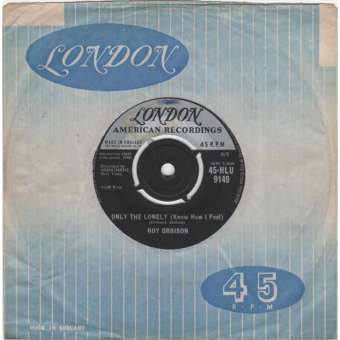
108. ‘Only the Lonely (Know How I Feel)’, by Roy Orbison

Now this is more like it! As we try to wash the memory of that last chart-topper from our minds, a dose of the Big ‘O’ will do nicely.

Roy-Orbison-1967-bw-portrait-billboard-1548

Only the Lonely (Know How I Feel), by Roy Orbison (his 1st of three #1s)

2 weeks, from 20th October – 3rd November 1960

Dum-dum-dum-dumbee-doo-wa, Ooooh-yeah-yeah-yeah-yeah, Oh-woa-woa-woa-ahhh… Only the lonely… We haven’t heard many catchier intros in this countdown, have we?

Only the lonely, Know the way I feel tonight, Only the lonely, Know this feelin’ ain’t right… This is how you do heartbreak in a pop song. It feels somehow significant, the fact that this was the song to depose ‘Tell Laura I Love Her’ from the top of the charts. As if Roy Orbison had listened to Ricky Valance and his saccharine mulch and said ‘Hold my beer…’

Everything about this song feels like an upgrade from ‘Tell Laura…’ – the voice (that voice – one of the most unmistakeable in pop history), the lyrics, even the backing singers. But to paint this record solely as the yang to ‘Laura’s yin would be unfair. This is a great track in its own right, deserving of a place in this countdown regardless of the record it knocked from the top spot.

It’s a rock ‘n’ roll record, but with the operatic flourishes that were a trademark of Orbison’s career. There are the fluttering violins that dance around the end of each line, the deep bass drum that marks out the bridge – there goes my baby (dun dun dun dun) – and, of course, that high note at the end. His voice, which has been deep, and fairly manly, up to now, rises with each of the final lines: Maybe tomorrow, A new romance, No more sorrow, But that’s the chance… wait for it… youuuuuu gotta take… As someone who has listened to Roy Orbison for many years this almost passes me by as standard – that’s what he sounded like a lot of the time – but you have to remember that this was his first big, international hit. People in October 1960 didn’t know who he was, and they wouldn’t have heard the high note coming. The chart nerd in me feels compelled to point out that ‘Only the Lonely’ took what was, at the time and until 1985(!), the longest ever climb to #1 in the UK charts (eleven weeks) This was a slow-burner, a word-of-mouth hit that you heard about from your neighbour over the garden fence – ‘Have you heard that new song by the guy with the high-pitched voice…?’

118953981

Turns out that this mix of rock ‘n’ roll rhythms with operatic touches and emotive, melancholy lyrics was Roy Orbison’s new trademark, after an earlier rockabilly phase that had brought him limited success in the US but had failed to register over in Britain, and the record-buying public lapped it up. His next release, for example – the OTT ‘Blue Angel’ – makes ‘Only the Lonely’ sound stripped back and subtle. I bought my first Big ‘O’ Best Of at the same time as I was getting into Buddy, Chuck and co., so we go way back. He can be something of an acquired taste at times, but once you get him; you won’t forget him.

And we’ll hear from him again in a few years’ time – when he’ll stand up to the Merseybeat tsunami with a couple of his best known songs – but until then I’d recommend checking out his early sixties classics: the aforementioned ‘Blue Angel’, ‘Running Scared’, ‘Crying’ (as made super famous by Don McClean), ‘Workin’ for the Man’ and ‘Falling’ (a song that, to this day, I can’t work out if I like or not but which definitely shows off his unique voice).

We seem to be settling back into a nice rock ‘n’ roll groove in the autumn of 1960, this disc following on from the likes of ‘Please Don’t Tease’, ‘Shakin’ All Over’ and ‘Apache’. In fact, ‘Only the Lonely’ is something of an amalgam, of this new, easy goin’ rock ‘n’ roll and the string-laden, percussion-y chart toppers from earlier in the year – ‘Poor Me’, ‘Why’ and so on. A new type of pop song, perhaps? A subtle little game changer? We’ll see. Onwards!

100. ‘Do You Mind’, by Anthony Newley

100 not out! A little cricket reference for you there. And I’d wager that Mr. A. Newley – the singer involved in this particular milestone – was partial to a spot of the old leather-on-willow back in his prime. Cos he’s posh, you see. Or rather, he sounds posh – and that’s half the battle, really. Anyway… He would like to ask, if it isn’t terribly impertinent of him, another question. Fresh from asking ‘Why?’, he’s now wondering ‘Do You Mind?’

newley7.jpg

Do You Mind, by Anthony Newley (his 2nd of two #1s)

1 week, from 28th April – 5th May 1960

He loves a polite question, does our Anthony. The title of this latest chart-topping record could be anything but polite – it conjures up, in my mind at least, images of a fearsome old lady grabbing the boy who’s just tried to push ahead of her in a queue: ‘Young man! Do you mind!?’. And yet, when you listen to the words, you realise that this is a song about being nothing but a perfect gentleman.

It begins with some finger snappin’, and a natty little bass line. If I say I love you… Do you mind? Make an idol of you… Do you mind? If I shower you with kisses, If I tell you honey this is, How I picture heaven… Do you mind? ‘I say, dearest, would it be OK if I begin utterly adoring you? Are you sure? Thanks ever so…’ Works a charm every time. He’s a clever rogue is Anthony Newley. Last time I pictured him as a sort of dandy-ish Bertie Wooster, posing soppy questions to his girl – the answer to which was always ‘Why? Because I love you.’ Here I’m picturing him as a sort of proto-Hugh Grant, bumbling his way into women’s hearts with his achingly proper advances.

As with ‘Why’, this is a fluffy little record of very little consequence. But I like it more than its predecessor. It’s got someone snapping their fingers, for a start. Plus there’s a sort of jazzy, music hall swing to the lines: I wanna whisper, whisper sweet nothings in your ear… Then there’s the oh-so-1960, tinny rock ‘n’ roll guitar which begins with the odd jab between lines, before growing in confidence and adding some cool little licks along the way. And I love the ending. Click click.

I also like Newley’s voice here more than I did during his first chart-topper: it’s not quite as reedy or as camp. He’s trying to add a spot of swagger by dropping his aitches – note the ‘love ya’ and the ‘ba-by’ in the closing bridge – but he isn’t really fooling anyone. I did my usual research, as this is the last time we’ll be hearing from Mr. Newley, and it turns out that he was a big vocal inspiration for none other than… David Bowie. Which makes complete sense, and which means you will forever picture a young Ziggy Stardust whenever you next hear ‘Do You Mind.’

37004-raw

Which probably won’t be any time soon, though, as Anthony Newley and his hits seem to have been erased from the public conscience. He lived a full life nonetheless: four marriages (that loveable toff schtick must have worked!), one of which was to Joan Collins – a notch in anyone’s bedpost! He also – and this makes his disappearance from the rock and pop canon seem very strange – wrote Nina Simone’s ‘Feeling Good’ (!) and Shirley Bassey’s ‘Goldfinger’ (!!) As well as all that – and this belatedly gains him a place in my childhood heroes Hall of Fame – he also wrote the soundtrack to ‘Willy Wonka & The Chocolate Factory’, i.e. the one with Gene Wilder, i.e. the film I watched on VHS at least once a month between the ages of seven and nine.

Also of note here is the fact that this track is the latest in a growing list of quick-fire doubles at the top of the charts. In the past two years Connie Francis, Russ Conway, Bobby Darin, Adam Faith, Cliff Richard and now Anthony Newley have all hit the top spot twice with a gap of only two or three months in between. I’ve mentioned the concept of a shadow #1 before – a follow-up release that does well thanks to the resonant glow from an earlier hit – but it’s really been noticeable these past months. And quite often the ‘lesser’ hit has been better, to my ears, than the bigger one… Anyway, the next #1 is also a ‘sophomore’ number one, and – I don’t usually do previews but I’m indulging myself here – a complete and utter CLASSIC.

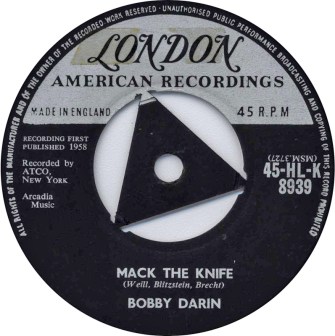
91. ‘Mack the Knife’, by Bobby Darin

We kick off the next thirty #1s in the October of ’59 – four chart-toppers away from the 1960s! And this… This is a real palate cleanser after the cheesy numbers, the Cliffs and the Jerry Kellers, that immediately preceded it. This is something different.

bobby-darin-mack-the-knife-1959-8

Mack the Knife, by Bobby Darin (his 2nd of two #1s)

2 weeks, from 16th – 30th October 1959

It begins with the softest of intros – a tickle of drum, a pluck of bass. Oh the shark, babe, Has such teeth, dear, And it shows them, Pearly white… Bobby Darin is holding back, almost sneaking the lyrics out when we’re not looking. Just a jack-knife, Has ol’ MacHeath, babe, And he keeps it, Out of sight…

The best thing about this song – and there are many great things about this song – is that the lyrics slowly unfold. You are not quite sure what it is that you are listening to, what on earth this record is about, on first listen. The title doesn’t give anything away for a start. Then the first verse alludes to ‘scarlet billows’ and ‘traces of red’. All very mysterious…

Just to make sure, then, that we’re all on the same page – this is a song, a number one selling hit no less, about a hitman. A man, MacHeath, who does murders and stuff. A proper wrong ‘un. The following verses – and this record is nothing but verses, each one ramping up the tempo both in terms of the sound and the sinister lyrics – make it clearer.

Now on the sidewalk, Sunny morning, Uh-huh, Lies a body, Just a-oozin’ life… And: There’s a tugboat, Down by the river don’t ya know, Where a cement bag’s, Just droopin’ down… We’ve got stabbings, and guys swimmin’ with the fishes. A chap that disappears not long after ‘drawin’ out all his hard-earned cash.’ And then there’s the ladies: Jenny Diver, Miss Lotte Lenya and ol’ Lucy Brown. Whether they’re MacHeath’s lovers, or his victims, is left ambiguous.

And ambiguous is a good word with which to describe this latest #1. Superficially, it’s a perky swing number with a quiet start and a loud finish. In recent years, thanks to Robbie Williams and ‘Big Band Week’ on X-Factor, ‘Mack the Knife’ has been somewhat bland-ified. Yet if you sit down and actually listen to the lyrics… They’re dark, man. How great is it, after ‘Here Comes Summer’s saccharine mulch about ‘drive-in movies’ and ‘Joe’s Café’, and Craig Douglas’s paean to puppy love, to have a chart-topper that’s about a vicious murderer. I wonder how it got past the censors of the day? If the opacity of the lyrics, or the old-fashioned big-band swing, helped Darin get away with it.

MI0002749454

It’s a brilliant number one; but also a bizarre one. A song that begs the age-old question: How did this end up on top of the charts? If the success of Darin’s earlier #1 ‘Dream Lover’ led to this, then that’s yet another feather in the earlier song’s cap. Both songs showcase how good a singer Bobby Darin was – one a traditional pop song, the other a brassy swing number. I mean it as a compliment when I say it sounds as if it were recorded live.

‘Mack the Knife’ had a circuitous route to the top of the UK charts. It was written, in German, in 1928, for a musical called ‘Die Dreigroschenoper’. Catchy title. The show was then translated into English and performed as ‘The Threepenny Opera’ in 1933, then resurrected in 1954, and ‘Mack the Knife’ cherry-picked from it for a single by Louis Armstrong in ’56, before Bobby Darin recorded this definitive version two years later.

It ends with a bang, and probably the song’s most famous line: Look out ol’ Macky is back! Which not only draws this swingin’ little record to an end; but also the chart-topping career of Bobby Darin. Which is a shame, as he really was great. I’ve been digging into his back-catalogue since writing the post on ‘Dream Lover’, and would recommend that you give the frothy ‘Splish-Splash’, the cheeky ‘Multiplication’, and the karaoke-classic ‘Beyond the Sea’ a listen. In fact, just delve in and check it all out. That he topped the charts with two such different, but equally brilliant, records -when a lot of his contemporaries were treading the same path again and again – speaks volumes.

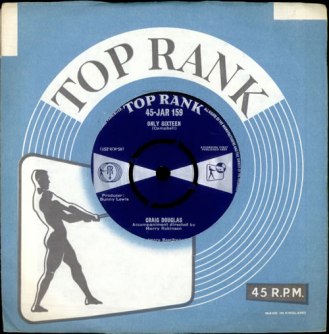
89. ‘Only Sixteen’, by Craig Douglas

Following on from Cliff, it’s another British rock ‘n’ roll disc taking up a considerable residency at the top of the UK Singles chart. Unlike Sir Cliff, the singer is completely unknown to me…

CRAIG_DOUGLAS_ONLY+SIXTEEN+-+4PR-511404

Only Sixteen, by Craig Douglas (his 1st and only #1)

4 weeks, from 11th September – 9th October 1959

But first, a question. Why, oh why, couldn’t British rock ‘n’ roll acts of the 1950s take themselves seriously? Why does every rock ‘n’ roll chart topper from a British artist have the whiff – nay, the stench – of the Victorian music hall, of Skegness pier about it? Why weren’t we cool?

I make Craig Douglas the 5th UK-born rock ‘n’ roll chart topper, and the four previous – Tommy Steele, Lonnie Donegan, Lord Rockingham’s XI and Cliff – have made the top by blending simple rock melodies with a lot of silliness. OK, ‘Hoots Mon’ was a novelty record so we can perhaps let Lord Rockingham’s XI off. Lonnie Donegan was a pioneer in terms of his sound but old-fashioned when coming out with lyrics like ‘two old ladies sitting in the sand, each on wishing that the other was a man’. Tommy Steele camped ‘Singing the Blues’ right up, while ‘Living Doll’ was barely more than a nursery rhyme. (A very creepy nursery rhyme, but still). And you can trace this theme – this current of candyfloss that runs through our British hit singles – way back into the pre-rock days. The US was giving us ‘I Believe’; while the UK was replying with ‘I See the Moon’.

I suppose the big question is… (and I’m deliberately excluding women like Ruby Murray and Shirley Bassey as, while British and while quite classy, they definitely weren’t rock) what will be the first truly cool, suave and sophisticated British recorded rock ‘n’ roll record? Well, I can reveal… It’s not ‘Only Sixteen.’

This is more jauntiness, more end-of-the-pier winking and gurning. There’s whistling, and a guitar plucked so precisely that I think it might be a banjo. She was only sixteen, Only sixteen, I loved her so… Douglas’s voice is slightly shrill, quite posh and, to be honest, fairly average. It doesn’t quite fit the song. It sounds a bit like the dreaded David Whitfield, but a David Whitfield who’s debasing himself in an attempt to sing rock ‘n’ roll…

We’d laugh and we’d sing, And do the little things, That made my heart glow… Craig had a fling with a lass; but it didn’t last. She was too young to fall in love, I was too young to know… So far, so ‘Jackie Magazine’. Then comes the punchline: Why did I give my heart so fast, It never will happen again, I was a mere lad of sixteen, I’ve aged a year since then… Oh! Hahaha – he thinks he’s all grown up. At seventeen! The folly of youth.

craig-douglas-only-sixteen-golden-girl-pretty-blue-eyes-buy-049-autographed-64148-p

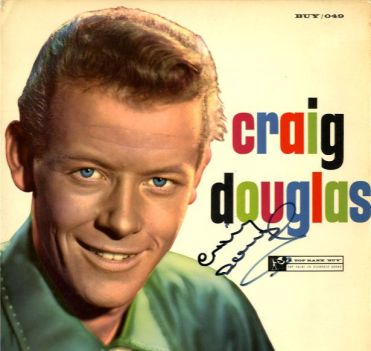
Yeah, it’s a cute line and all, but I don’t think it’s quite enough to build a whole song around. Plus, with that voice, I’m having trouble imagining that Craig Douglas was seventeen when he recorded this. *Plot twist* He was! But come on – look at that picture. That lad of sixteen must have had one hell of a paper round. And while we’re at it – Craig Douglas just isn’t the name of a chart-topping star. Craig Douglas lives next door to you, and is someone you avoid making conversation with on your way to the car in the morning.

I think we should just file this under ‘Of It’s Time’ and be done with it. ‘Only Sixteen’ isn’t a terrible record – it’s quite pleasant, really – but it won’t live with you long after hearing it. Craig Douglas is still with us, however – aged seventy-seven – and still tours, though his recording career didn’t last the Beatles-led cull of ’63.

To finish, and to illustrate my point about US singers being that much cooler than their British counterparts, just listen to Sam Cooke’s version of this song. It’s technically the original, though they were released around the same time, and has exactly the same melody and lyrics… But, you see what I mean? I think I may have finally put my finger on just what the difference is, though: the huge gulf in coolness between British and American stars. The Sam Cooke version, you see, doesn’t have Any. Bloody. Whistling!

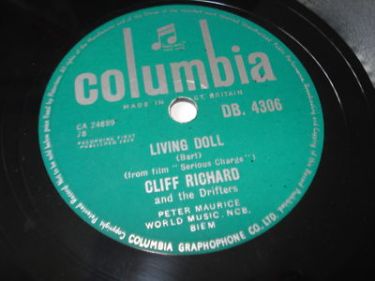
88. ‘Living Doll’, by Cliff Richard & The Drifters

In which we meet the pre-eminent British popular singer of the day. And the next day. And the next. Next. Next. Basically, there will be no escaping Cliff for the following forty years…

230674091186

Living Doll, by Cliff Richard & The Drifters (Cliff’s 1st of fourteen #1s / The Drifters – AKA The Shadows – 1st of twelve #1s)

6 weeks, from 31st July – 11th September 1959

In the intro to my post on Shirley Bassey’s debut #1 I gave it the big fanfare about living legends and national treasures and so on. And let’s be honest, the same applies ten times over for Sir Clifford of Richard. He will go on to utterly dominate UK pop music, remaining a genuine chart presence well into the 2000s, even if he is probably more famous today for singing during the rain at Wimbledon and for suing the BBC over the way they covered allegations of… (REDACTED).

Let’s get to the music shall we? ‘Living Doll’ begins with a natty little bass intro, and then… Well it’s rock ‘n’ roll; but not as we know it. I’ve mentioned many a time the idea of ‘US’ Vs ‘UK’ rock ‘n’ roll: British singers taking on the Yanks at their own game and slowly getting better at it. Let’s be honest, the odds were stacked against the Brits with Elvis, Buddy Holly, The Everly Brothers, Johnnie Ray et al against Lonnie Donegan and, um, Tommy Steele. And with the arrival of ‘The British Elvis’ AKA Cool Cliff, you might think that this is the moment for Britain to really grab the rock ‘n’ roll flag for herself!

Except, no. ‘Living Doll’ is an extremely lightweight record. A couple of acoustic guitars. Cliff’s simpering vocals. And that’s about it. Got myself a cryin’, walkin’, sleepin’, talkin’, living doll… Got to do my best to please her, Just cos she’s a living doll… This is a song that I could have sung a few lines from – most Brits could, no? – without ever having listened to it properly. And it’s a song that doesn’t do well under more intense scrutiny.

Yes it sounds cheesy and flimsy with a whiff of George Formby in the background. But beyond all that there’s the problem of the lyrics… In the previous chart-topper, Bobby Darin was giving us a ‘girl as dream’ narrative. Here Cliff is giving us ‘girl as doll’, and taking it very literally: Well take a look at her hair, It’s real and if you don’t believe what I say just feel… Pretty creepy… Gonna lock her up in a trunk, So no big hunk, Can steal her away from me… Eww. That’s taking a metaphor way too far and then some. She’s either literally a doll with which Cliff is romancing… Or an extremely submissive young lady over whom Cliff is aggressively over-protective. Either way…

The best bit of the song, by far, is the dreamy guitar solo which by the standards of the time is pretty long, loose and groovy. That, of course, is provided courtesy of Cliff’s long time backing band The Sha… No, wait. The Drifters. It’s actually quite simple: The Drifters were The Shadows until the US Vocal group of the same name (Ben E. King and co.) threatened legal action. They appeared as The Drifters on Cliff’s first five or so hit singles; this was their sole chart-topper before the name change.

Rocker Cliff

It’s pretty easy, almost a cliché, to get stuck into Cliff as an uncool, God-bothering, 2nd rate Elvis impersonator. And I’d try to avoid doing so at all costs… If his debut #1 record didn’t kind of prove all the accusations correct. He was clearly trying to sound like Elvis. He was clearly trying to look like Elvis (just look at that quiff!). And this record is him selling out just like Elvis did. Except Elvis got a good few years of genuine rocking ‘n’ rolling in before the movie studios, the army and the burgers came a-calling. Cliff got one album. (Do give ‘Rock on With Cliff Richard’ a listen, though – it’s got some decent tracks on it.)

Anyway, that’s one down for Cliff; just thirteen more UK #1 Singles to go…

https://www.youtube.com/watch?v=QK3uFgjCTeY

87. ‘Dream Lover’, by Bobby Darin

Now this is more like it. This is a chart-topping single!

BOBBY_DARIN_DREAM+LOVER+-+1ST-547817

Dream Lover, by Bobby Darin (his 1st of two  #1s)

4 weeks, from 3rd – 31st July 1959

It’s been a while since I listened to this song, or to any Bobby Darin songs, but slipping the needle to hear ‘Dream Lover’ is like slipping into a silk dressing gown and settling down by the fire: Every night I hope and pray, A dream lover will come my way, A girl to hold in my arms, And know the magic of her charms…

We get not one but two groups of backing singers: girls for the ‘oohs’ and boys for the ‘wadda waddas’. We get strings and we get some oh-so-fifties staccato guitars. In fact, I’d put this up there with ‘Diana’ and ‘When’ as the most fifties, most rock ‘n’ rolly, doo-woppy #1 yet. But ‘Dream Lover’ is a much better song than either of those.

And that’s down to Bobby Darin. His voice is as crisp and as clear as a bell, and he lends the song a sort of… gravitas, that places it a cut above pure teeny-bopper fluff. He sounds older than his twenty-three years, and sounds suave where Paul Anka and the Kalin Twins sounded puppyish. Does this then represent the pinnacle of late fifties rock ‘n’ roll-as-pop? Maybe something to consider in our upcoming re-cap.

For all that, it’s a simple song. The singer wants a dream lover, so he doesn’t have to dream alone. Someday, I don’t know how, I hope she’ll hear my plea, Some way, I don’t know, She’ll bring her love to me… The listener knows where the song is going, but is more than happy to be taken along for the ride.

I don’t want to really write any more about this record. I want to leave it there. Minimalist. This is where easy-listening and pop collide to create a seriously classy song. And we’ll be hearing from Bobby D again very soon, so we can delve into his backstory then. For now, just sit back, relax, and enjoy.

Bobby-Darin

There are two little things of note, though, that we should point out here. I mentioned in my post on ‘Hoots Mon’, back in November ’58, that the production on these chart-topping singles was getting more substantial, beefier. And I have to admit that on ‘Dream Lover’, and to a lesser extent on ‘When’, I’m getting a hint of the ‘Wall of Sound’ technique – Phil Spector and all that – which will be all the rage in three or four years. Listen to the crashing symbols that precede the final verse and chorus here, and you’ll see what I mean. Interestingly, this song was engineered by Tom Dowd, a pioneer of multi-track recording. So there could be something in that…

And finally, while this is a wonderful record more than worthy of a month atop the UK Singles Charts… something has been nagging at me for a while now. Are our #1 singles growing more and more lyrically banal? Let’s explore. Drag your minds back to the dark and smoggy days of pre-rock and yes, song lyrics were probably pondering weightier issues: I believe for every drop of rain that falls, A flower grows… Or Three coins in the fountain, Which one will the fountain bless…? Or I saw her face and ascended out of the common place, into the rare, somewhere in space… from ‘Brainiest #1 Yet’ ‘Stranger in Paradise’. Or they at least talked of love in slightly flowerier, more abstract terms. And there haven’t been any out-of-place, soundtrack songs like ‘Hernando’s Hideaway’ or ‘The Man from Laramie’ with lyrics about sharp-shooters and speakeasies hitting the stop spot recently.

In 1958-9, while there are anomalies like ‘Smoke Gets in Your Eyes’ and ‘The Day the Rains Came’, it’s mainly all Dream lover, where are you…? All I have to do is dream… And Goodness gracious great balls of fire…! Simple, immediate stuff. Is this a bad thing? Rock ‘n’ roll may have dumbed things down a bit, but its brought an immediacy to our chart-topping hits. Everyone can relate to someone sitting at home wishing for a dream lover. Not everyone can relate to She wears red feathers and a huly-huly skirt… I’m all for it really. And that’s probably a good thing, as our next #1 takes simple to the next level.

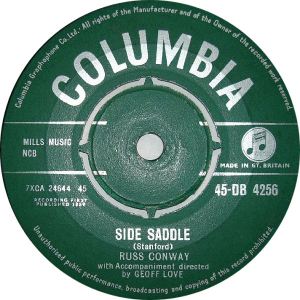
83. ‘Side Saddle’, by Russ Conway

And so, The Winter of the Ballad, which I took such pains to introduce in my previous post, experiences a sudden thaw. Spring has sprung, and has brought with it a perky piece of piano-pop.

russ-conway-side-saddle-columbia

Side Saddle, by Russ Conway (his 1st of two #1s)

4 weeks, from 27th March – 24th April 1959

Upon a first listen of this latest chart-topping record, two questions spring immediately to mind: What is this? And why did it spend a whole month at the top of the charts? It’s an instrumental, Mr. Russ Conway tinkling away at his piano, and… that’s about it. It’s got a melody (of sorts), which plods along without going anywhere very far, and then it ends, in under two minutes.

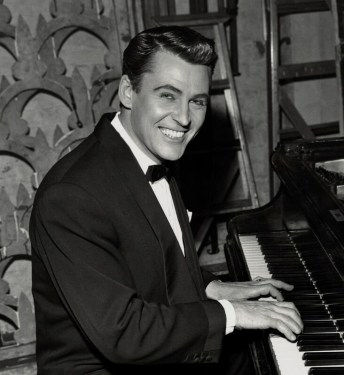
The obvious comparison to draw here is with Winifred Atwell, who has already claimed two UK chart-topping singles with records sounding very similar to this. But Atwell at least had a kind of frantic energy about her piano-playing – you could picture her bashing out the hits with a smile and a bead of sweat rolling down her temple. Whereas you can only imagine Conway plodding his way through ‘Side Saddle’ with a cheesy grin-slash-wink combo. The other piano-led #1 single which springs to mind at this time is, of course, ‘Great Balls of Fire’. But to compare that record to this record is, to my mind, heresy of the highest order. There is a slight concession to rock ‘n’ roll here, in that someone in the background is tickling a drum kit in time to Conway’s piano, but that’s strictly it.

It’s a strange chart-topping record, this. At best I’d describe it as incidental music, or silent movie music: you can imagine it going down quite well as an accompaniment to Buster Keaton running down a railroad track. It is very 1932. Which means we have to pose a 3rd question: Why now? Why did this curio of a record zoom to the top of the charts in the spring of 1959? My research has thrown up no answers. It wasn’t an old song; it was written and released in ’59, apparently recorded for a TV adaptation of ‘Beauty and the Beast’ – which at least helps explain the olde-worlde feel of the song. There’s no clue as to how the melody concerns a horse-riding style popular with posh old ladies. According to Wiki “the song was a staple of the BBC’s ‘Housewives Choice’ radio programme”, which perhaps says more than anything I could ever write.

mw148586

Due to summer holiday commitments, this is the first time in over a fortnight that I have sat down to write one of these posts. In that time, I’ve listened to very little music, and the music I have heard has been radio-friendly, modern pop. Perhaps ‘Side Saddle’, then, is suffering from being the oldest record I’ve heard for a while. Perhaps if I were in the swing of things – in my mid-season form of writing a post every couple of days – it wouldn’t stand out so much. But then again… maybe not. I fear that, whatever way you look at it, this track is simply a relic. And, glancing down my list o’ number one singles… Oh, goody. There’s more to come from our Russ in very short order.

One final thing of note… If you click on the video below and discover a hitherto unrevealed love of bland, piano-based background Muzak, Spotify has the most extensive collection of Russ Conway back-catalogue ever seen. Like, seriously. There must be fifty-odd albums on there. Knock yourselves out!

63. ‘Diana’, by Paul Anka

paul-anka-diana-columbia

Diana, by Paul Anka (his 1st and only #1)

9 weeks, from 30th August – 1st November 1957

In which we encounter the best opening line in pop music history. Or is it the worst? I can’t really tell…

Paul loves Diana, and has written a song for her. How does he begin said paean to his one true love? What is his grand opening declaration? It’s: I’m so young and you’re so old, This my darling I’ve been told…

Phew! I’ll bet there was no holding Diana back after she heard that. And the lyrics that follow aren’t much better. You and I will be as free, As the birds up in the trees… I love you with all my heart, And I hope that we will never part… Hold me darling, Hold me tight, Squeeze me darling with all your might… (If I could add a puking emoji right here, I would) This is pure pop-song-as-love-letter-written-by-fifteen-year-old. Elsewhere ‘me’ is rhymed with ‘see’, ‘my lover’ with ‘no other’ and ‘arms’ with ‘charms’… It’s by far the tritest, most banal, utterly cheesiest song we’ve met in this countdown.

But wait… It turns out that this song, which sounds like it was written by a randy fifteen-year-old, was written by… a randy fifteen-year-old! (OK, Paul Anka was sixteen when it was recorded and seventeen by the time it hit #1, but for the purposes of this next paragraph lets imagine he wrote it in his bedroom, aged fifteen). See, Paul had a crush on a girl at church, called Diana, and was thus inspired to write a song entitled ‘Diana’. Simple! Quite how old ‘so old’ is I can’t find any info on. She was probably only nineteen, but part of me really hopes Diana was a forty-five-year-old cougar.

paul-anka-diana-1957-3

Musically this record is super-diluted rock ‘n’ roll. It sounds like a pastiche of rock ‘n’ roll as recorded for the ‘Grease’ soundtrack. There’s a cheesy sax riff and some ‘doobeedoobees’ from the backing singers. Actually, to refer to this as a ‘rock’ song sounds ridiculous – I take back that last sentence. This is pure, bubblegum pop – a genre we haven’t seen too much of so far (strangely enough for the pop charts) – and I’d put it along with ‘Dreamboat’ and ‘Look at That Girl’, and perhaps ‘Butterfly’, as the purest ‘pop’ chart-toppers thus far.

Earlier I described Guy Mitchell’s ‘Rock-A-Billy’ as a sherbet dib-dab of a song – a song that you can’t resist despite knowing that it cannot be good for you. Well, if that was a sherbet dib-dab, then listening to ‘Diana’ is like drowning in a swimming pool filled with Coca-Cola. And, just as with ‘Rock-A-Billy’, as much as you want to dislike this utter cheese-fest it worms its way in and doesn’t let go. You’ll be belting it out in the shower after a couple of listens, trust me. Then again, I am a sucker for a catchy hook and a silly-but-simple lyric. It’s harder than you think to write a song like this, I’ve heard…

Anka’s voice is pretty strong too – it simultaneously sounds like the voice of a fifteen-year-old, and that of a middle-aged bloke. And by the time he belts out the champagne line: OOOOH, pleeeeeaaasseee stay-eee by me… Diana… you’re won over. Actually, the way he lowers his voice to sing her name does indeed sound like a kid trying to impress an older woman. It’s quite clever, in a way. Anka won’t have any more #1s, but when you’re debut single hits the top and stays there for nine weeks do you really need any more? He’s had a long chart career but is perhaps more famous as a songwriter, having written ‘It Doesn’t Matter Anymore’ for Buddy Holly and ‘She’s a Lady’ for Tom Jones. Oh, and ‘My Way.’ So he did alright for himself in the end.

To end, it’s perhaps worth noting how quickly rock ‘n’ roll has diversified since Bill Haley announced its arrival at the top of the charts. In quick succession we’ve had the raw, proto-punk of Lonnie Donegan, a low-key and slightly tropical sounding debut for Elvis Presley, and now this. After a run of very samey sounding #1s, we are getting a little more variety at the top. And I’m excited to hear what will come next!

56. ‘Young Love’, by Tab Hunter

s-l300 (1)

Young Love, by Tab Hunter (his 1st and only #1)

7 weeks, from 22nd February – 12th April 1957

I’ve been bigging up the arrival of rock ‘n’ roll to the top of the UK charts for so long – especially back when we were plodding through all those dreary, brow-furrowingly earnest pre-rock ballads – that this next statement goes against every instinct I have…

By the time it got to the top of the UK charts, rock ‘n’ roll was over. Finished. Defunct. Obsolete.

I recently claimed that the rock era began on 11th January 1957, when bona fide teen-idol Tommy Steele sneered his way to a week at the top. I’m now claiming that the rock era ended on 22nd February 1957, when this limp little record grabbed a scandalous seven weeks at the top.

Because, by God this is bland! That this made it into the record books before Elvis, before Buddy Holly, before Jerry Lee and all the rest doesn’t make sense. It is a rock ‘n’ roll record – there’s a guitar riff and solo, drums, oohs and aahs and all the rest. Plus, the lyrics are all about two kids falling in love for the first time. And it’s called ‘Young Love’!

They say for every boy and girl there’s just one love in this whole world, And I-I-I know I’ve found mine… Young love, First love, Filled with true devotion…

But it’s delivered in such a soppy way that I refuse to acknowledge this as any kind of rock and/or roll. Tab Hunter’s voice is deep and sonorous, but in pictures he looks like the all-American boy next door: rosy-cheeks, blonde curls, blue eyes, church on Sundays, part-time job in the gas station. Your mum would have liked him as much as she would have disliked Tommy Steele. I can imagine a young Cliff Richard taking notes as he planned his assault on stardom a couple of years later (and there are a lot of similarities between Hunters voice here and Cliff’s on, say, ‘Living Doll’). And note the role-reversal – now it’s the Americans giving us staid and boring while the Brits grin and wink! Fittingly, this was #1 on the day my mum was born. I say ‘fittingly’, because she has just about the blandest taste in music going (and is a huge fan of Sir Clifford of Richard).

maxresdefault

And that’s about it. The shortest entry yet. At least, that was going to be it… Until I did my customary Wikipedia-based research about Tab Hunter. Turns out this American-as-apple-pie captain-of-the-school-football-team was – dum dum dum – gay! Is gay, he’s still alive, aged eighty-six. He had to cover it up for most of his career, obviously, and had fake flings with Debbie Reynolds and Natalie Wood among others to throw the newspapers off the scent. Which adds a bittersweet layer to his one and only UK chart topping single, and the lines about boys and girls falling in love.

I’ve listened to ‘Young Love’ several times now, trying to find something to like about – I usually love me a bit of rock ‘n’ roll – but I can’t do it. It’s insipid. And so that’s it. Rock is dead. If it ever existed. Obviously, the top of the pop charts is never the place to look for cutting edge music, but I’m surprised there wasn’t a bit more of an explosion, with some real rockers, before the sell-out began. Or maybe I should just accept that lines were always blurred, that rockabilly merged with blues which had merged with jazz which had merged with the music of the cotton fields to create rock ‘n’ roll over several decades, and not in an afternoon. No more attempting to pinpoint the birth of a musical movement to a particular record.

Anyway, in my next post… The moment skiffle was born!

(Edit: Tab Hunter sadly passed away shortly after this post was published. The Guardian published this obituary, touching on some of the themes mentioned above.)