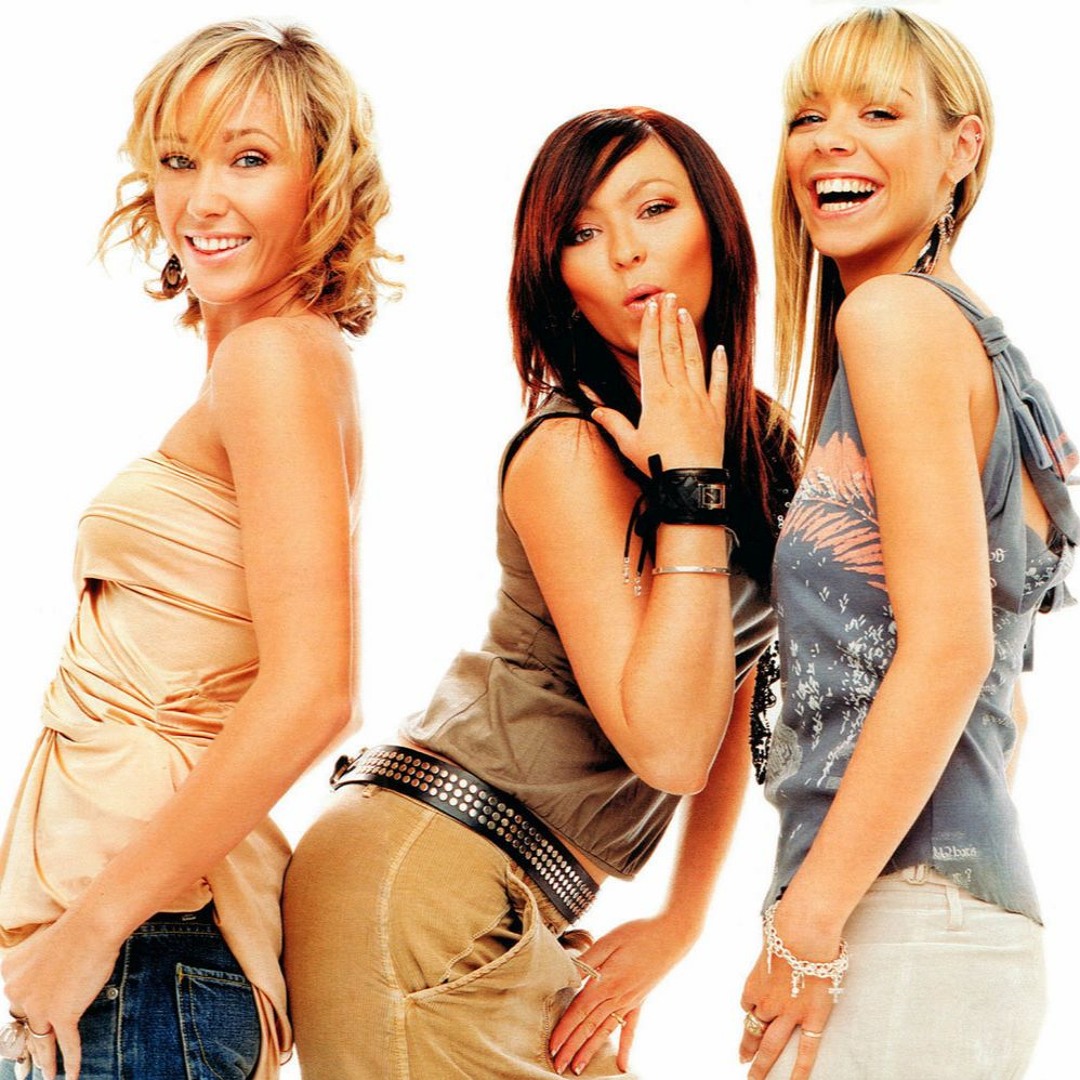
888. ‘Love Don’t Cost a Thing’, by Jennifer Lopez

A few weeks ago we welcomed Beyoncé to the top of the charts, and now we welcome another twenty first century icon…

Love Don’t Cost a Thing, by Jennifer Lopez (her 1st of three #1s)

1 week, from 14th – 21st January 2001

It does seem a bit laughable to compare Jennifer Lopez with Beyoncé now, in 2025, but in the early years of the millennium there were few bigger pop stars than J Lo. And for her first number one, the Beyoncé comparison is very fitting, as I hadn’t realised how much ‘Love Don’t Cost a Thing’ owed a debt to Destiny’s Child and their fluttery style of R&B.

It’s also similar to ‘Independent Women (Pt 1)’, though Lopez compares love, rather than independence, to wealth in the lyrics: Baby credit cards, Aren’t romance, Still you’re tryna buy, What’s already yours… Call me a cynic, but I’m not totally sold on the idea that J Lo would be happy dating a pauper, but at least it gives us a treasure trove of early ‘00s slang: Think you gotta keep me iced, You don’t… If I wanna floss I got my own… Rumours at the time suggested it was a dig at her then-boyfriend, P Diddy, who apparently had the cash but not the class. Looking back, if the worst he did was buy her a few Mercedes then she probably got off quite lightly…

Musically it’s fine. It rattles along at a fair clip, not giving you a chance to pick holes with some of the now pretty dated production touches. I do like the synthy drum fills, and the break where squelchy horns take over the beat. Like most US pop songs at the time its slick and polished, though it comes nowhere close to the heights of a Britney or a Christina record from the same time.

In fact, without giving too much away, I find all three of J Lo’s number ones slightly underwhelming. She had some great tunes fall short, such as her other classic of false modesty ‘Jenny From the Block’, and the banging ‘Play’, which made #3 a few months after this chart-topper. This is decent enough pop, very much of its time – a time capsule record – but perhaps not the sort of record that would have topped the charts at any time other than January.

887. ‘Touch Me’, by Rui da Silva ft. Cassandra

Into 2001 we go… Picture the scene: it’s January, the Christmas decorations are down, the weather’s shit… Time for some Random Dance.

Touch Me, by Rui da Silva ft. Cassandra (their 1st and only #1s)

1 week, from 7th – 14th January 2001

I mean, why not? Now’s as good a time as any, and ‘Touch Me’ does have a cold, wintry feel to it. This is moody dance, made for mixing deep into a set at around two thirty in the morning. It’s not a grab-your-handbags floor-filler. I remembered the hook – Touch me in the morning, And last thing at night… – but little else about it.

What this reminds me of is that around the time this charted I was preparing for my Standard Grades (GCSEs to the rest of Britain), and in our art class we were allowed to have the radio on as we worked on our final projects. I can’t say for sure if ‘Touch Me’ was played often, but it’s the sort of thing that would have done. (We were also allowed to bring in snacks, which was even more of a treat than the radio).

I’m taking detours down memory lane not only because it’s fun, but because I can’t think of much to write about this record. It’s alright for what it is, which is not my type of thing. There’s not much to get your teeth into, really (unlike the fruit pastilles I was launching down my gullet in art class). It’s more of a vibe, a mood, than a melody and a hook. It’s technically ‘progressive house’, the first record of its kind to be a number one single, and I can see that. It’s more layered, more cerebral perhaps, than most dance records.

It’s also the first ever UK chart-topper by a Portuguese act, DJ Rui da Silva hailing from Lisbon. Vocalist Cassandra Fox, meanwhile, wrote the lyrics and became the third youngest woman to debut at #1, after Billie Piper and Britney Spears. Her voice has a nice throaty rasp well beyond her eighteen years. And actually, if we’re being pernickety, it this song, and not ‘The Masses Against the Classes’, which is technically the first number one of the new millennium.

So there are some stories here, just not necessarily within the song itself. Still, ‘Touch Me’ still seems to be well-respected in dance music circles. Meanwhile, the Guardian has claimed it to be both the ‘most forgotten number one of the decade’, and the 70th greatest UK number one single of all time.

Either an official video was never made, or has never been uploaded to YouTube.

886. ‘Can We Fix It?’, by Bob the Builder

Ah, the classic British Christmas. Pigs in blankets, a half-pissed Granny, more rain than snow outside, and some novelty tripe at number one in the charts…

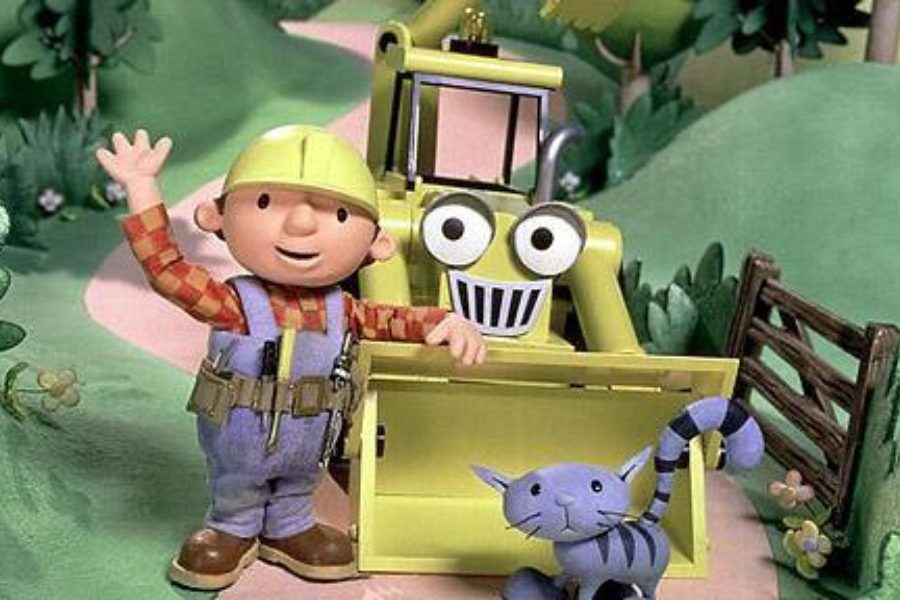
Can We Fix It?, by Bob the Builder (his 1st of two #1s)

3 weeks, from 17th December 2000 – 7th January 2001

Bob the Builder joins Mr Blobby, Benny Hill, the kids of St. Winifred’s, Little Jimmy Osmond, and several more, in the festive hall of shame. But I will say that, while ‘Can We Fix It?’ is not a song I’m desperate to ever revisit after this; it’s far from the most heinous example of festive excess.

It’s an expansion on the theme to the popular kids’ TV show, with lots of fun musical references. It opens with a version of the escalating ‘Twist and Shout’ intro, also heard in more respectable chart-toppers from David Bowie and the Manic Street Preachers (which means that the year 2000’s first and last #1s are connected in the most unlikely way). Elsewhere there’s a pretty current 2-step garage beat, and lots of record scratches. For a song based on a children’s TV show theme it actually sounds like it could, in a not too distant parallel universe, be a real pop song.

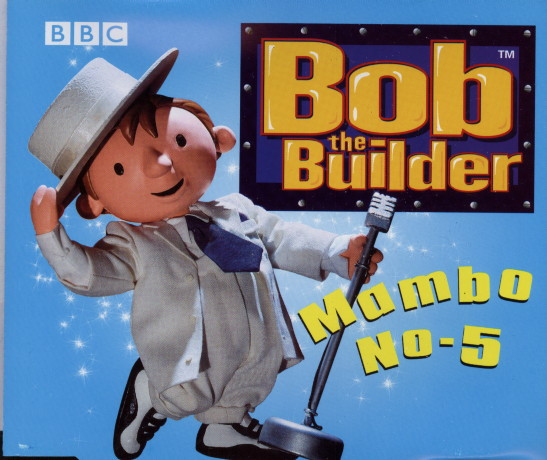
In the video, by which novelties like this often live and die, Bob the Builder puts on various pop star guises, the most memorable of which is Liam Gallagher, complete with a parka and a sneering microphone stance. It also helps that Neil Morrissey, AKA Bob, has a Jarvis Cocker-esque drawl to his voice, sounding almost like a real rock star, but also like he’s very much not taking this seriously at all.

So, like I said, far worse musical crimes have been committed in the name of a Christmas number one. (And that’s before we mention the many God-awful, non-festive novelty chart-toppers…) But quite how this managed to become 2000’s best-selling single – in a year not short of generational classics – and the entire decade’s 10th best seller (!), I’m not quite sure. But hey, at least it kept Westlife’s ‘What Makes a Man’ off top spot, denying them a second Christmas #1 in a row.

Interestingly too, it was the only one of the year 2000’s forty-two chart-toppers that climbed to the top, entering at #2 behind ‘Stan’ the week before. It then peaked in sales in its third week, taking the coveted Christmas prize.

We finally, then, reach the end of 2000: the longest year we’ll ever cover. I published the first number one of this year on 23rd January, real-time, and we’re now well into June. I’m not sure I can sum up a year with so many different number one singles, but I’ve enjoyed more of them than I expected to (while it’s also been a self-indulgent trawl through my fifteenth year on this planet). Back then I was frustrated at the high turnover, feeling that it devalued the charts (which it does), but I’m coming round to the feeling that variety is indeed the spice of life. Meanwhile, at the time of writing in 2025, the current UK #1 has just entered its twelfth week on top…

885. ‘Stan’, by Eminem

The end of the longest year in chart-topping history is in sight: here we are at the forty-first and penultimate number one of 2000. And of all the zeitgeist grabbing #1s we’ve met along the way – Craig David’s seven days, Robbie’s rocking DJ, Destiny’s Child and their independent women – we’ve reached the ultimate pop culture reference. For none of those other records’ titles have entered the OED, as both a noun and a verb…

Stan, by Eminem (his 2nd of eleven #1s)

1 week, from 10th – 17th December 2000

With ‘The Real Slim Shady’, Eminem announced himself, for better or worse, as a foul-mouthed, parent-baiting, attention-demanding cartoon character. With ‘Stan’ he announces himself as something else entirely. It’s a study of fame, of fandom, of what we would now call toxic masculinity, much of which is even more pressing today than it was a quarter of a decade ago. And it was almost a Christmas number one.

I don’t love Eminem, and I’m not the biggest fan of hip-hop. But I am a writer, and the way he constructs a character, a backstory, and a narrative with not one but two twists, in four verses is one of pop music’s great feats. One little detail stood out to me on this re-listen: in verse one Stan mentions how sloppy his handwriting is, while in the third he calls back to it and claims he wrote the address on his letters perfectly. That’s some proper plotting.

The tension builds as the letters from Stan pile up, unanswered. (The fact that Eminem manages to make some weirdo writing letters this gripping is another great feat.) The start of the third verse (the best of the four) is my favourite moment: Dear mister I’m too good to call or write my fans…! Stan then launches into a rambling rant about how he’s like the character in Phil Collins’ ‘In the Air Tonight’, with Eminem capturing perfectly how someone on a fistful of downers and a fifth of vodka would sound.

Then there’s the twists. First that Eminem hasn’t been ignoring Stan’s letters, he’s just not had the time to reply. And then Eminem remembering in the final lines that he’d heard about some guy on the news who’d driven off a bridge, killing his pregnant girlfriend. Come to think about it, His name was… It was you… Damn. Thunderclap. It’s an almost theatrically, dare I say camply, abrupt ending. But it works, ending a near seven-minute record in a flash.

The fact that Stan references Eminem having written songs about killing his ex-wife Kim, inspiring him to do the same, is worth mentioning. Eminem knows the controversy he causes, knows the monsters he might create. But he doesn’t apologise, doesn’t judge, doesn’t celebrate. He offers us a glimpse of a life lived, and ended. And it’s art, quite high art, of a level that not many #1s can achieve.

The only thing that feels forced is the P.S. line about Stan wanting ‘to be together’ with Eminem. I covered the homophobic side of Eminem in my last post, and again maybe this is just the repressed fears of fourteen-year-old me, but I don’t think the song needs a gay element to it. Stan is already unhinged enough without wanting to literally fuck his idol. It just feels like an excuse to allow Eminem to reject him in the final verse – That type of shit makes me not want us meet each other… – a chance for him to prove, yet again, that Marshall Mathers is definitely not homosexual.

Beyond Stan’s story, what makes this record stand out is one of the great uses of a sample. Dido’s ‘Thank You’ had existed since 1998, and had been used in the soundtrack to the film ‘Sliding Doors’ (which gave us an earlier chart-topper in Aqua’s ‘Turn Back Time’) A DJ put the chorus to a hip-hop beat, and the demo found its way to Eminem who was inspired by the line got your picture on my wall to write about a deranged fan. In the wake of ‘Stan’s success, both ‘Thank You’ and Dido’s debut album raced up the charts, establishing her as one of the biggest British stars of the new millennium.

But as great as ‘Stan’ is, I am glad it didn’t hold on to become Christmas number one. No, after this tragic tale we all needed some light relief…

883. ‘Independent Women (Pt. 1)’, by Destiny’s Child

Question…

Independent Women (Pt. 1), by Destiny’s Child (their 1st of two #1s)

1 week, from 26th November – 3rd December 2000

Towards the end of a year jam-packed with zeitgeist grabbing choruses, where does All the women, Who independent, Throw your hands up at me… rank?

That’s before we get to the I bought it bridge, or indeed the repeatedly deadpanned question line. It’s slick turn-of-the-century R&B, minimalist in its instrumentation, with plenty of space for Beyoncé and co.’s tight harmonies, especially in the nearly a cappella break. This was the first Destiny’s Child track to feature Michelle Williams, and the only one to feature Farrah Franklin (who was only in the group for a couple of months).

‘Independent Women’ comes from the soundtrack to a movie reboot of ‘Charlie’s Angels’, and we are given no chance to forget it. From the spoken intro introducing the actresses, to the Charlie how your angels get down like that… refrain, few other movie soundtrack chart-toppers have had such strong product placement. It could have backfired, or at least left the song stranded in a very particular place in time, but it hasn’t. In fact, lines like Cameron D, Invest in me have perhaps added to its nostalgic allure.

I earlier drew comparisons between the Spice Girls’ recent ‘Holler’ and US girl-groups like Destiny’s Child, but really it’s no contest. This is so polished, so confident; another example of how American acts were setting the tempo at this time. Britain could still produce good pop (Steps!), but whenever we tried to ape this sort of hip-hop/R&B uber-pop we just couldn’t pull it off.

What I’m noticing now, after repeated listens, is the irony of a song about women’s independence promoting a film about three (admittedly kickass) women controlled by an unseen older man. Plus, as others have pointed out before me, the independence of the women in the song seems to be measured by the fact that they can buy their own clothes, shoes, cars and jewellery.

I mentioned her in passing, but we should make more of this being our introduction to Beyoncé, who will go on to be one of the new millennium’s biggest stars, with a near twenty-five year span between this and her most recent chart-topper. And while this track is well-remembered, I’d argue that the two following Destiny’s Child singles have become even more embedded in popular culture (one of which will be shortly turning up at #1).

Before we finish, I have one final question. If this is ‘Independent Women (Pt I)’, then what of part two? Well, it’s an album track, much harder-edged, nowhere near as catchy. Case closed, Charlie.

881. ‘Same Old Brand New You’, by A1

Let’s purge A1’s unnecessary cover of ‘Take on Me’ from our minds, and instead revel in their second number one of the year, and some of the purest turn-of-the-century pop this side of *NSYNC.

Same Old Brand New You, by A1 (their 2nd and final #1)

1 week, from 12th – 19th November 2000

In fact, this is *NSYNC crossed with the Backstreet Boys, and with a liberal dollop of Britney Spears. It is a shameless tribute to/pastiche of/rip-off of that blockbuster, Max Martin sound so beloved of those Stateside pop juggernauts. It was co-written by Eric Foster White, who had worked with Britney and the BSBs. And it comes pretty close to being as good.

The a cappella intro is striking, and well sung; and the chorus is a peach. The chords are huge, the production has that clanking industrial sound that makes everything feel epic. It’s also got a cheeky title, almost palindromic. No song called ‘Same Old Brand New You’ is going to be dull. But why don’t I rate it as highly as, say, ‘Oops!… I Did It Again’?

Sad to say, it’s probably because it’s A1, and there’s something a bit budget about them. If this has been recorded by Justin Timberlake and his crew, maybe I’d be more effusive. We Brits tend to knock our own while being in thrall to anything from across the Atlantic. I felt the same about Billie Piper’s foray into similarly hard-edged pop, ‘Day and Night’.

Though if I had to give a specifically musical reason for this song falling short of classic status, I’d point out the hugely clunking robot-voice sections. They go on too long, are too distorted, and are simply incomprehensible. The lyrics get completely lost: something, something, not keeping your promises… (To my ears it sounds like never gonna change your passwords…)

But it’s still a lot of fun, and a song I admit I’d completely forgotten about. Despite being a chart-topper, it’s definitely been lost among the year 2000’s more illustrious number ones. This was from A1’s second album, and they had one more in them. That gave us their last big hit – the also pretty decent ‘Caught in the Middle’, which made #2 in early 2002. They split soon after, but have reformed since. Like Westlife in my previous post, A1 were hugely popular in Asia, so popular that there were four teenage girls sadly crushed to death when the band turned up for a signing in Jakarta.

As it is still just about Eurovision season, it would be remiss to finish without mentioning that A1 almost represented Norway at the contest in 2010. Meanwhile Ben Adams did, as one half of Subwoolfer, finishing in 10th place in 2022, with the memorably titled ‘Give that Wolf a Banana’.

Best of the Rest – Eurovision Top 10 Hits

Tomorrow marks that one day of the year in which Europe (plus some countries technically in Asia, and Australia for some reason) comes together to celebrate the joys of music. Or at least to celebrate the joys of cheesy riffs, simplistic lyrics, unhinged dance routines, and a whole load of camp. Yes, it’s the…

Held every year since 1956 (2020 excepted, thanks to COVID), Eurovision was invented through collaboration between seven nations’ broadcasting corporations, as a means of testing out the capacities of live broadcasting. The first contest featured just those seven – France, Switzerland, Italy, Belgium, West Germany, Luxembourg and the Netherlands – and was won by the Swiss. The UK made their first appearance the following year, when a public vote was brought in to help decide the winning song. Ever since then there have been plenty of complaints about political voting (usually from us Brits, when nobody gives us any points) with neighbouring countries, and nations with a shared ethnicity, trading points based perhaps more on kinship rather than on musical quality.

A maximum of forty-four countries can enter – qualifiers were introduced in the 1990s – and as of 2024, twenty-seven different nations have won the contest. Sweden and Ireland have the most wins with seven, and Britain holds the record for finishing second. Norway, meanwhile, holds the record for finishing last, and has ended with the dreaded nul points four times.

Eurovision is famous for launching the careers of ABBA, who won with ‘Waterloo’ in 1974, but it has also played a part in helping Celine Dion, Julio Iglesias, and Olivia Newton-John become world famous. Other legends to take part include Sandie Shaw, Cliff, Lulu, Bonnie Tyler, Engelbert Humperdinck, Nana Mouskouri and, um, Flo Rida. And of course we’ve already met plenty of Eurovision number ones during our chart-topping journey… Who could forget Dana, Brotherhood of Man, Bucks Fizz, Nicole, Johnny Logan, or Gina G…?

Part of the reason why I chose to do this post now is that in the 21st century there have been no further Eurovision chart-toppers. Plenty of songs have gone close, but none have made it to the top. And so, having covered all the Eurovision #1s in the regular blog, it’s time to check out the Best of the Rest. I’m only counting songs that made the UK Top 10, and have whittled a thirty-odd longlist down to ten.

‘Volare’, by Domenico Modugno (3rd place for Italy in 1958)

Probably rivalling ‘Waterloo’ as Eurovision’s most famous song, this was the first big Eurovision hit, making #10 in the UK and top spot in the States (it remains the only Eurovision chart-topper on the Billboard 100). Dean Martin’s version is now perhaps more popular, of the hundreds that have since been recorded, but this was the original. Ubiquity has not, and seemingly cannot, dull the laidback coolness of this classic.

‘Boom Bang-a-Bang’, by Lulu (joint 1st place for the UK in 1969)

Och, if it isn’t lovely wee Lulu. Nonsense song titles have long been a Eurovision cliché, and you have to think ‘Boom Bang-a-Bang’ helped in that. (We’ve since had winners titled ‘Ding-a-Dong’, ‘A-Ba-Ni-Bi’ and ‘Diggi-Loo Diggi-Ley’.) If it were just the verses, this wouldn’t have stood a chance of making the list, as they make Sandie Shaw’s ‘Puppet on a String’ sound subtle. But it is in that nonsense chorus that the song soars. Watch the performance above, and marvel at Lulu – the consumate performer that she is – selling the living daylights out of this tosh. She dragged it to a joint first place finish (the only time there’s ever been a tie) and to #2 in the charts. The contest was held in Madrid that year, and in true Brits-abroad fashion Lulu finishes her performance with a big ‘Olé!’ Who says we don’t try to learn the local languages…?

‘Jack in the Box’, by Clodagh Rodgers (4th place for the UK in 1971)

Lyrically this is ‘Puppet on a String’ Pt II – I’m just your Jack-in-the-Box, You know whenever love knocks, I’m gonna bounce up and down on my spring – and musically it’s not a million miles from ‘Boom Bang-a-Bang’. It didn’t do as well as either of those earlier entries (4th place in the contest, #4 in the charts) but I’d argue it’s a better song than both. Especially when, in the best music hall fashion, things slow down for a big, showstopping final chorus. Clodagh Rodgers, from Northern Ireland, received death threats from the IRA for representing the UK. (Interestingly, the year before Ireland had won through London-born Dana.) This was Rodgers’ third and final UK Top 10 hit. She sadly died just a few weeks ago, in April 2025, aged seventy-eight.

‘Beg, Steal or Borrow’, by The New Seekers (2nd place for the UK in 1972)

Going by my choices, the late-sixties to early-seventies was the golden age of British entries at Eurovision. A world away from the British acts that were setting the standard and pushing the envelope in those days when pop music was developing at a heady pace; it was a world of bubblegum, easy-listening, and schlager. Which was a wise choice, and why so many of those entries placed very high, such as this runner-up performance from 1972. (Pink Floyd probably wouldn’t have done well at Eurovision…) But representing the UK were acts that, while not the avant-garde, were still very famous names: Cliff, Lulu, Sandie Shaw, Clodagh Rodgers, and the New Seekers above. Going to Eurovision was seen as a big thing, a beneficial thing, whereas in the 21st century it is the reserve of the has-been, or of the unknown act looking for any sort of break they can get. Anyway, ‘Beg, Steal or Borrow’ is perfectly decent pop – better than the New Seekers’ saccharine Coca-Cola anthem, but not as good as their sadly forgotten second chart-topper.

‘Go’, by Gigliola Cinquetti (2nd place for Italy in 1974)

A case of right song, wrong time, as Gigliola Cinquetti’s gloriously sultry ballad came up against ABBA’s ‘Waterloo’. Still, it made the Top 10 in the UK (re-recorded in English, which means that I’m not technically choosing the Eurovision version, but hey ho…) The original has exactly the same melody and instrumentation, but is entitled ‘Sí’, which means ‘Yes’. Cinquetti had actually won the contest a decade before, aged sixteen, with a song entitled ‘Non ho l’etá’ (‘I’m Not Old Enough’), meaning she came close to becoming the first act to win Eurovision twice. In Italy, the song’s title caused drama as the contest coincided with a referendum on making divorce illegal (it having just been legalised a few years earlier) and authorities believed that a song featuring the word ‘yes’ sixteen times might subliminally influence the vote… Even the contest itself wasn’t broadcast in Italy until a month afterwards. In the end the divorce laws stayed, and Cinquetti also went on to host the contest in the 1990s.

‘Love Shine a Light’, by Katrina & the Waves (1st place for the UK in 1997)

It would be remiss of me not to include the song that last won the contest for Britain, almost thirty (30!) years ago now. ‘Love Shine a Light’ manages – just about – to straddle the line between genuinely inspiring and sentimental schmaltz (a battle that Eurovision songwriters have been waging ever since 1956). It provided an unexpected career coda for Katrina & the Waves, who had struggled for a follow up hit ever since their 1985 breakthrough ‘Walking on Sunshine’. ‘Love Shine a Light’ peaked at #3, beating even ‘Walking on Sunshine’, but the band split the following year.

You may have noticed a twenty-three year gap between our last two entries, after a run of sixties and seventies hits. There weren’t that many Top 10 hits from Eurovision in the eighties (apart from those that went all the way to #1), and I doubt many people could name any of the winners between Bucks Fizz and Katrina & the Waves.

‘Flying the Flag’ by Scooch (22nd place for the UK in 2007)

Making Steps look like the Velvet Underground, it’s Scooch! There are compelling arguments for this being Britain’s worst ever Eurovision entry, and I get it, I do… But I will never not enjoy this psychopathically tacky number. It’s too much, really, to even have been considered as a parody of a Eurovision entry; and yet we actually sent this to Helsinki in 2007. Where it finished joint second-last, with a grand total of nineteen points. The flying theme is taken to the extreme, with plenty of European capitals name-checked, and an impressive attempt to sexualise a pre-flight safety demonstration. One of the band’s job is solely to make saucy spoken asides ‘in character’ as a gay flight attendant, culminating in him making the lascivious offer to the captain: Would you like something to suck on for landing, Sir…? Whether it went over the heads (pun intended) of the audience I do not know, I’m just forever grateful that it happened. It seems to have been viewed more fondly in its home country, as the British public sent it flying all the way to #5 in the charts.

‘Calm After the Storm’, by the Common Linnets (2nd place for the Netherlands in 2014)

A much more sedate number now, from a Dutch country rock duo. This doesn’t tick any of the typical Eurovision boxes, and yet it’s a lovely, atmospheric ballad. The band had only formed the year before entering the contest, and ‘Calm After the Storm’ was their first release. Interestingly, this was only the 4th non-winning, non-British entry to enter the Top 10 (after ‘Volare’, and ‘Go’, and another Dutch entry from 1975), reaching #9.

‘Space Man’, by Sam Ryder (2nd place for the UK in 2022)

After years in the Eurovision doldrums, of Jemini (nul points), Scooch, Engelbert Humperdinck, and Blue, Britain finally finished strongly in 2022. (We probably would have won, had Ukraine not had the goodwill of the continent behind them.) For years people had claimed that it was all political: that Britain placed low because of Iraq, Brexit, and because we make such obnoxious tourists. But as it turns out, all we needed do was to enter a half decent song! ‘Space Man’ is a strong pop-rock single, that felt like we were finally taking the contest seriously again. I find Sam Ryder to be fairly irritating (I’ve seen him described as a golden retriever in human form, and am still unsure as to why that is a compliment) but I seem to be in the minority. ‘Space Man’ came agonisingly close to being the first Eurovision chart-topper in twenty-five years, only to be be beaten at the last by Harry Styles. Sadly, in the two contests since ‘Space Man’, the United Kingdom has reverted back to type and placed fairly low. Hopes are mixed, then, for Remember Monday this year.

‘Cha Cha Cha’, by Käärijä (2nd place for Finland in 2023)

The first and so far only song sung in Finnish to make the UK Top 10, we end our run down with ‘Cha Cha Cha’. And this, really, is what Eurovision is all about: it’s loud, brash, chaotic, camp. Terrible, and yet brilliant. A metal-dance-pop fusion, featuring a dance routine in which Käärijä rides his backing dancers while they do the human centipede. The song is apparently about getting drunk, specifically on pina coladas. But you don’t really need to understand the lyrics. The charm of this song, and of Eurovision in general, is getting behind songs you don’t understand, by artists you’ve never heard of, and celebrating being part of the smallest but most culturally diverse continent on the planet.

877. ‘Beautiful Day’, by U2

A rock band! With guitars! On top of the singles charts in the Year 2000!

Beautiful Day, by U2 (their 4th of seven #1s)

1 week, from 15th – 22nd October 2000

The extended nature of our journey through this year has distorted things slightly, as we’ve had both Oasis and the Manics on top of the charts in recent months, not to mention the Corrs, but still. Rock music has become a highly endangered beast around here.

For someone who wouldn’t count himself as much of a U2 fan, their first three #1s all had merit. The raw, bluesy hum of ‘Desire’, the industrial prog of ‘The Fly’, and ‘Discotheque’s, well, disco beats were all enjoyable curios, oddities almost, which is a strange position for the biggest band in the world to be in. But here, at last, is U2: Biggest Band in the World ™.

And my heart sinks, because songs like this are why I don’t count myself as a big U2 fan. At least, not of 21st century U2. For this soaring, uncomplicated (undeniably catchy) rock music is not just setting U2’s manifesto for the new millennium, but that of rock music in general. From here we can draw a line to Coldplay, to Snow Patrol, to Imagine fucking Dragons… To U2 themselves foisting an entire album on unsuspecting iPod buyers. To stadium gigs at 300 quid a pop (or more, thanks to dynamic pricing). To streaming algorithms. To the death of indie clubs and small venues, and nightlife in general…

Okay, okay. I don’t lay all of this at the feet of U2’s ‘Beautiful Day’, but I’d say it represents a shift. They’re not the first band to soften the edges – in fact, the production here isn’t a million miles away from All Saints with William Orbit – but this does feel like a huge grasp for ubiquity. It’s a beautiful day…! Don’t let it get away… Of course, radio ate it up, and of course it featured as background to sports montages, adverts, and political campaigns, for years. (In fact, a big part of the reason I dislike this song is that it reminds me of when ITV had the rights to the Premier League highlights. This, versus the Match of the Day theme? No contest.)

The middle eight introduces a bit of edge, as Bono casts an omnipotent eye around the world and sees the oil fields at first light and the tuna fleets cleaning the sea out… But this feels more like an in-joke, to see if anyone will actually notice, than a statement. The rest of the song, unless my sarcasm detector is on the fritz, is pure motivational schmaltz. Pure corporate rock, the sort that the world’s worst CEO listens to in his Mercedes, on his way to making five hundred people redundant.

For anyone who thinks that I’m being harsh, or that I’m letting an anti-U2 bias cloud my judgement of one of their biggest hits, I will state that I really rate the two singles that followed ‘Beautiful Day’: ‘Stuck in a Moment You Can’t Get Out Of’ and ‘Elevation’. But neither of them made #1, and so we are left discussing this record. I’ll leave the final words to a quote I heard once (I wish I could remember where from): If it is a beautiful day, then I don’t need Bono telling me about it…

873. ‘Take on Me’, by A1

I’ve mentioned this before, but it’s definitely becoming a bit of a chart theme over the past year or so: classic #2s making #1 in inferior cover versions. We’ve had 911’s ‘A Little Bit More’, Westlife’s ‘I Have a Dream’, and Madonna’s infamous ‘American Pie’. But is this next chart-topping cover the most egregious…?

Take on Me, by A1 (their 1st of two #1s)

1 week, from 3rd – 10th September 2000

Or is it a harmless tribute, bringing a much-loved classic to the ears of a new generation…? (Though there were only fifteen years between this and the original ‘Take on Me’, so I’m not sure enough time could have passed for it to have been forgotten.) The first thing that stands out are the reedy vocals, which simply cannot compete with Morten Harket, the ‘80s most crystalline voice. The producers try to paper over the cracks, by distorting, or by beefing them up with reverb and echo, and in the chorus Ben Adams makes a decent enough attempt at the high note (though the sceptic in me wonders if he didn’t have some electronic assistance…)

The original riff is of course, forever and always, a classic. So if you were to stumble across this version without ever having heard the original, then you might be impressed. But on top of the riff there are lots of pointless effects and window dressing. In fact, ‘pointless’ is the perfect word here. Why did A1 need to do this?

They had already enjoyed four Top 10 hits from their debut album, and the single following this – if I’m not mistaken – is something of a noughties pop classic. So, was it more of a statement? We’re back, with our second album, and a cover that’s bound to get us attention? I mean it worked, after all. Here they are, with their first #1. And they weren’t done meddling with the pop canon, as the B-Side was a Beatles medley.

A1 had been formed by Tim Byrne, the mastermind behind Steps, and Paul Marazzi, who had failed the audition to be in Steps. In my mind, they were very much a second division boyband, more Another Level than Take That, but they stayed together for three albums and eight Top 10 singles in total. The A-ha connection goes beyond this record, too, as they had a Norwegian member, Christian Ingebrigsten, and were almost as successful in Norway as they were in the UK.

872. ‘Music’, by Madonna

Maybe it’s just my age, and the fact that I was in prime ‘coming of age’ territory during the summer of 2000, but it feels like every chart-topper at the moment has a line, or a moment, that resonates to this day.

Music, by Madonna (her 10th of thirteen #1s)

1 week, from 27th August – 3rd September 2000

We’ve had Craig David’s seven days of wooing. Robbie’s ‘Rock DJ’. Will the real Slim Shady please stand up and If it ain’t love, Then why does it feel so good… To the list we can add Madonna’s command: Hey Mr DJ, Put a record on, I wanna dance with my baby…

When I claimed that her version of ‘American Pie’ wasn’t as bad as people said, but that it was also a bit too safe, I was looking ahead to this record. Imagine if she had bent and twisted that hallowed classic of rock ‘n’ roll using the grinding, whirring, blurping production that she employs on ‘Music’. It may have turned out terrible, but it would have been every bit as fun and provocative as her other most controversial moments.

As it is, we are left with ‘Music’, and for a woman in her forties, almost two decades into her chart career, it is a remarkably modern record. The video and the lyrics may reference disco balls and boogying, but musically this is forward-facing electro-funk. Again, Madonna shows herself to be bang on-trend, as this sounds both like Daft Punk circa 1997, and Hot Chip circa 2006. It also leaves room for a bit of cheese amongst the cool, in the heavily distorted Do you like to boogie-woogie refrain.

Lyrically this is standard sort of ‘music brings the world together’ stuff. Although she does try to reach for a higher plane of thought with the line: Music, Mix the bourgeoisie, And the rebel… Apparently Madonna was inspired to write this at a Sting concert, noting the euphoric reaction of the crowd when he started to play the old Police hits. The video isn’t one of her most thought-provoking either, featuring Sacha Baron-Cohen in character as Ali G (how very Y2K) driving her around in a pimped-out limo.

No, here Madonna isn’t trying to outrage or annoy, she just wants us up on our feet. And I, for one, will always head to the dancefloor when this one comes on. This record took her into double-figures in the total number ones count, the first woman in British chart history to manage it. She joined Elvis, The Beatles, and Cliff Richard in managing ten or more chart-toppers. Meanwhile ‘Music’ itself made history by becoming the first song ever to be played on an iPod.

I may have overstated it in the intro, or allowed nostalgia’s rose-tinted specs to influence my take. Perhaps the chart-topping lyrics of the day were no more memorable than any other era’s. Perhaps I was just of an age to remember them. But I do think the #1s of the summer of 2000 were an integral part of turn-of-the-century popular culture, one of those periods when the charts reflected more than just musical taste. And that’s something, in this fragmented, online age, that I don’t think we’ll ever see again.