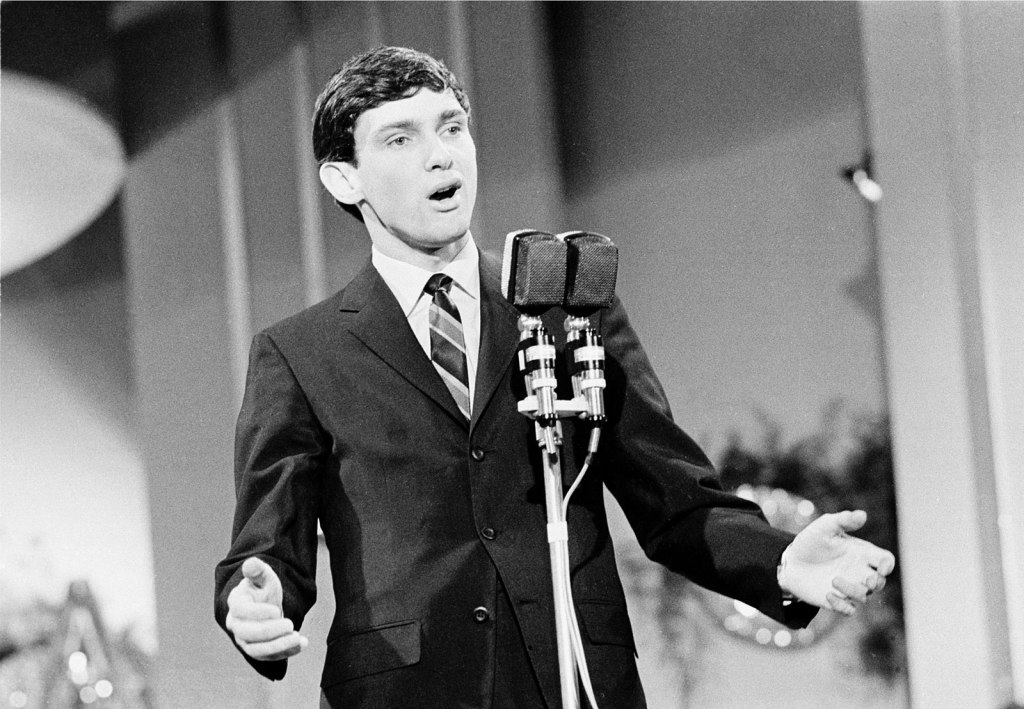
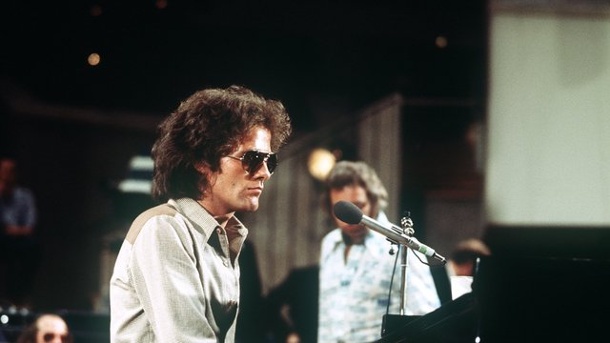
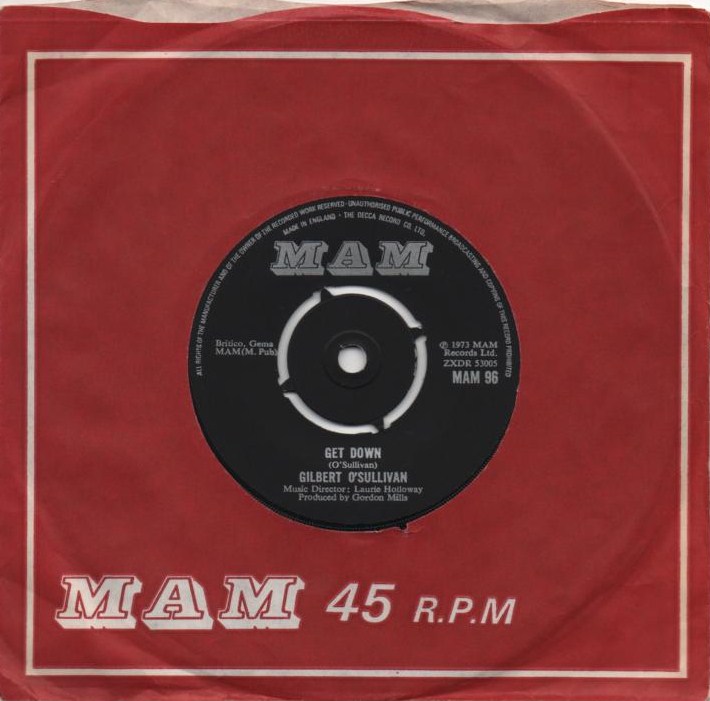
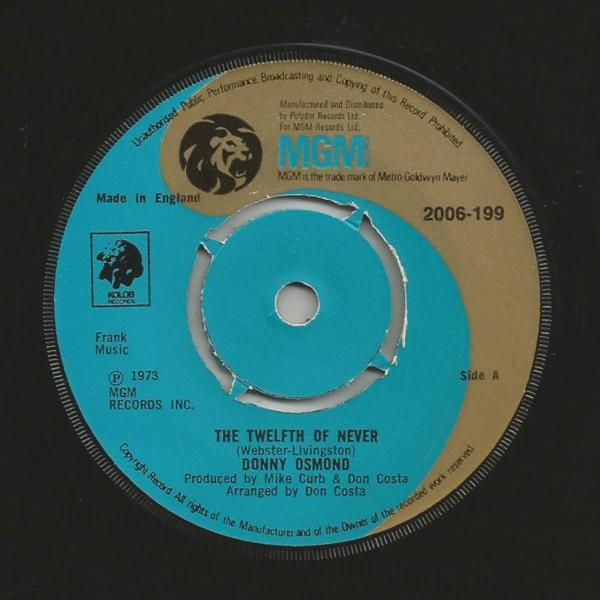
We last heard from Gilbert O’Sullivan on ‘Clair’, crooning about a little girl he babysat for. I didn’t think much of it. Not the worst chart-topper ever, but far from a classic. But this – his second and final #1 – this is more like it, Gilbert!
Get Down, by Gilbert O’ Sullivan (his 2nd and final #1)
2 weeks, from 1st – 15th April 1973
Straight from the off we are into a stomping, glam rock groove – imagine a T. rex ‘B’-side covered by early-ABBA – and my feet are tapping. I know this song, from somewhere I cannot quite place, and I’m enjoying it. Told you once before and I won’t tell you no more… Get down, get down, get down…
Like ‘Clair’, this is another song that isn’t about what you immediately think. Any song, released in the seventies, called ‘Get Down’, should be about dancing. About ‘getting on down’, as I believe they called it back then. But no, as the lyrics progress: You’re a bad dog baby, But I still want you around…
It can’t be, surely, you wonder… He can’t have followed up his hit single about childminding with a song about how much he dislikes his dog climbing on the furniture…? Except no, the plot thickens. There are layers upon layers. Keep your hands to yourself, I’m strictly out of bounds…
Now, dogs don’t have hands. Which leads me to deduce that his isn’t singing about a frisky dog, but an amorous lady! Gilbert is sorely tempted, and this has led him to feel like a cat on a hot tin roof. (Cats, now. Is this what’s called a mixed-metaphor…?) Whatever, this is a groovy little record that shimmys in and shimmys out, that makes the listener shake their hips and drop their shoulders. A perfect pop number one.
I’m not sure I love his schtick, though, this writing songs about things but making it sound like he’s singing about other things. I have a feeling that Gilbert O’ Sullivan thought he was being clever. (One of his greatest hits collections is titled ‘The Berry Vest of…’) Plus, we do have to ignore that he is comparing a woman – a woman that he likes, no less – to a dog. Which isn’t very gentlemanly.
Gilbert O’Sullivan enjoyed thirteen Top 20 hits in the UK during the seventies and very early eighties, which is not to be sniffed at. He still writes and records: in 2018 his 19th studio album reached #20 (I love the symmetry there). In 1972, believe it or not, he was the biggest selling male solo act of the year. Worldwide…! But I can’t help feeling he’s been pretty much forgotten, though, in the grand scheme of things. Can your average man in the street name either of Gilbert O’Sullivan’s chart-topping records? The fact that he’s still not consistently on platforms such as Spotify – again, ruining my #1s Blog playlist! – is either a cause, or a symptom, of this. ‘Get Down’, at least, is worth remembering and so, if you have never heard it before, you’ll have to enjoy it on YouTube for now. And look down there – a link! How’s about that. Enjoy.
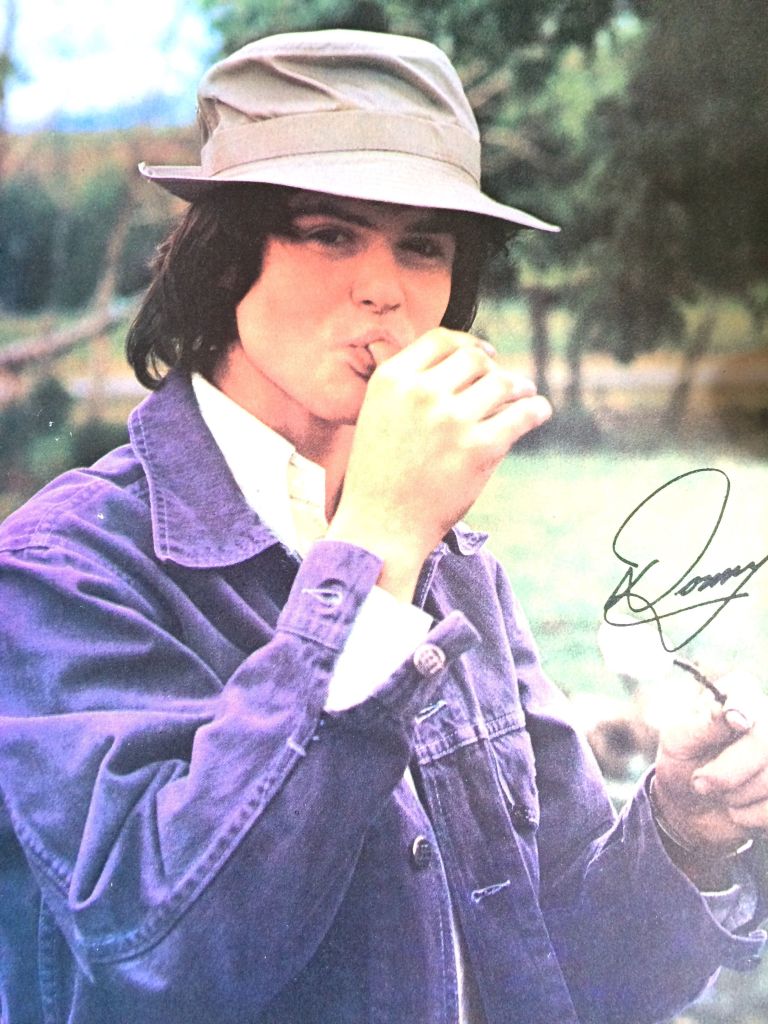
I press play on this, the second part of Donny Osmond’s chart-topping trilogy, and the first word that comes to mind is ‘syrupy’. Listening to this record’s intro is like being dropped head first into a vat of treacle, and trying to swim to safety…
The Twelfth of Never, by Donny Osmond (his 2nd of three #1s)
1 week, from 25th March – 1st April 1973
Second thing I notice is that lil’ Donny’s voice has broken. He’s become a man, or at least a proper teenager, and so, we wonder, will his music have grown up along with him? We last heard him chirping about his ‘Puppy Love’; is there any sign that Donny is pushing boundaries, experimenting on the lead single from his fifth (his fifth!) album?
No. If anything – and I have considered this statement very carefully – ‘The Twelfth of Never’ is worse than ‘Puppy Love’. (Meanwhile it makes his little brother Jimmy’s chart-topper sound genuinely enjoyable by comparison.) You ask how much I need you… Must I explain… I need you oh my darlin’, Like roses need rain… You really don’t need to hear any more of the lyrics to get the picture.
But, just in case you were enjoying it, he will love his girl until the roses don’t bloom, until the clover has lost its perfume, and until the poets have run out of rhyme… Until the twelfth of never, And that’s a long, long time… I’ll give this song one thing: it’s powerful. Certain songs make you sad, certain songs make you happy, certain songs make you nauseous. You can guess what category this one falls under…
I dunno. I feel a bit bad. He was only fifteen, and picking on this record feels a bit like taking candy from, well, a kid. I’m sure he was a nice young man, and your nan would certainly have approved (though she might have suggested a haircut), but Donny Osmond did release some utter shite. But then again, as I wrote in my post on ‘Puppy Love’, I am not and never have been a thirteen-year-old girl, and so am far, far away from being this song’s target audience.
‘The Twelfth of Never’, like ‘Puppy Love’, was a cover of an older hit. Johnny Mathis had released his version way back in 1956, and it is much less syrupy, almost gospel-ish. (Mathis, though, disliked the song and kept it as a ‘B’-side.) In the UK, Cliff Richard had had a #8 hit in 1964 with his own version…
Donny will have one last UK #1, coming up pretty soon, so brace yourselves. That one is interesting as it is not just a cover of an oldie, but a cover of an oldie that has already topped the charts! Until then, I need a glass of water and a ‘Rennies’…
Into 1973 with a hop, skip and a jump, and a question. Can a song that begins with an air-raid siren ever be anything less than brilliant?
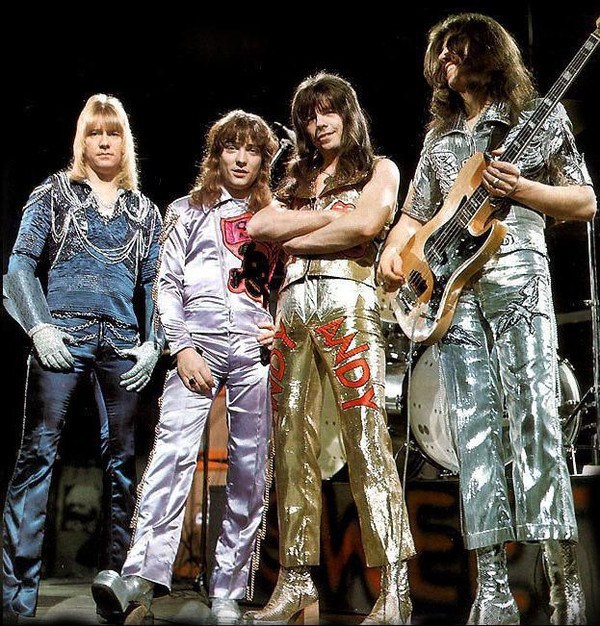
Block Buster!, by The Sweet (their 1st and only #1)
5 weeks, from 21st January – 25th February 1973
1973 is going to be the year in which glam rock peaks. Scanning down the list of #1s for the coming year, ten of the seventeen chart-toppers are glam. And we kick it all off with a classic of the genre. Air-raid siren, riff, drums, Ah-Aaaaaaah-Ah-Aaaaaaaaah!
You better beware, You better take care, You better watch out if you’ve got long black hair… Night falls, and Buster is about. Who, or what, Buster is is never established, but he’s dangerous. And he’s coming for you… Nobody knows, Where Buster goes, He’ll steal your woman out from under your nose…
The lyrics are dumb, but at the same time, were they delivered less theatrically, they’d be terrifying. There’s every chance that Buster is a serial killer. Does anyone know the way, Did we hear someone say…? And then the best bit of a great record – the squealed: We just haven’t got a clue what to do! Does anyone know the way to block Buster? Probably not. Even the police can’t do anything.
As a title, ‘Block Buster!’ is great. It grabs the attention as much as the air-raid siren. ‘Here’s the blockbuster new record from Sweet, called ‘Block Buster!’ That sounds fun. But then there’s the play on the term in ‘blocking’ the eponymous villain of the piece, the one with the disc-eyes and the taste in dark-haired women. It’s a clever record, underneath all the silliness.
It’s also a great rocking record. The bluesy riff raised some eyebrows at the time as it sounded a lot like David Bowie’s very recent hit ‘The Jean Genie’. Sweet knew this, considered it, and put their record out anyway. ‘The Jean Genie’ had sat at #2, behind Little Jimmy Osmond of all people, meaning Bowie will have to wait a while longer for his first chart-topper. My only complaint about ‘Block Buster!’ is that the guitar, the drums, the whole production, could have a little more oomph to it. Imagine this tune, played on Marc Bolan’s crunchy Les Paul…
But I’m knit-picking. This is not a quiet record; it has everything thrown into the mix, including the kitchen sink. Screaming, reverbing chords, huge drums, and a frenzied, chanted finish: Buster, Buster, Block Buster! It’s dumb, it’s zany, it’s brilliant. It’s somehow the Sweet’s only #1 single. Their two other 1973 singles peaked at #2, and are even better than ‘Block Buster!’ – the near garage rock of ‘Hell Raiser’ and the brilliant glitter-stomp of ‘The Ballroom Blitz’.
Sweet, like most glam rock acts, saw their chart fortunes plummet around 1976. They reacted to this by going heavier and more experimental. In the eighties, different band members toured with their own versions of the band. Lead singer Brian Connolly struggled with alcohol addiction, and died in 1997. Drummer Mick Tucker died a few years later and bassist Steve Priest passed away just a few weeks ago. We’ll leave them here, on our journey through the years, but, if you’re only going to score one number one single, then you better make it a good one. Like this. 1973 is off to a cracking start!
I do love T. Rex, and having their 4 number one’s crop up in my countdown has cemented how brilliant they were, how fun it must have been to be around for Marc Bolan’s short-lived explosion into the biggest pop supernova on the planet.
But two of those #1s don’t even make my Top 10… Yes, this is my Top 10 and mine alone, picked for personal preference just as much as musical brilliance.
First up the rules. Well, the ‘rule’, singular… To qualify for my Top 10, the song has to have been released and to have charted on the UK singles chart. No album tracks, or ‘B’-sides, no ‘Mambo Sun’, or ‘Thunderwing’. Enjoy…
10. ‘One Inch Rock’, reached #28 in 1968 (and #7 on re-release in 1972)
I am well aware that this is not Marc Bolan’s and T. Rex’s tenth-best song, but on a personal level this takes me back to being a kid and singing along in the backseat. Somehow it had ended up on a cheapo ‘Best of the 60s’ cassette. My brother and I found the line ‘I’m kinda hard cos I’m one inch tall’ hilarious… Except it’s ‘I got the horrors cos I’m one inch tall’, and it’s not the only lyric you might struggle to make out.
Released when they were still ‘Tyrannosaurus Rex’ and more of a folk-duo, with Bolan joined by the brilliantly named Steve Peregrin Took, it sets the tone for much of T. Rex’s lyrical output while sounding unlike anything they would release in their heyday. On the one hand it is a song about being one-inch tall; on the other it is about being under the influence of some very strong hallucinogenics.
9. ‘New York City’, reached #15 in 1975
Did you ever see a woman, Coming out of New York City, With a frog in her hand…? Why no, Marc, can’t say I ever did. (Though apparently this one was genuinely inspired by Bolan seeing a woman, in New York, walking down the street while holding a frog…) While I wish I could have included more of T. Rex’s mid seventies singles, the truth is they just can’t compete with the ones further down this list. However, this one just about manages holds its own. That intro, sounding like a cartoon super-villain warming up his death-ray, twinned with a honky-tonk piano, is brilliant. Add the performance above, complete with a man in a giant-frog suit, and you have my 9th favourite T. Rex single.
8. ‘Children of the Revolution’, reached #2 in 1972
A grinding, almost menacing, riff that lumbers its way through a song that I want to love more than I do… I don’t know, I just think it lacks a little of their other hits’ joie de vivre. This one makes number 8, though, because it includes Bolan’s Bolanest lyric: I drive a Rolls-Royce, Cos it’s good for my voice… That, my friends, is rock ‘n’ roll, right there.
7. ‘Get It On’, reached #1 in 1971
A sexy riff for a sexy song about sex. Not much more needs written about one of their most-recognisable hits, but if you want to know more my original post is here. As much as I love it, I always think this song could have been chunkier… Know what I mean? Anyway, it gave them their biggest hit in the US, and you may recognise the keyboard player in the video above…
6. ‘Teenage Dream’, reached #13 in 1974
The epic, operatic, pinnacle of Marc Bolan’s genius… Or the sound of him disappearing up his own arse? Opinions are split, but I’d sway towards to the former. In amongst all the bizarre imagery, I think it’s Bolan’s lament towards the fame and adulation that was slipping away from him. He claimed ‘Teenage Dream’ as his finest lyric, and who am I to argue? The single version is already five minutes long, and the video above has an added minute of guitar trickery tagged on. Because, why not?
5. ‘Ride a White Swan’, reached #2 in 1971
The breakthrough hit for ‘T. Rex’ the glam rock icons. The lyrics still referenced the people of the Beltane and looking like a druid in the olde days… But the guitar was electric and funky and T. Rex was a-go. Years later, Bolan would perform this hit while literally riding a giant white swan. Which is brilliant…
4. ‘The Groover’, reached #4 in 1973
Dripping with attitude, and a punky, metal-ish riff, this was T. Rex’s last UK Top 10 hit. It starts off with the band’s name as a chant – T. R. E. Exxxxxx – with Marc going on to tell us just how brilliant he is. Some name me stud (yes they do…) We know he ain’t tame, and we call him the groover etc etc. Sing it to me children… It’s a middle finger to everyone who might claim that T. rex’s music was repetitive and reductive; in the form of yet another gloriously simple, repetitive T. Rex hit.
3. ‘Jeepster’, reached #2 in 1971
Fun fact: this was released against Bolan’s permission, as their final single on the Fly label. But let’s just be glad they did. Not for the first time, or the last, Marc is comparing his woman to a car. But also, he’s a car. A Jeepster for her love… Everyone’s a car! What is a simple enough, rockabilly number transforms towards the end when he announces that he is also a vampire for her love, and that he’s gonna suck ya! Oh my…
2. ‘Metal Guru’, reached #1 in 1972
T. Rex’s best #1 single – read my original post here – and a record that soars. ‘It is a festival of life song’, Marc said. ‘I believe in God, but have no religion.’ By the time this reached the top of the charts T. Rex were approaching God-like status themselves in the UK, and this was probably their pinnacle. The performance above is a bit ropey, but the brilliance of the song shines through. Why Noel Edmonds is dressed like Robin Hood, however, remains a mystery…
1. ’20th Century Boy’, reached #3 in 1973
‘One Inch Rock’, back at the start of this list, is my earliest memory of T. Rex, before I knew what they were. Hearing ’20th Century Boy’ as a nine or ten year-old was the moment I sat up and said ‘Hello, what is this?’ I don’t think its overstating things to say that the two crunching chords right at the start here is one of the most thrilling moments in rock music, ever… It’s heavier than a lot of T. Rex’s stuff – the guitar sounds more like a chainsaw – and the performance above is even heavier than the recorded version. It’s a brutal, stripping down of glam rock to its essence: power chords and slightly ambiguous lyrics… He wants to be a toy, to a boy, a boy-toy…?
Phew. That was fun. Up next, we launch head first into 1973!
Hot on the heels of Chuck Berry’s smut-fest ‘My Ding-A-Ling’ comes another Christmas novelty, and 1972’s festive #1. Two novelty chart-toppers in a row! Aren’t we the lucky listeners…?
Long Haired Lover From Liverpool, by Little Jimmy Osmond (his 1st and only #1)
5 weeks, from 17th December 1972 – 21st January 1973
Actually no. We are not. For everything that ‘My Ding-A-Ling’ got right, ‘Long Haired Lover From Liverpool’ gets wrong… It’s not funny, it’s not subversive, it’s not got a bawdy bone in its body. It’s a nine-year-old boy singing a music hall ditty, and it is intensely, painfully, terrifyingly catchy.
I first listened to it a few days ago, after finishing my previous post, and it has been lodged in my brain ever since. I’ll… Be… Your… Long-haired lover from Liverpool, And I’ll do anything you say… Was Little Jimmy Osmond from Liverpool? No, obviously not. They were Mormons from Ogden, Utah. Had he ever been to Liverpool? Doubtful. But he’ll say he is, and that he has, for his sunshine daisy from LA…
He’ll also be her leprechaun sitting on a toadstool, her clown, her puppet, her April Fool… Anything she asks, as long as she’s his sunshine daisy from LA… You have to wonder if Little Jimmy had any idea what the hell he was singing. But he does it like a pro, like the youngest son from a family steeped in showbiz. Before I’d even seen any pictures of him, I could picture his cheeky grin and chubby cheeks. His voice is ear-piercingly high, especially on the title line, but then I suppose nine-year-old’s voices usually are.
It’s strange. On the one hand I am aware that this is a genuinely heinous piece of music. Meanwhile the other hand is tapping along happily. But lo! Suddenly, just past the two-minute mark, the song fades. Finished. I like to think that the sound engineer just couldn’t take it anymore and slid the volume dial down, while Jimmy and his band kept going for another three minutes, unaware…
‘Long Haired Lover From Liverpool’ had been written and recorded a few years earlier, by a Christopher Kingsley, and played on local radio. That’s where Mother Osmond heard the song and thought it would be perfect for her Jimmy. And it was – Osmond mania was sweeping the world in late ‘72. Little Jimmy was, apparently, particularly huge in Japan. We’ve had one Osmond at the top of the charts already this year, and I have to admit that I’d choose ‘Long Haired Lover From Liverpool’ over Donny’s ‘Puppy Love’ any day of the week.
At nine years and eight months old Jimmy Osmond was – and still is – the youngest artist to be credited with a UK #1 single. (Though younger children have featured on #1s, without getting a credit… more on that anon.)
And that’s that for 1972. What a strange year for chart-toppers! Some have been era-defining, others have been heart-breaking, while some have been hilarious. And a few have just been really, really bad. Roll on 1973!
And so we come to our alma mater. We must do our alma mater…
My Ding-a-Ling, by Chuck Berry (his 1st and only #1)
4 weeks, from 19th November – 17th December 1972
Come along one and all, for the touching tale of a young boy and his favourite childhood toy: When I was, A little bitty boy, My grandmother bought me a cute little toy…Silver bells, Hanging on a string, She told me it was my ding-a-ling-a-ling…
In this live-est of live number ones, the audience sing approximately half of the song. The girls in the audience give us My… While the boys give us Ding-a-Ling! Girls: I want you to play with my… Boys: Ding-a-Ling! While Chuck croons his encouragement: Beautiful! I think it’s a beautiful little song, really I do…
Mum takes the boy to grammar school, but he stops off in the vestibule. (Find me, if you can, another #1 single that includes the word ‘vestibule’.) Every time that bell would ring, Catch me playing with my ding-a-ling-a-ling… Life brings along many trials and tribulations for the hero of the piece but first and foremost, no matter the danger, the lad looks after his prized possession. Climbing the garden wall, swimming across Turtle Creek… All the while holding onto his ding-a-ling. You can guess where every verse is going after the first line; but that’s the beauty of it. Like all lame jokes you can see it coming a mile off, bounding over the horizon like a big dumb dog.
And Chuck Berry’s enthusiasm for this silliest of silly songs really helps to sell it. The spoken asides – the two girls singing in harmony, the guy singing in rhyme (that’s alright, brother, you gotta right baby) – are the best bits. In an extended version that runs to well over eleven minutes, Berry can be heard briefing the audience on how to sing. It is complete end-of-the-pier, pantomime smut, with lines like: We’ll teach the boy’s first, cos they’ve only got one part… (You notice how the boy’s part starts rising right there?)… Now boys you gotta come in strong with your ding-a-lings… It’s a very funny listen – those aren’t even the dirtiest bits – if your sense of humour is as underdeveloped as mine… When it comes to the verse dedicated to those who will not sing, the glee in Berry’s voice as he changes the lyrics to Your ding-a-ling, Your ding-a-ling, We saw you playin’ with your ding-a-ling…! is unmistakeable.
I’ve been looking forward to writing about ‘My Ding-A-Ling’ ever since I started this blog. For a start, it’s Chuck Berry finally getting a #1 single. He, more than any other artist, is rock ‘n’ roll. He’d only had one (1!) Top 20 hit in the fifties – ‘Sweet Little Sixteen’, which peaked at #16! In the sixties, when his influence on beat bands became evident, he started hitting the top 10 with discs like ‘No Particular Place to Go’. By 1972, though, he was a veteran; a legacy act. This had been recorded in February, at the Lanchester Arts Festival in Coventry, and was belatedly pushed as a single by a radio station in Boston.
The other reason I’d been looking forward to writing about this record? The controversy, of course. Radio stations refused to play it (duh). Not that there’s anything wrong with the lyrics on face-value, but the fun that Chuck and the audience are having singing along like drunks at closing time means that even the most innocent of minds can get in on the innuendo. Mary Whitehouse, last seen campaigning against Alice Cooper’s ‘School’s Out’, claimed that whole classes of young boys across the nation were lowering their trousers, ‘singing the song and giving it the indecent interpretation… that is so obvious.’ Which, if they weren’t doing before Mary made this claim; they certainly were afterwards.
This tune had been around for a long time, since the 19th century in fact, in the form of the American folk number ‘Little Brown Jug’. It was first recorded as ‘My Ding-a-Ling’ by Dave Bartholomew in 1952, and if you thought Berry’s version was bawdy then you’re in for a treat with the original (sample lyric: When you’re young and on the go, Your ding-a-ling won’t ever get sore…)
There are a lot of people who think of it as sacrilege that this was Chuck Berry’s biggest hit. Which I understand, on one level. But, at least it’s fun. Compare and contrast with Eddie Cochran – another rock ‘n’ roller who, after genre-defining hits like ‘Summertime Blues’ and ‘C’mon Everybody’ reached #1 with the soppy ‘Three Steps to Heaven’. Plus, he was dead. Chuck Berry had decades of playing with his ding-a-ling to come after this (though, given some of the allegations made against him over the years that might not be the best way to phrase it). He died in 2017, aged ninety.
To conclude, then. This may be puerile, and silly. It may not be anywhere near as momentous a record as ‘Johnny B. Goode’, or ‘Rock ‘n’ Roll Music’, or ‘Maybelline’, or hundreds of Chuck Berry’s earlier hits. But I love it for what it is. Somehow, some way, ‘My Ding-A-Ling’ is every bit as rock ‘n’ roll as his classic hits.
For the first time in three hundred and twenty-two #1 singles… I find one that is not on Spotify. At least not in my ‘region’. I realise that this may be of no interest to anyone but me, but damn it if it hasn’t ruined the #1s Blog Playlist I attach at the foot of every post!
Clair, by Gilbert O’Sullivan (his 1st of two #1s)
2 weeks, from 5th – 19th November 1972
Actually, the fact that this isn’t on Spotify might be quite telling. Spotify might be on to something… Let me explain. First up, we have whistling. Whistling in pop records rarely leads to good things. (There are notable exceptions, I will admit, but still.) Clair, The moment I met you, I swear, I felt as if something somewhere, Had happened to me… The tune is jaunty but bittersweet, the production very soft-focus. It’s easy-listening – the softest of seventies soft-rock.
Who is Clair? Must be his girlfriend, right? A guy called Gilbert writes a song about a girl called Clair. Words mean so little, When you look up and smile… Yadda-yadda-yadda… I don’t care what people say to me, You’re more than a child… Wait a second. Plot twist. Why in spite of our age difference, Do I cry, Each time I leave you…
Ah… she’s his daughter. Which kind of excuses the cutesy shlock factor. He’s written a love song to his daughter. Aw… But no. The mystery of ‘Clair’ continues to unravel. Nothing means more to me than hearing you say, I’m going to marry you, Will you marry me Uncle Ray…? What now? Who’s Uncle Ray?? I give up, and resort to Wiki.
Where I discover that ‘Clair’ was the child of O’Sullivan’s producer, and Ray is Gilbert. He would sometimes babysit his friend/producer’s daughter. He has written a chart-topping single about a child he sometimes babysat for. Process that over the horrible harmonica solo…
It’s clever, I guess. It’s like a murder-mystery novel that keeps you guessing till the end. And it ends with a flourish – I quite like the lines in the final verse in which he’s trying to put Clair to bed: Get back into bed, Can’t you see that it’s late, No you can’t have a drink… It’s quite modern, like today’s beanie-hat wearing singer-songwriters picking lyrics out of the mundane. If Tom Walker wrote a song about babysitting, it might sound a bit like ‘Clair’.
But the final verse can’t redeem the song as a whole. It’s pretty terrible (and crucially, if you miss the bit about babysitting, it sounds super, super creepy…) And just to rubber-stamp this song’s terribleness, the real-life Clair giggles on the final note, like a doll in a horror movie. Oh Clair…
Gilbert (Raymond) O’Sullivan – I assume that he was going for a pun on ‘Gilbert & Sullivan’ with his stage name? – is an Irish singer-songwriter who had been scoring hits since a couple of years before his first #1. ‘Alone Again (Naturally)’ had been his biggest hit earlier in the year: a #3 in the UK and huge #1 on the Billboard 100. He’ll have one more chart-topper in early ’73, with a song I already know and that I can confirm is much better than this.
One final note: ‘Clair’ was at #1 for the twentieth anniversary of the UK Singles Chart. We have covered two decades’ worth of chart-topping singles, plus a diversion or two, in just over two and a half years, since my first post on Al Martino’s ‘Here in My Heart’! Well done to everyone who has been keeping up!
I’ve heard of this song before – for better or for worse – but don’t think I’d ever heard it, in full, until now. And boy, is it strange…
Mouldy Old Dough, by Lieutenant Pigeon (their 1st and only #1)
4 weeks, from 8th October – 5th November 1972
It starts with a military drum beat, and for a second I’m worried that we’re getting 1972’s second pipes ‘n’ drums #1 single. Then we get a flute, and I’m picturing an orange march. Then we get a boozy, woozy, synthesised rock ‘n’ roll piano, and we’re in a crowded German beerhall.
Two immediate points of reference jump out at me. There’s Chicory Tip’s similarly stomping ‘Son of My Father’ from a few months back. And then there’s the work of Joe Meek a decade ago: The Tornados, and ‘Have I the Right?’ and so on. There’s a lot of similarities there, but they don’t fully explain what the hell is going on here.
‘Mouldy Old Dough’ is an instrumental, save for the title being growled by what sounds like a very old man with no teeth. Apparently the line Dirty old man… is also buried in there, deep within the soupy mix, but I can’t make it out. It is so rough and ready, this record. It sounds like an old demo that was burnt, buried in a shallow grave, then dug up years later, released and sent to the top of the charts…
Have you ever eaten durian? It’s a huge spiky fruit, really popular in south-east Asia, with a smell somewhere between sweaty socks and rotten onions. Apparently, though, if you can get past the stench the actual flesh of the fruit is quite nice. I’ve never been able to get past the stink but feel that ‘Mouldy Old Dough’ might be the durian fruit of #1 singles. Get past your initial doubts and reservations, your initial what the hell?, and by the third or fourth listen you start to find something charming buried deep within its relentless, plodding, churning beat.
The backstory of Lieutenant Pigeon only adds to the record’s charm. They were an experimental band from Coventry, fronted by Rob Woodward, and featuring his mum, Hilda, on piano. She’s basically the star of this record, as it’s her melancholy piano line that holds it all together. ‘Mouldy Old Dough’ was recorded in their living room (what I mistook for synths is just poor sound insulation!) When asked what it was all about, Rob admitted that he had no idea… Despite being the composer. Honest. I like it. The follow-up to this, ‘Desperate Dan’, made #17 and after that the charts were a Pigeon-free zone… The Woodwards are still the only mother and son combo to ever top the UK singles chart.
And isn’t that nice? Lieutenant Pigeon still record and release music to this day, mainly online, while Hilda died twenty years back. She was fifty-eight when this record hit the top of the charts, and she’s still in the Top 10 oldest people to feature on a number one single. By the end the marching beat has transformed into a glam-rock stomp as we fade out. As weird as this record sounds – and it does sounds pretty darn weird – it still somehow fits in with the styles of the time…
Unluckily for David Cassidy, I arrive at his first UK chart-topper – ‘How Can I Be Sure’ – and instantly think of Dusty Springfield’s version of the same song. It’s a version that I’ve known for years, and it puts young Cassidy at a bit of a disadvantage…
How Can I Be Sure, by David Cassidy (his 1st of two #1s)
2 weeks, from 24th September – 8th October 1972
…for which singer would want to be compared against Dusty? But hey. I’ll try to keep an open mind. This version opens a little gently: echoing guitars backed by an annoying ting – like a typewriter reaching the end of a line – before settling into a French accordion’s sway. Whenever I, Whenever I am away from you… I wanna die, Because you know I wanna stay with you…
Dramatic, right? Except this record never quite reaches the levels needed to sell the lyrics. How can I be sure? I really, really, really, really wanna know… He loves someone, but is overcome with self-doubt. Do they really love him back? How can he ever know? And that’s before you add in the ‘alibi’, who’s going around spreading nasty rumours about him… It’s just a shame that he sings it, for the most part, in a crooning style, never really letting loose. He sings it nicely, and enunciates his words wonderfully, but I’m not sold.
At least it’s not too sickly saccharine. I still have the aftertaste of ‘Puppy Love’ in the back of my throat… In my mind (and remember this all came a decade before I was born), Cassidy was the main rival of Donny Osmond, with the two pre-eminent teen-idols of the day competing to see who had the whitest smile and the most perfectly set hair. Both came from a showbiz family too, though Cassidy’s was the made-for-TV ‘Partridge Family’. In reality, Cassidy was a decade older than Osmond, so they would surely have been competing for different audiences, and by 1972 he had been photographed nude on the cover of ‘Rolling Stone’ by Annie Liebovitz and had been reported to have taken – shock horror – recreational drugs.
So, David 1 Donny 0, if indeed it was a competition at all. You would, after all, have to go to some lengths to make a worse record than ‘Puppy Love’. At the same time, I’m struggling to have a strong opinion on this song. It’s fine. It’s nice enough. It’s no Dusty. It’s the perfect proof of a truly great singer, when they can take lyrics that sound a little trite in the voice of another, and give them meaning… But I do like the ending here, as the lines How can I, How can I, How can I… tumble and cascade over one another, like a wonky soundtrack in a circus big-top.
‘How Can I Be Sure’ had been around for a few years by the time David Cassidy recorded his version. It was originally a hit for The Young Rascals in 1967 – their version is meh – before Dusty in 1970 and David two years after that. And we’ll hold off on a full Cassidy bio, as he has another #1 to come in a year or so. Though, I have to admit that, until a few seconds ago, I had no idea that he passed away a few years ago…
In which Rod Stewart scores his second number one single, by releasing a song that sounds suspiciously like his first. I mean, ‘Maggie May’ had been such a huge hit, his now-signature song, that you can’t blame him for trying to re-bottle lightning.
You Wear It Well, by Rod Stewart (his 2nd of six #1s)
1 week, from 27th August – 3rd September 1972
Not that it’s a rip-off (can you even rip-off your own song?), but it’s similar enough to sound like an off-cut from the same recording session. The intro meanders, as it did in ‘Maggie May’, before two drumbeats – dun dun – signify that we’re ready for the song proper to get underway.
I had nothing to do, On this hot afternoon, But to settle down and write you a line… Rod’s reminiscing about a woman he once loved. Who knows, maybe it’s Maggie…? He’s been meaning to call her, but thinks a handwritten letter would tug the old heartstrings a bit more effectively. You wear it well, A little old fashioned but that’s alright…
He reminisces about basement parties, her radical views, a birthday gown he bought her in town… Then he lays on the charm: Madame Onassis got nothing on you… It’s another wordy ballad, a little more electric than acoustic this time, while the fiddle from ‘Reason to Believe’ – the flip-side of his first #1 – makes another appearance to add some homespun charm. To be honest, I’m struggling to get into ‘You Wear It Well’. It’s a bit plodding, and the words sometimes get lost in the mix.
When you look the lyrics up, though, you see that there are some nice touches. The fact that he didn’t call because he’s in Minnesota and, y’know, that’d be a bit pricey, and the line: My coffee’s gone cold and I’m getting told, That I gotta go back to work… While at the end Rod hopes that she’s still at the same address. It’s not a record without charm; you just have to give it a few listens and dig a little deeper to find it.
But, you’d have to admit that if he had been trying to recapture the magic of his debut chart-topper then he’s not quite managed it. It’s strange to think that of all Rod Stewart’s big seventies hits which didn’t make the top of the charts – ‘You’re In My Heart’, ‘Tonight’s the Night’, ‘Hot Legs’ – ‘You Wear It Well’ did.
A short post, then. A nice enough song, and a nice enough addition to 1972’s parade of chart-toppers. It seems that to hit #1 in the summer of ’72 your record either had to be glammed up to the eyeballs, soppy teenybopper fluff, or an acoustic ballad. Let’s spin the tombola and see what pops up next…!