Back for another pop at the top, the teen idol of the mid-seventies, and as far as I’m aware the only chart-topping star named after an English county… David Essex!
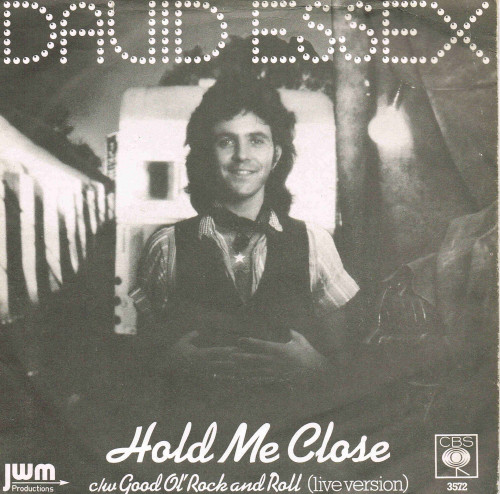
Hold Me Close, by David Essex (his 2nd and final #1)
3 weeks, from 28th September – 19th October 1975
When I wrote about his first #1, ‘Gonna Make You a Star’, I mentioned that he wasn’t very comfortable with the teeny-bopper tag. In fact, it’s what that whole song was about. A year on, however, I’m tempted to think he’s rolled his eyes, shrugged his shoulders, given in and hopped on the pure pop bandwagon.
Hold me close, Don’t let me go, Oh no… I, Yes I love you and I fink that you know… He’s kept the cockney accent; in fact he might be playing it up here more than ever. Wiv your love loight, shi-nin’… It kind of reminds me of Dick Van Dyke in ‘Mary Poppins’, even though David Essex was genuinely from east London, and I can imagine him gurning in the corny, deliberate pauses between words. It also reminds me, somehow, of Sid Vicious’s poppy covers, ‘My Way’ and the like, though a much more PG rated version.
It’s a fun pop song, and catchy as hell. If it were an animal it would be a huge, slobbering St. Bernard, just looking for a cuddle. The perky riff flirts with becoming irritating, but just about gets away with it, while the song could have a good minute shaved off its runtime and nobody would notice. It was a deliberate choice to make a single as commercial as this to be the follow up to #5 hit ‘Rolling Stone’, which was a bit more out there.
I don’t really have much more to say about this one. It’s catchy, and simple. A solid pop single. In time, David Essex would move more into acting, although he was scoring the odd Top 10 hit well into the eighties. He has starred in various West End productions, including ‘Evita’ and ‘Tommy’, and featured heavily on Jeff Wayne’s ‘War of the Worlds’ concept album (Wayne also produced both of Essex’s chart-toppers.) He still performs, and acts, and has confirmed his place in cockney legend by appearing in ‘EastEnders’, and by having a model of himself in the West Ham United museum.
Ladies and Gentlemen, Welcome aboard Coconut Airlines… It’s August ’75, and we’re spending the summer in the Caribbean.
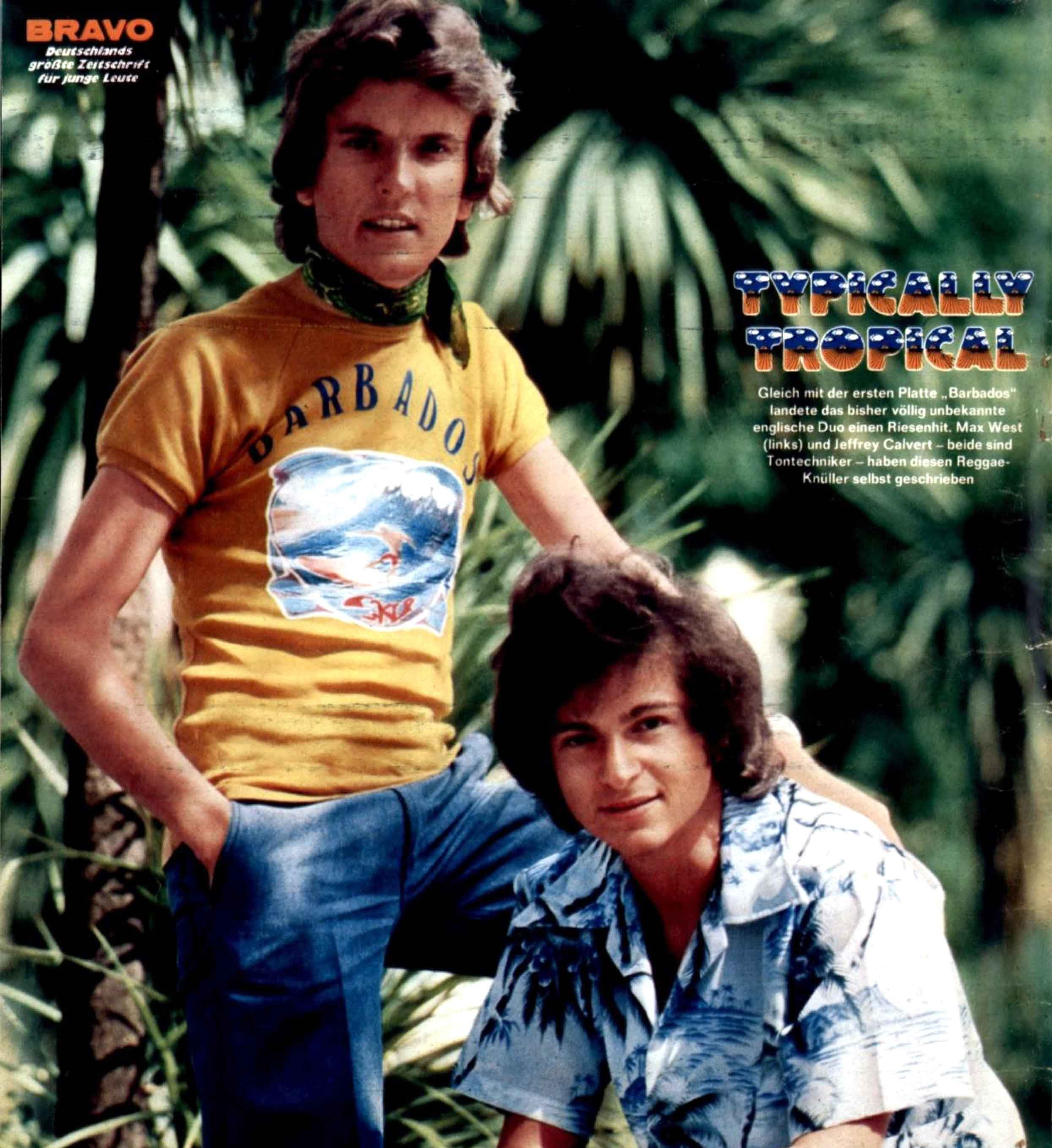
Barbados, by Typically Tropical (their 1st and only #1)
1 week, from 3rd – 10th August 1975
‘Captain Tobias Wilcock’ delivers a pretty convincing pre-flight welcome, detailing our cruising altitude and speed, sounding just like what you might hear if you stepped on a plane today. Until he reminds us to refrain from smoking until the aircraft is airborne… that is. Ah, the seventies.
Woah, I’m going to Barbados, Woah, Back to the palm trees… Let’s address the elephant in the room before going any further. We’ve got two white guys, one of whom is giving us a heavy Caribbean accent (ah, the seventies…) I’m going to see my girlfriend, In the sunny Caribbean sea…
London’s rainy, Brixton’s a mess: it’s time to go home. ‘Barbados’ is one of the first ‘summer holiday’ hits – not a song about summer (we’ve had plenty of them); more a song that sums up the summer holiday feeling – the escape from the daily grind to a world of sun and cocktails. A song that wouldn’t hit #1 at any other time of year. (The ‘90s will be the peak of this phenomenon, when record buyers will send one cheesy Europop record after another to the top of the charts.)
However, the singer doesn’t seem to have much intention of coming back from Barbados. Maybe he’s there to stay. Maybe this isn’t a holiday hit at all! The fact his girlfriend is called ‘Mary Jane’ adds another layer to it… Maybe he’s just high as a kite? Layers upon layers… The song itself is catchy – I like the twiddly synth riff – but very disposable. By the end, the cabin crew have taken over again, preparing us for landing: The weather is fine, with a maximum temperature of ninety degrees Fahrenheit… Sounds lovely!
If time and space permitted, I might make more of social commentary on the growing accessibility of foreign travel in the 1970s, and the growing impact of the Windrush generation on British culture. Plus, there’s this decade’s clear and undying love for a novelty single. All of which culminate in a week at the top for Typically Tropical, who were two Trojan Records engineers, Jeff Calvert and Max West, stepping out from behind their mixing desks to record this single. It is a 100% certified one-hit wonder: none of their later singles charted at all.
I knew this song as a teen, as ‘We’re Going to Eat Pizza’… sorry… ‘We’re Going to Ibiza’, in which it was neither sampled nor covered, more reimagined, by one of those Euro-cheese acts I mentioned earlier: The Vengaboys. I’m not linking to it, though, as we’ll be meeting it atop the charts in twenty-four years.
Finally, it’s worth mentioning that yet again this is a record completely absent from Spotify. It’s interesting to observe that it wasn’t until 1972 that I encountered this problem. All those pre-rock ‘n’ roll #1s that nobody has listened to in decades were all present and correct, but several big hits from the mid-seventies aren’t. Not sure what point I want to make, but it’s definitely something to note.
(Isn’t this the perfect song for my first post of January 2021?) Back in 1975, making it to the top just in time, with five days to spare: ‘January’, by Pilot. (And don’t think I didn’t notice the perfect coincidence of our first month-themed #1 also being chart-topper #365.)
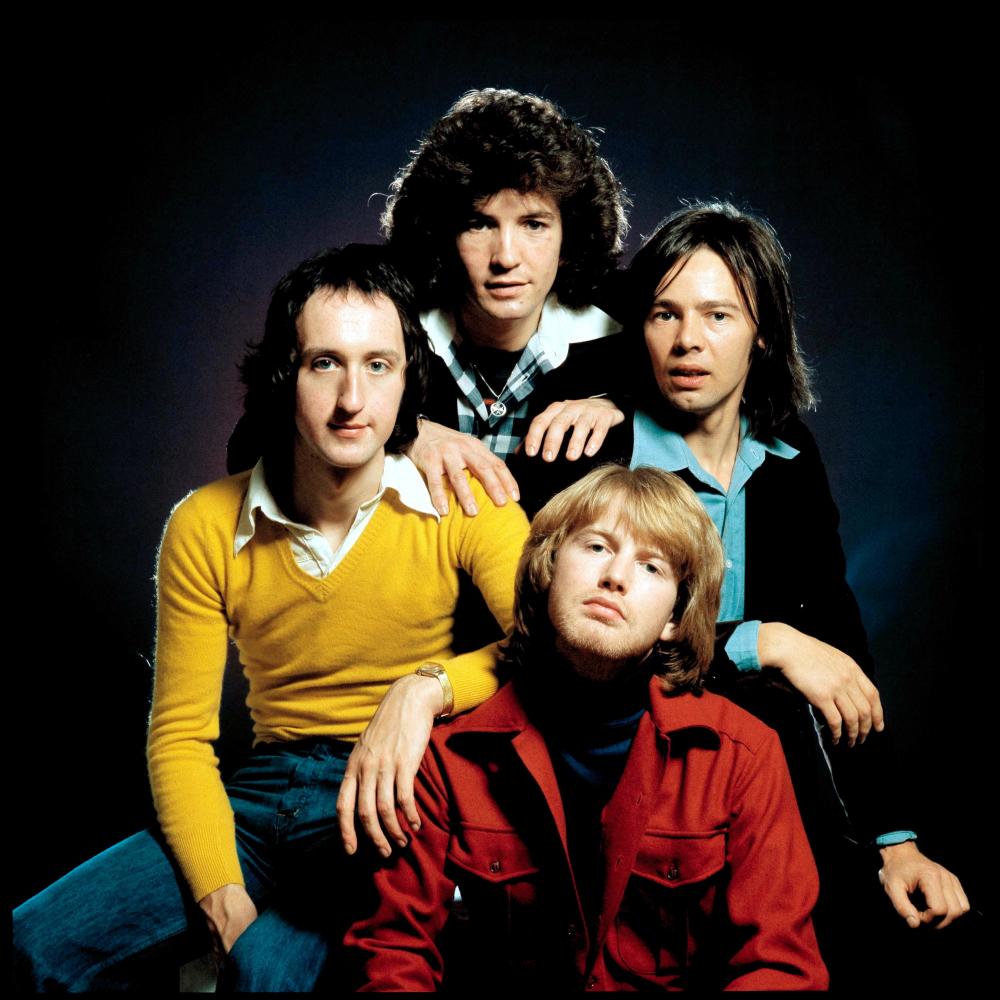
January, by Pilot (their 1st and only #1)
3 weeks, from 26th January – 16th February 1975
For the first time in what feels like an age, we have some glam rock in the top spot. I make this the first glam #1 since Gary Glitter’s ‘Always Yours’ in June last year. (Was David Essex’s ‘Gonna Make You a Star’ glam…? A question for the ages, but I’m going to err on the ‘no’ side.) Not that ‘January’ is all that glam. We’re not suddenly back in mid-1972, alas. But there are handclaps, for a start. And some flamboyant guitar flourishes.
It also qualifies as glam, for me, because of its nonsensical lyrics. January, Sick and tired you’ve been hanging on me… (Respect to Pilot here, for having the audacity to rhyme ‘January’ with ‘hanging on me’) You make me sad with your eyes, You’re telling me lies… Anyone who’s lived through a British January – and Pilot were Scottish, which means they’d have known some truly miserable Januarys – can sympathise.
I think the singer just wants the summer to hurry up and arrive: Sun, Like a fire, Carry on, Don’t be gone… But then there are ways he humanises this calendar month – January, Don’t be cold, Don’t be angry with me… – that make me think ‘January’ might be a lover. Then there are lines like: You’ll be facin’ the world…! You’ll be chasin’ the world… that don’t fit either narrative.
What we have here, probably, is nothing more than a catchy pop song with some lyrics arranged semi-coherently. The Noel Gallagher method of songwriting, you might call it… Pop at its disposable best. There’s a hook, a beat to tap your feet to, and a chorus that’ll stay in your head for a while. And sometimes that’s enough.
Pilot were from Edinburgh, and ‘January’ was the follow-up to the (much better, and definitely 100% glam) ‘Magic’. That, amazingly, had only made #11 late in ’74, but I’d suggest that this chart-topper was riding the wave created by that earlier hit. They had a few other, smaller hits, and lasted three albums, before splitting. The members of Pilot, though, have quite the legacy, having been involved with The Alan Parsons Project, produced for Kate Bush, and written for Westlife.
I’m pretty sure that this is the first and only time that a record has reached the top of the charts during the month it’s named after. ‘November Rain’ was not a #1 (and was released in March…), ‘It Might As Well Rain Until September’ should have been a #1, as it is a stone-cold classic, but no… In fact, I’ve just checked and bonus points shall be awarded if you can name the only other #1 record with a month in the title… (Hint: it’s coming up pretty soon…)
It’s a recap of a pop music scene in flux. The last recap was ‘The Glam Recap’ – with huge hits from Slade, T Rex, the Sweet, Wizzard et al – while these past thirty discs have seen glam lose its grip on the top of the charts, to be replaced by disco and soul. The change, when it did come in the summer of ’74, was swift and merciless.
But let me take you back, to the spring of ’73. We started this run off with some heavy hitters: Suzie Quatro telling us to ‘Can the Can’, Slade going straight in at the top with the Slade-by-numbers (but still catchy as hell) ‘Skweeze Me Pleeze Me’. Then enter Gary Glitter. Not the disgraced pervert we think of these days, but a sparkly jump-suited behemoth declaring ‘I’m the Leader of the Gang! (I Am!)’ By the time we reached the final #1s of ’73, two glam rock records entered at the top and sold a million, one by Glitter and one which you have probably heard a lot this month, and it all proved too much to maintain.
Glam rock died in the spring of 1974. It descended into the rock ‘n’ roll pastiches of, yes, Gary Glitter – as catchy as he was – Alvin Stardust and The Rubettes. Decent enough pop songs, but nowhere near the level of ‘Get It On’ or ‘Block Buster!’ The corpse still had a few decent farts left in it, though. Nobody can deny the stupid brilliance of ‘Tiger Feet’, or of ABBA’s glorious arrival on the scene with ‘Waterloo’. (Meanwhile, the man I always hold up as the gold-standard of glam, Ziggy Stardust himself, has been noticeably absent from the top of the charts, for now. Maybe by our next recap…)
Then arrived the other-worldly ‘Rock Your Baby’, bringing disco and soul in equal measure, and suddenly American pop was the standard-bearer once again. The Three Degrees followed, Carl Douglas went ‘Kung Fu Fighting’, and John Denver wrote a song for his love Annie.
Of course, this is only telling half the story. Not every number one fits the narrative. Dotted in between these genre-defining hits we’ve had solid, timeless pop from the likes of Peters and Lee, The New Seekers (making up for their horrid Coca-Cola jingle), the classy Charles Aznavour and the glossy Sweet Sensation (who showed that the Brits can get just as soulful as the Yanks.)
We also bid farewell to the decade’s biggest teen-idols: Donny and David. Donny’s final #1 was a limp cover of Tab Hunter’s ‘Young Love’, which confirmed the 1950s as ancient history ripe for rediscovering. His brothers also nabbed their one and only chart-topper, too, while David Cassidy skipped off into the sunset singing ‘Daydreamer’. But with the most recent #1 we met another David, Essex this time, and he might just be the man to take over as idol du jour.
To the awards, then. First up, the ‘Meh’ Award. The song that moved me least this time around. I could say ‘Love Me For a Reason’, but that’s at least solid pop song. I could also say ‘Billy – Don’t Be a Hero’, by talent-show winners Paper Lace, or Ken Boothe’s ‘Everything I Own’. But again… no. I’m going to give it to John Denver’s ‘Annie’s Song’, for being a perfectly pleasant three minutes of folk-tinged country pop, but also for failing to get my pulse up in any way.
To be honest, the charts have been slightly more eclectic this time around. For the last recap we had some solid-gold classics to whittle down; and some complete stinkers to wade through. There just aren’t the same extremes this time. The records I name best and worst will not be the ‘Best’ and ‘Worst’ of all time. They will just have been in the right or wrong place at the wrong or right time.
But before all that, we must award a WTAF Award for being interesting if nothing else. There was ‘The Streak’, but I think I’ll save that for later. There was the Simon Park Orchestra’s ‘Eye Level’, from ‘Van Der Valk’, but it feels like a cop-out just giving it to the random TV theme #1. There was even 10cc’s ‘Rubber Bullets’, a zany, ping-pong record that packed a lot into its runtime. But… I think I’ll award it to a record that maybe suffers in its ubiquity. It’s a classic, one everyone knows, but if you sit down and actually listen to it… It is a strange, strange song. Carl Douglas’s ‘Kung Fu Fighting’ takes it.
To The Very Worst Chart-Topper, then, of the past thirty. Whoever takes this can count themselves unfortunate to sit alongside utter turds like ‘Wooden Heart’ and ‘All Kinds of Everything’. But thems the breaks. Someone has to get it. Many would argue the case for ‘Seasons in the Sun’, but I can’t help kind of liking that one. Others would make a strong case for Donny O’s insipid cover of ‘Young Love’, but he won the last Worst award, and two in a row would just be plain bullying. So… Step forward Ray Stevens, Ethel and the News Reporter, for their work on the ‘The Streak’. A song, as I wrote in my original post, to make your teeth clench.
What, then, will be the 12th disc to join the ranks of The Very Best Chart-Toppers? I immediately have it down to three. ‘Waterloo’: the song I am this very moment naming The Last Great Glam #1. Except, I have a feeling that ABBA might be capable of even better than this, so I’ll place them 3rd and save them for later. Which means it comes down to a straight shoot-out: Wizzard’s often overlooked, Phil Spector inspired masterpiece, ‘Angel Fingers’, or Mud’s irrepressible ‘Tiger Feet’?
For the longest time, I assumed I’d give it to Wizzard. They just missed out last time, ‘See My Baby Jive’ finishing runner-up. And ‘Angel Fingers’ is wonderful – a million instruments and references crammed into five minutes of perfect pop. It did also, arguably, herald the descent of glam into rock ‘n’ roll tribute act, but I won’t hold that against it. And then there’s ‘Tiger Feet’, a song I’ve loved since I was a kid, and it would feel like a betrayal of the 10-year-old me to overlook it. And so, despite being aware that ‘Angel Fingers’ is the superior song, that must have taken weeks of Roy Wood’s loving effort, while Mud probably knocked ‘Tiger Feet’ out in an afternoon… ‘Tiger Feet’ takes it! Dumb, disposable pop wins. It always wins in the end.
Recapping the recaps:
The ‘Meh’ Award for Forgettability:
‘Hold My Hand’, by Don Cornell.
‘It’s Almost Tomorrow’, by The Dream Weavers.
‘On the Street Where You Live’, by Vic Damone.
‘Why’, by Anthony Newley.
‘The Next Time’ / ‘Bachelor Boy’, by Cliff Richard & The Shadows.
‘Juliet’, by The Four Pennies.
‘The Carnival Is Over’, by The Seekers.
‘Silence Is Golden’, by The Tremeloes.
‘I Pretend’, by Des O’Connor.
‘Woodstock’, by Matthews’ Southern Comfort.
‘How Can I Be Sure’, by David Cassidy.
‘Annie’s Song’, by John Denver
The ‘WTAF’ Award for Being Interesting if Nothing Else:
‘I See the Moon’, by The Stargazers.
‘Lay Down Your Arms’, by Anne Shelton.
‘Hoots Mon’, by Lord Rockingham’s XI.
‘You’re Driving Me Crazy’, by The Temperance Seven.
‘Nut Rocker’, by B. Bumble & The Stingers.
‘You’ll Never Walk Alone’, by Gerry & The Pacemakers.
‘Little Red Rooster’, by The Rolling Stones.
‘Puppet on a String’, by Sandie Shaw.
‘Fire’, by The Crazy World of Arthur Brown.
‘In the Year 2525 (Exordium and Terminus)’, by Zager & Evans.
‘Amazing Grace’, The Pipes & Drums & Military Band of the Royal Scots Dragoon Guard.
‘Kung Fu Fighting’, by Carl Douglas.
The Very Worst Chart-Toppers:
‘Cara Mia’, by David Whitfield with Mantovani & His Orchestra.
‘The Man From Laramie’, by Jimmy Young.
‘Roulette’, by Russ Conway.
‘Wooden Heart’, by Elvis Presley.
‘Lovesick Blues’, by Frank Ifield.
‘Diane’, by The Bachelors.
‘The Minute You’re Gone’, by Cliff Richard.
‘Release Me’, by Engelbert Humperdinck.
‘Lily the Pink’, by The Scaffold.
‘All Kinds of Everything’, by Dana.
‘The Twelfth of Never’, by Donny Osmond.
‘The Streak’, by Ray Stevens.
The Very Best Chart-Toppers:
‘Such a Night’, by Johnnie Ray.
‘Cherry Pink and Apple Blossom White’, by Perez ‘Prez’ Prado & His Orchestra.
‘Great Balls of Fire’, by Jerry Lee Lewis.
‘Cathy’s Clown’, by The Everly Brothers.
‘Telstar’, by The Tornadoes.
‘She Loves You’ by The Beatles.
‘(I Can’t Get No) Satisfaction’, by The Rolling Stones.
‘A Whiter Shade of Pale’, by Procol Harum.
‘I Heard It Through the Grapevine’, by Marvin Gaye.
I’m not sure what I was expecting from this next #1, the pre-penultimate chart-topper of 1974… But it definitely wasn’t an outrageously catchy synth hook.
Gonna Make You a Star, by David Essex (his 1st of two #1s)
3 weeks, from 10th November – 1st December 1974
Seriously, this sounds really futuristic. Not since Chicory Tip have we had such an electronic song at the summit. It starts with a simple enough, acoustic riff, then wham. Add to this the fact that David Essex sings with such a thick, yes, Essex accent, which sounds to my ears quite, sort of… punky. It is 1974… but it’s not.
Oh is he more, Too much more, Than a pretty face…? It’s so strange the way he talks, It’s a disgrace… David Essex seems to be singing in the character of a critic, of himself as a singer, before answering them directly: Well I know I’m not super hip, And I’m liable to take a slip…
It’s a cynical take on the music industry, as cynical a song as we’ve had at #1. Essex is keen to let us know that he’s not just a pretty-boy teen idol, another Donny or David Cassidy. Except, going by the picture above, he really could have been. Which probably made him even more determined to go against type. We’re gonna make you, A sta-a-ah-ar, We’re gonna make you, A sta-a-ah-ar… The title line becomes a sort of mantra, you imagine a crowd of greedy execs crowding around, pawing at young, innocent David…
I really like this record. It is, as I said, not what I was expecting. It is a very hard song to place, and to sum up. Put it in this way: it sounds like they rounded up a group of blokes on their way home from Upton Park, asked them to have a pub-rock singalong, then at the last minute replaced the guitars with synths. Seriously, replace these synths with crunchy guitars and you’d have a glam rock anthem to rival anything T Rex or Slade came up with. And I particularly love the cheeky I don’t fink so… response to the ‘Is he more than a pretty face?’ question.
Maybe part of the problem that Essex had with the music industry was that he had been in bands for years, since the mid-sixties. He released the first of several unnoticed singles in 1965, and it wasn’t until he moved into musical theatre in the early seventies that he started to gain recognition. So to some he might have seemed a stage-school upstart, putting on the mockney accent for authenticity. While in reality he was a kid from Plaistow, the son of Irish travellers who had had played for West Ham, which in my book gives you every right to sing your cockney heart out.
None of which explains the synths, though… They really do come out of nowhere. Jeff Wayne produced this single – he of ‘War of the Worlds’ fame – so perhaps that has something to do with it. Essex will go on to star on ‘War of the Worlds’ but, as he has a second #1 coming up next year I’ll save the bio for then. Up next, a recap…
In my last post, I dubbed the autumn of 1974 as the ‘Disco-Fall’, so glistening and shimmering has it been, dripping with the season’s hot new sound. But there have been detours, brief intermissions in the programme – think John Denver’s ‘Annie’s Song’, for example. And now this.
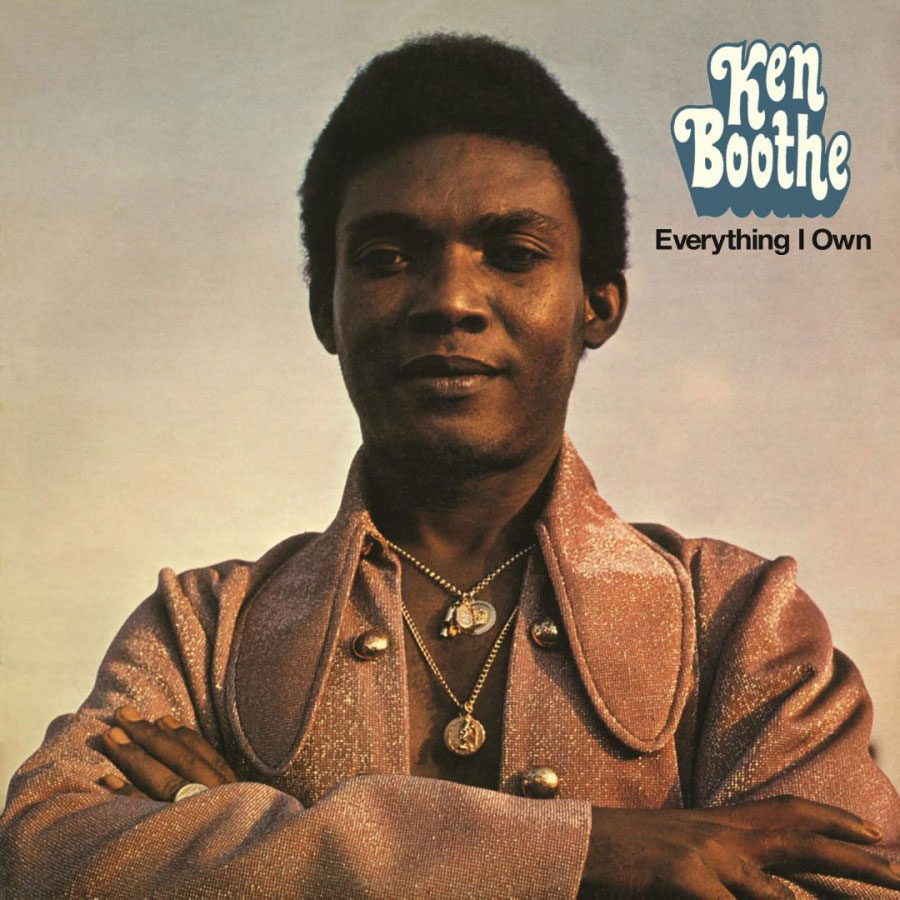
Everything I Own, by Ken Boothe (his 1st and only #1)
3 weeks, from 20th October – 10th November 1974
Though ‘Everything I Own’ isn’t so much a detour from the disco-soul sounds of recent #1s; it is more like being dumped in the middle of the Amazon with no compass. It is a slice of incredibly laid-back reggae, with incredibly earnest vocals and a tempo that never gets above crawling pace. Reggae is a strange genre, in chart terms, as it never seems to come or go. We’ve had reggae chart-toppers since the late sixties, and they’ll crop up every now and then until the present day. See also: country and western.
You sheltered me from harm, Kept me warm… You gave my life to me, Set me free… It’s a love song, a thank you letter to a loved one. It’s so sincere and sweet that it might even be a hymn. God himself might be the loved one… He’s not, it becomes clear, but the comparison is valid. This is record is just very… nice.
I would give anything I own, Give up my life, My heart, My home… (It’s odd, but the phrase ‘everything I own’ never features, it’s always ‘anything…) It’s nice, it’s very calming, almost like an audible massage, but I’m waiting for the hook… Still waiting… And then it fades. Oh well. It would work very well playing in the background, in a beach bar, in Thailand.
‘Everything I Own’ was originally a soft-rock hit for Bread, in 1972, before being adapted here into soft-reggae. It has been covered by everyone with a penchant for AOR, from Rod Stewart to Boyzone. It will also appear again at the top of the charts, in 1987, but I won’t give the game away on that just yet.
I have to say that, despite not loving this record, it is the version that I’m enjoying the most. Ken Boothe has a fine voice, and he enunciates every syllable in a manner your nan would approve of. His chart career mirrors perfectly that of our previous chart-toppers, Sweet Sensation. A #1, followed by a #11, and then done. I like that symmetry. Boothe made a sum total of $0 from this hit, as his record label went bust before they paid him. He is still alive, has been awarded the Jamaican Order of Distinction, and released his most recent album in 2012.
I described the previous chart-topper – ABBA’s glorious ‘Waterloo’ – as a ‘sugar rush’ of a song. It is replaced now at the top of the charts by what I’ll call a ‘sugar overdose’ of a song.
Sugar Baby Love, by The Rubettes (their 1st and only #1)
4 weeks, from 12th May – 9th June 1974
Why does ‘Waterloo’ work, while this doesn’t? Both songs are constructed from the same ingredients: power chords, sturdy drums, backing vocals and a big glance back to the pop of the early sixties. But ‘Waterloo’ leaves you soaring, and ‘Sugar Baby Love’ leaves you feeling icky. I am not a songwriter; but if I was I bet I’d be forever chasing and missing that fine, fine line between ‘catchy’ and ‘cheesy’.
This record starts promisingly enough, with ‘Twist and Shout’ Aaaahs that overlap and ascend. But then, fifteen seconds in, a falsetto so high and piercing that it knocks you sideways arrives. Sugar baby love, Sugar baby lo-ove, I didn’t mean to make you blue… The singer is trying to suck up to his sweetheart, trying to apologise for an unspecified misdemeanour. If was them, I’d have stuck to a letter or a phone-call. You can imagine someone performing this outside a girl’s bedroom window at night – and hopefully getting the police called on them.
Yes, All lovers make, The same mistakes, As me and you… It is another sad milepost on glam rock’s descent into the hands of rock ‘n’ roll tribute acts. In 1974, Slade went harder, Bolan went experimental (and started missing the Top 10), while Bowie was starting to look towards soul sounds on ‘Young Americans’. The Rubettes know what side they’re on, though: the backing singers keep up a persistent shoo-waddywaddy, shoo-waddywaddy throughout (though Showaddywaddy themselves turned this track down when it was offered to them!)
And yet, I do have a very high-tolerance for cheesy pop. I can’t hate this song, no matter what it represents. My feet are tapping along quite happily. However, I have an extremely low tolerance for spoken word sections in pop songs and, of course, ‘Sugar Baby Love’ has to go there. People, Take my advice, If you love someone, Don’t think twice… **shudder**
The Rubettes were a group basically put together to promote this record, which had been recorded by session musicians (shades of Alvin Stardust). It had been written for the soundtrack of a rock ‘n’ roll, jukebox musical that never saw the light of day. Which means that singer Paul Da Vinci (not his actual name), whose falsetto makes such a statement in the intro, was never actually a member of the band. They had a few other hits, with titles like ‘Juke Box Jive’, which sound like filler from the ‘Grease’ soundtrack, and still tour to this day in various iterations, thanks to a big court case twenty or so years ago where all the members tried to get The Rubettes name for themselves… If I were them I’d have been fighting to become disassociated from it…
This next number one kicks off, and instantly reminds me of another chart-topper from not so long ago. The chugging, fuzzy guitars that lead us in were last heard on 10cc’s ‘Rubber Bullets’. Musically, this is very mid-seventies soft-glam. It’s nice.
Jealous Mind, by Alvin Stardust (his 1st and only #1)
1 week, from 3rd – 10th March 1974
Then the singing starts, and it instantly reminds me of another chart-topper from much longer ago. Buddy Holly lives! If he’d made it to the seventies, and gone glam, he might have sounded a bit like this. Why is it I must know, The things you’re doin…? A-ah-hu-ho-ho, It’s just my jealous mind…
Seriously, the hiccup is spot on. A-ah-hu-ho-ho… It’s not an easy thing to mimic, the Buddy Holly hiccup – believe me, I’ve tried. For the rest of the record it’s not just Holly that Alvin Stardust harks back to – I get Elvis, early-Cliff and Eddie Cochran. It’s a fifties rock ‘n’ roll hit, set to a glam rock beat. I should love it…
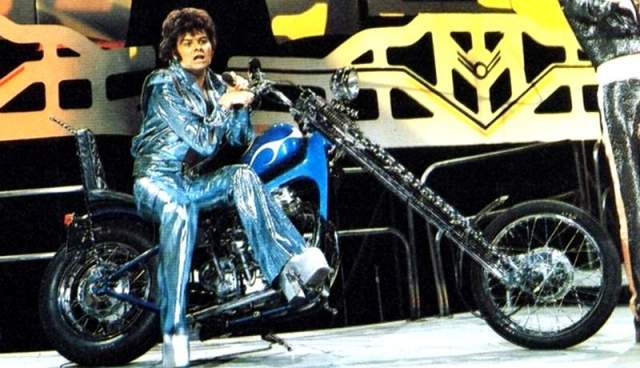
But something’s lacking. The riff is fun, the solo is furious, the vocals are very singable… It’s just a little… gimmicky? Is that it? It’s definitely lacking a special ingredient, whatever that might be, to make this great. It’s not helped by Stardust’s get-up, the black leather and the outrageous quiff. He looks like an Elvis impersonator, before they were a thing. Plus, his name sounds like a rip-off of Gary Glitter…
When you delve into the Alvin Stardust back-story, you begin to understand why. For a start, he was an actual rock ‘n’ roller in the early sixties. He went by his first stage-name, Shane Fenton, with his band The Fentones. Their biggest hit, ‘Cindy’s Birthday’, made #19 in 1962. The big Mersey bands put paid to the Fentones, Fenton slipped into obscurity. Years later, a bloke called Peter Shelley created a persona called ‘Alvin Stardust’, based on David Bowie’s ‘Ziggy Stardust’, who was in turn based on the real British rock ‘n’ roller Vince Taylor. All very meta… Shelley cut a record as Stardust, ‘My Coo-Ca-Choo’, then got stage fright when the song took off and started climbing the charts. He needed a new ‘Alvin Stardust’, pronto, and turned to Fenton.
So, seeing pictures of Alvin Stardust Mk II, all leathered and quiffed up, looking old enough to know better, suddenly makes sense. He was well over thirty when he scored his first and only #1. But there’s something romantic about it, this jobbing singer finally making it after all that time. His short burst of fame in the mid-seventies didn’t last too long but, amazingly, Stardust had a third-wind in 1981, with the #4 hit ‘Pretend’ and a fourth one in ’84 with two #7 hits, one of which was aptly titled ‘I Feel Like Buddy Holly’. That’s some staying power: a real rock ‘n’ roll limpet. (Personally, I would have liked them to have kept changing Alvin Stardusts with every album, like a regenerating Doctor Who, as a weird experiment in pop.)
Away from the interesting back-story, though, I still can’t find much to love about this record. It’s another nail in the glam-rock coffin. Watered-down glam, a fifties homage, a last-minute relaunch of a washed up star…. But hey, ho. Worse things, worse people, have topped the charts. Moving on.
It’s mid-January, mid-seventies, three day weeks and coal shortages and all that (I wasn’t there, but it sounds pretty grim). So along came Mud, to save the day!
Tiger Feet, by Mud (their 1st of three #1s)
4 weeks, from 20th January – 17th February 1974
‘Tiger Feet’ is a relentlessly happy song. It is a big dumb puppy of a record that bounds in and refuses to get off until you start dancing. I’ve loved it since I was a kid, and I’m not going to go all snobby on it now. Some records need thinking about, need chin stroking and serious analysis. Others don’t.
All night long, You’ve been lookin’ at me, You know you’re the dance hall cutie that you long to be, You’ve been layin’ it down, You got your hips swingin’ out of bounds, And I like the way you do what you’re doin’ to me… That first verse sums it all up, in roughly ten seconds. A girl dances, a boy likes what he sees. Add in the backing cheers, whoops and hollers that make it sound as if this was recorded in someone’s front room on the New Year’s Eve just past, and you’ve got a classic.
It’s symptomatic of the route that glam rock has taken in the past year or so, through Wizzard and Gary Glitter, and now this ‘at the hop’ spoof from Mud. The genre is becoming little more than a fifties tribute act, characterised by the Elvis stylings of Mud’s lead singer Les Gray. It’s cheap, and tacky, but damn it if it isn’t catchy. It was written by glam rock songwriters du jour Nicky Chinn and Mike Chapman, who have already scored #1s with The Sweet and Suzi Quatro.
One thing’s always troubled me about this song, though, even as a child. If you were to pick a part of the body to compare to a tiger… why the feet? That’s neat, That’s neat, That’s neat… I really love your tiger feet! Tigers have claws and stripes and sharp teeth – tons of cool body parts. Anyway, whatever, I’m getting dangerously close to serious analysis, and I promised not to.
But if you really did want to don your thinking caps, there’s definitely an argument for connecting the grim economic situation of the mid-1970s with the increasing popularity of bubblegum hits like this (and I’m aware that I won’t be the first to spot this.) It’s pure escapism, for people who have bigger things to worry about. In turn, ‘Tiger Feet’ became one of the defining hits of the decade. Any cheap ‘Best of the 70s’ compilation has to feature it, by law, while it’s one of those songs that a drama set in the seventies will always turn to as background scene-setting.
Mud had been around as a band since the mid-sixties and, like most of the genre’s big stars, they jumped on the glam rock bandwagon and rode it hard. They will feature twice more in this rundown but, without giving the game away, I won’t be giving their following chart-toppers as much leeway as I gave this one. Because this is great. Inside everyone, there is an eight-year-old who thinks ‘Tiger Feet’ by Mud is the best song ever written. Go on, indulge them.
Just like that, it’s the mid-seventies! And to celebrate, here’s Track 1 from the best-selling album ‘Now That’s What I Call Mid-Seventies-Easy-On-The-Ear-Pop’.
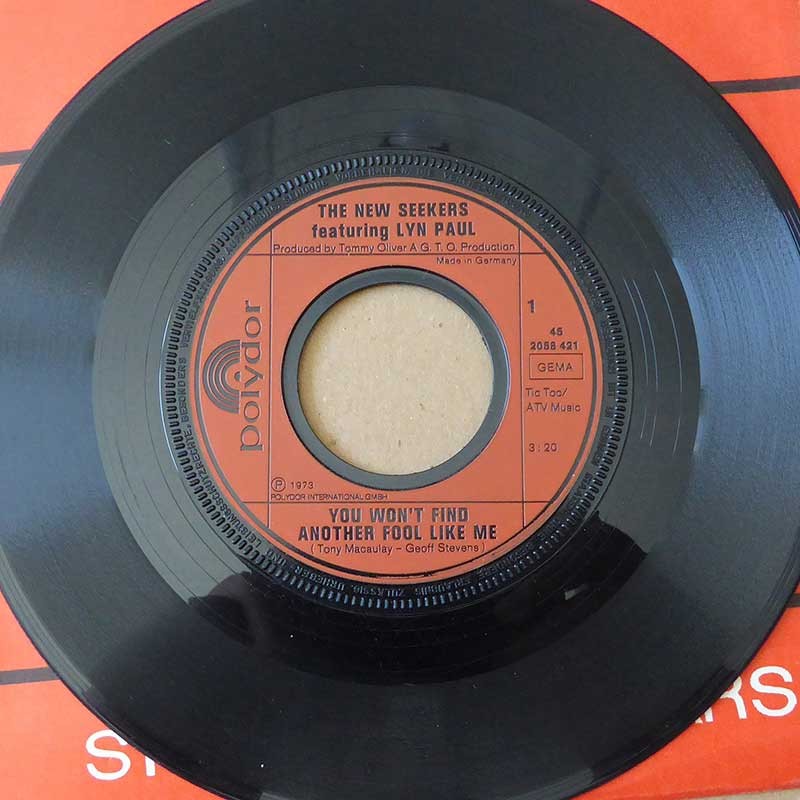
You Won’t Find Another Fool Like Me, by The New Seekers ft. Lyn Paul (their 2nd and final #1)
1 week, from 13th – 20th January 1974
Exactly two years ago, the New Seekers were assaulting us with their Coca-Cola advert-slash-call to arms, ‘I’d Like to Teach the World to Sing’. I didn’t like it. It was a catchy jingle stretched out way too long. This, though… This I like.
‘You Won’t Find Another Fool Like Me’ (they did like a long song title, didn’t they?) popped up on a playlist a few years ago and I’ve had it on rotation since. It sashays in with a sassy sax, follows it up with some jaunty guitars, and adds some brilliant vocals from Lyn Paul.
You won’t find another fool like me, babe… No ya won’t… Who’ll sit around all night and wait for you… It’s not a subtle performance, not by any standards. She sets her stall out from the start and keeps it up till the very end. Even though you treat me like you do, babe… I’m so hooked on you I can’t get free… The best way I can describe her singing– and I mean this as a compliment, truly I do – is that she sounds like your mum, slightly drunk, doing karaoke at a wedding reception.
Just listen to the rasp as she growls the last Aahy’know darn wellyou’re foolin’… and the way she slurs the adlibs at the end… Are ya listenin’ to me? She’s loving every minute of this performance. It was the first time Paul had been given lead vocals on a New Seekers song, and she was clearly grabbing her chance by the ankles. Such was her performance that it got her a ‘featuring’ credit… Imagine if she’d got her chops around ‘I’d Like to Teach the World to Sing’! One of pop’s great ‘if only’s…
I wouldn’t go as far to describe this record as ‘perfect pop’, but it’s definitely an earworm, a tune you’ll be humming long after it’s ended. And that, when all is said and done, is what pop music should be. It doesn’t all have to change the world. ‘You Won’t Find Another Fool Like Me’ is also the perfect example of a January chart-topper, one that grabbed its turn after the Christmas hits had fallen away but before the record companies had returned from their Christmas holidays. And I’m very glad it managed to sneak its week.
If anything, it’s redeemed The New Seekers for me, and in turn The Seekers before them (they didn’t share any members, but the former were formed by a member of the latter, if you get what I mean). The New Seekers would only have one further Top 10 hit in the UK, but they’re still going to this day – although with a fair few line-up changes. If this record proves one thing, it’s don’t judge a band by their biggest hit.









 The UK Number Ones Blog