949. ‘Beautiful’, by Christina Aguilera

In a presumably intentional move, Christina goes from ‘dirrty’ to ‘beautiful’…

Beautiful, by Christina Aguilera (her 4th and final #1)

2 weeks, 2nd – 16th March 2003

She knew what she was doing, representing all the facets of freshly-‘Stripped’ Xtina (the album’s third single was ‘Fighter’). And sonically, this is completely different from ‘Dirrty’s mucky synths and horny beats. It’s a pretty, piano-led ballad, very Beatlesy, with growing strings lending some orchestral grandeur.

It’s very pleasant, very grown-up, and a worthy riposte to those who tut-tutted after hearing its predecessor. This is one tune that everyone from primary school kids to grandma could sing along to. It also stands out in the charts of early 2003, as clearly being recorded on actual instruments, with little to no obvious electronic embellishment. And Christina manages to reign in her over-singing fairly well. It’s still there in dribs and drabs throughout, because she can’t help herself, but when she finally does let rip in the middle-eight, it’s an almost triumphant moment.

It’s the words of this song that, ironically, bring me down today. Yes, ‘Beautiful’ has gone down as a modern anthem of empowerment, still very well regarded by the LGBT community; but in walking the tightrope between ‘affecting’ and ‘trite’, I’d say this topples over more towards the latter. You are beautiful, No matter what they say… Maybe I’m just immune to the charms of this sort of song, as I’ve mentioned before, but I struggle to see how lyrics so basic could make anyone feel anything.

The video was more thought-provoking, featuring characters struggling with anorexia, and racism, as well as their gender and sexuality. In fact, this is two number ones in a row to feature a gay kiss in the video. The future is well and truly here! I was seventeen when this came out (a few months before I, too, came out), surely a prime age to be inspired by its message. But what I remember most was squirming with embarrassment when the video came on, worried that friends would make a connection between the two guys kissing and me.

Like Lady Gaga’s ‘Born This Way’ almost a decade later, the people that are left feeling the most positive from songs like this are the artists performing them, who get a nice sense of self-satisfaction. And as much as I like Christina, and love Gaga, and think both songs are good, the messages behind them are the least impactful aspects for me. Though it is worth noting, perhaps, that in 2002 Christina couldn’t actually use words like ‘gay’ and ‘transgender’ in her lyrics, whereas Gaga could in 2011.

As with several of the songs on ‘Stripped’, ‘Beautiful’ was written by Linda Perry, of 4 Non Blondes fame. Perry had previously worked with Pink, and had intended this song for her, but was blown away by Christina’s demo. This added to a growing beef between Pink and Aguilera, who had already argued over a chair on the set of the ‘Lady Marmalade’ video. And in all honesty, two pop divas fighting over furniture probably has much resonance within the gay community than lyrics about being ‘beautiful no matter what they say’…

This was Christina’s final UK number one, but she was good for ten further Top 10 singles through to the mid-2010s, including three more from ‘Stripped’. And for those of you who see her over-singing as a fun quirk rather than a criminal act, may I point you towards the album’s final single, the caterwauling ‘The Voice Within’, which made #9 towards the end of 2003.

948. ‘All the Things She Said’, by t.A.T.u

Up next, on UK Number Ones Blog. Schoolgirls…! Lesbians…! Russians…! Are you ready to clutch your pearls??

All the Things She Said, by t.A.T.u (their 1st and only #1)

4 weeks, 2nd February – 2nd March 2003

I well remember the furore about t.A.T.u, about this song, and about the video. And we’ll get to the furore in a minute. But it’s a shame that this song is remembered for the fact that it featured ‘lesbian’ schoolgirls, and that there were bans left, right and centre, and not because it’s a great pop song.

Because it really is. It’s an electro-grunge-dance mashup, with crunching power chords, at least two great synth riffs, and a brilliant shoutalong chorus. It’s cool, edgy, and yet retains a catchy Eurotrash edge. The two girls’ voices have a fairy-like high pitch, and a memorable way of pronouncing the English lyrics, AKA the ABBA-effect. It’s brilliant fun to yell out Have I lost my mind… mimicking the Russian accent (the original version is called ‘Ya Soshla S Uma’ in Russian – the lyrics were re-written but retained the lesbian content). The man responsible for the re-write, and the production, was synth pop royalty Trevor Horn, who of course gave us the Buggles, but who has also had input on chart-toppers from Frankie Goes to Hollywood, Boyzone, to LeAnn Rimes.

This, plus ‘Sound of the Underground’, as well as ‘Dirrty’, and Sugababes’ two 2002 #1s, were all part of the vanguard, dragging pop away from millennial bubblegum and glitchy R&B and into a future of big beefy power chords, and big beefy choruses. (It’s perhaps no coincidence that while listening to ‘All the Things She Said’ when writing this post, Spotify auto-played Lady Gaga’s 2011 hit ‘Judas’ straight after). I’d say that this record was overshadowed by a couple of other, huge pop tunes that come later on this year, but I’d also say that the controversy it created also didn’t help it retain credibility. (It is on its way back, though, and is poised to re-enter the charts following a feature on the ‘Heated Rivalry’ soundtrack.)

Predictably, conservative outlets criticised the song and the video for promoting homosexuality and paedophilia. The two members of t.A.T.u were fifteen at the time, but they do little more than kiss in the video. Cultural figures like Richard and Judy were moved to campaign against it, though. Meanwhile, more liberal voices criticised the fact that t.A.T.u – Lena Katina and Julia Volkova – were just playing at being gay as a record-shifting gimmick, a fact given credence by the fact that both women have since denied being in a relationship, while Volkova has made anti-gay statements (though that’s potentially a sensible career move in Putin’s Russia).

Perhaps surprisingly, t.A.T.u were not one-hit wonders. They remain the only Russian act to have topped the UK singles chart. The shouty drum ‘n’ bass of ‘Not Gonna Get Us’ made #7 later in the year, and the lead single from their follow-up album ‘All About Us’ made #8 in 2005. They also did Eurovision. I actually bought that second album, and can attest to the quality of that single and one of the follow-ups, ‘Loves Me Not’, both of which were similarly angsty electro-grunge. t.A.T.u were certainly one-trick ponies – shouty faux-lesbian electro – but it just so happens that shouty faux-lesbian electro is right up my street.

947. ‘Stop Living the Lie’, by David Sneddon

2002, the year reality TV took over the singles chart, ends. And 2003 begins with more reality TV fodder…

Stop Living the Lie, by David Sneddon (his 1st and only #1)

2 weeks, 19th January – 2nd February 2003

And this is fodder, especially compared to the classic it knocked off the #1 spot. David Sneddon was the winner of ‘Fame Academy’, the BBC’s attempt at getting in on the singing contest craze, after ‘Pop Idol’, ‘Popstars’ and ‘Popstars – The Rivals’ had all aired on ITV.

And in the best tradition of Auntie Beeb, ‘Fame Academy’ was promoted as a slightly higher brow sort of singing contest. The contestants were called ‘students’, they worked on their craft, they were encouraged to write their own songs. There would be no pratting around in ponytails, over-singing to ‘Baby One More Time’ here.

Which meant that it produced a winning single as dull as ‘Stop Living the Lie’, and a winner as dull as David Sneddon. Even his name is dull. David Sneddon is a plumber from Paisley, not a pop star from Paisley. I’m sure he was a nice boy. I’m sure he was talented to a certain extent. And he does have a cute boyishness to him. But Lord, this is such earnest claptrap, plodding and po-faced, with profoundly teenage lyrics about people not living their authentic lives. Who is going to save her, No-one wants to know her…

I don’t think pop stardom is something that can be taught. Sure, you can refine a kid’s dancing technique, and give them a new haircut; but there has to be something there in the first place. The X-Factor, as it were. Simon Cowell and Louis Walsh, for all their faults, knew this. They knew that cute young people singing basic but catchy tunes sold. There was a reason Gareth Gates didn’t write his own songs. I go back to the argument I made when writing about Darius’s ‘Colourblind’, that just because a song has been written by the person singing it does not automatically make it a good song.

The album version of ‘Stop Living the Lie’ has a much more rousing electric guitar riff, which gave me cause to sit up when I played it. Sadly the single remix removed this guitar, presumably because of worries that the sort of people who’d be buying this record couldn’t cope with that much rock.

David Sneddon lasted for four singles, each one charting lower than the one before, then moved into songwriting. He’s written for (predictably) X-Factor winner Matt Cardle and Westlife’s Shane Filan, and (less predictably) Lana Del Rey. And in fairness to the format, ‘Fame Academy’ did produce two other charting artists: runner up Sinead Quinn and 3rd placed Lemar, the latter of whom went on to have genuine chart success for much of the rest of the decade.

946. ‘Sound of the Underground’, by Girls Aloud

If anyone wants to attempt an argument for TV talent shows not being the death of popular music, then this is usually the first (and perhaps only) piece of credible evidence they can produce… Girls Aloud.

Sound of the Underground, by Girls Aloud (their 1st of four #1s)

4 weeks, 22nd December 2002 – 19th January 2003

The Christmas #1 for 2002, by the winning girl group from ‘Popstars – The Rivals’, is the best talent show #1 so far by miles, and miles. It may be the best ever, because it remains a brilliantly fresh pop record, and the descending guitar lick that takes us to the chorus still sounds thrilling.

Guitars? In a pop record? By a girl group? In 2025, in a world with Olivia Rodrigo and Billie Eilish, that sounds perfectly believable. But that’s because acts like Girls Aloud made it so, by blurring the lines between pop and rock, cool and uncool, indie and manufactured. When I was going to indie nights at the student union a couple of years after this had been at number one, you were just as likely to hear Girls Aloud as you were the Arctic Monkeys. And hey, naming your manufactured TV pop group’s debut single ‘Sound of the Underground’ is a pretty ballsy move.

Speaking of the guitars, with this coming a few weeks after Las Ketchup, is it too soon to claim an early noughties surf rock revival? I can think of at least one more upcoming, classic #1 that will also feature them. It has to be said, if you had ‘Sound of the Underground’ described to you before ever hearing it – a TV singing contest girl group, surf guitars, drum ‘n’ bass beat – you’d be forgiven for expecting a car crash.

This, and Sugababes’ two chart-toppers from earlier in the year, set pop music on its way for the rest of the decade. Girls Aloud were the Spice Girls – fun, playful, gobby – to Sugababes’ All Saints – cooler, more attitude, looked like they could handle themselves in a fight. But they needed one another to bounce off; I don’t remember it ever being painted in the press as a rivalry. And of course, the two groups would eventually release a chart-topping duet.

We should take a moment to remember One True Voice, the boyband ‘rivals’ of Girls Aloud. The premise of ‘Popstars – The Rivals’ was that the two groups would release their debut singles the week before Christmas, and the winner would get the festive #1. (Though it would have been hilarious if neither had…) In the end, Girls Aloud sold 213,000 copies that week, almost 70,000 more than One True Voice’s single ‘Sacred Trust’, a rather more predictable, disco-lite ballad (which I’m listening to now for the first time in twenty-three years, and actually quite enjoying…)

One True Voice lasted for exactly one more single, which limped to #10. Girls Aloud, meanwhile, did a little better… We needn’t have worried that they might peak with their debut for, as good as ‘Sound of the Underground’ is, they have at least five better singles in their arsenal. This was the first of twenty consecutive Top 10 hits, right through to 2009. Sadly not enough of them made number one, but when I do my Girls Aloud – Best of the Rest post it will be wall-to-wall bangers.

945. ‘Sorry Seems to Be the Hardest Word’, by Blue ft. Elton John

This number one marks the beginning, and the end, of two eras. It is the last chart-topper from ‘the Golden Era of Boybands’ (1989-2002). It is also the start of a strange late-career run for Elton John, in which he will be remixed, duet with dead rappers, and commit atrocities in the name of charity…

Sorry Seems to Be the Hardest Word, by Blue (their 3rd and final #1) ft. Elton John (his 5th of ten #1s)

1 week, 15th – 22nd December 2002

Compared to some of those records to come, I like this take on Elton’s 1976 #11 hit. It’s true enough to the original, with Elton’s piano coming through loud and clear, and keeps the Parisian sidewalk feel of the solo (swapping the accordion for a harmonica), with enough modern dressing for it to fit in and be a 21st century success. Starting songs with a vinyl crackle was apparently very hot in late 2002.

I will say that the addition of a modern R&B drumbeat, and a slightly faster tempo, means that this version is far less desolate than the original, and therefore loses some of its emotional heft. And I will also say that it is interesting to contrast the polished, technically very good, boyband voices of Blue with Elton’s gruff authenticity, and to wonder how far Reg Dwight might have got had he auditioned in front of Simon Cowell and the other ‘Pop Idol’ judges…

So, I like this, and liked it at the time, but I’m not sure deep down if it’s really much good. Is it just working with good source material? Is it given credibility thanks to Elton performing on it? I suppose it’s not much different to him and George Michael doing ‘Don’t Let the Sun Go Down on Me’ a decade earlier.

Like I said, this is it for boybands at the top of the charts, for a while anyway. Busted and McFly will dominate the next few years, but for my money they were boys in a band rather than ‘boybands’. It’s an important distinction! Therefore this is the end of a lineage that started with NKOTB thirteen years earlier, past Take That’s slow climb to credibility, Boyzone’s dullness, 5ive’s fun, Westlife’s relentlessness… I make it twelve boybands in total, with around forty chart-toppers, totals that could increase depending on how we class Boyz II Men, Hanson, and Blazin’ Squad. Disparage them if you will, but they were pretty much the sound of the charts for an entire generation.

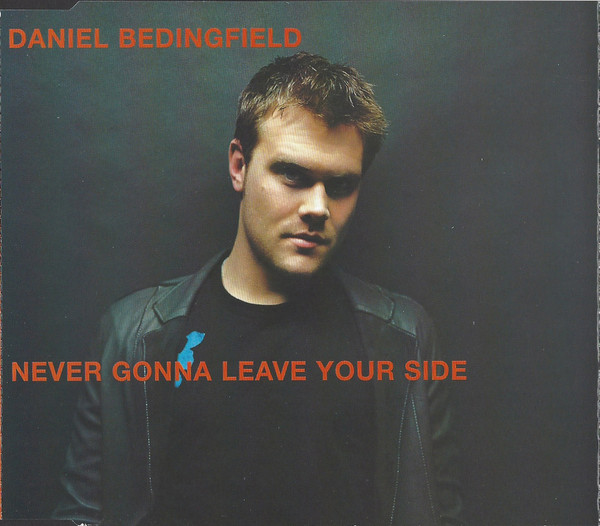
943. ‘If You’re Not the One’, by Daniel Bedingfield

Daniel Bedingfield’s debut hit, ‘Gotta Get Thru This’, was a breath of fresh air: a fun moment that balanced garage and dance nicely, in a way that summed up the sound of the early ‘00s.

If You’re Not the One, by Daniel Bedingfield (his 2nd of three #1s)

1 week, 1st – 8th December 2002

It was also a bit of a false dawn, because I think gloop like this is what Daniel Bedingfield is better remembered for these days, if he’s remembered for anything at all. Syrupy, heartfelt ballads. And syrupy, heartfelt ballads are not my thing. But I will try to see the best in this record, which I remember being fairly inescapable for a good few months.

That word: heartfelt. This definitely is, and Bedingfield’s commitment to the soppy sentiments makes it bearable. Even the falsetto note he hits at the end of each chorus. Then there’s the doubt, the fact that this song is about being with someone but worrying they might not stay. I hope I love you all my life… is probably the most powerful line. Plus, there’s something about the relatively low-key production, the heartbeat drums and echoing synths, that reminds me of Phil Collins’ ‘In the Air Tonight’

I’m actually surprised that I’m enjoying listening to this song, as I hated it at the time. Not only was it soppy, but it was everywhere. I remember it climbed back into the Top 10 for Valentine’s Day, a good two and a half months after it was released, something that didn’t happen often in the charts of the early ‘00s.

Daniel himself, though, went on record saying that he found the song too cheesy, and didn’t want it included on his debut album. He had, he said, deliberately set out to write a Westlife-ish song. And I’d say he failed, because this is quite subtly heartfelt, lacking the bombastic cheese of most Westlife tunes, and because there’s no key change. As far as I can tell all the interviews in which he said these things came from 2003 onwards, and I’d also say it’s easy to claim you don’t like a song once it’s been at #1 and made you lots of money.

I’m also sceptical of Bedingfield’s claims because his not far-off final chart-topper is an equally simpering ballad. If you don’t like these songs, why do you keep writing, recording and releasing them then, Daniel?

942. ‘Dirrty’, by Christina Aguilera ft. Redman

Louder, for the people in the cheap seats: If you ain’t dirty, You ain’t here to par-tay…

Dirrty, by Christina Aguilera (her 3rd of four #1s) ft. Redman

2 weeks, 17th November – 1st December 2002

Enter Xtina. Although last time we met her was in a boudoir in the Moulin Rouge, and although she’d always been the naughty one compared to rival Britney, I remember seeing the video to ‘Dirrty’ for the first time and being, as the kids say, shook.

Backing up my idea that 2002 was the moment the 21st century started, musically speaking, this is very modern pop. Gone are the staccato beats of millennial R&B. Gone is the bubblegum of the late ‘90s. In are clanking industrial chords, a scuzzy bassline, and huge vocals. This is the pop music of Rihanna, of Gaga, of a hundred other wannabes in the past twenty years. Pop music turned up to 11.

And yes, lyrically, it’s filth. I need that (uh) to get me off, Sweat until my clothes come off… Xtina announces before each chorus. It’s a classic good-girl-gone-bad song, in which a previously (semi)innocent pop princess launches headfirst into her slut era. Britney did it with ‘I’m a Slave 4 U’. Holly Valance made #1 with her debut single using the same trick. But nobody has done with as much as gusto as Christina. In previous posts I’ve taken issue with her over-singing, but here her belting works. This is no time for subtlety.

It’s also modern in its female singer plus guest rapper dynamic. Again, this is the format that many pop songs, and many number ones, will take over the next decade. I’ve no idea who Redman was, and doubt I’ve ever heard another song by him, but he’s a big part of this one’s success, from the If you ain’t dirty… call, to his line about being blessed and hung low, to him punching a giant rabbit in the video. In fact, the entire song is based around his 2001 original ‘Let’s Get Dirty’.

Ah, the video. As great as this record is in audio, it needs to be seen for it to have its full effect. Christina writhes, grinds, simulates masturbation, and invents the slut-drop, all while wearing some iconic, red leather, ass-less chaps. There’s foxy-boxing, mud-wrestling, female weightlifters, and signs in Thai that read ‘Young Underage Girls’ (a step too far, I will admit, and one which got a lot of criticism at the time).

Is it all a bit much? Is it vulgar? Is it pandering to straight male fantasies? To which I’d say: Yes, but who cares. Definitely, but who cares. And I’m not an authority on such matters. I will say though, a close (straight male) friend at the time spent hours a day requesting this video on music channels, waiting breath-baited on the edge of his bed for it to come on. He eventually recorded it onto a VHS… Which is a very hard to imagine scenario post-YouTube, but it was how we teenage millennials had to get our kicks. As for me, as much as I loved this song at time, it pretty much confirmed my homosexuality, as all I could think was how much Christina lived up to the song’s title, looking like she hadn’t showered in days.

I’ll end with the end, the final beat of the song after almost five minutes of writhing and grinding. In which Christina turns to the audience and asks Uh… What? As if daring you to criticise this gloriously inappropriate, slutty masterpiece.

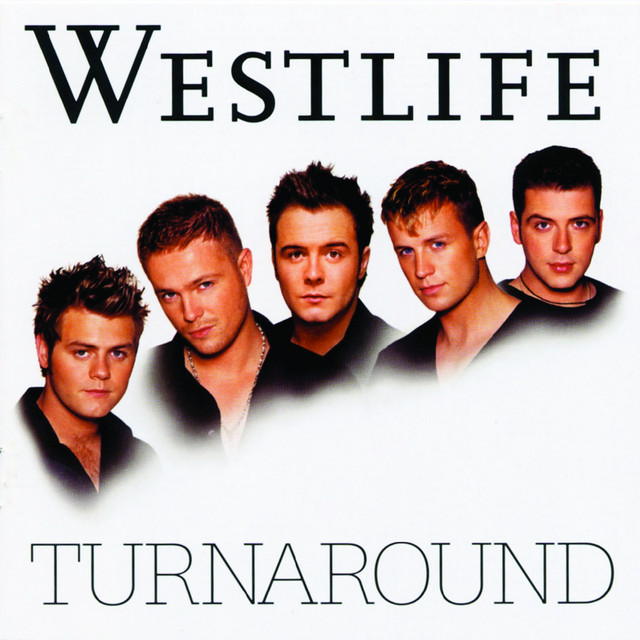
941. ‘Unbreakable’, by Westlife

Westlife’s eleventh number one in three and a half years. How are we all holding up…?

Unbreakable, by Westlife (their 11th of fourteen #1s)

1 week, 10th – 17th November 2002

My patience, for one, is well and truly shot. With each successive ballad, Westlife get more and more turgid. Is this any worse than their early hits? I think it is, but who can tell. When you get to number eleven then the law of diminishing returns has well and truly set in. The worst thing is, their last chart-topper, ‘World of Our Own’, was an upbeat bop. We’ve had hints, glimpses that it could have been so different.

‘Unbreakable’ starts off slowly, with a beat and tempo bastardised from ‘Hero’ and ‘Unchained Melody’. Yes, two of 2002’s previous big ballad hits. Call me cynical… To compound the lack of originality, the video was filmed on the same beach as ‘If I Let You Go’. By the end we’re soaring, or at least lumbering like a drunken buffalo, to a dramatic finish, complete with sleigh bells because it is almost Christmas after all.

And of course, there’s a gigantic key change. But even that lacks the fun, the charm, of their earlier key changes, because you know it’s coming. It arrives slowly, with a huge drawing of breath, like the tide going out before a gigantic tsunami that nobody is ever going to outrun.

The overriding feeling here is of a group going through the motions. This was the lead single from Westlife’s first greatest hits album, and it draws a line under the boyband part of their career. Their final three number ones will be covers of MOR classics, from the likes Barry Manilow and Bette Midler. Probably wisely, they knew that the twelve-year-olds that had bought their singles in 1999 were now sixteen-year-olds who had moved on. From here on they were shooting squarely for the mum, and grandma, market.

All of which ties into something I wrote a few posts ago, that we’re reaching the end of the golden age of the boyband, an era that has stretched from the late-eighties right through the nineties, past the good (Take That, 5ive), the bad (Boyzone, Westlife) and the ugly (911… oops)

938. ‘The Ketchup Song (Aserejé)’, by Las Ketchup

Ah, the classic autumn Eurotrash hit. Played in bars across Europe all summer, and belatedly making #1 in the UK after the leaves have started to fall…

The Ketchup Song (Aserejé), by Las Ketchup (their 1st and only #1)

1 week, from 13th – 20th October 2002

To Whigfield, Eiffel 65 and DJ Ötzi we can now add Las Ketchup, with this slice of Spanglish surf rock. And, of course, the accompanying dance routine. They were a Spanish girl group, three sisters, and this was their first hit. And call me cynical, but when your group and your first single share a title, and that title involves ‘Ketchup’, then it’s safe to assume you’re not aiming for longevity.

But also, call me surprised, because this isn’t at all as bad as I’d expected. It’s horribly catchy, sure, and largely nonsense (‘aserejé’ is not a Spanish word, nor is ‘buididipi’, nor ‘seibuinova’) with a chorus based on ‘Rapper’s Delight’, but it’s much more of a rock song than I recalled, with the guitars switching between eighties soft, and growling surf, rock. It’s not as in-your-face irritating as some of the Eurotrash that’s gone before and, despite its obvious disposableness, it still sounds like a real song.

This is all a revelation, presumably because sixteen-year-old me wrote this off as novelty crap without giving it a proper listen. I’d still not choose to listen to it, but couldn’t promise that it wouldn’t get me on a dancefloor in double quick time after a jug of sangria. And at least it came out when I was too old to be haunted by its dance routine at primary school discos, unlike ‘Saturday Night’ and ‘Macarena’.

My teenage aloofness has also caused me to miss how bloody massive this song was in 2002. It made #1 in twenty-seven countries, and Wiki lists it as being a chart-topper in every territory in which it was released except the US, Japan, and – the only European hold-outs – Croatia. It didn’t lead to any lasting success, however, and Las Ketchup are gold-star one hit wonders in the UK. Their last release was in 2006, when they represented Spain at Eurovision, finishing twenty-first with ‘Un Blodymary’, though they continue to perform.

One other thing that had passed me by regarding ‘The Ketchup Song’, as well as its relative quality and its success, was the fact that the gibberish lyrics are alleged in Latin America to be secretly demonic… ‘Aserejé’, some religious types argued, sounds like ‘a ser hereje’ (‘let’s be heretical’), with other lyrics supposedly referring to hell and Satanic rituals. The song was banned by a TV station in the Dominican Republic on these grounds… So, press play below at your peril!

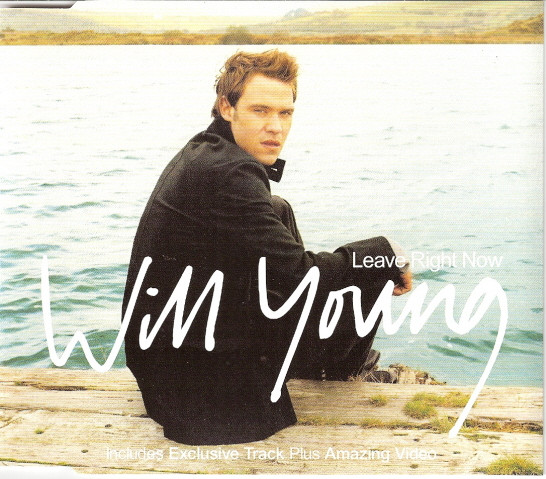
937. ‘The Long and Winding Road’ / ‘Suspicious Minds’, by Will Young & Gareth Gates

After two solo number ones apiece, it was surely inevitable that a Pop Idol Top Two duet was on its way…

The Long and Winding Road / Suspicious Minds, by Will Young & Gareth Gates (their 3rd of four #1s each)

2 weeks, from 29th September – 13th October 2002

And after two solo number ones apiece that I’ve tried to make the best of, and in some cases quite enjoyed, it was surely inevitable that my patience would run out. It’s not just that it’s the sixth Pop Idol #1 in barely six months, and it’s not just that they’re desecrating both the Beatles and Elvis. It’s both those things, but also the fact that both these songs are sooo very dull.

Their take on ‘The Long and Winding Road’ starts off as the sort of lounge-pop that male-female duos perform in the background of posh hotel buffets, under strict instructions to be as bland and inoffensive as possible so as not to distract people from their lobster. It picks up a little, and the harmonies are nice, but I’m not sure I’ve ever heard it before. Which is odd for a two-week number one in 2002, when I was amid one of my chart-watching phases. Or it’s entirely possible that I’ve just forgotten.

Interestingly – potentially the only interesting thing about this record – that song is a duet while the other is left entirely over to Gareth. His cover of ‘Suspicious Minds’ featured on the soundtrack to Disney’s ‘Lilo & Stitch’, and is bad in a completely different way. Although Gareth Gates is not vocally on a par with Elvis (newsflash!), it is upbeat, it is perky, and it sounds like he is having fun. But it has that classic, syrupy, karaoke production that reality TV singing shows will became famous for, with any potential edge polished away to nothing.

I’m not one for venerating the sacred cows of pop. I say have at them. One of my favourite covers of a Beatles song is Tiffany’s clattering ‘I Saw Her Standing There’. And of course Elvis’ and the Beatles’ back-catalogues is filled with covers, of varying quality. But for God’s sake, do something interesting. Add something to the conversation, for better or worse. It’s not as if ‘The Long and Winding Road’ is many people’s favourite Beatles’ song in the first place. And while ‘Suspicious Minds’ is an undisputed classic, Fine Young Cannibals proved that it was possible to reimagine it and not piss off too many people. Hell, even Will Young’s cover of a cover of ‘Light My Fire’ had something interesting about it.

But then ‘something interesting’ isn’t often in the remit of Simon Cowell and his production team. You do wonder if the choice of artists being covered here was intentional trolling, but I suspect it was just further proof of a lack of imagination. We’ll do Elvis and, um, The Beatles! This was still actually quite avant-garde for a Cowell release. If he had his way, he’d probably be happy with a never-ending parade of ‘Unchained Melody’ covers.

I imagine Gareth was happier than Will when doing these covers, but that’s probably based on the direction their careers went in the years after Pop Idol. 2003 will bring one final chart-topper for both, and these songs will give a clearer indication of what lay in store for either boy.