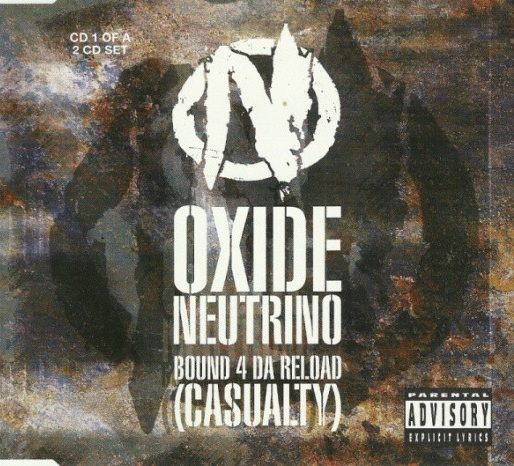
857. ‘Bound 4 da Reload (Casualty)’, by Oxide & Neutrino

The garage revolution picks up pace. All three so-called ‘garage’ chart-toppers that we’ve met so far, though, have been light and fluffy. Garage with the edges softened. Garages that you might find on a semi-detached house in a middle class suburb (Craig David did sing about a jacuzzi, after all).

Bound 4 da Reload (Casualty), by Oxide & Neutrino (their 1st and only solo #1s)

1 week, from 30th April – 7th May 2000

Here though is some proper garage. A garage covered with graffiti on an inner-city estate. Sirens. Gun shots. The theme tune from a long-running BBC hospital drama… Okay, that last bit doesn’t sound too street, but the sample from the ‘Casualty’ theme lends this record its name. It adds a dramatic energy to parts of the song, and works interestingly well when repeated on staccato synths. And it’s the only good thing about this record…

The rest of this song is abrasive nonsense. Bound for da bound bound for da reload… is the hook, repeated over and over, against a simple two-step beat. There’s some rapping, toasting, scatting, call it what you will. There’s a jarring spoken sample from the film ‘Lock, Stock and Two Smoking Barrels’ (Ah! Shit! I’ve been shot…) I was fourteen when this came out, and yet hearing it now I feel like an old fogey. It’s borderline unlistenable.

Having said that, the sweary sample above meant that ‘Bound 4 da Reload’ received little radio play, and so this probably passed me by unnoticed at the time. It does mean that it becomes one of a handful of chart-toppers so far to have featured swearing, and only the second after The Outhere Brothers to feature an F-bomb. But we’re on the precipice of swearing in number one singles becoming commonplace. Glancing down the list I can see the imminent debut of a certain bleach-blonde rapper, which will contain more swears than any previous number one combined.

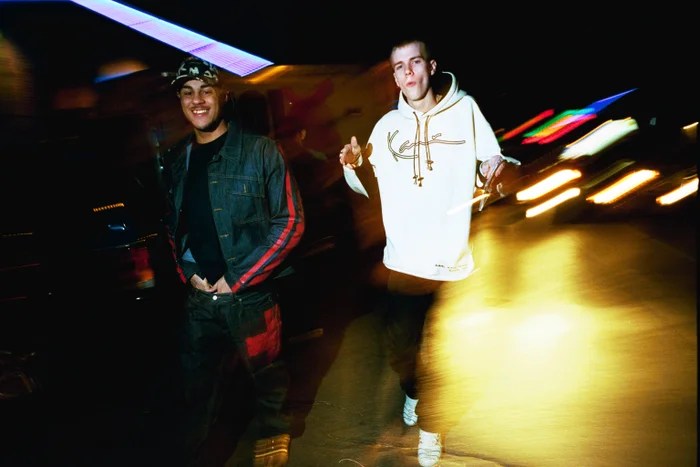
Oxide and Neutrino were members of garage/hip-hop collective So Solid Crew, a group of anywhere between nineteen and thirty singers, rappers, DJs and MCs. In just over a year the group will score their one and only chart-topper, but it is Oxide & Neutrino who struck first here. Leading me to wonder, is this the only instance of someone enjoying a solo number one before their group has had one…?

Full, un-edited version:

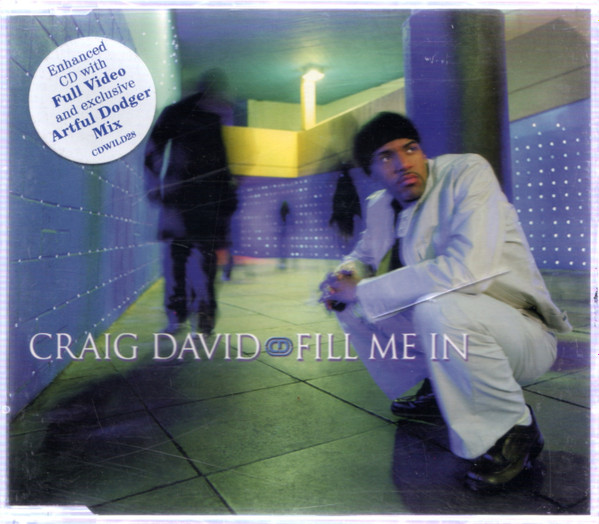
855. ‘Fill Me In’, by Craig David

If the year 2000 has a defining sound – and I’m far from convinced that it does, with so many chart-toppers crammed into its fifty-two weeks – then UK garage would be a strong candidate.

Fill Me In, by Craig David (his 1st of two #1s)

1 week, from 9th – 16th April 2000

These staccato, two-step beats have started to appear more regularly, with Shanks & Bigfoot last year, and to a lesser extent Gabrielle a few weeks ago. I never particularly liked garage at the time – it always felt too light, too airy, too difficult to grab a hold of. It dances around the beat, without ever committing to it. Garage makes me think of a hummingbird flitting from flower to flower, impossible to catch. A strange image for a musical genre, perhaps, but one that works for me.

And eighteen-year-old Craig David, Southampton’s most famous chart-topper, is an equally strong candidate for the year’s breakout star. He has a soft, honeyed voice, and controls this lyric-heavy song despite lacking what I would describe as ‘oomph’. (That’s what garage lacks – oomph!) It tells the story of a young couple trying to get jiggy in the face of her over-protective parents. Calls diverted to answer phone, Red wine bottle half the contents gone, Midnight return, Jacuzzi turned on… Can you fill me in? her folks ask.

Clearly Southampton is a bit posher than where I grew up, as I never knew anyone with a jacuzzi. The Wikipedia entry for ‘Fill Me In’ amusingly claims the song as a commentary on helicopter parenting, though I’m not sure there are many parents, helicopter or otherwise, that would be thrilled upon discovering their teenage daughter had been in a jacuzzi with the next door neighbours’ randy son, guzzling their wine. It is an interesting twist, however, to have a song about teenage lust told from the parents’ point of view.

Listening back to this now, a quarter of a decade later, and I’m more disposed to it than I was at the time. There’s something light, yes, but carefree too; though maybe that’s just nostalgia. As garage goes, this is way over to the poppier side of the genre. It owes as much to American R&B – TLC, Usher, Destiny’s Child and the like – as it does to UK MCs spitting rhymes on council estates.

Craig David had announced himself to the world as the vocalist on Artful Dodger’s ‘Re-Rewind (The Crowd Say Bo Selecta)’ right at the end of 1999. That is an era-defining single, although it fell just short of appearing in this countdown. (‘Bo Selecta’ is a phrase that will come to haunt David, but more on that later.) His second #1 is also a real cultural moment, leaving ‘Fill Me In’ in the strange position of being Craig David’s first chart-topper, but not one of the two songs everyone remembers him for.

854. ‘Fool Again’, by Westlife

A fifth number one single in less than twelve months, with the fifth and final single from their debut album, it’s…

Fool Again, by Westlife (their 5th of fourteen #1s)

1 week, from 2nd – 9th April 2000

…we know perfectly well who it is (the picture above probably helped). And there’s a reason why ‘Fool Again’ was the fifth single from the album. It’s average, and not just in a wider musical sense (which it obviously is). It’s average in a Westlife sense: not as good a pop song as ‘If I Let You Go’, but not guilty of the same musical crimes as their recent Christmas #1.

This was marketed as the ‘2000 remix’ of ‘Fool Again, as opposed to the 1999 original, and that probably eked out a few extra purchases from fans who already had the album. The only change I can make out, though, is the beefed up intro. The bridge really, really reminds me of a song that I just can’t quite put my finger on. The key change is massive, even by Westlife standards. The rest of the song descends quickly and happily into boyband schmaltz, rolling around in said schmaltz like a pig in shit.

Since they’re coming thick and fast, I’m going to keep track of Westlife’s many number one singles with my brand-new feature: Westlife Watch! (Hey, at least it will use up a paragraph every time I have to write about them). After five chart-toppers, the ranking currently stands at:

  1. If I Let You Go
  2. Flying Without Wings
  3. Fool Again
  4. Swear It Again
  5. I Have a Dream / Seasons in the Sun

I feel that bottom song will take some shifting, but I have faith in Westlife’s abilities to serve up something bad enough with their nine remaining number ones.

I think it must be a record, having five number one singles from the same album. I can find no other examples, on the British charts at least. But perhaps here we should discuss Westlife’s management, and their clever release schedule. Louis Walsh had a smart knack of picking quiet weeks for his boys’ singles. ‘Fool Again’ made #1 with sales that would have fallen short in all but nine weeks of this chart year. This doesn’t apply to all of their chart-toppers, as many did debut on top with impressive sales, but they definitely padded their stats with some lucky number ones. ‘Fool Again’ fell to #8 the following week, which says it all.

At the same time, maybe it was also a case of other acts avoiding weeks when Westlife were releasing, especially after five chart-toppers in a row? It would have been a brave act that went up against this Irish juggernaut in 2000, when they were at the peak of their popularity.

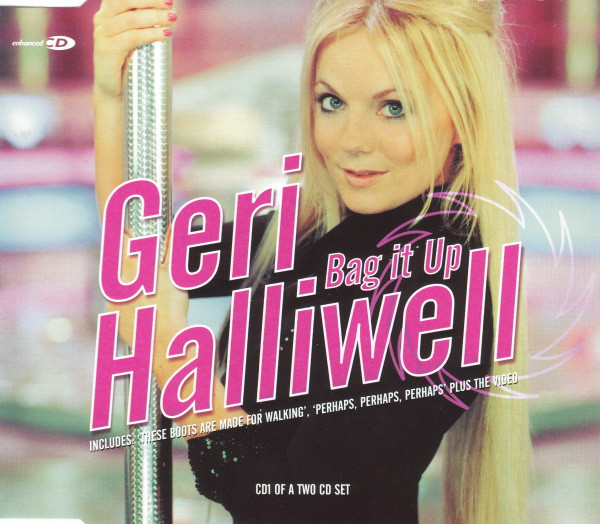
852. ‘Bag It Up’, by Geri Halliwell

Fresh from not giving up, we’re now bagging it up…

Bag It Up, by Geri Halliwell (her 3rd of four solo #1s)

1 week, from 19th – 26th March 2000

I overused the c-word in my post on Geri’s previous number one ‘Lift Me Up’, so I will endeavour to describe this record as anything but ‘camp’. Problem is, ‘Bag It Up’ opens with what may be the gayest line ever recorded: I like chocolate and controversy… Don’t we all, Geri.

What is this silly slice of disco-cheese about? Why is she treating her man ‘like a lady’? What the hell does I don’t take sugar on my colour TV mean?? It’s clearly some extension of the ‘Girl Power’ message, about how women don’t have to take crap from men. But like ‘Girl Power’ it falls apart under close inspection, and turns into the aural equivalent of a rowdy hen party entering a pub, even if the line Just a bad case of opposite sex… is wonderful.

Not that this record was ever meant to be closely inspected. It’s complete fluff. The video is even gayer, if such a thing was possible, as Geri advertises ‘Girl Powder’, which she uses to spike her boyfriend’s drink and turn him into a topless servant. She then dances around her factory with lots of pink-haired, six-packed oompah loompahs. Meanwhile, at that year’s Brit Awards, she performed the song after emerging from between a giant pair of legs.

Musically it sounds much like the Spice Girls’ ‘Who Do You Think You Are?’, in its poppy, nu-disco beats. In fairness, all three #1s from Geri’s debut solo album have brought something a bit different to the party, while remaining utterly disposable pop. I don’t mean that to be rude, either: I love Geri, and I love disposable pop.

What I might have questioned, had I been a bit older in 2000, was Geri’s relentless pursuit of gay icon status. It’s fun and all, but if anything it’s a little too much. She’d secured it anyway, what with being a literal Spice Girl, and so didn’t have to try so hard. I wonder if in the end it cost her some longevity. (As I write this I’m just remembering that her final chart-topper will be a cover of ‘It’s Raining Men’…)

Still, ‘Bag It Up’ is fun, and Geri was admirably serious about not taking herself seriously. Compared to self-obsessed modern pop, it’s been very refreshing to revisit the time when she was the biggest female pop star in the land.

851. ‘Don’t Give Up’, by Chicane ft. Bryan Adams

Hurray! Our first random dance hit of the new century! From the mid-nineties onwards these have become a common occurrence, and they aren’t letting up in the early years of the 2000s.

Don’t Give Up, by Chicane (his 1st and only #1) ft. Bryan Adams (his 2nd and final #1)

1 week, from 12th – 19th March 2000

This is blissed-out, late-afternoon by the pool sort of dance. Background dance, if there is such a thing. Which begs the question, how did this middling record end up on top of the charts? What’s the USP? Is it the fact that it’s rock music’s Bryan Adams croaking his way through it?

Maybe it was a bigger deal than it seems now, a middle-aged rock star appearing on a fresh dance track. Nowadays nobody bats an eyelid at a rock-cum-dance remix. I initially wondered if it was a sample of an old Adams’ track, but no – it was written by Adams in 1999, then mixed and produced by Chicane (British DJ Nicholas Bracegirdle). Vocally, Adams does a Cher and is heavily vocoded and autotuned. And yet, you can instantly tell it’s him. I never would have pegged him as having such a distinctive voice.

Other than the novelty of Bryan Adams’ featuring on it, there’s not much here to catch the ears. It picks up a bit from the midway point, with some higher tempo trance touches, but it remains fairly repetitive. I can’t escape the feeling that this sounds like the sort of remix that would usually have been tucked away as the third track on a CD single.

Perhaps the success of this record was due to the fact that Chicane had been responsible for the single edit of Adams’ 1999 #6 single ‘Cloud Number Nine’ (a much better song than this). View ‘Don’t Give Up’ as the follow-up and its success starts to make more sense. Chicane didn’t have too many big hits, but when they did it was usually with someone interesting. His single before this featured Máire Brennan, sister of Enya, while his 2006 hit ‘Stoned in Love’ was with Tom Jones.

Bryan Adams meanwhile was no stranger to chart success. This was his 11th Top 10 hit since arriving on these shores in the mid-eighties. It is interesting to see the difference in his two chart-toppers though, both in terms of their sound, and in their presence at the top. ‘(Everything I Do) I Do It For You’ holds the record for consecutive weeks at number one; while a decade later ‘Don’t Give Up’ squeaked a solitary week on fairly low sales, just over a thousand copies ahead of Madonna in the end.

850. ‘American Pie’, by Madonna

Just before our next recap, do we have a contender for the Worst Number One award…?

American Pie, by Madonna (her 9th of thirteen #1s)

1 week, from 5th – 12th March 2000

It’s fair to say that Madonna’s version of Don McClean’s ‘American Pie’ is much maligned. I’m guilty for some of this maligning, as I’ve pre-dissed it in earlier posts and comments, despite not having heard it for a quarter of a century. So, question is: is it as bad as everyone seems to think?

No, not at all. If this was the original version of ‘American Pie’, then it might be quite a fairly innocuous entry to the Madonna canon. But it’s not, of course. I think critics are more offended by the idea of this track than the song itself. Madonna? That cone bra wearing, Jesus humping, sex book publishing harpy, daring to cover one of the pillars of rock and roll?? And I’d guess that Madonna was fully aware of this, and that her deciding to cover this classic is an act every bit as provocative as the time she went down on Black Jesus.

At the same time, there’s nothing amazing about this version. It’s as if deciding to record it was bold enough, because Madonna forgot to make it particularly interesting. Sensibly, she doesn’t do the full eight minute version, and she uses McClean’s final verse, which most radio edits of the original skip. Perhaps she was attracted by the reference to the Father, Son, And the Holy Ghost, in keeping with her usual religious schtick.

‘American Pie’ was produced by William Orbit, just like the previous chart-topper from All Saints. This puts ‘American Pie’ in the unenviable position of sounding quiet a lot like its predecessor, but being not as good. All the Orbit swishes and swirls are there, but it ends up sounding like the B-side to ‘Pure Shores’. I’d have like Madge to have gone full, crunching electro – much like her second #1 of the year 2000 – just to truly give the purists a heart attack.

Madonna recorded this cover – and she’s not someone who has recorded very many covers during her career – for the soundtrack to her romcom ‘The Next Best Thing’ (her co-star Rupert Everett cavorts with her in the video, which also acts as an ‘America at the turn of the millennium’ time machine, with firefighters, body builders, blended families and kissing lesbians). It’s becoming something of a trend in the late nineties/early noughties for famous #2 hits make #1 in inferior cover versions. We’ve had ‘A Little Bit More’, and ‘I Have a Dream’. Now this, with a few more to come soon.

Perhaps, though, the final word should go to Don McClean himself, who was whole-hearted in his support for Madonna’s cover. ‘I have received many gifts from God’, he said, ‘but this is the first time I have ever received a gift from a goddess.’ (By ‘gifts’ we can only speculate that he meant ‘royalty cheques’.)

In other news, I recently wrote another guest post for Keith’s Nostalgic Italian blog, about books from our childhood. Check it out here.

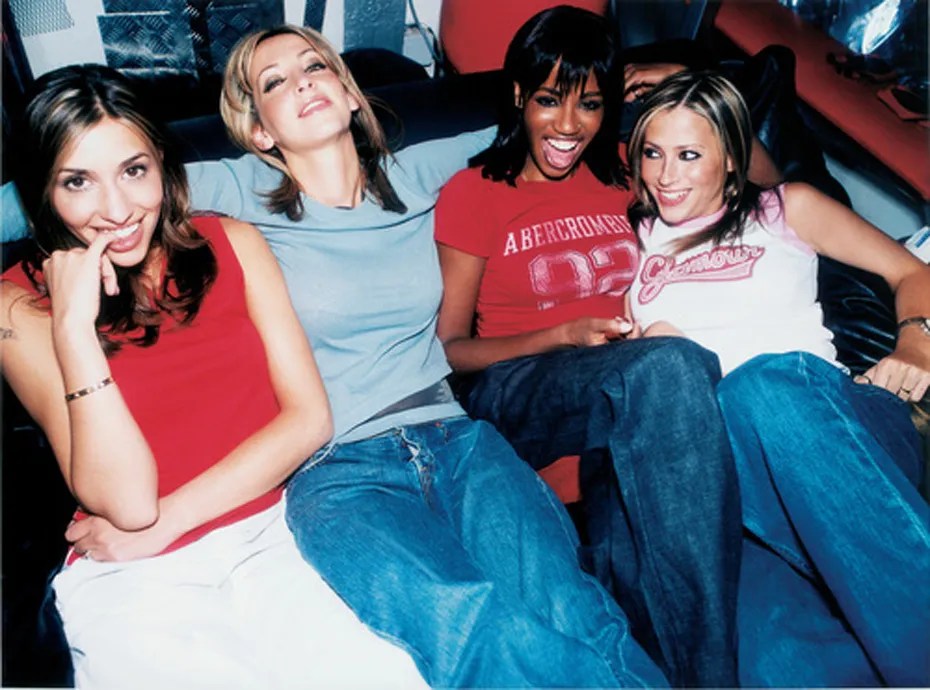
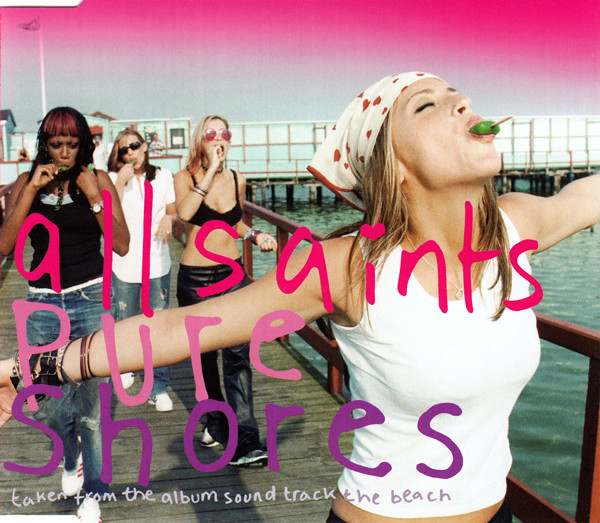
849. ‘Pure Shores’, by All Saints

The fifties had rock and roll, the sixties had beat bands and psychedelia. The seventies had glam, disco, and punk, while the eighties had new wave and new romantics. The nineties had hip-hop and Britpop, not to mention dance. The 2000s have… What do the 2000s have? In fact, what musical movements of any sort does the 21st century have…?

Pure Shores, by All Saints (their 4th of five #1s)

2 weeks, from 20th February – 5th March 2000

The new millennium provides an interesting dividing line, after which the Pop River reaches its delta, loses momentum, and splits into lots of little tributaries. It’s all to do with something called ‘the internet’, I think, taking power away from record companies and radio stations, and letting people discover all the music they could ever have dreamed of at the whir of a dial-up modem and the click of a mouse. The death of the monoculture, and all that. (Which isn’t to suggest that pop music’s journey had been relentlessly forward-moving over the first fifty years of the singles chart. Glam owed a debt to rock ‘n’ roll, Britpop owed a debt to the sixties, and so on …)

Anyway. That’s my long-winded way of getting around to saying that if the 21st century has a musical movement, I’d argue that it’s not so much a sound as a gender. Women. Female pop stars. Britney, Beyoncé, Gaga and Swift, to scratch but the tip of the iceberg. (And again, this is not to suggest that Connie Francis, Dusty Springfield, Diana Ross and Madonna were all figments of the 20th century imagination. Just indulge me…)

The dominance of the female pop star also meant – especially in the case of Britain in the 2000s – girl groups. In a few years I’ll be going wild for the cutting-edge pop of Sugababes and Girls Aloud, who even the likes of the NME will be rushing to anoint as the new avant-garde. All of which starts here, with the return of All Saints.

Phew. Having almost used up my regular wordcount with that intro, I’d better crack right into the song. ‘Pure Shores’ is described as ‘dream pop’, and it is definitely a step away from the group’s R&B-focused 1998 hits. The verses are laid-back, ambient, with a thrumming bass and lots of shimmering effects. We take detours between the verses for some whale calls and echoey backing vocals. It’s a pop song with the confidence to take its time, and to take us to some odd places. It was produced by electronic pioneer William Orbit, who is most famous perhaps for his work with Madonna around the same time, and who also worked with Blur, Prince, and U2.

But it is still a pop song, and the success of such things hinge on choruses. ‘Pure Shores’, for all its unusual soundscaping, remembers to click things into gear for a memorable I’m movin’, I’m comin’, Can you hear what I hear… Perhaps I’m of just the right age, but there are few choruses that transport me to a particular place and time like this one. It’s calling you my dear, Out of reach… The best bit of the song, though, is the hard-edged middle-eight, all industrial synths, and the following key change to take us home.

‘Pure Shores’ was written to order for the Leonardo Di Caprio movie ‘The Beach’, hence the Take me to my beach… line (the title doesn’t appear in the lyrics but certainly fits in with the film’s theme). Shaznay Lewis wrote most of the lyrics on a transatlantic flight, which is impressive, and not something many girl group members would be capable of doing, adding another layer of respectability to this tune.

Having said all that, and as good as ‘Pure Shores’ is, I think All Saints’ final chart-topper is even better. Both tracks, bookending the year 2000, set the tone for what pop music, specifically pop music fronted by women, could achieve in the years to come…

847. ‘Rise’, by Gabrielle

If there was an award for the artist that has flirted most with the number one spot on the UK charts without ever getting a date – the ‘nearly number one’ award – then Bob Dylan would be hot favourite to win. ‘Mr. Tambourine Man’ and ‘The Mighty Quinn’ were written by him, he sang a couple of lines on ‘We Are the World’, while ‘Knockin’ on Heaven’s Door’ made it in a cover version. All we need now is for someone to sample Dylan on a chart-topping single…

Rise, by Gabrielle (her 2nd and final #1)

2 weeks, from 30th January – 13th February 2000

Well wouldn’t you know… Here is the Bob Dylan-sampling number one. He liked this record so much that he allowed Gabrielle to use the sample – the guitar chords and his vocal harmonies from ‘Knockin’ on Heaven’s Door’ – free of charge. This sample adds a certain excitement to ‘Rise’, but I’m not quite sure what about the song convinced the often cantankerous Dylan to donate his work for gratis.

It’s a delicate, pretty ballad, nicely sung and sparingly arranged, with the gentlest of garage beats. In the ultra-processed, ultra-poppy early days of the 21st century it is a pleasant change of pace at the top of the charts. But ‘Rise’ never quite, ahem, rises above that word: ‘pleasant’. It’s nice enough to hear when it comes on Smooth FM (it has probably been on their playlists for twenty-five years straight), but I’d never rush to search it out.

I’m pretty sure I wrote much the same about Gabrielle’s first #1, ‘Dreams’ (in fact, I gave that a ‘Meh’ Award). There is something safe and very mum-leaning about her two biggest hits. I’ll argue that ‘When a Woman’ (the retro-pop follow-up to ‘Rise’), ‘Out of Reach’ (the ‘Bridget Jones’ soundtrack hit from 2001), or 1996’s big, brassy ‘Give Me a Little More Time’ – would have been worthier number ones.

As much as neither particularly excites me, it is worth noting the near seven-year gap between Gabrielle’s two number one singles. So much musical water has gone under the bridge since 1993 (for a snapshot: ‘Dreams’ knocked UB40 off the top, while ‘Rise’ displaces Britney Spears) that it is impressive how she managed to come back with such a big hit. She would go on scoring Top 20 hits until 2004, and released her most recent album just last year.

So, two number ones for Gabrielle, the most famous eye-patch wearing pop star since Johnny Kidd. And only ten letters between both titles, ‘Dreams’ and ‘Rise’. Has any singer managed to get more success out of even shorter song names? Nichest of niche pop knowledge, but let me know in the comments if you can think of one!

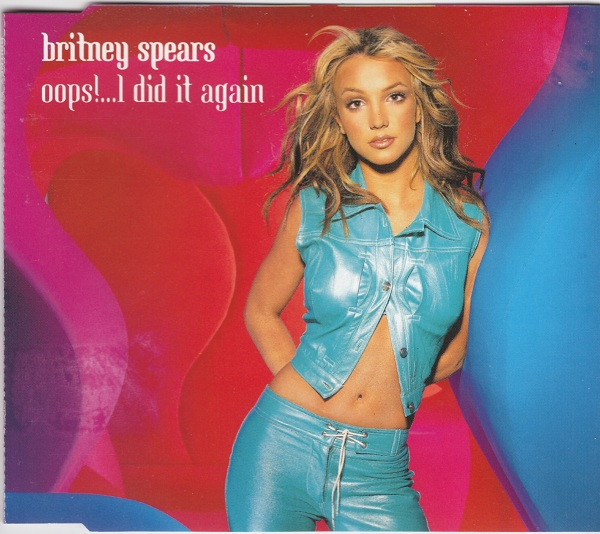
846. ‘Born to Make You Happy’, by Britney Spears

I did warn you that despite kicking things off with the snarling ‘The Masses Against the Classes’, the year 2000 would not be ushering in any kind of rock renaissance. Here then, restoring order, is Britney.

Born to Make You Happy, by Britney Spears (her 2nd of six #1s)

1 week, from 23rd – 30th January 2000

I love Britney Spears. I feel I have to preface every post I write about her with this statement, in case anyone is expecting me to give her a critical mauling (I can’t). But if there was ever a Britney #1 I was lukewarm on, it would be this one. Or so I thought.

But actually, this is a decent pop song. It’s nowhere near as cutesy or saccharine as I’d mis-remembered. It’s got a cool, electro-pop edge, a moody piano riff, and delicate guitars embellishing the end of each line. It has probably been lost among the sugar-rush of her other, early hits (and it’s nowhere near as good as ‘…Baby One More Time’, or her next chart-topper) but it’s the most mature-sounding of the four singles from her debut album. Plus, it might be one of her best vocal performances (in an admittedly narrow field…)

It’s let down a little by its overwrought lyrics, though. I’ll do anything, I’ll give you my world, I’d wait forever, Just to be your girl… You can’t really appreciate them, I suspect, unless you were a sixteen-year-old listening to this song in real time. They certainly appeal to a teenage sentiment, but a song with the hook I don’t know how to live without your love, I was born to make you happy… did little to endear Britney to those of a more feminist leaning.

But then again, if you’re going to try to enjoy teen-pop, then you have to embrace it all, even the ridiculously emo side of it. A quarter of a century on, ‘Born to Make You Happy’ sounds like a relic. No young female star in 2025 would dream of claiming that she was born to make any man happy. Which is a good thing, and yet…

For some reason, at school we changed the lyrics of this song to I was born to wear a nappy… I have completely forgotten the reason for this, if there ever was one, but felt it needed mentioning here. As I wrote above, this was the 4th single from her debut album, and was only released in Europe. But like the Manics the week before, it took advantage of low January sales to score Britney her second #1, and to keep things ticking over nicely until her next big, brand new single.