826. ‘Everybody’s Free (To Wear Sunscreen)’, by Baz Luhrmann

Ummmm…. 1999 might not be a top-tier year from a musical standpoint, but it’s certainly turning into one of my favourite years to write about…

Everybody’s Free (To Wear Sunscreen), by Baz Luhrmann (his 1st and only #1)

1 week, from 6th – 13th June 1999

We’ve pinged from pop-punk, to new wave, to bubblegum, to garage, with plenty of boyband pap in between, to this… This monologue on life from an Australian film director. It is a word-for-word recital of an imagined graduation speech, written by columnist Mary Schmich for the Chicago Tribune in 1997, that had gained fame through that most late-nineties of ways: as a viral email.

The voice on the record is Australian voice actor Lee Perry, who dispenses Schmich’s pearls of wisdom with a likeably dry authority. Some are practical (Floss! Stretch!), while some are fanciful (Maybe you’ll divorce at forty, Maybe you’ll dance the funky chicken at your 75th wedding anniversary…). Some are funny (Read the directions, Even if you don’t follow them…), and some are touching (Get to know your parents, You never know when they’ll be gone for good…) All of it is bookended by the one and only piece of advice that has been proven by scientists: Wear sunscreen!

The backing track is the choral version of a dance hit from 1991, which also lends the record its title, Rozalla’s ‘Everybody’s Free (To Feel Good)’, a song Luhrmann had previously used in ‘Romeo + Juliet’. It’s got a nice laid-back, trip-hop, surf-rock feel to it. In extended mixes, a new version of the chorus from the Rozalla original is included, although the single mix skips any singing and makes this a purely spoken-word #1, to rank alongside Telly Savalas and J.J. Barrie.

Although I have an aversion anything labelled as ‘self-help’, there is something appealing about this weird, post-modern single. It’s the sort of thing Andy Warhol might have released, had he had a pop music career. Like a lot of Lurhmann’s work, it’s not half as deep as it thinks it is. Some of the lyrics are downright trite, live laugh love level bullshit (Do one thing every day that scares you…), but there are a couple of verses that verge on the profound. My favourites are the lines on the power of youth in the first verse, and on nostalgia towards the end: Advice is a form of nostalgia, Dispensing it is a way of fishing the past from the disposal, wiping it off, painting over the ugly parts, And recycling it for more than it’s worth…

I think it also appeals because it’s now twenty-five years old, and is itself a reminder of a simpler time. A time when emails went viral, when newspapers would bother publishing a piece of whimsy like this, and when a pop record this innovative could make the top of the charts. Plus, spend five minutes scrolling through Instagram today, and you’ll be bombarded with an avalanche of crappy, pop-psychology memes with captions ten times more glib and cheesy than this record. (Oops, there’s me falling into nostalgia’s sneaky trap already…)

Baz Luhrmann may have had a far more prolific career as a director, but this isn’t the only time that he has had a say in the world of music. Tracks from the soundtracks of his movies, from ‘Romeo + Juliet’, to ‘Moulin Rouge’, to ‘Elvis’, have all made the upper reaches of the singles charts, including a soon to come number one.

As with some of our more left-field recent chart-toppers (Mr. Oizo and Spacedust spring immediately to mind) I’m more in the ‘Whyyyyy?’ than the ‘Yayyyyy!’ camp with this record, but it makes for a fun curio. And as a fair-skinned person living in a hot climate, I can attest: Trust him on the sunscreen!

The single mix:

The extended version, with a sung chorus:

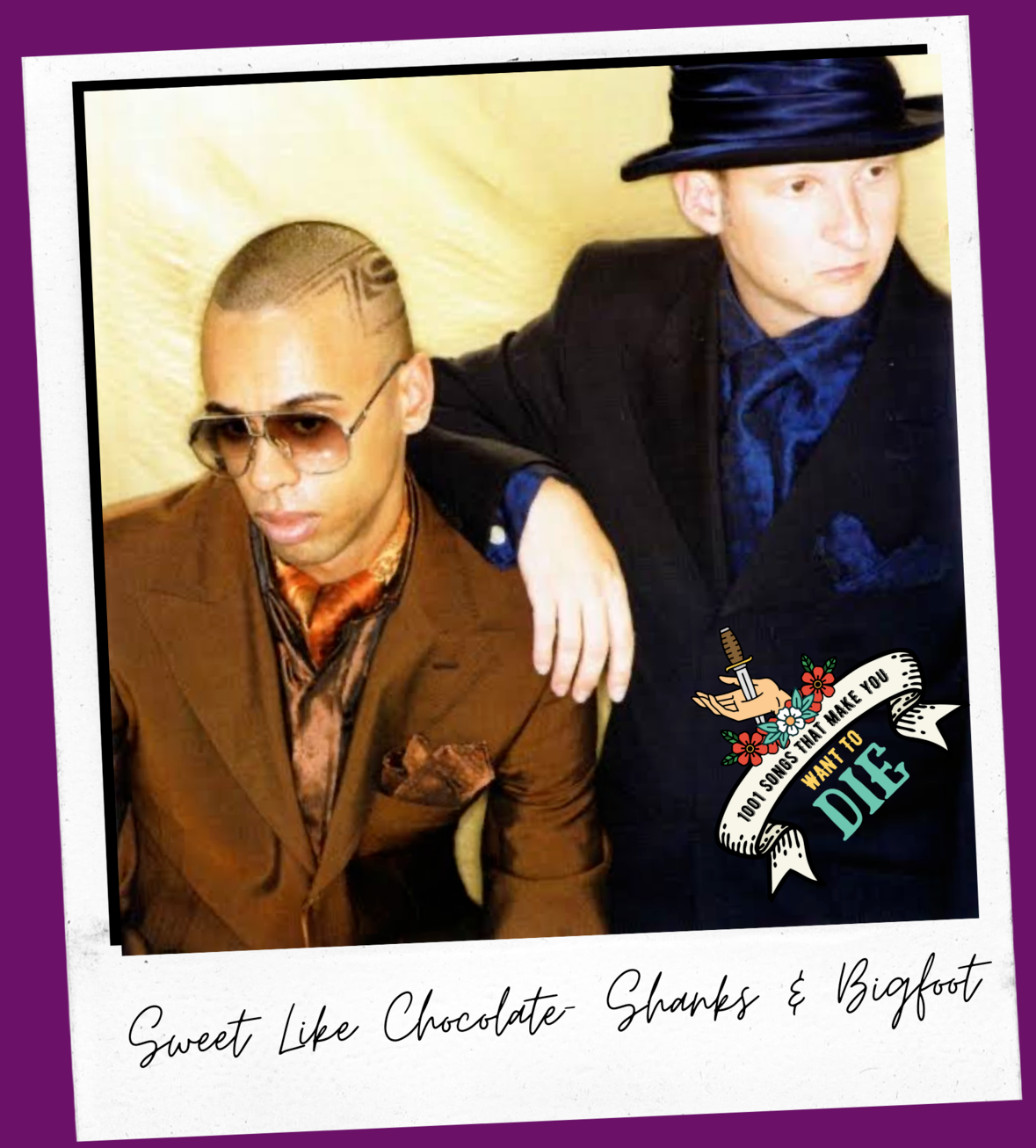
825. ‘Sweet Like Chocolate’, by Shanks & Bigfoot

I was about to sound the random dance hit klaxon, 1999’s most used alarm, before I noticed that this next number one isn’t really dance. I was going to claim it as drum ‘n’ bass, but then realised that it was actually our first example of a very turn-of-the-century genre: garage.

Sweet Like Chocolate, by Shanks & Bigfoot (their 1st and only #1)

2 weeks, from 23rd May – 6th June 1999

Sadly this has nothing to do with garage rock. Or with car repair. The genre stems from Paradise Garage, a NYC gay nightclub popular in the ‘70s and ‘80s (and which had been built as a parking garage back in the ‘20s). From there we can trace a route from disco in the seventies, to garage house in the eighties (alongside Chicago house acts like Steve ‘Silk’ Hurley), to the 90s when it crossed the Atlantic, got sped up, and became known as UK garage. From there we can look into a future of grime, and drill… A rushed potted history I know, but I’m very amused to discover that this often misogynist and homophobic genre can trace its family tree back to a gay bar presumably full of leather queens and cock-duster moustaches…

Not that there’s anything offensive about ‘Sweet Like Chocolate’. No, our introduction to garage is as light and fluffy as they come, with some staccato strings and a gentle brass section that builds over the 2-step beat that will become one of the sounds of the next few years. I’ll readily admit that I was never – now, or at the time – the biggest fan of the genre, but also that this is as pleasant an intro as we could have wished for.

What I’ve always remember about this record are the high-pitched vocals, from a singer named Sharon Woolf. And the animated video, in which the entire world is made of chocolate (and which now looks wonderfully dated). Oh yes, and the jokes at school about how this might not actually be about chocolate… You are sweet on the tip of my tongue, You are warm like the rays of the sun… (The steamy noises that Woolf makes in the extended original mix only serve to confirm my teenage suspicions.)

Shanks & Bigfoot were a duo called Steven Meade and Danny Langsman, who had had a #20 hit the year before, ‘Straight from the Heart’, under the name Doollally. Following the success of ‘Sweet Like Chocolate’, they released the same song, as Shanks & Bigfoot, and made #9. I wonder if there are any other songs which have charted twice by ‘different’ acts?

Though I’ll probably be down on the many of the garage records which will top the charts between now and 2002, I should emphasise the authenticity of the genre. Garage relied on underground nightclubs, MCs, and pirate radio to break through. I may not much like it, but it was the sound of the streets, like skiffle and punk had been to generations before. Which is something, in an era where manufactured pop held so much sway.

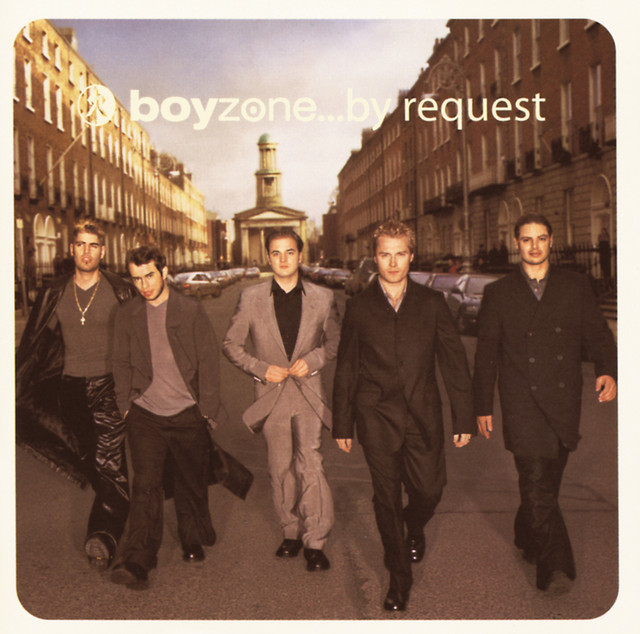
824. ‘You Needed Me’, by Boyzone

Yet MORE boyband balladry…

You Needed Me, by Boyzone (their 6th and final #1)

1 week, from 16th – 23rd May 1999

Following on from our last post, if I’d wanted an example of how drippy late-nineties boybands from the British Isles were compared to their American counterparts, then I couldn’t have planned it better. Straight after Backstreet Boys’ era-straddling classic ‘I Want It That Way’ comes Ronan and the lads’ final, and perhaps most insipid, number one.

‘You Needed Me’ was originally a Billboard #1 in 1978 for Canadian singer Anne Murray (it made #22 in the UK). If you ever want to listen to ‘You Needed Me’, then listen to her version. And you should want to listen to it, as in its original form it’s a nice slice of Carpenters-esque, late-seventies soft rock. There are no circumstances under which you should ever need to listen to the Boyzone cover instead, unless you find yourself writing a blog in which you force yourself to listen to every single number one single…

Ronan Keating takes lead vocals (of course he does), and he goes through his full repertoire of grunts, growls, and rasps, as if well aware that this is Boyzone’s last hurrah. And it’s not that he and his bandmates completely ruin the song. It’s more that nothing here is an improvement on the original: not the vocals, not the karaoke reverb ‘n’ tinkles production, not the extra backing singers chucked in at the end. My favourite bit of both versions, and which I’m happy Boyzone kept, exaggerated even, is the overstated ending.

I say that this is Boyzone’s most insipid number one but it of course has competition. ‘No Matter What’ is their best by far, ‘A Different Beat’ at least had some interesting, world music elements, while we were simply glad that their cover of ‘When the Going Gets Tough’ was NOT A BALLAD! Maybe then ‘You Needed Me’ can tie with their cover of ‘Words’, and ‘All That I Need’ as their dullest. The video to this one, though, is worth noting as it features lots of different couples in lots of different picture frames, at least two of whom appear to be same-sex, which feels very progressive for the time. It was probably tied to the fact that Stephen Gately had just come out as gay.

Many didn’t expect ‘You Needed Me’ to make number one, as it was up against Geri Halliwell’s highly anticipated solo debut ‘Look at Me’. Boyzone, though, edged the race by a narrow 748 copies, which many put down to the fact that they released two different CD versions compared to Geri’s one. Ginger Spice would have her day at the top of the charts, but was made to wait a few months longer than she might have wanted.

Boyzone meanwhile had one final Top 10 hit after this before calling it a day for the best part of a decade. We will of course hear Groanin’ Ronan’s unmistakeable tones again at the top of the charts, as he was quick to launch a successful solo career. Stephen Gately and Mikey Thomas also tried it alone, with less success, while Keith Duffy and Shane Lynch had a go as a duo. They reformed in 2008, returned briefly to the Top 10, and have released several albums in the years since. Gately tragically died from a heart condition in 2009, aged just thirty-three.

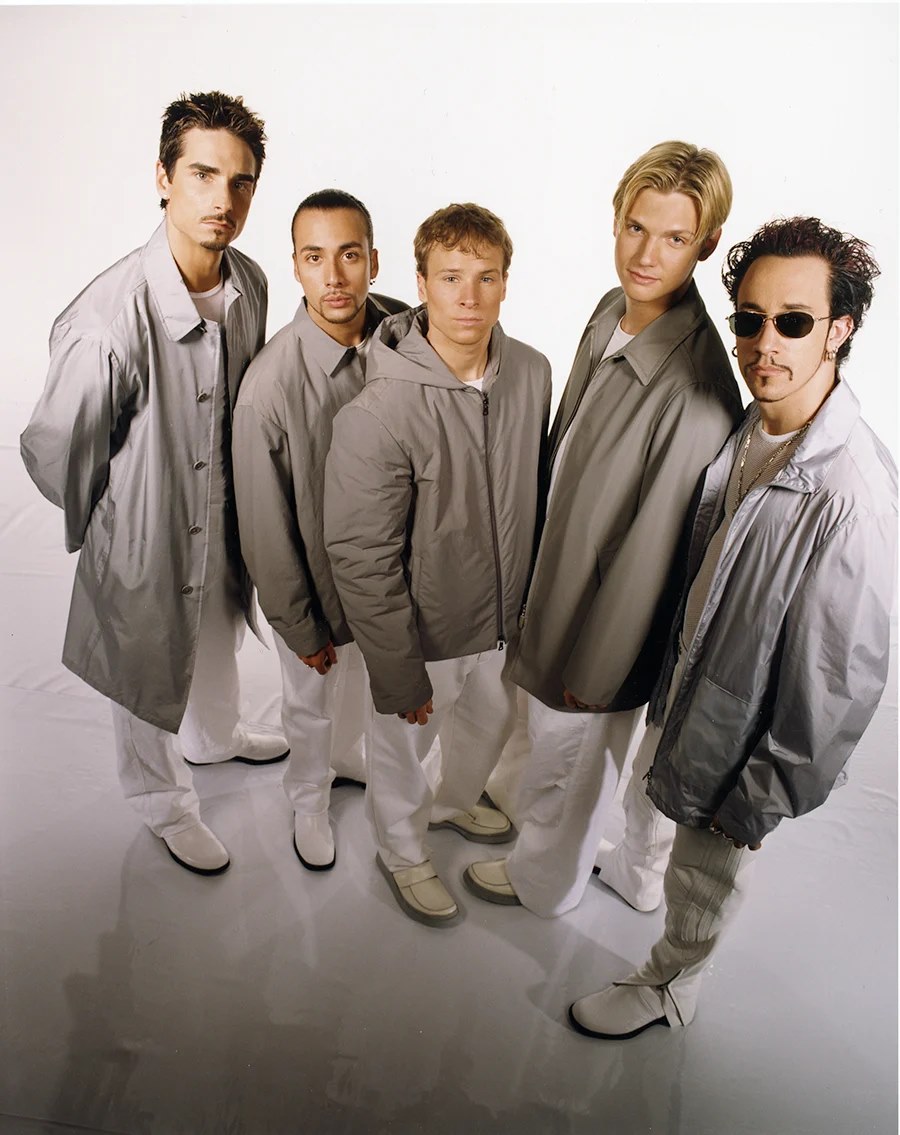
823. ‘I Want It That Way’, by Backstreet Boys

More boyband balladry at the top of the charts, with yet more to come very soon…

I Want It That Way, by Backstreet Boys (their 1st and only #1)

1 week, from 9th – 16th May 1999

But wait, come back! Boyband ballads don’t have to be dull, repetitive, and bland. Yes, I know, Westlife will put this theory sorely to the test time and again, but believe me. In fact, don’t take my word for it, just play our next number one: ‘I Want It That Way’, by the Backstreet Boys. From the UK’s most successful boyband, to – in pure sales figures – the most successful of all time…

Like Britney Spears a few weeks earlier, ‘I Want It That Way’ has that confident, glossy-teethed American-ness, with a healthy dollop of Max Martin production (plus, of course, that quintessential late-nineties drumbeat). Comparing this to Westlife, or Boyzone, it reminds me of the 1950s, when Elvis, Jerry Lee Lewis et al were the epitome of hip-swivelling cool, and the Brits were still serving up nudge-wink music hall acts like Tommy Steele. Of course, we’re only a few years on here from the heyday of Take That – a British boyband that had global appeal – but things seem to have regressed since then.

And I’m not saying that I think British popular music was in a less appealing state than the US at the turn of the 21st century. On the contrary, I think the British charts were throwing up curios and oddities, and a mix of genres, that the Billboard chart could only dream of, while the latest Boyz II Men hit spent its seventeenth week at #1. But when it came to pure pop, the US acts of the day – Spears, Aguilera, these Backstreet Boys – had the ability to make their British counterparts look like small fry. Let’s call it the US pop-industrial complex.

Anyway, that was a bit of a tangent. Why is ‘I Want It That Way’ such a classic pop tune? Something in the minor key verses and the soaring chorus. Something in the Tell me why! hook. Definitely something in the gigantic key change, which is one of the very best of its kind. But mainly in the way that it somehow sells an opening line like You are my fire, My one desire… without making you want to press ‘skip’. Get past that line and you’re invested until the end.

The lyrics are, as many before me have pointed out, nonsense. Or, if you’re being generous, ambiguous. We’re never given an answer to the ‘tell me whys’, or any hint as to what is such a heartbreak, and a mistake. Maybe it’s just my dirty mind, but I like to think of this as a sort of Meat Loaf not telling us what he wouldn’t do for love situation, with ‘that way’ being some sort of sordid sexual act that the good ol’ Backstreet Boys can’t stomach their girlfriends asking for.

Or maybe that’s just me. Whatever the reason, ‘I Want It That Way’ was a huge hit around the world. Take it from me, as someone who’s spent many years in Asia, this is one of those English songs that everyone, from Japan to the Philippines to Cambodia, knows. It was far from the Backstreet Boys first hit in the UK, but if any of their singles was going to make number one then it was this. They would also go on to have eight more Top 10s between here and 2005, to end with an impressive total of sixteen in just under a decade. Colour me amazed, though, to have just discovered that Backstreet Boys scored precisely zero US chart-toppers!

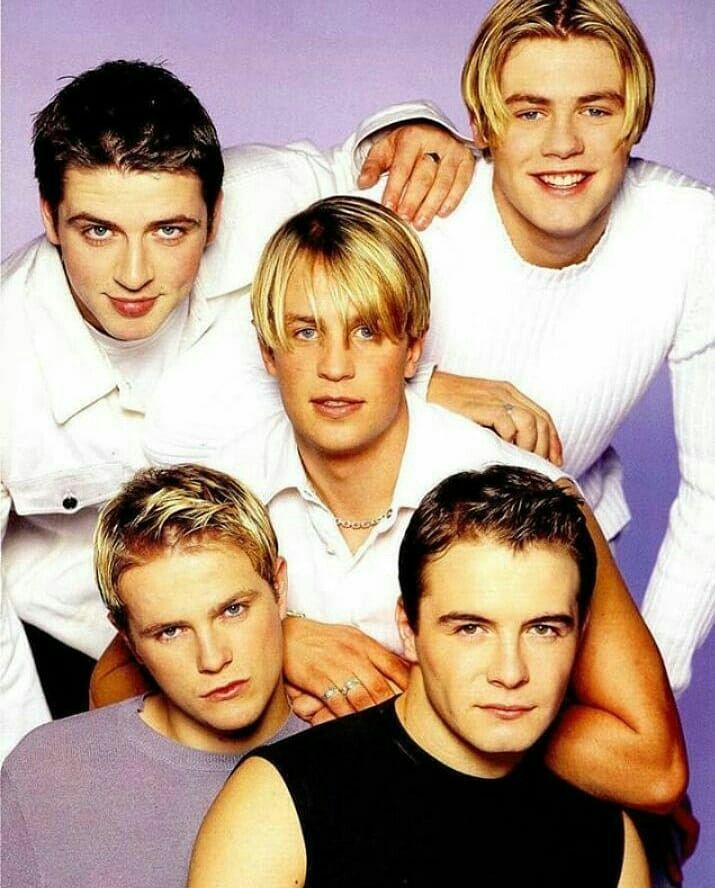
822. ‘Swear It Again’, by Westlife

Here we go, then… Our most successful boyband’s reign of terror begins…

Swear It Again, by Westlife (their 1st of fourteen #1s)

2 weeks, from 25th April – 9th May 1999

As tempting as it is to go in two-footed on Westlife from the start, they do have a hell of a lot of number ones to get through (only Elvis and The Beatles have more). So can I imagine a world where ‘Swear it Again’, their debut single, was their only hit, and find something good, or at least interesting, to say about it?

I’ll give the verses the credit of having a hint of ‘80s Elton John about them, in the confident piano lines. Beyond that though, it’s a struggle. This isn’t just Westlife’s debut single, it’s their Manifesto. The template through which they’ll be dominating the charts for much of the next decade. It’s bland, it’s MOR. It’s soppy. It’s crap.

This sounds so much like every other song they’ll release between now and 2006, that as I listen I can clearly picture them rising from their stools, through clouds of dry ice, for the final chorus. There is no key change, however, no matter how much one is teased. Perhaps we’ll find that a Westlife trademark key-change wasn’t as common as we think? Maybe they actually did very few, like how Sherlock Holmes hardly ever said ‘elementary’…? The truth will be revealed, slowly, one syrupy ballad after another.

Westlife are usually seen as taking the baton from Boyzone as Britain’s favourite Irish boyband. They shared a manager, Louis Walsh, and Ronan Keating was also involved in their early days (they had supported Boyzone and the Backstreet Boys on tour before releasing any music). It wasn’t a clean transfer of power, though, as Keating’s gang still have one more #1 to come. Westlife had formed a couple of years earlier, as a six-piece, but were rejected by Simon Cowell, who claimed that they were “the ugliest boyband I have ever seen in my life”. Three members were promptly sacked – the ugly ones, we can presume – two new ones hired, and off they went.

Off to score fourteen (yes, one four) number ones in seven years. Interestingly, though, ‘Swear It Again’ did something that only four of their chart-toppers managed: more than a single week at number one. Their fourteen number ones will amount only to twenty weeks in total at the top, a phenomenon that we can perhaps explore in more detail in a later Westlife post, once we’ve lost count of the key-changes, and run out of synonyms for ‘bland’.

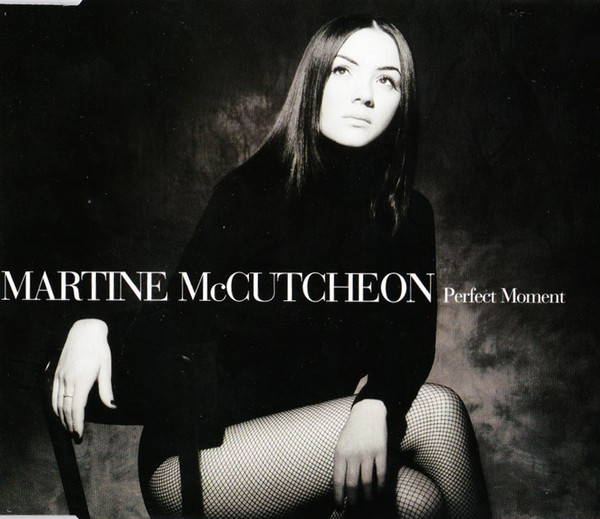
821. ‘Perfect Moment’, by Martine McCutcheon

If ‘Levi’s #1s’ is a niche chart-topping genre – see Mr. Oizo last time out – then this next chart-topper falls into an even rarer category…

Perfect Moment, by Martine McCutcheon (her 1st and only #1)

2 weeks, from 11th – 25th April 1999

Not just ‘TV stars’ (alongside the likes of Telly Savalas and David Soul) or ‘Soap Stars’ (alongside Kylie and Jason), both of which would be niche enough. No, after Nick Berry, this is just the second ever Eastenders number one.

And if this were a competition, then Martine McCutcheon wins the Battle of the Eastenders Pop Stars hands down. That is more to do with how crap Nick Berry’s effort was than any particular strengths that this record has, but still. A win’s a win. And ‘Perfect Moment’ starts off interestingly enough, with a grandiosely old-fashioned intro, and some early-eighties, Ultravoxy synths.

Yes, it’s a gloopy ballad. But it sounds quite out of place against the late-nineties pop landscape. This sounds like it could have replaced Nick Berry at the top back in 1986. I don’t want to use the word ‘experimental’ on a record as average as this, but at the same time McCutcheon’s producers were clearly trying a couple of things out.

By the second verse, though, order has been restored. That pre-set late-nineties drumbeat has kicked in, while the middle-eight (And if tomorrow brings a lonely day…) sets a template to be followed by every X-Factor winner’s single from here to eternity. Blandness wins, but for a minute or so something a little more interesting was threatened.

And what of Martine McCutcheon, AKA Tiffany Mitchell, who a few months earlier had been mown down in Albert Square by Frank Butcher’s car? She has a pretty decent voice here, on her solo debut, and by the end is trying her best to compete with the big ‘90s divas. She is ultimately, though, no Whitney Houston. She had made earlier attempts at a pop career, as part of failed girl-group Milan in at the start of the decade, and on a minor dance hit not long after she had joined ‘EastEnders.

‘Perfect Moment’ had originally been recorded by Polish singer Edyta Górniak in 1997, and this cover set McCutcheon up for a couple of years of chart success. Colour me surprised to discover that she managed four more Top 10 hits! None of which I have any memory of… She has gone on to acting success on stage and screen – perhaps most famous to an international audience as Natalie in ‘Love Actually’ – while the fact that she was killed off and unable to return to EastEnders has apparently always rankled with her.

820. ‘Flat Beat’, by Mr. Oizo

And now for something slightly different…

Flat Beat, by Mr. Oizo (his 1st and only #1)

2 weeks, from 28th March – 11th April 1999

…please don’t adjust your dial. I did earlier bill 1999 as the year of the random dance hit, and dance hits don’t come much more random than this.

Yes, it’s repetitive, but when the song is called ‘Flat Beat’ I think that’s largely the point. And yes, some of the myriad effects, pulses and throbs that make up this record are odd. But there’s something hypnotising in this track’s minimalism, and in that strange, vibrating bass riff that you can almost feel pressing against your eardrums (this is a chart-topper best appreciated through headphones).

Every thirty seconds or so, as you begin to tire of the simple beat, another little element is added, just in time. I’m imagining Mr. Oizo taking a walk through his local rainforest, and using some of the stranger sounding animal calls to decorate this tune. The intro features a woman claiming that Quentin (Mr. Oizo’s real name) is a ‘real jerkie’. The album version ends on what sounds a lot like someone taking a piss. I can’t say I truly love ‘Flat Beat’, but I do enjoy how bloody weird it is.

‘Flat Beat’ was helped to the top of the charts by Flat Eric, a yellow puppet made by Jim Henson’s Creature Shop. In the video he runs a business, answering phones and smoking frankfurters. But it was his appearance in a series of Levi’s adverts that made him famous, and that necessitated Mr. Oizo make a tune to go with them.

This is the latest – the seventh – and I believe final ‘Levi’s’ chart-topper. Since the mid-eighties we’ve had the jeans makers to thank for curios like ‘The Joker’, ‘Should I Stay Or Should I Go’, and Stiltskin’s ‘Inside’ making number one. Like its predecessors, ‘Flat Beat’ would have been nowhere near #1 without the ad campaign, but I will say that all of the Levi’s-resurrected chart-toppers have been worthwhile in their own way.

Mr. Oizo AKA Quentin Dupieux is a French DJ and filmmaker (‘oiseau’ being French for ‘bird’). ‘Flat Beat’ was a bonus track on his first album, and he’s had a few others which have been minor hits in his homeland. In the UK he has gold-star, purest one-hit wonder status, with nothing else even grazing the lower reaches of the charts.

It’s also worth noticing that, spoken intro aside, this is a purely instrumental track. Wikipedia lists it as the 25th instrumental number one, though they count ‘Hoots Mon’, and ‘Block Rockin’ Beats’ in that list, which seems generous. What’s indisputable is that there have been precious few since the genre’s heyday in the fifties and early-sixties – this is only the ‘90s second instrumental after ‘Doop’, while there were zero in the ‘80s – and that there are precious few more to come.

The album version:

819. ‘Blame It on the Weatherman’, by B*Witched

Storms gather, thunderclouds ripen, droplets fall like one of those ‘soft noise for sleep’ playlists… B*Witched are getting moody.

Blame It on the Weatherman, by B*Witched (their 4th and final #1)

1 week, from 21st – 28th March 1999

Before we get stuck into the meat of this next number one, can I ponder for a second what the most used non-musical sound effect is in pop music? I’m sure it must either be rainfall or revving motorbikes, but any other suggestions are welcome. The storms here are soon replaced by an acoustic guitar, and not for the first time I’m getting an unexpected Beatles flashback from a B*Witched number one. This time it’s ‘In My Life’ buried within the opening chords…

In fact this whole song is a game of spot-the-influences. The verses remind me of other late-90s indie-pop acts like Tin Tin Out and Catatonia, and most of all Natalie Imbruglia’s ‘Torn’. Then the new-age, Enya touches from ‘To You I Belong’ return for the chorus… The rain goes on, On and on again… Meanwhile the bad-weather-as-metaphor-for-heartbreak is a trope as old as pop music, from ‘Raining in My Heart’ to ‘Rhythm of the Rain’.

Since the ridiculous ‘C’est la Vie’, B*Witched have matured with each successive single, to the point that I’ve been quite impressed with how much I’ve enjoyed it when they’ve popped up in recent weeks. I’d still rank ‘Rollercoaster’ as my favourite, but this has some nice harmonies in the choruses and the middle-eight.

‘Blame It on the Weatherman’ was the group’s fourth consecutive #1 single, matching the Spice Girls’ achievement from a couple of years earlier. (In fact they bettered that record by having all four singles enter at the top; ‘Wannabe’ having climbed to its peak.) It would be their last though, as none of the singles from their second album came close. It’s interesting, actually, how quickly the B*Witched bubble burst. If we fast-forward exactly a year, in March 2000 we’d find ‘Jump Down’ struggling to a #16 peak.

They split in 2002, after being dropped by Sony despite having a third album in the works. More recently they have reformed and toured with other ‘90s pop acts (including recent chart-toppers 911), and have even tentatively released some new material, that hasn’t come close to troubling the charts. All a long way from the late-nineties, when B*Witched at the height of their powers were scoring four #1s across barely nine months. All together now: what were they like?

PS. I’m adding this in a couple of days after publishing, but I’ve just realised that when this record knocked Boyzone from the top it was probably the first and only time that two siblings have replaced one another at number one (Boyzone’s Shane Lynch and B*Witched’s Edele and Keavy Lynch). Let me know of any others!

818. ‘When the Going Gets Tough’, by Boyzone

From pop heaven, it’s back down to earth with a hefty bump…

When the Going Gets Tough, by Boyzone (their 5th of six #1s)

2 weeks, from 7th – 21st March 1999

Boyzone return with their penultimate chart-topper. Yes, we’re almost done with them. And, hey, at least this isn’t a ballad! Instead it’s that other modern pop group staple: the charity cover. From the late nineties onwards, charities desperate for your money made a clear shift away from novelty singles over to classic covers by the day’s big acts. There are similar crimes against pop to come from the likes of Westlife, Girls Aloud, and One Direction.

The synths are cheap and the production tacky on this version of Billy Ocean’s 1986 #1, while I think this might be Ronan Keating’s most grating vocal performance yet (a category with some very strong competition). In fact, this is pretty poor all round. I just don’t think Boyzone had the personality to do anything other than bland balladry. The fun and frivolity here sounds much too forced.

The best bit by far is that they keep the original’s saxophone solo almost note for note, which means we get a blast of sweet mid-80s sax – a sound I never realised I’d missed. And yes, the Billy Ocean version is a decent enough song (though not one I was overly hot on in my original post), and it’s hard to completely ruin decent source material. That original feels like a lifetime ago (in some ways it was, as I was born a few weeks before Ocean made #1), but the thirteen year gap between these versions means it’s the same as an artist in 2024 covering a song from 2011, which sounds like the blink of an eye…

This was the 1999 Comic Relief single, raising money for any number of good causes. So yes, yes, yes we shouldn’t be too harsh on it. (Though I would donate far more money than the price of a CD single to never hear Boyzone again). The video features the requisite plethora of celebs goofing around in the name of charidee. In fact, watching this was the most enjoyable part of this whole exercise, seeing people that hadn’t crossed my mind for many years: Will Mellor, John McCririck, Mystic Meg (RIP) and Saracen from Gladiators (as well as a very young Graham Norton).

817. ‘…Baby One More Time’, by Britney Spears

It’s Britney, bitch.

…Baby One More Time, by Britney Spears (her 1st of six #1s)

2 weeks, from 21st February – 7th March 1999

Sorry, couldn’t resist. That iconic intro is still eight years off. But let’s be real, the three note piano motif (the official term, apparently) that introduced the world to Britney Spears, and that underpins one of the all-time great pop songs, is even more iconic.

Yes, ‘all-time great’. Up there in the pop pantheon with ‘Cathy’s Clown’, ‘She Loves You’, ‘Dancing Queen’, ‘It’s a Sin’… You name a pop classic from any era, and ‘…Baby One More Time’ is up there holding its own alongside them. It has all the indefinable qualities – the ability to hook you instantly, the ability to remain catchy but never cloying, the ability to still somehow sound fresh after twenty-five years – which all classics need.

But, I hear you argue, is this not too bubblegum to be an all-time classic? Don’t Britney’s vocal, shall we say, limitations not detract? To the first charge I say no, for this has as much underlying melancholy as the best ABBA songs. What other teenybop songs involve lines about fatal loneliness? And to the second I say that sixteen-year-old Britney’s vocal stylings are perfect for a song about teenage lust and longing. Plus, she managed to influence the way an entire generation pronounced the word ‘baby’ (Bayba? Baybay? Byebuh?)

To reach truly magical heights though, a song needs a moment where everything just clicks. That moment of transcendence arrives in the middle eight, as the chorus lines are chopped up and loaded with emphasis: I must confess, That my loneliness, Is killing me now…

Of course, this was a massive smash across the world, and now stands as one of the best-selling singles ever. It’s most recent placing in the Rolling Stone Top 500 of all time was #205. It’s also been voted the greatest debut single of all time, and the UK’s 7th favourite number one. Britney aside, it also properly introduced the world to Max Martin, one of the most successful chart-topping writers and producers of all time. At last count I make this his first of twenty appearances in the credits of a chart-topping single in the UK.

‘…Baby One More Time’ also won awards for its video, in which Britney flaunts almost every school uniform rule in the book. It got criticism too, for sexualising both school uniforms and the teenage singer in them, as well as the suggestion that it was glamorising sexual violence. Martin has since argued that the ‘hit me’ in the lyrics refers to ‘hitting someone up on the phone’ (as the kids put it in 1999), and that any confusion stems from the fact that English isn’t his first language.

But frankly, who cares? A song this good doesn’t deserve to be caught up in tawdry speculation about its slightly risqué video. Having said that, while this might technically be the best of Britney Spears many singles, it is not my favourite. Britney has five more number ones to get through, and two of those songs can rival this for classic status.