Yo back up now and give a brother room, The fuse is lit and I’m about to go boom…! The first thing that becomes immediately apparent when I press play on our next number one is that I know almost all the words. When and how this happened I don’t know, but here we are…
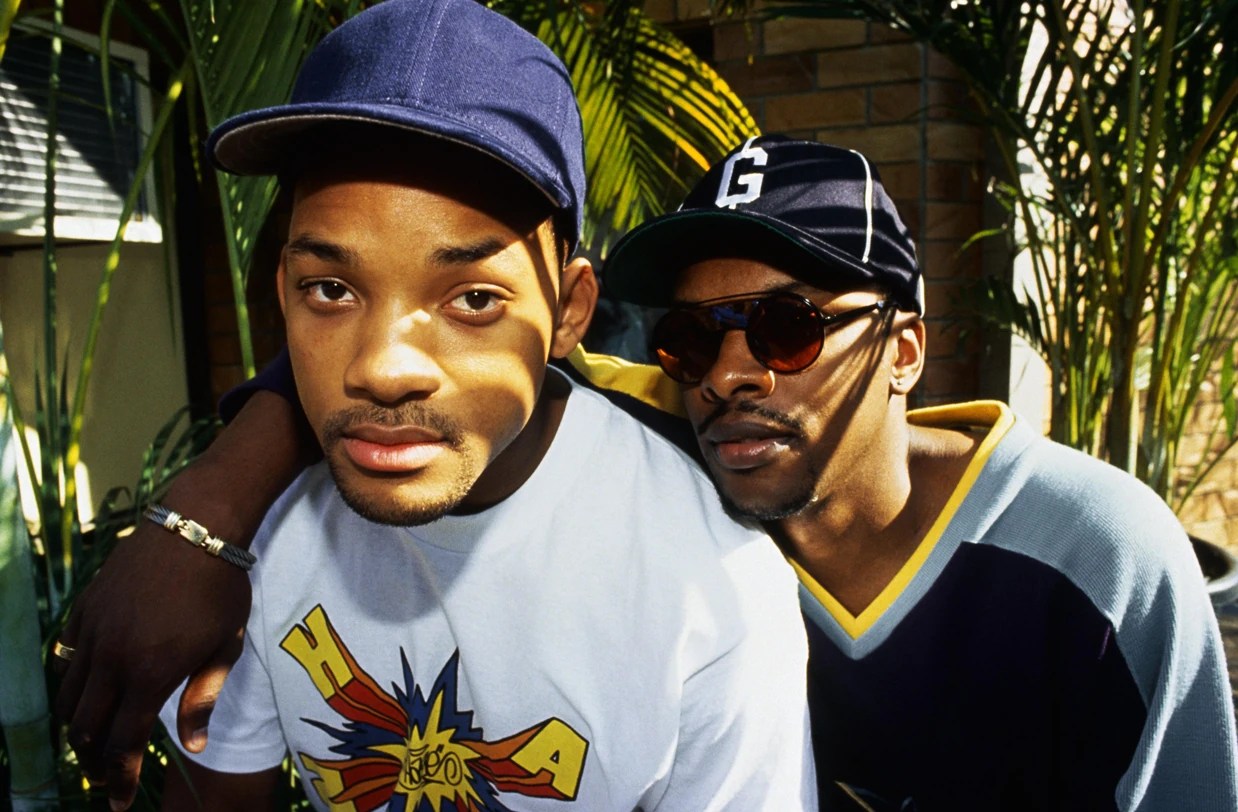
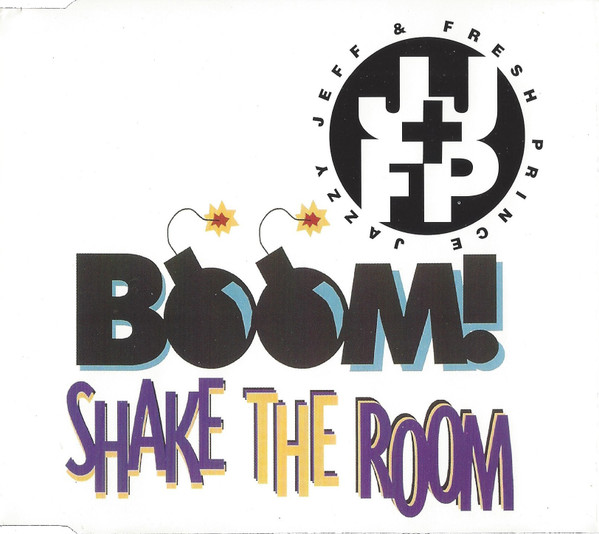
Boom! Shake the Room, by Jazzy Jeff & The Fresh Prince (their 1st and only #1)
2 weeks, from 19th September – 3rd October 1993
It’s the most rap-heavy #1 so far. No sung chorus, a bit of chanting, just Big Will spitting rhymes. Or should that be ‘The Fresh Prince’. It’s easy to assume that this was a tie-in with his role in the hit sitcom, but in reality the sitcom was a tie-in for a rap career which had been going since the mid-eighties.
And while it may be the purest hip-hop chart topper thus far, I’ll make the same comment that I’ve made about almost all rap songs we’ve featured: it’s hard now not to see this as a novelty. The call and response, the lines about ‘scoring like Jordan’, the stuttering verse… All very cute, all very tame. A kids party DJ could throw this on and fear no repercussions. The closest we get to something gangsta is when Will promises to find a girl, flip her around and then work that booty…
But, it’s a lot of fun. Like I said, I know nearly all the words. I grew up with rap a lot more explicit than this (with lots of words that a person of my complexion can’t go around saying…) I’m reminded of the classic Eminem line: Will Smith doesn’t have to cuss to sell records, Well I do, So fuck him, And fuck you too… That’s funny, but it also shows where Will Smith stood in the early 2000s: commercially very successful, but an outlier in the eyes of other rappers. Back in 1993, we’re on the verge of rap becoming a dominant sound in the charts, and I really don’t know if ‘Boom! Shake the Room’ was seen as cool, or already a relic of an earlier time.
Speaking of Eminem, we’re only seven years away from him scoring a huge #1 single about having his girlfriend gagged and bound in the boot of his car. That’s a huge shift, considering that the rap songs to have made #1 have been this, one about the Teenage Mutant Ninja Turtles, and Vanilla Ice. While the worst swearword that’s been uttered in a number one single has been, I think, ‘bullshit’. It’ll be interesting to watch how quickly tastes and standards change in the remaining years of the 1990s.
And while you could say that Will Smith became a figure of fun, spare a thought for the guy behind the decks on this record. Initially, Jazzy Jeff was the star of the duo, with first billing here and on their early hits, with wonderful titles like ‘Parents Just Don’t Understand’ and the ‘I Dream of Jeannie’ sampling ‘Girls Ain’t Nothing But Trouble’. At the very start of their relationship, Smith was Jazzy Jeff’s stand-in hype-man. Come the TV series, though, Jeff had become a punchline, spending most of his time getting launched out the door by Uncle Phil. ‘Boom! Shake the Room’ was the duo’s biggest hit, in the UK at least, but it was one of their last. Will Smith went solo in 1997 (more on that soon) with Jeff producing some his songs. He’s remained very active though, performing with Smith from time to time, while one of his biggest legacies is popularising the ‘transformer scratch’, a version of which opens this record.
The intro to our next number one kicks in, and I’m struggling to tell if it sounds like something we’ve already met in our journey through the early 90s, or if it was simply copied into ubiquity in the years that followed…
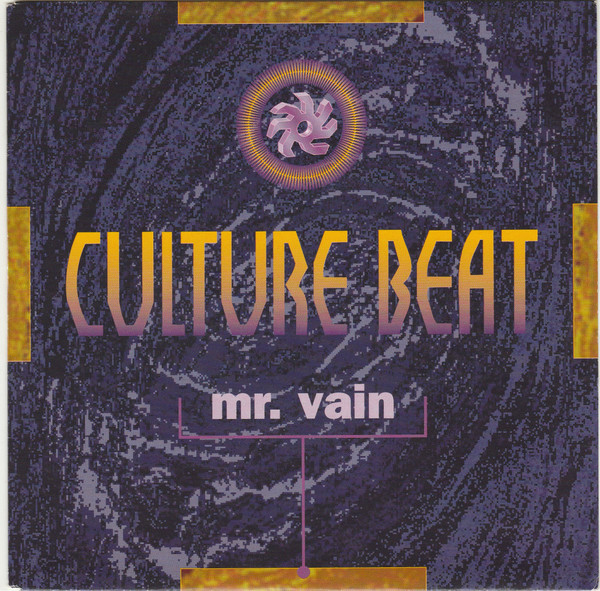
Mr. Vain, by Culture Beat (their 1st and only #1)
4 weeks, from 22nd August – 19th September 1993
On the one hand, ‘Mr. Vain’ is cheesy, throwaway Eurodance – the soundtrack to many a summer holiday in Ibiza (the 1990s is littered with dance hits that made the higher reaches of the charts in early autumn, after everyone had returned home from a fortnight in the Med). On the other, it’s an astute slice of dance-pop so of its time it could be in a museum.
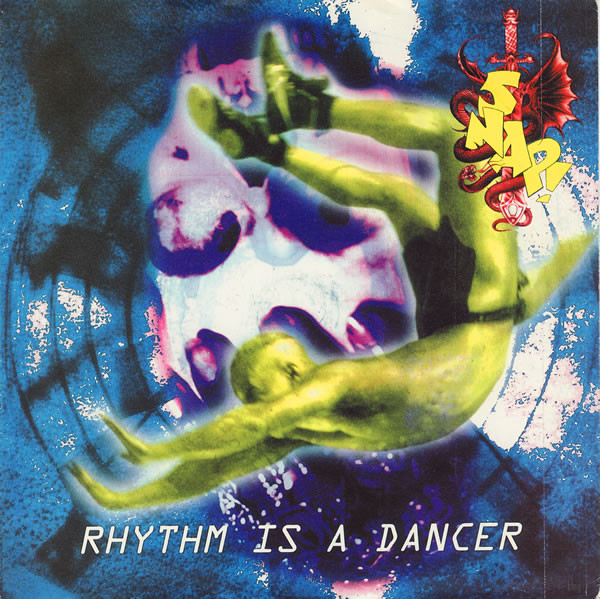
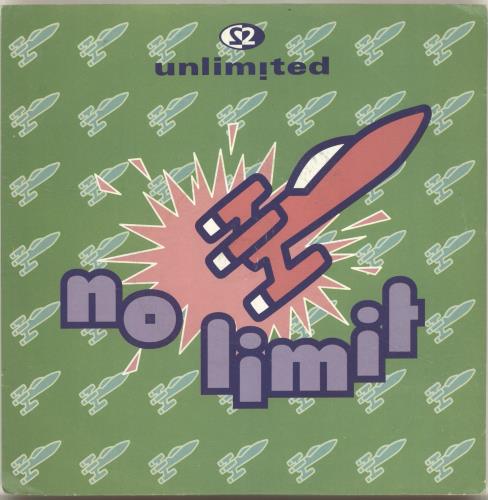
It follows a tried and tested formula: one girl who sings, one boy who raps, over a throbbing beat. It’s amazing how successful this was, over and over again, between 1990 and 1994. Snap!, 2 Unlimited, Culture Beat… ‘Mr. Vain’ is a both a cheap and cheerful rehash of ‘Rhythm Is a Dancer’, especially in the portentous intro, and a slightly less stupid take on ‘No Limit’, with its techno riff and juddering drum machine. It takes what was great about both those records, and creates a streamlined, optimised dance hit – perhaps the epitome of its genre.
Call him Mr Raider, Call him Mr Wrong… Away from the pulsing beat, there are lyrics that just beg to be chanted en masse. I know what I want and I want it now… A decade later, when I started going to nightclubs, this record would still get a regular spin, and girls would pick out their own personal ‘Mr. Vain’ among the strobes and the dry ice. Meanwhile, Mr. Vain responds in the rapped verses: Call me what you like, As long as you call me time and again…
I’m going to take bets on where Culture Beat were from. Place your chips…. There’s no way they were British – the thought didn’t even cross my mind, given that this is dictionary-definition Eurodance. I was tempted to go Dutch, or maybe Belgian… But no. They were a German creation, of course, from a producer with two rent-a-voices, keeping up a grand tradition that stretches all the way back to Boney M. For ‘Mr. Vain’, though, the large-lunged vocals are from a Brit – Tanya Evans – while the rap is supplied by an American – Jay Supreme.
They’d had a couple minor hits previously, but this one sent them into the stratosphere: a number one in eleven countries across Europe, setting them up for a year or so of follow-up Top 10s. In Germany their success lasted the better part of a decade, until a remake of their biggest hit, ‘Mr Vain Recall’, in 2003. Culture Beat remain a going concern, presumably touring festivals across central Europe every summer, with a completely different line-up, Evans and Supreme having left way back in 1997.
Living on My Own, by Freddie Mercury (his 1st and only solo #1)
2 weeks, from 8th – 22nd August 1993
And of the three, this remix of his minor 1985 hit is the tribute that Freddie himself might have enjoyed the most. On the one hand it is a shame that his solitary solo number one isn’t a blistering rocker; but then he was a musician who never let himself be restricted within one genre. ‘Living on My Own’ is updated nicely for the early-mid nineties, with a chilled out house beat, by a production trio called No More Brothers and, although it was still listed on the charts as the 1985 original, it was undoubtedly this remix that sent it to #1.
I say that Freddie would have liked this version and, presumptuous as that might be, if you listen to the original, from his ‘Mr. Bad Guy’ solo album, then it was already much more dance than rock. The lyrics, meanwhile, are very personal: Sometimes I feel I’m gonna break down and cry, Nowhere to go, Nothing to do with my time… I get lonely… They’re based heavily on quotations from Greta Garbo (which feels very Freddie Mercury…) and each chorus ends on the positive mantra: Got to be some good times ahead… Though knowing how soon it all would end, that line is tinged with sadness.
I will also give a shoutout to an earlier remix – which I initially thought was the chart-topping version – by Julian Raymond. This is my favourite of the three versions, with a faster, industrial beat, more of Mercury’s trademark yodelling, alongside a frenetic piano line. It was commissioned as part of the ‘Freddie Mercury Album’, released in November 1992 to mark the 1st anniversary of his death, but never released as a single.
The video to the 1993 version of ‘Living on My Own’ was the same as the 1985 one, and featured footage of a Drag Ball held for Mercury’s 39th birthday party. I love this quote: “Because of the garishly costumed homosexuals and transvestites celebrating a decadent, raucous party in the video clip, the BBC long refused to broadcast the music video on its channels.” Good old Beeb, always ready to ban those garish homosexuals…
I hadn’t realised quite how well Freddie Mercury’s solo career – while nothing compared to Queen’s discography – had been ticking along since the mid-80s, when he made the Top 10 with ‘Love Kills’. The ‘Living on My Own’ remix was his seventh, and final, Top 20 hit, and a huge smash across Europe. (Especially in France, where it did a Bryan Adams and stayed at #1 for fifteen weeks! Bryan or Freddie… I know who I’d rather have clogging up the number one spot…)
With this we can finally bid farewell to Freddie Mercury. Three number one singles in his lifetime, two after his death, and one well-intentioned tribute in-between. For my money, he is the greatest frontman of all time. Not only could he rock with the very best; he could do opera, musical theatre, pop, disco, camp ditties about girls with fat bottoms… And he sounds just as at home here, on a house track released two years after his death, as he does anywhere.
If we’re being reductionists, we can distil the entire 1990s down to four chart-topping acts. Oasis, of course, and Blur. The Spice Girls. And Take That. And of the four, it’s the boy band who make it to number one first. Can we finally declare that the nineties, after many a false start, begin now…?
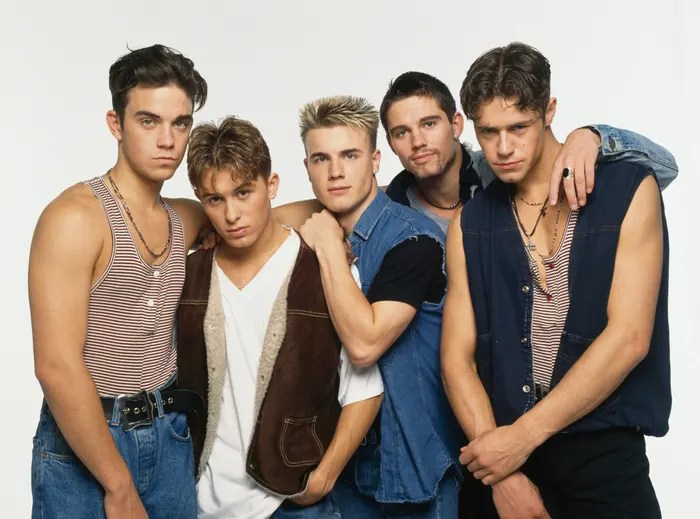
Pray, by Take That (their 1st of twelve #1s)
4 weeks, from 11th July – 8th August 1993
This record actually sounds quite cool – a new-jack swing beat and some edgy horn samples – until the voice comes in. Gary Barlow. Was he ever cool? I’d assumed he must have been, because he was young and in a hot new boyband. But even here, in his prime, he looks like the annoyingly well-behaved cousin that your mum insists on comparing you to… Why can’t you start a hugely successful boyband like Gary…? I mean, who’s he fooling, in the video, writhing around on the beach with his shirt hanging open.
Anyway, this isn’t the time to launch head first into my feelings on Gary Barlow (we can save that for his ill-fated solo career). He may sing lead here, but there are four other boys involved. And, to be fair, they all do their share of topless writhing in the video: on the beach, in the surf, in a fountain, entwined in the fronds of a banyan tree. On the one hand it’s quite arty; on the other it’s completely gratuitous.
The song itself is a funny mix. It treads a similar path to the Gabrielle hit that came before it: the verses are slow, wordy, and strangely lacking in hooks, considering that this is a pop song aimed at teenage girls. Barlow has always had ambition, writing songs that go above and beyond what you’d expect from his genre. He’s also always had the annoying habit of pulling a great chorus out of his arse. Just in time it comes racing in… Before I even close my eyes… All I do each night is pray…
We’ve had a few American boybands warming up the number one slot before this, in the shape of NKOTB, Color Me Badd, and Boyz II Men. But in the UK at least, Take That are the boyband of the decade. Perhaps of all time (1 Direction might have something to say about that, but I can’t bring myself to check the actual sales figures…) Either way, we’re going to be hearing an awful – interpret that word however you wish – lot of them in the coming posts.
And although they are the boyband of the decade, ‘Pray’ isn’t one of their hits that has been played to death. Which means that it’s actually fine to hear this again, and to enjoy the moments that soar past the sludgy verses. Take That had had quite a slow rise to the top, compared to some other pop acts. Their first release, the Hi-NRG ‘Do What U Like’ made #82 in the summer of 1991, and they slowly shed the pop-dance, scored hits with covers of Tavares and Barry Manilow, and went a bit more sophisticated. Once ‘Pray’ made #1, the rest was history. Though few at the time could have imagined that their chart-topping career would span almost two decades…
It’s a low-key way to kick off the next thirty tunes, a run of chart-toppers that will take us right into the heart of darkness… the mid-nineties.
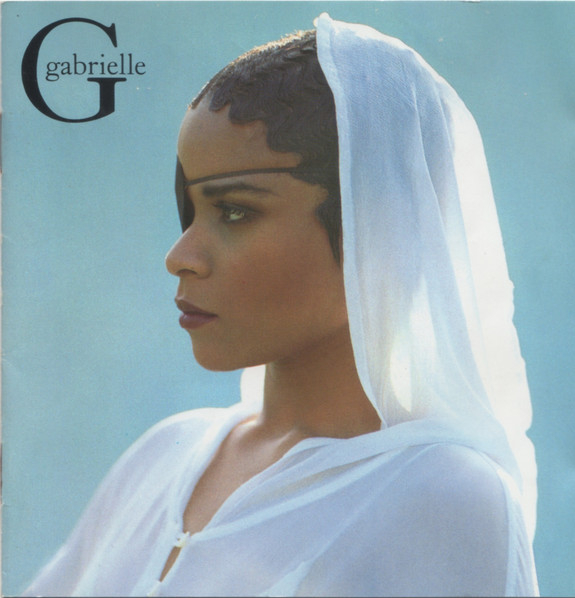
Dreams, by Gabrielle (her 1st of two #1s)
3 weeks, from 20th June – 11th July 1993
Looking back, Tasmin Archer was the forerunner of this sort of soul-lite, dinner-party-background-music peddling female singer, who will be very popular for the rest of the decade and beyond. Think Heather Small, Des’ree, and the doyenne of the genre: Gabrielle.
It’s light and airy, like a breeze stirring your curtains on a summer’s day – acoustic chords, springy strings, and Gabrielle’s gentle voice. One of the hallmarks of this genre is the uplifting lyrics – its fans don’t much want to linger on the fact that life is a crushing march towards oblivion – and ‘Dreams’ delivers fully on that front…
Dreams can come true… You know you got to have them, You know you got to be strong… (Except, the impossible ‘dream’ that came true is that she’s got a boyfriend, so…) Anyway, I can enjoy it, to a point. The problem is that it remains with you for just as long as the summer’s breeze it resembles. You hear it, think it’s pleasant enough, and then you move on.
It’s too controlled, too tidy. Precision-drilled pop. To me, it’s got #8 hit written all over it. But this record meant Gabrielle’s first ever release went to the top, and in debuting at #2 it became the highest charting debut single ever, so what do I know? It didn’t quite appear out of nowhere, though, as an earlier version had been doing the rounds for a year or two. It featured a sample of Tracy Chapman’s ‘Fast Car’ that the label which signed her couldn’t clear, so a re-record was ordered.
So maybe the earlier version had laid the groundwork for this to become a massive hit. Or maybe there’s something in the chorus that lingers after all (not for nothing does this remain Gabrielle’s signature song)? Or maybe it’s her voice, distinctive but pleasant, husky but warm. Or maybe it was nothing to do with the music… For when I think of Gabrielle the first word that springs to mind is ‘eyepatch’. She wears it due to a condition called ptosis, which causes drooping of the eyelid, and the sparkly model she sports in the video to this song is a real treat.
It might be stretching it a bit to claim that Gabrielle’s debut success is the start of a line of British female singers that stretches past Dido, Amy Winehouse, all the way to Adele. A stretch not least because ladies like the aforementioned Tasmin Archer, not to mention Lisa Stansfield, have already scored big soul-lite #1s. But this was certainly a type of singer that came of age in the 1990s, and none were bigger back then than Gabrielle. ‘Dreams’ set her up for a decade of consistent Top 10s, including one further chart-topper that we’ll meet in the early weeks of the new millennium.
For the twenty-third time, no less. This recap spans well over two years, from March 1991 to June 1993, which I think – without going back through all the previous twenty-two – might be a record. At least since the mid-fifties, when songs having double-digit runs at the top of the charts was the norm.
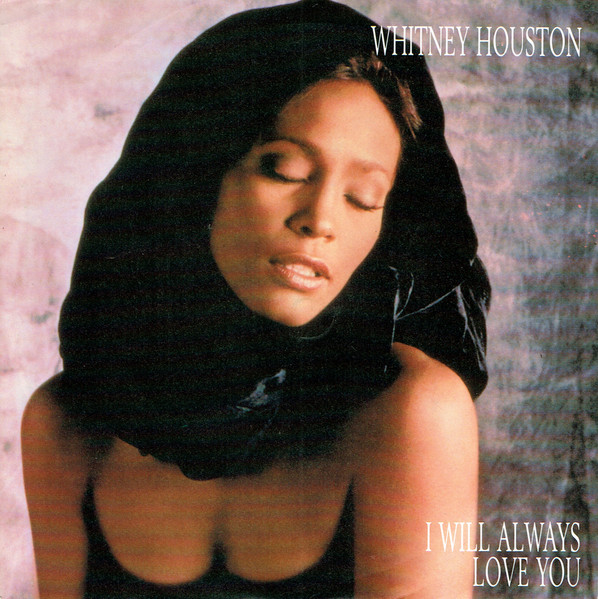
And the reason why we’ve taken so long to cover the last thirty #1s? It would be tempting to lay the blame at the feet of Bryan Adams, for his still record-holding sixteen-week consecutive run with ‘(Everything I Do) I Do It for You’, and Whitney Houston for her ten-week stint with ‘I Will Always Love You’. But we’ve also had an eight-weeker from Shakespear’s Sister, a six-weeker from Snap!, and six separate five-weekers. In a previous post, I went into some of the reasons behind this: a decline in vinyl sales not yet being covered by growing CD sales, resulting in sluggish charts. Give it a few years though, and all this will be behind us, with sales at an all-time high.
It might also have had something to do with the lack of a dominant ‘sound’ in the early nineties. Sales tend to peak with hot new genres – Merseybeat, glam, disco, new wave – and trough during the years in between. We’re currently between the house, dance and SAW of the late ‘80s and the Britpop years, and this is best indicated by the likes of Adams and Houston’s monster hits. Both were from blockbuster movies, and they were far from the only two. In fact, if we had to pick a dominant genre from the early ‘90s, it would be the movie soundtrack hit.
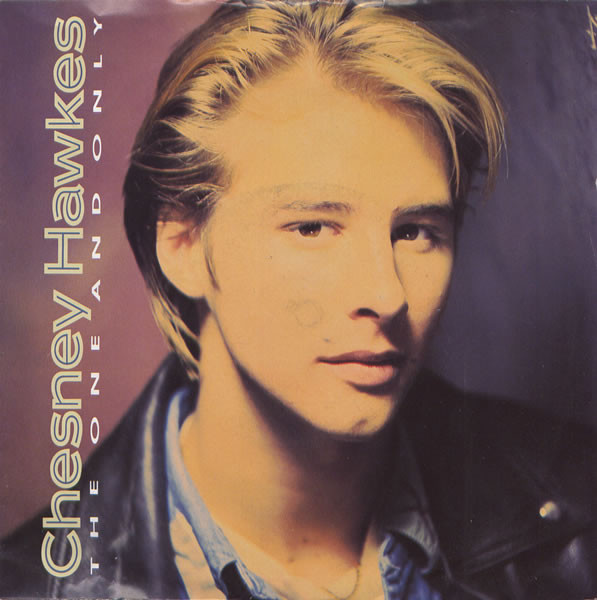
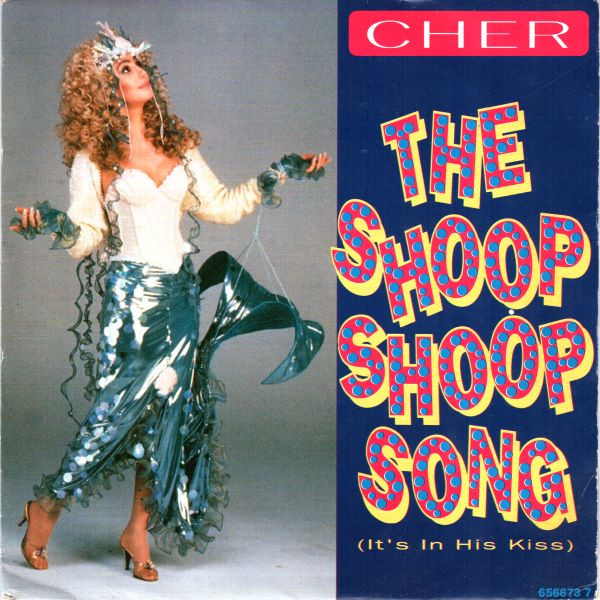
I count seven movie soundtrack #1s in this period, spanning all manner of genres: Chesney Hawkes (pop-rock), Cher (retro pop), Color Me Bad (boyband R&B), Adams and Houston (power ballads), Shaggy (reggae), and UB40 (reggae-lite), plus a bit of musical theatre from Jason Donovan. Some have been good, some have been okay, some I would happily never hear again.
If we had a runner-up in the ‘sounds of the early nineties’ category, then it would have to be the random re-release. They’ve been popping up since Jackie Wilson scored 1986’s Christmas number one, and they’ve usually – though not always – been TV advert tie-ins. The most recent two gave us a couple of pretty unique chart-toppers: The Clash’s ‘Should I Stay or Should I Go’, and The Bluebells’ ‘Young at Heart’, thanks to Levi’s and VW respectively. But these, sadly, mark the end of the re-release phenomenon (for now…)
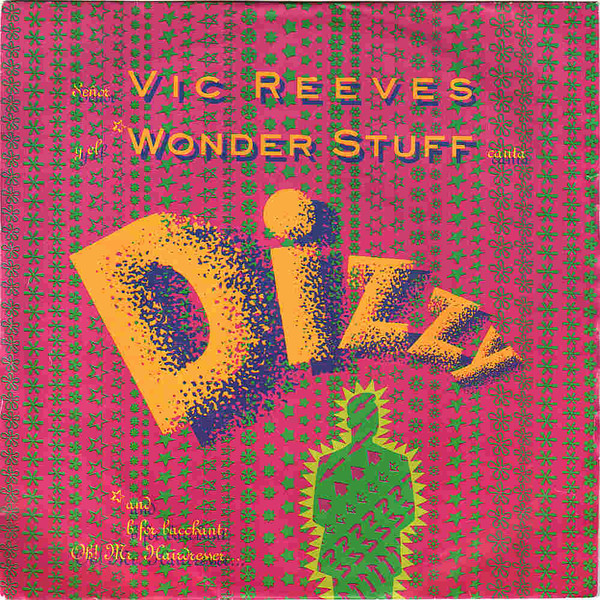
Before hitting the awards portion of this post, let’s go through some of the other stories from the past thirty chart-toppers. And it’s starting to feel like the ‘nineties’ as I remember it, with dance music continuing to shapeshift from its sample-heavy origins, into streamlined pop smashes like ‘Rhythm Is a Dancer’, and techno bangers such as ‘No Limit’ (not to mention the soon to be everywhere, half-hearted dance remakes of oldies a laKWS). There’s also been a whiff of Britpop in the unlikely shape of Vic Reeves and The Wonder Stuff.
We’ve bid farewell to Freddie Mercury, twice; with the posthumous ‘These Are the Days of Our Lives’ (paired with ‘Bohemian Rhapsody’) in the wake of his death, and the ‘Five Live E.P.’ on which Queen performed a live version of that hit, and of ‘Somebody to Love’, with Lisa Stansfield and George Michael. The other two tracks on that EP were Michael solo tracks which, along with his earlier live duet with Elton John on ‘Don’t Let the Sun Go Down on Me’, have helped confirm him as the biggest British solo star of the era.
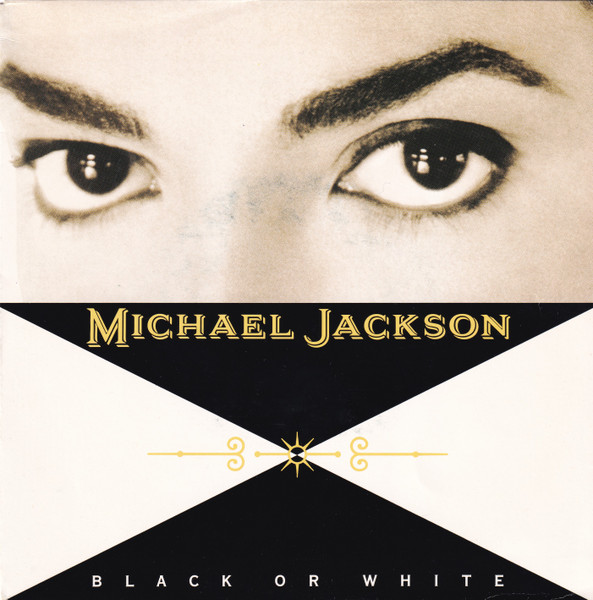
We’ve also started to ride the crest of another reggae wave. (In fact, the three #1s from Shaggy, Ace of Base and UB40 towards the end of this thirty set the charts up nicely for probably their most prolonged run of reggae hits.) Elsewhere, Michael Jackson premiered the biggest music video ever, in his usual understated way, and the evergreen Cher set a record for the longest gap between number one singles. Plus, we can’t finish without mentioning Erasure, who scored a chart-topper after years of trying, and kickstarted the modern ABBA-nnaisance.
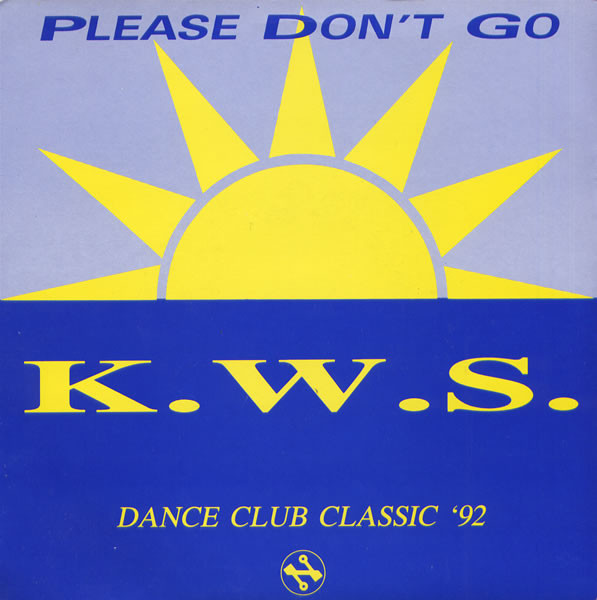
To the awards then. Starting, as is traditional, with the The ‘Meh’ Award for bland forgettability. I briefly considered Jason Donovan’s ‘Any Dream Will Do’, but that soundtrack was the first CD I ever owned, and residual fondness prevents me. There was also UB40’s pedestrian cover of ‘Can’t Help Falling in Love’, but I’ve already awarded them a ‘Meh’ award, and to do so twice would be cruel. So we’re left with Wet Wet Wet’s ‘Goodnight Girl’, which does have a good chorus, Tasmin Archer’s ‘Sleeping Satellite’, with a vocal performance which doesn’t really deserve such an award, and KWS’s bland dance double ‘Please Don’t Go’ / ‘Game Boy’. The KC & the Sunshine Band cover was dull, and the hardcore ‘Game Boy’ was ear-catching for a minute before it become repetitive. They win.
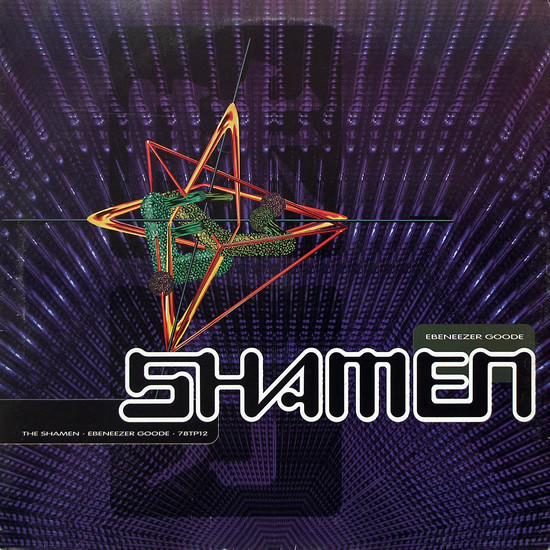
We don’t have quite as rich a set of pickings for The WTAF Awardfor being interesting if nothing else as we did in the last recap, but it’s still a strong field. You could give it to ‘Stay’, for the video alone. Or Right Said Fred for their jaunty, non-‘Sexy’, ‘Deeply Dippy’. Or maybe Hale and Pace’s char-com danceathon ‘The Stonk’ (though I perhaps have bigger things planned for that record…) No, I’m giving this WTAF award to The Shamen, for bringing rave culture and quality innuendo to the top of the charts, with the leering, gurning ‘Ebeneezer Goode’.
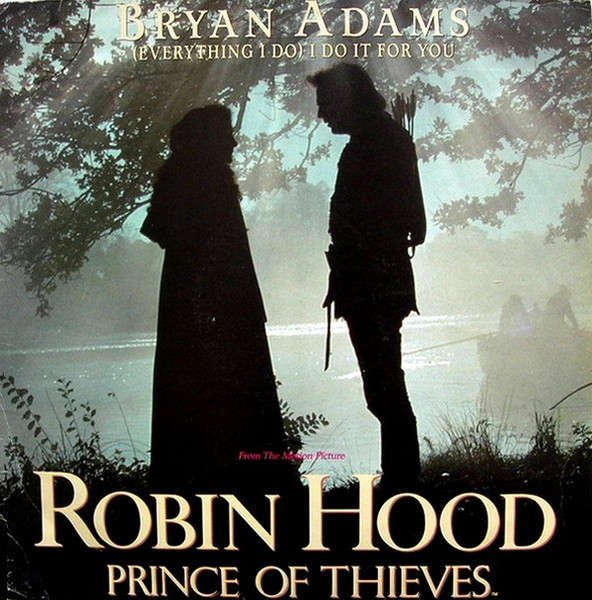
Where to go with this recap’s Very Worst Chart-Topper award, then. Do we give it to Color Me Badd and their lame attempts to woo us with ‘I Wanna Sex You Up’? Or do we give it to ‘The Stonk’ – a ‘comedy’ record so aggressively unfunny that it was almost sad…? Do we give it to either of the gruesome twosome who clogged the top of the charts up for over half a year between them…? To be honest, yes, let’s. I just can’t get past the elephant in the room – a record that stayed at #1 so long it started to stink like a beached whale-carcass, ticking every bad power-balled cliché on the list. Bryan Adams wins.
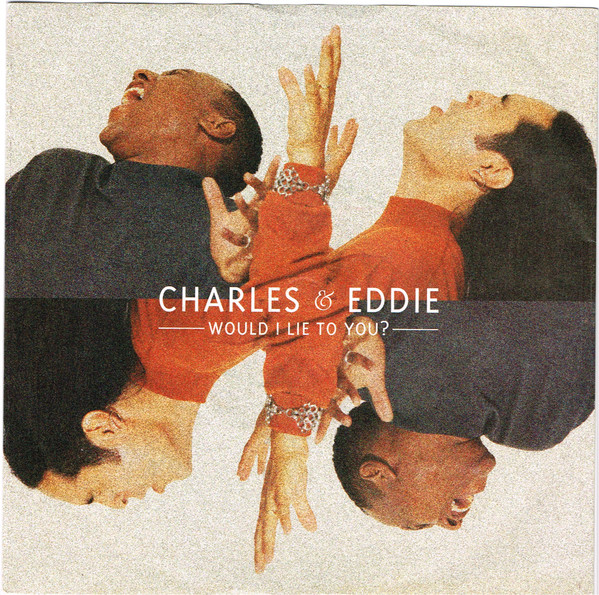
Finally, of course, the 23rdVery Best Chart-Topper award. I’ve been pleasantly surprised by the general quality of our recent number ones, but I’m struggling to pick an all-time classic. I’m tempted to give it to 2 Unlimited, for their very-1993 techno banger. It’s big, it’s dumb, it’s a whole lot of fun. But I couldn’t live with myself if I did, not really. Instead, I’m awarding it to Charles & Eddie, for the least nineties-sounding song of the entire thirty. It’s a slice of timeless soul, the quality of which surprised me when I listened to it for the first time in years. Check it out again below, if you haven’t. Unlike the two chaps in question, I wouldn’t lie to you…
Let’s recap the recaps:
The ‘Meh’ Award for Forgettability
‘Hold My Hand’, by Don Cornell.
‘It’s Almost Tomorrow’, by The Dream Weavers.
‘On the Street Where You Live’, by Vic Damone.
‘Why’, by Anthony Newley.
‘The Next Time’ / ‘Bachelor Boy’, by Cliff Richard & The Shadows.
‘Juliet’, by The Four Pennies.
‘The Carnival Is Over’, by The Seekers.
‘Silence Is Golden’, by The Tremeloes.
‘I Pretend’, by Des O’Connor.
‘Woodstock’, by Matthews’ Southern Comfort.
‘How Can I Be Sure’, by David Cassidy.
‘Annie’s Song’, by John Denver.
‘I Only Have Eyes For You’, by Art Garfunkel.
‘I Don’t Want to Talk About It’ / ‘The First Cut Is the Deepest’, by Rod Stewart.
‘Three Times a Lady’, by The Commodores.
‘What’s Another Year’, by Johnny Logan.
‘A Little Peace’, by Nicole.
‘Every Breath You Take’, by The Police.
‘I Got You Babe’, by UB40 with Chrissie Hynde.
‘Who’s That Girl’, by Madonna.
‘A Groovy Kind of Love’, by Phil Collins.
‘Do They Know It’s Christmas?’, by Band Aid II.
‘Please Don’t Go’ / ‘Game Boy’, by KWS.
The WTAF Award for being interesting if nothing else
‘I See the Moon’, by The Stargazers.
‘Lay Down Your Arms’, by Anne Shelton.
‘Hoots Mon’, by Lord Rockingham’s XI.
‘You’re Driving Me Crazy’, by The Temperance Seven.
‘Nut Rocker’, by B. Bumble & The Stingers.
‘You’ll Never Walk Alone’, by Gerry & The Pacemakers.
‘Little Red Rooster’, by The Rolling Stones.
‘Puppet on a String’, by Sandie Shaw.
‘Fire’, by The Crazy World of Arthur Brown.
‘In the Year 2525 (Exordium and Terminus)’, by Zager & Evans.
‘Amazing Grace’, The Pipes & Drums & Military Band of the Royal Scots Dragoon Guard.
‘Kung Fu Fighting’, by Carl Douglas.
‘If’, by Telly Savalas.
‘Wuthering Heights’, by Kate Bush.
‘Hit Me With Your Rhythm Stick’, by Ian Dury & The Blockheads.
‘Shaddap You Face’, by Joe Dolce Music Theatre.
‘It’s My Party’, by Dave Stewart & Barbara Gaskin.
‘Save Your Love’ by Renée & Renato.
‘Rock Me Amadeus’, by Falco.
‘Pump Up the Volume’ / ‘Anitina (The First Time I See She Dance)’, by M/A/R/R/S.
‘Doctorin’ the Tardis’, by The Timelords.
‘Sadeness Part 1’, by Enigma.
‘Ebeneezer Goode’, by The Shamen.
The Very Worst Chart-Toppers
‘Cara Mia’, by David Whitfield with Mantovani & His Orchestra.
‘The Man From Laramie’, by Jimmy Young.
‘Roulette’, by Russ Conway.
‘Wooden Heart’, by Elvis Presley.
‘Lovesick Blues’, by Frank Ifield.
‘Diane’, by The Bachelors.
‘The Minute You’re Gone’, by Cliff Richard.
‘Release Me’, by Engelbert Humperdinck.
‘Lily the Pink’, by The Scaffold.
‘All Kinds of Everything’, by Dana.
‘The Twelfth of Never’, by Donny Osmond.
‘The Streak’, by Ray Stevens.
‘No Charge’, by J. J. Barrie
‘Don’t Give Up On Us’, by David Soul
‘One Day at a Time’, by Lena Martell.
‘There’s No One Quite Like Grandma’, by St. Winifred’s School Choir.
‘I’ve Never Been to Me’, by Charlene.
‘Hello’, by Lionel Richie.
‘I Want to Know What Love Is’, by Foreigner.
‘Star Trekkin’’, by The Firm.
‘Nothing’s Gonna Change My Love for You’, by Glenn Medeiros.
‘Let’s Party’, by Jive Bunny & The Mastermixers.
‘(Everything I Do) I Do It for You’, by Bryan Adams.
The Very Best Chart-Toppers
‘Such a Night’, by Johnnie Ray.
‘Cherry Pink and Apple Blossom White’, by Perez ‘Prez’ Prado & His Orchestra.
‘Great Balls of Fire’, by Jerry Lee Lewis.
‘Cathy’s Clown’, by The Everly Brothers.
‘Telstar’, by The Tornadoes.
‘She Loves You’ by The Beatles.
‘(I Can’t Get No) Satisfaction’, by The Rolling Stones.
‘A Whiter Shade of Pale’, by Procol Harum.
‘I Heard It Through the Grapevine’, by Marvin Gaye.
‘Baby Jump’, by Mungo Jerry.
‘Metal Guru’, by T. Rex.
‘Tiger Feet’, by Mud.
‘Space Oddity’, by David Bowie.
‘I Feel Love’, by Donna Summer.
‘Heart of Glass’, by Blondie.
‘The Winner Takes It All’, by ABBA.
‘My Camera Never Lies’, by Bucks Fizz.
‘Relax’ by Frankie Goes to Hollywood.
‘You Spin Me Round (Like a Record)’, by Dead or Alive
More reggae at the top of the charts, after Shaggy and Ace of Base over recent weeks. And it’s Britain’s best-sellers in the genre who are bringing it there…
(I Can’t Help) Falling in Love With You, by UB40 (their 3rd and final #1)
2 weeks, from 6th – 20th June 1993
As with their last #1, a cover of ‘I Got You Babe’ with Chrissie Hynde, this is a dub take on a golden oldie (though note the slight title change from the Elvis original, a chart-topper in 1962). And I can see what they were going for – a softened version of their reggae sound, with clear nineties dance influences in the swaying beat – but I can’t take to it. ‘Plodding’ and ‘slow’ were the two notes I took on first listen. I also gave their version of ‘I Got You Babe’ a ‘Meh’ award, so I’ve got form.
Ali Campbell’s voice is an acquired taste most of the time, and especially so here. I don’t know if he’s trying to imbue his lines with emotion, but it mainly sounds as if he’s straining to get them out. Obviously it doesn’t help that the listener automatically compares his efforts to Elvis’s from thirty years earlier… And yet, the quality of the song shines through – there’s a reason why it’s become a standard – and I do like the addition of the short, sharp horn fills towards the end.
Like ‘Oh Carolina’ before it, ‘(I Can’t Help) Falling in Love With You’ featured on the soundtrack to the Sharon Stone movie ‘Sliver’. There are very few film soundtracks to have included multiple #1s, and it’s amazing that a movie as poorly regarded and forgotten as this ‘Sliver’ managed it. Still it gave UB40 their 3rd and final chart-topper, and became their biggest hit in the US, staying at #1 for seven weeks.
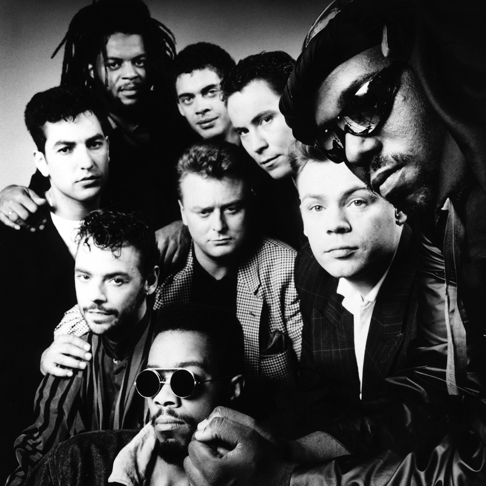
And we should note the impressive longevity of the band, given that those three number ones were spread out over a decade (while the Campbell brothers have one more shot at top spot, in a featuring role, to come). But I think it’s fair to say, and this is coming from someone who wouldn’t count himself as a fan, that UB40 are not best represented by their three #1s. Two of them are fairly pedestrian covers, while ‘Red Red Wine’ – which was also a cover, of course – has bit more charm to it, though still plays it fairly safe.
They had a few more years of chart hits in them, including two further Top 10s, but its perhaps right to mark this as UB40’s swansong. They remain a going concern, with four of the original eight members still in the band. Ali Campbell, however, left in 2008, after disagreements with the band’s management.
Enter Sweden’s 3rd biggest-selling pop act… (Answers for 2nd place on a postcard… I’ll reveal it at the end of the post!)
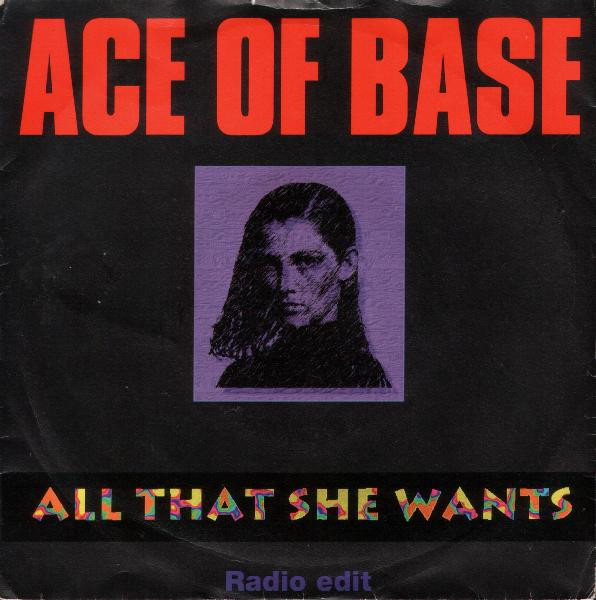
All That She Wants, by Ace of Base (their 1st and only #1)
3 weeks, from 16th May – 6th June 1993
And in the grand Swedish tradition, it’s a male-female combo – two men, two women (though as far I can tell no marriages) – Ace of Base. With what I’ve always thought to be a deeply strange pop song.
There’s the sparse, ghostly intro, for example. And all the empty spaces in the song, where it’s just nothing more than a drum machine and a lumbering synth riff, and the low-key ending. It’s not your normal pop smash, even if it has more than a hint of dub-reggae – soon to be one of the dominant chart sounds – in the steady, hypnotic beat. And that’s before we dissect the lyrics…
All that she wants, Is another baby, She’s gone tomorrow boy… They tell the tale of a femme fatale, who prowls an unnamed beach looking for men… She’s the hunter, You’re the fox… And in that respect it’s great. Girl power! Fifteen years ago Brotherhood of Man told the story of a holiday resort lothario in ‘Figaro’, but Ace of Base flip it on its head. If it were sung by men it might be a bit cliched, but no. Go girls!
The problem I have with the lyrics is the fact that, as a kid, I took them literally. All that she wants, Is another baby… I thought she was wandering the beach looking for a man to get her pregnant. Which is weird, and I apologise; but having done some research I find I’m not alone. “As far as I can remember, ‘All That She Wants’ by Ace of Base is the only hit single ever to talk about a lady who uses men for stud service so that she can become an unwed mother,” said LA Weekly at the time. I like to think Ace of Base knew what they were doing, keeping the lyrics intentionally vague and menacing. Either way, I feel seen.
‘All That She Wants’ is definitely a grower. Even now, on my fourth or fifth listen, I’m remembering why it is such a good pop tune. I’m not sure what the hooks are – or perhaps it’s because there are so many it’s hard to pinpoint them – but it worms its way in and stays there. Just like Sweden’s biggest pop group, the one it’s impossible not to compare Ace of Base to… It’s not out of the question to imagine that, had ABBA been around in 1993, they might have been making records like this. And, like Agnetha and Frida, the girls here have similarly accented, idiosyncratic, but still very alluring, English.
This was only Ace of Base’s second chart hit, and what a hit. A number one across Europe, presumably unavoidable at beach bars from Faro to Faliraki in the summer of ’93, and a #2 in the US. It set them up for a run of Top 10s through the 1990s, including US #1 ‘The Sign’ and a cover of ‘Don’t Turn Around’, which Aswad had taken to the top in 1988. But permit me to give a shout out to my favourite Ace of Base tune, ‘Always Have, Always Will’, which takes everything you love about ABBA, Motown, sixties girl groups, and serves it up in pop perfection. Its #12 peak be damned!
This would be their only visit to the top of the charts, but they remain Sweden’s 3rd most successful act. ABBA are obviously the 1st, but what of the runners-up…? Well, it’s Roxette (another male-female act!), who never made it higher than #3 in the UK. Personally I’d have named garage rock loons The Hives as my second favourite Swedish act, but they’ve never come close to troubling the top of the charts.
If we thought ‘Oh Carolina’ was an unpolished step away from the usual sounds of the early nineties, then what to make of this folksy jig…?
Young at Heart, by The Bluebells (their 1st and only #1)
4 weeks, from 28th March – 25th April 1993
We need to sound the ‘random re-release’ klaxon, one that has been honked fairly often during these past few chart years, for the success of this record was not completely organic. ‘Young at Heart’ was originally a #8 hit, in 1984, for Scottish jangle-pop act The Bluebells. It was their biggest hit, from the only studio album they released before disbanding in 1985. Fast-forward nearly a decade, and the song is being featured in a commercial for Volkswagen (not Levi’s, for once!)… Hey presto. Number one.
And aren’t we glad that it was! It’s distinctive, bordering on strange, and yet oh so catchy. Banjos, harmonicas, and most of all violins – the solo has to be one of the most ‘out there’ moments in a #1 for many a year – come together at the barn dance for a tale of young love: They married young, For love at last, Was their only crime…
It’s always hit me as a sort of ‘Come On Eileen’ Part II, both in terms of the Celtic sounds and the subject matter. Plus at its heart, despite all the country dressing, it has a pure pop bridge and a soaring chorus, which hint at an interesting origin story. I’ll let you in on a secret, one that raised my eyebrows when I found it out barely five minutes ago… The reason this song has such strong pop credentials is because it was written, and originally recorded by, Bananarama! I know, right…!
They recorded it for their debut album in 1983 – it was actually co-written by Siobhan Fahey (sort of giving her a second non-Bananarama number one) and the band’s guitarist Bobby Bluebell (not his real name) – and, if we’re honest, their version is fairly bland. In fact, The Bluebells’ take is a lesson in how to do a cover version right: changing the tone, the tempo, the genre, to the point where you’d have to be listening pretty closely to notice that they were the same song.
The Bluebells reformed especially for the TOTP performance brought about by the record’s unexpected success, and have continued to come back together on and off over the years. One of their former members is a lecturer in music business, while another is a golf correspondent for The Guardian.
Sadly, I make this the final ‘random re-release’ we’ll see, for a while at least. There are plenty more to come, especially in the 21st century, but this is the end of that golden spell in the late-eighties and early-nineties, when Ben E King, Jackie Wilson, The Clash, The Righteous Brothers, The Hollies and The Steve Miller Band all scored belated, sometimes posthumous, chart-toppers thanks to films, TV shows and, more often than not, adverts for Levi’s jeans. Let’s salute them, then, these random re-releases, for spicing up the charts, and breaking up all the SAW, the dance, and the movie soundtrack power ballads.
There’s so much to unpack with this next number one… How did this unknown Jamaican, who growls and slurs his way through his breakthrough smash, go on to become one of the longer-lasting hitmakers of the decade? Why did this summery smash, that sounds like its coming to you live from a beach bar in Montego Bay, make #1 in March? And just why is reggae the chart genre that refuses to die…?
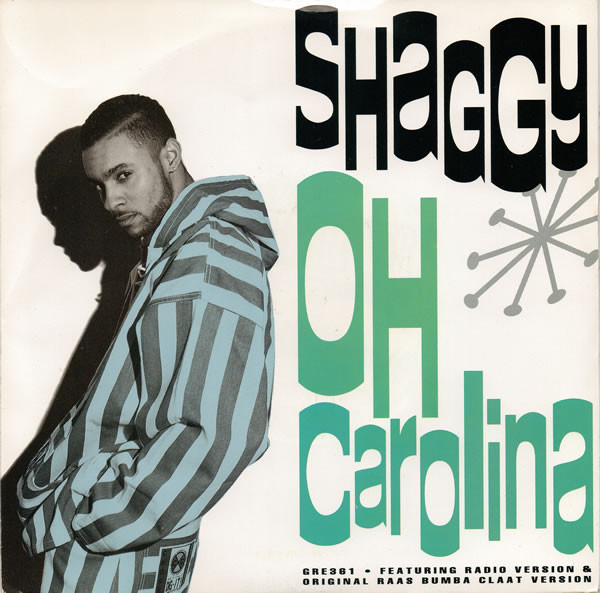
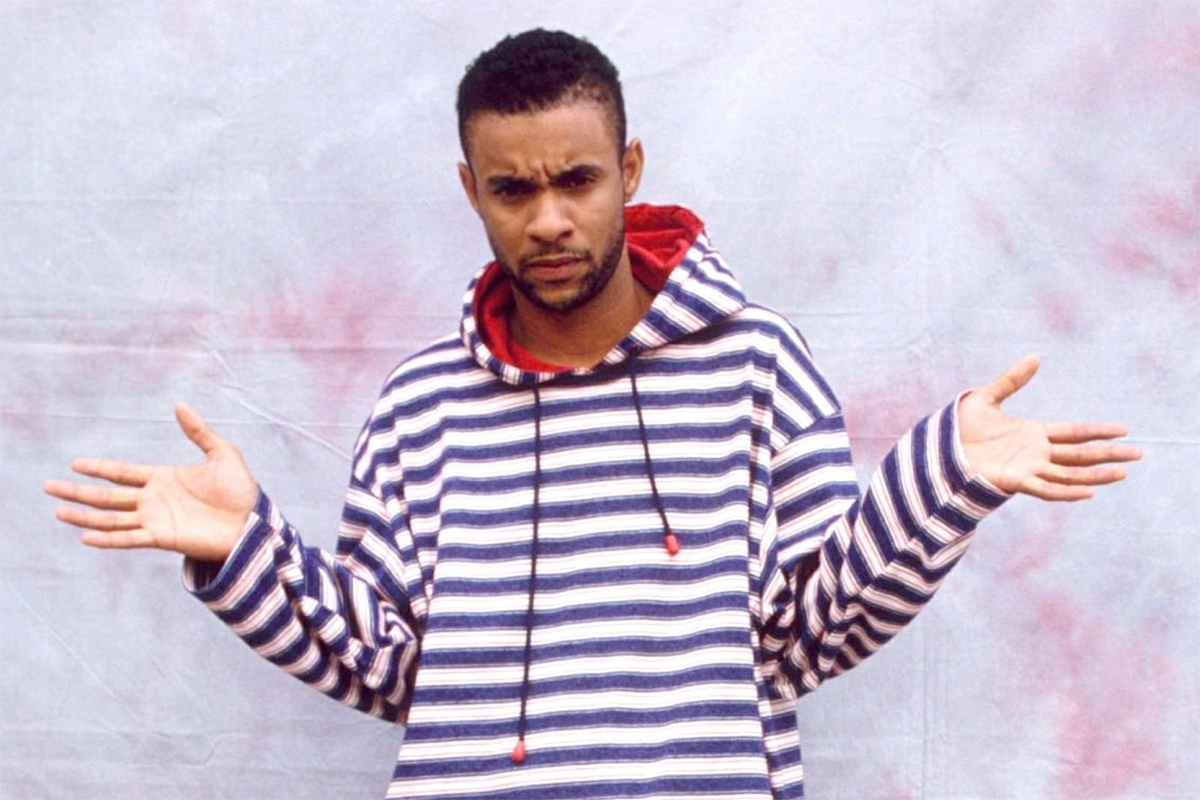
Oh Carolina, by Shaggy (his 1st of four #1s)
2 weeks, from 14th – 28th March 1993
Let’s address that last question first. For this is the purest reggae, not the pop version of UB40, or the watered down offering of Boris Gardner. It’s ragga, its dancehall; it’s rough and grimy, so much so that you almost have to wipe the sweat from the stereo after playing it. It’s a cover of an old ska song from the early sixties, by the Folkes Brothers, the opening riff of which is sampled on Shaggy’s version, giving this a folksy, distinctive edge, a world away from the polished beats of the 1990s. This doesn’t in any way answer why reggae keeps coming back to the top of the charts – other than the fact it is impossible not to dance to songs like this – but we’re entering what is perhaps the most reggae-heavy period in chart history, between 1993 and the middle of the decade.
Once the main rhythm, and the up to date production rolls in, the song still doesn’t lose its edge. And that’s mostly thanks to Shaggy’s gruff toasting. I have no idea what he’s saying, but it all sounds pretty filthy… I believe Carolina moves her body just like a squirrel, can jump and prance… And at one point I think Shaggy claims to love how she shag… (I could just Google the lyrics, but I have no desire to prove myself wrong.)
As to why it made #1 months ahead of schedule? Well aside from a need for some escapism from a misty, miserable March, it was included on the soundtrack to the movie ‘Sliver’, starring Sharon Stone (15% on Rotten Tomatoes). Whether that helped or not I don’t know, but if it did I’m glad. This is a rough and ready song, with a wonderfully raw feel. It’s certainly Shaggy’s forgotten chart-topper, but it’s probably his most credible.
Which brings us on to the very first question I posed. ‘Oh Carolina’ has one-hit wonder written all over it, and yet… I can’t adequately explain the subsequent career of Shaggy (AKA Mr Boombastic, AKA Mr Lover-Lover), even though I lived through it. He’s somehow cool – he is an ex-Marine after all – and yet completely ludicrous. By the time of his turn-of-the-century, biggest hit (you know, the one about ‘banging on the bathroom floor’) he was basically a cartoon character. He duetted with Ali G, for Pete’s sake!
Anyway, we can address all this in good time. For now, let’s enjoy his first chart-topper, in all its raunchy, mumbling glory. (I think it helps to enjoy Shaggy when you don’t understand what he’s saying…) And, for the third chart-topper in a row, I have specific memory attached to this record. A primary school friend had a (highly unrequited) crush on a girl called Caroline. Cut to our Primary 4 disco, where we requested this song on his behalf, made sure the DJ announced who it was for, and an entertaining meltdown ensued…










 The UK Number Ones Blog