707. ‘Inside’, by Stiltskin

In my previous post, I wrote that Tony Di Bart’s ‘The Real Thing’ must have been the most recent #1 that I’d never previously heard. Well, the very next chart-topper is probably just as forgotten…

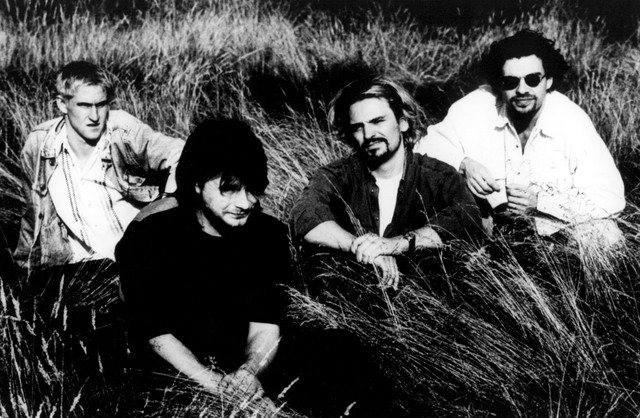
Inside, by Stiltskin (their 1st and only #1)

1 week, from 8th – 15th May 1994

Luckily, though, my dad once owned a ‘Best Rock Album Ever…’ sort of compilation released sometime around 1994. In amongst all the Free, the Boston, and the Blue Oyster Cult, the compilers had clearly felt the need for something more contemporary. What better track to include, then, than that year’s big rock hit: Stiltskin’s ‘Inside’. Which means that this lumpy, grungy, one-hit wonder takes me right back to my childhood.

This should be a pretty cool moment for chart watchers. Grunge was the sound of the early-nineties, though it had never troubled the top of the charts until now. (By May ’94, the genre was on its last legs, Kurt Cobain having died just a month earlier…) Anyway, this is a very heavy, very sweaty, very hairy number one single, the hardest rocking since Iron Maiden brought our daughters to the slaughter. Listening to it now, for the first time in two decades, the chorus is a classic of the genre.

But it also feels a little like Grunge-by-AI. Listen and you can hear rip-offs of ‘Smells Like Teen Spirit’ in the quiet-loud chorus, and ‘Black Hole Sun’ in the two chiming notes during the verses. I swear to God there’s something by Pearl Jam buried in there, too, though I can’t quite root it out. People online have compared it to ‘Today’ by Smashing Pumpkins, but I don’t personally hear it. Basically, the songwriters have taken elements of the best grunge bands, smushed them up, and made a pretty decent song.

The lyrics are apparently based on Plato’s ‘allegory of the cave’, making this potentially the first UK #1 to reference the ancient Greek philosopher. To my ears, though, it sounds like the worst sort of Year 9 poetry: Strong words in a Ganges sky, I have to lie, Shadows move in pairs… culminating in the motivational slogan: If you believe it, Don’t keep it all inside… (To be fair, I was a fan of the fat man starts to fall line as a kid…)

‘Inside’ also loses a few more street-cred points from the fact that the song was written to order for a Levi’s jeans commercial (making this the fourth number one to come from a Levi’s ad, though the first that isn’t a re-release of an older track). A man called Peter Lawler wrote the song, and plays all the instruments on this recording. He needed a vocalist, and after some auditions found Ray Wilson, a Scottish singer/guitarist. This first incarnation of the band released only one album, and two more low-charting singles, but they reformed and have carried on to this day, in an ever-changing line-up with Wilson as the only constant. (He also spent four years as lead-singer for Genesis, replacing Phil Collins.)

‘Inside’ was probably fortunate to find itself on a compilation called ‘Best Rock Album Ever’ – right place, right time – and is similarly fortunate to hold the title of the UK’s sole grunge chart-topper. But variety is the spice of life, and I’m glad it sneaked its week at number one. Sadly, the fate that confirms once and for all if a record has been lost to the mists of time has indeed befallen ‘Inside’… It’s not on Spotify.

706. ‘The Real Thing’, by Tony Di Bart

Well, I didn’t expect this. To get to May 1994 and come across a number one hit I have genuinely never heard before…

The Real Thing, by Tony Di Bart (his 1st and only #1)

1 week, from 1st – 8th May 1994

This record both is, and isn’t, your average mid-nineties dance tune. It’s a banger, all throbbing synths and a bassline that goes right through you, but it’s main references aren’t techno, or Eurodance. It looks back to the house tunes of the late-eighties – meaning it probably qualifies as retro already – and in the beat and the piano chords it nods even further back, to the days of disco.

It’s a slow-build sort of song. I was about to write it off as bland on first listen, but on my second I heard a hook buried in the melancholy chords, and by the third listen I was intrigued. There’s something there. Despite its retro influences, it feels very modern. If I can’t have you, I don’t want nobody baby… Most dance hits in the mid-nineties were euphoric, in-your-face – the likes of 2 Unlimited and Snap! springing to mind. ‘Dancing through the tears’ is a very 21st century concept, popularised by acts like Robyn, and The Weeknd. The latter of whom I bring up, because Tony Di Bart sounds remarkably like Abel Tesfaye, with his falsetto, and the longing in his voice.

The man known as The Weeknd counting Tony Di Bart as an influence seems unlikely, given that ‘The Real Thing’ was the only Top 20, and one of only two Top 40 hits, Di Bart managed. Neither of which did very much in North America. This single hadn’t done much initially in the UK either, when it was released in November 1993. It took a remix to send it up the charts, and that’s why I haven’t attached a video below: none seems to have been made for the much more atmospheric remix. (Listen to the original version here.)

As Italian as Antonio Carmine Di Bartolomeo AKA Tony Di Bart sounds, he was actually from Slough. His Wikipedia page is sparse, with few details given as to how he went from selling bathrooms to the top of the charts. His post-fame entries make for sad reading: one of his more recent public appearances was at a village fête in Buckinghamshire, before he was arrested and pleaded guilty to assaulting a police officer earlier this year.

Still, assault charges or no assault charges, you can’t take away the fact that Tony Di Bart has a number one single. One that is actually quite good, the more you listen and get lost in its wistful synths. Up next, an equally forgotten one-week wonder…

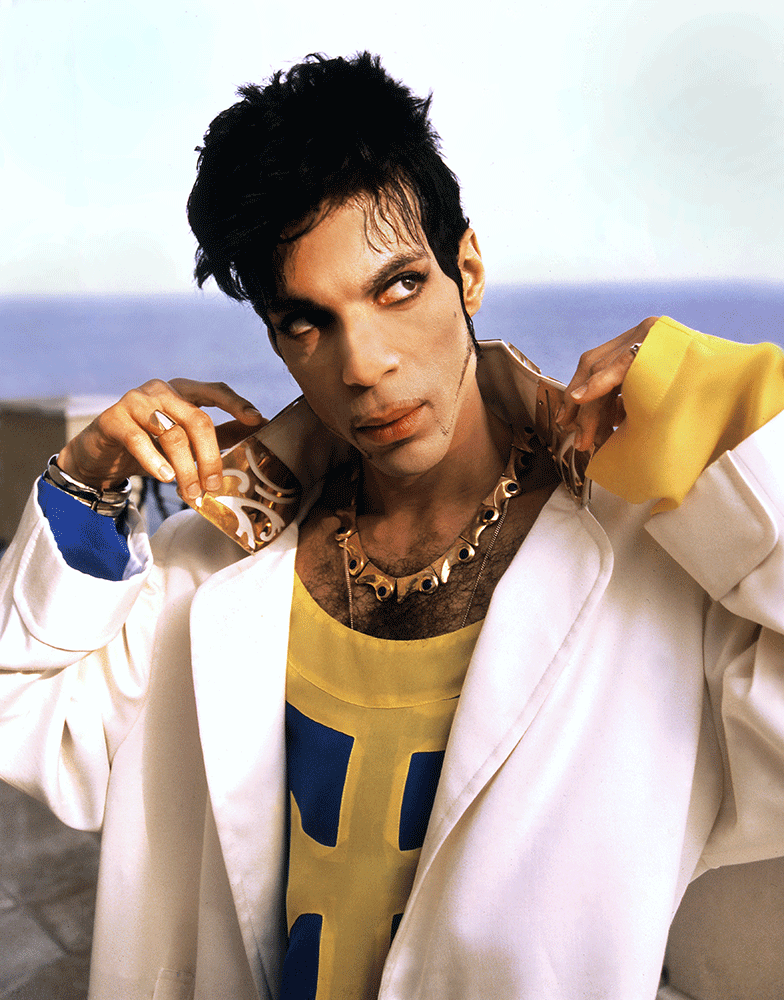
705. ‘The Most Beautiful Girl in the World’, by Prince

The list of superstar artists with underwhelming singles chart records is long, and complex. There’s Led Zeppelin, who simply didn’t bother releasing them. There’s Chuck Berry, whose ding-a-ling made number one two decades after he’d helped invent rock and roll. There’s Stevie Wonder, whose two chart-toppers don’t begin to do his talent justice…

The Most Beautiful Girl in the World, by Prince (his 1st and only #1)

2 weeks, from 17th April – 1st May 1994

Then there’s Prince – the star with possibly the biggest disparity between talent and number one hits. Not that he has a terrible overall chart record in the UK: seventeen Top 10 hits is nothing to be sniffed at. But only this one chart-topper (the 2nd biggest hit of his long career, apparently…)

And I’m just going to come out and say it… For ‘The Most Beautiful Girl in the World’ to be Prince’s only #1 is as big a travesty as ‘My Ding-A-Ling’. It might even be bigger. At least Berry’s novelty is dumb fun. This is syrupy, over-produced tripe, with some queasy lyrics… It’s plain to see, You’re the reason that God made a girl… The fact that the song debuted on the 1994 Miss USA pageant speaks volumes.

As I listen, all I can think of is all the brilliant Prince tunes that came and went without making #1… And not only is this dull, it’s disappointingly chaste. This from a man who recorded songs like ‘Soft and Wet’, ‘Cream’, and ‘Sexy MF’. There’s a spoken-word portion, as in all the worst love songs, in which Prince semi-raps: And if the stars ever fell, One by one from the sky…

It leads on to the most enjoyable bit of the song though, in which Prince provides his own backing vocals in a deep voice before launching back into his more famous falsetto. The song’s odd sound effects – tears dripping, clocks ticking, birds twittering – are interesting too. These moments are where we come closest to the fun, creative-chameleon Prince, who’s sorely missing from the rest of this sludge.

Of course, ‘The Most Beautiful Girl in the World’ isn’t technically a ‘Prince’ song. It came at the start of his ‘Love Symbol’ period, AKA the time he was known as ‘The Artist Formerly Known as Prince’, as part of a rebellion against his Warner Brothers contract. He felt they were holding him back, insisting that he chill out and release albums more sporadically. Interestingly, this single – one of his most successful – was released on a small, independent label, rather than Warner Bros. The corresponding album didn’t see the light of day for another year and a half, and is still involved in a lawsuit over plagiarism involving ‘The Most Beautiful Girl in the World’ and an Italian song called ‘Takin’ Me to Paradise’.

Prince does already have two other chart-toppers to his name as a songwriter. Two classics: Chaka Khan’s ‘I Feel for You’ and Sinead O’Connor’s ‘Nothing Compares 2 U’. And of course there’s ‘Purple Rain’, ‘When Doves Cry’, ‘Kiss’… So many that I might have to do a post on Prince’s nearly-number-ones. All these hits kick this one into the long grass… And yet. The charts often don’t play nice…

704. ‘Everything Changes’, by Take That

For their fourth #1 in nine months, Take That once again take turns at lead-vocal duty. We’ve had two Garys, one from Mark, and now a Robbie…

Everything Changes, by Take That (their 4th of twelve #1s)

2 weeks, from 3rd – 17th April 1994

Which gives a fairly throwaway pop song, a chart-topper more because of the band singing it than because of any innate quality the song might have, some significance. For here is the voice of the biggest British star of the coming decade… Though you might not have realised it at first, given the strange American accent he puts on for the album version’s intro…

On the single edit that bit is cut out, and we are rushed straight into another disco-tinged piece of retro-pop; the skinnier, sickly brother of ‘Relight My Fire’. I did wonder if ‘Everything Changes’ might have been a cover, as nobody under the age of sixty has ever used the term ‘taxicab’, but no – it’s a Gary Barlow (plus guests) writing credit. I guess they just needed the extra syllable to make it scan…

It’s perfectly serviceable pop. There’s nothing wrong with it (if we overlook the dated sax solo…) but neither is there much particularly memorable about it, apart perhaps from the for-ev-er… hook. There’s a reason why it was the fifth and final single from the band’s second album. There’s also a reason why it still made number one for a fortnight despite everyone already owning a copy of said album: Take That were bloody huge by this point.

While it might not have been his first lead vocals on a Take That single (I have little inclination to go back through their discography and check) it was definitely Robbie Williams’ first lead vocals on a #1. On their previous three, he very much took a back-seat. It felt strange to see him dancing gamely behind Barlow and Owen, knowing that he would go on to be bigger than any of them. But then, at the time, his departure was unexpected, and nobody would have bet on him having the success that he did.

Anyway, we’re getting ahead of ourselves. They’ve got a few more hits, and a few more chart-toppers, before he strikes out alone. And of the Take That #1s that have gone before, I’m starting to think I was a bit harsh on ‘Pray’… It’s head and shoulders above their other chart-toppers so far – as fun as ‘Relight My Fire’ was, and as strange as ‘Babe’ was. Quite possibly one of their very best…?

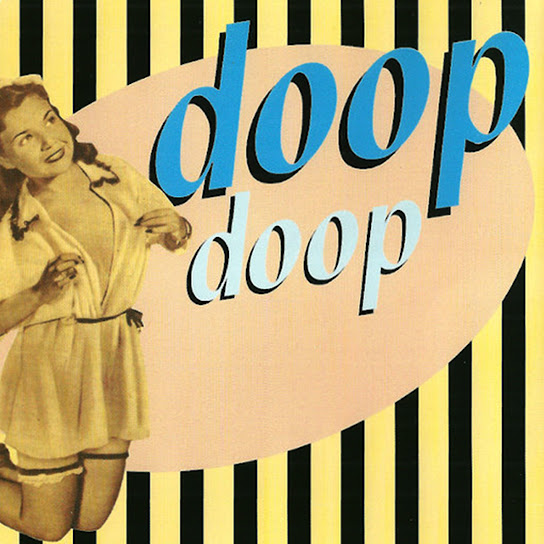
703. ‘Doop’, by Doop

And now for something a little different… Eurodance meets the Charleston.

Doop, by Doop (their 1st and only #1)

3 weeks, from 13th March – 3rd April 1994

More impressively, Eurodance meets the Charleston, and the results aren’t a complete disaster. ‘Doop’s merging of wildly disparate musical eras works. It’s fast, catchy, and fun – a novelty for sure, but not too irritating. It works its way right into your brain, thanks to its frenetic pace and puppy dog energy, and stays there…

It’s a completely instrumental track, apart from the doopy-doopy-do-do-doos which give the song its name. It’s the last instrumental number one since… I’m not sure, to be honest, but it’s been a good while. It’s also probably one of the last, as they’ve become rarer and rarer since their heyday in the late fifties-early sixties.

There’s not much to it – a big band sample stretched out over a techno beat. With the aforementioned doops, of course. The most complex thing about this record is how many remixes there were, and working out which one was actually getting airplay at the time. They all have a varying techno-to-Charleston ratio. The ‘Official Video’ on YouTube is the most modern, a dance beat interspersed with trumpet blasts. I prefer the more big band-heavy versions, such as the Sidney Berlin Ragtime Band mix, from the Maxi-CD release, or the Urge-2-Merge radio edit.

The best mixes are also the ones that keep proceedings down to the three-minute mark for, as fun as this tune is, it can get a little repetitive when stretched over seven minutes. Short and sweet is the order of the day here. Doop were, you’ll be shocked to realise, from the Netherlands, the one country that can rival masters Germany for Europop cheese. And let’s be honest, giving your debut single the same name as your band (or vice-versa) suggests that you’re quite happy in aiming for one-hit wonder status.

In fairness, Doop did manage a #88 follow-up hit with ‘Huckleberry Jam’, in which they tried the same trick using an old blues riff, while an earlier incarnation of the group, Hocus Pocus, made #1 in Australia with a song called ‘Here’s Johnny!’ Really though, this is real one-hit wonder stuff: a flash in the pan, bottled lightning moment, and I’m not sure this track has been played on the radio for years.

It was a trend-setter of sorts, though. I can’t think of many dance tracks that sampled pre-rock and roll music before Doop, but I can think of a few that came afterwards, including at least a couple of number ones. Anyway, I like it, as throwaway as it is. The NME disagree, though, naming it among their ‘25 most annoying songs ever’… Which seems rich given some of the crap they’ve championed over the years.

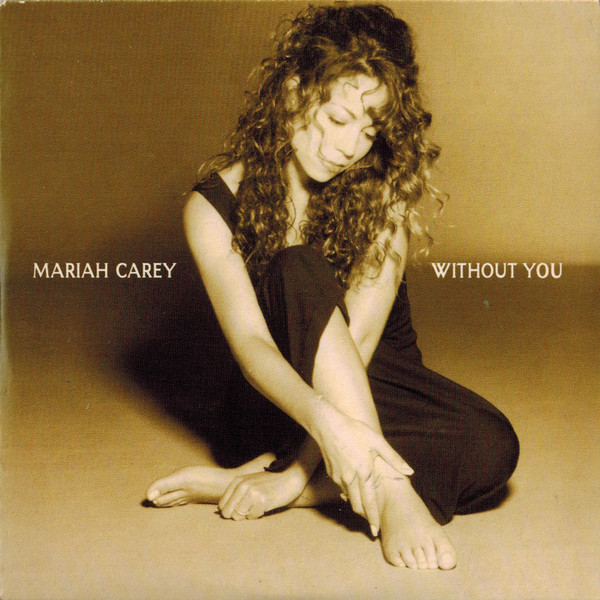
702. ‘Without You’, by Mariah Carey

Mariah Carey, one of the biggest-selling stars of the 1990s, is very poorly served in terms of the UK number ones she scored in that decade. Just the one, in fact. This one.

Without You, by Mariah Carey (her 1st of four #1s)

4 weeks, from 13th February – 13th March 1994

And I have to say, as much as I have a soft spot for ‘Mariah’ the camp icon – the ‘Cribs’ appearance, the ‘I don’t know her’ meme, all that nonsense – the fact that she didn’t dominate the British charts in the same way she took over the Billboard Hot 100 can only be a good thing. Yes, she can sing. No question. She takes Nilsson’s 1972 #1, and sings the absolute bejeezus out of it.

At one point, towards the end of this track, she extends the I can’t give any more… line for a full sixteen seconds, in a display of aggressive melisma. I can barely hold my breath for sixteen seconds, let alone belt out a succession of different musical notes for that length of time, and in purely technical terms it is very impressive. And yet, it’s these sorts of vocal gymnastics that ruin the song.

The same charges that were laid out against Whitney Houston as she whooped and hollered her way through ‘One Moment in Time’ and ‘I Will Always Love You’, can be made against Mariah here. Technically good singing will only get you so far, if you don’t mean what you’re howling about. Not in every song – plenty of decent pop songs can be churned out half-arsed – but in a torch song like this, with such a heartfelt original to compare it to, the difference shows. (Nilsson’s version, of course, wasn’t the original, but it is the version to which everyone compared Carey’s.)

Another comparison I can make between Mariah and Whitney is that I’ve always enjoyed Carey’s poppier moments more than her monster ballads. ‘Fantasy’, ‘Dreamlover’ and ‘Heartbreaker’ are all solid nineties pop tunes. What we also have to take into account, before complaining about her endless stream of ballads, is that she was tied in to a pretty controlling contract, and a pretty nasty relationship, with her manager Tommy Mottola.

I was under the impression that Harry Nilsson had died when this cover of his most famous hit was at #1, and was going to make a cheap joke about his cause of death. Except he had died a month before, in January 1994, at the very young age of fifty-two. I assume that Carey’s cover was already recorded by then, and wasn’t intended as a tribute, even if it did in the end become one. She had already had eight chart-toppers in the US, though ‘Without You’ stalled at #3 over there.

Younger readers may be surprised to discover that Mariah Carey actually had a recording career beyond a certain Christmas song, the name of which I dare not type out in case I accidentally get it stuck in my head. In truly shameless Mariah fashion, she’s really lent into her ‘Queen of Christmas’ alter-ego in recent years and, even as I sit here in late October, I’m counting down the days until her annual assault on the charts, and on our ears…

701. ‘Things Can Only Get Better’, by D:Ream

There’s a niche category of number one singles, one I’m going to name ‘much loved chart-toppers that I don’t really get’ (catchy, isn’t it?) Our next #1 belongs to this category…

Things Can Only Get Better, by D:Ream (their 1st and only #1)

4 weeks, from 16th January – 13th February 1994

I don’t dislike ‘Things Can Only Get Better’; I just don’t quite see why people love it. I think the problem is the intro, the overwrought vocals and weighty piano chords gradually building, very slowly getting to the point. Is this a gospel track? A spiritual? No, it’s just a dance tune, and once the synths and the funky bassline come in, and you know where you stand, things improve.

I have a deep suspicion for songs that could be described as ‘motivational’, which is probably where my issues with this tune lie. ‘Motivational’ means ‘uplifting’, and the next step on the ladder from that is ‘spiritual’, or ‘religious’, and I’m someone who believes very strongly in the separation of church and pop. It’s not just this song – there is a strain of thought (or clever marketing) that positions dance music as a sort of religion, with nightclubs as churches, and the Ministry of Sound as some sort of Holy Father… Religious ecstasy taking on a new meaning in this case…

But then I sit down, and properly listen to the lyrics to ‘Things Can Only Get Better’, and wonder if they aren’t to do with accepting who you are, and holding your head up through scorn and insult… Burn the bridges as you’ve gone, I’m too weak to fight you, I’ve got my personal hell to deal with… Maybe it even alludes to those with AIDS (I must learn to live with this disease…), and I’m starting to feel bad for writing this song off as mindless motivational nonsense.

My favourite part of the song is the ending (and I don’t mean that sarcastically) as the entire song deconstructs, the horn riff goes wonky, and the lyrics taper off. I still don’t love it, but I think I’m beginning to appreciate it a little more. I can see it as a musical sibling of Yazz’s ‘The Only Way Is Up’, which is every bit as positive, but doesn’t quite wear its heart on its sleeve like this one.

D:Ream were the brainchild of Peter Cunnah, a Northern Irish singer-songwriter, who sings the vocals on this track. He sounds a bit like George Michael, actually – one moment light and airy, the next hitting a throaty growl. The other members changed fairly regularly, but one of their more famous alumni is the now TV-scientist Brian Cox, who famously played keyboards when the band performed ‘Things…’ on Top of the Pops.

This was their first big hit, but D:Ream had been plugging away for a few years before breaking through. This track had been released a year earlier, making #24, but its popularity in the clubs kept growing, leading to this re-release. In many ways, this is one of the chart-toppers that sum up the mid-to-late nineties: Britpop, Cool Britannia, Noel’s union jack guitar, Geri’s dress, all that razzamatazz. It was used as a campaign song by the great political hope of the age, New Labour, as they swept to victory in the 1997 general election. It all seems like a very long time ago, now…

700. ‘Twist and Shout’, by Chaka Demus & Pliers with Jack Radics & Taxi Gang

The 700th UK number one single. My word, haven’t we come far! Not only that, it’s the first #1 of 1994 – officially the mid-90s. Bring. It. On!

Twist and Shout, by Chaka Demus & Pliers with Jack Radics & Taxi Gang (their 1st and only #1s)

2 weeks, from 2nd – 16th January 1994

And it’s pretty fitting that this landmark chart-topper is a reggae song. For all the dance tunes, boyband pop, and the Britpop hits yet to come, I’ve already made the argument that reggae was the sound of 1993-5. And what I like about this, as with Shaggy’s ‘Oh Carolina’, is that it’s pretty uncompromising reggae. This isn’t dub, as heard recently from Ace of Base or UB40; it’s a proper sweaty dancehall track.

‘Twist and Shout’ is a fairly well known tune, mostly in the frantic version the Beatles’ released on their debut album, featuring a famous vocal performance from John Lennon. And so you could be forgiven for wondering if we really needed a reggae version. We definitely do, though. As with all the best cover versions, Chaka Demus and Pliers (a Jamaican DJ and singer) turn it into a completely different song.

The bare bones are still there: the chorus and, most importantly, the ascending aaahs that lead us to it. But beyond that there’s lots of toasting and rapping that neither Lennon, nor the Isley Brothers (who first had a hit with ‘Twist and Shout’ in 1962), could have imagined. Get up and move your body… One time… Pliers sings… Ooh man you drivin’ me crazy… The purists may have frowned, but I think it’s charming, and a lot of fun.

You couldn’t have picked a less likely time of year for this to be a hit, with it reaching the top the day after New Year’s. But we all need a bit of tropical escapism, don’t we, especially in a miserable British January? Plus, Chaka Demus & Pliers had already made the Top 5 twice in 1993 (tease me, tease me… till I lose control…) and this cemented them as Britain’s favourite reggae act.

For the recording, they roped in Jack Radics, who I believe is the gruffer voice you hear on the chorus, and Taxi Gang, a rhythm section associated with Jamaican music legends Sly & Robbie. This gives the song’s credits a very modern look, with four different artists attributed (I think this might have been a record at the time). It was Chaka Demus and Plier’s last big hit in the UK, though they would carry on until 1997, and still get together every now and again.

Every time we reach a century of #1s, it’s always good to take stock. Do they tell us anything about the styles of the time…? Well, in this case, yes. Reggae was enjoying a big resurgence in the charts. It’s certainly more relevant than the 500th #1 (Eurovision cheese from Nicole), or the 400th (Julie Covington’s ‘Don’t Cry for Me Argentina’). The most ‘of its time’, though, remains the 200th: the Beatles’ ‘Help’.

698. ‘Mr. Blobby’, by Mr. Blobby

From Meat Loaf, to Mr. Blobby. From one larger-than-life epic, to another…

Mr. Blobby, by Mr. Blobby (his 1st and only #1)

1 week, from 5th – 12th December 1993/ 2 weeks, from 19th December 1993 – 2nd January 1994 (3 weeks total)

It’s been a while since I’d last heard this, for obvious reasons, and I thought I’d imagined the farting synths. No, actually, they’re not farting synths. They’re fart sounds. This number one single is built around farts, of the sort seven-year-olds make by blowing into their elbow cracks.

Before we delve any further into this murky swamp, I’d better explain exactly what a Mr Blobby is, for anyone not British, or anyone born in this century. There’s no better place to start than checking the picture embedded at the head of this post. It’s a man in a giant pink and yellow rubber suit, with a perma-grin and googly eyes, who’s only capable of saying ‘blobby’, over and over again in an electronically altered voice. His schtick is that he’s terminally clumsy, and anyone who comes in contact with him will end up flat on the floor and/or with a faceful of something sticky. He rose to fame on ‘Noel’s House Party’, a Saturday evening light entertainment show, set in a fictional mansion named ‘Crinkly Bottom’…

Before we go any further, I must stress that this is a truly heinous piece of music, one that I have no interest in ever hearing again once I’ve finished writing this post. And yet… When this came out, I was that seven-year-old, for whom fart noises, and the sight of Mr. Blobby falling through a drum kit, were the height of comedy. Even now, I’m ashamed to say, the video raises a smile…

In it Mr. Blobby is bathed on a slab, in a recreation of Shakespear’s Sister’s ‘Stay’ video, and leers over his backing band in a recreation of Robert Palmer’s ‘Addicted to Love’, as well as leading a gang of children in what looks like a Satanic ritual. He is chauffeured by Jeremy Clarkson, and has Carol Vorderman as some sort of scientific advisor in his ‘Blobby Factory’. There’s an air of utter anarchy, chaos, not to mention an underlying creepiness (though maybe that’s just the Noel Edmond’s cameo…)

With a lot of the truly terrible #1s that we’ve covered, a large part of what makes them awful is that the writers and performers don’t seem to realise how bad their song is (see ‘No Charge’, or St. Winifred’s, for example). This isn’t the case with ‘Mr. Blobby’ – the creators know they’re unleashing something horrendous on the world, and show a complete lack of contrition. Quite the opposite. So while I’m not going to argue the case for ‘Mr. Blobby’ being any good, I am going to gently suggest that might be one of the few truly punk #1s.

It’s also musically quite… complex? Like the video, the song doesn’t stay with any one sound for long. The farting and the children’s chanting (Blobby, Oh Mr Blobby, Your influence will spread throughout the land…) are constantly interrupted by sudden and incongruous swerves into dance and rap, by key changes and a rising and falling tempo. I jokingly called it an ‘epic’ in my intro, but maybe I wasn’t far off… It’s hyperactive, bright, zany, stupid… It’s ADHD in musical form. Or, rather, it’s a dog whistle for seven-year-olds, who are the only ones for whom this song holds any meaning.

For me, the moment that sums it all up comes towards the end of the video, when there’s footage of Blobby storming out from a helicopter and into the arms of a child, who looks like he’s seen the face of God. It sums up Blobby mania, which culminated here, in him reaching Christmas Number One. He was everywhere: on TV, in panto, in adverts, in a 1994 computer game, even running for election as an MP in 1995 (receiving 0.2% of the vote). Three separate Mr. Blobby theme park attractions were opened over the course of the 1990s, none of which survived the decade…

The fact this made Christmas number one is a story in itself, one that I’ll go into more detail on in my next post. It was initially knocked off the top, before roaring back, and amazingly became the first record in almost twenty-five years to have two separate spells at number one (during the same chart run). This was common in the fifties and sixties, and has become a normal occurrence again in the 21st century, but throughout the entirety of the seventies and eighties no record managed the feat. In terms of returning to number one with a different song, the closest Blobby came was with ‘Christmas in Blobbyland’, which made #36 two years later. He remains active to this day, popping up on ‘Britain’s Got Talent’ just this year…

697. ‘I Would Do Anything for Love (But I Won’t Do That)’, by Meat Loaf

On the one hand, we have to ask how this became a number one single. How did this outrageous, eight-minute long, barnstorming rock-opera push past the dance and all the Take That to become the biggest seller of the year?

I’d Do Anything for Love (But I Won’t Do That), by Meat Loaf (his 1st and only #1)

7 weeks, from 17th October – 5th December 1993

On the other, we have to ask ‘how could it not?’ What would be the point of a song this huge getting stuck at #23? You put this much time, and money, this many power chords, that many prosthetics on Meat Loaf’s face, then you have to aim for the top. Then there is the fact that it was the lead single from ‘Bat Out of Hell II’, Meat Loaf’s first album in almost a decade, and follow-up to one of the best-selling albums of all time. Maybe the demand and the interest was there…? Or, if we had an imaginary third hand, do we decide not to care why, and just give thanks that it did? The dramatic build-up, the soaring chorus, the sledgehammer duet, the fun innuendo in the title…

It tells the story of a frustrated lover, who would do anything for love, you know it’s true and that’s a fact. Except, for one thing. One thing that turns out to be vital. ‘That’. Many suggestions have been offered as to what ‘that’ is: some philosophical, some slightly more sexual… There’s even a Wikipedia entry on the ‘perceived ambiguity of ‘that’’. The video, directed by Michael Bay with a budget that would be the envy of many a feature film, pads the story out a bit more. Meat Loaf plays a monster, Dana Patrick plays a sexy siren, miming along to lines originally sung by Lorraine Crosby. It’s part ‘Beauty and the Beast’, part Channel 5 soft porn. At the end, the pair escape an approaching police squad on a motorbike. It’s every bit as fun, and as confusing, as the song itself, and I’d suggest a large factor in its success.

Speaking of the female vocalist, she has to wait a while before coming in, but when she does she makes the most of it. Will you cater to every fantasy I’ve got, Will you hose me down with holy water, If I get too hot? Hot! has to be one of the greatest lines ever in a number one single. It’s reminiscent of Meat Loaf’s other epic duets: with Cher on ‘Dead Ringer for Love’ and with Ellen Foley on ‘Paradise by the Dashboard Light’. Sadly, Crosby – like many of Loaf’s female partners – didn’t get a credit, or any royalties, for her part in the song.

Do we list this as the ‘90s version of ‘Bohemian Rhapsody’? It’s every bit as epic, though not as genre-hopping. Or is it just a power ballad – possibly the ultimate power ballad? – the likes of which have been popping up at the top of the charts for a decade. The fun had started to fade, with bloated and boring turns by Bryan Adams and Whitney Houston, so Meat Loaf arrives just in time to inject some much needed OTT silliness to the genre. It was, of course, a creation of Jim Steinman, who also had a hand in another contender for best power-ballad ever: ‘Total Eclipse of the Heart’.

My only complaint is that it doesn’t build to a crescendo, rather a more gentle finish as the woman lists the ways he’s going to break her heart and he, to my ears anyway, grudgingly agrees. But that’s a minor quibble about a song that has so many soaring peaks over the course of its epic runtime. The UK single edit comes in at 7mins 48s, making this the longest number one single ever at the time, beating ‘Hey Jude’s twenty-five year record. There’s a more manageable five and a half minute edit, and a frankly ridiculous twelve minute version on the album. Meanwhile, following on from Lulu, Meat Loaf becomes the second consecutive forty-something to top the charts (he was forty-six when this made it to the summit).

‘I Would Do Anything for Love’ is glorious, but I don’t think it quite hits the heights of some of the ‘Bat Out of Hell’ tunes. I was raised on that album as a child, and could quite probably sing all seven songs (plus ‘Dead Ringer’ on the deluxe version) word for word. But it did what none of those songs could do, and gave Meat Loaf a number one single… In twenty-eight countries, no less. It was only his second UK Top 10 hit, but he’d go on to have several more in the years that followed, including a #8 for a re-released ‘Bat Out of Hell’ in the wake of this. I saw him in concert in 2007 and, while it was a lot of fun, it was clear that his best days were behind him by then. He continued recording and performing well into his seventies, despite various health issues, remaining a larger than life presence on stage and in interviews, until his death from Covid-19 complications last year.