784. ‘My Heart Will Go On’, by Celine Dion

In which we don our lifejackets, fight our way out on deck, and try to find a lost child with whom to bribe our way onto a boat. Anything to avoid a collision with this hulking leviathan of a song…

My Heart Will Go On, by Celine Dion (her 2nd and final #1)

1 week, from 15th – 22nd February 1998 / 1 week, from 8th – 15th March 1998 (2 weeks total)

‘My Heart Will Go On’ is one of those songs that has become such a cliché, such a meme, such a cornerstone of popular culture, that it is very hard to judge as a mere five-minute piece of popular balladry. But if you can separate it from what it’s become, and manage to hear it as people in 1997 did… Then you are still confronted with a truly horrifying song.

I always thought the opening notes were played on pan-pipes, but it’s actually a tin whistle. This vaguely Celtic, new-agey motif features throughout the three hours plus of the movie ‘Titanic’, a sort of Pavlovian signal that Something Romantic is happening. It existed as part of the soundtrack to the film before composer James Horner suggested using it in a song. James Cameron, the director, wasn’t sold. If only he’d stuck to his guns… Sadly, he gave in, and this monster was born.

My first impression upon sitting down and listening to this song properly for the first time in a quarter of a century is that it sounds dated for the late-nineties. Every power-ballad cliché is ticked: big drums, squealing guitars, echoey effects, and gloopy percussion. Add in the new-age feel, and it sounds like we’ve slipped back a decade. Then there’s the ‘Whitney’ moment – the pause, and the beat, before the key-change and the final sledgehammer chorus.

As Houston does in ‘I Will Always Love You’, Celine Dion bludgeons all emotion out of the song’s climax in a storm of howling bombast. Though that sounds like I’m suggesting that there’s emotion in the verses preceding the final chorus. There isn’t. It’s all just too huge, too overwhelming, to have any impact. It mirrors the way I feel about the movie, too. I’ve enjoyed it as a piece of entertainment, but the ‘sad’ scenes now come across almost as tongue-in-cheek. Again, this is possibly because we’ve seen way too many parodies of frozen Jack, and Rose clinging to the door; but it could also be because the film was complete fluff in the first place.

For all this talk of entertainment, though, one of this song’s biggest failings is its dullness. I first mentioned this phenomenon when we covered the ‘90s other big soundtrack hits: Houston’s, and Bryan Adams. Once upon a time power ballads were ridiculous pieces of theatre. Think ‘Total Eclipse of the Heart’, or ‘China in Your Hand’. Dion’s previous chart-topper ‘Think Twice’ was a much more recent example of a power ballad whose earnestness was delivered with a wink and a lot of scenery chewing. There’s no wink here, though, no sense of an in-joke. Just a dull plod punctuated by lots of serious fist clenching.

But you don’t need me to tell you that ‘My Heart Will Go On’, for all its God-awfulness, was fairly successful. A number one in more than twenty-five countries around the world, and currently the second-best selling single ever by a female artist (behind you-know-who). Celine Dion apparently disliked it at first – I mean, she would say that now – but it hasn’t stopped her milking it for all its worth. China in particular has a passion for the song, with state television inviting Dion to belt out her biggest hit several times over the years. For me, though, ‘My Heart Will Go On’ will always remind me of a family holiday in Lanzarote. It was the first time I had ever been on a plane, travelling for four hours across Europe just to hear this dirge being played every fifteen minutes at the pool bar…

772. ‘Men in Black’, by Will Smith

The first half of 1997 was an interesting musical smorgasbord, with a quick turnover of number ones meaning we flitted gayly from genre to genre. During the second half of the year things will get slightly more predictable at the top of the charts, and records will start staying at #1 for slightly longer…

Men in Black, by Will Smith (his 1st and only solo #1)

4 weeks, from 10th August – 7th September 1997

Beginning with the year’s second big soundtrack hit. ‘Men in Black’ was the summer’s big popcorn movie, featuring Will Smith, Tommy Lee Jones and some aliens, which I thought I remembered fondly until I realised I was thinking of ‘Independence Day’, from the year before. I probably did see ‘Men in Black’ at the time, but it hasn’t remained with me.

The lyrics are geared towards the movie plot, which means unique lines like: Walk in shadow, Move in silence, Guard against extra-terrestrial violence… It reminds me of Partners in Kryme – one of the first hip-hop chart toppers – and their rhymes about which Teenage Ninja Turtle liked pizza (Michelangelo, of course). You could class this, and Puff Daddy’s ‘I’ll Be Missing You’ as a step back for hip-hop, after more innovative and respectable #1s by the Fugees and Coolio. But at the same time, this was a huge-selling, month-long number one, and another sign that rap had gone mainstream. (It was also, I believe, the first time that one hip-hop track had knocked another off top spot).

It’s based around ‘Forget Me Nots’, a minor hit in 1982 for Patrice Rushen. If it sounds familiar, then that’s because George Michael had sampled it a year earlier on ‘Fastlove’. The chorus was edited and sung by Coko, of the R&B group SWV, who really should have gotten a co-credit, so much does she bring to the show.

“Will Smith don’t have to cuss to sell records, but I do”, Eminem would famously rap a few years after this. It’s easy to be snobbish about Smith’s family-friendly approach to hip-hop (an NME review at the time labelled him the ‘Cliff Richard of rap’) but really, this is well-made, catchy pop. I don’t love it now, twenty-seven years on, but it was everywhere that summer, and was the #1 when I started high school. Plus the Bouncin’ with me, Slide with me… break is still great fun. File it under ‘fondly remembered’.

‘Men in Black’ was Will Smith’s debut solo single, featuring on his first solo album ‘Big Willie Style’ (tee-hee) and marked a return to music after he’d begun focusing on acting in the early-nineties. He has of course already featured at number one, as the Fresh Prince with Jazzy Jeff in 1993; while this song set him up for a good few years of chart success. He would have eight further Top 5 hits between now and 2005, including three #2s. Respect from the hip-hop community never quite arrived, but he had a great ear for a sample, and made some of the records that define the late-nineties for many people of my generation. He hasn’t released much new music since the mid-2000s, but remains one of Hollywood’s big hitters…

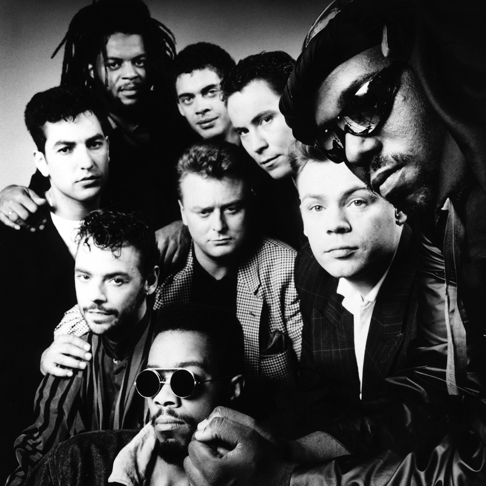
690. ‘(I Can’t Help) Falling in Love With You’, by UB40

More reggae at the top of the charts, after Shaggy and Ace of Base over recent weeks. And it’s Britain’s best-sellers in the genre who are bringing it there…

(I Can’t Help) Falling in Love With You, by UB40 (their 3rd and final #1)

2 weeks, from 6th – 20th June 1993

As with their last #1, a cover of ‘I Got You Babe’ with Chrissie Hynde, this is a dub take on a golden oldie (though note the slight title change from the Elvis original, a chart-topper in 1962). And I can see what they were going for – a softened version of their reggae sound, with clear nineties dance influences in the swaying beat – but I can’t take to it. ‘Plodding’ and ‘slow’ were the two notes I took on first listen. I also gave their version of ‘I Got You Babe’ a ‘Meh’ award, so I’ve got form.

Ali Campbell’s voice is an acquired taste most of the time, and especially so here. I don’t know if he’s trying to imbue his lines with emotion, but it mainly sounds as if he’s straining to get them out. Obviously it doesn’t help that the listener automatically compares his efforts to Elvis’s from thirty years earlier… And yet, the quality of the song shines through – there’s a reason why it’s become a standard – and I do like the addition of the short, sharp horn fills towards the end.

Like ‘Oh Carolina’ before it, ‘(I Can’t Help) Falling in Love With You’ featured on the soundtrack to the Sharon Stone movie ‘Sliver’. There are very few film soundtracks to have included multiple #1s, and it’s amazing that a movie as poorly regarded and forgotten as this ‘Sliver’ managed it. Still it gave UB40 their 3rd and final chart-topper, and became their biggest hit in the US, staying at #1 for seven weeks.

And we should note the impressive longevity of the band, given that those three number ones were spread out over a decade (while the Campbell brothers have one more shot at top spot, in a featuring role, to come). But I think it’s fair to say, and this is coming from someone who wouldn’t count himself as a fan, that UB40 are not best represented by their three #1s. Two of them are fairly pedestrian covers, while ‘Red Red Wine’ – which was also a cover, of course – has bit more charm to it, though still plays it fairly safe.

They had a few more years of chart hits in them, including two further Top 10s, but its perhaps right to mark this as UB40’s swansong. They remain a going concern, with four of the original eight members still in the band. Ali Campbell, however, left in 2008, after disagreements with the band’s management.

282. ‘Wand’rin’ Star’, by Lee Marvin

The seventies’ second number one… is not what I was expecting. Not by a long stretch.

5b18b0aba7b32184792db93d93f58a7a

Wand’rin’ Star, by Lee Marvin (his 1st and only #1)

3 weeks, from 1st – 22nd March 1970

For a start, it’s got one of the longest intros to a number one single, surely, ever. A gentle, countryish rhythm, some horse hooves clip-clopping, and lots of humming. For a full minute and fifteen seconds. They hum through an entire chorus and verse! Apparently the radio-edit was shorter, but it seems that the single version was the full four and a half minutes, with the added humming. I can’t find a shorter version anywhere.

Finally the vocals come in. And my, what a voice. Chiselled straight from granite, like a statue come to life. A series of deep vibrations, rather than actual words. I… Was born… Under a wand’rin’… Star… The singer is a traveller, one born to roam. Wheels are made for rollin’, Mules are made to pack, I’ve never seen a sight that didn’t look better lookin’ back… Harmonicas trill in the background, while the slight rhythm carries, and on. The wagon keeps headin’ west…

‘Wand’rin’ Star’ is a showtune, that much is clear from the first listen (it’s the backing singers that give it away) and Lee Marvin an Oscar-winning actor. He sung (whispered, grunted, grumbled… I can think of so many better verbs for his performance than plain old ‘sung’) this in the character of Ben Rumson, a gold prospector, in the movie version of ‘Paint Your Wagon’.

To be fair to Marvin, he perks up a little in the verses. I especially like the third, in which he appeals to anti-social people everywhere: Do I know where hell is? Hell is in ‘Hello’… Heaven is ‘Goodbye’ forever, It’s time for me to go… He’s happiest alone, heading somewhere new. Home is a place best dreamt of. There’s something quite romantic in the song’s cynicism.

In the following chorus, he lets the final ‘star’ flop out of his mouth, as if he’d like to go back to sleep, and you presume that’s that. But no, the song keeps plodding along, Marvin keeps chewing his tabaccy. It’s almost a lullaby – parents of the time could have used this record, and Marvin’s spectacularly sonorous voice, to get their babies to sleep.

Lee+Marvin+Wandrin+Star+-+Solid-585856

‘Wand’rin’ Star’ could have been a hit in the early-fifties, for someone like Frankie Laine. That’s the kind of territory we’ve temporarily slipped back into. The musical version of ‘Paint Your Wagon’ did debut in 1951, in fact, though the movie version had been released just the year before this single hit #1. It is apparently a ‘not very good film’, though one I’ve never seen, which didn’t make a lot of money. The soundtrack, though, made up for it. If you’ve ever wondered what Clint Eastwood would sound like singing a song called ‘I Talk to the Trees’ then check it out (he’s got a surprisingly light voice!)

Lee Marvin stuck to the acting after this, never releasing another single. Which means we’ve had two one-hit wonders in a row! He passed away in 1987, with full military honours thanks to his service in WWII. To be fair: an Oscar, a #1 single, several military medals… a life well-lived. ‘Wand’rin’ Star’ has an equally interesting postscript, including a cover version by Julian Clary (if you don’t know who he is then please, please follow this link) and being played at Joe Strummer’s funeral.

261. ‘The Good, The Bad and The Ugly’, by Hugo Montenegro, His Orchestra & Chorus

And so we reach one of the 20th century’s best-known pieces of music. People might not be aware that they know the theme from ‘The Good, The Bad and The Ugly’, but if you can mimic the woo-wee-oo-wee-oo well enough, then they should be able to come back with a passable waa-waa-waa…

MV5BMTA4OTVhZTItYzIxZS00YTU4LTkwZWEtYTE0MjhjNTIxNzE5XkEyXkFqcGdeQXVyMjUyNDk2ODc@._V1_SX1054_CR0,0,1054,999_AL_

The Good, The Bad and The Ugly, by Hugo Montenegro, His Orchestra & Chorus (his 1st and only #1)

4 weeks, from 13th November – 11th December 1968

It’s so famous that it sounds kind of clichéd now. It’s been used in so many spaghetti-western spoofs – a gun slinger in a poncho with an orange setting sun in the background, close-up on his narrowed eyes as he spits his tobacco on the ground (the famous refrain is supposed to sound like a coyote howling.) You’re almost surprised to remember that it was an actual real piece of music, soundtrack to real movie all of its very own.

Back in the fifties and early-sixties, when it seemed as if every second chart-topper was an instrumental, I regularly complained that lyric-less songs can sometimes meander and get lost. Not always, but for every ‘Apache’ or ‘Nut Rocker’ there was a ‘Side Saddle’. Instrumentals need a bit of atmosphere about them to cover up for the fact that you can’t sing along. The instruments need to become the voice. Which is what happens with this record. This instrumental passes the test. You definitely can sing along to it.

Speaking of ‘Apache’, this theme owes a bit of a debt to The Shadows when the twangy, Hank Marvin-ish guitars come in. It also reminds me of ‘Running Bear’ (1960 was a big year for the cowboys and injuns themed #1s) with its rep rop ooh wah too chants, which came from band leader Hugo Montenegro himself, and which sound a lot like someone counting in a strange, forgotten tongue.

81x60PFau0L._SL1169_

It’s a fun mish-mash of sixties styles – a bit latin, a bit rock ‘n’ roll and a bit psychedelic. It sounds old-fashioned at the same time as sounding like nothing that’s reached the top of the charts before. It was, of course, from the movie of the same name, starring Clint Eastwood but this isn’t the version used in the film. The original was written and recorded by Ennio Morricone – listen to it here – and it sounds a bit bleaker, a bit more like a movie soundtrack should. This version is softer, warmer – more of a pop song. Why it hit #1 a full two years after the movie’s release…? I’m not sure.

I’m glad it did make a belated chart-topper, though. It’s given us yet another strange side-road to wander down on our journey through 1968. We’re almost there, though – almost made it through this most eclectic of years… Hugo Montenegro wouldn’t enjoy chart success on the scale of ‘The Good, The Bad and The Ugly’ again, though he tried his hand at covers of several of the songs we’ve heard elsewhere on this countdown: ‘Cherry Pink and Apple Blossom White’, ‘Stranger in Paradise’, ‘Good Vibrations’… He died very young, in his mid-fifties, in 1981.

We may have left the golden age of the instrumental behind us – the days of Winifred Atwell, Eddie Calvert and, of course, The Shadows – long ago. But there are a few more still to come. Looking at the modern day, I can’t remember the last big instrumental hit. Maybe a nineties dance track…? Though they usual had at least one vocal refrain. I can’t help feel that it’s something we’ve lost – our love for the instrumental single – because when a good one comes along it’s usually quite the experience…

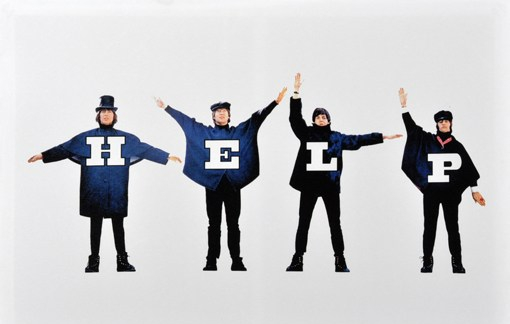
200. ‘Help!’, by The Beatles

And it’s two hundred not out! Two hundred UK #1 singles covered; plenty more where they came from… And this isn’t a bad little record with which to celebrate our mini-milestone!

0003568_beatles-art-beatles-help-canvas-art_510.jpeg

Help!, by The Beatles (their 8th of seventeen #1s)

3 weeks, from 5th – 26th August 1965

Help! I need somebody! Help! Not just anybody! Help! You know I need someone! He-e-elp… It looks ridiculous written out like that, doesn’t it? If you told somebody that you were going to write a pop song with those as the introductory lines they would probably laugh at you. Then look nervously away… But, The Beatles were the some of the best producers of pop that the world has ever seen, and this may well be their best pop moment.

Or, you know, it might be ‘She Loves You’, or ‘Please Please Me’, or ‘I Saw Her Standing There’, or ten other of their songs… Let me rephrase. This may or may not be their best pure pop moment, but it is their last. ‘Help!’ is a bit of a step back, after the stoned haziness of ‘I Feel Fine’ and ‘Ticket to Ride’. This is the same Beatles that gave us ‘A Hard Day’s Night’ and ‘Can’t Buy Me Love’ – all floppy-haired enthusiasm and cheeky winks.

Except… listen to the lyrics. It’s an upbeat, summery pop song (from the soundtrack to their latest movie), but by God the words are bleak. When I was younger, So much younger than today, I never needed anybody’s help in any way… But now these days are gone, I’m not so self-assured… and Every now and then I feel so insecure, I know that I just need you like, I’ve never done before… do not your average pop song make. In the film, the cry for ‘help’ is from Ringo, who finds himself about to become the sacrificial victim of an Oriental cult (as you do…) In real life, the cry for help was John’s. His life, as the leader of the most popular band in the world, was getting to him.

I’ve never suffered from depression. But I know people who have, and the line: Help me if you can, I’m feeling down, And I do appreciate you being round… seems to be just about the most perfect description of the disease. The knowledge that nobody can really help you feel better; but that just knowing people are still around brings you some comfort. That’s it. Summed up in two perfect lines.

the-beatles-help(uk-original.-company-sleeve)

Musically this is a short and simple song. But many of the best pop songs are. With The Beatles it’s often the small things that make their hits stand out over and above their contemporaries. The opening chord on ‘A Hard Day’s Night’, for example. On ‘Help!’, it’s the way that the backing singers’ lines (the countermelody, if you will) weave, and twist, and sometimes even precede the lead vocal. The Now I find… and the My independence… lines are the best examples. It’s the little touches like this that made the Fab Four peerless.

So, that’s it for the ‘pop’ Beatles. In 1966 they’ll stop performing live, smoke even more weed, start getting lost in India… all for another day. For now, press play on the link below and enjoy them as the mop-top Fabs for one last time. Plus, what with this being chart-topper #200, this seems like a good place to stop for a brief moment of reflection.

Chart-topper #1 – Al Martino’s pre-rock epic ‘Here in My Heart’ kicked it all off. It’s from another era – another planet – entirely. By the time we got to chart-topper #100 – Anthony Newley’s twee little ‘Do You Mind’ – we had traversed the rock ‘n’ roll era and were about to get stuck in the early-sixties slump of Elvis soundtrack songs and ‘death-discs’. And now here we are with #200. ‘Help!’ Perhaps the very final Beat-pop number-one. Experimental times lie ahead… I published chart-topper #1 at the end of January last year, to precisely zero interest, and so I’d like to say thank you to everyone who has since decided to join up for the journey. Your views, likes and comments sustain me! #100 was posted at the very start of November last year, and now here’s #200 at the end of August. A rate of a hundred every nine months. So… We should reach #300 by May 2020 (T.Rex, btw!) And which means we should reach the current UK number one (#1357) in about a decade… Hang on in there!

Remind yourself of all 200 of the first chart-toppers, here:

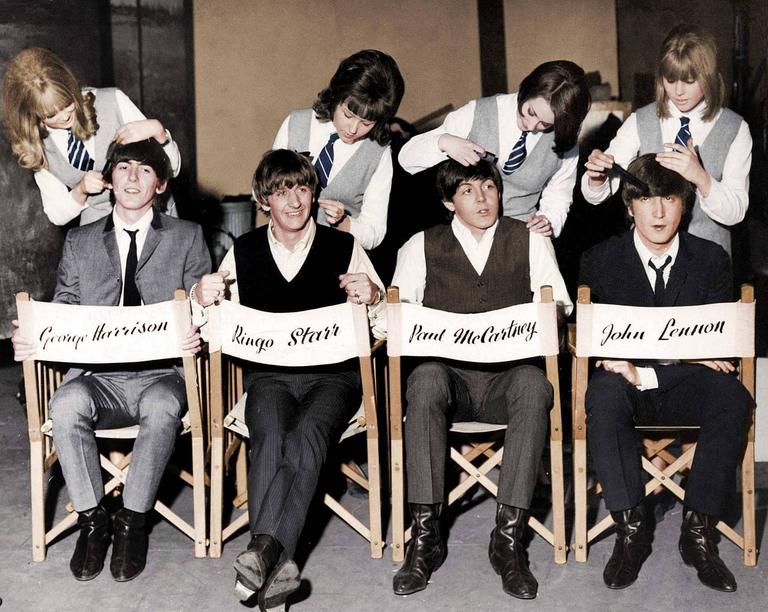
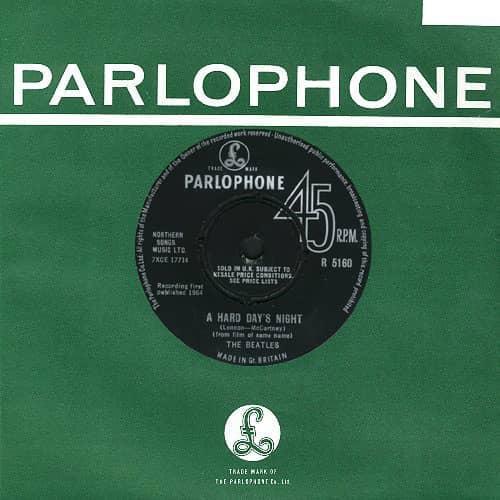
174. ‘A Hard Day’s Night’, by The Beatles

Has there ever been a more memorable, yet concise, intro in the history of pop? One chord. Literally just one chord. But I’d bet anyone with even a passing interest in popular music would be able to identify it.

The_Beatles_Hard_Day_s_Night_1964_l

A Hard Day’s Night, by The Beatles (their 5th of seventeen #1s)

3 weeks, from 23rd July – 13th August 1964

I’d also wager that entire theses have been devoted to this chord… (*Edit* Check out a 2004 report entitled “Mathematics, Physics, and ‘A Hard Day’s Night’” if that’s your thing.) As chords go, it’s quite a complicated one, with George Harrison playing an F and a G, while Paul McCartney adds a D on the bass, plus lots of other bits of wizardry from George Martin. Try the Wiki entry on the song for more detail. I didn’t really understand…

To the actual song, then. The intro fades, and we race into the first verse. It’s been a hard day’s night, And I’ve been working like a dog… And what’s that in the background, setting the frantic pace… Bongos?? Sure sounds like it. It’s been a hard day’s night, I should be sleepin’, Like a log…

Coming hard on the heels of two R&B chart-toppers, ‘House of the Rising Sun’ and ‘It’s All Over Now’, this sounds a bit light. Perhaps even a bit dated. So 1963… The But when I get home to you, I find the things that you do… line sounds like the climax to a cheesy sitcom theme. (‘One Foot in the Grave’, maybe…)

But the bridge comes in, and blasts all these doubts away. When I’m home, Everything seems to be right… Insistent cowbell, and the way that Paul half-screams Tight… Yeah! It’s actually a pretty filthy song. When he gets home to his girl, he finds the things that she does, make him feel alright… Who knows, maybe she’s just fetching him his pipe and slippers… Then scream! And solo. I love a scream before a solo. It’s second only to shouting the guitarist’s name in my list of ‘Brilliant Ways to Introduce a Solo’.

uk_a-hard-days-night_single

Actually, listening properly to ‘A Hard Day’s Night’ for the first time in years, it feels like this is actually four songs in one. You’ve got the intro, the cheesy verses, the intense bridge, then the outro… The jingly, jangly, echoey outro that sounds as if it’s coming from a year or two in the future. It kills of Beatles Mk I, and suddenly this record doesn’t sound lightweight, or like a re-tread of their previous hits. Those last five seconds basically announce that Merseybeat is dead; but that The Fab Four will continue setting the tone for the next few years. Everyone knows that The Beatles were ‘very good’; but it’s tiny moments like this that confirm it.

This song was, of course, from a film of the same name, all about the boys carousing their way around London, getting up to all sorts of hi-jinks. It was their first feature film appearance and, whaddya know, it’s one of the most influential music-movies ever made. Even their films turned out that way. They simply had the Midas touch.

Interestingly, what with this disc being released at the height of Beatlemania, as part of the soundtrack to the biggest film of the year, it didn’t enter the charts at #1. Entering the chart at the top was a big deal back then – Elvis had done it twice, Cliff once… That’s it. It seems natural to assume that The Beatles would have done so too in pretty short order. But they never did. ‘A Hard Day’s Night’ entered at #3, before climbing. They would have to wait until ‘Get Back’, their penultimate #1 in 1969, to hit the summit in release week… I say ‘interesting’; but maybe it’s just me. A strange quirk, anyway. Onwards.

133. ‘Can’t Help Falling in Love’ / ‘Rock-A-Hula Baby’, by Elvis Presley

Wise men say, Only fools… would be surprised at Elvis Presley claiming yet another UK #1. His sixth inside fifteen months. And with it, he takes his chart-topping singles account into double figures.


91eaiwS0ygL._SY355_

Can’t Help Falling in Love / Rock-A-Hula Baby, by Elvis Presley (his 10th of twenty-one #1s)

4 weeks, from 22nd February – 22nd March 1962

One of the good things about Elvis’s post-army career is that he never released two similar records in a row. We’ve had operatics (‘It’s Now or Never’) followed by a ballad (‘Are You Lonesome Tonight?’) followed by oompah (‘Wooden Heart’) followed by a return to La Scala (‘Surrender’) then a spot of rock ‘n’ roll (‘Little Sister’ / ‘His Latest Flame’) and now some more balladry.

Some supreme balladry. Because ‘Can’t Help Falling in Love’ is Elvis at the height of his crooning powers – a classy, classy record. Not one that I probably have to describe in too much detail, given its ubiquitousness, but I’ll give it a go anyway. A simple piano melody, the ‘ting’ of a xylophone, and The King: Wise men say, Only fools rush in, But I can’t help, Falling in love with you… Oh, Elvis, do go on… Shall I stay, Would it be a sin, If I can’t help, Falling in love with you…? That voice. There are no operatics, nothing fancy; but you’re dragged in, and left as putty in his hands. It’s a very chivalrous love song, too – with the singer almost apologising for his affections.

It’s like an update of the big fifties ballads – ‘Here in My Heart’, ‘Answer Me’ and so on – with the same OTT emoting (Take my hand, Take my whole life too…), but much more stripped back. And yet compared to its contemporaries, this record – all of Elvis’s records for that matter – sounds incredibly polished. Very crisp and very clear. As if it’s been recorded in the most palatial of recording studios using the most up-to-date equipment (to be fair, it probably was). If ‘Can’t Help Falling in Love’ was in a high-school class with all the other recent #1 singles – suspend your disbelief for just a second, please – then it would be the cool kid, the rich kid, the captain of the football team with the cutest cheerleader girlfriend.

Two bits stand out in particular: the twang of the guitar in the bridge, and the moment when Elvis and the backing singers combine for the final verse. Mmmm. Shivers. Elvis released some drivel in the 1960s; but when he was at the top of his game, releasing beauties such as this, there was no touching him. Cliff could but watch and weep.

For proof of the transcendent nature of this song, look no further than the fact that this is both the unofficial club anthem of Sunderland F.C. and my parents’ ‘song’ – despite the fact that they had barely started primary-school when this was at the top of the charts. And just a few weeks ago, while on holiday in Cambodia, I heard a busker performing it in the street.

r-553725-1311448310.jpeg.jpg

So: ‘Can’t Help Falling in Love’ is an utter classic. The song on the flip-side of this disc, on the other hand… Well, let’s pull no punches here: it’s Elvis at his shitty B-movie contractual soundtrack worst. ‘Rock-A-Hula Baby’, or to give it its’ bandwagon-jumping full title ‘Rock-A-Hula Baby (Twist Special)’, sets out to be a fun song, with a Rock-a-hula, rock rock-a-hula, Wow! intro, and I want to find it fun… But I can’t.

Because I don’t believe Elvis himself is having much fun here. He sounds like he’s going through the motions as he describes his Hawaiian lover with silly lines like: When she starts to sway, I gotta say, She really moves the grass around… and Although I love to kiss my little hula-miss, I never get the chance, I wanna hold her tight, All through the night, But all she wants to do is dance… And if he ain’t enjoying it, then how are we meant to?

Couple this with the terrifying guitar effects – Rock! Whhrrraa! – and the ridiculously cheesy chorus-line ending, and you’ve got a hot mess. Still, at least it’s a rocker – ridiculously fast-paced and over in under two minutes. An up-tempo bad record is always, I repeat always, better than a slow-tempo bad record.

Both sides of this disc featured on the latest Elvis film, ‘Blue Hawaii’ – a film that I’ve never seen but, going by its write-up on Wiki, might be worth checking out. Sample sentence: “Before Ellie can drown herself, Chad (Elvis’s character) saves her and administers an overdue spanking.” Quite. And though we’ve covered a fair few double ‘A’-sides up to now, none of them have contrasted as much as this pair of songs do. Surely ‘Can’t Help Falling in Love’ could have stood alone and still made it to #1? Surely people weren’t buying this disc for ‘Rock-A-Hula Baby’?? But it’s there, in the annals of British chart history, as much of a hit as its far-superior twin. And that egalitarianism, that chance that any song can get to number-one as long as enough people buy it, is why we love the charts. Isn’t it…?

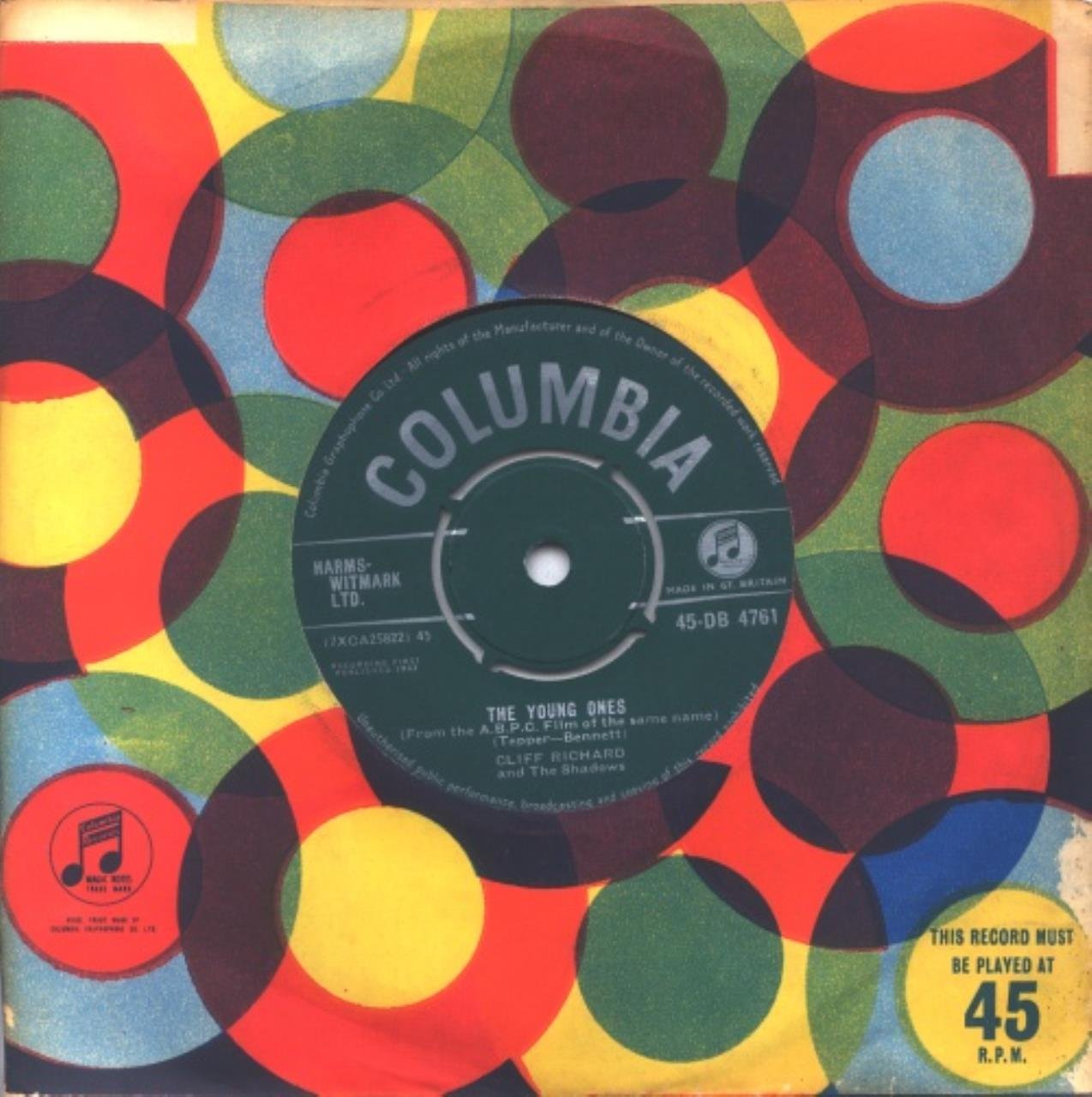
132. ‘The Young Ones’, by Cliff Richard & The Shadows

We enjoyed/suffered through (delete according to personal preference) a Cliff-less 1961. But Britain’s great rock ‘n’ roll hope kicks off 1962 with… (pause for dramatic effect)… his most famous hit?

The-Young-Ones-1961-film-images-630814b5-6ace-499e-8614-12e90dccdd6

The Young Ones, by Cliff Richard (his 5th of fourteen #1s) and The Shadows (their 7th of twelve #1s)

6 weeks, from 11th January – 22nd February 1962

OK, there are the Christmas songs. And ‘Summer Holiday’. And ‘Congratulations’… Let’s just say that this is his most famous song not about festivities and/or vacations. Though this latest chart-topper is a celebration of sort – a celebration of being young!

Its starts with some Shadows ™ guitar, before Cliff comes in with his gossamer-light voice… The young ones, Darlin’ we’re the young ones, And the young ones, Shouldn’t be afraid… I am slightly loathe to admit it, but I have missed that voice of late… To live, Love, While the flame is young, ‘Cause we may not be the young ones very long… Any song performed by The Shadows and sung by Cliff can’t fail to be of a certain standard. It may well be cheesy, and the lyrics might be very trite, but downright bad? Unlikely.

And ‘The Young Ones’ does have its moments. I love the beat-band drum fills, while the guitars are very reminiscent of Buddy Holly’s mid-tempo hits – ‘Heartbeat’, ‘Maybe Baby’ and the like. Yet it’s far from perfect –  corny couplets like: Oh I need you, And you need me, Oh my darlin’, Can’t you see…? make sure of that.

And then there are the violins. Yep, Cliff’s gone orchestral. By the end the strings are swirling and cascading, drowning out Hank and Bruce’s guitars. (I can’t help wondering if this was one of those tracks, like the minimalist ‘Travellin’ Light’, on which The Shadows were a little bored…) I had to double-check that I was listening to the original version, rather than some kind of polished re-release… I’d see this as Cliff’s attempt to move away from teeny-bop discs like ‘Please Don’t Tease’ and ‘I Love You’ – his bid for adult-artist longevity.

7140gXm67-L._SL1280_

In that regard it’s a very clever record. The lyrics are about being young; and yet the production is very grown-up. It isn’t enough of a departure to alienate the screaming fifteen year-olds, but it’s classy enough to get grandma interested. And there’s a bittersweet edge to the closing lyrics that will appeal to mum and dad: And someday, When the years have flown, Darlin’ then we’ll teach the young ones, Of our own…

I wouldn’t call it a sell-out in the same way that Elvis prancing about in Lederhosen singing ‘Wooden Heart’ was a sell-out. Because, let’s face it, Cliff has never – in terms of his chart-topping singles, at least – managed to justify his tag as Britain’s foremost rock ‘n’ roller. From the opening chords of his first #1 he’s been planted firmly in the middle of the road. But… Something definitely clicked here, and his career has kicked up a gear. Thanks to its role on the soundtrack to Cliff’s movie of the same name, ‘The Young Ones’ had built up a staggering 500,000 pre-orders before its release, meaning that it rocketed straight in to the charts at Number One – only the 3rd single (and the 1st single not released by a certain Elvis Presley) to do so. It remains his biggest seller in the UK.

And its legacy was such that twenty years later it became the theme tune to BBC sitcom ‘The Young Ones’, in which Rik Mayall played a lisping, tantrum-throwing, anarchy-loving Cliff fan. The joke of course being that, by 1982, young people with any aspirations towards being cool couldn’t possibly be Cliff fans. But, the eighties are a long way off yet in our world. It’s January of 1962, Cliff and The Shadows are the biggest pop-stars in the country, and they’ve just scored their biggest hit yet. Though, as with all of us, they may not be the young ones very long…