Today’s Top 10 – November 26th, 1963

The two earlier ‘Today’s Top 10’s I’ve done were pretty succesful. Thanks to all who had a look, liked and commented. I was wondering what to do with the feature going forward, and I think I’ll use it to take a deeper look at interesting periods in chart history. What can the Top 10 tell us about where pop music was at a particular time and place?

So, we’ve done the death of the ’60s, and we’ve done the Summer of Love. Now we turn to perhaps one of the most exciting times in modern popular music: late-1963. The moment when the sixties finally started to swing. Thanks, mainly, to the Beatles. But not, as this chart will hopefully prove, solely because of them. For those interested in significant world events, this was also the Top 10 on the week that JFK was assassinated.

10. Let It Rock / Memphis, Tennessee, by Chuck Berry – down 4 (7 weeks on chart)

But what’s this…? Two rock ‘n’ roll tunes first released in 1959. How the charts like to mess with us… The reason is tied to the times, though. The Godfathers of rock, Buddy Holly, Jerry Lee Lewis, and Chuck Berry, had inspired the new Beat groups that we’ll be meeting further up this chart. The Beatles early albums were full of Berry songs, while the Stones’ first hit had been a cover of ‘Come On’ earlier in 1963. Pye Records saw an opportunity, and released some of these influential tunes for the first time in the UK. Amazingly, this was Berry’s first ever visit to the UK Top 10. A runaway train might not be the most obvious topic for a rock ‘n’ roll tune, but this wasn’t Berry’s first time singing about a railroad. And the way he makes his guitar sound like a train horn is iconic.

It was paired with the more laidback ‘Memphis, Tennessee’, which had also been a hit in a version by Dave Berry & the Cruisers around the same time. It pulls the same trick as such classics as Gilbert O’ Sullivan’s ‘Clair’, and Brotherhood of Man’s ‘Save Your Kisses for Me’, by tricking the listener into thinking that the singer is singing about a girlfriend, when he is actually singing about a small child. Berry, though, consumate storyteller that he was, manages to do it in a far less creepy manner, making the song more about the messy break-up, and the father’s regret, than about dodgy double entendres.

9. I’ll Keep You Satisfied, by Billy J. Kramer & The Dakotas – up 2 (3 weeks on chart)

This one’s much more 1963. One of the big beat combos that had broken through earlier in the year (with another three to come higher up), and who had been at #1 just a few weeks earlier with the Lennon-McCartney tune ‘Bad to Me’. ‘I’ll Keep You Satisfied’ is another L&M composition and, while it would peak decently at #4, it isn’t quite as good. Still, it’s better than the Dakota’s next hit, the dubious ‘Little Children’. Watching the video above, the music may be (slightly) rocking, but Billy J. is giving good crooner energy. Nothing to worry grandma… yet.

8. I (Who Have Nothing), by Shirley Bassey – up 1 (9 weeks on chart)

A constant presence on the charts of the ’50s and ’60s: a bit of Bassey. This is three minutes of pure melodrama, as Shirley watches an old-flame woo his new girl. ‘I (Who Have Nothing)’ was adapted from an Italian hit, which was something of a theme in the early sixties. It’s a classic of its genre: an intro of swirling strings, quiet bits, and bits where she lets loose, belting out high notes like nobody else can. I always find Shirley Bassey somewhat lacking in subtlety, but then again – if you’ve got it flaunt it. If I could sing like her then I’d be belting out my Starbucks orders.

7. Blue Bayou / Mean Woman Blues, by Roy Orbison – down 3 (10 weeks on chart)

Another double-‘A’ side from an American rocker, who had been around since the ’50s. Unlike the Chuck Berry record, though, this was a new hit. ‘Blue Bayou’ is one of Orbison’s gentler numbers – for the Big ‘O’ could of course give Shirley Bassey a run for her money in the belting stakes – but it’s always been one of my favourites. Even as a young ‘un who had no idea what the hell a ‘bayou’ was. Linda Rondstadt recorded a famous cover in 1977, though that didn’t make the UK Top 10.

On the flipside of this disc was a cover of ‘Mean Woman Blues’, an Elvis track from 1957. Personally, while they are both fine singers, I prefer Elvis’s version. I prefer bombastic, overblown Orbison to rocking Orbison. On this record he tries out the famous Grrrrrr, which he’d use to great effect on his chart-topping ‘Oh, Pretty Woman’ the following year.

6. Secret Love, by Kathy Kirby – up 6 (3 weeks on chart)

We’re keeping an eye out for the bands that came along in 1963 and changed popular music forever. But for every beat combo that made it big, there were plenty of British women who were just as instrumental in making the sixties swing. Kathy Kirby’s name hasn’t lasted alongside the likes of Cilla, Dusty, Lulu or Sandie Shaw, but here she is, enjoying her biggest hit. Her take on ‘Secret Love’ starts off very bombastically, much like Doris Day’s chart-topping original from a decade earlier, but soon a groovy guitars-and-backing-singers beat takes over, nicely updating the song for a new era. Plus, she has a great voice, with a bit of bite to it. Kirby may have retired from showbusiness in the early eighties and died in relative obscurity, but for a while she was a huge name: representing the UK at Eurovision in 1965 (finishing as runner-up) and hosting her own television programme.

5. Don’t Talk to Him, by Cliff Richard & The Shadows – up 2 (3 weeks on chart)

Common knowledge would have it that with the arrival of the Beatles et al the career of Cliff Richard – the hottest star in the land just a year or so earlier – fell off a, well, cliff. But glance at any Top 40 from any random moment post-1962, and it quickly becomes clear that Cliff went nowhere. Okay, he didn’t hit #1 as regularly, but ‘Don’t Talk to Him’ was one of an astounding 33 Top 10 hits he achieved across the sixties. I’d never heard this before, but it’s actually a really good song, combining a latin rhythm with some very current, beat guitars. This could easily have been written and recorded by one of the acts a couple of places up this chart, proving that Cliff gave those young whippersnappers a stronger run for their money than the history books suggest. *Some sources disagree as to whether this was Cliff solo, or Cliff with the Shadows, but I’ve gone with the latter*

4. Be My Baby, by the Ronettes – up 1 (6 weeks on chart)

The first of two all-time great, hall of fame pop songs in this week’s Top 4. The fact that this never made it higher than number four is a shock, and I’ve already done a post on how this really Should Have Been a #1. Even on this chart, in the year that it was recorded, where girl groups like the Ronettes were common, ‘Be My Baby’ stands out as special. It would stand out as special on any chart, in any era, simply because it is better than 99.95% of anything else in the history of pop.

3. Sugar and Spice, by the Searchers – down 1 (5 weeks on chart)

Here we are then, a purely Liverpudlian Top 3. The Searchers had been the 3rd Merseybeat band to make number one that year, after the two acts ahead of them in this chart, with their cover of The Drifters’ ‘Sweets for My Sweet’. Although still on the candy theme, ‘Sugar and Spice’ was an original, written by producer Tony Hatch. The chiming guitars and harmonies, as well the almost skiffle rhythm section, are pleasant, almost proto jangle-pop. But within a year, once the Stones, Kinks and Animals started making the upper reaches of the charts, it would start to sound a bit safe. The Searchers had two much better hits to come: their majestic second #1 ‘Needles and Pins’, and their cover of ‘When You Walk in the Room’. Like so many Beat bands that didn’t, or couldn’t, write their own material, the Searchers’ chart shelf-life was limited.

2. She Loves You, by The Beatles – up 1 (13 weeks on chart)

The song that officially kicked off the swinging sixties? The way that ‘She Loves You’ barrels in, chorus-first, on a wave of tight guitars and precision drumming, and yeah yeah yeahs. In France, this style of Beat music literally became known as ‘Yé-yé’ (and surely everyone knows by now how Mr McCartney Senior thought ‘yes, yes, yes’ would have sounded much more proper…) It is utterly perfect pop, to rank alongside the Ronettes a couple of places below it on this week’s chart. Although they developed their sound so far beyond this, I would still rank ‘She Loves You’ in my personal Beatles Top 3. You can read my original post on it, as a number one, here. On this week in November 1963, it was on its way back to number one, having already spent a month there that autumn, and on its way to becoming the biggest-selling single ever, at that point, in the UK (where it remains the Fab Four’s highest seller). Also, the seven-week gap between its two runs at the top remains a record to this day.

1. You’ll Never Walk Alone, by Gerry & the Pacemakers – non-mover (7 weeks on chart)

The 4th Beat group in the Top 10 on this day sixty-one years ago, Gerry & the Pacemakers had made history by being the first act to make #1 with their first three singles. This was the final week of a month-long run for ‘You’ll Never Walk Alone’, and it would also be The Pacemakers final week on top of the charts. (You can read my original post on it here.) The fact that for only their 3rd single the band had turned to a cover of a song from a 1945 musical is telling. While the Beatles were just warming up, their contemporaries were often relying on covers (or on handouts from Lennon & McCartney). Plus there was the fact that for record labels and producers, rock and roll was still a very new thing, one that many were convinced wouldn’t last. It was seen as essential for bands to branch out, and to nurture a wider appeal.

Of course we know now that rock ‘n’ roll was here to stay, even if Gerry & The Pacemakers weren’t. ‘You’ll Never Walk Alone’ was also here to stay, and by the end of its initial chart run it had already been adopted by the crowd at Anfield as Liverpool FC’s unofficial anthem, to be belted out pre-match from here to eternity. The song returned to number one in a charity version by The Crowd, following the Bradford City fire, while it also made top spot for a third time in 2020 in a version featuring Michael Ball and the 100-year-old Captain Tom Moore, a phenomenon that can only be explained by how crazy we all went during lockdown. It is nothing short of a modern-day hymn, given the song’s role in the current British psyche.

I hope you enjoyed this flashback to Today’s Top 10 in 1963. What a snapshot of popular music that was, as Britain finally cast off the shadow of the War and started to get a little groovy. Up next we’ll return to 1999, and to a country just a few months away from the terrifying uncertainty of a new millenium. Would all the computers crash? Would planes start dropping from the sky…? Nobody knew, so confused and distracted were people that they kept buying Ronan Keating records in large quantities. Stress will do that to you…

Random Runners-Up: ‘Do You Want to Know a Secret?’, by Billy J. Kramer & The Dakotas

Our next randomly selected #2 comes from what, for my money, must have been the most exciting time to be a pop music fan. Come with me back to the summer of 1963, and the Merseybeat explosion…

‘Do You Want to Know a Secret?’, by Billy J. Kramer & The Dakotas

#2 for 2 weeks, from 30th May to 12th June 1963, behind ‘From Me to You’

And its one Liverpudlian act, Billy J. Kramer, covering another, The Beatles. Many of the early beat bands ended up relying on Lennon & McCartney hand-me-downs, and The Dakotas were no different. A few months after this, their debut hit, they would score a first number one with another Beatles cast-off, ‘Bad to Me’.

‘Do You Want to Know a Secret?’ had featured on the Fab Four’s first album, ‘Please Please Me’, released in March that year. (I only just realised that it was sung by George Harrison, who sounds remarkably like Paul McCartney on the recording.) It’s a sweet, simple song, but not one which really indicates that the band were going to be the biggest pop phenomenon the world had ever seen. And The Dakotas’ version is even more diluted, a little more ramshackle, a little old-fashioned in a rockabilly kind of way. Again nice, but they’d pick up the pace on ‘Bad to Me’.

It made #2 during the seven-week run of The Beatles’ first chart-topper, ‘From Me to You’ (not the last time Lennon & McCartney would occupy a Top 2…) It may even have been the best-selling single in the country at some point during its run, but not on the Record Retailer chart, which is what the Official Charts now recognise. It’s the reverse of the situation a few months earlier, when The Beatles’ ‘Please Please Me’ had stalled at #2 in Record Retailer, and therefore the history books, behind yodeller supreme Frank Ifield.

Billy J. Kramer would remain popular for a year or two, scoring a second chart-topper with the ever so slightly creepy ‘Little Children’. Like so many of the earliest Merseybeat stars, though, his star had waned by 1965. The original ‘Do You Want to Know a Secret?’, meanwhile, would go on to be released as a single in the US, where it also made #2.

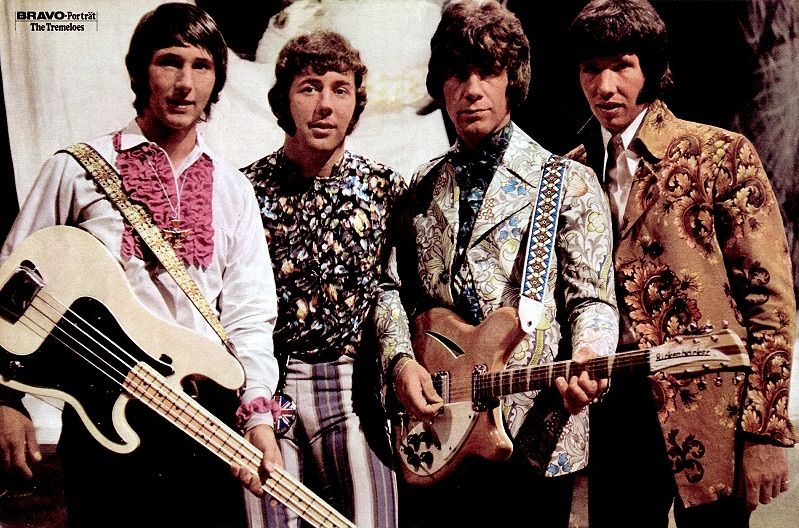
233. ‘Silence Is Golden’, by The Tremeloes

It’s been over three and a half years since The Tremeloes scored their first number one hit, a raucous cover of ‘Do You Love Me’. Since then they’ve dropped Brian Poole – or, rather he’s left to pursue a solo career – and mellowed their sound right down.

4045b26e9793a0ec8f807e95b9d9ea48

Silence Is Golden, by The Tremeloes (their 2nd and final #1)

3 weeks, from 18th May – 8th June 1967

I’m getting a Beach Boys, folky vibe as we start off. ‘Silence Is Golden’ is yet another song I know as being ‘part the swinging sixties canon’, without having ever listened to it properly. It’s a nice melody, the harmonising is nice… It’s a nice song. Oh don’t it hurt deep inside, To see someone do something to her… It’s the song of a watcher, one that either still has feelings for an ex, or that has an unrequited love. He wants to tell her that she’s being taken for a ride: Should I tell her, Or should I be cool…?

In the end he decides that silence is indeed golden, and that he should keep schtum. I like the idea that it’s actually the singer’s conscience singing to him, and that it at one point calls him ‘a fool’, but some time around the second chorus this song starts to get irritating.

It’s the forced falsetto voices, and the cheesy doo-wop backing vocals. It’s the ‘solo’, which is the band converging for a long oooweeeooowaaawaaawooowooow. By the end, when the final note swoops upwards like you’ve changed the speed setting, you’re glad it’s over. Like I said, it’s nice enough… But it’s a bit wishy-washy. It’s trying too hard. If this record were a schoolboy, he’d be getting his lunch money stolen.

R-563702-1400510024-1639.jpeg

(Can we just take a moment to appreciate that this disc appears to have had an actual picture sleeve, which seems to have been very rare thing indeed in Britain in the ’60s! Maybe that’s why it made it to  #1!)

‘Silence Is Golden’ is actually a cover of a Four Season’s ‘B’-side from a few years earlier. I’ll link to it here, but have to admit that that version also leaves me a bit cold. I dunno. Sometimes songs just don’t connect. It is very impressive, though, that The Tremeloes’ chart-topping career spanned the very middle of the 1960s, a time when pop music was developing at lightning speed. Their contemporaries in 1963 were Gerry & The Pacemakers and Billy J. Kramer, who were nowhere near the #1 spot in 1967. (And The Beatles who, to be fair, were still enjoying reasonable success…)

To conclude: file under so-so. The Tremeloes powered on, given a second wind by their second number one, and scored hits right through to the early seventies. They still tour on the oldies circuit, and reunited with Brian Poole for their 40th anniversary. And, since I’m struggling to write much more, I’ll end with a great bit of trivia. The Tremeloes contributed heavily to nineties pop, inadvertently, as the band members’ children included duo Alisha’s Attic and the one and only (gettit?) Chesney Hawkes!

198. ‘I’m Alive’, by The Hollies

Finally, after all the recent gospel, jazz and country, we’re back on track. This is more like it. This is what the sixties were meant to sound like…

125018732-origpic-9d7859.jpg

I’m Alive, by The Hollies (their 1st of two #1s)

1 week, from 24th June – 1st July / 2 weeks from 8th – 22nd July 1965 (3 weeks total)

This record is like a ‘Best of the Sixties’ compilation distilled down into a two and a half minute song. Let’s take it step by step… The intro is pure Merseybeat – light, chiming guitars – with a generous side order of Doo-Wop. Doo- doodoodoodoodoodoodoo… Then in comes in a husky, Lennon-ish voice: Did you ever see a man with no heart, Baby that was me… It’s all about a man who had never lived before, until his girl came along. It’s an upbeat and positive song. A song that puts you in a good mood. He’s alive!

The build-up to the chorus is very Beatles-y. Think a milder version of their ‘Twist and Shout’. Now I can breathe, I can see, I can touch, I can feel… Each line ascends ahead of the previous one, until the singer punches the chorus out: I never felt like this… I’m alive! I’m alive! I’m alive! End, and repeat.

Then the solo, which is a bit more hard hitting. Think tinny Kinks’ guitars with a bit of Stones swagger thrown in. And by the end, they’ve gone full on Who – with Keith Moon style drum fills and a frenetic rock-out to the end. Sprinkle the tiniest hint of psychedelica in the guitar reverb, and soupçon of Beach Boys in the backing vocals, and there you have it. I mentioned in recent posts that Jackie Trent and Sandie Shaw’s recent #1s were the most ‘sixties-sounding’ pop hits and now, well, I think we have the rock equivalent. We are slap-bang in the middle of the decade, and the sixties have never sounded sixtieser. It’s the perfect mix of old-style rock ‘n’ roll, Merseybeat and the newer, harder-edged rock. It’s a great little record.

THE-HOLLIES-Im-Alive-Parlophone-1965

The Hollies were also, like so many of the bands that they sound like, from the north-east of England, and went through the same Cavern Club circuit as all their peers. Founded by Allan Clarke and Graham Nash (later of Crosby, Stills and Nash), they started out as an Everly Brothers style duo before adding a few more members. Their name is – as you may have guessed – a tribute to Buddy Holly. ‘I’m Alive’ was far from being their first hit; nor was it their last. They would go on to have Top 10s well into the seventies, and were the 9th biggest chart-act of the sixties. Not bad, considering that they were up against Elvis, Cliff, The Beatles, The Stones, The Kinks and more in that list.

And I have to admit that they are the one big sixties rock group that have passed me by. I know ‘Just One Look’ – another mid-decade pop classic – and ‘Stop Stop Stop’, as well as their later, mellower hits ‘He Ain’t Heavy…’ and ‘The Air That I Breathe’. But I should know more, and will explore their back-catalogue as soon as I’ve finished writing this post. ‘I’m Alive’ was their only UK #1* and that, given their chart longevity, feels like a surprise.

But, before you give delve into their Greatest Hits, give this record one more spin. A song that sounds like the love-child of every prominent sixties rock ‘n’ roll band, a record that faces both forward and back, a record that did a weird mid-summer’s dance with Elvis’s ‘Crying in the Chapel’ (Elvis was #1, then The Hollies, then Elvis, then The Hollies again) at the top of the charts. A classic, that almost slipped through the gaps.

*(My first ever footnote!) Actually, The Hollies will have one further UK chart-topper, with a re-release in precisely twenty-three and a bit years, for Miller-Lite based reasons that we’ll go into when we get there.

193. ‘Ticket to Ride’, by The Beatles

In my post on the last Beatles’ chart-topper, ‘I Feel Fine’, I suggested that it announced the arrival of Beatles MK II. The cool Beatles. The detached Beatles. The stoner Beatles.

1965_beatles_01

Ticket to Ride, by The Beatles (their 7th of seventeen #1s)

3 weeks, from 22nd April – 13th May 1965

This, their seventh chart-topper in two years (!), is definitely mined from the same groove. It could even have been from the same recording session as ‘I Feel Fine’. The intro isn’t as scuzzy – the chiming guitars actually come across like a church bell on a Sunday morning – but that only lasts a second or two. Soon we lurch into a woozy, droney riff, with drums that roll, then thump, then disappear when you least expect. I’m no drummer, but am pretty sure that ‘Ticket to Ride’ should be produced as the first item of evidence when anyone claims Ringo couldn’t drum.

I think I’m gonna be sad, I think it’s today, Yeah…. The girl that’s drivin’ me mad, Is goin’ away, Yeah… Like most of the big Beatles hits, I grew up listening to this and could sing most of the words. But I’d never really noticed how desolate they were… She said that living with me, Was bringing her down… She would never be free, When I was around… Then how threatening they become: Before she gets to sayin’ goodbye, She oughta think twice, She oughta do right by me…  We’re a long way from ‘I Want to Hold Your Hand’, Toto.

Going by those lines, it seems as if Lennon & McCartney had been taking notes from the Rolling Stone’s book of romance. It’s the same sort of bruised bravado that we’ve heard in ‘The Last Time’ and ‘It’s All Over Now’. And that’s not the only thing they’d noticed – the clanging, ominous guitars here sound very Stonesy. Except… the lead guitar is also very US folk-rock. Very Byrds-y. And the guitar lick that connects the bridge back to the verses is… a mini-metal solo. Like, seriously.

THE-BEATLES-TICKET-TO-RIDE-UK-7-Single

‘Ticket to Ride’ is all about the details. Those drum-fills. That guitar lick. The chiming intro and the falsetto outro – My baby don’t care… – reminiscent of the way that they completely changed track for the last five seconds of ‘A Hard Day’s Night’. The Awww before the final She’s got a ticket to ride… It’s all about the details, because it’s an impossible record to categorise as a whole. It’s a beat-pop song at heart, but it’s also folksy, it’s heavy, it’s got bloody Indian sitar-sounding riffs thrown in…

I’m aware that this is going to be a very short post for a song of this stature. But we are seven songs into The Fab Four’s chart-topping run – there’s no need for an intro. And with ten more #1s to come from them we don’t need much of a postscript. I’ll leave you with a realisation that struck me midway through my sixth listen of ‘Ticket to Ride’… The Beatles were really, really good, weren’t they?

A playlist with all the #1s so far….

187. ‘Tired of Waiting for You’, by The Kinks

The 4th chart-topping single of 1965 is a bit of a Ctrl-Alt-Del moment. The first three #1s have felt like a mini revolution in all their Latin-soul, jazzy, glossy-pop glory. You could have been forgiven for asking: Is the Beat movement dead already?

the-kinks-1965-portrait-u-billboard-1548

Tired of Waiting for You, by The Kinks (their 2nd of three #1s)

1 week, from 18th – 25th February 1965

Of course it isn’t. The Kinks are swooping in to save the day for all the boys with guitars out there. A wonky, woozy intro – it feels kind of like you’re floating on a swing on a hot summer’s day – then in comes Ray Davies… So tired, Tired of waiting, Tired of waiting for you… (On a side note, I’ve always thought that Davies sings with a strange accent – as if English wasn’t his first language. Kind of Indian sounding. It’s really noticeable here…)

Anyway, he’s being kept waiting by a girl. And not ‘waiting’ as in she’s late for a movie. Waiting as in waiting. I was a lonely soul, I had nobody till I met you, But you keep-a me waiting, All of the time, What can I do? He might be waiting for a declaration of love; or waiting for you-know-what, like a horny teenager. Who knows?

I mentioned in my post on ‘You Really Got Me’ that that song, while being one of The Kink’s biggest and best known hits, isn’t really indicative of their sound. ‘Tired of Waiting for You’ is much more Kinks-y to me, especially when the band harmonise on the bridge: It’s your life, And you can do what you want… There are hints of ‘Waterloo Sunset’ there – and I can mention/link to that song now as it – unbelievably – won’t be featuring in this countdown. One of the great chart-travesties, that. I’m also getting a Searchers-vibe in the song’s chiming melancholy, too.

PC120005_ml

The edge is still there, though. The crunchy guitars that blasted their way through ‘You Really Got Me’ are barking in the background, especially in the build-up to the final chorus, as Davies pleads Please don’t keep me waiting… It’s a song about frustration, albeit politely voiced frustration. It’s like the polite cousin of ‘(I Can’t Get No) Satisfaction’… (Now there’s a song which we will be meeting on this countdown – hurrah!)

The Kinks will have one more number one, and several more famous songs that don’t make the chart summit. But I’ve enjoyed re-hearing this one. I had a Kinks’ Greatest Hits on CD as a kid, and while I knew this song I’ve never really listened to it in much detail. It’s a nicely forgotten chart-topper from an ever so slightly under-rated band. And coming as it does, in early 1965, as pop music races to evolve and improve at a staggering pace, it already sounds like a bit of a throwback.

https://www.youtube.com/watch?v=QkBvsBpgGbo

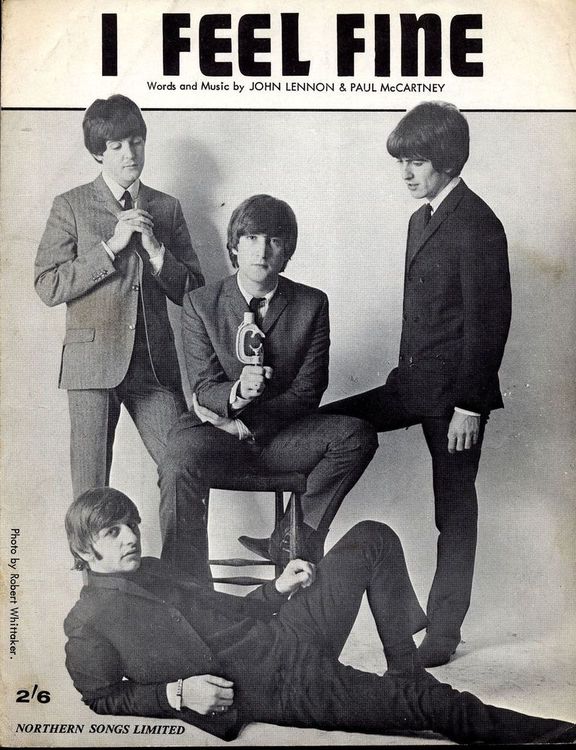
183. ‘I Feel Fine’, by The Beatles

And so we hit the mid-point of the swinging sixties. Slap bang in the middle, and The Beatles are knocking The Stones off the #1 spot. How very 1960s. Peak sixties!

i-feel-fine-the-beatles

I Feel Fine, by The Beatles (their 6th of seventeen #1s)

5 weeks, from 3rd December 1964 – 14th January 1965

But this is a new version of the Beatles. I mentioned when covering their last chart-topper, ‘A Hard Day’s Night’, that that was the sound of the MerseyBeatles being killed off – their last pure pop hit. And, as if to make sure of that, their sixth UK number one enters to the sound of feedback. A deliberately jarring intro, one that’s been done to death by now but at the time must have sounded strange indeed.

Their voices, too, have changed. They’re deeper, huskier… manlier? The mop-top boys have grown up. Baby says she’s mine you know, She tells me all the time you know, She said so… There’s an arrogance to it. The girl doesn’t have a name – she’s just ‘baby’. Tomorrow there’ll be a new one. That’s what happens when you’re in the world’s most popular band. She’s in love with me and I feel fine…

The guitar is rocking – apparently the riff came first when Lennon and McCartney were writing it – and drives the song along. The bridge, though, is still pure bubble-gum. Old habits die hard, I guess. I’m so glad, That’s she’s my little girl, She’s so glad, She’s tellin’ all the world… The relationship doesn’t seem to be built on the strongest of foundations, though – it’s more about buying diamond rings to keep his little girl happy.

download

This disc is a world away – both lyrically and sonically – from The Beatles earlier chart-toppers. Think the innocent ‘From Me to You’ and the earnest ‘I Want to Hold Your Hand’. It’s a cool record, the first Beatles record that your older brother would have admitted to liking.

There’s been a lot of discussion, for years, over when and where the band first started taking drugs. As far as I know Bob Dylan thought they must have been smoking as early as 1963, as he misheard the ‘I can’t hide’ lyric in ‘I Want to Hold Your Hand’ as ‘I get high…’ And they definitely were by October 1965, as Paul McCartney admitted to smoking a joint in the toilets of Buckingham Palace when they collected their MBEs.

If I had to guess, I’d narrow it down to the few months between ‘A Hard Day’s Night’ and this release. There’s a glazed, detached air to their voices here… They sound pretty stoned. Plus the name of the song just sounds like something you’d say when you’re high… ‘Dude, I feel fine…’ Then there are the mmmmhhs as the song fades out. The Beatles MK II are here.

It’s the perfect way to end 1964 – by far the best year yet in terms of the quality of its #1s. It has felt like walking through Madame Tussaud’s at times – look there’s Diana Ross, and Roy Orbison, and over there, The Kinks and Cilla Black! So to end it with The Stones and then The Fab Four –the decade’s two biggest bands – is perfect. 1965 looks like being a much more eclectic year, though the overall standard of chart-topper might drop off slightly… Onwards!

180. ‘(There’s) Always Something There to Remind Me’, by Sandie Shaw

This next chart-topper is a record that you can date pretty much instantly. Pretend, for a second, that you haven’t been following this countdown, and that you don’t know we are currently in October 1964. Just drop the needle, and listen. You know, straight away – it’s just got that mid-sixties vibe…

hqdefault

(There’s) Always Something There to Remind Me, by Sandie Shaw (her 1st of three #1s)

3 weeks, from 22nd October – 12th November 1964

There are soft, warm horns, and a little cha-cha-cha, bossanova beat. The ting of a typewriter reaching the end of a line. And a warm, playful voice… I walk along the city streets you used to walk along with me… Cute and glamorous – it kind of sounds like a French person singing in English (not that Sandie Shaw is French in any way – she’s Dagenham born and bred.)

It’s a song about a lost love, about how small things – streets and cafes – can remind you of the ones that got away. Oh how can I, Forget you, When there is always something there to remind me…? But, at the same time, it’s not a sad song. I’m not really sure what ‘kind’ of song it is…

It straddles lots of borders: it’s a bit of a ballad, a bit of a torch song, a bit of a standard pop song with a rock song looking to burst through. Listen to all the instruments involved: the horns, the orchestral strings, the twangy, Shadows-esque guitars. Plus the way Shaw sings – soft and lovelorn in the verses; shouty for the chorus. And then there’s the woah-waoh-waaaaa! and the cascading piano that bookmark either end of the violin solo.

There’s a lot going on here, but I like it. ‘(There’s) Always Something There to Remind Me’ is another song I knew – I could have sung the chorus – but had never listened to in any detail. It’s another Bacharach & David number (they’re starting to rack up) and I love the completely pointless brackets in the title. I like it because it doesn’t know, and probably doesn’t care, what kind of song it is. Everything’s been chucked in and given a good mix, and the end result is a classy little #1 hit.

SANDIE_SHAW_(THERES)+ALWAYS+SOMETHING+THERE+TO+REMIND+ME-560281

The only bit that jars is the I was born to love you, And I will never be free… line, because this might have been the swinging sixties, but girls were still expected to pine after their want-away men. Still, Shaw just about sells it with vocals that are both spunky and a little vulnerable.

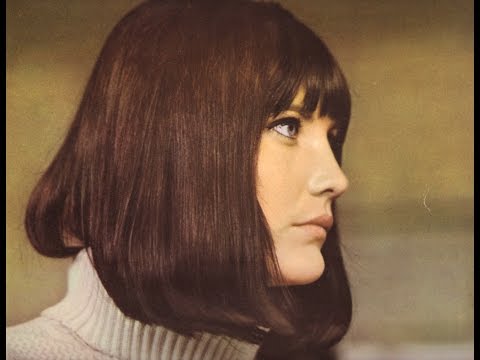
Sandie Shaw herself is, to me anyway, super-sixties. Just the name, without knowing anything about her, and its playful alliteration dates it to within a couple of years (her real name was Sandra.) And pictures of her taken in late ’64, when this was sitting atop the charts, show a foxy, mascaraed, chunky-fringed girl (she was but seventeen) in knee-high floral dresses. You can easily picture her racing around swinging London town on the back of a scooter, bouncing from glamorous party to glamorous party, from Carnaby Street to King’s Cross.

But… perhaps this tune is actually a victim its era. It’s a good record – a sad song with an upbeat vibe – and yet it pales a little in comparison to some of the era-defining records that have topped the charts recently. A nice song lost among the greats? Our next post is a recap, and so we’ll be able to wade back through all the recent #1s, and really sort the downright brilliant hits from the simply very good. Until then…

Follow along with this Spotify playlist:

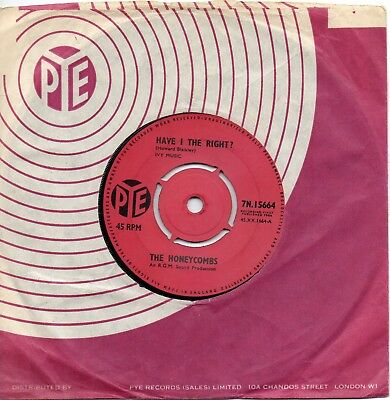
176. ‘Have I the Right?’, by The Honeycombs

What’s that? What’s this? Why, it’s the sound of Merseybeat being fed through an electronic blender…

the_honeycombs_have_i_the_right_ep_spain_500_49412

Have I the Right?, by The Honeycombs (their 1st and only #1)

2 weeks, from 27th August – 10th September 1964

This is a Beat-pop song, with everything in the right place: verses, choruses, a solo. Lyrics about love. Have I the right to hold you, You know I’ve always told you, That we must never, ever part… Some whoah-oahs. But… Something doesn’t sound quite right. And by ‘not quite right’ I don’t mean it sounds ‘wrong’ – far from it. I mean it sounds… completely unique.

Take the drums for a start. They are deep and bouncy, and echoey. The drummer might well be in a completely different room from the rest of the band. In the chorus, as they pound out on every note, they sound like one of those huge Japanese drums, echoing across a misty forest.

Then there are the jabs of electronic keyboard that pierce the end of every line in the verses, like a ray-gun in a cheapo fifties ‘B’-movie. The guitar too is sharp, and clean as a knife; but again there’s something kooky about it, as if you were listening to pop music from a different but not too distant dimension. These two instruments combine on the solo and then, perhaps midway through, you realise what this song reminds you of: the one and only, the era-defining, blast from the future that was ‘Telstar’.

That particular #1 was produced by the legendarily maverick Joe Meek, and so was this. All three of his chart-toppers – this, ‘Telstar’ and John Leyton’s ‘Johnny Remember Me’ – were recorded in his apartment in Islington. All three are unique songs; but all contain recognisable characteristics. They’re drenched in overdubbing, they’re tweaked and tucked, they twang with reverb, and they are just all a little bit weird.

Here, for instance, is just one of the tales from the recording of ‘Have I the Right?’ Those drums I mentioned earlier? They were enhanced, not digitally, but by members of The Honeycombs stamping their feet on the stairs outside the studio. A tambourine was thumped against a microphone. And then, for the finishing touch, the tape was sped up. So much for the misty Japanese forest…

HONEYCOMBS-HAVE-I-THE

This record isn’t quite ‘Telstar’ – how could you recreate one of the most innovative and forward-gazing pop songs ever recorded? But it is still a brilliant #1. And in some ways, maybe, this is actually the more impressive feat. Here, Meek had to use his powers in the confines of a ‘regular’ mid-sixties pop song; while on ‘Telstar’ he was allowed to completely let loose… When we get to the chorus – Come right back, I just can’t bear it, I got some love and I need to share it… The lyrics look normal on paper – a little basic even. It’s the sound, and the propulsive, endearingly home-made feel of this song that makes it what it is.

Joe Meek, while never actually featuring in any of his chart-topping hits, was the main star of all three. From the gothic melodrama of ‘Johnny…’, to the space-age transmission of ‘Telstar’, to this piece of electronically blended Merseybeat. And, as is befitting one of pop music’s greatest innovators, he was an extremely eccentric character. His Wikipedia entry ranges from the bizarre (his belief that he could communicate with the dead, including through the meows of a cat), to the sad (he struggled through long-term drug addiction), to the downright tragic (he shot his landlady, and then himself, in 1967 after a depression brought on by the drugs, impending plagiarism lawsuits and the fear that he was about to be outed as gay.)

Under all this, The Honeycombs – understandably – have to play second fiddle. This was their debut hit and, although Meek produced several of their follow-ups, they struggled to match the success of ‘Have I the Right?’ Their second most successful single could only hit #12, and they broke up in 1967 after several line-up changes. Perhaps the most remarkable thing about them is that their drummer and founding member – Honey Lantree – was a woman.

Let us celebrate, then, this progressive sounding chart-topper, ‘Have I the Right?’, with a progressive bunch of people at the helm: a gay producer, a female-drummer, and a bunch of guys stamping on the stairs…

Follow along here:

175. ‘Do Wah Diddy Diddy’, by Manfred Mann

‘Pop Music’… an ultra-generic term, but hey… What’s the first thing that pops (gettit?) into your head when you hear that term? Feel-good, catchy hits. Bubble-gum and bright colours. Popular songs that sell loads of copies. And yet, many, if not most, pop songs are more complex than that. Look at the songs to have hit #1 in 1964, and you’ll find a lot of bittersweet emotion: ‘Needles and Pins’, ‘Anyone Who Had a Heart’, ‘A World Without Love’, two songs titled ‘It’s Over’ and ‘It’s All Over Now’. Plus a song about a boy driven to ruin in a gambling den-slash-whorehouse. Only one – ‘Glad All Over’ – could potentially have filled all the ‘feel-good, catchy, bubblegum’ criteria this year so far. Make that two, now.

ManfredMann01

Do Wah Diddy Diddy, by Manfred Mann (their 1st of three #1s)

2 weeks, from 13th – 27th August 1964

There she was, Just a-walkin’ down the street, Singin’… Do wah diddy diddy dum diddy doo…! I forgot to add one more requirement to the ‘Pop Music’ manifesto – a memorable hook. And has there ever been a more memorable hook than Do wah diddy diddy dum diddy doo? Add it to the wopbopaloomas, the ramalamadingdongs and the zig-ah-zig-ahs of pop lore. As usual, I took a pre-post listen to this song, and tried to jot down some notes. But I found I didn’t write very much. I was too busy enjoying what is a great little pop song.

We come to a goofy call-and-response section: She looked good… (looked good…) She looked fine…( looked fine…) And I nearly lost my mind… And then it’s the bridge – another great bridge in an era of absolutely superb middle-eights. Woah-oh-woah, I knew we were falling in lo-o-o-ve… coupled with a twangy, rock ‘n’ roll throwback guitar. And we finish with, of course, a happy ending: with the loved-up couple together every single day, singing… You know exactly what they were singing: Do wah diddy diddy…

Musically, we can still hear the slow disintegration of the Merseybeat sound, now with organs, and maracas, and deep, bouncy, almost synthetic sounding drums. We’re approaching what I would think is peak-sixties, and this is a very sixties-sounding disc. And I’m looking at what I’ve written so far, and thinking it’s a pretty short post for a pretty high-quality song… But at the same time, ‘Do Wah Diddy Diddy’ is pretty close to pop perfection; and pop don’t need no analysing. That’s not really what pop music is for.

Manfred-Mann-Do-Wah-Diddy-Diddy-b-w-What

Plus, Manfred Mann will be chart staples for the entirety of the 1960s, managing what many of their Beat contemporaries couldn’t – to adapt their sound and score hits (including two more chart-toppers) all the way through to 1969. So I can’t even pad this post out with a career round-up.

This record made them the first non-Liverpudlian/Mancunian US chart-toppers during the British Invasion of 1964. In actual fact, though, ‘Do Wah Diddy Diddy’ was a cover. US girl group The Exciters had had a minor hit on the Billboard Hot 100 with it earlier in the year. Give that version a listen here. It’s a sign of the song’s strength, I’d say, that it works just as well in the hands of a female vocal group as it does in the hands of a raucous Beat-combo, and sounds as if it was originally written for them both. A stone-cold pop classic.

https://www.youtube.com/watch?v=43vOAw2sAFU