Today’s Top 10 – 17th July, 1957

After all the celebrations as we reached the 1000th #1 – a re-release of the 80th #1 ‘One Night’, which gave Elvis his 20th UK #1 – I thought an interesting way to wrap the festivities would be to go back to where it all started.

For Elvis, that is. I’ve done several ‘Today’s Top 10’ posts, but have never delved as far back as the fifties. Here then, is the UK Top 10 as it stood on this day sixty-nine years ago, which just so happens to have been the very first of Elvis’s eighty weeks on top of the charts…

10. ‘Butterfingers’, by Tommy Steele & The Steelemen – up 2 / 10 weeks on chart

First up Tommy Steele, one of the British rockers who were trying their best to emulate their pearly-teethed, slick-haired American idols. Steele had scored his sole #1 a few months earlier, with a cover of Guy Mitchell’s ‘Singing the Blues’ (which had knocked Mitchell’s original off the top). From the title I expected a novelty rocker, but this is an over-sung ballad about letting a girl slip away. Oops, butterfingers. Listen to Steele’s yelping, and then the Elvis record on top of this chart, and tell me who did it better.

9. ‘Around the World’, by Bing Crosby – up 1 / 8 weeks on chart

The crooners’ crooner, and a fixture of the pre-rock charts. This is what I remember much of the 1950s sounding like as we worked through the earliest number ones. From the soundtrack to an adaptation of ‘Around the World in Eighty Days’, this could have been a hit in the 1930s, and proves just how badly Elvis and co. were needed.

8. ‘A White Sport Coat (And a Pink Carnation)’, by The King Brothers – up 1 / 7 weeks on chart

This is a bit more like it. Still far from rocking, but at least it swings. A natty young man – I’m just picturing that white coat/pink pocket combo – is dressed up for the dance, but has to go stag. Such were the problems face by youngsters in the fifties. In the US, the song’s writer Marty Robbins had a hit with ‘A White Sports Coat…’, but in the UK vocal group the King Brothers took it into the Top 10 for their only such success.

Fun fact, Paul McCartney wore a white sports coat to a village fete on July 6th 1957, apparently inspired by this song. That was, of course, the day he met John Lennon. Whether or not he wore a pink carnation has been lost to history.

‘When I Fall in Love’, by Nat ‘King’ Cole – down 1 / 13 weeks on chart

Another crooner. I don’t know why, but Nat ‘King’ Cole’s crooning is far more palatable than Bing Crosby’s. He just had a bit more pizzazz about him. (I mean, the man had ‘King’ for a middle name.) I did a post on how Cole is one of the unluckiest chart stars, in terms of never managing a number one. ‘When I Fall in Love’ is one of his hits that peaked at #2. It also made #4 on rerelease in 1987, on the back of Rick Astley’s cover version.

‘Yes Tonight Josephine’, by Johnnie Ray – down 3 / 10 weeks on chart

On its way down from #1, pre-rock star Johnnie Ray’s final UK chart-topper (read my original post here). Ray was one of my favourite discoveries from the early months of doing this blog, as one of the few artists before Elvis to trade on sex and charisma. ‘Yes Tonight Josephine’ is a little throwaway compared to some of his other hits, but it is catchy and perky and, most importantly, not one of the many saccharine ballads that filled the charts in the early to mid 1950s. Speaking of which…

‘We Will Make Love’, by Russ Hamilton – up 3 / 8 weeks on chart

The worst of the 1950s. Elvis was doing a public service by consigning tripe like this to the history books. The song’s title promises something raunchy, or potentially problematic (We will make love, and there’s nothing you can do about it…) But you have to remember that ‘making love’ in 1957 probably meant nothing more than what those old swimming pool ‘Dos and Don’ts’ posters referred to as ‘heavy petting’.

‘Around the World’, by Ronnie Hilton – non-mover / 8 weeks on chart

Another annoying idiosyncrasy of ’50s charts was the fact that people were rarely satisfied with one version of a popular song. On a couple of occasions we even had two versions of the same tune replacing one another at number one. And so it is in this week’s chart, not content with Bing Crosby’s ‘Around the World’, we had to have some homegrown crooning, from Hull’s very own Ronnie Hilton. For what it’s worth, I do think Hilton’s cover has a little more oomph about it, and it did chart higher than Crosby’s.

‘Little Darlin”, by The Diamonds – up 2 / 7 weeks on chart

So far so bland. But luckily for us, searching for a whiff of rock and roll, the Top 3 on this week’s chart seems to have been beamed down from a different planet to the easy listening schmaltz that we’ve just waded through. Not that ‘Little Darlin” is strictly rock ‘n’ roll, but doo-wop had the tempo and the sexiness to allow it to go toe-to-toe with rock on the jukebox. I love the castanets and the harp flourishes, two silly touches that make this record pop in comparison to Ronnie Hilton. It was written, amazingly, by a sixteen-year-old Maurice Williams, who would later go on to form the Zodiacs. Incidentally, I always assumed the Diamonds were black, but no. They were a Canadian vocal quartet, who still exist today minus any original members, and with a past members list that hits thirty.

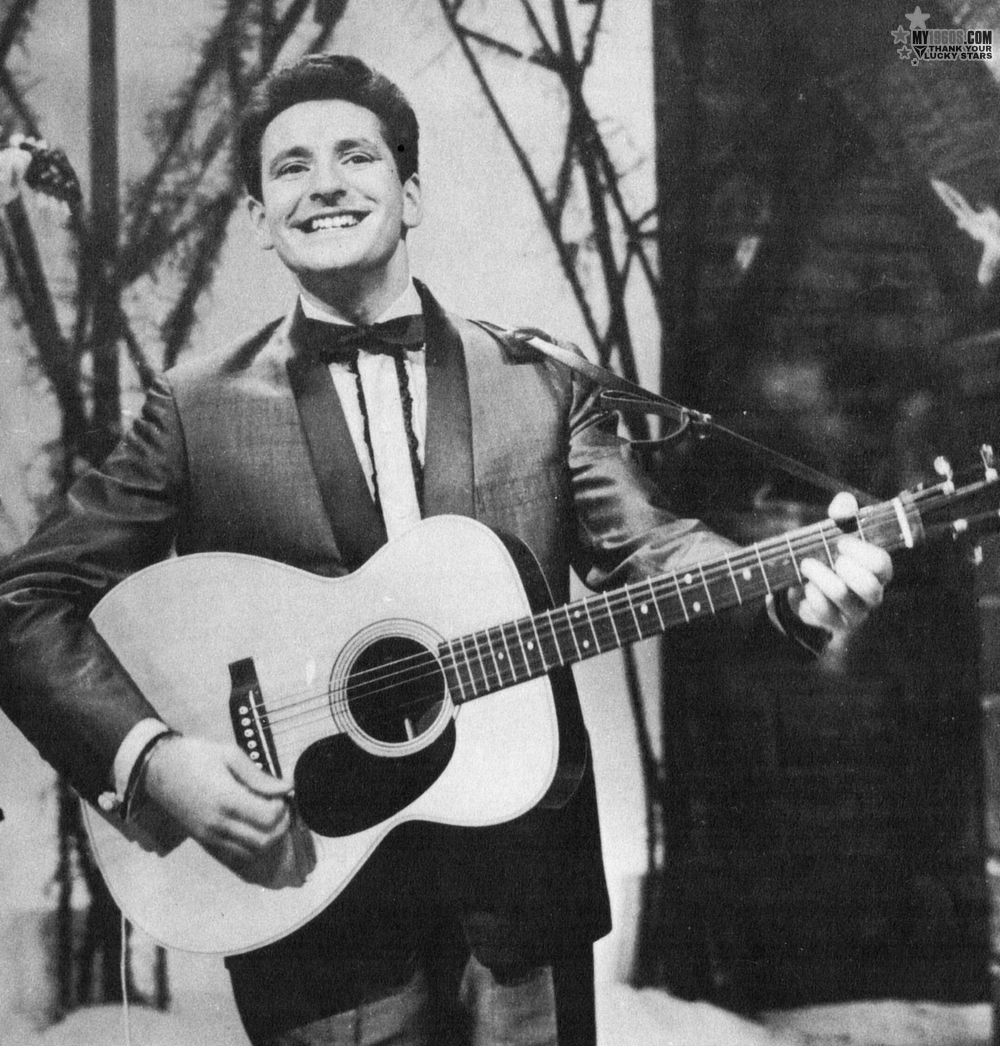
‘Gamblin’ Man’ / ‘Puttin’ on the Style’, by Lonnie Donegan – down 1 / 6 weeks on chart

People always cite Cliff, or Marty Wilde, or even Tommy Steele, as Britain’s first homegrown rock ‘n’ roll star. But for my money, this week’s #2 record was true British rock ‘n’ roll. Skiffle pioneer Lonnie Donegan’s second #1 of the year might have fallen one place on this chart, but ‘Gamblin’ Man’ rocks harder than most chart-toppers, of any era. Listen to this next to one of the strained ballads further back in this Top 10, and it’s not hard to appreciate how seismic a change rock and roll was in 1957. And why many older people thought it was the devil incarnate.

‘Putting on the Style’ is a little more traditional, with a music-hall singalong chorus, but it’s still fairly raucous. When a young Paul McCartney, in his white sports coat, met a young John Lennon, Lonnie Donegan tunes were among the first songs they performed together. Read my original post on this #1 here.

‘All Shook Up’, by Elvis Presley – up 1 / 4 weeks on chart

And so here it is. Elvis Presley’s first week on top of the British charts. It wasn’t his first hit – ‘Heartbreak Hotel’ had made #2 a year before and his star had grown consistently from there – and ‘All Shook Up’ doesn’t have the raw power of a ‘Heartbreak Hotel’, or a ‘Hound Dog’. It’s an understated groove of a record, with a runtime of less than two minutes. But Elvis spends those two minutes purring, murmuring, growling… in short seducing the listener. The way his voice slips up an octave for the It scares-a me to death… line is great. And the little uh before the final chorus is sex itself.

‘All Shook Up’ would spend seven weeks at number one, and within eight years Elvis would score fifteen chart-toppers. The British chart’s most successful act was up and running. As was, belatedly, the rock ‘n’ roll era. In the months following this, both Buddy Holly and Jerry Lee Lewis would join Elvis in topping the charts.

Advertisements

Remembering Lonnie Donegan

Today we remember Britain’s very first rock star. Cliff? Tommy Steele? Marty Wilde? They were but cabaret entertainers giving rock ‘n’ roll a go. Lonnie Donegan? He rocked, well and truly.

I remember listening to his first number one single, and thinking woah. ‘Cumberland Gap’ came in in the spring of 1957, between Tab Hunter’s schmaltzy ‘Young Love’ and Guy Mitchell’s goofy ‘Rock-A-Billy’. It was a short, sharp slap round the face and you can read my original post here. (The live version below is even more ferocious). It’s a traditional American folk song, given the British skiffle treatment, and to my ears it is punk come twenty years early. It was also the first of many times that a Scot has topped the UK charts.

‘Cumberland Gap’ wasn’t Donegan’s breakthrough hit: he’d been scoring Top 10s since 1955, and would amass sixteen of them before his chart career was cut short by the Merseybeat explosion. (Ironically, many of those bands had been hugely influenced by Lonnie and his Skiffle Group. The Beatles began when Paul McCartney joined John Lennon’s skiffle band a few months after ‘Cumberland Gap’ had been at #1.) Here is his first hit: ‘Rock Island Line’, a #8 in the UK and, significantly, a Top 10 in America too.

Born in Glasgow, but raised in the east-end of London, Lonnie Donegan had a background in trad-jazz before moving into the new skiffle movement. His subsequent hits included his 2nd number one, a double-‘A’ side of ‘Gamblin’ Man’ and ‘Putting on the Style’, and the brilliantly named ‘Does Your Chewing Gum Lose Its Flavour (On the Bedpost Overnight)?’. That hit veered towards the music hall, and it was the same style of hit that gave Donegan his third and final chart-topper, ‘My Old Man’s a Dustman’. I don’t think I was as impressed by that record in my original review, as humour is a hard thing to get right in a record, and it doesn’t necessarily age well.

It’s tempting to blame Donegan’s shrinking chart fortunes on the song he released for the 1966 World Cup: ‘World Cup Willie’. (Willie was a lion, and the official mascot for the tournament.) It didn’t chart, but it perhaps spurred England on to their win. (Yes, England won the World Cup in 1966. They still mention it from time to time…) I had never heard it, and was ready to hate it, but it’s actually a bit of a trad-jazz foot-stomper. You can see, though, why skiffle hard-liners felt betrayed by Donegan’s move away from the genre in the sixties.

Despite the hits drying up, Donegan and his band continued to tour throughout the seventies and eighties. This was despite him suffering several heart attacks, one of which killed him on this day in 2002. The Beatles aside, his legacy also lives on through artists like Roger Daltrey, Mark Knopfler and Jack White.

Lonnie Donegan, 29th April 1931 – 3rd November 2002

99. ‘My Old Man’s a Dustman’, by Lonnie Donegan

Back for one final fling at the top of the charts folks – live from the glamorous Gaumont Cinema, Doncaster – please welcome… the one and only… Lonnie!… DONEGAN!!!

tyls-21

My Old Man’s a Dustman, by Lonnie Donegan (his 3rd and final #1)

4 weeks, from 31st March – 28th April 1960

I had my doubts as to whether either of his previous #1s were ‘live’, as they sounded like studio recordings with some applause tacked on the end, but this is certainly the real deal. The audience are truly involved here, whooping and clapping at the end of almost every line – in fact they start cheering before the song has even really begun.

Now here’s a little story, To tell it is a must, About an unsung hero, Who moves away yer dust… Donegan tickles his guitar, as he introduces the tale of his father and then launches into some famous lines: Oh my ol’ man’s a dustman, He wears a dustman’s hat, He wears cor blimey trousers, And lives in a council flat… This is a very British number one, perhaps the most home-grown, wink-wink, nudge-nudge, how’s yer father, oo-er missus number one yet. For the benefit of non-British readers then: a ‘dustman’ is a rubbish collector, a ‘council flat’ is government built and owned housing for lower-income tenants, and ‘cor blimey trousers’ are… quick check, as even I’m not that up on old-fashioned Britishisms and was born far from the Bow Bells… old trousers unfit for wearing, possibly with a big rip across the arse.

The song bounces along, while Lonnie paints colourful scenes from his father’s life as a binman. I’ll pick out just one, shall I? Now one day whilst in a hurry, He missed a lady’s bin, He hadn’t gone but a few yards, When she chased after him, ‘What game do you think you’re playing?’, She cried right from the heart, ‘You’ve missed me am I too late?’, ‘No, jump up on the cart!’ (Cue riotous laughter)

In between the tales from the frontline, Lonnie trades dad-jokes with his fellow band member Les, in a variety of voices: I say, I say Les… Yes?… I found a police dog in my dustbin… How d’you know he’s a police dog?… He’d a policeman with him! Groan. Want another one? Course you do? I say, I say, I say, my dustbin’s absolutely full with toadstools… How d’you know it’s full?… Cos there’s not mush-room inside!

I know I’ve had a good moan in the past about British chart-toppers being silly and uncool compared to those recorded in the US. But that would be a somewhat snide and petty thing to bring up here. This is pure east-end music hall: silly jokes, accents and innuendo a-plenty. (Apparently it upset the hardcore skiffle fans of the time that their hero would stoop to recording this silly mush). I don’t find it terribly funny myself – though that one about the mushroom did take me a couple of listens to get and made me chuckle when I did – but then I’m a cynical millennial whose coming to this record sixty years too late. The song ends to rapturous applause, and it did spend a month atop the charts – so plenty of folks enjoyed it, and presumably still do.

lonnie-donegan-my-old-mans-a-dustman-original-uk-7-single-very-good_8789423

This, following hot on the heels of ‘Running Bear’, means we’ve had two novelty #1s in a row. They’re pretty easy to write about, good for a quote or two, but they don’t reveal much about where popular music was at the time of their release. ‘My Old Man’s a Dustman’ (‘Ballad of a Refuse Disposal Officer’ – to give it its full title) could have been written in 1910, for example. (It wasn’t – but the lyrics do have their origins in the 1st World War trenches.) Looking down the list, normal service at the top of the charts will resume very soon – rock ‘n’ roll ditties about falling in and out love. And maybe we’ll grow bored of that and look back fondly on these novelty number ones from the spring of 1960. Who knows?

One more thing – the line at the start of the song about the singer’s dad being ‘flippin’ skint’ is the by far closest we’ve come to hearing a swear-word in this countdown – ‘flipping’ being a very PG version of ‘fucking’, kind of like ‘freaking’ in American English but probably even milder. And it got me wondering when and what the first ever #1 to feature genuinely foul-language will be? I know all sorts of facts about the UK’s chart-toppers – longest, shortest, most weeks at the top, longest climb to the top, highest selling, lowest selling – but not that…

Lonnie Donegan bows out here. His 3rd and final chart-topper being his biggest – his signature? – hit. But it’s far from being his best. That was the punky, gonzo, gloriously messy ‘Cumberland Gap’. Donegan was a regular visitor to the top ten between 1956 and ’62, and did a lot to inspire the wave of British guitar acts that are set to explode on both sides of the Atlantic in a few years’ time. Meanwhile, his Wiki page introduces him as both ‘The King of Skiffle’ and ‘Britain’s most successful and influential recording artist before The Beatles’. A pretty decent bunch of ways to be remembered, eh?

61. ‘Gamblin’ Man’ / ‘Puttin’ on the Style’, by Lonnie Donegan & His Skiffle Group

s-l300 (4)

Gamblin’ Man / Puttin’ on the Style, by Lonnie Donegan & His Skiffle Group (their 2nd of three #1s)

2 weeks, from 28th June – 12th July 1957

Kicking off Part III, we come across our first double ‘A’ -side. What to do here…?

To be honest, what with me being a bit young to remember the days when vinyl was the only way to consume music rather than the expensive self-indulgence it is now, I’ve never really understood the concept of a double ‘A’-side. Who decided that the ‘B’-side on a particular record was suddenly the equal of the main single? The artist? The record label? The DJs?

Double ‘A’-sides were still a ‘thing’ long into the 2000s. The final chart topping double ‘A’ was ‘Baby’s Coming Back / Transylvania’ by McFly in 2007, while I vaguely remember Oasis – with the sort of absurd bravado that Oasis did so well – releasing a triple ‘A’-side circa 2002. So it is something we’ll encounter pretty often on this countdown.

I suppose the only thing to do here is to give each song equal weighting, while trying to keep the post down to the usual length. Wish me luck…

‘Gamblin’ Man’ sees Lonnie Donegan giving us more ‘Muricana a la his last chart-topper, ‘Cumberland Gap’. He’s gambled down in Washington, and he’s gambled up in Maine… It gets off to a slow start, and never quite reaches the frenzied levels of ‘Cumberland Gap’, but it’s still another decent slice of up-tempo skiffle.

It turns out that the ladies love the Gamblin’ Man, while parents are less keen… She said Oh mother, mother, I’m in love with a gamblin’ man…  She said Oh daughter, daughter, How could you treat me so, And with that gambler go… Then we get to the solo, and one of my favourite things in the world happens: Donegan announces the guitarist with an ‘How ’bout Jimmy!’ Jimmy then does the business. In my opinion, every guitar solo should be ‘announced’ by the lead singer and, again in my opinion, the best example of this comes in Poison’s ‘Talk Dirty to Me’, when Bret Michaels screams ‘CC, pick up that guitar and a-talk to me!’

Anyways, back to 1957. The end of the song sees the line I’m a gamblin’ man man man… repeated many times until it becomes something of a rhythmic, almost hypnotic, chant. And then it finishes and lots of people cheer. Oh! I’ve been listening to a live version… Was this, then, the version that topped the charts? Quick check… Wiki says ‘Yes.’ It was recorded at the London Palladium. It speaks volumes about either the quality of Donegan and his band’s performance, or the generally poor quality of recording equipment used in every previous chart-topper, that I didn’t notice it was live until the cheers came in at the end. But it’s our very first live-recorded #1, as well as our very first double ‘A’-side. We’re pushing boundaries here, people!

07d094a3c20ac52982bf8bc16ba6cba2--lonnie-donegan-s-music

‘Puttin’ on the Style’ is a mellower number altogether. Is that a banjo I hear before me? The lyrics concern kids putting on an act to impress others: girls giggling and flirting, boys driving around in ‘hot-rod’ cars (with driving gloves borrowed from their fathers). Very rock ‘n’ roll. But it’s a simple song: a ditty, a nursery rhyme even. I mentioned in the entry on ‘Cumberland Gap’ that Donegan had merged US rockabilly with the UK music halls, and this song is very heavy on the latter: Puttin’ on the agony, Puttin’ on the style, That’s what all the young folks are doin’ all the while… But Lonnie isn’t one to judge: And as I look around me, I sometimes have to smile, Seein’ all the young folks, Puttin on the style…

The final verse is the most interesting one. Attention turns to a preacher scaring the bejesus out of his congregation with tales of ol’ Nick and the fiery pits. Now you might think it’s Satan, Comin’ down the aisle, But it’s only our poor preacher boy, Who’s puttin’ on the style… Irreligious? Controversial for 1957? I’m sure the BBC wouldn’t have playlisted it, but there doesn’t seem to be any record of an uproar. What with that, and the mild glorification of gambling on the flip-side, times were certainly changing.

‘Puttin’ on the Style’ is another live-recording, and the crowd roar appreciatively come the end. As with ‘Cumberland Gap’, I love that this topped the charts; but I don’t love the song(s). I love that it’s rock ‘n’ roll, that there’s an irreverent, slightly anarchic edge to the songs, and that it’s a thoroughly British interpretation of this new style of music. But Donegan’s voice is just a bit irritating. Nasal and whiny…

He’ll be back at the top of the charts, but not for a while yet, so we’ll leave him here at the forefront of the rock vanguard. It will be interesting to see how he sounds when his next #1 comes along, in an altogether different decade!

57. ‘Cumberland Gap’, by Lonnie Donegan & His Skiffle Group

lonnie-donegan-cumberland-gap-pye-nixa-78-s

Cumberland Gap, by Lonnie Donegan & His Skiffle Group (their 1st of three #1s)

5 weeks, from 12th April – 17th May 1957

I take it all back, what I said in my last post: we are rockin’ and a-rollin’ again. In a very British kind of way. With a very American song.

I’ll explain all that in a minute, but let me start by mentioning the fact that this is a blistering little record. Two minutes of lean, mean, frantic rock. Or more specifically, skiffle. For which read: ‘British Rock ‘n’ Roll’. I’ve mentioned it before, and I’ll no doubt mention it again, but this is the best thing about a countdown of records based on sales alone: that songs like ‘Cumberland Gap’ can follow on from songs like ‘Young Love’. One follows the other, like night follows day; polar opposites of one another but somehow eternally linked.

The guitar starts lightly, then grows, along with the bass and the drums, before Lonnie Donegan’s voice comes in. Singing about something called ‘the Cumberland Gap’. I say ‘something’, because whatever it is isn’t immediately clear from all his squealing and squawking: Well the Cumberland Gap, Cumberland Gap, Fifteen miles on the Cumberland Gap… The Cumberland Gap, Ain’t nowhere, Fifteen miles from Middleburgh…

Note that it’s Middleburgh, not Middlesbrough. We’re in the US, here – with all the yee-hahs and yodels that that entails. But then we take a strange turn, and it all goes a bit East-End music-hall: Well I got a girl, Six feet tall, Sleeps in the kitchen with her feet in the hall… Two old ladies, Sittin’ in the sand, Each one wishin’ that the other was a man…

What this girl and these old women have to do with the ‘Cumberland Gap’ isn’t expanded upon, and Donegan doesn’t hang around either. The lyrics are replaced by straight up screams and a frenetic solo. The song ends with a verse that is just da-dee-dee-dees and a mumbled something about how much he loves ya baby, and then the song title is repeated several times – loud, then quiet, then VERY LOUD and then boom. Done. Phew! You can see why some learned types have referred to this as the first ever punk record.

lonniedonegan1_2398941k

I have to admit – I’m not sure that I love this record. It’s a bit much. But I do love that it spent five weeks at the top of the UK Singles Charts in the spring of 1957. That the public’s taste in music had evolved enough to allow a song which is essentially a lot of screaming and mumbling such an extended moment in the sun. And I take back what I said about rock being dead, deader than dead. It’s obviously not. I overreacted.

Before I finish, I had to find out what in God’s name the Cumberland Gap actually is. Turns out it’s a mountain pass, located at the convergence of Kentucky, Virginia and Tennessee, which allowed old American frontiersmen such as Daniel Boone to pass across the Appalachian Mountains and conquer the wilderness that was The Wild West. Add this, then, to the list, alongside ‘The Man from Laramie’, ‘Hey Joe’, Slim Whitman and Tennessee Ernie Ford, as the latest piece of Americana to find a place at the top of the charts. Was it exoticism? Was it envy? Why were we so obsessed with America? Perhaps we still are.

However, knowing what the Cumberland Gap is has gone no distance in helping me work out what the hell this song is about. As a song it had been around since at least the mid-to-late 19th Century as a folk ditty. Wikipedia mentions lyrics about ‘taking naps’ in the Cumberland Gap, and ‘raising hell’ in the Cumberland Gap, but nothing about six-feet tall women. Perhaps Donegan added those verses himself, and in doing so created the perfect fusion of American rockabilly and British silliness.

We’ll hear from Lonnie Donegan again, and soon. So I won’t delve too deeply into his back-story. ‘Cumberland Gap’ was only his fourth hit single in a chart career that would stretch deep into the sixties and which would bring great success. It is worth noting, though, that he was born in Glasgow and so, after having had an Italian, a Cuban, a Trinidadian and tons of Americans already top the charts, the 57th UK #1 single goes to a Scot.