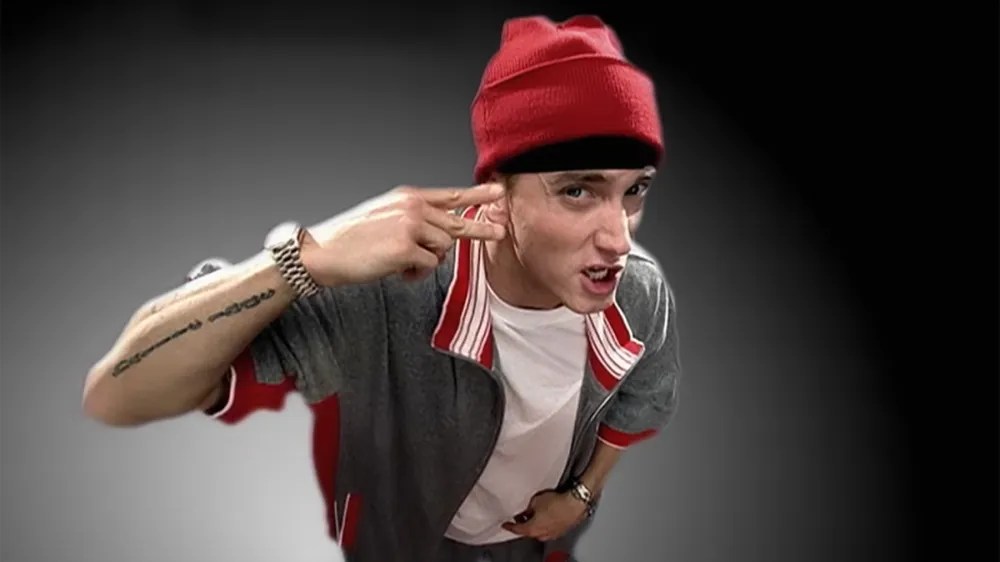
944. ‘Lose Yourself’, by Eminem

The third and final part of Eminem’s era-defining triptych. Scary Eminem, Funny Eminem, Motivational Eminem…

Lose Yourself, by Eminem (his 4th of eleven #1s)

1 week, 8th – 15th December 2002

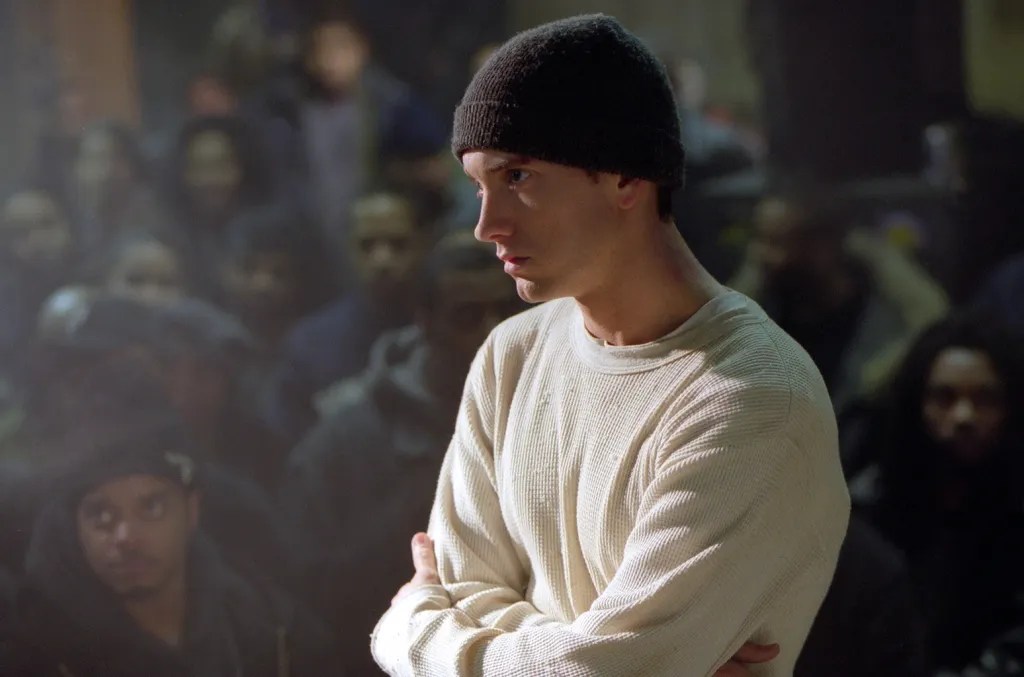
‘Lose Yourself’ was probably Eminem at the peak of his fame and success, as not only was it a huge hit record, it also came from the soundtrack to ‘8 Mile’, a huge hit movie in which Eminem played a character loosely based on himself. If he has a signature song, then it’s probably this.

Before we get to the lyrics, I’d also say that this is Eminem’s strongest number one musically. The slow building intro, the heavy, dramatic chords, the piano line that slinks around the beat (and I’ve just realised the ‘Succession’ theme writers totally nicked a trick here). Some of his other, funnier chart-toppers tend towards cheap, rinky-dink beats. Not this one. It’s lush, and cinematic.

Lyrically, ‘Lose Yourself’ is about taking chances, with the movie’s protagonist about to take part in a rap battle that could lead to a way out of poverty. You only get one shot, Do not miss your chance to blow, This opportunity comes once in a lifetime… I am usually immune to the charms of anything that could be labelled as ‘motivational’, but this works because it focuses on the fear of failure rather than on the glory of winning, as the delivery grows more intense verse by verse. No ‘search for the hero inside yourself’ here. Instead it’s: I’ve got to formulate a plot, Or end up in jail or shot, Success is my only motherfucking option, Failure’s not…

Surprisingly, that ‘motherfucker’ is one of very few curse words in the song, making this surely Eminem’s cleanest chart-topper. For the first time in four we also do not need to sound the homophobia klaxon, as this track also features zero gay slurs. This is basically a hymn by Eminem’s standards…

I also think, as it’s not about murdering your girlfriend, and features no puerile humour, that this was the song which convinced most anti-rap types of Eminem’s talent. I think it comes across as a little bit ‘newly graduated English teacher desperate to look cool’ when one compares Eminem’s lyrics to poetry, but the opening lines – His palms are sweaty, Knees weak, Arms are heavy, There’s vomit on his sweater already, Mom’s spaghetti – set a scene in less than twenty words that most writers could only dream of. In the third verse, he sets off on a staccato flow that very few, if any, other rappers could pull off.

Having said that, of his three peerless #1s, I enjoy ‘Lose Yourself’ the least. It’s great, impressive; but it’s also very earnest. What it says about me, that I prefer the song about murdering your girlfriend, or the one with the video in which Eminem surfs on a turd, I don’t want to explore. What’s for sure is that this was the end of Eminem’s imperial phase. ‘Lose Yourself’ might have been the first rap song to win the Oscar for Best Original Song, a genuine cultural moment, but he certainly did ‘lose it’ with his fifth number one…

This will be my last regular post for the year. I’ll do a couple of festive posts over Christmas and New Year, and resume with the number ones in early January.

939. ‘Dilemma’, by Nelly ft. Kelly Rowland

Our next number one was a huge hit, a very popular song then that remains so now. Many of its lyrics and hooks are familiar to me, despite not listening to the song very often in the intervening twenty years or so. And yet…

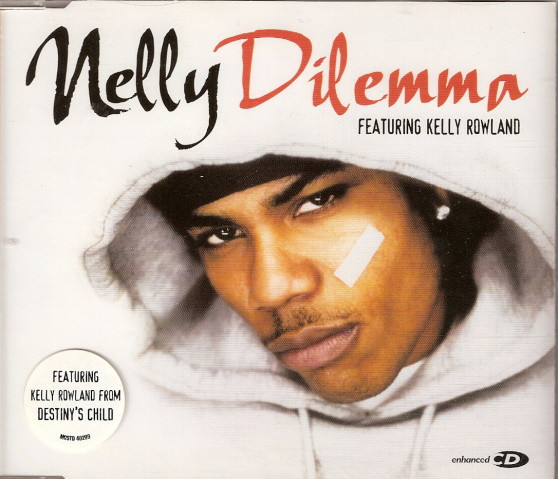
Dilemma, by Nelly (his 1st of four #1s) ft. Kelly Rowland (her 1st of two solo #1s)

2 weeks, 20th October – 3rd November 2002

And yet, I can’t quite figure out why this was such a big song. And I don’t really know how to approach it. Is it cheesy? It is an unabashed love song… Or is it cool? One third of Destiny’s Child and the year’s big breakout rapper should equal pretty cool… Or is it a novelty? Any song that rhymes ‘boo’ with ‘you’ could be filed under that category… None of this is to say I dislike it. It’s smooth, it’s memorable, it’s so very rooted in my memories of my final year at high school. I just struggle to place it.

Maybe the best way to view is as classic hip-hop, an old-school slow jam in the tradition of LL Cool J. The crackly vinyl in the intro, the record scratches, the nursery rhyme melody, the cheesy lyrics, all become acceptable if this is a loving nod back to the hip hop of the eighties and the nineties. It’s strange though. Tracks like this were ten-a penny on top of the Billboard charts, but in the UK this type of hip-hop rarely had as big an impact as this.

In fact, still, even in 2002, the number of hip-hop chart-toppers has been limited. Eminem, sure, and some rapped verses in pop songs. Was Afroman rap? Shaggy? There’s UK garage too, like So Solid Crew, but that’s slightly different. The last pure US hip-hop #1 was arguably Run-D.M.C, way back in 1998, and that was a remix of an old tune. Beyond that there was Puff Daddy, and LL himself, in 1997.

And yes, the number one is only one record out of a whole chart, and rap songs had been featuring in the Top 40 for decades by this point, but still. If this was a blog on the US charts (where it was #1 for ten weeks) then ‘Dilemma’ wouldn’t stand out at all. But in the UK it does feel like a slight outlier among the talent show pop, the boybands and the dance. A nice outlier, though. A smooth palate cleanser after our usual fare.

‘Dilemma’ probably did better than your average rap single because of the first appearance of a solo Destiny’s Child star (although Beyoncé had released a song for an ‘Austin Powers’ soundtrack a few months before, this song’s success caused her to push back the release date of her debut album so as not to have to compete with her bandmate). Nelly too had just been responsible for one of the songs of that summer, the funky ‘Hot in Herre’. So momentum was behind both of them, leading to the biggest non-Pop Idol opening sales of the year, and 2002’s fourth highest-selling single.

It also seems to live on to this day, or has been rediscovered by Gen Z, as I see it crop up in reels where the ‘ahhs’ are synced with a variety of weird and wonderful things. And then there’s the now-infamous scene in the video, where Kelly appears to be using an Excel spreadsheet to write a text message, which has been doing the rounds online for years. As a songwriter you presumably want your songs to live on, but you have no control over the reasons for why they do…

934. ‘Crossroads’, by Blazin’ Squad

In 2002, an S Club 7 spin-off was launched: S Club Juniors, a group of pre-teens singing similarly peppy pop tunes. Sadly, they won’t feature on this countdown (though seriously, ‘One Step Closer’ is a banger), but they’re here in spirit. For Blazin’ Squad, read So Solid Crew Juniors…

Crossroads, by Blazin’ Squad (their 1st and only #1)

1 week, from 25th August – 1st September 2002

A group of ten sixteen-year-old lads, covering a rap classic by Bone Thugs-N-Harmony, #8 in 1995 (and eight-week Billboard #1). It’s easy to scoff – the band name is so clearly a teenage brainwave – and many did. “Self-proclaimed pioneers of chav culture” is a particular favourite. But I do like to take each number one we meet at face value.

And this is okay. It’s a lot poppier than anything from So Solid Crew, but that makes it better, in a way, for me. For someone so far removed from the target audience for an early-noughties hip-hop act. It’s also much poppier than the original, with the lyrics largely re-written. At the time critics mocked them for this, but it makes sense. They were ten boys from North London, not an American rap troupe from Ohio. Nowadays a largely white group like this would get in trouble for appropriating such a song if they didn’t change the words.

But that begs the question: were Blazin’ Squad real MCs, or posh boys cosplaying? I can’t find much background on the individual members, but their hometown was Chingford, which internet searches reliably tell me is a fairly middle-class suburb in north-east London. But then, many of the pop success stories of the 21st century are posh types who made it because they could always have been bailed out by daddy, so in that regard Blazin’ Squad were perhaps pioneers.

That may be pushing things but, as maligned as the Squad were, this record making number one set them up for a couple of years of chart success, and six Top 10 hits. I should mention here their second biggest hit, the genuinely fun ‘Flip Reverse’, one of pop music’s great odes to delivering via the tradesman’s entrance, as it were. If only that had made number one. We’d have had a great time getting to the bottom of it.

Anyway. One final question needs to be addressed. Were Blazin’ Squad a boyband? I ask that not because I particularly care – and yes, they were boys in a band – but because if they are then I think they mark the end of the golden age of ‘90s-‘00s boybands which had started with Take That in 1993, or even perhaps with NKOTB in 1989. The next new boyband we’ll meet at number one will be JLS in 2009. (And before anyone asks, I’m deliberately excluding Busted and McFly from the boyband equation, because they held – and I’m pretty sure used – guitars).

928. ‘Without Me’, by Eminem

Guess who’s back? Back again? Shady’s back with his third album, and his third British number one single.

Without Me, by Eminem (his 3rd of eleven #1s)

1 week, from 26th May – 2nd June 2002

My usual moral quandaries over his lyrical themes aside, this is my favourite Eminem #1. I even used to know all the words. It’s an elevated version of ‘The Real Slim Shady’, in which Eminem contrasted his vulgarity with his popularity, and took swipes at various famous figures. Here he plays up to his pantomime villain image again, seemingly more at peace with it than on his angrier, earlier chart-topper, and the fact that everyone wants the character of Slim over the real-life Marshall Mathers: I created a monster, ‘Cos nobody wants to see Marshall no more, They want Shady, I’m chopped liver…

In the video, and in the short Batman-theme interpolation, he positions himself as an inept superhero, Rap Boy, who snatches his own CDs from children’s hands, lest they hear his inappropriate rapping. Elsewhere the rhymes are airtight, the delivery precise, and all the right/wrong buttons pressed (choose depending on your tolerance for Eminem). Two people who might have been disapproving were Liz Cheney and her husband, and Vice-President, Dick, whom Eminem kills with a defibrillator in the video. Shots are also fired at NSYNC, Limp Bizkit, Moby, Prince, and his mum: Fuck you Debbie!

The second verse is a highlight, with one of Eminem’s best lyrics: Little hellions, Kids feelin’ rebellious, Embarrassed their parents still listen to Elvis, They start feelin’ like prisoners helpless, Until someone comes along on a mission and yells ‘Bitch!’ In ten seconds it goes from making an interesting comparison between the controversies around himself, and Elvis forty-five years earlier, to him yelling a rude word. Eminem in a nutshell.

Elvis reappears later, in another astute line: I not the first king of controversy, I am the worst thing since Elvis Presley, To do black music so selfishly, And use it to get myself wealthy… Much was, and still is, made of the fact that the biggest selling hip-hop artist of all time is white. But again, just as the casual listener is starting to think Marshall Mathers might be more intelligent than he looks, the same lines are delivered in the video while a mini-Eminem balances on a giant turd that the King has just delivered into his famous toilet bowl.

In some ways, this record is typical Eminem. It wasn’t going to win him any news fans, unlike ‘Stan’, but he’s also at the peak of his powers. Many times over the years he has tried to release a ‘Without Me’ style caustically-comic single, and while many have been commercially successful, none have managed to come close to this. It’s also musically quite fun, with a grinding disco beat, and it may be the one Eminem song that you can actually dance to.

Because I can’t help myself, I have to do the now traditional Eminem Homophobic Lyrics Watch, and there’s just one example here, in which he calls Moby a bald headed fag. But then he asks that he blows him, so who knows. Perhaps the lady doth protest too much? Sixteen-year-old me noticed that lyric, though, never fear. It’s also still noticeable how much more explicit Eminem’s three number ones have been compared to almost everything else that’s made number one. He liked to revel cartoonishly in his status as a corruptor of youth, but he had a point. Few other stars could release chart-topping singles so explicit.

‘Without Me’ is the middle single of a triptych, between ‘Stan’ and his next (more serious) chart-topper, in which Eminem was untouchable. Although he has gone on to have an almost thirty-year career, nothing he’s released since 2004 has come close to these three. Not just three of the best hip-hop singles, but three of the best and most controversial #1s of all time.

911. ‘Because I Got High’, by Afroman

It’s been noticeable how, as soon as the 21st century began, the top of the singles chart has been home to all manner of depravity. And here is yet more evidence of slipping societal standards…

Because I Got High, by Afroman (his 1st and only #1)

3 weeks, from 21st October – 11th November 2001

We’ve had the rock ‘n’ roll, we’ve had the sex, and now we have the drugs. Of course, this isn’t the first number one song to reference illegal substances, but usually they’ve been protected by innuendo, by a level of plausible deniability. This record, however, opens with someone asking us to roll another blunt. Less than a decade sits between the nudge-wink of ‘Ebeneezer Goode’, and this unabashed celebration of ganja.

But, actually, is this a celebration? Superficially, yes. But then you listen and notice that this song is a list of unfortunate events brought about by smoking too much weed. First verse: I was gonna clean my room, Until I got high… Second verse: I was gonna go to class, Before I got high… It’s not long before he’s being chased by the police, crashing his car, and ending up a paraplegic.

Obviously, all this is tongue in cheek, a fact highlighted by the fact that the paraplegic verse is followed by one about being unable to function sexually: I was gonna eat your pussy too, But then I got high… (Sadly, Afroman is forced to take matters into his own hands, if you catch my drift.) This is no anti-drug song, no inside job to keep the kids on the straight and narrow. But it works as a satire nonetheless, with Afroman and his homies skewering the reasons that those in authority give to warn people off marijuana. By the end, the fourth wall has been broken: Imma stop singing this song, Because I’m high… And if I don’t sell one copy, I’ll know why…

So I like this record on one level. I also like how stripped back it is, just a bassline and vocals. It’s almost a cappella, with some doo-wop backing touches. But the backing vocals, his gang of stoned buddies whooping and hollering, are also the reason that this song grows old, and quickly. Unless you’re actually high when listening, then you might think that this was the greatest song ever recorded. Which I suppose means that ‘Because I Got High’ is doing its job.

Afroman had been rapping since the 8th grade, when he allegedly recorded a diss track about the teacher who had him expelled for wearing sagging jeans. Which seems unlikely, but it’s a fun origin story… ‘Because I Got High’ could be said to have gone viral, by the standards of the time. It had originally been released a year and half earlier, and had slowly grown in popularity on file-sharing websites. This belated major label release came after the track was featured on the soundtrack to ‘Jay and Silent Bob Strike Back’.

Afroman was good for one more Top 10 hit, ‘Crazy Rap’ in early 2002. And if ‘Because I Got High’ is at the limit of your tolerance, or if you’re a Dolly Parton fan, then I’d say best avoid it. After the hits dried up he started releasing his music independently, and remains active to this day, with his beloved Mary Jane still very much a strong lyrical theme (his album titles include ‘Drunk ‘n’ High’, ‘Waiting to Inhale’ and ‘Marijuana Music’).

905. ’21 Seconds’ by So Solid Crew

Garage music continues on its mission to be as annoying a genre as possible…

21 Seconds, by So Solid Crew (their 1st and only #1)

1 week, from 12th – 19th August 2001

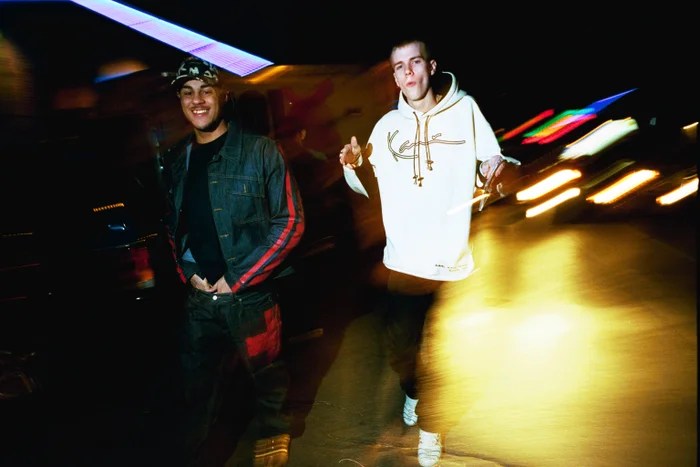
The three hardcore UK garage number ones – ‘Bound 4 da Reload’, ‘Do You Really Like It?’, and now this – feel like the musical equivalent of a teenager playing their music out loud at the back of the bus.

I could argue that I’m just an old fogey; but actually, I was fifteen when this made number one. I could easily have been that twatty teen. And while I’m sure me and my schoolmates were plenty obnoxious, none of us were ever into garage music. It felt very inner-city London; not small-town Scotland.

Like the two earlier garage #1s, this has lots of MCs spitting rhymes over a minimal 2-step production. The title refers to the fact that each performer gets twenty-one seconds to deliver their verse. Which at least keeps things quite fast-paced, and if one rapper doesn’t grab you then you know they won’t be on for long. Problem is, none of them grab me. And this isn’t me speaking as someone who doesn’t like rap music. There are rap songs I love. I named a rap song as my most recent Very Best Number One. It’s just that none of the rappers involved on this track have anything interesting to say.

What the title doesn’t refer to is there being twenty-one MCs on this track, though it starts to feel like it. There was actually a mathematical formula involved in creating the record. According to Wikipedia: “21 seconds is arrived at as the song’s tempo is approximately 140BPM, has a key of G minor, and each rapper has 12 bars of 4 beats (48 beats at 140BPM, when worked out to the nearest integer, rounds to 21 seconds).”

So Solid Crew had, at any one time, somewhere between nineteen and thirty members. Which makes them by far the biggest group to reach #1, although fewer than ten were involved in this track. The one member of So Solid that I can name with any confidence is Lisa Maffia, who is the only MC who sings her verse. Turns out I also recognise Romeo and Harvey, who had decent-ish solo careers away from the Crew. Interestingly, Oxide & Neutrino (of ‘Bound 4 da Reload’ fame) were So Solid members but didn’t feature on this track.

Of the three garage chart toppers that I mentioned, I would rank this in the middle. It’s not as intentionally annoying as DJ Pied Piper, and there is a lot of cultural relevance here. It’s punk for the new millennium, the sound of rebellious youth. It’s extremely modern, and there’s a clear line from this through to modern UK rap hits from the likes of Stormzy or Central Cee, while the I got twenty-one seconds to go, I got twenty-one seconds to flow chorus went just as viral, by 2001 standards, as Do you really like it, Is it is it wicked... I don’t like this record, but that’s down to personal taste. I must say, when I reviewed ‘Bound 4 da Reload’ I never thought I’d be placing it top of any list, but there was a joie de vivre in its ‘Casualty’ sampling novelty that is lacking in this song’s charmless slog through five minutes’ worth of identikit rapping.

One other thing worth mentioning here is the first appearance of the N-word in a number one single, in Megaman’s opening verse. I’m a big fan of tracking offensive language in chart-topping singles, from Lonnie Donegan’s ‘bloomin’’, to John Lennon’s ‘Christ!’, to Paul Weller’s ‘bullshit’. It feels like a switch was flicked the moment we hit the 21st century, with Oxide & Neutrino, and then of course Eminem, cramming their chart-toppers with vulgarity. All that’s left is the debut appearance of the c-word on top of the charts (and I don’t mean Coldplay…)

864. ‘The Real Slim Shady’, by Eminem

May we have your attention please? May we have your attention please? Won’t the highest selling male artist of the 21st century please stand up?

The Real Slim Shady, by Eminem (his 1st of eleven #1s)

1 week, from 2nd – 9th July 2000

Whatever your opinion of rap as a genre, or on the talents of Marshall Mathers III, it’s hard to deny that we’re introducing a massive cultural phenomenon with this next chart-topper. And for the record, I will not deny Eminem’s skills as a rapper, which are well on display here. This is hip-hop for the new millennium – sharp, slick and rapid-fire – making much of the rap that we covered in the eighties and nineties sound slow and antiquated.

And, even though this wasn’t his first chart hit, ‘The Real Slim Shady’ acts as the perfect introduction to Eminem. The beat is robust, if simple and repetitive, starting as the theme to a kid’s TV show gone wrong, ending with a slightly out-of-tune recorder coda, and peppered with lots of fairly juvenile sound effects. While the lyrics – which are what we’re all here for – are spat out with precision, and venom. Not a beat or a syllable is wasted, as this sleek, modern rap-bot veers from vulgar, to profound, to problematic, to funny, quickly marking off all the boxes in Eminem Bingo.

We’ll deal with the vulgarity first, as this is the most explicit number one single we’ve met yet. Aside from the actual swear words, we’ve got reference to clitorises, VD, Viagra and jerking off, and whom Christina Aguilera may or may not have given head to. Some of the cultural references haven’t aged too well, though: for example I don’t remember why or when Tom Green humped a dead moose. Profundity (of sorts) comes from the fact that Eminem anticipates the controversy that this song will cause, positions himself as a voice of the disenfranchised (the little guy at Burger King spitting on your onion rings), and encourages everyone to raise their middle fingers to the world.

The problematic bits, for me at least, are his making light of Tommy Lee’s domestic violence against Pamela Anderson, and his comparison of homosexuality to bestiality. Yes Eminem duetted with Elton John shortly after this, and has gone on to show that he’s probably not homophobic; but the lyrics are still there, ringing in this gay man’s ears as loudly as they did when he was a closeted fourteen-year-old. But then other parts of this record are undeniably funny, and the Will Smith don’t gotta cuss in his raps to sell records, But I do, So fuck him, And fuck you too… line ranks as one of my all-time favourite chart-topping lyrics.

We have ten more of his number ones to get through, so plenty of time to dissect the many guises of Eminem. His music can be extremely unpleasant; but at the same time, to react to it with outrage is to give him exactly what he wants. This isn’t his best chart-topper, and I think its impact is now marred by the fact that we’ve had twenty-five years of similar schtick, and several (far less funny) comedy singles, from him down the years. But it does represent a moment in time when Slim Shady was becoming both the biggest star on the planet, and public enemy number one.

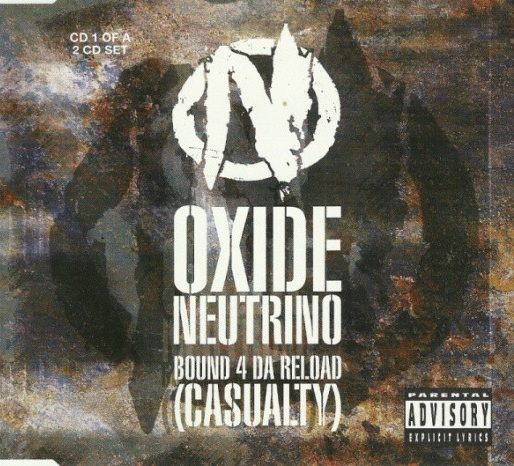
857. ‘Bound 4 da Reload (Casualty)’, by Oxide & Neutrino

The garage revolution picks up pace. All three so-called ‘garage’ chart-toppers that we’ve met so far, though, have been light and fluffy. Garage with the edges softened. Garages that you might find on a semi-detached house in a middle class suburb (Craig David did sing about a jacuzzi, after all).

Bound 4 da Reload (Casualty), by Oxide & Neutrino (their 1st and only solo #1s)

1 week, from 30th April – 7th May 2000

Here though is some proper garage. A garage covered with graffiti on an inner-city estate. Sirens. Gun shots. The theme tune from a long-running BBC hospital drama… Okay, that last bit doesn’t sound too street, but the sample from the ‘Casualty’ theme lends this record its name. It adds a dramatic energy to parts of the song, and works interestingly well when repeated on staccato synths. And it’s the only good thing about this record…

The rest of this song is abrasive nonsense. Bound for da bound bound for da reload… is the hook, repeated over and over, against a simple two-step beat. There’s some rapping, toasting, scatting, call it what you will. There’s a jarring spoken sample from the film ‘Lock, Stock and Two Smoking Barrels’ (Ah! Shit! I’ve been shot…) I was fourteen when this came out, and yet hearing it now I feel like an old fogey. It’s borderline unlistenable.

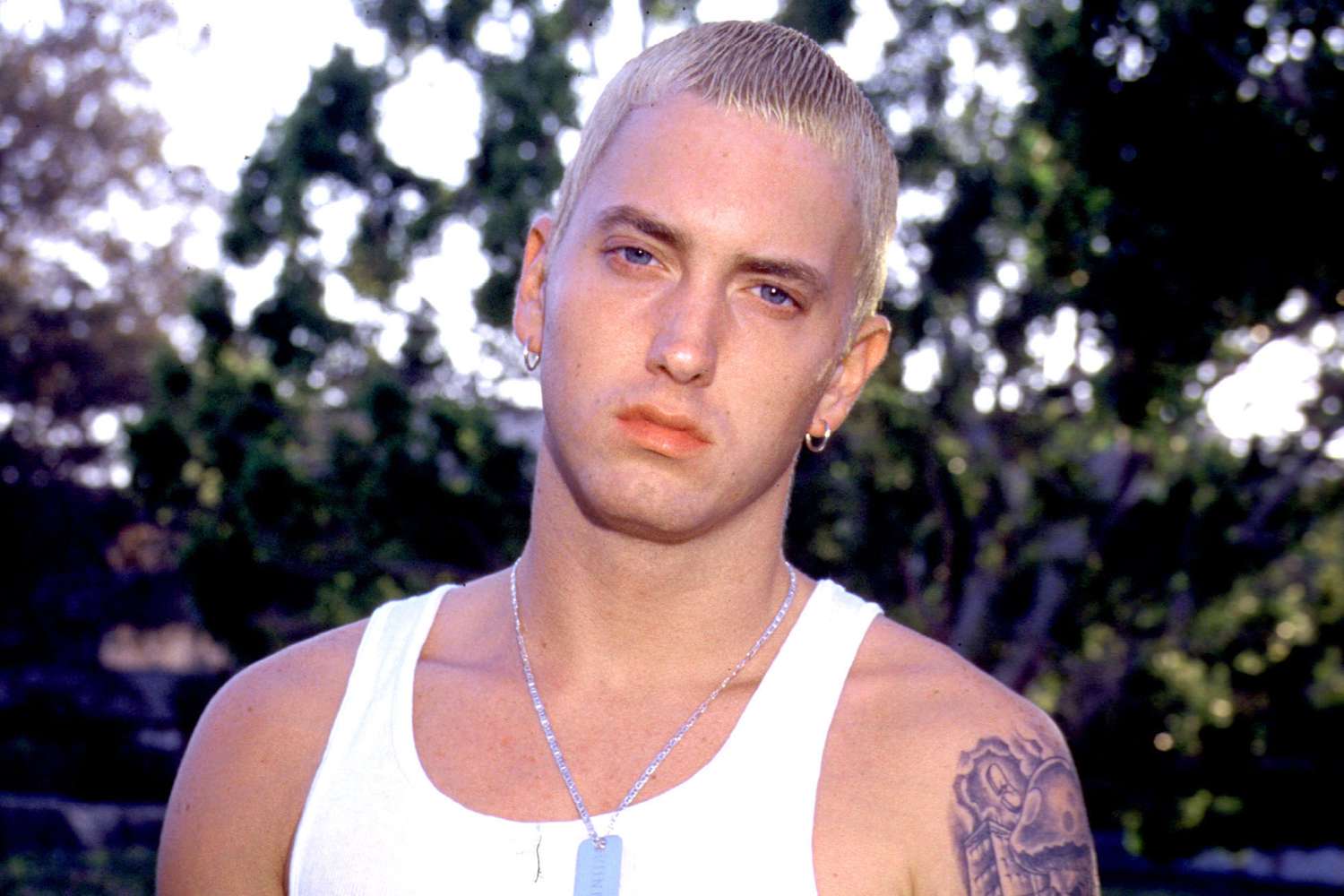
Having said that, the sweary sample above meant that ‘Bound 4 da Reload’ received little radio play, and so this probably passed me by unnoticed at the time. It does mean that it becomes one of a handful of chart-toppers so far to have featured swearing, and only the second after The Outhere Brothers to feature an F-bomb. But we’re on the precipice of swearing in number one singles becoming commonplace. Glancing down the list I can see the imminent debut of a certain bleach-blonde rapper, which will contain more swears than any previous number one combined.

Oxide and Neutrino were members of garage/hip-hop collective So Solid Crew, a group of anywhere between nineteen and thirty singers, rappers, DJs and MCs. In just over a year the group will score their one and only chart-topper, but it is Oxide & Neutrino who struck first here. Leading me to wonder, is this the only instance of someone enjoying a solo number one before their group has had one…?

Full, un-edited version:

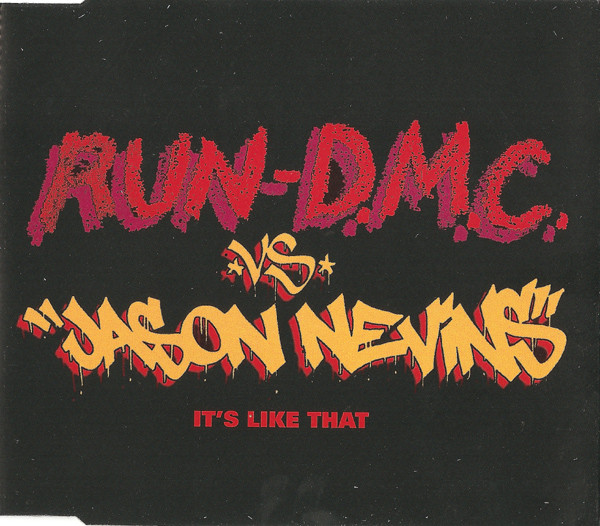
787. ‘It’s Like That’, by Run-D.M.C. vs Jason Nevins

Check this out… Just a couple of weeks after Norman Cook worked his magic on Cornershop’s ‘Brimful of Asha’, American house DJ Jason Nevins has his wicked way with a hip hop golden oldie…

It’s Like That, by Run-D.M.C. vs Jason Nevins (their 1st and only #1s)

6 weeks, from 15th March – 26th April 1998

I remember this being huge, an omnipresent hit that spring. And six weeks at number one is a very impressive run for the late-nineties (only one song will beat that total in 1998). But listening now, I’m a bit stumped trying to work out why it was quite so popular… It’s a bit repetitive, a sledgehammer beat that goes on, and on, with a less stardust sprinkled by Nevins compared to Fatboy Slim. Some of the transitions are predictable, and the original Run-D.M.C. vocals feel off in the mix.

Not that it’s bad, or that I don’t enjoy it on a certain level, or that it doesn’t unleash a heady wave of nostalgia listening to it again in 2024. I just mean that I can’t really locate the reason that it became the year’s 3rd best-selling single and – even more impressively – the only record to ever hold a Spice Girls’ song off number one in the UK (this was released in the same week as ‘Stop’, which it beat to the top by well over 100,000 copies).

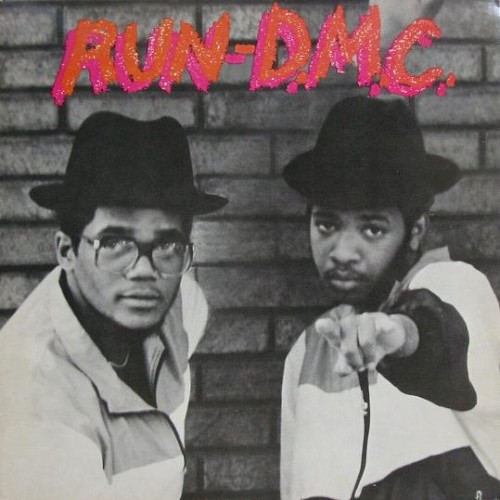
The original ‘It’s Like That’ had featured on Run-D.M.C.’s debut album in 1984, and was released as the LP’s first single. It’s a call-to-arms – a spikier, more cynical ‘What’s Going On’ for a new decade: Unemployment at record highs, People coming, People going, People born to die… Don’t ask me because I don’t know why, It’s like that, And that’s the way it is… What’s interesting about the original is that the 1998 hit is there, fully formed. If anything, the beat is even heavier. Nevins does little more than tart it up with a standard dance rhythm and some up-to-date flourishes (which admittedly is also what Norman Cook did on ‘Brimful…’, I just like that song better).

The one notable thing that Nevins does add is the sped-up Run DMC and Jam Master Jay! break, along with a bit off beatboxing. That’s the part I most remember, perhaps the hook that sold this as a hit. But in actual fact it last barely ten seconds, before that relentless beat comes slamming back in. (I always assumed that ‘Jam Master Jay’ was Jason Nevins, but he was actually the DJ in Run-D.M.C, who was sadly shot dead in 2002.)

Not surprisingly, this would be both Run-D.M.C.’s and Jason Nevin’s biggest ever hit. Nevins has only returned to the Top 10 one further time, although he’s gone on to work with stars like Nelly and Ariana Grande. For Run-D.M.C., this was their second Top 10, a decade on from ‘Walk This Way’ – in which they and Aerosmith fused rap with rock, much like Nevins was fusing rap and dance on this record.

Is it too early to call this the Age of the Remix? It is true that we’ve had two in quick succession, and that remixed hits will be more noticeable at the top of the charts as the century turns. I think it’s the fact that this is the first ‘versus’ record to make #1, as opposed to a plain old ‘featuring’ or an understated ‘&’. It feels so very turn of the twenty-first century (though a quick scan has shown me that there will actually only be a couple of other ‘someone versus someone else’ number ones between now and 2005.)

772. ‘Men in Black’, by Will Smith

The first half of 1997 was an interesting musical smorgasbord, with a quick turnover of number ones meaning we flitted gayly from genre to genre. During the second half of the year things will get slightly more predictable at the top of the charts, and records will start staying at #1 for slightly longer…

Men in Black, by Will Smith (his 1st and only solo #1)

4 weeks, from 10th August – 7th September 1997

Beginning with the year’s second big soundtrack hit. ‘Men in Black’ was the summer’s big popcorn movie, featuring Will Smith, Tommy Lee Jones and some aliens, which I thought I remembered fondly until I realised I was thinking of ‘Independence Day’, from the year before. I probably did see ‘Men in Black’ at the time, but it hasn’t remained with me.

The lyrics are geared towards the movie plot, which means unique lines like: Walk in shadow, Move in silence, Guard against extra-terrestrial violence… It reminds me of Partners in Kryme – one of the first hip-hop chart toppers – and their rhymes about which Teenage Ninja Turtle liked pizza (Michelangelo, of course). You could class this, and Puff Daddy’s ‘I’ll Be Missing You’ as a step back for hip-hop, after more innovative and respectable #1s by the Fugees and Coolio. But at the same time, this was a huge-selling, month-long number one, and another sign that rap had gone mainstream. (It was also, I believe, the first time that one hip-hop track had knocked another off top spot).

It’s based around ‘Forget Me Nots’, a minor hit in 1982 for Patrice Rushen. If it sounds familiar, then that’s because George Michael had sampled it a year earlier on ‘Fastlove’. The chorus was edited and sung by Coko, of the R&B group SWV, who really should have gotten a co-credit, so much does she bring to the show.

“Will Smith don’t have to cuss to sell records, but I do”, Eminem would famously rap a few years after this. It’s easy to be snobbish about Smith’s family-friendly approach to hip-hop (an NME review at the time labelled him the ‘Cliff Richard of rap’) but really, this is well-made, catchy pop. I don’t love it now, twenty-seven years on, but it was everywhere that summer, and was the #1 when I started high school. Plus the Bouncin’ with me, Slide with me… break is still great fun. File it under ‘fondly remembered’.

‘Men in Black’ was Will Smith’s debut solo single, featuring on his first solo album ‘Big Willie Style’ (tee-hee) and marked a return to music after he’d begun focusing on acting in the early-nineties. He has of course already featured at number one, as the Fresh Prince with Jazzy Jeff in 1993; while this song set him up for a good few years of chart success. He would have eight further Top 5 hits between now and 2005, including three #2s. Respect from the hip-hop community never quite arrived, but he had a great ear for a sample, and made some of the records that define the late-nineties for many people of my generation. He hasn’t released much new music since the mid-2000s, but remains one of Hollywood’s big hitters…