!!Banned #1s Special!!

Having just covered the Daddy of all banned #1s, ‘Relax’, I thought I’d take a short pause to look at which of our 530 previous chart-toppers had been banned for one reason or another.
By ‘banned’ I mean ‘banned by the BBC’, as I think that’s probably the best barometer of overall public taste and opinion in the UK. And rather than divide the post by song titles, I’ve divided it by the reasons the records were banned. Starting with…

SMUT!!

Such a Night, by Johnny Ray – a #1 in 1954, and one of my favourite pre-rock chart-toppers. It was banned because of Ray’s ‘suggestive panting’, as he recalls a night of wild abandon with an unamed person. (Ray was gay, and so he technically sent an ode to gay sex to #1 a full thirty years before Frankie Goes to Hollywood.) Read my original post here.

Je T’Aime… Moi Non Plus, by Serge Gainsbourg & Jane Birkin – a strong contender for the most controversial #1 ever, alongside ‘Relax’. Leave it to a Frenchman to record this steamy slice. Rumour has it that the ‘suggestive panting’ here is an actual live orgasm, as the randy old goat defiled English rose Jane Birkin in the studio. (Gainsbourg denied this by claiming that if it had been live sex, then the record would have had to have been a long player… Ooh lalala!) Live or not, this record was so good it came twice. To the singles chart, that is… It originally made #2 in the spring of 1969, before being re-released in the autumn and reaching its ultimate climax. (Original post here.)

BLASPHEMY!!

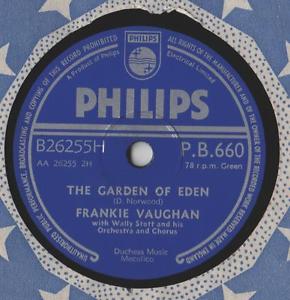
Answer Me, by Frankie Laine / Hold My Hand, by Don Cornell / The Garden of Eden, by Frankie Vaughan – the fact that these three records were banned might sound completely ridiculous to modern ears. But in the 1950s people – or the Beeb, at least – blanched at the mere mention of Our Lord in a pop song. Frankie Laine made light of praying with the line Answer me, Lord above… (When David Whitfield came to record his own chart-topping version, he changed the words to Answer Me, Oh my love…) Don Cornell and Frankie Vaughan meanwhile compared acts of love to being in the Garden of Eden. Saucy stuff for the mid-fifties. Here’s Vaughan’s hit from 1957, which was actually a bit of a banger by pre-rock standards:

MURDER!! and PROSTITUTES!!

Mack the Knife, by Bobby Darin – originally written for Berthold Brecht’s ‘Threepenny Opera’ in the thirties, Bobby Darin’s recording is nowadays seen as the definitive version of ‘Mack the Knife’. No matter that the references to murder and prostitution were softened considerably – ‘cement bags’ and ‘scarlet billows’ for example – the BBC still thought it was a bit too heavy for radio.

DEATH!!

Tell Laura I Love Her, by Ricky Valance / Ebony Eyes, by The Everly Brothers / Johnny Remember Me, by John Leyton – One of the stranger musical movements of the 1960s was the popularity of ‘death-discs’ in the very earliest years of the decade. They usually involved a young couple, a tragic accident, and an untimely end… Three such ‘splatter platters’ made it to #1 in the UK, the best of which was the Joe Meek produced ‘Johnny Remember Me’. The BBC banned them on the grounds that they were ‘morbid’ – which I guess is true – and ‘nauseating’ – which is most definitely true in the case of the awful ‘Tell Laura I Love Her’.

FRIVOLITY!!

Nut Rocker, by B. Bumble & the Stingers – I’m stretching things a bit here, as this record was never actually banned. However, the BBC did put it to a review, as this 1962 #1 was a rock ‘n’ roll take on the march from Tchaikovsky’s ‘The Nutcracker’, and Auntie took a dim view of frivolous parodies of much more worthy classical pieces. In the end the board decided that the record was clearly of ‘an ephemeral nature’ and was ‘unlikely to offend reasonable people’. B. Bumble lived to sting another day. (Original post here.)

TEMPTING FATE!!

Space Oddity, by David Bowie – Bowie’s first chart hit was this classic, released just five days before the Apollo 11 mission launched in July 1969. The world was on tenterhooks, waiting to see if Neil Armstrong, Buzz Aldrin and Michael Collins would make it to the moon and back in one piece. The BBC felt that this song, in which a solitary Major Tom floats in his tin can towards oblivion, his circuits dead and something wrong, went against the optimistic public mood. The ban only lasted until the astronauts had splashed down in the Pacific Ocean. The single made #5, and eventually #1 when re-released in 1975. (Original post here.)

WAR!!

Waterloo, by ABBA – Yes. ‘Waterloo’ by ABBA has indeed been banned by the BBC. During the first Gulf War, it was one of sixty-seven songs banned from the airwaves for alluding, however obliquely, to military conflict. The idea that a metaphor involving a tempestuous romance and Napoleon’s last stand could unsettle the general public in a time of war seems laughable, but the Beeb played it safe. Also banned at the time were Blondie’s ‘Atomic’, Paper Lace’s ‘Billy – Don’t Be a Hero’ and… Desmond Dekker’s ‘Israelites’.

The BBC doesn’t officially ‘ban’ songs anymore, it just doesn’t play them. The last big controversy involved The Prodigy’s ‘Smack My Bitch Up’ in the late ’90s, which was only played as an instrumental. In recent years, controversy over radio stations editing, or not editing, a certain term from ‘Fairytale of New York’ has become something of a festive tradition in the UK. Last I heard, Radio 1 were playing an edited version, while Radio 2 were sticking with the original.

Any official ‘ban’ on a song nowadays would be quite pointless, with streaming services and YouTube at our fingertips, and the BBC seems to have given up its role as arbiters of public decency. Anyway, the fact that all these banned records made #1 anyway is probably quite telling. At best, a ban did very little. At worst, it actually boosted sales through all the people popping down HMV to see what all the fuss was about.

Next up, we return to the regular countdown, with a song about nuclear armageddon. That was never, as far as I’m aware, banned…

Advertisements

130. ‘Tower of Strength’, by Frankie Vaughan

And so we resume normal service. Since I first listened to this next Number One single, in preparation for writing this post, I’ve been trying to place it. Trying to put my finger on what exactly is happening here… What box does this fit into? Why did it prove such a popular song in December of 1961…?

xo4c63c9oxj66j96

Tower of Strength, by Frankie Vaughan (his 2nd and final #1)

3 weeks, from 7th – 28th December 1961

What’s happening here is simple: Frankie Vaughan is singing a song – and having the time of his life doing so. This is an irresistible song – it barrels in the front door and wallops you over the head with a rollicking sax riff (you can have a saxophone riff, right?)… baaa da da-na da-na… And then in comes Frankie.

If I were a tower of strength, I’d walk away, I’d look in your eyes, And here’s what I say… If he were a tower of strength, a man of action, someone with a bit of backbone, he’d tell his wayward lover: I don’t want you, I don’t need you, I don’t love you anymore… Said woman would , cry, plead and beg him to stay. Simple. Except, plot twist… A tower of strength is something, I’ll never be…

That’s pretty much it as far as the lyrics are concerned. The main attraction here is the absolute gusto with which Frankie Vaughan belts his way through this song. He yelps, he growls, he hits some scandalously high notes, and he gives us the biggest finish we’ve had a number of years: I’ll… Ne-ver… BEEEE-EEEEEE! It’s the sort of ending that was done to death in the mid-fifties – the THIS IS THE END OF THE SONG! kind of finale – but in the right hands it can still sound superb. For some reason I’m imagining this scenario where the sound engineer and the producer are goading Vaughan, suggesting that he might not be up to singing this particular song, not able to hit all the notes, and Frankie just looks at them and says: “Press the red button, punks…”

FRANKIE-VAUGHAN-Tower-Of-Strength-Rachel-7

I first came across this song a few years ago when it appeared on my Spotify feed, and it lifts me every time it pops up on a shuffle. It’s the sort of tune you should throw on when you’re in a mid-afternoon slump, or nursing a mild hangover – an aural espresso. When it finishes, you draw breath, half-expecting to look around the room and see the lampshade swinging, pieces of paper floating to the ground, pictures on the wall knocked squint…

What I didn’t realise until now is that Vaughan’s version of ‘Tower of Strength’ was a cover. The original was released by one Gene McDaniels – an American soul singer. It’s a fine version, a slightly slicker, Sam Cooke-ish version, that was a big hit in the US – though it could only creep to #49 in the UK. But… There’s something so relentlessly likeable about this version, something so fabulously uncool about Vaughan’s dad-at-a-wedding vocals, that I’d say his is definitive.

Of course, we have heard from Mr. Vaughan before in this countdown. Way, way back in January 1957 – nigh on five years ago – with ‘The Garden of Eden’. A song which was, in its own way, every bit as weird as this. While a five year gap between #1s isn’t that odd; he has basically straddled the rock ‘n’ roll era – bookending it with his two chart-toppers. Very few of the chart stars from 1957 – Tommy Steele, Guy Mitchell and Tab Hunter were his contemporaries at the top the first time around – were still managing it in the early sixties, and so credit where it’s due. In total, Vaughan’s recording career lasted from 1950 through to 1987 and, again, that ain’t to be sniffed at. He was an old-fashioned type – the sort of Butlins holiday-camp performer turned everyman pop star that seems to be a constant trope in British music, no matter the era – think Dickie Valentine through to Olly Murs.

We’ll leave him here, belting out ‘Tower of Strength’ to his heart’s content. And while we won’t be hearing from Frankie again, our ears will still be ringing for some time to come…

55. ‘The Garden of Eden’, by Frankie Vaughan

Before I begin my next post in this countdown, I would just like to address something. The elephant in the room, if you will. As I mentioned back when writing about Guy Mitchell’s ‘Singing the Blues’, one of its weeks in the top spot was shared with the record that’s up next: Frankie Vaughan’s ‘The Garden of Eden’. It’s the second time we’ve encountered this situation, and it won’t be the last. Which begs the question… How did records end up sharing the top spot with such regularity in the 1950s? Well, the answer’s pretty simple. But it kind of whips the rug away from under this whole countdown. You see, the charts back in the early days of their existence simply weren’t very accurate.

Way back in my intro I mentioned that the concept of a ‘singles chart’ was introduced in November 1952 by the NME. And the UK Singles Charts company has since incorporated this chart into the ‘official’ chart – even though such a thing didn’t exist at the time. There were various other charts published every week in the 1950s: the Melody Maker chart, the Record Mirror chart, the Record Retailer chart… and the NME chart, which is recognised as the most comprehensive. But not completely comprehensive. There are still many bones of contention. Which I won’t go into here – they can be easily searched for online.

The number of record stores surveyed by the NME for their chart was surprisingly low and the methods very old fashioned compared to the instant downloading and streaming databases used in 2018 – they basically called up a bunch of record stores and asked them to keep a record of what they were selling. The first chart – topped by the record we met in my earliest post, Al Martino’s ‘Here in My Heart’ – was compiled using data from only 20 (twenty!) major record stores. And thus, every so often, because they were working from such a small sample, there were ties. David Whitfield and Frankie Laine in 1953, Guy Mitchell and Frankie Vaughan in 1957… In 1960, the Record Retailer Chart became the UK Chart Company’s chart of choice and there were no further ‘joint’ number ones (though there were still several contested number ones). Then in 1969 the British Market Research Bureau took over chart-compiling duties and steadied the boat further, while in 1982 chart compilation went digital. Since then, it’s been on the straight and narrow. 100% reliable.

So, while it may be distressing to some to discover the records that you have read about during this countdown may not actually have been the best selling records in a particular week, I thought it was only correct that I address the issue. And with that, today’s sermon is brought to a close. On with the next (presumed?) Number One Single!

s-l300

The Garden of Eden, by Frankie Vaughan (his 1st of two #1s)

4 weeks, from 25th January – 22nd February 1957 (including 1 week joint with Guy Mitchell from 1st – 8th February 1957)

So I press play on this record, ‘The Garden of Eden’ by Frankie Vaughan, and pretty soon I get to thinking that, from ‘Just Walkin’ in the Rain’ to this, I don’t think we’ve encountered such a run of similar-sounding songs. Here we have yet another male singer, with yet another performance involving guitar and vocals and not much else. I’m gearing up for another recap, so I don’t want to get too introspective right now, but it seems like we are settling into a groove which – glancing ahead at what’s to come – might last for a while yet.

I am not left thinking this for too long, however. This record is slightly deceiving. It does start off with a simple guitar strum, and with understated backing singers, but halfway through someone flicks a switch. We get trumpets, and a cymbal clash. Things escalate pretty quickly. The drums go up several notches, and suddenly the vocals are accompanied by a full-on big-band swing section. It’s a never ending crescendo, a key-change drawn out for two and a half minutes, and I like it! You can imagine this being performed on TV, the curtain opening to show Frankie Vaughan alone on stage. Then, as the song progresses, the lights draw further and further back to reveal, by the end, the full-blown orchestra that are bringing us to climax. It’s not rock ‘n’ roll, in terms of the sound, but it is in terms of the frenzied tempo.

Lyrically we are in somewhat stranger territory too. Recent number ones have been lovelorn, and wry. This is… well to tell the truth I’m not entirely sure what this is: When you walk in the garden, The garden of Eden, With a beautiful woman, And you know how you care… And a voice in the garden, The garden of Eden, Tells you she is forbidden, Can you leave her there?

It goes on… When you’re yearning for loving, And she touches your hand, Can you leave her to heaven, And obey the command, Can you walk from the garden, Does your heart understand?

It’s a parable, maybe. Resist temptation? Don’t resist temptation? I don’t really know what it’s about even after several listens. My best bet is that this is Vaughan explaining his behaviour to St. Peter at the Pearly Gates. “Yes, m’lord, I should have resisted the advances of that beautiful woman but, to be honest, she was far too hot…”

hqdefault

Without knowing any of this track’s backstory, I imagine it must have been pretty risqué to have had this many religious references in a pop song back in early 1957. Remember how, back in 1953, Frankie Laine and David Mitchell had remove the ‘My Lord’ from the title of their versions of ‘Answer Me’? But I can’t find mention of any controversy online. So that’s that.

Also of note is the fact that, once again, it’s a British artist doing the rockin’ and a rollin’. Vaughan was a Liverpudlian for whom this appearance at the top of the UK charts was the culmination of a few years of growing success – he was voted ‘Showbusiness Personality of the Year’ in 1956, and was one of the biggest stars of the late fifties. Pictures show him in dickie-bows and top-hats, so we know what kind of territory we’re in. And we will meet Mr. Vaughan again, in a few years, though I feel he has been somewhat forgotten over time, considering how famous he once was.