199. ‘Mr. Tambourine Man’, by The Byrds

Heading towards the big two zero zero, and our next record opens with a riff that every man and his dog has heard, probably more than once. File it alongside ‘Shakin’ All Over’ and ‘You Really Got Me’ as one of the most prominent riffs to have wound up at the top of the charts so far.
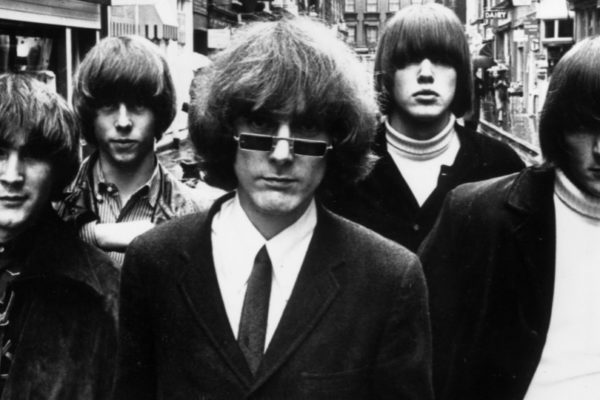
the-byrds-Getty-600x400

Mr. Tambourine Man, by The Byrds (their 1st and only #1)

2 weeks, from 22nd July – 5th August 1965

But, unlike the two records I just mentioned, this isn’t an aggressive riff. There’s no lust here. It’s a riff that, instead, aims for the heart. It’s the musical equivalent of the sun streaming out from behind a cloud. And when the vocals kick in it only adds to the effect. Hey mister tambourine man, Play a song for me… I’m not sleepy and, There ain’t no place I’m goin’ to… Suddenly we’re in California, on a long stretch of golden sand, watching the surf break and the gulls soar…

Lyrically, too, we’re far from home. These are the most abstract, poetic lyrics we’ve heard in this countdown. ‘Mr. Tambourine Man’ is the only #1 so far to have an ‘Interpretations’ section to its Wikipedia page. Take me for a trip upon your magic swirling ship, Oh my senses have been stripped, And my hands can’t feel to grip… Not weird enough for you? How about the moment when you expect a chorus (I love the way they draw it out, prolong the pleasure, by adding this gorgeous bridge) but get an insistent plea: I’m ready to go anywhere, I’m ready for to fade, On to my own parade, Cast your dancin’ spell my way…

Huh. I think, you know, that they may be making some drug references there. Going for trips, and senses being stripped… It’s the summer of ’65, and counter-culture has arrived at the top of the UK singles charts. The sixties are really starting to swing. Groovy, baby!

It’s not just the lyrics that feel like something new, though. There’s the jingle-jangle guitars (referenced in the jingle-jangle morning lyric), the structure of the song – chorus, verse, verse, chorus – and the long, trippy fade-out. As with so many of our chart-toppers over the past two years, ‘Mr. Tambourine Man’ sounds like the stakes being raised. It’s the sound of pop music being pushed forward.

P6180009_ml

It’s folk rock, but it’s a mile away from the couple of folk rock hits we’ve covered previously. The Highwaymen’s ‘Michael’ sounds like it was from another century – well, it was 1961 – while The Seekers sounded like they were merely playing at being folkies. The Byrds are the real deal. Who was the tambourine man? What was his ship? Does it matter? Just listen, and let yourself be swept away… Meanwhile, this song’s folk-rock credentials are helped massively by the fact it was written by a certain Robert Allen Zimmerman.

Bob Dylan will never (gasp!) top the singles charts as an artist. But this is the first of three #1s that he will enjoy as a composer. (I think it’s three… please correct me if I’m wrong… He has written an awful lot of songs…) Dylan’s version is, naturally, twice as long as this one – and it’s safe to say that The Byrds make it their own. He’s also gone on to deny that it’s in any way about drugs. So there you go.

‘Mr. Tambourine Man’ was The Byrds first hit in both the US and the UK – impressive considering they had only formed the year before. Following this, they were more successful in their homeland (‘Turn! Turn! Turn!’ hit the top there while it only reached #26 in Britain.) But even in the US their popularity didn’t last long. They were just too darn experimental, it seems, to maintain chart success. They went psychedelic, then Indian, then country, all the while changing members like most bands change socks… It couldn’t last; but their influence lingers on.

I’ve mentioned it many times before, but the vast majority of Merseybeat, R&B and rock groups that we’ve met since the Beat explosion have been British. Compare that to the fifties, when every rock ‘n’ roll hit, good or bad, was coming from across the Atlantic. Slowly but surely, though, the Americans are now staking their claim on the sixties. We’ve had some Motown, some Spector-patented Wall of Sound, and now some sun-drenched Californian folk-rock. There may not be too many US #1s at the moment; but when they do arrive, they’re golden.
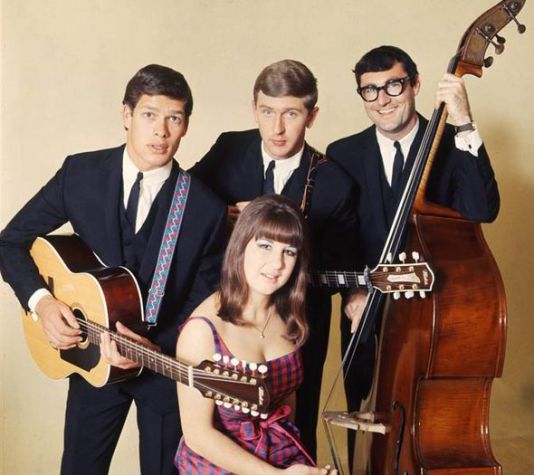
188. ‘I’ll Never Find Another You’, by The Seekers

For the first time in a good nine months – since The Four Pennies’ bland ode to ‘Juliet’ – do we arrive at a #1 single that I have never heard before. This is how it used to be, of course, in the pre-rock days – before rock ‘n’ roll came along, with all those famous songs in tow. Almost every post was a step into the unknown…

152374

I’ll Never Find Another You, by The Seekers (their 1st of two #1s)

2 weeks, from 25th February – 11th March 1965

Speaking of rock ‘n’ roll, and the fifties and all that… The opening chords of this latest chart-topper sound a lot like ‘La Bamba’. A mellower, more folksy version of the Ritchie Valens hit to be sure, but they’re there. It’s a promising opening… that lasts until the singers open their mouths…

There’s a new world somewhere, They call the promised land, And I’ll be there someday, If you could hold my hand… Several earnest, fresh-faced voices chime together. I’m getting strong Christians-round-a-campfire vibes… I still need you there beside me, No matter what I do, For I know I’ll never find another you… Or maybe proto-hippies, the first feelers of a movement that will go full-on mainstream in a couple of years? The lyrics sure do sound like they could be about joining a commune (‘The promised land’?)

Not quite. This record is, though, our first slice of sixties folk-rock. The gentle guitars, the clear vocals, the tambourine that gets a good shaking in the background… It’s a genre that I don’t think was ever quite as popular in the UK as in America, where Peter, Paul and Mary, The Byrds, The Mamas and the Papas, Simon & Garfunkel and, of course, Bob Dylan were big, big stars. But we’d had fair warning of it – remember back in 1961, when the collegiate folk band The Highwaymen scored a surprise #1 with their version of ‘Michael’ (Row Your Boat etc. etc.)? They were from across the pond, too.

731107311054_1

I’m not convinced by this song, to be honest… There’s something a bit cloying about it, a bit happy-clappy. And the lead singer – Judith Durham – sounds kind of like a Sunday school teacher gone rogue. Plus the lyrics don’t really go anywhere – it’s just a long list of what she can do with her man by her side… When I walk through the storm you’ll be my guide… and I could lose it all tomorrow, And never mind at all… etcetera and so on. It’s not terrible; but it’s the worst number one for a while. Probably since ‘Juliet’, the last chart-topper that I’d never heard of… And in its defence, we’ve just enjoyed the highest-quality run of #1 singles in British chart-history, and it would be unfair to completely write a record off just because it doesn’t hit the heights of ‘A Hard Day’s Night’ or ‘You’ve Lost That Lovin’ Feelin’.

I am, for example, a sucker for those yearning chords that pop up time and time again in folk-rock. See lines like You’ll be my someone, Forever and a day… Or If I should lose your love dear, I don’t know what I’ll do… The first song I ever loved – I’m reliably informed, as I was too young to remember – was ‘Puff the Magic Dragon’, which I would sing anywhere and everywhere as a toddler, driving everyone around me to the edge of insanity. And ‘Puff’’s got plenty of those yearning, minor-key chords in it. Who knows – maybe I’m a folky at heart?

Of course, all that stuff I just spouted about ‘I’ll Never Find Another You’ being an all-American slice of hippyish folk is undone by the fact that The Seekers were Australian, and that the song was composed by British songwriter Tom Springfield (brother of Dusty – who keeps cropping up via other people’s songs – when will she appear on her own merits?) But hey. It sounds American, and was definitely influenced by American folk-rock artists of the day, so we’re claiming it for the Yanks.

To finish, I’ll return to the pre-rock days that I mentioned at the start of the post. Back then, as Vera Lynn, Dickie Valentine, Winifred Atwell et al were jostling for attention at the top of the charts, the word I reached for more often than most was ‘twee’. And that’s what this is: the twee-est number one single we’ve had in a long time. Altogether then, grab the marshmallows and back round the campfire for another singalong!

Catch up with this handily compiled playlist!