I wasn’t going to mark the sad death of Don Everly on Saturday… because I was under the mistaken impression that his brother Phil was still with us. When I realised that Phil had died in 2014 it became clear that they needed a ‘Remembering’.
When you can count The Beatles, The Rolling Stones, The Beach Boys and Simon & Garfunkel among the many acts you’ve influenced, then you must have had something special going on. (Keith Richards called Don one of the finest ever rhythm guitarists, while John Lennon and Paul McCartney used to pull girls as teenagers by claiming that they were the ‘British Everly Brothers’.) Their country-ish harmonies were a huge part of the rock ‘n’ roll years – go on, listen to them combine on ‘Cathy’s Clown’ below! Being brothers was a blessing – those harmonies – and a curse – they spend decades not recording, or touring, or even talking to one another…
The duo scored four UK number ones between 1958-’61, and I won’t repeat myself by talking about them again. You can read the original posts here:
Here are some great, non-chart toppers from the brothers… (Because I’m hastily throwing this together, I won’t follow my usual rules of the songs having to have charted in the UK. Let’s be crazy for an evening!)
‘Bye Bye Love’, 1957
Chosen for self-indulgent reasons… This was one of the very first – and very few – songs I mastered on the keyboard as a child. A simple tune (that’s probably why it was book one, song one of ‘Keyboards for Dummies’) beautifully rendered.
‘Bird Dog’, 1958
The tale of Johnny: who is the funniest, cheekiest, coolest dude in school – making him a bird – but who is also hitting on the singer’s girl – thus a dog. I picked this over the pair’s other, more-famous tale of high school woe, ‘Wake Up Little Susie’ (which is also great) because this one rocks just that bit more.
‘When Will I Be Loved’, 1960
Some good ol’ fashioned rockabilly. I love the heavy, deliberate guitars, and the insistent, almost tribal drums. They re-recorded it when they moved labels, to RCA, but the original was the one released. The newer version is bluesier – here’s a link.
‘Don’t Blame Me’, 1961
The Everlys loved a ballad… ‘Love Hurts’, ‘Let It Be Me’, ‘Crying in the Rain’… But I picked this cover of a ’30s standard for some of their greatest harmonies, the guitar work (not actually from Don or Phil, but Hank Garland), and the bridge where Don really lets loose…
‘I’m Not Angry’, 1962
Not a hit, I don’t think, coming at the end of their glory days. But how filthy and scratchy is the guitar here, in this tale of pettiness? The boys hope that the girl who just dumped them doesn’t get letters, or phone-calls, that her dress rips and her car won’t start, but they’re not angry… just sad. Whatever…
Another short trip back to the earliest days of the charts, when big-lunged men such as Al Martino, DavidWhitfield and Frankie Laine were dominating the #1 position with earnest declarations of love and faith. Elvis hadn’t arrived yet, Sinatra wasn’t the teen heart-throb of a decade before… The charts needed some sexiness, some fun…
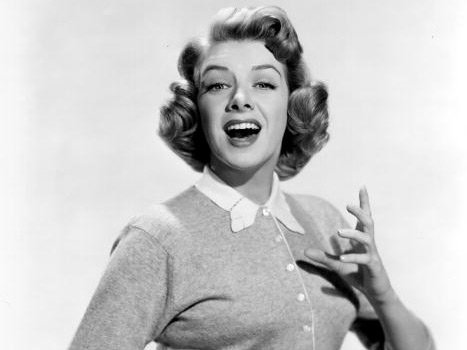
Thank God for the girls, then. Girls like Rosemary Clooney. I’ve already posted on Kay Starr and Winifred Atwell, two contemporaries of Clooney, who brought a jazzy playfulness to their chart-topping records. But Miss Clooney, who scored Britain’s 25th and 28th #1 singles, went a step further, and brought mad-cap craziness to the pop charts.
First up came ‘This Ole House’, in November ’54. A raucous, honky tonk piano-led tale of a rundown house whose elderly inhabitant is waiting to meet the saints… There can have been very few hit songs to reference oiling hinges and fixing shingle… Here she is performing it live, and with slightly more restraint, in the ’80s.
Then just weeks later, she was back with an even better hit. Clooney was of Irish/German extraction, but that didn’t stop her hamming up an invented Italian side. The lyrics are basically nonsense, with nods to Italian, Spanish, Mexican and Neapolitan. (Sample lyric: Hey mambo, no more a-Mozzarella…) Again the energy and playfulness really stood out next to its dully earnest contemporaries. (See also her earlier hit ‘Botch a Me’ if you like the cod-Italian vibes.) ‘Mambo Italiano’ lives on in a way that few pre-rock hits do. It was remixed back into the charts in the early ’00s, and sampled more recently by Lady Gaga and Iggy Azalea.
Rosemary Clooney’s career trajectory was pretty standard for a post-war pop star. From singing with big bands, to a record label, to big hits and on to TV and films – her most famous one probably being ‘White Christmas’ alongside Bing Crosby. What wasn’t so standard was Clooney’s sleeping pill and tranquilliser dependency that developed through the sixties, that ended with her in psychoanalytic therapy for eight years.
She survived, though, came back and continued to record throughout the remainder of her life. Her final performance came just six months before she died of lung cancer in 2002. One of the pall bearers at her funeral was her nephew, George.
In my ‘Remembering’ bits, I like to draw people’s attention back to artists from the dawn of the charts, from posts published long before anyone was actually reading this blog. Back we go, then, to 1954…
Winifred Atwell is a significant figure in the British charts as, when she scored her first #1 in late ’54 (a Christmas #1 before that was something worth noticing), she became the first black artist to do so. ‘Let’s Have Another Party’ – a medley of old music hall tunes – stayed at the top for five weeks. It is very of its time, but still a fun listen. You can read my original post here.
Some of the melodies in that record date from the the 1920s, so we are really looking a century back in time from our modern-day vantage point. Anyway, Winifred Atwell had arrived in the UK in 1946, from Trinidad via the USA, and had been accepted into the Royal Academy for Music, where she achieved the highest grades possible. She supported herself by playing boogie-woogie tunes in clubs around London, where she was spotted and signed.
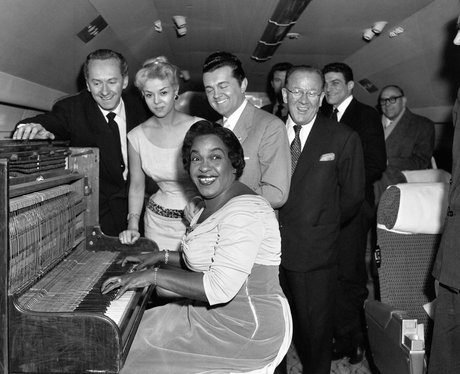
Between 1952 and ’59, she scored fourteen Top 20 hits in the UK, many with wonderful titles such as ‘Flirtation Waltz’ and ‘Let’s Have a Ding-Dong!’ (You could say she was a suggestive performer, in that she released no less than five singles beginning with the word ‘Let’s…’) She did the Royal Variety, where she was invited to play privately for the Queen, who requested ‘Roll Out the Barrel’. (Ma’am does love a good knees-up!) On stage she would often start off by playing classical pieces on a grand piano, before switching to a battered old piano bought in a market for fifty shillings – her ‘other’ piano, which was credited on her records and which travelled the world with her – to bash out some ragtime tunes.
Her 2nd number one, ‘The Poor People of Paris’ is interesting – not because it sounds much different from her first – but because it featured as sound engineer a young Joe Meek, who would go on to produce three seminal sixties #1s (and who I did a post on a year or so back.) In the background, hovering above Winny’s piano, is a high-pitched whine which I thought, and pondered in my original post, might have been a Theramin, but which I have since read was probably a musical saw. Either way, you can hear the embryonic beginnings of ‘Telstar’ here, in the video below:
And this live performance, from a couple of years later, has Atwell banging away on her famous ‘other’ piano (I love her winks at the camera…)
By 1958, when this was filmed, her hit-scoring days were almost over – killed stone-dead, as so many artists’ careers were, by rock ‘n’ roll and then the swinging sixties. Still, Atwell remained a popular figure on TV variety shows and in concert. She moved to Australia, where she was a huge star, and where she lived until her death on this day in 1983. Her final performances, quite sweetly, were on the organ in her parish church.
Despite her music now sounding incredibly quaint, and her dressing like your aunt at a wedding, Winifred Atwell’s legacy lives on. Keith Emerson spoke of her influence on his music, while David Bowie also reminisced about hearing her rags on the radio as a boy. But the biggest example has to be Sir Elton John, who cites Atwell as one of the main reasons behind him wanting to learn piano.
Winifred Atwell, 27th February 1914 – 28th February 1983
I’ve covered 342 #1 singles since starting this blog. Some have been classics, some have been terrible, some have been by the most famous acts in pop music history, some have been by acts unknown to me until that moment… One of the singers I have been happiest to discover on my journey, is the singer of the 35th UK #1 single, Alma Cogan.
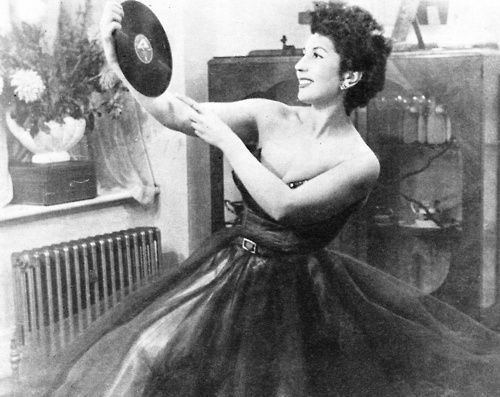
Born in East London in 1932, she went from singer-in-residence at a hotel, to the biggest British female star of the fifties. ‘The Girl with the Giggle in Her Voice’ – a nickname she earned after bursting into laughter during an early recording session – with huge frocks and a healthy pair of lungs – to listen to her early hits is to lose yourself in unpretentious pop perfection. Of which ‘Dreamboat’, her one and only chart-topper, is perhaps the perfect example.
(You can read my original post on it here.) Voted Outstanding British Female Singer by NME readers four times between 1956-1960, she scored hits throughout the decade by covering standards such as ‘Mambo Italiano’ and ‘Why Do Fools Fall in Love?’, ‘Little Things Mean a Lot’ and ‘Hernando’s Hideaway’. Being a popular singer in the fifties and early sixties meant that she also recorded her fair share of novelties – ‘Never Do a Tango with an Eskimo‘ – and showtunes. But she sings them with such a twinkle in her eyes that you forgive even her cheesiest moments. Here she is, belting out ‘As Long as He Needs Me’ from ‘Oliver!’ (Apparently the part of Nancy was written with Cogan in mind, and she does have a fantastic cockney rasp in her voice, compared to other more stage-school actresses who have played the role.)
The swinging sixties killed off her chart-topping days, as they did to many stars of the fifties. But there is a fascinating coda to Alma Cogan’s career – her friendship with The Beatles…
Cogan’s star was waning and the Fab Four’s was on the rise, but they would still meet at the same TV recordings. She was the first person that Paul played ‘Yesterday’ to, and she allegedly had an affair with John. She also tried to relaunch herself back into the charts by covering some of the bands hits – her ‘Eight Days a Week’ is a particular moment of overblown brilliance.
For whatever reason, she couldn’t seem to reignite her singles career – in the UK at least – and died tragically young from cancer in 1966. She was just thirty-four. Which terrifies me, as I am thirty-four and I have neither enjoyed a decade-long singing career nor had an affair with a Beatle… Just what have I done with my life?
Here’s one of Alma Cogan’s later TV performances – a cover of ‘The Tennessee Waltz’ – as introduced by her (supposed) lover John Lennon. They do flirt quite heavily in this clip, I must say…
And if that doesn’t leave with a smile on your face, then I don’t know what medication to recommend…
My special feature for the week is a moment in the sun for the singles that didn’t quite make it to the top. These aren’t particularly long-running, or unlucky #2 singles. They may not even be particularly good… They all simply peaked in the runners-up position.
Today’s random runner-up takes us back a good ol’ while…
‘Cool Water’, by Frankie Laine with the Mellomen
#2 for 3 weeks, behind ‘Rose Marie‘, from 5th – 26th August 1955
Before Slade or T Rex, before the Stones and the Beatles, before even Elvis himself, one man dominated the UK singles chart in its earliest days: Frankie Laine.
In 1953, the first full year of the singles chart, he scored three #1s that lasted at the top for a staggering twenty-eight weeks (!) This record was his 16th Top 20 hit in under 3 years. Everything he recorded turned to chart gold… Which perhaps explains the success of ‘Cool Water.’ It was a hit by default.
Or maybe its been so long since I reviewed a pre-rock single I’ve forgotten how dull most of them were. It’s a song from a Western, about a cowboy lost in the desert, dragging his horse, Dan, along in search of water. Cool, clear, water….
Dan can y’see that big green tree, Where the water’s runnin’ free…? Dan doesn’t answer because it’s just a mirage, and he’s just a horse. It’s very 1955, this song, and it fits right in with the spaghetti-western film-score feel of #1s like ‘The Man From Laramie‘, ‘Give Me Your Word‘, and the 11-week mega chart-topper that held this off top-spot, ‘Rose Marie’.
A few months after this hit #2, ‘Rock Around the Clock‘ would come along and that would be that. Rock ‘n’ roll would be here to stay. Frankie Laine’s chart-topping days would be numbered, although he remained a recording artist into the 1970s. In fact, he would re-record ‘Cool Water’ in 1961, for an album titled ‘Hell Bent for Leather’ (Is it just me, or does that sound more S&M than C&W…?)
Meanwhile, the Mellomen, who provide the actually quite cool deep-voiced Cooool Water… backing vocals, have also appeared on a #1 themselves: Rosemary Clooney’s ‘Mambo Italiano‘ earlier in the same year. A fun, catchy song that reminds us there actually were some great chart-toppers before Bill Haley and Co. came along.
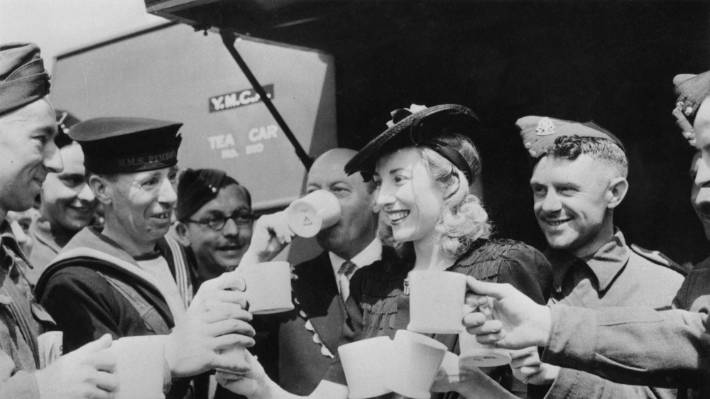
I had decided not to do a post on Dame Vera Lynn, who passed away yesterday, aged 103. She was, after all, representative of an era before the singles chart came into being. Born duringWWI (just think about that for a second!), she began singing with dance bands before going on to become the ‘Forces’ Sweetheart’, singing traditional pop songs that kept spirits up among the public and the armed forces during the second world war. Plus, there are plenty of obituaries doing the rounds, by people who know much more about her than me.
But, she did have a #1 single: ‘My Son, My Son’ in 1954. You can read my original post on that here. (I don’t think I was wildly complimentary about the song, but hey ho.) Plus, she was the first non-American artist to reach #1 on the US Billboard charts, with ‘Auf Wiederseh’n Sweetheart’, in 1952.
On top of that… I was doing some browsing in the wake of her death, and read some really interesting stories about her. For example, that she played an anti-heroin benefit gig with Hawkwind, organised by Pete Townshend, in the eighties. And that she rocked up to Brighton Pride aged 92, to support the Brighton and Hove Gay Men’s Chorus in another charity performance. And that she sued the British National Party for using her signature tune, ‘We’ll Meet Again’, in an ad campaign. (I suppose part of the reason I was going to avoid this post was because her legacy and her back-catalogue have been hi-jacked by nationalists and Brexiteers in recent years – but clearly Ms Lynn had no time for that nonsense herself.) Here is said signature song:
It would have been a massive #1 in 1939, had the singles chart existed. ‘We’ll Meet Again’ has reappeared in the British charts in recent weeks, after striking a resonant chord with those isolated during the Coronavirus crisis – making Dame Vera by far the oldest person ever to have a hit single.
So in the end I did decide to do a post on Dame Vera Lynn. And you’ve just read it. Normal service will resume tomorrow!
I’m taking a quick break from the usual rundown to give a mention to the bands and artists that we will never meet at the top of the UK singles chart. If you were following along, wondering when (*insert name of your favourite act*) were going to finally appear in this countdown, then I got some bad news for you…
(I’ll do this in chronological order, with acts whom we would have met by now – i.e. in the fifties, sixties and early seventies.)
I wanted to include an early rock ‘n’ roller in this feature, and the obvious one would have been Little Richard. But, as legendary a figure as Richard was, a lot has been written about him since his death a fortnight ago. And, in terms of chart hits without reaching top-spot, one star of the late fifties and early sixties stands out even more…
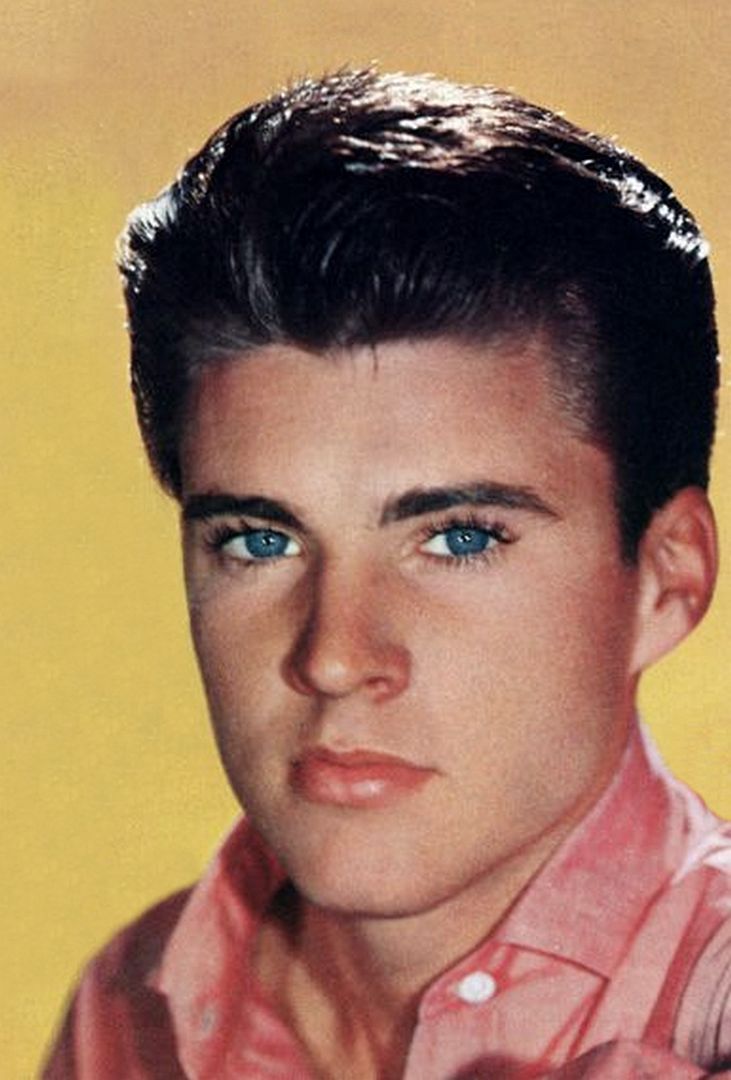
Look at those eyes! Nelson was quite ridiculously good-looking. The son of two well-known celebrities of the 1930s and 40s, he made his way in typical teen-idol fashion, first through radio sitcoms as a child, then TV shows and films as a teenager, and then, in 1957, he released his first single, aged seventeen. He scored tons of Billboard Top 10 hits, as well as two #1s, and while he wasn’t as successful in the UK, here are his five biggest:
‘Travellin’ Man’ / ‘Hello Mary Lou’, #2 in 1961
A pretty standard, Neil Sedaka-ish early sixties pop song for the first half of this double-‘A’, in which Nelson sings about the girls he has around the world. He’s got a little Eskimo girl in Alaska, and a China-doll in ol’ Hong Kong. Simpler times, simpler times…
A much better song on the flip side: a rolling country beat and a simple tale of falling in love with a pretty young gal called Mary-Lou.
‘It’s Late’, #3 in 1959
Great, light rock ‘n’ roll song, and a common theme for the time: a young couple stay out past their curfew, and dad’s gonna be mad. Ricky hopes this won’t be their last date…
‘Poor Little Fool’, #4 in 1958
Another fifties standard. His first US #1, and the new chart-topper on the first-ever Billboard Hot 100. Not his greatest song, though. A little dull. Nice enough. Next.
‘Someday’, #9 in 1958
Suspiciously similar in theme and sound to Connie Francis’s ‘Who’s Sorry Now’… The follow-up to ‘Poor Little Fool’ was an older country song given a light rock ‘n’ roll makeover, which is how around fifty percent of the chart-toppers in 1958 came about.
To be honest, Ricky Nelson’s biggest hits aren’t his best. I love his version of ‘Fools Rush In’, and his sarcastic seventies comeback ‘Garden Party’. And then there is the majestic ‘Lonesome Town’ – one of the 1950’s sparsest, most haunting hit records. As the sixties progressed, he dropped the ‘y’ from his name as the hit singles and big movie roles dried up. He struggled through a very messy divorce, and drug problems, before dying in a plane crash in 1985.
Hope you enjoyed this short interlude. I’ll do another three artistes-sans-#1s in the autumn…
Time for a Top 10… Usually I rank the ten best singles from a particular artist (last time it was The Kinks) but I thought I’d fiddle with my criteria a little, and rank my favourite #1 singles from an entire decade.
Starting with the singles chart’s very first decade. Back where it all began, when rock ‘n’ roll was but a twinkle in Elvis’s eye. The list is in chronological order – not ranked in order of preference – and to choose the songs I went back and read through my recaps to see which ones I dug at the time, live, as it were…
So, without further ado, the ten best #1 singles of the 1950s, according to me:
1. ‘Look at That Girl’, by Guy Mitchell – #1 for 6 weeks in Sept/Oct 1953
Only the 12th-ever number one single, from one of the decade’s biggest chart stars, and a runner-up in my first recap. This was the very first whiff of rock ‘n’ roll at the top of the UK charts (a very faint whiff, but still) and I think it appealed more than it probably should have because I’d waded through so much Eddie Fisher and Mantovani to get to it. Still, a catchy, upbeat tune. As I wrote in my original post:
“It sounds to me as if a battle is taking place here, between traditional easy-listening and the burgeoning rock ‘n’ roll movement. On the one hand you’ve got the usual twee backing singers and floaty trumpets, parping away at the end of each line; on the other you have the hand claps and the guitar solo.”
2. ‘Such a Night’, by Johnnie Ray – #1 for 1 week in April/May 1954
Johnnie Ray was known for his emoting, which lent him two spectacular nicknames: ‘The Prince of Wails’ and ‘The Nabob of Sob’. But for his 1st of three #1s he was overcome with a slightly more enjoyable emotion… lust! By far the sauciest number one of the pre-rock era, I awarded it ‘Best Chart-Topper’ in my 1st recap. I’d go as far as saying it was the best #1 single ever… Until 1957 came along. My original post is here:
“…what makes it, and elevates it to a classic, are Ray’s vocals. Like Doris Day before him there’s an effortlessness to his voice that draws you in and yanks you along. But his voice is nothing like the clean-cut, honeyed tones of Miss Day. ‘Such a Night’ isn’t being sung here – it’s being ridden, it’s being humped… it’s being performed!”
3. ‘Mambo Italiano’, by Rosemary Clooney & The Mellomen – #1 for 3 weeks in Jan/Feb 1955
I remember noting, back in the early days of the charts, that it felt like the girls were having all the fun. Guys were being boringly earnest – Al Martino, Eddie Fisher, David Whitfield all proclaiming overwrought, undying love over heavy orchestration. Meanwhile Rosemary Clooney, in her 2nd #1, was singing in cod-Italian about fish bacalao (which is Portuguese, but whatever.) It’s a song that resonates to this day, with a 00s remix and a 2011 pastiche by Lady Gaga. I named it a runner-up in my first recap:
“…while this is a mambo record, sung by an easy-listening singer-slash-actress, this is rock ‘n’ roll. It may be fun and funky, but it just about manages to retain an air of cool around all the silliness. While we were waiting for Bill Haley to come along and kick-off things off, the ideals and attitudes, if not the actual sounds, of rock ‘n’ roll were being sneaked in right under our noses.”
4. ‘Cherry Pink and Apple Blossom White’, by Perez ‘Prez’ Prado & His Orchestra – #1 for 2 weeks in April/May 1955
Another saucy slice of Latin pop, which I named the very best song in my 2nd recap! Again, my opinion of it was probably exaggerated because of all the pre-rock easy-listening mulch surrounding it. It is catchy, though. Just you try not swaying along. Can’t be done! I tried summing up the record’s appeal in my original post…
“…it allows Janet and John from Southend to draw close and to feel one another’s bodies, taught and trembling from two and a half minutes of intense mambo.”
5. ‘Dreamboat’, by Alma Cogan – #1 for 2 weeks in July 1955
The 3rd #1 from 1955, making it officially the best year of the decade… (Hmm…) ‘Dreamboat’ is just a spectacularly fun pop song, sung with a giggle and a wink by perhaps the biggest British female star of the pre-rock age. As I wrote at the time:
“…there isn’t much else to ‘Dreamboat’ -it’s a fun little ditty. Cogan sings it well, with the perfect pronunciation we’ve come to expect but also with a light, playful touch that’s been missing from many of the number ones so far.”
6. ‘Why Do Fools Fall in Love’, by The Teenagers ft. Frankie Lymon – #1 for 3 weeks in July/Aug 1956
Regrets, I have a few… One of them being that I named this classic as a runner-up to Perez Prado in my 2nd recap. What was I thinking? ‘Cherry Pink…’ is great and all, but this is timeless. The first number one by kids, for kids – the Teenagers were all, you guessed it, teenagers – is one of the catchiest, golden pop moments of all time, let alone the decade. As I wrote…
“… it’s just a great song. A summer smash. It oozes New York city: steam, water spraying from a sidewalk valve, the sun blasting down, the Jets and the Sharks… (I dunno. I grew up in small town Scotland.)”
7. ‘That’ll Be the Day’, by The Crickets – #1 for 3 weeks in November 1957
Perhaps the most obvious choice of the ten… What else needs to be said. Press play, gasp at the spectacular intro, and enjoy two and a half minutes of rock ‘n’ roll perfection…
“…Buddy Holly’s voice dances and flirts – toys, almost – with the listener. He coos, he pauses, he growls… The Crickets play tightly, but also very loosely. There’s a great, rough-around-the-edges feel to this record that contrasts with the polished cheese of Paul Anka’s ‘Diana’, whose bumper run at the top this track ended.”
8. ‘Great Balls of Fire’, by Jerry Lee Lewis – #1 for 2 weeks in January 1958
But… I didn’t name ‘That’ll Be the Day’ as one of the very best chart-toppers. Oh no. In my 3rd recap, that honour was reserved for The Killer. On any given day, I could wake up and prefer ‘Great Balls…’ to ‘That’ll Be the Day’, or vice-versa. What’s the point in debating? These two records were nailed-on to make my 50’s Top 10. Pure rock ‘n’ roll greatness…
“…It’s just an absolute blitz, an assault on the senses, a two-minute blast which takes rock ‘n’ roll up another notch.”
9. ‘Who’s Sorry Now’, by Connie Francis – #1 for 6 weeks in May/June 1958
A spot of schadenfreude in the decade’s sassiest #1 single. Connie got dumped, and is now taking great pleasure that the tables have turned on her ex in his new relationship. You had your way, Now you must pay, I’m glad that you’re sorry now… Who says girls in the 50’s were all sweetness and apple pie? The twang in her voice when she launches into the final verse is something to behold. As I wrote at the time…
“A lot of the female artists we’ve met previously on this countdown have been cute, and flirty, and fun to listen to – Kitty Kallen, Kay Starr, Winifred Atwell… But no girl has brought this level of spunk to the table.”
10. ‘Dream Lover’, by Bobby Darin – #1 for 4 weeks in July 1959
Last up – a record that encapsulates everything great about the 1950s, mixing rock ‘n’ roll with swing, doo-wop and a touch of pre-rock crooning, to create pop perfection. Another runner-up to Jerry Lee in my 3rd recap, but there’s no shame in that. In my original post, I wrote:
“…I don’t want to really write any more about this record. I want to leave it there. Minimalist. This is where easy-listening and pop collide to create a seriously classy song.”
And there we have it! The ten best #1 singles of the 1950s!
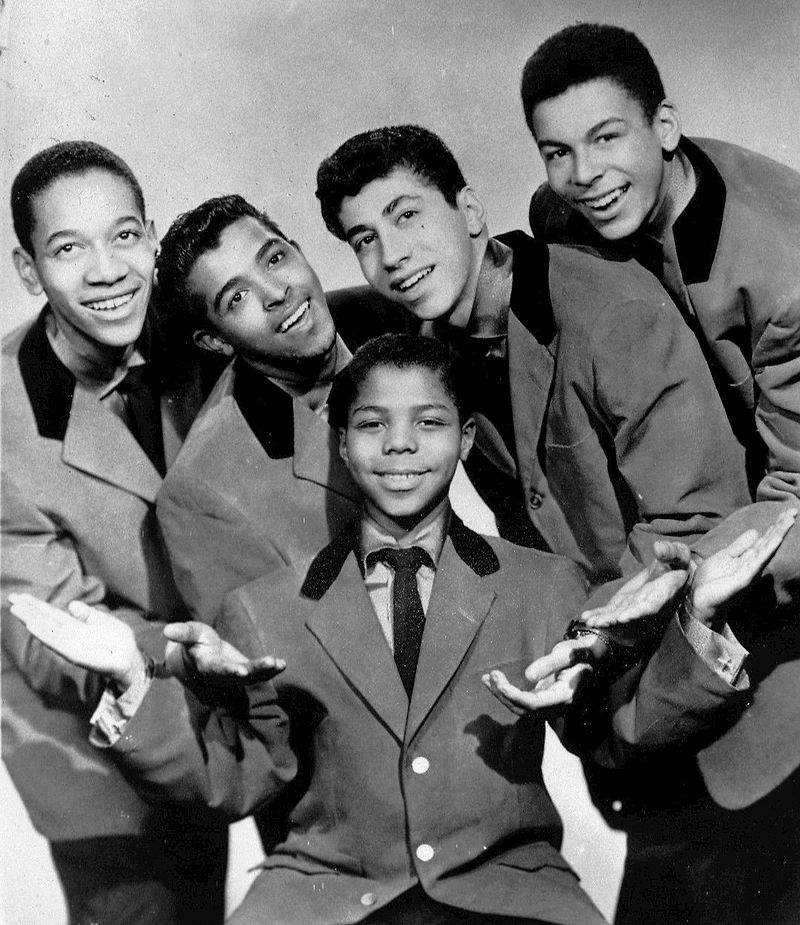
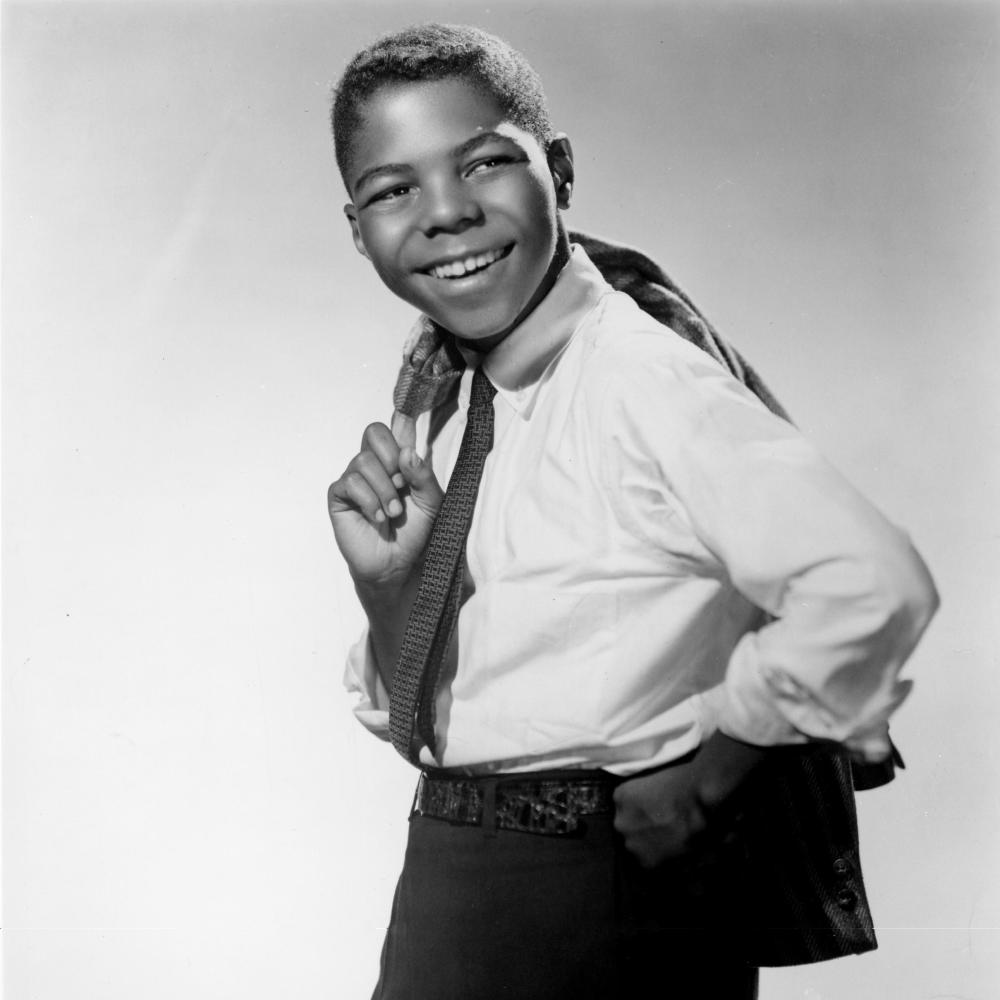
Fifty-two years ago today, one of our youngest chart-topping artists passed away. Franklin Joseph ‘Frankie’ Lymon, the voice of The Teenagers.
(The Teenagers, with Frankie Lymon in the centre.)
He barely was – a teenager that is – when their debut hit ‘Why Do Fools Fall in Love’ made #1. Lymon was thirteen when it was recorded, and he sounds his age as you listen to it now, sixty-four years later. His unbroken voice flits like a sparrow around a doo-wop song about heartache, like a choir boy gone rogue. Listen to it below, and read my original post on it here.
(Performing the song on national TV, and bantering with Frankie Laine – a man not short of #1 singles by 1956.)\
Note how early ‘Why Do Fools…’ hit #1. Mid-1956. Only the 2nd ever rock ‘n’ roll chart-topper, after ‘Rock Around the Clock’ (not counting Kay Starr’s in-name-only ‘Rock and Roll Waltz’.) The Teenagers were knocked from the top by Doris Day, after they themselves had deposed Pat Boone. That’s where we were, when five kids from Harlem shook things up. In nearly every one of their songs – which do all sound a bit similar – a saxophone solo comes charging along, sounding as if it is hell-bent on blowing codgers like Boone away for good.
Their only other UK chart hit was the brilliantly titled ‘I’m Not a Juvenile Delinquent’, which made #12 and sounds like the theme song to a misguided government campaign aimed at errant youths. The Teenagers still tour today, Herman Santiago being the only surviving member. But this is not their story. This is Frankie Lymon’s, and he had already left the band by 1957.
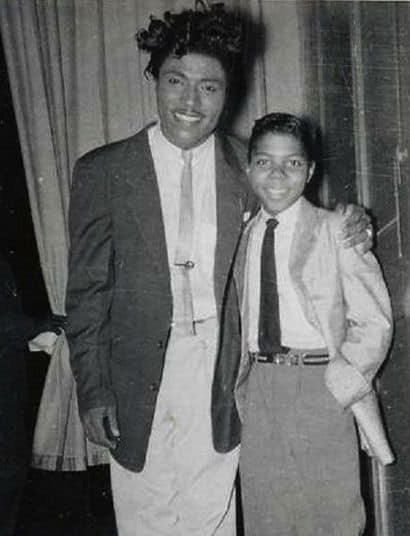
(Lymon with Little Richard)
His first solo release, a cover of the thirties hit ‘Goody Goody’, was fine, but didn’t catch on. And by then, aged fifteen, Lymon was already addicted to heroin. He hadn’t had much of a childhood, he would relate in an ‘Ebony’ magazine interview in 1967, growing up in Harlem around prostitutes and pimps, smoking weed and ‘knowing’ women, all before he even joined The Teenagers. Watching him perform, you can definitely see the street-kid swagger behind the suits and the polished smiles.
(I think this is a genuinely live performance and, if so, then wow! I’m out of breath just from listening.)
The hits dried up as the fifties drew to a close, and the drugs started to take their toll. There was a steady stream of women – fake marriages, then scam marriages in Mexico, making the title of his biggest hit sound ever more prescient. His managers and label offered no help, and there clearly wasn’t much of a support network around him. Eventually he got caught up in drug charges and, rather than go to jail, he was drafted into the army.
In the forces he went clean, and sober, and every-so-often AWOL to perform tiny, low-key gigs, by this point near forgotten amongst the British Invasion acts that were dominating the Billboard Hot 100 at the time. He left the army, recorded a few demos, and by 1968 was preparing a comeback with Roulette Records.
Unfortunately, and in a tragic Hollywood ending, the day before his first recording session with his new label, Lymon was found dead on his grandmother’s bathroom floor, a needle in his arm. He was twenty-five.
You could say this about any child star that goes off the rails, but there’s it’s almost painful to watch Frankie Lymon performing with The Teenagers, the proto-boyband that brought some New York swagger to the staid singles chart of the mid-fifties, and to think what was to come.
Frankie Lymon, September 30th 1942 – February 27th 1968
February made me shiver, With every paper I delivered, Bad news on the doorstep, I couldn’t take one more step…
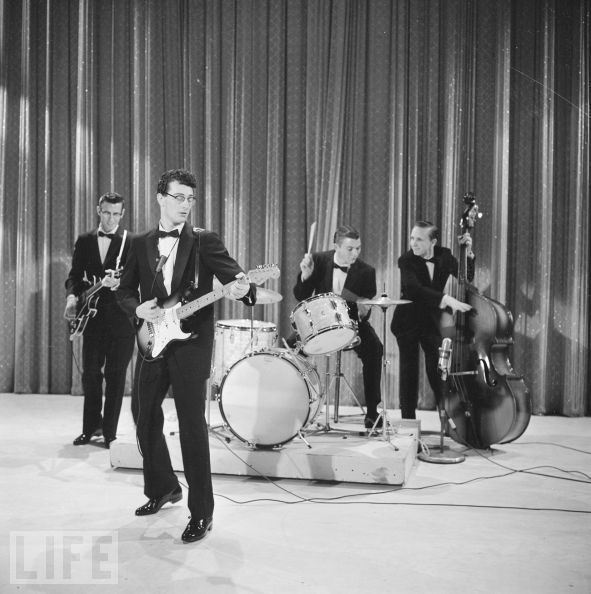
Sixty-one years ago today, a light aircraft slammed into a field in Iowa during a snow-storm, killing everyone on board. The four passengers were Ritchie Valens (a seventeen-year-old up and coming rock ‘n’ roller), J.P. Richardson (AKA The Big Bopper, of ‘Chantilly Lace’ fame), pilot Roger Peterson, and Charles Hardin Holley. Buddy Holly.
The Day the Music Died has passed into folklore. I’m not going to write about that today. Rather, for my 2nd artist’s Top 10 post – check out the first one I did here – I’m going to list my favourite UK hit singles from a man whose legacy stretches far. The Beatles, The Stones, punk rock and power pop – they all owe a big debt to Buddy.
As before, I’m restricting myself to ‘A’-sides of singles that charted in the UK. So no ‘Everyday’, no ‘I’m Gonna Love You Too’, no ‘Not Fade Away’, and no ‘You’re So Square… Baby I Don’t Care’. Don’t blame me… Blame the people that didn’t buy those singles, or the record labels that never released them…
10. ‘Think It Over’, with The Crickets, 1958 – peaked at #11
People sometimes forget that Buddy Holly recorded some down and dirty rock ‘n’ roll. Maybe it’s the thick-rimmed glasses that make him seem a little more, how to say, cerebral, than Elvis or Little Richard… But while he was able to add more subtlety than most of his contemporaries, ‘Think It Over’ has swagger and attitude to spare. Is she sure she doesn’t want him? Really sure? Maybe she should think it over… Great piano solo, too.
9. ‘It Doesn’t Matter Anymore’, 1959 – reached #1
Holly’s only solo #1, three months after he died. More strings than you’d expect from a rock ‘n’ roll single, and a very memorable vocal performance. Lots of trademark hiccups and southern drawl. The video above starts with a snippet of ‘Heartbeat’… not sure why. Read my original post on ‘It Doesn’t Matter…’ here.
8. ‘Reminiscing’, 1962 – reached #17
Some sexy sax, and a quality chugging riff. And Buddy’s voice. I’ve always loved the way he has fun with the line You’re a mean mistrea-ea-ea-ter… This peaked in the early sixties, along with several other gems from his back catalogue.
7. ‘What To Do’, 1965 – reached #34
Since this was never a big hit in Holly’s lifetime, you can hear it in all manner of overdubbed and re-imagined versions. I’ve gone for this stripped-back one, though. Just Buddy Holly and a guitar, so close to the mic that you can hear his breathing. It was a minor hit a full six years after his death. I love the lines about ‘soda pops’ and ‘walks to school’, that by the mid-sixties must have sounded very old-hat.
6. ‘Early in the Morning’, 1958 – reached #17
Some more swagger from Mr. Holly. We-e-e-e-el, he crows at the start, You gonna miss me… To be honest he doesn’t sound very heartbroken. In fact he might just be enjoying the break-up. I love his vocals here, one second yelping, the next growling…
The Top 5 were all Top 10 hits in the UK, all priceless slices of rock ‘n’ roll goodness:
5. ‘Maybe Baby’, with The Crickets, 1958 – reached #4
Every Buddy Holly song has a little detail – beyond the lyrics and melody – that makes it stand out. In ‘Maybe Baby’ it’s the reverb on the guitar. A near perfect pop song.
4. ‘Peggy Sue’, 1957 – reached #6
Buddy’s first ‘solo’ single – even thought The Crickets are clearly accompanying him in videos around online… It was written for the drummer, Jerry Allison’s, girlfriend after they had temporarily split up. Probably more groundbreaking than the 3 songs I’ve chosen above it… That drumbeat for a start is like nothing heard in a rock ‘n’ roll single before. Just my personal preference. The moment when the electric guitar comes in. My, my, my…
3. ‘That’ll Be the Day’, with The Crickets, 1957 – reached #1
If the plane crash was The Day the Music Died, then this is the moment it all began. The jingle-jangle intro, the hiccuping voice, the John Wayne inspired hook… My favourite bit has always been the start of the second verse – the country twang on the: well-a, when Cupid shot his dart… Read my original post on this number one record here.
2. ‘Oh Boy!’, with The Crickets, 1957 – reached #3
Teenage angst – you can here my heart a-callin’ – and lust – a little bit of lovin’ makes the everythin’ alright – in The Crickets 2nd big hit. Holly’s vocals rasp, yelp and strain against the conservatism of 1950s America, and it just pips ‘That’ll Be the Day’ into the runners-up slot…
1. ‘Rave On’, 1958 – reached #5
We-a-he-a-he-al… The opening second of this record already seals its place as an all-time great. The way he stretches out the opening syllable is sublime, and then it morphs into a proto-punk number with its relentless riff surfing along in the background. One minute fifty seconds of rock ‘n’ roll brilliance, the well from which so much modern pop music springs…









 The UK Number Ones Blog