No song conjures up the year 2002 more than this tune, that year’s song of the summer.
A Little Less Conversation, by Elvis (his 18th of twenty-one #1s) Vs. JXL
4 weeks, from 16th June – 14th July 2002
It sounds curious, and potentially disastrous: a little known Dutch DJ remixing a little known Elvis track from one of his long-forgotten late sixties movies. But, through some strange alchemy, the original’s brassy swagger mixes nicely with JXL’s big, accessible beats, and creates a great pop song.
What remains is Elvis-enough for people who were around when he was alive, and modern enough for those who weren’t. It helps that few people probably knew the original, but also that it was recorded in 1968, around the time of the comeback special, when what is now Elvis’s most familiar pop culture persona was born. Elvis sounds like Elvis, deep voiced and lip curled, and the added echo makes it sound like he’s coming live from the other side. All that’s missing is a thank you very much to finish.
JXL (officially Junkie XL, though that was presumably shortened to keep things family-friendly) was Tom Holkenberg, a DJ active since the late-eighties. He had worked as a producer with several punk and metal bands, as well as becoming big on the rave scene and touring with the Prodigy. None of which sounds like the guy who came up with this super-mild, catchy, chart-friendly hit. As much as I like the record, I’d sooner call it cheesy than cool, and do wonder if Norman Cook considered lining up any plagiarism suits against all the Fatboy Slim style drum-breaks and goofy fills.
The original ‘A Little Less Conversation’ had featured on the ‘Ocean’s Eleven’ soundtrack in 2001, presumably bringing it to the attention of Nike. They then commissioned JXL to remix the song for an advert to tie in with the 2002 World Cup, in which the world’s best footballers competed in a first-goal-wins tournament in a cage. Maybe I’m of the perfect age to get swept up in the nostalgia of it, but watching that advert again, much like hearing this song, feels so ‘2002’ that it hurts.
The single followed a few months after the advert, and was sitting at #1 as Brazil won a record fifth world title. Equally record-breaking was the fact that, after a twenty-five year tie, Elvis moved ahead of the Beatles and onto eighteen UK #1 singles. It kicked off a bit of a renaissance for the King, and a collection of his number one hits (including this remix) became a huge seller that autumn. I’d credit this single, and the album, for getting me into Elvis, and enjoying his music to this day. In 2003 another Elvis remix, this time of ‘Rubberneckin’’ by Paul Oakenfold, made #5.
JXL meanwhile, while not quite a one-hit wonder, never made it higher than #56 without Elvis’s help. Still, he was the first person to be allowed by Elvis’s estate to remix one of his songs, which is an honour of sorts. And he is responsible for introducing many youngsters (me included) to The King, and to one of the greatest ever rhyming couplets in chart-topping history. A little less conversation, A little more action please, All this aggravation ain’t satisfactioning me… Thank you very much, indeed.
Welcome one and all to our fourth ‘On This Day’ feature, in which we take a look back at chart-topping history through the records which have made #1. (Please feel free to check out the previous dates that we have covered here, here, and here.)
What, then, were the stories atop the UK singles chart on August 28th through the years…?
Well, way back in 1953 Frankie Laine’s ‘I Believe’was starting its seventeenth of eighteen weeks at number one. That’s a lot of weeks. Amazingly, no other record in the intervening seventy-two years has managed to equal it. The record set by just the 9th number one single – the charts having begun less than a year earlier – still stands! Interestingly, two of the records that came closest – ‘(Everything I Do) I Do It for You’ (16 weeks, and the record holder for consecutive weeks) and ‘Love Is All Around’ (15 weeks) – were also both at number one on this date. The only other 15-weeker, Drake’s ‘One Dance’, was sadly not at #1 on the 28th August. ‘I Believe’ returned to #1 in the nineties ‘thanks’ to Robson & Jerome, but I won’t bother linking to that.
Eleven years later, and sitting at #1 was the Honeycomb’s stomping ‘Have I the Right?’ It was the third and final chart-topper produced by the visionary Joe Meek. Of the three, this is probably the most traditionally ‘pop’ sounding, though it is still crammed with wacky techniques – such as having the band stomping on the staircase outside his studio – and instruments, such as the slicing synths. It hit the charts in that glorious autumn of ’64, one of the most fertile times for British pop with ‘A Hard Day’s Night’, ‘Do Wah Diddy Diddy’, ‘You Really Got Me’, ‘I’m Into Something Good’, and this, taking turns on top.
28th August is also the birthday of The Honeycombs’ female drummer, Honey Lantree. One of few women to take up the sticks – I can only think of Karen Carpenter and Meg White – she had been discovered while working as a hairdresser. Her salon manager was in a band, let her try out, and was so impressed that he incorporated Lantree and her brother into his group. She retired from music when the Honeycombs split in 1967 following Meek’s death, but she rejoined them every so often for tours right up until 2005.
August 28th has seen not one, but two versions of ‘I Got You Babe’ sitting at number one in the singles chart. The original was, of course, by Sonny and Cher in 1965…
It was their only #1 as a duo, and Cher’s first of four, spanning thirty-three years. Exactly twenty years later, and a cover by UB40 and Chrissie Hynde was spending its solitary week on top. I gave this record a ‘Meh’ award, and my opinions on it haven’t changed much. It’s still a bit of a slog…
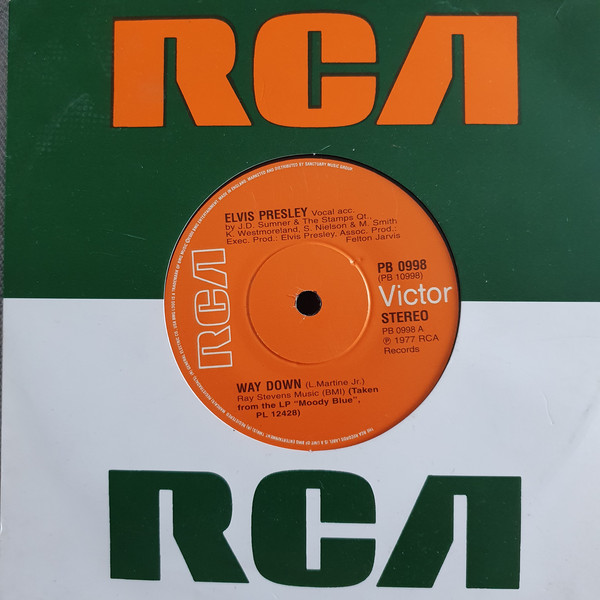
On this day in 1977, and the world still coming to terms with his death aged just forty-two, Elvis Presley’s current single climbed to #1, the first of his record five posthumous chart-toppers. ‘Way Down’ had spent its first two weeks on chart climbing from #46 to #42, so its safe to assume that it wouldn’t have been a massive hit without tragedy striking. However, it would also be wrong to suggest that The King was a spent force at this point in his career, as his previous single ‘Moody Blue’ had made it to #6. In my original post on it, I rejoiced in the fact that fate ensured Elvis’s final single was a rocker, given that he’d spent much of the ’70s releasing schmaltzy ballads. Lyrically, it’s also fitting for the recently deceased star, given that it’s called ‘Way Down’, and compares a woman’s love to prescription drugs… However, fun as the song is, and as lively as Elvis’s perfomance is, the show is stolen by JD Sumner’s astonishingly low closing note.
Finally, on this day in 1993, Culture Beat’s ‘Mr. Vain’ was enjoying its first of four weeks at #1. I bring this to your attention not just because it’s a banger – and it is – but because it was the first chart-topper in forty years not to be released as a 7″ single. Vinyl was on its way out after a century as the medium of choice, to be replaced in the space of twenty years by CDs, then digital downloads, then streaming…
Thanks for joining this delve back through the decades. Next up, we continue our journey through 2001 with a similarly retro reboot…
A Happy Easter to all who celebrate it. I’m launching a new feature this Easter Sunday, something to enjoy while rendered immobile by one too many chocolate eggs… ‘Today’s Top 10’! My blog focuses very intently on every song that’s made #1 in the UK, and I often try to draw conclusions on how popular music has been shaped, and has shifted, over the years based on one tune alone. Which is actually quite limiting, because the singles charts have always been about more than just the number one. Over the 70-plus years of the singles chart, we’ve had a weekly Top 12, a Top 30, a Top 40, a Top 75, and now a Top 100.
So I want to, every so often, single out a random Top 10 from history, to look at in more detail. My version of ‘Pick of the Pops’, if you will. Cue the music….! Completely at random, using an online date generator, the first to come out the hat was 1970: the singles chart as it stood fifty-four years ago today. It features, inevitably, a #1 we’ve met before (plus one former #1), as well as songs by some of the biggest acts of all time. So let’s crack on…
#10 – ‘Don’t Cry Daddy’, by Elvis Presley (down 1 / 6 weeks on chart)
The early-seventies was a sort of musical wilderness: after the post-sixties comedown, a year or so out from the glam rock takeover of 1972-73. Speaking of musical wildernesses, here’s Elvis with a maudlin ballad about a break-up (or is it a mother’s death?) written from the POV of the couple’s daughter. Elvis croons the life out of it, and that voice could sell anything, but even he struggles to imbue lines like Daddy you’ve still got me and little Tommy, Together we’ll find a brand new mommy… with any sort of gravitas. He was still capable of greatness in the early seventies – in a few months he’d be back on top with one of his biggest hits, ‘The Wonder of You’ – but this is pretty saccharine.
#9 – ‘Everybody Get Together’, by The Dave Clark Five (down 1 / 5 weeks on chart)
The DC5 had scored their one and only #1, the stomping ‘Glad All Over’, more than six years earlier. So it is impressive that they were still hanging around the Top 10, when so many of their ’60s contemporaries had already faded away. This is a call-to-arms, a song with a message: Everybody get together, Try to love one another right now… Originally written as a folk song, and a hit in 1967 for the Youngbloods at the height of flower-power, The Dave Clark Five clearly felt that the sentiment was worth one more go. But there’s a droning, heavy feel to this version that feels weary, as if they’ve given up on the message even before the end of the song. It’s appropriately downbeat, perhaps, for the end of the sixties and the start of an uncertain new decade. Fitting too, as this was the Five’s final Top 10 hit. They would disband by the end of the year.
#8 – ‘Something’s Burning’, by Kenny Rogers & The First Edition (up 3 / 9 weeks on chart)
New to this week’s Top 10, and maintaining our run of hits by artists that we’ve already met in the #1 position, it’s Kenny Rogers and The First Edition with a sexy, sexy song. The verses are soft and slinky, lines like You lie in gentle sleep beside me, I hear your warm and rhythmic breathing… but it builds to a heated crescendo in the chorus. Kenny growls Here it comes, Can’t you feel it baby… and we know he’s not talking about the No. 42 bus. Lord have mercy…! It’s a world away from his much more gentle, much more ‘country’, solo hits like ‘Lucille’.
#7 – ‘Let It Be’, by The Beatles (down 3 / 4 weeks on chart)
Some of you may have heard this one before… The last single released before Paul McCartney’s departure heralded the end of history’s greatest group. There’s nothing new I can say about the record as a whole, so I’ll single out my two personal favourite moments. George Harrison’s snarling solo (especially on the album version) and the way Paul’s scouse accent sneaks through in the word ‘trouble’. Perhaps I’m just used to the streaming age, where songs hang around the charts for……ever, but for a song as legendary as ‘Let it Be’ not to make #1, and then be slipping down to #7 after just four weeks, seems surprising.
#6 – ‘That Same Old Feeling’, by Pickettywitch (down 1 / 6 weeks on chart)
I can’t say I’ve ever heard this one, though it had been as high as #5. It’s a nice enough, Motown-leaning tune done in a late-sixties, bubblegum style. Pickettywitch – I can’t decide if that’s a great or a terrible name – are another sign that though we may be in March of 1970, we’re still in the sixties going by much of this Top 10. Lead singer Polly Brown has a decent voice, reminding me of Diana Ross.
#5 – ‘Young, Gifted and Black’, by Bob & Marcia (up 1 / 4 weeks on chart)
I’ve made many a reference to the fact that reggae is the most indestructible of genres on the UK singles chart. Never the defining sound of an age, but always popping up when you least expect it. In 1970, it really was a new sound, Desmond Dekker having scored the first ‘official’ reggae #1 (if you ignore The Equals, and ‘Ob La Di…’) the year before. This is reggae + , with lots of strings, and rocking drums, but I’d say it still counts. More significant, though, are the lyrics: In the whole world I know, There’s a million boys and girls, That are young, gifted and black… And that’s a fact! Written and originally recorded by Nina Simone a few months earlier, right at the end of the decade that had brought the Civil Rights Movement to a head, for this to make the Top 10 in the UK feels very significant, and the second song in this rundown that could be described as a ‘rallying cry’.
#4 – ‘Wand’rin’ Star’, by Lee Marvin (down 2 / 9 weeks on chart)
A former number one – which I go into much more detail on here – that had kept ‘Let It Be’ from top spot a few weeks before. It was taken from the movie version of ‘Paint Your Wagon’, which was a box office flop. A bizarre #1 at the start of a decade full of bizarre #1s, Lee Marvin officially has the lowest voice ever heard on a chart-topping single (*disclaimer – may not be true*), and uses it brilliantly on this anti-social anthem: I never seen a sight that didn’t look better lookin’ back…
#3 – ‘Can’t Help Falling in Love’, by Andy Williams (non-mover / 4 weeks on chart)
Elvis makes a second appearance in the Top 10, in spirit at least, with Andy Williams’ belting cover of the King’s 1962 #1, ‘Can’t Help Falling in Love’. If it was impressive that the DC5 were still having hits in 1970, then we should also give a nod to the fact that Williams debuted with ‘Butterfly’ – his sole chart-topper – in 1957. But then again, crooners like Williams are timeless, much less prey to shifting trends than pop groups. The video above, which I think comes from later in the decade, is a spectacular glimpse into ’70s variety shows: the multi-coloured steps, the giant ‘ANDY’, the cardigan…
#2 – ‘Knock, Knock Who’s There?’, by Mary Hopkin (up 5 / 2 weeks on chart)
Venture deep enough into a springtime chart, and there’s a good chance you’ll meet a Eurovision Song Contest entry. ‘Knock, Knock Who’s There?’ was the UK’s 1970 offering, finishing second on the night to Ireland’s Dana. This is very schmaltzy, very middle of the road – not a patch on Hopkin’s huge breakthrough #1 ‘Those Were the Days’ – but it’s a darn sight better than the horrible ‘All Kinds of Everything’. This was a big departure from Hopkin’s usual, folky offerings, and she wasn’t a fan: “I was so embarrassed about it. Standing on stage singing a song you hate is just awful.” Hate it though she might have, it brought about her final Top 10 hit.
#1 – ‘Bridge Over Troubled Water’, Simon & Garfunkel – (non-mover / 7 weeks on chart)
In the middle of a three-week run at the top, ‘Bridge Over Troubled Water’ was just the 3rd number one of the 1970s, but is probably one of the decade’s biggest and best-loved songs. Simon wrote it, while Garfunkel gave one of the great vocal performances (something that apparently irks Paul to this day…) You can read my original post here.
In a way, ‘Bridge Over Troubled Water’ is the perfect number one for this chart. March 1970 wasn’t the sixties, but it’s wasn’t the seventies as we remember it either. ‘Bridge…’ is timeless, not beholden to many of the styles of the time, and could have been a #1 at most points in chart history. Elsewhere in the Top 10, we tick a few common chart boxes: soundtrack hits, Eurovision, Elvis, The Beatles… Maybe the two most relevant songs, though, are ‘Everybody Get Together’, and ‘Young, Gifted and Black’, which represent the social and civil rights movements that had defined the latter part of the 1960s. The hippy dream may have died, Dr King may have been killed, but hope springs eternal…
That was fun, and hopefully worthwhile. I’ll do another one sometime, as a break from our normal proceedings. Next up it’s back to 1996…
More reggae at the top of the charts, after Shaggy and Ace of Base over recent weeks. And it’s Britain’s best-sellers in the genre who are bringing it there…
(I Can’t Help) Falling in Love With You, by UB40 (their 3rd and final #1)
2 weeks, from 6th – 20th June 1993
As with their last #1, a cover of ‘I Got You Babe’ with Chrissie Hynde, this is a dub take on a golden oldie (though note the slight title change from the Elvis original, a chart-topper in 1962). And I can see what they were going for – a softened version of their reggae sound, with clear nineties dance influences in the swaying beat – but I can’t take to it. ‘Plodding’ and ‘slow’ were the two notes I took on first listen. I also gave their version of ‘I Got You Babe’ a ‘Meh’ award, so I’ve got form.
Ali Campbell’s voice is an acquired taste most of the time, and especially so here. I don’t know if he’s trying to imbue his lines with emotion, but it mainly sounds as if he’s straining to get them out. Obviously it doesn’t help that the listener automatically compares his efforts to Elvis’s from thirty years earlier… And yet, the quality of the song shines through – there’s a reason why it’s become a standard – and I do like the addition of the short, sharp horn fills towards the end.
Like ‘Oh Carolina’ before it, ‘(I Can’t Help) Falling in Love With You’ featured on the soundtrack to the Sharon Stone movie ‘Sliver’. There are very few film soundtracks to have included multiple #1s, and it’s amazing that a movie as poorly regarded and forgotten as this ‘Sliver’ managed it. Still it gave UB40 their 3rd and final chart-topper, and became their biggest hit in the US, staying at #1 for seven weeks.
And we should note the impressive longevity of the band, given that those three number ones were spread out over a decade (while the Campbell brothers have one more shot at top spot, in a featuring role, to come). But I think it’s fair to say, and this is coming from someone who wouldn’t count himself as a fan, that UB40 are not best represented by their three #1s. Two of them are fairly pedestrian covers, while ‘Red Red Wine’ – which was also a cover, of course – has bit more charm to it, though still plays it fairly safe.
They had a few more years of chart hits in them, including two further Top 10s, but its perhaps right to mark this as UB40’s swansong. They remain a going concern, with four of the original eight members still in the band. Ali Campbell, however, left in 2008, after disagreements with the band’s management.
The Christmas #1 record for 1987 wasn’t a novelty, a charity record, or a song about snow and sleighbells. (Thank God.) It was simply the biggest pop act in the country, the freshly-crowned winners of my most recent ‘Very Best Chart Topper’, at the height of their powers, covering a classic.
Always on My Mind, by Pet Shop Boys (their 3rd of four #1s)
4 weeks, from 13th December 1987 – 10th January 1988
Not just ‘covering’ a classic. More grabbing a classic by the scruff of the neck, dressing it up in glitter and lycra, and shoving it onto the dancefloor. Cover versions work best when they take a song away from its usual environs, and this take on what was originally a hit for Elvis Presley certainly does that. From soaring balladry, to pounding Hi-NRG disco…
Great cover versions are also almost always of great originals. The shift in tones, in styles and in genres brings out different shades of meaning, different ways of appreciating the song, but at heart they remain very good in whatever dressing a band hangs on them. Elvis’s version is slick seventies bombast, made for belting out at his Vegas residencies; and the Pet Shop Boys’ take keeps the song’s humungous presence, swapping lush orchestration for thumping synths, while Neil Tennant’s detached performance of the heartfelt vocals adds an almost comic element.
Do they also change the words? The Elvis version is quite clearly: Maybe I didn’t love you, Quite as often as I could have… Whereas PSBs seem to be singing Quite as often, As I couldn’t… I just be mishearing it, but if they are changed they add a different meaning to the song, and it’s not quite as apologetic.
‘Always on My Mind’ has also been covered by Willie Nelson, as a country ballad, having first been recorded by Brenda Lee in 1972. Elvis’s version, though, was the first to become a hit and so feels like the original. Pet Shop Boys first performed their take for an ITV special on the tenth anniversary of Presley’s death, and it was so well received that they released it as a single a few months later. And as Pet Shop Boys singles go, it’s pretty straightforward. There’s nothing particularly clever, or knowing: it’s just an all-out dancefloor banger – one of those songs that pretty much commands you to get up and start making shapes.
What is the name of that pre-set, synthesised chord – the one that sounds like a dog barking, but compressed? It’s a sound that’s synonymous with the late-eighties and early-nineties, to me, and the Boys use it liberally here. It works, but also completely dates the song. Never mind, though. It was the perfect Christmas hit: both a fun pop tune from two huge chart stars, and a song that mums and grans up and down the land knew too. A smash for all the family! And that’s that as far as 1987’s concerned. Never fear, though. The pop classics keep on coming. Stay tuned…
Do you remember the early 1960s? (Not literally – I mean in terms of this blog.) Back when every third #1 was by Elvis? Those three years in which he dominated the top spot like no one before or since, not even The Beatles? Amazingly, given the heights of his heyday, this is only his second chart-topper in twelve years. ‘The Wonder of You’ came just after his leather-clad comeback, and marked the start of the Vegas years. Since then he’s descended into a jump-suited parody of himself, mumbling his way through residencies with sweat-soaked towels round his ever-widening neck. From Sun Records, to Elvis the Pelvis, to the army, the movies and the rhinestones, there was still time for one more reinvention. Enter: Dead Elvis.
Way Down, by Elvis Presley (his 17th of twenty-one #1s)
5 weeks, from 28th August – 2nd October 1977
I don’t include the picture above to shock or to mock; more to mourn what he had become. What his management and enablers had allowed him to do to himself. I’ve loved Elvis’s music since I was young, and can find something to enjoy from every stage of his career. And I’m glad he bowed out with a rocker. ‘Way Down’ is pure cabaret razzamatazz, with the jazzy drums and the piano flourishes; but there’s rock ‘n’ roll in there. There’s a hint of disco too, believe it or not, in the churning, didgeridoo-like rhythm.
Ooh, And I can feel it, Feel it, Feel it, FEEL IT! You wonder if Elvis was capable of feeling very much at this point, and he does sound pretty bored (or pretty well sedated) during the verses. But he goes for it in the chorus. Way down where it feels so good, Way down where I hoped it would, Way down where I never could… On the one hand they sound like standard, throwaway, mildly risqué rock ‘n’ roll lyrics. But for a man in Elvis’s condition maybe he knew what he was talking about: he was having to dig very deep to feel anything. Meanwhile the line: The medicine within me, A doctor couldn’t prescribe… sounds like a very knowing reference.
I’ve always liked this one, long before I knew it was his swansong. It’s kid-friendly rock – almost a pantomime of the real thing. Would it have been a #1 smash if Elvis hadn’t died? No way. It was languishing at #42 in the week of his death, before rocketing up the charts when the news broke. Nowadays, people download or stream deceased artists’ biggest hits on hearing of their deaths. Back in 1977, those who wanted to mark The King’s passing had one choice: to go ‘Way Down’.
Sadly, Elvis isn’t actually the true star of his final antemortem release. Step forward J.D. Sumner, who ends the record with perhaps the lowest note ever sung on a chart-topping single. Way… On… Doowwwn… I did wonder if he was the same baritone as featured way back on ‘A Fool Such As I’, but sadly he wasn’t.
While this record did perhaps only hit #1 thanks to Elvis’s death, that shouldn’t suggest he had been absent from the charts. Since his last #1in 1970, Presley had scored fifteen Top 10 hits with a mix of new songs and re-releases. ‘Moody Blue’, the single before this, had reached #6. Perhaps ‘Way Down’ would have done something similar, then, if it hadn’t been for that fateful trip to the bathroom.
And this isn’t the end of the road for Elvis and the number one spot. Far from it. At the time, it gave him his seventeenth chart-topper, tying him with The Beatles. They will stay neck and neck for a good twenty-five years, until an Elvis resurgence in the ‘00s (he has twice as many #1s in that decade as he does in the ‘70s…) But still. We should still mark this occasion. One of, if not the, biggest pop star ever has left the building. Go on, order yourself a Fools’ Gold Loaf (flown in on your own private jet, naturally) and play the King of Rock ‘n’ Roll’s final hit, one last time…
Enjoy every #1 so far, including all 17 of Elvis’s:
The final two covers for the week, and we’re slowing the pace, ending on a chilled note…
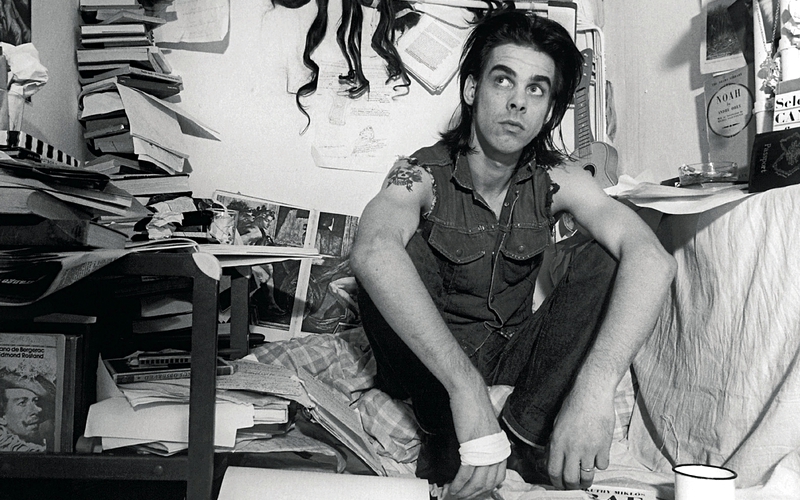
‘The Carnival Is Over’, by Nick Cave & The Bad Seeds – 1986 album track
(Originally a #1 in November 1965, by The Seekers)
I didn’t have much positive to say about The Seekers’ two 1965 #1 singles, the second of which was the dirgey ‘The Carnival Is Over’. But if you want someone to take a dirge, and make it even gloomier, yet make it completely their own, then look no further than Nick Cave. Based on an old Russian folk song, and given some sixties-folk lyrics by Dusty Springfield’s brother Tom, it sold a million for Australia’s biggest band of the decade. Fellow Aussie Cave and his Bad Seeds recorded it for a covers album twenty years later – ‘the song sort of haunted my childhood’, Cave has been quoted as saying. (Until five minutes ago, I had no idea that Boney M had also recorded a version… And I had no idea that Boney M had ever sounded so miserable. Nobody can make this tune sound fun!)
Despite being described as an ‘indie-folk project’ on their Wikipedia page, and despite it sounding ready made for a Starbucks playlist, I have liked this version of ‘The Wonder of You’ by The Villagers ever since hearing it on the soundtrack to HBO series ‘Big Little Lies’. It is the polar opposite of Elvis’s bombastic version – lo-fi and intimate, with just a hint of old-style rock ‘n’ roll around the edges. In the show, it soundtracks an abusive husband getting flung to his death down a flight of stairs during an Elvis-themed PTA night at a primary school… (I mean, if that description doesn’t make you want to watch something, then I don’t know what will!)
I hope you enjoyed my second annual cover versions week. Normal service will be resumed in a few days, with our 377th chart-topping single.
Well, look who’s back! Over five years on from his last #1, Elvis is back in the building. What version of Elvis are we on now? We’ve had the ‘Sun’ Records Elvis, Elvis the Pelvis, Army Elvis, Post-Army-Chart-Dominator Elvis, Terrible Movie Soundtrack Elvis…
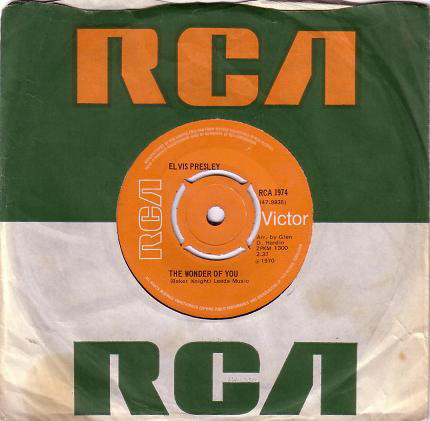
The Wonder of You, by Elvis Presley (his 16th of twenty-one #1s)
6 weeks, from 26th July – 6th September 1970
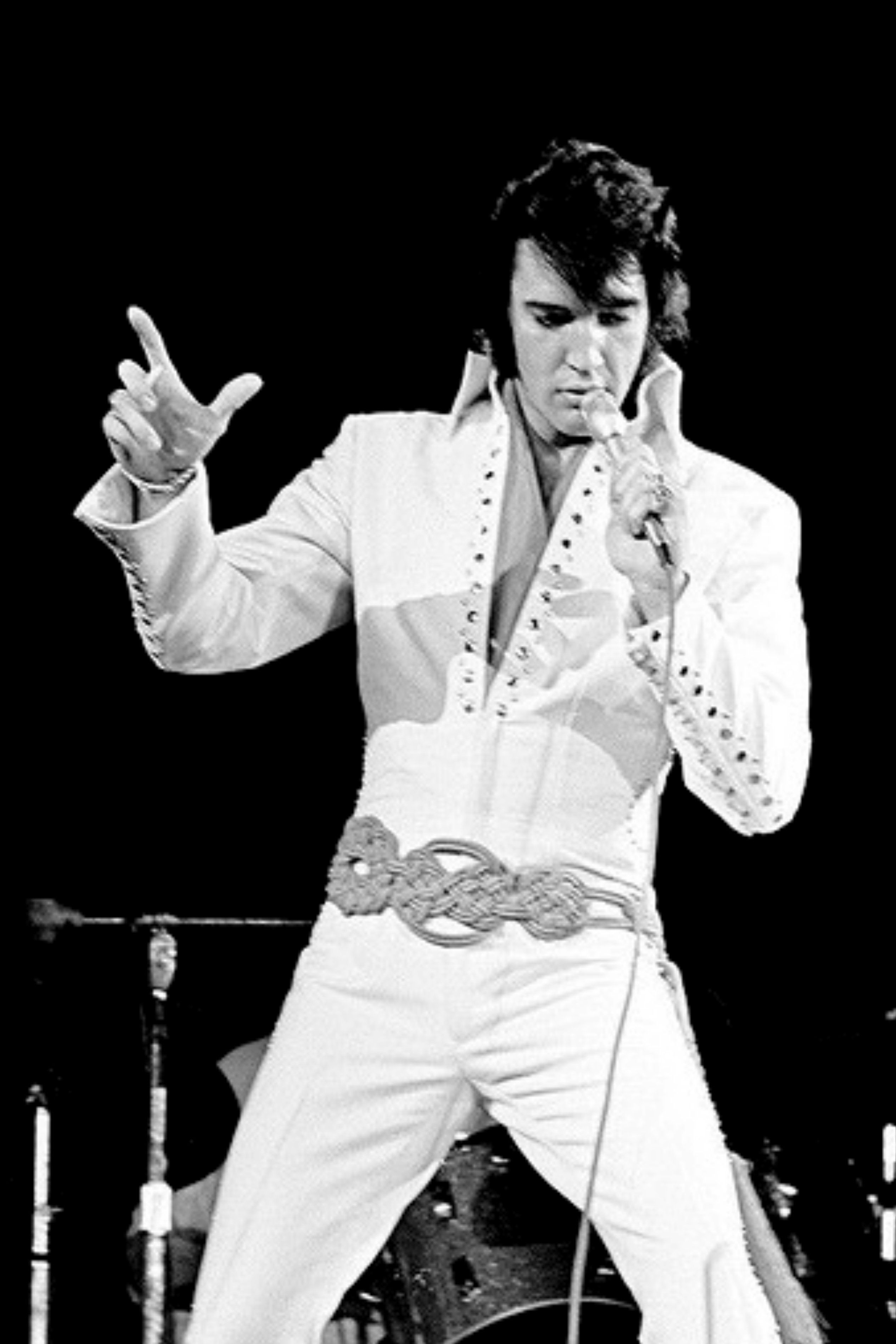
’68 Comeback Special Elvis has been and gone – he didn’t make the top of the charts, though ‘Suspicious Minds’, ‘In the Ghetto’ and ‘If I Can Dream’ were all decent-sized hits. Now we’ve arrived at Vegas Elvis. The jumpsuits, the rhinestones… It’s one of his most distinctive looks, the favoured outfit of the modern Elvis impersonator.
‘The Wonder of You’ sweeps in, the instruments sounding brassy and confident, as if the very fact that they are being played on an Elvis record is giving them an extra decibel. And the man himself can’t wait to get singing, joining in with the intro: Woah-woah-woah-woah… His voice sounds deeper, thicker than when we last heard him, crooning on ‘Crying In the Chapel’.
When no-one else can understand me, When everything I do is wrong… I’m not going to lie, this record is a big bucket of schmaltz… You give me hope and consolation, You give me strength to carry on… But I love it. I especially love giving it a good old belt out in the shower. Elvis has plenty of excellent shower-songs, but this is the ultimate. I guess I’ll never know, The reason why, You love me as you do… That’s the wonder, The wonder of you… Who is the ‘you’ in the title? Priscilla? God? The listener? It works, because any old schmuck can sing it to their loved-one and come away looking cute.
Completing the ‘Elvis at the MGM’ feel are the crowd noises. Yes, we have our first ‘live’ number one since, I think, Lonnie Donegan a decade ago. They applaud at the start, when The King begins to sing, and they cheer at the end when the song rises to its finale. He never actually recorded ‘The Wonder of You’ in a studio, amazingly. At the very end, as the final note appears over the horizon, Elvis’s voice is faded right back into the mix. It’s a disappointingly muted end, a sign perhaps that his voice was beginning to fade. Of course, the next Elvis (Elvis MK VIII?) will be prescription drugs ‘n’ burgers Elvis.
And, sadly, the next Elvis we’ll meet on this countdown will be The Late Elvis. Yep, this is the last UK chart-topper of his lifetime. ‘The Wonder of You’ had been around for a while, though. It was written in 1959 by one Ray Peterson, and recorded by Ronnie Hilton (remember him, from way back in 1956?) and The Platters. Their versions are fine, though a lot stiffer than this one. Apparently Elvis had asked Peterson’s permission to record the song, and Peterson had replied with an ‘Um, you don’t really need to ask, cause you’re, you know, Elvis…’
Very few acts who scored number ones in the sixties managed to keep their runs going in the sixties. There was a sudden and sharp cut off: The Beatles (to be fair, they split up in 1970), The Stones, The Beach Boys, all the Beat bands… The door slammed down on New Year’s Eve 1969. Except, obviously, these rules didn’t apply to The King. In fact, with his 16th #1 he creates a whole new club: artists who have scored chart-toppers in three different decades. Even now it’s a select club, reserved for big names: Madonna, Michael Jackson (if you count The Jacksons), Eminem, Kylie… and Cliff Richard, who has hit #1 in an outrageous five different decades. Yep, plenty more Cliff to look forward to, coming up right here…
Follow along with the UK #1s Blog Spotify playlist here.
It’s two years since I started this blog and I’m exactly 250 number ones in! To celebrate, I am doing a week-long special: cover versions of #1 singles! Whenever I write a post, I not only discover and enjoy the #1 singles, I also often discover and enjoy other recordings of these hit songs.
Our next two covers are by two of the founding pillars of rock ‘n’ roll…
I adore Johnnie Ray’s version of this, but Elvis’s version hits the spot just as nicely. Both singers get how sensual and sexy a song this is meant to be. Recorded for his ‘Elvis Is Back!’ album, ‘Such a Night’ is proof that Elvis could still kick it after being in the army. His voice is superb here, but just as brilliant is DJ Fontana on drums. It reached #13 in the UK when finally released in 1964.
‘Memories Are Made of This’, by Little Richard (1964)
Deano crooned the life out of this, his only number one hit. Little Richard does not croon. He gives it the full treatment – it’s an experience similar, I’d imagine, to standing behind a 777 as it revs up. I’ve already covered how criminal it is that Little Richard never scored his own #1 single, and will take any chance going to bring him up! Enjoy…
How well a single performs in the charts can be influenced by various things… promotion, star power, tastes and trends, time of year… pure luck. And that most fickle, unpredictable of factors: the general public. Do enough of them like your song to make it a smash? Or will they ignore it, and let it fall by the wayside?
I’m taking a short break from the regular countdown to feature five discs that really should have topped the charts. Be it for their long-reaching influence, their enduring popularity or for the simple fact that, had they peaked a week earlier or later, they might have made it. (I’ll only be covering songs released before 1964, as that’s where I’m up to on the usual countdown.)
Next up…
Well since my baby left me…
Heartbreak Hotel, by Elvis Presley
reached #2 in June 1956
OK, OK, I know. Elvis doesn’t need any more number one singles. He’s had plenty. Back on my regular countdown, of actual #1s, we’re in 1964 and The King of Rock ‘n’ Roll is on fourteen (14!)
But… His dominance of the charts in the early 1960s is why I wish that this disc could have made the top. He had some brilliant, classic #1s – don’t get me wrong – but he also dragged a lot of crap to the top just through the power of his name. If only we could swap ‘Good Luck Charm’, or ‘Rock-A-Hula Baby’, or ‘Wooden Heart’, for this burst of primal energy.
This was Elvis the hip-swiveller, Elvis as Moral Panic, Elvis the Pelvis edited from the waist down… And it’s a really clever song, too. A broken heart imagined as a real place – a hotel where broken-hearted lovers cry in the gloom, and the desk-clerks are all dressed in black. It was inspired by a real-life suicide, which is some heavy shit for a pop song in 1956 (for comparison, it was kept off the top-spot in Britain by the banal, saccharine stylings of Pat Boone, with ‘I’ll Be Home’.) And when that guitar solo kicks in… Oh boy. The King was most definitely in the building.









 The UK Number Ones Blog