459. ‘Theme from M*A*S*H (Suicide Is Painless)’, by The Mash

This next #1 sounds like a blast from the past… Originally released in 1970, the theme from ‘M*A*S*H’ took a full decade to make the top of the charts…

Theme from M*A*S*H (Suicide is Painless), by The Mash (their 1st and only #1)

3 weeks, 25th May – 15th June 1980

The why and wherefore of that we’ll get to in a bit. To the song first, though. It’s a simple enough, folksy ditty. It’s got a very late-sixties, post-Woodstock comedown feel to it. It’s also very melancholy. A song titled ‘Suicide Is Painless’ was always going to be a bit depressing…

Through early morning fog I see, Visions of the things to be, The pains that are withheld for me, I realise and I can see… The main thrust being that life is shit, and that suicide is always an option. By verse three, the ‘sword of time’ is piercing our skin, and everyone’s feeling thoroughly miserable. The singers, meanwhile, harmonise on the choruses like creepy Beach Boys.

I’m going to stick my neck out and say that this would never have been a hit had it not been associated with a huge film and TV franchise. It was the theme to the movie first, in 1970, and then the spin-off TV series between 1972 and ’83. I guess demand had built up over the years thanks to the show’s success, and this re-release sent it crashing up to the top of the charts.

The record is credited to ‘The Mash’, but in reality it was performed by some uncredited session singers who probably never received a belated dollar for their huge hit. One person who did make some money from it was Michael Altman, the fourteen-year-old son of the film’s director Robert. His dad allegedly requested ‘the stupidest lyric ever’, and the kid obliged in five minutes flat.

I think ‘stupidest lyric ever’ is a bit harsh, but the second you realise it was written by a moody teenager then lines like: The game of life is hard to play, I’m gonna lose it anyway… suddenly make complete sense. I think the dumbest bit of the whole song is actually the chorus: Suicide is painless, It brings on many changes… One of pop music’s great understatements there.

I wonder if there was any controversy at the time, either in 1970 or ten years later, around the theme of suicide in a #1 single, or TV theme, and the idea that it might be ‘painless’? It’d raise a few eyebrows nowadays for sure. Either way, it’s a song that’s been covered many a time. In the UK, the most notable has been The Manic Street Preachers’ version, which returned the tune to the Top 10 in 1992. It’s quite a haunting take on the song, too, given the Manics’ guitarist Richey Edwards’ still-unexplained disappearance a couple of years later.

458. ‘What’s Another Year’, by Johnny Logan

Eurovision klaxon! It’s been a few years since we’ve had to sound it, but 1980 was one of those years when the winning record also went all the way on the pop charts…

What’s Another Year, by Johnny Logan (his 1st and only #1)

2 weeks, 11th – 25th May 1980

Some Eurovision singles have been classic – ‘Waterloo’, ‘Congratulations’ – other have been less classic – ‘All Kinds of Everything’, ‘Save Your Kisses…’. Into which camp, then, does ‘What’s Another Year’ slide into…? Well…

I won’t keep you on tenterhooks. It’s the latter camp. From the opening seconds, when a gratuitous, easy-listening saxophone riff rises up, you know where this record is heading. We’re back in David Soul territory: a handsome lad – think a slightly more rugged Donny Osmond – crooning his heart out. I’ve been crying, Such a long time, With such a lot of pain, In every tear… What’s another year? The tweens and the grannies must have lapped it up.

In my post on the previous #1, ‘Geno’, I repeated my belief that pop music, at the very least, shouldn’t be boring. ‘What’s Another Year’ is a well-produced, and well-sung, song… but it’s dull. And that sax… It comes back for a pure elevator-slash-lounge-bar solo, that is a horrible premonition of what’s to come in the middle of this decade. To be fair, the song isn’t actually about a lost love, but about the death of the writers’ mother, which does make it a bit more heartfelt in my eyes.

(I love the weeping eye in the corner of this sleeve, just in case you were in any doubt what type of song this was…)

Of course, this record won Logan, and Ireland, the Eurovision Song Contest. Johnny clearly felt that the continent hadn’t suffered enough, as he re-recorded his biggest hit several times, including in Spanish and German. (I think the version I listened to for this post was the original.) And he wasn’t done there… This man is Mr. Eurovision. He won it again in 1987, with ‘Hold Me Close’ (that made #2 in the UK, and is even slicker and limper than this one…) Then he went and wrote the 1992 winner, ‘Why Me?’ for Linda Martin, on top of having written the 1984 runner-up, ‘Terminal 3’, for the same woman. (Of all four songs, ‘Terminal 3’ is by far the best: a Bonnie Tyler-esque barnstormer.)

Ireland may have won Eurovision more times than any other country, but goodness they’ve done so with some utter tripe. Anyway, Johnny Logan struggled to score any non-Eurovision hits in the UK, but he’s had better luck in his homeland, releasing his latest album in 2017, and scoring Top 10 hits as late as 2013. And I might as well break it to you now… we will also be sounding the Eurovision klaxon in 1981. But, boy oh boy, that record will be everything that this one is not!

457. ‘Geno’, by Dexys Midnight Runners

Our next number one starts off with some live chanting, and a short, sharp horn riff, giving the impression that we’re heading off in the same 2-tone, ska direction that The Specials took us… Until it switches tack and suddenly we’ve got a brassy, soulful saxophone line leading the way.

Geno, by Dexys Midnight Runners (their 1st of two #1s)

2 weeks, 27th April – 11th May 1980

And that’s not the only abrupt shift over the course of ‘Geno’ – it’s a song that’s chopped up into lots of little bits. Lots of catchy little chunks. There are the woozy verses… Back in sixty-eight in a sweaty club… with lyrics that need serious Googling thanks to lead-singer Kevin Rowland’s unique delivery… Before Jimmy’s Machine and the Rocksteady Rub…

It’s a potted history of the band, or of Rowland’s formative years, bunking school and sneaking in to clubs to see soul legend Geno Washington step on stage, swinging his towel high… Then the tempo swings again, and there’s an insistent post-punk drive to the middle-eight. Academic inspiration, You gave me none… And then there’s the live chanting, which is actually sampled from a Van Morrison live album.

When writing these posts, I usually jot down my impressions on a song without looking at any other sources. You know, if you read that such-and-such a song is included in the Rolling Stone magazine’s Top 500 of all time, then it might influence your judgement… But with this record, I’m a bit stumped. The components are catchy, the oh-oh-oh Geno hook is great, but I’m struggling to place it.

It’s another insistent record, yet another chart-topper from ’79-’80 that is brimming with confidence and with ideas. Listening to this era’s chart-toppers is like going to an art school’s open day and being performed at by some very confident young wannabes. It’s all very impressive; but it can get a bit much.

So, do I like this song? Should I be enjoying this? The consensus seems to be that this is a classic… but that’s probably just because the Runners’ next chart-topper is so overplayed and people want to look cool. I think the big negative here is that the song’s topic is quite niche – a description of a gig – and the vocals so unintelligible. Still, it’s not boring, and that is always something.

This was just the second single that Dexys Midnight Runners’ had ever released, after their formation in Birmingham in 1978. Their name is the shortened version of Dexedrine, an amphetamine popular in clubs at the time, and which is referenced in this song: This man was my bomber, My dexys, My high… Oh Geno! It’s also the reason why there’s no apostrophe in the band’s name, which goes against all my English teaching instincts… They will be back, in good time, with one of the decade’s signature hits. One that may be overplayed, but that I will have no problem justifying as a classic!

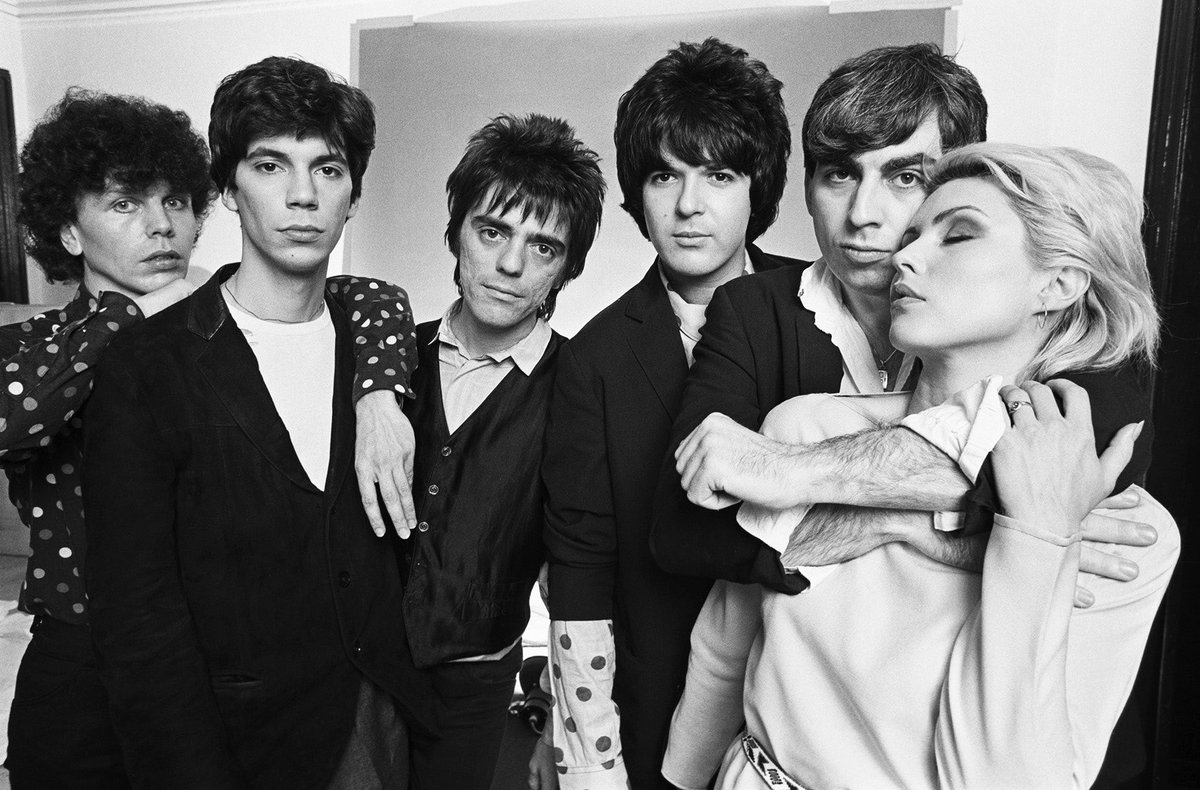
456. ‘Call Me’, by Blondie

In which Blondie return after only six weeks away – that’s a very short time between chart-toppers, really – with another disco-rock stomper.

Call Me, by Blondie (their 4th of six #1s)

1 week, 20th – 27th April 1980

About a year ago, when records like ‘Tragedy’ and ‘I Will Survive’ were monopolising the chart’s top-spot, I killed disco off. It had peaked, I said. New-wave, post-punk, electronica were about to take over. But it’s not been that simple… Acts keep sticking a disco beat on their songs and scoring hits: Pink Floyd, Fern Kinney, Dr. Hook… And the masters of it, Blondie.

As with ‘Atomic’, there’s another whip-snapping intro, a drum-roll, and a beat that grabs you along for the ride. And what a ride. Colour me your colour baby, Colour me your car… Not sure what that’s all about, to be honest, but this isn’t the sort of song where you stop to think about the lyrics.

Again, as she did in the band’s previous #1, Debbie Harry is letting loose compared to the ‘Parallel Lines’ hits. Call me! she hollers at the top of her voice… On the line, Call me call me any anytime… It’s pretty clear what kind of call she’s talking about (think Donna Summer in ‘Hot Stuff’…) Anytime, anyplace, anywhere, any day, any way…

‘Call Me’ didn’t feature on any Blondie album – it was recorded for the soundtrack of ‘American Gigolo’, starring Richard Gere, which perhaps explains the unrepentant lyrics and why it followed so hot on ‘Atomic’s heels. The soundtrack version is a full eight minutes long, with beefier synths, and a verse about being taken out and shown off, as all the best gigolos want to be. The producer behind the soundtrack was none other than Giorgio Moroder, which means he’s now been involved in three UK chart-toppers with three different acts, and this won’t be his last…

Few bands have the sort of golden runs that Blondie were having in 1979-80. In just over a year they have had four chart-toppers, all of which I’d say were at least eights out of ten. (If you insist: ‘Heart of Glass’ 9.5, ‘Sunday Girl’ 8, ‘Atomic’ 9, ‘Call Me 8.5) Their one release that didn’t top the charts in amongst all this was ‘Dreaming’, a #2 and another stone-cold classic, much more post-punk than disco (and another 8.5, since you ask.)

Sadly, they have but one chart-topper to come, and – without wanting to give too much away – one that isn’t quite in the same league. And of course they’ll have a huge comeback almost twenty years later, but as great as that #1 is I would count it as something separate. Anyway. Let’s leave Blondie here, at the peak of their powers, and their chart success. A band that sound great anywhere, anytime, any day…

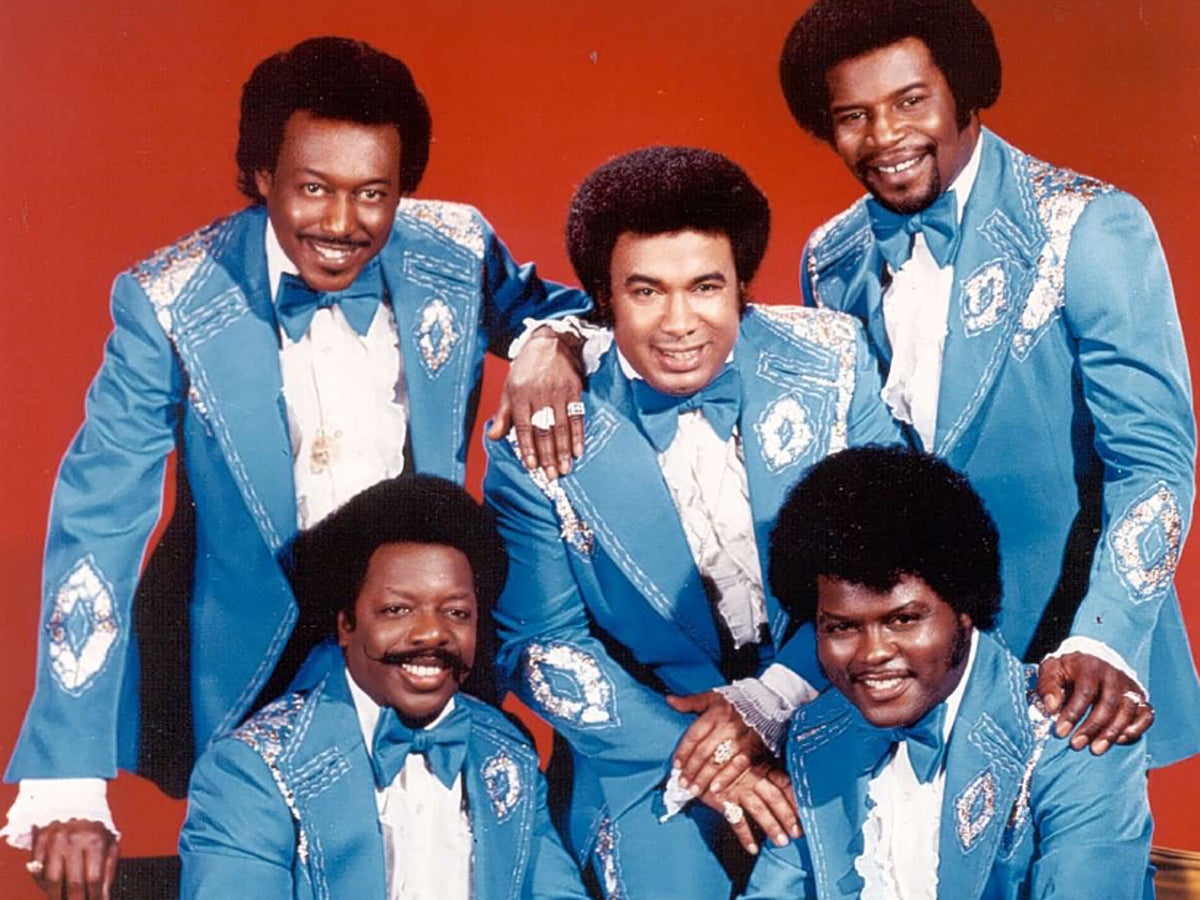
455. ‘Working My Way Back to You / Forgive Me, Girl’, by The Detroit Spinners

As vital as The Jam’s polemic first #1 was, you wouldn’t want every chart-topper to be that angry… Luckily for us, here come the (Detroit) Spinners with a relentlessly positive classic.

Working My Way Back to You / Forgive Me, Girl, by The Detroit Spinners (their 1st and only #1)

2 weeks, 6th – 20th April 1980

They are far from the first well-established band to try a disco-ified take on the old vocal-group sound. In fact, they’re pretty late to the party. This record could have been a hit from any point since 1975. And you can approach this in one of two ways… Way A) rolling your eyes at the cheese, and at the drunken memories of every wedding disco you’ve ever attended, or Way B) joining in with the undeniable fun.

I’ll keep working my way back to you babe… The singer’s made a mistake, told some lies, thought he could have his cake and eat it, but now he’s feeling remorse… With a burning love inside… And I love his very deep voiced counterpart: Been prayin’ every day… It has a bit of a karaoke-backing track feel, but that’s part of the charm. It gives you no choice but join in.

When you do, you realise how much of a dick the singer has been. He played around, he loved to make her cry… That matters not. He is coming back, and we are left in no doubt as to his success. ‘Working My Way Back to You’ was (yet another) UK #1 that began life as a song by The Four Seasons, in 1966. Theirs is a very ‘sixties’ version, as good if not better than this cover.

Here, the Spinners had it spliced with a few bars from ‘Forgive Me Girl’, a composition by producer Michael Zager (nothing to do with Zager & Evans, unfortunately), giving us our 2nd recent chart-topping medley after Boney M’s last-but-one Christmas number one. You wouldn’t realise that these were two songs mixed together – ‘Forgive Me Girl’ works perfectly as the bridge – and I’m left relieved that this isn’t another double-‘A’ side (as they take twice as long to write about!)

The Spinners had been around since 1954, and had been charting in the US since the early sixties. Which means that by the time their one and only British chart-topper came around, all four members were in their early-forties. One of the original ‘man-bands’, then! They join the aforementioned Four Seasons, and The Tymes, and even The Tams, in scoring #1s beyond their eras thanks to the popularity of soul and, of course, disco. They are still an active group, too, with one founding member, Henry Fambrough, still present.

Why, though, were the plain old Spinners marketed as The Detroit Spinners, and sometimes the Motown Spinners, in the UK? Well, all thanks to a British folk group who had already laid claim to the name. A couple of decades later the Americans would repay the compliment by forcing Suede to become the considerably less cool London Suede for their US releases…

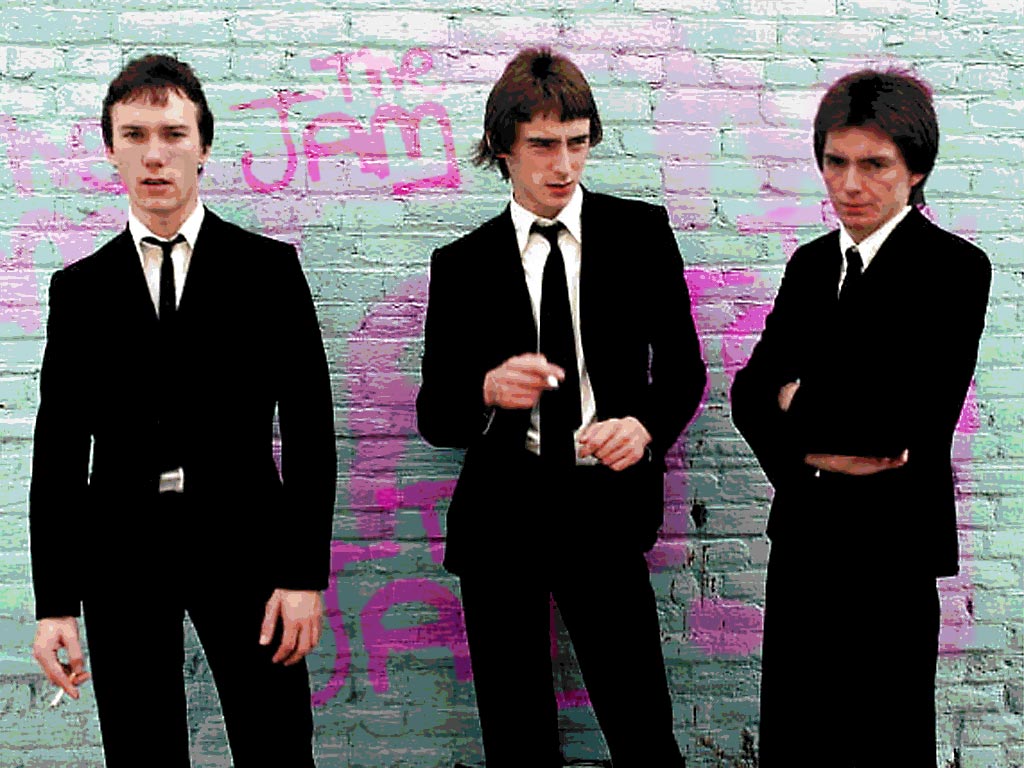
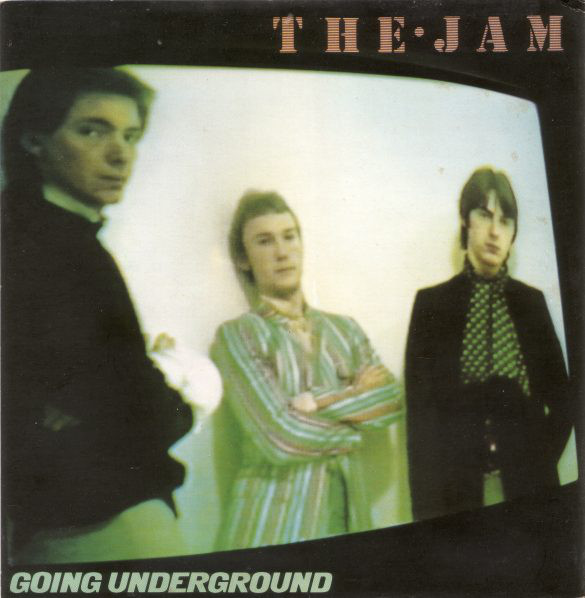
454. ‘Going Underground’ / ‘The Dreams of Children’, by The Jam

Well, isn’t this quite the shot of adrenaline! The line between new-wave and punk becomes very blurred as The Jam score their first number one single…

Going Underground / The Dreams of Children, by The Jam (their 1st of four #1s) 

3 weeks, 16th March – 6th April 1980

The guitars are tight, and fast. Lead-singer Paul Weller spits the opening lines out with venom: Some people might say my life is in a rut! But I’m quite happy with what I’ve got! It’s a record that grabs you by the lapels of your smart, modish suit and doesn’t let you go. These angry young men are not happy with modern life, with their leaders’ lies and atomic crimes, and are off underground.

The lyrics are not always easy to make out – delivered as if Weller just has to get them off his chest before their three minutes are up – but one line stands out: The public wants what the public gets, But I don’t get what this society wants… I’m going underground…! And then there’s the ‘braying sheep’ on his TV screen. They’re words that ring just as true today – you could probably apply them to any point since WWII, to be fair – but after an economically difficult seventies, and less than a year into Thatcher’s government, dissent is growing…

‘Going Underground’ really does sound very raw, and very punk. It could be a hit from 1977, and is much more primitive when compared to new-wave’s two other big guitar bands, Blondie and The Police. This is perhaps The Jam’s last moment as an ‘underground’, if you will, band. This hits number one, and their sound expands and progresses. Only in the break, before the final chorus, does it sound a little more of its time, drippy and echoey, but only for a second before the guitars chop right back in.

‘Going Underground’ was actually only listed as the double-‘A’ due to a printing error. ‘The Dreams of Children’ was intended to be the lead, and it does sound much more of the moment. It starts with a cool false-beginning, guitars and vocals played in reverse, and has a great, chiming riff. But, I’d say it lacks the urgency of the flip-side. I hope that whoever buggered things up at the printing plant wasn’t punished too harshly…

If you were hoping for a more positive take on modern life here… well, nope. Paul Weller is having sweet dreams – the innocent dreams of a child – but wakes sweating and paranoid to this modern nightmare… I was alone and no-one was there… Before long, the song has turned into a sort of horror movie theme, voiced by a sinister dream-catcher.

Something’s gonna crack on your dreams tonight, You will crack on your dreams tonight… he sings, as the twiddly backwards effects return and things get genuinely creepy. Sorry kids, your dreams are just that: dreams. Real-life will grind you down. I mean, it’s not your run-of-the-mill #1 single material, but everything can’t be all sweetness and light. Neither of these songs sounds like a chart-topper, but it’s great that they got there.

And they got there in some style. This was the first record to enter at #1 since Slade did it with ‘Merry Xmas Everybody’ over six years ago. Elvis, Cliff, The Beatles and, er, Gary Glitter were the only other acts to have achieved this feat before 1980. It pretty much announces The Jam as one of, if not the, biggest band in the country (or at least the band with the most devoted fanbase, who ran out to buy the song as soon as it was released…)

However, can I just add before I go that it is a shame that The Jam’s previous single – their first Top 10 hit – wasn’t the big #1 debut. As great as this record I’ve reviewed today is, ‘The Eton Rifles’ stands as a brilliant commentary on the British class system: angry, and funny, and another one that still rings true today. We just don’t learn, do we?

453. ‘Together We Are Beautiful’, by Fern Kinney

Let’s slow things down a bit, with this next number one. A soft, slinky beat, some strings, and a breathy vocal…

Together We Are Beautiful, by Fern Kinney (her 1st and only #1) 

1 week, 9th – 16th March 1980

Fern Kinney’s voice reminds me a bit of Anita Ward’s: high-pitched and slightly nasal. But it doesn’t grate in the same way. This record doesn’t grate like ‘Ring My Bell’ at all – for better or worse. ‘Ring…’ might have been annoying; but you remembered it. ‘Together We Are Beautiful’ isn’t annoying, really, but it does wash over you without leaving much of a lasting impression.

He walked into my life, And now he’s taking over… It’s a decent opening line, that the song fails to build upon. I’ve gone with better looking guys, He’s gone with prettier lookin’ girls… It’s a middle-aged love song – settling down with someone on a deeper level. Fern doesn’t need love affairs any more… Except the lyrics still descend into stock-standard, love song cheese: I am the rain, He is the sun, And now we’ve made a rainbow… Ick!

What saves this song from being truly cloying – and when Kinney starts wishing that the whole world could fall in love like her and her man, it comes very close – is that it’s delivered in such a fluffy, tongue-in-cheek way that you can easily treat it as a camp novelty. It does drag on a bit, though: another song that shouldn’t have come anywhere near the four-minute mark.

The disco earthquake may have passed, but there will still be aftershocks like this for some time to come. Fern Kinney had been a backing singer who had given it up to be a housewife, before having one final crack at a solo career. And it worked – for this record… She is a bona-fide one-hit wonder. ‘Together We Are Beautiful’ had been around in different versions for a few years, before Kinney had her go.

I had a very vague memory of hearing this song years ago, in an advert that featured a guy with a miniature-sized version of Arsenal and England centre-back Tony Adams… And I am reassured to find out that I hadn’t dreamt it. It was used in a 1999 deodorant ad, which you can now enjoy in all its glory. What would we do without YouTube…?

452. ‘Atomic’, by Blondie

Getting us back on track after (yet another) country detour… Though you could argue that there’s a country twang to the main riff on this one… sort of… Anyway, where were we? Oh yes! Blondie go atomic!

Atomic, by Blondie (their 3rd of six #1s)

2 weeks, 24th February – 9th March 1980

Add this one to the list of great intros: a sort of beautiful cacophony, a remix of the way church bells go wild after a wedding, or on Christmas morning… Ding! Dang! Dong! Apparently its based upon the nursery rhyme ‘Three Blind Mice’ of all things! And then it clicks into that riff. (This intro was, for some reason, cut from the single edit… but let’s just pretend that version doesn’t exist.)

Oh-ho, Make it magnificent, Tonight… Is there a better song to listen before a night out than ‘Atomic’? Back when I was young and going to nightclubs, this was often playing as I picked out a shirt, did my hair, and prayed that the bouncer would ignore the fact that I still looked about thirteen… Oh, your hair is beautiful… Debbie Harry would sing, as if she could see me in the mirror. Oh tonight… Atomic! It’s a fine, fine song. But is it better than ‘Heart of Glass’…?

In some ways they’re very similar. Both rock with a disco beat (or disco with guitars…) and both with a synth breakdown in the middle – of the album versions, anyway. Here, actually, it’s time to quickly resurrect the single-edit that I killed off earlier, as that shortens the breakdown, cuts the bass guitar solo, and repeats the iconic, deep-voiced Atomic! line. It works better as a pop song, which I suppose was the point. ‘Heart of Glass’ was chopped up into various different mixes, too…

The biggest difference between last year’s Blondie and this year’s Blondie is Harry’s voice. On ‘Heart of Glass’ she was restrained, and sarcastic. On ‘Sunday Girl’ she was quite cute. She belts this one out, though, full-throated. A huge echo effect is put on her closing Oh-oh Atomics… adding to this record’s epic feel.

I’d go as far as describing ‘Atomic’ as life-affirming. A song that will psyche you up, pick you up, cheer you up… A song that does everything pop music should. Which is funny, because there’s a school of thought (in so far as pop songs have ‘schools of thought’…) that interprets this song as apocalyptic i.e. it’s the song you’d play just before the bomb goes off. That’s not something I subscribe to, though.

Anyway, I still have a question to answer though: is it better than ‘Heart of Glass’…? Actually, who cares? They’re both brilliant songs. Blondie were brilliant, on top of their game at this point, and will be along again soon with another classic hit. And another one that’s totally atomic!

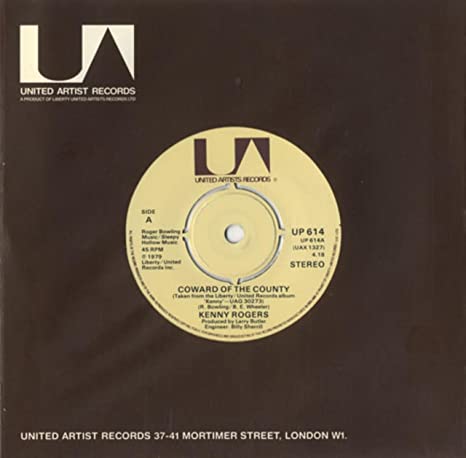
451. ‘Coward of the County’, by Kenny Rogers

Oh well. The brave new world of the eighties – the world of The Pretenders and The Specials – lasts for precisely two chart-toppers. Because, as they so often do, a Country and Western song has come along to remind us not to get too carried away…

Coward of the County, by Kenny Rogers (his 2nd of two #1s)

2 weeks, 10th – 24th February 1980

It’s another homespun tale, with the exact same jaunty, acoustic plod as Lucille, Kenny Rogers’ first #1 from three years earlier. It’s the tale of a – presumably – fictional nephew, the eponymous ‘Coward of the County’. His momma named him Tommy, The folks all called him yellow…

Why is he such a ‘coward’? Well, it’s all down to a promise to his dying father, who had made Tommy swear he’d always run from trouble, always turn the other cheek. I hope you’re old enough to understand, Son, you don’t have to fight to be a man… Which was all fine, until the day Gatlin boys came to have their way with his wife, Becky.

Yes, this is a #1 single that centres around a gang rape. In some ways this is one of the most shocking chart-toppers, ever. Except, the way Rogers delivers the line – and there was three of them… – is almost funny. Not intentionally, you’d hope, but still… Yep, she’s been raped. Key change!

Long story short: Tommy decides that there are limitations to his promise, goes to the local saloon, and beats the shit out of the Gatlin boys. Hurray! And as in ‘Lucille’ there’s a plot twist. Papa I sure hope you understand, Sometimes you gotta fight when you’re a man… There’s something noble about that, I guess… But there’s so much wrong with this song: the vigilantism, the voiceless Becky’s rape as a plot device, the idea that men must fight or they are sissies… All wrapped up in a jaunty little tune. I’m not against dealing with tough topics in pop singles – Rogers did it excellently in his breakthrough hit ‘Ruby, Don’t Take Your Love to Town’ – but it doesn’t work here.

I’m shocked by my reaction to this song, actually. I thought I liked it… But the more I listen, the more I’m put off. The obvious comparison is to Johnny Cash’s ‘Boy Named Sue’ – both country, both about absent fathers controlling their sons’ destinies – but Cash plays his hit for laughs. The idea of a father naming his son ‘Sue’ so that he’ll have to fight is genuinely funny, and plays with the masculine conventions of country music, whereas ‘Coward of the County’ is self-righteous and predictable.

Kenny Rogers may not be appearing on this blog again, but his hit-making career was far from over. He’d have one further Top 10 in the UK, the karaoke classic ‘Islands in the Stream’ alongside Dolly Parton. He died last year, aged eighty-one. Meanwhile, ‘Coward of the County’ was turned into a TV movie and was covered – and this is 100% true, just check out this link – by Alvin & The Chipmunks. There was also controversy when it turned out that the writer, Roger Bowling, may have named the song’s villains after the band The Gatlin Brothers, against whom he held a grudge… Actually, that’d make a really good storyline for a country song. Better than this one, anyway…

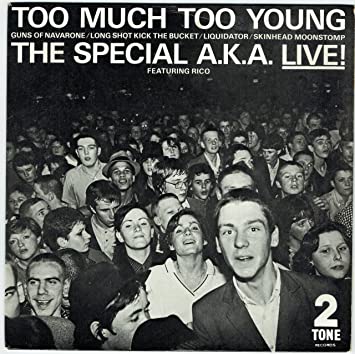
450. ‘Too Much Too Young – The Special A.K.A. Live! EP’, by The Specials

The 1980 ‘statement of intent’ continues… Following on from The Pretenders’ cool and cocky ‘Brass in Pocket’, the decade’s second #1 is some hardcore ska. Live ska.

Too Much Too Young – The Special A.K.A. Live! (EP), by The Specials (their 1st of two #1s)

2 weeks, 27th January – 10th February 1980

Too much too young! the band announce, to a drum-roll. You done too much too young, You’re married with a kid when you could be havin’ fun with me… The drums and organs skip and thump – ska is basically reggae on speed – as Terry Hall spits out the lyrics. Ain’t it cool, No it ain’t, He’s just another burden on the welfare state… I mean, it puts a different spin on rock music not being child-friendly

Musically this is ska, or two-tone, but really this is as punk as things have gotten at the top of the charts. Hall sneers at the girl who went and got pregnant… Ain’t you heard of contraception…? and lists all the reasons why getting married and having a kid was a terrible idea (number one being that she won’t come get jiggy with him). The ferocious guitar solo is also as raw and gritty as we’ve heard in a chart-topper for a long old while. As great as the disco/electro years have been, it has all been bit glossy. There’s nothing glossy about this nasty little record. (The album version is slightly slower, and longer; but there’s a lot to be said for the rawness that comes across live.)

The best bit comes at the abrupt end – this is a record that barely makes it over the two minute mark – with possibly the finest closing line to any #1 single: Try wearing a cap! Unsurprisingly, the BBC would not play this bit. We’re only two number ones into this bold new decade and we’ve already had aggressive references to contraceptives.  

While ‘Too Much Too Young’ was the hit, this is an EP – only the second ever to top the charts – and so we should give the rest of it a quick listen. The second track on side-‘A’ is an instrumental, ‘Guns of Navarone’. It’s a cover of a 1961 hit by the Skatalites – great band name alert! – which was in turn a cover of a film score. It’s another short, sharp blast of ska, with some unintelligible (to me at least) scatting from Neville Staple. The lead trombone on the song is played by Rico Rodriguez – a near fifty-year-old ska veteran, and not a full-time member of the band.

The flip-side is where my patience with ska wears thin. It’s fine in small doses – I think ‘Too Much Too Young’ is a wonderful kick up the arse – but stretched into a seven-minute, three-part ‘Skinhead Symphony’, the relentlessness of the genre starts to grate. You don’t get any downtime. The final part is the best, a full on wig-out called ‘Skinhead Moonstomp’. The band yeah-yeah-yeahs, as Staple calls on all the rude boys and rude girls to stomp their boots to an ever quickening beat.

Phew! Away from the music, this is an interesting record. TMTY is very short – the shortest #1 of the entire decade and the shortest since ‘It’s Not Unusual’ in 1965. It’s also… I think… only the 4th #1 single to have been recorded live, after ‘My Old Man’s a Dustman’, ‘The Wonder of You’, and ‘My Ding-a-Ling’ (though I’m sure I’ve forgotten one, or two.) Interestingly, half of this disc was recorded in London, and half in Coventry… where Chuck Berry had also recorded his classic (yes, I said classic) hit in 1972. Who knew Coventry was such a hot-bed of live music. Though, to be fair, The Specials were formed in Cov, so that could explain it…

This is a fun, palate-cleanser of a record, that again proves that January is often the most interesting month for chart-toppers. The Specials will be back next year, with their masterpiece. And we’ll be back, in a couple of days, with a recap.

Catch up with everything so far, before the next recap: