850. ‘American Pie’, by Madonna

Just before our next recap, do we have a contender for the Worst Number One award…?

American Pie, by Madonna (her 9th of thirteen #1s)

1 week, from 5th – 12th March 2000

It’s fair to say that Madonna’s version of Don McClean’s ‘American Pie’ is much maligned. I’m guilty for some of this maligning, as I’ve pre-dissed it in earlier posts and comments, despite not having heard it for a quarter of a century. So, question is: is it as bad as everyone seems to think?

No, not at all. If this was the original version of ‘American Pie’, then it might be quite a fairly innocuous entry to the Madonna canon. But it’s not, of course. I think critics are more offended by the idea of this track than the song itself. Madonna? That cone bra wearing, Jesus humping, sex book publishing harpy, daring to cover one of the pillars of rock and roll?? And I’d guess that Madonna was fully aware of this, and that her deciding to cover this classic is an act every bit as provocative as the time she went down on Black Jesus.

At the same time, there’s nothing amazing about this version. It’s as if deciding to record it was bold enough, because Madonna forgot to make it particularly interesting. Sensibly, she doesn’t do the full eight minute version, and she uses McClean’s final verse, which most radio edits of the original skip. Perhaps she was attracted by the reference to the Father, Son, And the Holy Ghost, in keeping with her usual religious schtick.

‘American Pie’ was produced by William Orbit, just like the previous chart-topper from All Saints. This puts ‘American Pie’ in the unenviable position of sounding quiet a lot like its predecessor, but being not as good. All the Orbit swishes and swirls are there, but it ends up sounding like the B-side to ‘Pure Shores’. I’d have like Madge to have gone full, crunching electro – much like her second #1 of the year 2000 – just to truly give the purists a heart attack.

Madonna recorded this cover – and she’s not someone who has recorded very many covers during her career – for the soundtrack to her romcom ‘The Next Best Thing’ (her co-star Rupert Everett cavorts with her in the video, which also acts as an ‘America at the turn of the millennium’ time machine, with firefighters, body builders, blended families and kissing lesbians). It’s becoming something of a trend in the late nineties/early noughties for famous #2 hits make #1 in inferior cover versions. We’ve had ‘A Little Bit More’, and ‘I Have a Dream’. Now this, with a few more to come soon.

Perhaps, though, the final word should go to Don McClean himself, who was whole-hearted in his support for Madonna’s cover. ‘I have received many gifts from God’, he said, ‘but this is the first time I have ever received a gift from a goddess.’ (By ‘gifts’ we can only speculate that he meant ‘royalty cheques’.)

In other news, I recently wrote another guest post for Keith’s Nostalgic Italian blog, about books from our childhood. Check it out here.

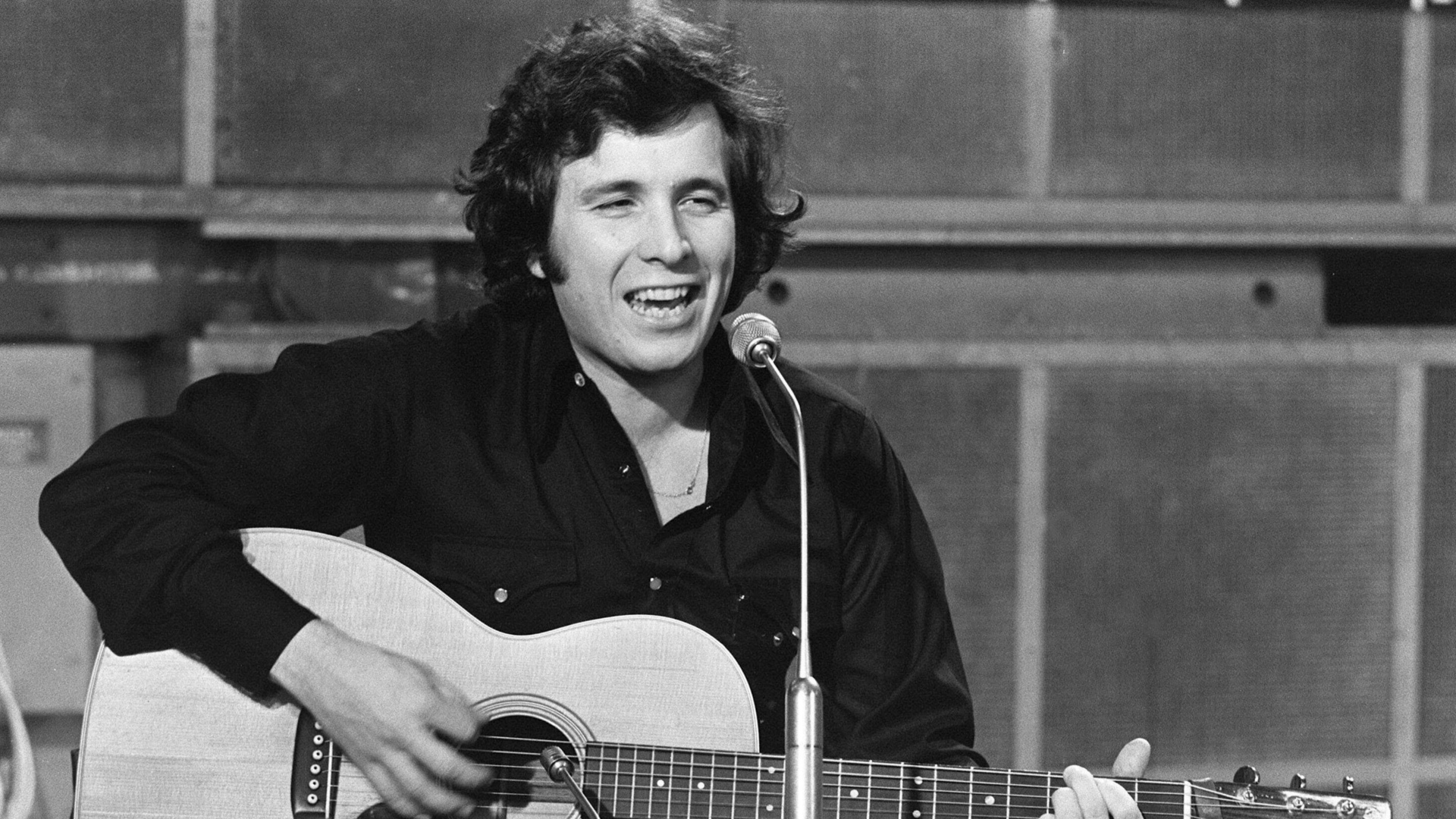
Random Runners-Up: ‘American Pie’, by Don McLean

It’s that time of year, when I fire up my random date generator (random.org, for all your randomly generated needs) and choose some number two singles from across the ages.

In the main Number Ones blog we’ve reached mid-1993, and so the runners-up I picked could have come from any chart dated between then, and the very first in November 1952. I’m not choosing these hits because I like them, or dislike them… I may not have even heard of them. It’s all random. And yet, the first #2 that pops up just happens to be one of the most famous of all time…

‘American Pie’, by Don McLean

#2 for 3 weeks, from 27th Feb to 18th March 1972, behind ‘Son of My Father’ and ‘Without You’

On the one hand, great that this classic gets a post. It’s a #1 on every metric – cultural heft, recognisability, singalongability – except the one metric that matters when it comes to getting a #1: sales. On the other hand… What’s left for little old me to write about this colossus?

Thirteen-year-old Don McLean was doing his paper round, or so the story goes, in February 1959, when he read the news of the plane crash that killed Buddy Holly, Richie Valens and the Big Bopper (and their pilot) AKA ‘The Day the Music Died’. February made me shiver, With every paper I’d deliver…

The song then goes on to detail the history of rock music from the late fifties to the early seventies, with cryptic references to Elvis, Dylan, the Beatles, the Stones and more, as well as nods to the big news events of the age: the Kennedy assasination, the Cuban Missile Crisis, and the Manson family among them. I know this not because I understand the lyrics; I just read the Wikipedia page.

Like all great poetry, it could mean all the above, or it could mean something completely different. When asked what it’s all about, McLean famously answered: ‘It means I don’t ever have to work again…’ When talking more seriously, he’s compared it to Impressionism. And of course, his next big single would be about a very famous (post) impressionist… Which would make #1.

At over eight and half minutes long, ‘American Pie’ initially had to be split over two sides of a 45′ record, which means people (including me) are much more familiar with the first four minutes than the latter four. In fact, listening to the pub singalong last chorus now, I’m not sure I’d ever heard it before. It is the sixth longest record to chart in the US, and held the record for the longest ever Billboard #1 until 2021.

Before I end this post, I have to give an advance trigger warning. ‘American Pie’ may not have made #1 in its original form, but a version by a certain Queen of Pop will make the top of the charts in the early 2000s. I’m someone who will defend Madonna until the cows come home, but even I might struggle to justify that particular musical decision…

460. ‘Crying’, by Don McLean

Hot on the heels of ‘Suicide Is Painless’, we are crying, crying, crying… A depressing double-whammy at the top of the charts…

Crying, by Don McLean (his 2nd and final #1) 

3 weeks, 15th June – 6th July 1980

‘Crying’ was, of course, originally recorded by Roy Orbison. As I do every time I approach a cover of a famous hit, I try to blank out any knowledge of the original. Which is always hard, but especially so when said original was by The Big ‘O’. Don McLean takes what was already a ballad, and slows it down further. We are moving at treacle pace here.

I was alright, For a while, I could smile, For a while… It’s a classic Orbison theme: hiding your heartbreak behind your dark glasses. But when I saw you last night, You held my hand so tight… And it’s effective, as we’ve all been there – watching as a former crush moves on. And though you wished me well, You couldn’t tell, That I’d been crying… 

My biggest problem with this take – and let’s just have it out and admit that this isn’t a patch on the original – is that all the melodrama has been stripped out. Roy had a latin beat, strings and a marimba… You could samba as you cried. Don goes for a much more straight-forward, country version, and suddenly the lyrics sound trite and basic. The music plods as you wait for it to reach the climax.

Another sizeable problem is that for all Don McLean’s skills as a singer, he isn’t Roy Orbison. The climax here is the word ‘crying’ repeated over and over. Orbison rattles the roof with it, as he does on all his big heartbreak bangers: ‘Running Scared’, ‘It’s Over’ and the like. McLean can’t, and his voice ends up sounding reedy. That’s not to say he can’t put emotion into his songs. I find his previous #1, ‘Vincent’, heartfelt and heartbreakingly sad. Here, though, he over reaches, and his Cry-y-y-ying sounds… like Miss Piggy?

It’s still a pleasant melody, and I am enjoying it to some extent, but it’s a bit of a wet-blanket of a song. And yet another country chart-topper that I can’t quite get behind. At least, quickly scanning down my list, it looks like the last one for a while… This was also Don McLean’s last hit in the UK (he had barely charted since ‘Vincent’ either) until a re-release of ‘American Pie’ in the early ‘90s. He remains active, though, and released his 22nd studio album just last year.

314. ‘Vincent’, by Don McLean

From the glorious, life-affirming swagger of ‘Metal Guru’… to one of the saddest #1 singles ever recorded.

mclean-american-pie-getty--735x413

Vincent, by Don McLean (his 1st of two #1s)

2 weeks, from 11th – 25th June 1972

The ‘Vincent’ in question is the Dutch artist Vincent Van Gogh, who lived and painted in the late 19th century, to little recognition and with failing mental health until severe poverty and depression led to him shooting himself. Not the cheeriest of topics to start with, even before we get to the song itself, and certainly not the usual territory of pop singles.

It’s also one of the most articulate and descriptive chart-topping singles yet. Don McLean takes Van Gogh’s most famous works and turns them into lyrics: Starry, starry night, Paint your palette blue and grey, Look out on a summer’s day, With eyes that know the darkness in my soul…

It’s just a voice, an acoustic guitar, and some light, light backing touches. The gist of the song is that the singer sympathises with Vincent, that he recognises something of himself in the artist’s struggle (this was written before McLean hit the big time with ‘American Pie’), and that perhaps Vincent was the sane one after all. If people know one thing about Vincent Van Gogh, it’s that he cut off his ear and sent it to his brother. But that’s not all that he was. Now I understand, What you tried to say to me, And how you suffered for your sanity… It works also in the voice of Van Gogh’s brother, Theo, who was entwined in Vincent’s life, and who suffered equally under his brother’s illness. It’s strong stuff.

I love the idea that Van Gogh was too pure, too good for this ordinary world. It comes to a height midway through, as McLean describes the day Van Gogh committed suicide: For they could not love you, But still your love was true, And when no hope was left inside on that starry, starry night, You took your life as lovers often do… Some artistic license there, as he shot himself in a wheat field during the day, but it’s a powerful image – that he could have died on a night like the one in his most famous painting. But I could have told you Vincent, That this world was never built for one as beautiful as you… There’s also an urban legend that ‘Vincent’ was played to rapper Tupac on his death-bed, after he had suffered the same fate as Van Gogh. It was, apparently, his favourite song.

R-1456931-1342348675-5628.jpeg

It ends on a gut-punch. Each previous verse has ended on the hope that: They did not listen, They did not know how… Perhaps they’ll listen now…. On the final note, however, this changes to: They were not listening, They’re not listening still, Perhaps they never will… The idiots will always outnumber us. We’re all doomed…

Acoustic singer-songwriter type music is far from being my favourite genre. It’s all too easy to sound clever and profound as long as you sing softly enough and don’t plug your guitar in. Especially in the past few years, every male solo artist to hit the charts seems to have a beard, a beanie hat and observations to make. (I blame Ed Sheeran, personally, but then I’d happily blame all the world’s problems on Sheeran.) However, when a song is written and performed as beautifully as this, with a genuine message and genuine emotion, it’s very powerful. Don McLean had made his name just a few months before with ‘American Pie’, another song built around the death of a cultural icon. You have to wonder if ‘Vincent’ would have been such a big hit had ‘American Pie’ not come along first (it had reached #2 in the UK), especially as this sounds so out of place in a chart dominated by glam and bubblegum, though you’d hope it would have.

Last winter, in those final, blissful pre-coronavirus days, I visited the Van Gogh Museum in Amsterdam. If you have the chance to go one day, do! It displays his pictures in chronological order, and gives the background to his circumstances and mental state at the time of painting. When you get to the end, and see his very last works, it’s genuinely affecting. Maybe this song wouldn’t be hitting me so hard, had I not been there? Who knows. Under the museum is buried a time-capsule containing Vincent’s paintbrushes, and the sheet music to this song. Tens of thousands walk above it every year, to see the work of a once-ignored painter. People did listen, eventually.