Today’s Top 10 – December 31st, 1999

For my final post of the year, let’s go back twenty-six years. Back to the final day of the 20th century. The Millennium. I was thirteen and remember it well: the day long coverage on TV, the fireworks, the fear that society might collapse at midnight, that I got to drink sparkling wine…
But, did the final UK singles chart do justice to the millennium just past? Did it manage to sum up the sounds of a century? Did we go out with a bang? Well….

10. ‘Back in My Life’, by Alice Deejay (up 1 / 5 weeks on chart)

The record at #10 on this week sets the scene beautifully. This was the sound of the late nineties: a Dutch Eurodance ‘project’ with some basic beats, basic lyrics, and a basic ‘dancing in front of a waterfall’ video. It’s ‘basically’ a slightly harder-edged Vengaboys. This was the follow-up to Alice Deejay’s better (and better known) breakthrough #2 ‘Better Off Alone’, and had been as high as #4 in the charts in early December.

9. ‘Kiss (When the Sun Don’t Shine)’, by Vengaboys (up 1 / 3 weeks on chart)

Oops. Like summoning an evil spirit by the mere mention of its name, here are the Vengaboys. Following up their two 1999 #1s, ‘Kiss (When the Sun Don’t Shine)’ had made #3 a couple of weeks before this. It is a little less in one’s face compared to, say, ‘Boom Boom Boom Boom’. Which is maybe why it didn’t do as well… Or maybe Vengaboys fatigue had set in? In earlier posts, I posited a theory that disposable tripe like this was so succesful at the turn of the millennium because we were all worried that the world would end, and just wanted to party. The first two records in this Top 10 do seem to give my theory some credence…

8. ‘Say You’ll Be Mine’ / ‘Better the Devil You Know’, by Steps (down 1 / 2 weeks on chart)

No turn of the millennium chart would be complete without some Steps, an ever-present between ’97 and 2001. ‘Say You’ll Be Mine’ is a pleasant pop tune, but it’s nobody’s favourite Steps song. The video is a nice time-capsule of late nineties movie parodies: ‘Romeo + Juliet’, ‘Titanic’, ‘Austin Powers’, and a fairly daring recreation of the ‘hairgel’ scene from ‘There’s Something About Mary’.

Steps did love a double-‘A’, and on the other side of the disc was this camp cover of a Kylie classic. The devil horns and long red coats are, I’m just going to say it, iconic. They do not outdo Kylie’s version, but they stick so close to it that they can’t really go wrong. This record entered at a fairly lowly (by Steps’ standards) #7 in Christmas week, but would climb to #4 in the new year to keep up an unbroken run of Top 5 hits for the group.

7. ‘Cognoscenti Vs. Intelligentsia’, by the Cuban Boys (down 3 / 2 weeks on chart)

Right. Y2K might not have brought about the end of the world, but two minutes into this next record you will perhaps begin wishing for it. There’s a lot to unpack here. It’s based around a sped-up, soundalike sample of Roger Miller’s ‘Whistle Stop’, AKA the minstrel’s tune from Disney’s ‘Robin Hood’. It had been the soundtrack to one of the earliest internet memes, ‘The Hampster Dance’, and there was a copyright controversy which delayed the release date. It had been promoted on, of all places, John Peel’s Radio 1 show, and had been at #4 for Xmas. And in some ways this is perfect for our dawn of the 21st Century Top 10: striking, modern, rooted in internet culture, completely and utterly banal…

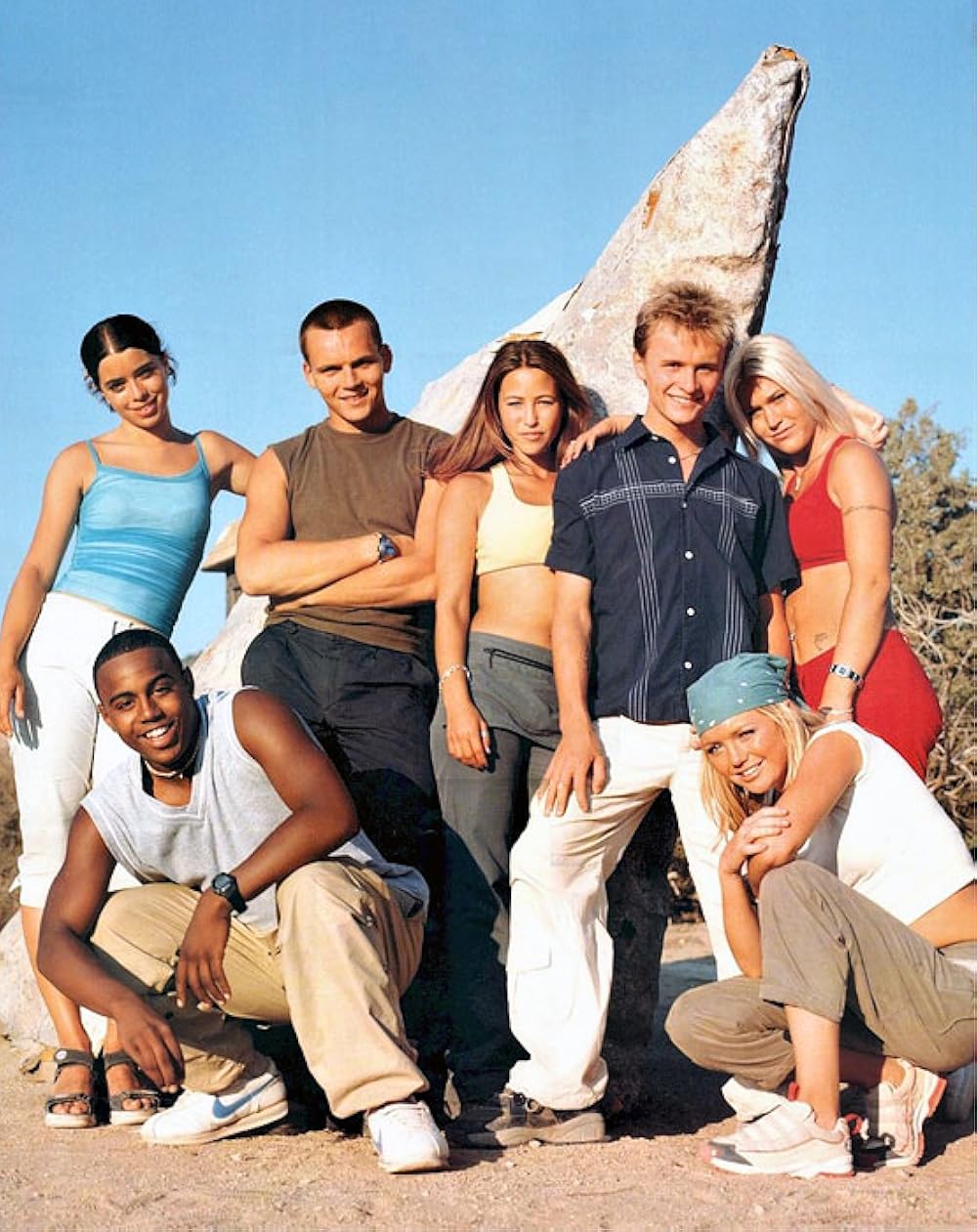
6. ‘Two in a Million’ / ‘You’re My Number One’, by S Club 7 (down 1 / 2 weeks on chart)

We’ve had Steps, let’s have S Club. ‘Two in a Million’ isn’t one of their classics, and I struggled to remember it even after the chorus came along. It’s a nice enough slice of medium-tempo soul pop, but let’s skip forward to the flip-side…

…because this sort of breezy, Motown-lite pop is what S Club excelled at. ‘You’re My Number One’ was like a warm-up for their massive smash ‘Reach’ the following summer, but I’m enjoying it more today because it hasn’t been overdone. And I’m not one for nostalgia, but by God that video – with it’s crap choreo, its tomfoolery, its outfits – is so of its time it hurts. This double-A would rocket up to #2 in the new year, keeping S Club’s 100% Top 5 record intact.

5. ‘Re-Rewind (The Crowd Say Bo Selecta)’, by Artful Dodger ft. Craig David (up 1 / 4 weeks on chart)

Peaking at #2 before and after the festive period, though slumping temporarily on this week’s chart, here is the sound of the new millennium. Those staccato 2-step garage beats would go on to be one of the sounds of 2000-2001, while seventeen-year-old Craig David would be the first big breakout star of the 21st century, scoring two #1s in the coming months. I wouldn’t say I love this as a piece of music, but as a scene setter few songs take you back to the turn of the millennium as effectively as this.

4. ‘Mr. Hankey the Christmas Poo’, by Mr. Hankey (up 4 / 2 weeks on chart)

Clearly released with the Christmas number one in mind, here’s a cartoon character which Wikipedia nicely sums up as a ‘sentient piece of feces’. Mr. Hankey, the Christmas Poo had featured in a South Park episode way back in 1997, but a combination of the series taking off a little later in Britain, plus Chef’s success the year before, led to this release in late 1999. Mr Hankey, The Christmas Poo, He’s small and brown and comes from you… It has the sound of a classic fifties festive tune-slash-television theme and did, I will confess, raise a smile on these unwilling lips. It is not a patch on ‘Chocolate Salty Balls’ however, and was nowhere near as succesful. (Though it would obviously have been somewhat satisfying if this had peaked at number two…)

3. ‘Imagine’, by John Lennon (non-mover / 2 weeks on chart)

Many will be holding their heads in their hands at the thought of ‘Mr. Hankey the Christmas Poo’ rubbing shoulders with ‘Imagine’. But I like to see this juxtaposition as the magic of the charts… Anyway, we all know ‘Imagine’, and would all probably be happy never hearing ‘Imagine’ again, despite it being a beautiful song. It had been re-released ahead of the new year, presumably with the aim of making it the millennium’s final #1. It fell a couple of places short, but this did mark the third occasion on which it had made the Top 10.

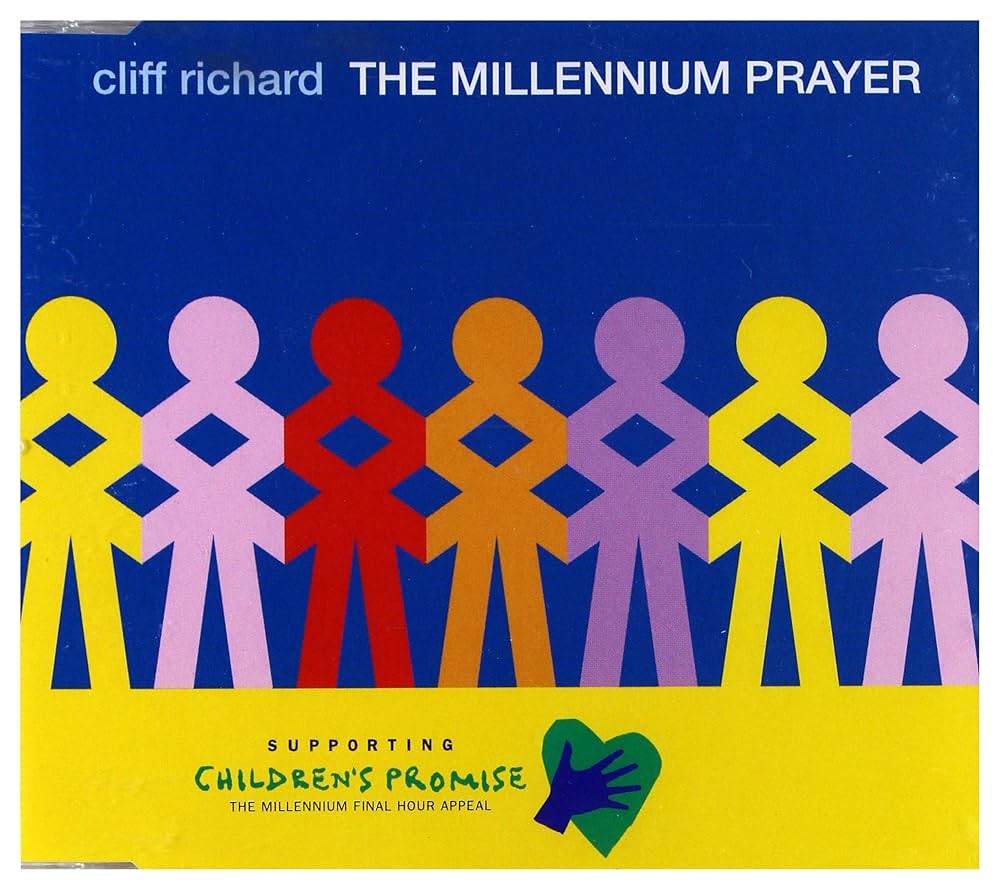
2. ‘The Millennium Prayer’, by Cliff Richard (non-mover / 6 weeks on chart)

This weird Top 10 sees arguably Britain’s two biggest pop acts represented in the Top 3, with Cliff joining a Beatle as the century drew to an end. It also sees one of the worst Top 2s of all time. I wrote all about Cliff’s final number one here, and have no wish to revisit it….

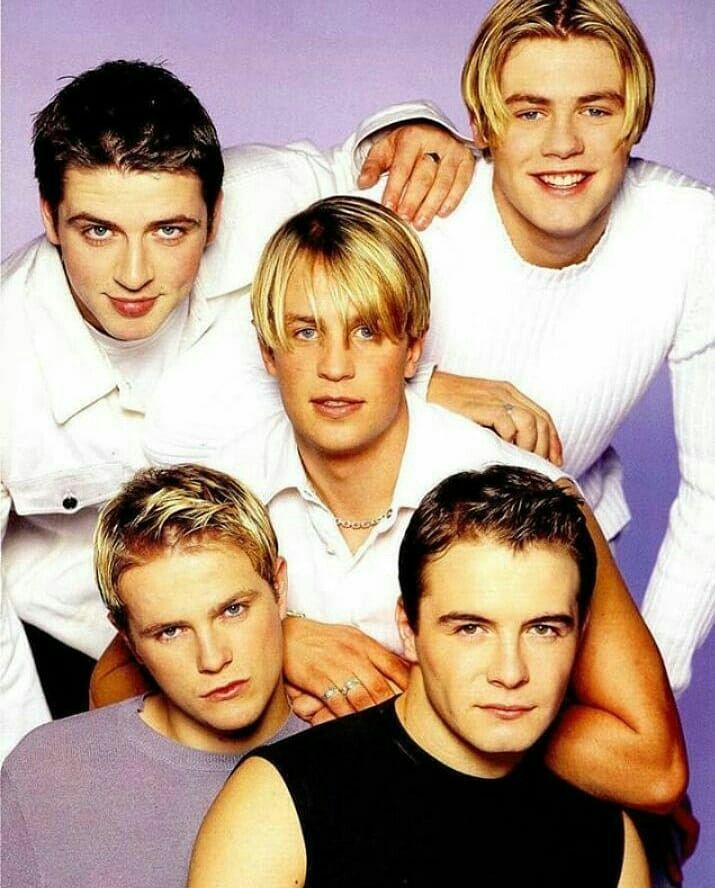
1. ‘I Have a Dream’ / ‘Seasons in the Sun’, by Westlife (non-mover / 2 weeks on chart)

Ditto the record that was at number one, Westlife’s fourth of their breakout year and the previous week’s Christmas chart-topper. I have tried to be as kind as possible about some of Westlife’s many #1s, and have enjoyed a couple, but this double-‘A’ is as syrupy, saccharine, and cynical as you can get. Read my full post on it here, and discover why I named it as one of my very worst number ones here.

What strikes me about this chart is how normal it is, considering the looming spectre of Y2K. I thought that would have been more of a theme in this Top 10 but, aside from Cliff and John Lennon, it’s mainly just a routine run-down of Eurodance, disposable pop and Christmas novelties. It’s refreshing , however, to see a festive chart that isn’t just a replica of the Spotify ‘Christmas Hits’ playlist, as the modern charts now are.

Our regular blog will resume early next week, where we left it in December 2002. I hope everyone has a great new year, and that 2026 is full of health, wealth and happiness… and great music!

843. ‘The Millennium Prayer’, by Cliff Richard

And so, after forty and a half years, Britain’s most decorated chart artist bows out from chart-topping duty, with his sixty-fourth Top 10 hit, and fourteenth number one.

The Millennium Prayer, by Cliff Richard (his 14th and final #1)

3 weeks, from 28th November – 19th December 1999

In some ways it’s tragic that Cliff ends in this way, as he has been responsible for some great hits, and was arguably the nation’s first real homegrown rock star. But in other ways, it’s entirely fitting and predictable for Cliff, an artist who had long since given up caring about such concepts as relevance, and quality control, to leave us with ‘The Millennium Prayer’.

It’s a simple enough idea: the Lord’s Prayer set to the tune of ‘Auld Lang Syne’. A prayer for the new millennium, twinned with a world-famous new year’s melody. ‘Auld Lang Syne’ is a lovely tune, heartwarming and yet melancholy, and so on one level there is something bearable about this record. The production is fairly minimal, though very dated by 1999’s standards, with a marching drumbeat and a trumpet solo in the middle. There is, naturally, a gospel choir brought in towards the end.

What makes it less bearable are Cliff’s ad-libs, decorated with assorted vocal gymnastics that are, I suppose, impressive for a man approaching sixty. What makes this near-nauseating is the video, a live performance in which Cliff goes into full Messiah-mode, prancing around, arms stretched, surrounded by a children’s choir.

I’m a fairly irreligious person, and I’m being careful not to let my opinions on organised religion cloud my judgement of this song’s merits. But I’m hopeful that even the most committed Christians, who may agree with the song’s sentiments (and lovely sentiments they are, too), can recognise that this record is garbage. It makes Cliff’s two previous festive chart-toppers, ‘Mistletoe and Wine’ and ‘Saviour’s Day’, sound like masterpieces of subtlety and restraint.

In fact, can I just take a moment to rant against the concept of Christian rock in general? Christianity has centuries’ worth of hymns, psalms, carols… Plus, the entire gospel canon. Gospel music, sung by a choir, can be wonderfully moving, even for a heathen like me. But there’s something fundamentally wrong with Christian contemporary rock music, such a disconnect between the rock ‘n’ roll beat, the guitars, the long hair – the entire raison d’etre of rock and roll – and the churchy message. I have a sneaking suspicion that God, whoever they may be, really, really hates Christian rock. (Although having said all that, ‘The Millennium Prayer’ is almost entirely saved in my estimations by the fact that Jesus himself received a writing credit!)

My mum was one of the hundreds of thousands who bought ‘The Millennium Prayer’, making it both the year’s third highest seller, and the third biggest hit of Cliff’s entire career. I remember it sitting in our CD tower at home for years, but I never remember her playing it. I suspect this was the case for most of the copies sold. Christians around the country mobilised en masse to buy the record, probably multiple times, especially after it had been refused airplay by most (sensibly-minded) radio stations. Nowadays it’s a festive tradition for the charts to be stuffed with protest songs around Christmas: songs bought, downloaded, or streamed as a statement, not because anyone particularly likes the music. Was ‘The Millennium Prayer’ the first modern protest number one?

I billed this as Cliff’s farewell, and while he has no further number ones to come (he currently sits in joint-third position in the ‘most number ones’ table, behind only Elvis and The Beatles), he is still very much active and recording well into his eighties. The 2000s brought him four more Top 10s, while his most recent album, ‘Cliff with Strings’, made #5 just over a year ago. Despite his many musical mis-steps, the man is a living legend. (While anyone who claims that ‘We Don’t Talk Anymore’ isn’t his best number one is just plain wrong.)

Of course, Cliff was aiming for his third Christmas #1, and presumably the final #1 of the century, with this modern day hymn. He didn’t quite make it though, as he was held off by a record that we may discover to be every bit as irredeemable as ‘The Millennium Prayer’…

Today’s Top 10 – November 26th, 1963

The two earlier ‘Today’s Top 10’s I’ve done were pretty succesful. Thanks to all who had a look, liked and commented. I was wondering what to do with the feature going forward, and I think I’ll use it to take a deeper look at interesting periods in chart history. What can the Top 10 tell us about where pop music was at a particular time and place?

So, we’ve done the death of the ’60s, and we’ve done the Summer of Love. Now we turn to perhaps one of the most exciting times in modern popular music: late-1963. The moment when the sixties finally started to swing. Thanks, mainly, to the Beatles. But not, as this chart will hopefully prove, solely because of them. For those interested in significant world events, this was also the Top 10 on the week that JFK was assassinated.

10. Let It Rock / Memphis, Tennessee, by Chuck Berry – down 4 (7 weeks on chart)

But what’s this…? Two rock ‘n’ roll tunes first released in 1959. How the charts like to mess with us… The reason is tied to the times, though. The Godfathers of rock, Buddy Holly, Jerry Lee Lewis, and Chuck Berry, had inspired the new Beat groups that we’ll be meeting further up this chart. The Beatles early albums were full of Berry songs, while the Stones’ first hit had been a cover of ‘Come On’ earlier in 1963. Pye Records saw an opportunity, and released some of these influential tunes for the first time in the UK. Amazingly, this was Berry’s first ever visit to the UK Top 10. A runaway train might not be the most obvious topic for a rock ‘n’ roll tune, but this wasn’t Berry’s first time singing about a railroad. And the way he makes his guitar sound like a train horn is iconic.

It was paired with the more laidback ‘Memphis, Tennessee’, which had also been a hit in a version by Dave Berry & the Cruisers around the same time. It pulls the same trick as such classics as Gilbert O’ Sullivan’s ‘Clair’, and Brotherhood of Man’s ‘Save Your Kisses for Me’, by tricking the listener into thinking that the singer is singing about a girlfriend, when he is actually singing about a small child. Berry, though, consumate storyteller that he was, manages to do it in a far less creepy manner, making the song more about the messy break-up, and the father’s regret, than about dodgy double entendres.

9. I’ll Keep You Satisfied, by Billy J. Kramer & The Dakotas – up 2 (3 weeks on chart)

This one’s much more 1963. One of the big beat combos that had broken through earlier in the year (with another three to come higher up), and who had been at #1 just a few weeks earlier with the Lennon-McCartney tune ‘Bad to Me’. ‘I’ll Keep You Satisfied’ is another L&M composition and, while it would peak decently at #4, it isn’t quite as good. Still, it’s better than the Dakota’s next hit, the dubious ‘Little Children’. Watching the video above, the music may be (slightly) rocking, but Billy J. is giving good crooner energy. Nothing to worry grandma… yet.

8. I (Who Have Nothing), by Shirley Bassey – up 1 (9 weeks on chart)

A constant presence on the charts of the ’50s and ’60s: a bit of Bassey. This is three minutes of pure melodrama, as Shirley watches an old-flame woo his new girl. ‘I (Who Have Nothing)’ was adapted from an Italian hit, which was something of a theme in the early sixties. It’s a classic of its genre: an intro of swirling strings, quiet bits, and bits where she lets loose, belting out high notes like nobody else can. I always find Shirley Bassey somewhat lacking in subtlety, but then again – if you’ve got it flaunt it. If I could sing like her then I’d be belting out my Starbucks orders.

7. Blue Bayou / Mean Woman Blues, by Roy Orbison – down 3 (10 weeks on chart)

Another double-‘A’ side from an American rocker, who had been around since the ’50s. Unlike the Chuck Berry record, though, this was a new hit. ‘Blue Bayou’ is one of Orbison’s gentler numbers – for the Big ‘O’ could of course give Shirley Bassey a run for her money in the belting stakes – but it’s always been one of my favourites. Even as a young ‘un who had no idea what the hell a ‘bayou’ was. Linda Rondstadt recorded a famous cover in 1977, though that didn’t make the UK Top 10.

On the flipside of this disc was a cover of ‘Mean Woman Blues’, an Elvis track from 1957. Personally, while they are both fine singers, I prefer Elvis’s version. I prefer bombastic, overblown Orbison to rocking Orbison. On this record he tries out the famous Grrrrrr, which he’d use to great effect on his chart-topping ‘Oh, Pretty Woman’ the following year.

6. Secret Love, by Kathy Kirby – up 6 (3 weeks on chart)

We’re keeping an eye out for the bands that came along in 1963 and changed popular music forever. But for every beat combo that made it big, there were plenty of British women who were just as instrumental in making the sixties swing. Kathy Kirby’s name hasn’t lasted alongside the likes of Cilla, Dusty, Lulu or Sandie Shaw, but here she is, enjoying her biggest hit. Her take on ‘Secret Love’ starts off very bombastically, much like Doris Day’s chart-topping original from a decade earlier, but soon a groovy guitars-and-backing-singers beat takes over, nicely updating the song for a new era. Plus, she has a great voice, with a bit of bite to it. Kirby may have retired from showbusiness in the early eighties and died in relative obscurity, but for a while she was a huge name: representing the UK at Eurovision in 1965 (finishing as runner-up) and hosting her own television programme.

5. Don’t Talk to Him, by Cliff Richard & The Shadows – up 2 (3 weeks on chart)

Common knowledge would have it that with the arrival of the Beatles et al the career of Cliff Richard – the hottest star in the land just a year or so earlier – fell off a, well, cliff. But glance at any Top 40 from any random moment post-1962, and it quickly becomes clear that Cliff went nowhere. Okay, he didn’t hit #1 as regularly, but ‘Don’t Talk to Him’ was one of an astounding 33 Top 10 hits he achieved across the sixties. I’d never heard this before, but it’s actually a really good song, combining a latin rhythm with some very current, beat guitars. This could easily have been written and recorded by one of the acts a couple of places up this chart, proving that Cliff gave those young whippersnappers a stronger run for their money than the history books suggest. *Some sources disagree as to whether this was Cliff solo, or Cliff with the Shadows, but I’ve gone with the latter*

4. Be My Baby, by the Ronettes – up 1 (6 weeks on chart)

The first of two all-time great, hall of fame pop songs in this week’s Top 4. The fact that this never made it higher than number four is a shock, and I’ve already done a post on how this really Should Have Been a #1. Even on this chart, in the year that it was recorded, where girl groups like the Ronettes were common, ‘Be My Baby’ stands out as special. It would stand out as special on any chart, in any era, simply because it is better than 99.95% of anything else in the history of pop.

3. Sugar and Spice, by the Searchers – down 1 (5 weeks on chart)

Here we are then, a purely Liverpudlian Top 3. The Searchers had been the 3rd Merseybeat band to make number one that year, after the two acts ahead of them in this chart, with their cover of The Drifters’ ‘Sweets for My Sweet’. Although still on the candy theme, ‘Sugar and Spice’ was an original, written by producer Tony Hatch. The chiming guitars and harmonies, as well the almost skiffle rhythm section, are pleasant, almost proto jangle-pop. But within a year, once the Stones, Kinks and Animals started making the upper reaches of the charts, it would start to sound a bit safe. The Searchers had two much better hits to come: their majestic second #1 ‘Needles and Pins’, and their cover of ‘When You Walk in the Room’. Like so many Beat bands that didn’t, or couldn’t, write their own material, the Searchers’ chart shelf-life was limited.

2. She Loves You, by The Beatles – up 1 (13 weeks on chart)

The song that officially kicked off the swinging sixties? The way that ‘She Loves You’ barrels in, chorus-first, on a wave of tight guitars and precision drumming, and yeah yeah yeahs. In France, this style of Beat music literally became known as ‘Yé-yé’ (and surely everyone knows by now how Mr McCartney Senior thought ‘yes, yes, yes’ would have sounded much more proper…) It is utterly perfect pop, to rank alongside the Ronettes a couple of places below it on this week’s chart. Although they developed their sound so far beyond this, I would still rank ‘She Loves You’ in my personal Beatles Top 3. You can read my original post on it, as a number one, here. On this week in November 1963, it was on its way back to number one, having already spent a month there that autumn, and on its way to becoming the biggest-selling single ever, at that point, in the UK (where it remains the Fab Four’s highest seller). Also, the seven-week gap between its two runs at the top remains a record to this day.

1. You’ll Never Walk Alone, by Gerry & the Pacemakers – non-mover (7 weeks on chart)

The 4th Beat group in the Top 10 on this day sixty-one years ago, Gerry & the Pacemakers had made history by being the first act to make #1 with their first three singles. This was the final week of a month-long run for ‘You’ll Never Walk Alone’, and it would also be The Pacemakers final week on top of the charts. (You can read my original post on it here.) The fact that for only their 3rd single the band had turned to a cover of a song from a 1945 musical is telling. While the Beatles were just warming up, their contemporaries were often relying on covers (or on handouts from Lennon & McCartney). Plus there was the fact that for record labels and producers, rock and roll was still a very new thing, one that many were convinced wouldn’t last. It was seen as essential for bands to branch out, and to nurture a wider appeal.

Of course we know now that rock ‘n’ roll was here to stay, even if Gerry & The Pacemakers weren’t. ‘You’ll Never Walk Alone’ was also here to stay, and by the end of its initial chart run it had already been adopted by the crowd at Anfield as Liverpool FC’s unofficial anthem, to be belted out pre-match from here to eternity. The song returned to number one in a charity version by The Crowd, following the Bradford City fire, while it also made top spot for a third time in 2020 in a version featuring Michael Ball and the 100-year-old Captain Tom Moore, a phenomenon that can only be explained by how crazy we all went during lockdown. It is nothing short of a modern-day hymn, given the song’s role in the current British psyche.

I hope you enjoyed this flashback to Today’s Top 10 in 1963. What a snapshot of popular music that was, as Britain finally cast off the shadow of the War and started to get a little groovy. Up next we’ll return to 1999, and to a country just a few months away from the terrifying uncertainty of a new millenium. Would all the computers crash? Would planes start dropping from the sky…? Nobody knew, so confused and distracted were people that they kept buying Ronan Keating records in large quantities. Stress will do that to you…

#1s poll! Choose your best (and worst) Christmas Number Ones…

It’s the most wonderful time of the year, at least according to Andy Williams, which means stockings above the fireplace, geese getting fat, goodwill to all… And the annual race for Christmas Number One.

By now it’s certainly a British tradition, and the one time of the year that the singles chart is guaranteed to make the news, but most people would say that the honour of being the nation’s biggest-selling song on December 25th has lost a lot of its lustre. I’d agree. In fact, I’d say that we’ve already covered the heyday of the Christmas Number One in my regular blog… The most recent festive #1 was 1994’s: East 17’s ‘Stay Another Day’, a classic that I’ve just named one of the Very Best. From here on its a slippery slope, past The Spice Girls, endless X-Factor winners, countless charity singles, to the very bottom of the barrel, and the dreaded LadBaby.

Now it’s time for you to decide: what is the greatest Xmas #1? And, perhaps more importantly, what is the worst?? See below two polls, in which you can choose as many or as few songs as you like, for both honours.

Perhaps controversially, I’ve not listed every Xmas #1 since 1952. Until the early seventies, the idea of a ‘Christmas Number One’ wasn’t particularly relevant, so the only pre-1973 hits I’ve included in the vote are specifically Chistmassy, or novelty songs that probably wouldn’t have made #1 at any other time of year (so, sorry, no Beatles…) Even post-1973, I’ve excluded pop songs that just happened to be #1 at Christmas (so no Human League, or Pet Shop Boys). However, there is space at the bottom for you to nominate any Xmas #1 you think I’ve unfairly missed off the list. You may, for example, feel very strongly that ‘Two Little Boys’ deserves the title…

Here’s the poll for the best…

And the worst…

I’ll announce the results on Christmas Eve, so you have until then to cast your votes. Have at it!

655. ‘Saviour’s Day’, by Cliff Richard

Appearing on a 3rd Xmas #1 in a row, and going full in on the nu-folk sound of the time: the one, the only, Sir Clifford of Richard.

Saviour’s Day, by Cliff Richard (his 13th of fourteen #1s)

1 week, from 23rd – 30th December 1990

It’s a Christmas tune, and yet it’s not really. No references to decking the halls or Santa Claus here, and not a sleigh bell in sight. I mentioned that, two years ago, despite ‘Mistletoe and Wine’ being unashamedly religious in tone, Cliff still kept the little secular touches that people expect from a festive chart hit. For ‘Saviour’s Day’, though, he’s gone full-on Christian contemporary.

Open your eyes on Saviour’s Day, Don’t look back or turn away… It’s proper judgement day stuff – some hardcore preaching. Life can be yours if you’ll only stay… Songs like this are usually tucked away on a niche Christian chart, so that regular people don’t have to hear them. But, because Cliff is the biggest solo star this island has ever produced (a bold statement, but I’m sticking to it!) he manages to take it to number one.

However actually, by the end, I’m pretty sure he’s toasting several different gods: the God of the Present, the God of the Past… Maybe he was going all Dickensian – rather than for a pagan, Earth-mother sort of vibe – but I’m not sure the Bible allows that kind of blasphemy. Though maybe God himself would think twice before disagreeing with Cliff.

I was expecting to dislike this. And there are certainly aspects of it that I can’t get behind. The lyrics, for a start. The electronic pan-pipes are also an acquired taste, while there are some horrible synth flourishes that make my hair stand on end. Plus, the video is ridiculously cheesy (or is that cheesily ridiculous?), featuring Cliff striking messianic poses on the chalk cliffs of Dorset. And yet, ‘Saviour’s Day’ has a corker of a chorus. And people who know much more about song writing than I do really rate it.

It’s probably better than ‘Mistletoe and Wine’ – though that too has a tacky charm – and it’s certainly better than Cliff’s fourteenth and final number one. (Thankfully we have some way to go before we meet that one.) What’s not up for debate is that this record gave him a chart-topper in every decade that the UK singles chart had been in existence: two in the fifties, seven in the sixties, one in the seventies, two in the eighties, and now one in nineties (plus one to come). It’s a feat that has never been matched, and perhaps never will.

620. ‘Mistletoe and Wine’, by Cliff Richard

I am writing this post on January 25th, possibly the least Christmassy date in the entire calendar. The whole shebang just came and went a month ago, with any right-minded human needing a good long detox from festive music…

Mistletoe and Wine, by Cliff Richard (his 12th of fourteen #1s)

4 weeks, from 4th December 1988 – 1st January 1989

Though, let’s be honest, is there ever a good time for listening to ‘Mistletoe and Wine’? Even if this were Christmas Eve, it’s not a song I’d ever rush to write a glowing blog post about. Yet it crops up, year in, year out: in shops, on music channels, buried away on Christmas playlists.

Cliff is probably Britain’s best-known Christian, well him and the big Archbishop of C, so of course his Christmas songs have to go deeper than just singing about Santa, presents and snow falling all around us. (He does sing about those things in ‘Mistletoe and Wine’, presumably because he still wanted people to buy the record; he just mixes a bit of sermonising in with it.) A time for living, A time for believing, A time for trusting, Not for deceiving… Ours for the taking, Just follow the master… Meanwhile, the way he pronounces ‘Christian’ in the chorus, with that extra vowel, has always gotten on my nerves.

Watching the video for ‘Mistletoe and Wine’, which begins with Sir Cliff peeking into a sleeping child’s bedroom, you could be forgiven for thinking that he himself is the aforementioned ‘master’, not the man upstairs. The way he conducts his carollers, swaying around as if in raptures, arms outstretched in a messianic pose… It’s ridiculous. Not to mention ridiculously camp.

But… There is something cheesily charming buried within, especially the moment it swells towards the final chorus, and a choirboy comes in with snatches of ‘Silent Night’. There’s an ‘all together now’ music hall feel to it. Most Christmas music is ultimately quite naff, and yet we love it. This record is certainly one of the naffest, and yet it is well loved. And to give him his dues, Cliff was several decades ahead of Mariah and Bublé in setting himself up as a Christmas fixture when the regular hits began to dry up.

I think I’ve been pretty fair and open-minded when it came to Cliff’s eleven previous chart-toppers. Some I really enjoyed discovering (‘Please Don’t Tease’) while some are just undeniable milestones of British popular culture, deserving of our respect (‘Summer Holiday’ and ‘Congratulations’). Some I found dull as dishwater (‘The Next Time’) while at least one is a stone-cold classic (‘We Don’t Talk Anymore’).

As late as the early-eighties he was still scoring respectable pop hits, but this feels like the moment he lost his grip. He was, to be fair, almost fifty when it was released, and how many fifty years old pop stars are still able to have big hits? But from here on in, Cliff seems to have been playing to the gallery, giving the middle-aged ladies what they wanted, with no attempt to keep current. This would be a great place to sign off on Cliff, sending him to a well-earned retirement of gospel songs and old rock ‘n’ roll covers. But no… He still has two further festive #1s to come. And by the time we’re done with them, you’ll be begging for ‘Mistletoe and Wine’…

Random Runners-Up: ‘Move It’, by Cliff Richard & The Drifters

Our final #2 of the week, and it’s back to the fifties. To a man we’ve met plenty of times before on these very pages…

‘Move It’, by Cliff Richard & The Drifters

#2 for 1 week, from 24th-31st Oct 1958, behind ‘Stupid Cupid’ / ‘Carolina Moon’

Cliff Richard, in 1958, was Britain’s answer to Elvis. That’s both true, and unfair. True, because he was young, good-looking, and extravagantly quiffed. And unfair, because nobody comes out well from a comparison with Elvis.

This was Cliff’s debut single, his first of sixty-eight (68!) Top 10 hits in the UK, over the course of fifty years. And if you are of a slightly snide disposition – and aren’t we all, sometimes – one could argue that this was the only true rock ‘n’ roll record from Britain’s great rock ‘n’ roll hope.

And it does rock. The opening refrain is great, reminiscent of Buddy Holly, and the purring, driving riff that succeeds it sounds genuinely exciting, almost punk-ish in its simplicity. In the autumn of 1958, it must have been thrilling to hear this growling out of some jukebox speakers, and knowing that the singer was from a London suburb, rather than Memphis.

The lyrics are pretty nonsensical, as all the best rock ‘n’ roll lyrics are… C’mon pretty baby let’s a-move it and a-groove it… while The Drifters sound the equal of any American group. (They wouldn’t become The Shadows until 1959, by which point they had accompanied Cliff on his first of many easy-listening #1s, ‘Living Doll’.)

The one thing that doesn’t quite sell this for me is Cliff himself… He just sounds a bit too nice. And I don’t know if that’s because I can’t seperate the goody-goody, God-bothering, Centre Court-serenading Cliff Richard from the eighteen-year-old version. Still, imagine Elvis mumbling and grunting his way through this…

As I referred to above, Cliff would go on to enjoy some reasonable success over the ensuing decades… I wonder if anyone who bought ‘Move It’ in October 1958 imagined that this hot young rocker would still be touring and recording in 2022, well into his ninth decade… As uncool as he is, I can’t bring myself to dislike Sir Clifford of Richard: he’s a bona-fide pop legend. I can’t say I’m looking forward to reviewing any of his three remaining #1s, though, but that’s a story for another day…

I hope you’ve enjoyed random runners-up week. The regular countdown will resume over the weekend, picking up in the summer of ’86…

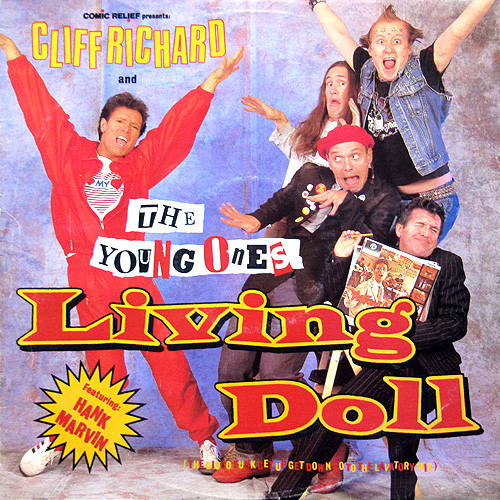
567. ‘Living Doll’, by Cliff Richard & The Young Ones ft. Hank Marvin

The newest addition to our chart-topping roster – the charity record – returns. But it has shapeshifted. Morphed into a form that will terrorise the charts from here until the end of time… The comedy charity record…

Living Doll, by Cliff Richard (his 11th of  fourteen #1s) & the Young Ones ft. Hank Marvin

3 weeks, from 23rd March – 13th April 1986

As with most charity records – which tend to be very rooted in their particular time and place – this needs a bit of explaining. ‘The Young Ones’ was a sitcom, about a group of flat-sharing undergraduate students of Scumbag College: Rick, an anarchist; Vyvyan, a psychopathic metalhead; Neil, a hippie; and Mike, the ‘cool’ one. The show’s theme tune was Cliff Richard & The Shadows’ 1962 #1 ‘The Young Ones’ and Rick, played by Rik Mayall, was a proud Cliff fan, despite his anarchist leanings. In-jokes on top of in-jokes…

This one isn’t on Spotify, which actually ends up being in the record’s favour – it works better as a video. As a song, it’s fairly unlistenable. Cliff does a straight, very soporific cover of his 1959 #1, while the four actors prat about over the top. Meanwhile, Hank Marvin emerges from behind a door to perform the solo.

It is undoubtedly hard to write a song that is as funny as it is catchy. And this is not how you do it… ‘The Young Ones’ is a funny programme, and Cliff is Cliff. But they’ve had to paint their anarchic humour in very broad strokes here. There are funny(ish) bits… At one point Vyvyan calls Cliff ‘Shaky’. And they call out the creepy ‘gonna lock her up in a trunk’ line: I still feel that locking girls in trunks is politically unsound… Well I feel sorry for the elephant… (groan)

It reminds me – and I’m not sure how I even remember this song – of ‘I See the Moon’, The Stargazers’ 1954 chart-topper. That also featured voice actors pratting about – in a very proper, pre-rock ‘n’ roll kind of way – over a well-known tune. It also reminds me of just about every other ‘comedy’ record to come: ‘Spirit in the Sky’, ‘Islands in the Stream’, ‘500 Miles’ will all be subjected to the same treatment in the years to come, and that’s just off the top of my head.

This was recorded for the very first Comic Relief (AKA Red Nose Day), a BBC charity telethon. Like Band Aid, it was set up in response to the famine in Ethiopia and has since gone on to raise 1.4 billion pounds for charity over the last thirty years. For all the musical chaos it has unleashed, it has undoubtedly done a lot of good for the world. Four minutes of Cliff, and Adrian Edmondson bashing everyone on the head with a mallet, is perhaps a small price to pay…

Advertisements

441. ‘We Don’t Talk Anymore’, by Cliff Richard

Twenty years to the day from his very first number one hit, ‘Living Doll’, and over eleven years since his last, Sir Clifford of Richard is back, back, back…

We Don’t Talk Anymore, by Cliff Richard (his 10th of fourteen #1s)

4 weeks, from 19th August – 16th September 1979

The first thing that strikes my ears is how modern this sounds – synths are now just an accepted part of the musical landscape – but also how retro. Especially in the verses, it sounds like one of his old rock ‘n’ roll hits dressed up for the late-seventies. Used to think that life was sweet, Used to think we were so complete… he sings over a simple guitar riff, while hand claps enter later on.

It’s a canny move from Cliff and his record label to release a song like this, one that straddles the sort of easy-listening cheese you expect from the man, but that also slots in perfectly with the sound of the time. The chorus is a belter: It’s so funny, How we don’t talk anymore… At certain points in the song I’m getting hints of Billy Joel, then Hall and Oates, but by the chorus Cliff’s giving us pure Elton John: No I ain’t losin’ sleep, And I ain’t countin’ sheep…!

The synths are maybe a bit tinny – though that’s perhaps because I still have the Tubeway Army ringing in my ears – but aside from that I’m not ashamed to admit that this is a tune. I knew it vaguely, because my mum is a big Cliff fan, but had never properly listened to it. Richard sounds like he’s having a lot of fun, and his falsetto after the post-chorus drop is perhaps the best five seconds from any of his fourteen chart-toppers. Damn it… Cliff sounds… Cool! And then the fade-out has actual hard rock guitars. Hard rock. Cliff Richard. What a moment…

I am amazed to discover that he was still only thirty-eight when ‘We Don’t Talk Anymore’ made the top. In my mind, Cliff was a teenage idol for a few years, before waking up one day around 1965 as an old man. Anyway, as young as he still was, this record marked a bit of a comeback for him after a decade in which he’d struggled for hits. It was his first Top 10 single since ‘Devil Woman’ in 1976, and is possibly his biggest hit internationally: a #1 across Europe, and a #7 in the US – only his 2nd release to get that high in the States.

Cliff is famous for managing UK number one singles in five consecutive decades – a feat that nobody else has ever managed – but he left it late in the ‘70s. In a nice touch, the record that kept the run going was produced by Bruce Welsh from his long-time backing band The Shadows, with whom he shared so many ‘60s hits. Amazingly, this is the decade in which Cliff has fewest chart-toppers: in both the eighties and nineties he’ll manage two, while his final #1 is another twenty years away. Whatever you think of the man, his beliefs, and his music… There’s no denying his legend.

And there’s no denying that this might be the best of his fourteen chart-toppers. I say that because none of his earlier hits truly grabbed me – though I do like the rockabilly ‘Please Don’t Tease’ and the unashamed cheese of ‘Congratulations’ – and because I know… shudder… what’s to come… Yes, Cliff’s far from done featuring in this countdown; but I will be nowhere near as generous with his final chart-toppers…!

248. ‘Congratulations’, by Cliff Richard

Just what we needed – a bit of Cliff. 1968 has so far been a year in which everything and everyone has had a go at #1, and Sir Clifford doesn’t need to be asked twice before claiming his ninth number one single.

13aa6fc88a28837e7323cce44c8ecde2

Congratulations, by Cliff Richard (his 9th of fourteen #1s)

2 weeks, from 10th – 24th April 1968

I’d say that this, along with ‘Summer Holiday’ and ‘Mistletoe and Wine’, are the quintessential Cliff hits. The ones that people would go for if you shoved a microphone in their face and yelled ‘Name a Cliff Richard song!’ I know without even checking that this was one of the songs he sang during that rain delay at Wimbledon. Peak Cliff.

It goes without saying that ‘Congratulations’ is complete and utter cheese. It blasts into life with a goofy grin, all horns and handclaps, sounding like the theme song to the campest game show never commissioned. Congratulations, And celebrations, When I tell everyone that you’re in love with me… It also goes without saying that it’s pretty irresistible.

The big drums, the whimsical strings, the jaunty guitar, the music hall horns… It’s pop at its most disposable; yet also at its purest. ‘Congratulations’ is a song that exists to make people smile and tap their feet – a song that would get a reaction out of anyone aged between seven and ninety-seven. Congratulations, And jubilations, I want the world to know how happy I can be…

And, unlike some of the snoozers Cliff was releasing towards the end of his imperial phase – ‘The Next Time’, ‘The Minute You’re Gone’ and the like – at least it’s upbeat. I especially like when it slows down and Cliff starts doing the can-can (in my mind at least…) I do wish they’d kept it up and gone for a big, bawdy brass finish.

71ZBB6s7+dL._SL1280_

It’s tempting to see this as a comeback for Cliff – his 1st #1 in three years. But that would be to rewrite history. Between ‘The Minute You’re Gone’ and ‘Congratulations’ he had managed to score six Top 10s. Just because he wasn’t topping the charts with every release doesn’t mean he had gone anywhere. He was a still huge presence, and would continue to be for the next forty-odd years. But, after a year in which Engelbert, Petula Clark, Tom Jones et al had taken easy-listening back to the top of the charts, perhaps he felt safe enough to stop trying to catch The Beatles and to just settle into middle-of-the-road comfort. Maybe this is the exact moment that Cliff the rocker finally is laid to rest, and Cliff the housewives’ favourite is born?

‘Congratulations’ was famously the British entry to the Eurovision Song Contest in ’68, in which they were defending the crown won by Sandie Shaw’s ‘Puppet on a String’ the year before. It was the hot favourite, but was beaten at the last by the Spanish entry ‘La La La’. Rumours abounded that the result had been fixed on the orders of Franco himself! But still, ‘Congratulations’ was a huge hit across Europe – #1 from Norway to Belgium, to Spain itself.

Looking back, we’ve only gone nine years since Cliff’s first chart-topper ‘Living Doll’, but so, so much has changed. Rock ‘n’ roll has died, been revived, died again… Merseybeat, R&B, Soul and Folk have all been the order of the day. Meanwhile, Cliff has stayed afloat just by being Cliff. Fortunately / Unfortunately (delete as appropriate) we won’t hear from him now for another eleven years…