On This Day… 27th May

Time for another instalment of ‘On This Day’, and how the 27th May has tied in to various number one singles over the years (links to my original posts for each one).

Starting off with the record sitting atop the charts sixty-seven years ago today…

Many of the 1950s’ biggest hits were boringly straight-faced declarations of love, done in a bombastic fashion. Thank goodness for Connie Francis’s classic tale of sass and schadenfreude, then, which is one of my favourite number ones of the decade. I love the bluntness of the closing line: I’m glad that you’re sorry now… ‘Who’s Sorry Now’ isn’t a fifties original however, as it dates all the way back to 1923. What’s amazing is that 1923 to 1958 is what 1990 is to 2025… Like Sabrina Carpenter covering ‘Vogue’, or something. All of which begs a discussion as to how much popular music changed between 1923 and 1958, and how much it hasn’t changed in the past thirty-five years. A discussion for another day, perhaps. Anyway, Connie Francis is still with us, aged eighty-seven, having only retired from music in 2018.

Meanwhile on this day in 1943, ‘ar Cilla was born in Liverpool. Proud achiever of eleven top ten singles between 1964 and 1971, the first two of which gave her a brace of #1 singles, before she moved more into TV. ‘Anyone Who Had a Heart’ was the UK’s biggest-selling single by a female artist through the entirety of the 1960s – a fine achievement considering some of the legendary divas she was up against.

Next up, a Stones double-header. For not only was ‘Paint It, Black’ number one on this day in 1966 (meaning that the coolest comma in rock history had its moment in the sun), but on May 27th two years earlier newspapers were reporting that eleven fifth-form boys had been suspended from Woodlands Comprehensive School in Coventry for having ‘Mick Jagger haircuts’. Donald Thompson, their headmaster, decried the boys’ hair as ‘long and scruffy’, and that they could return to school only ‘with a neat Beatle cut’. We can clearly see what side of that great rock rivalry Mr Thompson was on…

Finally, on May 27th 1977, just in time for Her Majesty’s Silver Jubilee, the Sex Pistols released the number one that never was. In my Should Have Been a #1 post on ‘God Save the Queen’ I erred on the side of caution, not committing to sensationalism without proper evidence like a proper, upstanding blogger. This time, though, I’m just going to come out and say it: ‘God Save the Queen’ was the best-selling single the week of the Silver Jubilee, but was kept from the top by some very selective book-keeping. (For one week only, records bought in a shop owned by the label they were released under didn’t count towards the chart. It’s as if they knew Virgin’s Sex Pistols might sell quite a few singles in Virgin Megastores…)

It seems I’m not alone, as many sources have retrospectively awarded the Sex Pistols a number one, and the furore over it now seems incredibly quaint. How society has changed in forty-eight years… And hey, being blocked from number one by the establishment is way more punk than actually getting there. I’m sure Johnny Rotten and co. weren’t at all bothered.
Remembering Burt Bacharach

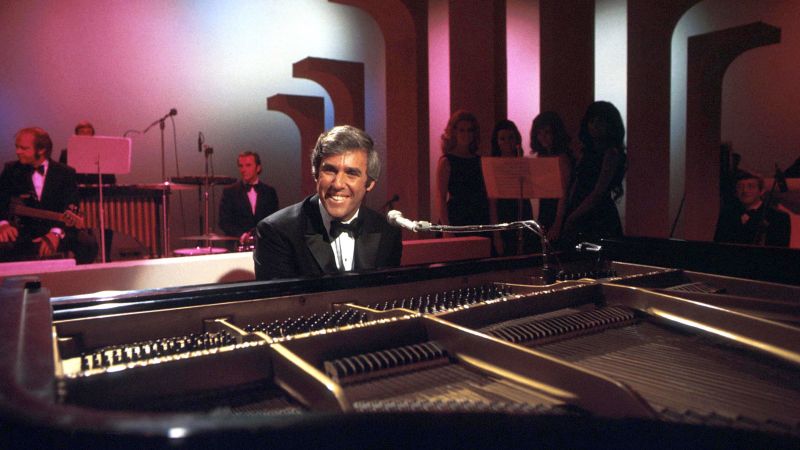
Legendary songwriter Burt Bacharach sadly died a couple of days ago, and to mark his passing I thought I’d run through the UK number ones that he (and his partner Hal David) were responsible for. There are seven in total, by acts ranging from Perry Como, to Cilla Black, to Bobbie Gentry, among his fifty-two Top 40 hits.

And, because the charts never play fair, we can only give such timeless classics as (deep breath)… ‘Walk on By’, ‘Raindrops Keep Falling on My Head’, ‘(They Long to Be) Close to You’, ‘The Look of Love’, ‘I Just Don’t Know What to Do With Myself’, ‘Twenty Four Hours from Tulsa’, ‘What the World Needs Now Is Love’ and ‘I Say a Little Prayer’… a shout-out now, because they never made the top spot. Still, we have a fair few good ones to be working with, and there’s a link to my original posts in the song titles.

‘The Story of My Life’ – #1 in 1958 for Michael Holliday

Bacharach’s first big hit, originally written for Marty Robbins. Quite jaunty, very whistle-heavy, and not too much of an indication of what was to come… No matter, for a monster hit was just around the corner.

‘Magic Moments’ – #1 in 1958 for Perry Como

Very few songwriters manage to replace themselves at number one, but Bacharach and David managed it with their first two hits. Crooner Perry Como knocked Holliday off the top, and stayed there for eight weeks. More whistling, but still it’s a song that has seeped into our collective conscience. Anyway, these were just the warm-up for a run of all-time classics in the 1960s.

‘Tower of Strength’ – #1 in 1961 for Frankie Vaughan

I’d put ‘Tower of Strength’ in my Top 5 songs I’ve discovered since starting this blog. It’s a real barnstormer, in which Frankie Vaughan spends two minutes just letting rip. He’s the star here, but he needed good source material. In the US it was hit for Gene McDaniels, in a much more laidback version.

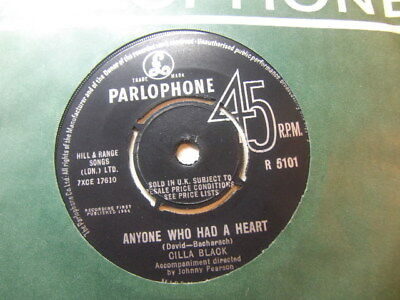
‘Anyone Who Had a Heart’ – #1 in 1964 for Cilla Black

Cilla’s version of Dionne Warwick’s original gave her the biggest female hit of the entire decade in the UK. I’m not one to indulge in idle gossip, but… Apparently Warwick hated the fact that Cilla Black got the bigger hit out of this song, claiming that had she so much as coughed on the original then Cilla would have done the same on her cover version. Bacharach was a big fan, however, personally arguing for Cilla to record it ahead of Shirley Bassey.

‘(There’s) Always Something There to Remind Me – #1 in 1964 for Sandie Shaw

Another song originally recorded by Dionne Warwick – Bacharach and David’s muse throughout their long careers – though her version wasn’t released until 1968. Instead it was a bare-footed seventeen-year-old who took it to #1 in late-1964, launching the career of one of the biggest British singers of the decade. It wasn’t a hit in the US until Naked Eyes’ new-wave version in 1983.

‘Make It Easy on Yourself’ – #1 in 1965 for The Walker Brothers

The classiest #1 single ever? Never has Bacharach and David’s effortlessly slick songwriting had a cooler delivery. This was another one first recorded by Dionne Warwick, before being shelved. Along came The Walker Brothers a few years later, to give the songwriting duo their 6th UK chart-topper.

‘I’ll Never Fall in Love Again’ – #1 in 1969 for Bobbie Gentry

The last #1 hit for Bacharach and David (in the UK, at least) was also one of the 1960’s final chart-toppers. After the first two, fluffier songs on this list, the duo settled into a run of songs detailing exquisite heartbreak. Towers of strength, things being there to remind you, people not having hearts… And then this, a classic anti-love song dressed up in trademark B&D gloss. Plus, one of the best ryhming couplets in pop music history…

Burt Bacharach, May 28th 1928 – February 8th 2023

Remembering Cilla Black

Growing up, the two things that I knew about Cilla Black was that she presented ‘Blind Date’ on a Saturday night (a program I wasn’t allowed to watch as a child, due to my mother’s long-held distrust of ITV) and that her real name was Cilla White.

1486481447-cilla-black-blind-date-1990s

As I got older, and all teenage, it would have been harder to think of anyone less cool than Cilla Black. She hung out with Cliff Richard, campaigned for the Tories, and had her hair set in a perfect early-nineties bouffant. Years ago I stumbled across a forum in which BA cabin crew posted horror stories about serving Ms. Black (always ‘Ms. Black’), how she would only sit in seat 1A, only drank a particular champagne, and would make her demands known only through her PA… (although, are you even a real celebrity if cabin crew don’t have a few bad things to say about you…?)

The one thing I didn’t know Cilla Black for, really, was the thing that started her off on her career of matchmaking and terrorising cabin crew: her singing.

While her hit-making career didn’t last too long, the two chart-toppers she had in 1964 are both excellent ballads interpreted very well, by a very young woman. The first – ‘Anyone Who Had a Heart’ – a Bacharach & David number that stands as the highest-selling single of the 1960s by a British woman.

I love the way, in that performance, how she starts off simply, quite unspectacularly, before dropping an octave and letting loose. Then a few months later came ‘You’re My World’, an Italian melody with English lyrics. Both these hits stood out, when I wrote about them for this blog, because they stood out so much from Cilla’s contemporaries, the Merseybeat bands, and in particular her Cavern Club mates, The Beatles (who are in the audience for the performance below).

She would continue to have hits as the sixties went on, though no further number ones. I can’t claim to be the biggest expert on the later musical career of Cilla Black (and I will happily take recommendations from those who know better), but if I can choose one more video to embed, it would be her final UK Top 10, a #3 from 1971: ‘Something Tells Me (Something’s Gonna Happen Tonight)’.

Following this the hits dried up, although she kept on recording music even after reinventing herself as the 1980s/1990s go to woman for Saturday night ‘trash’ TV. (My mother’s words, not mine…) On this, the fifth anniversary of her death then, it is worth remembering that Cilla Black was, first and foremost, a lady who could hold a tune, and whose musical achievements have been slightly overshadowed by what came next.

00849490_1024x1024

Cilla Black, 27th May 1943 – 1st August 2015

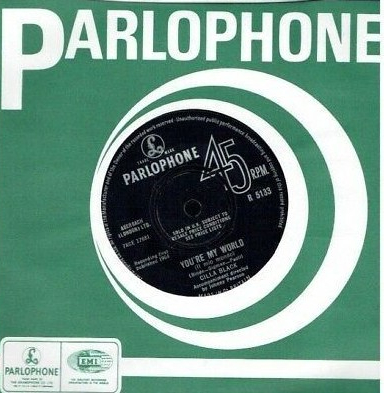
170. ‘You’re My World’, by Cilla Black

A word of warning. If you listen to this next #1 through headphones, and haven’t checked the volume levels on your device, then the violins that open this song may burst your eardrums. Take it from me. They’re the violins from the shower scene in ‘Psycho’, remixed.

cilla-black

You’re My World, by Cilla Black (her 2nd and final #1)

4 weeks, from 28th May – 25th June 1964

Once they settle down, though, we head into solid ‘sixties ballad’ territory. Dramatic piano, tumbling drums, a soaring chorus… You’re my world, You’re every breath I take, You’re my world, You’re every move I make… The lyrics are trite, no doubt about it – but does that really matter? It’s an over-the-top record, that requires some over-the-top emoting. As the trees reach for the sun, Above, So my arms reach out to you, For love…

I still can’t shake the feeling I had while listening to her first #1: ‘Anyone Who Had a Heart’ – that Cilla was but a second-rate Dusty Springfield. She gives it a good go, and does sing it very well, but her voice just doesn’t have enough behind it – it’s still a little too reedy. It’s harsh, you might argue, to compare a perfectly good singer to the one and only Dusty. And this, after all, is Cilla’s second chart-topper while we are still yet to hear from Ms. Springfield… But. From a 2019 standpoint, the patent on this type of pop-ballad is owned by Dusty, and almost everybody else will fall short of her standards.

Still, when we get to the line that builds up to the chorus – With your hand, Resting in mine… I feel a po-wer, So, divine… I’m completely won over by this song. That’s how you do a chorus. We’re a long way yet from the golden age of the power-ballad; but this is a proto power-ballad. What the V2 rocket was to Apollo 11. It’s a song that manages to cram a lot into it’s three minute run-time. A song that takes you on a journey, and assorted other clichés.

It’s also a song with a bit of a story behind it. It had originally been written the year before, in Italian as ‘Il Mio Mondo’ – which explains the operatic vibe – and translated into English, then French, then Spanish. It was a hit record in whatever language they tried; apart from, interestingly enough, in Italy… George Martin, who had an ear for these kind of things, was the man who spotted its potential and gave it to Cilla…

Cilla-Black-Youre-My-World-45-Parlophone-1964

And so it was her, and her alone, who could break up these nine months of Merseybeat with two #1 blockbuster ballads. She was a huge star, no doubt about that, though with this her chart-topping career ended quite abruptly. Whatever happened to her…? She lasted throughout the sixties – not something that all of her contemporaries managed – scoring nine more Top 10s (the last of which, the sublime ‘Something Tells Me (Something’s Gonna Happen Tonight)’ is the best.)

Oh yes. And then she became one of the most famous TV personalities in the country, as the face of Saturday night light entertainment shows like ‘Surprise, Surprise’ and ‘Blind Date’. I wasn’t allowed to watch ‘Blind Date’ as a kid; my mum thought it was trash. I mean, it was trash – that was the entire point… Anyway, unresolved childhood grievances aside, Cilla Black was part of the fabric of British live in the eighties and nineties and it was genuinely shocking when she died suddenly in 2015. Her death sent a ‘Greatest Hits’ compilation to the top of the UK Album Charts – the first time she had topped any chart since ‘You’re My World’…

I once spent an enjoyable hour reading a thread by anonymous British Airways cabin crew who had had the misfortune to serve Cilla on flights. She could *allegedly* be, shall we say, demanding… It made me love her even more. A proper diva, the likes of whom we see fewer and fewer of these days. RIP, and onwards.

164. ‘Anyone Who Had a Heart’, by Cilla Black

Alright, chuck? What’s your name and where d’you come from? Me name’s Cilla, and I’m from Liverpool.

1962 and ’63 were barren years in terms of women reaching number one in the UK. 1963 had precisely zero female #1s, while 1962 had just the one – Wendy Richard popping up as the featured artist on Mike Sarne’s ‘Come Outside’ (and she didn’t even sing on that record!) No, if we are counting #1 discs sung solely by women we have to look all the way back to Helen Shapiro’s ‘Walkin’ Back to Happiness’ from October 1961! No pressure then, Cilla…

00849490_1024x1024

Anyone Who Had a Heart, by Cilla Black (her 1st of two #1s)

3 weeks, from 27th February – 19th March 1964

This is a dramatic record. Right from the opening chords. Dun… Dun Dun… It’s the sort of song sung onstage, in a movie, while a murder is being committed in the wings. We’ve got a jabbing piano, cascading strings, and those rolling drums that are fast becoming the sound of the mid-sixties. Anyone who ever loved, Could look at me, And know that I love you…. It’s the song of a spurned lover. One who demands better. Knowing I love you… so, Anyone who had a heart, Would take me in his arms and, Love me too…

Writing the words out like that, though, cannot convey the brilliantly stop-start, woozy way that they come at the listener – loud then quiet, soft then angry. The pauses before the ‘so’ and the ‘who’ in the chorus are perfect, as is the whispered What am I to do… before the gorgeous horn solo.

It is a slice of supreme balladry – a seriously classy record. And when you discover, as I just did, that it was written by Burt Bacharach and Hal David, then that makes complete sense. It’s their 4th UK chart-topper so far. And the soaring ending – with the Anyone who had a heart would love me too… lines emphasised by drumbeats on each word, and Yeah Yeahs from the backing singers, is possibly the most sixties thing we’ve heard yet in this countdown.

Cilla-Black-–-Anyone-Who-Had-A-Heart

The only unconvincing thing about this record is… sorry Cilla… the voice. Technically, it’s great. But, for me, it sounds just a little young. Anyone who had a heart would love me too… is a difficult line to sell, and in the hands of a twenty-year old Cilla Black it sounds a little bratty. You don’t like me so you must have something wrong with you… My first instinct is to ask: Did Dusty ever sing this? Dusty would have done it justice. And she did. It’s not her finest effort, and I’m not sure about the guitars in place of the piano, but still… Nobody conveys stoic heartbreak like Ms. Springfield. On top of this, the song was originally recorded by Dionne Warwick, who also gave a more grown-up rendition.

But, still, this single launched Cilla Black as one of the biggest British female singers of the decade. Her take on ‘Anyone Who Had a Heart’ was the biggest selling song by a woman for the entirety of the 1960s! She was, as many people know (and as she kept reminding us for years to come), best mates with The Beatles, coming up through the same club circuit as they did. John Lennon introduced her to Brian Epstein, and the band even accompanied her during her audition for Parlophone.

Maybe what I’m mistaking for brattishness was actually the reason Cilla Black became so popular – her genuine girl-next-door, cheeky charm. She’ll top the charts again very soon and so we’ll hold off talking about what was to come for our Cilla for now. It is interesting to note, though, that both she and the last woman to top the charts, the aforementioned Wendy Richard, went to on to be better known for their TV work than their singing. More on that later…

Listen to every #1 so far with this handy playlist: