In going through the chart-toppers of the time, I was always a bit down on the early to mid-eighties. 1980 was a great year for #1s, one of my favourites, but between 1982 and ’86 things went a bit gloopy.
And yet. Multiple sources claim 1984 as the best year in pop music history. Rolling Stone, Billboard, and the BBC have all pushed the theory, among several others. And on the surface you can see why: Prince, Madonna, Michael Jackson all at the peak of their powers, Springsteen’s ‘Born in the USA’, the rise of MTV, ‘the second British Invasion’…
There’s only one problem with this. It’s all very US-centric. It didn’t seem to translate back across the Atlantic, at least in terms of number one singles. But maybe if we zoom out a little, and take a random Top 10, I might become a mid-1980s convert. Here then, is the UK Top 10 as it stood on this day in 1984, AKA forty-two years ago.


10. ‘Wood Beez (Pray Like Aretha Franklin)’, by Scritti Politti (up 7 / 8 weeks on chart)
A bit of a litmus test at #10, because this is as 1984-sounding as it gets. I know very little about Scritti Politti, other than they’re the sort of band you might name drop as eighties-by-numbers, like Kajagoogoo or Blancmange. And I’ll admit that this track isn’t converting me to their cause. It’s got an interestingly funky bassline and synth riff, but the vocals are buried in the mix. And where the hell does Aretha Franklin come in…? (Okay, there’s a line in the bridge that alludes to ‘Say a Little Prayer’) Part of my problem with mid-eighties pop is that it took itself very seriously, and I’d say this is an issue here. But this was Scritti Politti’s breakthrough record, and first of two UK Top 10s.
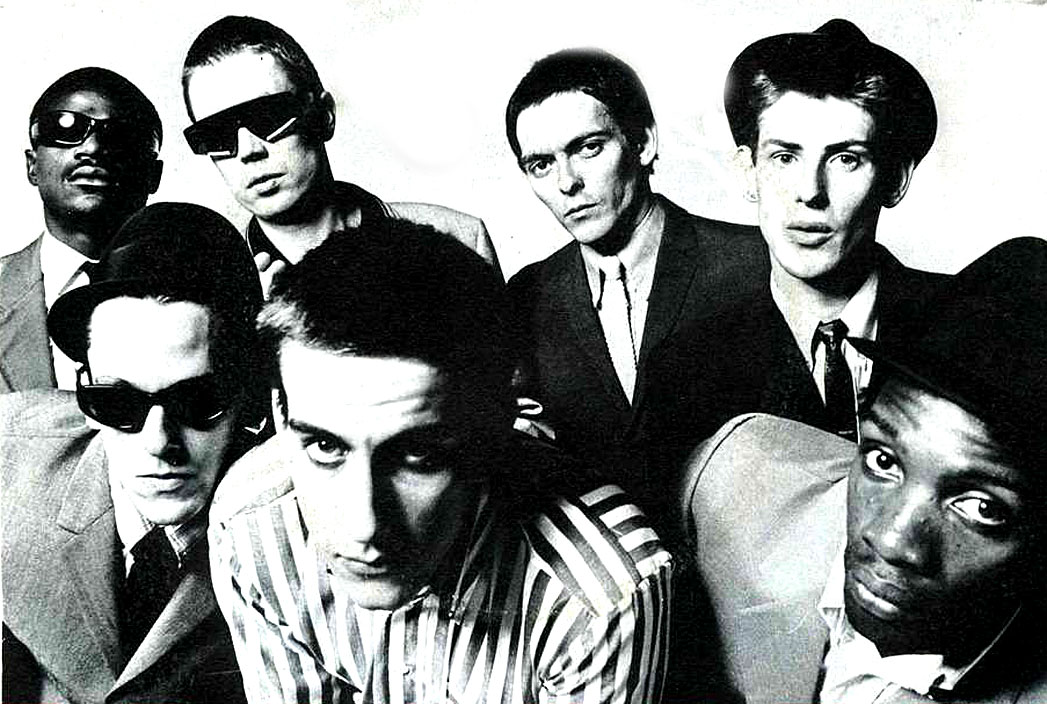
9. ‘Nelson Mandela’, by The Special AKA (non-mover / 6 weeks on chart)
This is a bit more like it. Nelson Mandela was already twenty-one years in captivity when the Specials released this, and brought his name to the wider British public’s attention. Jerry Dammers, who wrote the song, had only found out who Mandela was the year before, when he attended his first anti-apartheid rally. Around the same time as Margaret Thatcher – ever on the wrong side of history – denouncing him as a terrorist.
As protest songs go this is very danceable, with lots of authentic African musical influences. One of the backing singers was Caron Wheeler, who would go on to provide lead vocals for Soul II Soul’s 1989 #1 ‘Back to Life’. It was released as the Special AKA, as The Specials had technically split in 1981, with three members going on to found Fun Boy Three. This was the band’s first Top 10 hit since ‘Ghost Town’, and would be their final UK Top 10.
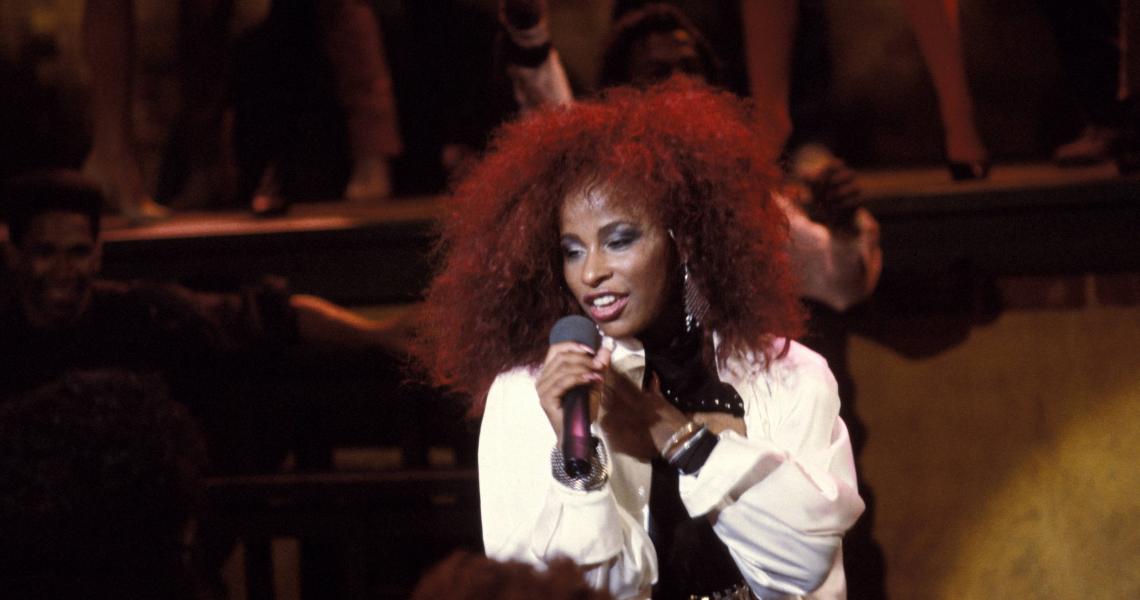
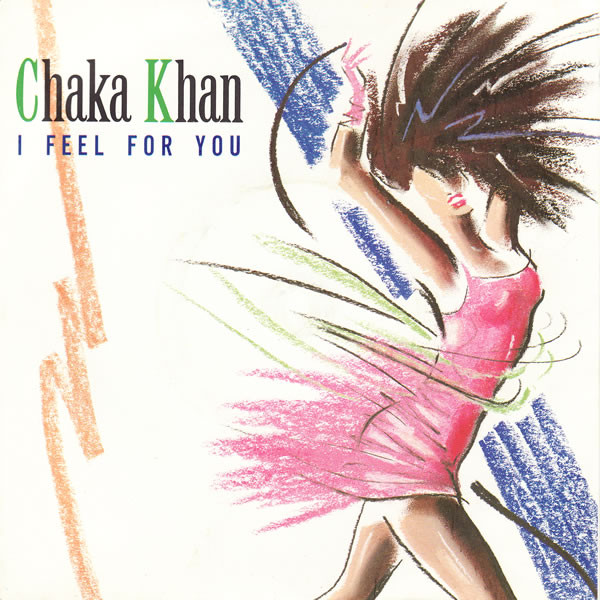
8. ‘Ain’t Nobody’, by Rufus & Chaka Khan (up 5 / 4 weeks on chart)
Vaulting up into the Top 10 this week, a bona-fide classic. If someone cites a track like this as an example of 1984’s musical pedigree, I will wholeheartedly agree. #8 was this record’s peak, which feels low, though Chaka Khan would outdo it with a chart-topper later in the year.
The enduring popularity of ‘Ain’t Nobody’ is proven by the fact that it has returned to the upper reaches of the UK charts on five occasions over the years through various covers, remixes and samples, including a belated appearance at #1 through LL Cool J in 1997, and a re-peak for Chaka at #6 when re-released in 1989.
I will admit, though, that I always though the ‘Rufus’ credited on the record was a man, Rufus Khan… Chaka’s brother, or husband, perhaps…? Colour me surprised to learn today that Rufus were a funk act with three Top 10s on the Billboard Chart. At least I don’t get paid for this…
7. ‘Glad It’s All Over’ / ‘Damned on 45’, by Captain Sensible (down 1 / 5 weeks on chart)
Captain Sensible, founder of the Damned (releasers of officially the first ‘punk’ record in 1976), had maintained a side solo career since the late-seventies, and had scored an unlikely chart-topper in ’82 with a cover of ‘Happy Talk’. He was also a committed pacifist, and ‘Glad It’s All Over’ refers to the Falklands conflict (more South Atlantic than ‘South Pacific’), making for two protest songs in this week’s hit parade. As nice as the sentiment is, this is a fairly pedestrian number. It could do with some punkish spit and vinegar…
Luckily then we have the flip-side of this double-A. It’s a riff on the popular ‘Stars on 45’ singles, but with a medley of around fifteen Damned and Captain Sensible tunes (including a reprise of ‘Happy Talk’). I’m not going to claim that it works particularly well, or that I enjoyed all seven and a half minutes of it, but at least it injects a bit of variety into this Top 10!
6. ‘People Are People’, by Depeche Mode (down 2 / 4 weeks on chart)
In some ways, Depeche Mode are as ‘eighties synonymous’ as Scritti Politti. However, Depeche Mode outlasted their new-wave roots to become one of Britain’s most succesful chart outfits. I’ve already covered them in my ‘Never Had a #1’ series, as one of the non chart-topping acts with the most Top 10 singles, and this #4 hit remains their joint-highest hit.
Why? Well, I’d say contrast this clanking, choppy, industrial hook-filled track to the weedy ‘Wood Beez’ further down the chart. Yes it’s very of its time in terms of its sound and production – your tolerance for harsh mid-eighties synths will determine if that’s a positive or not – but it’s undeniably catchy. And it’s another somewhat political number: People are people so why should it be, You and I should get along so awfully…?
5. ‘I Want to Break Free’, by Queen (up 13 / 2 weeks on chart)
Breaking into the Top 5 this week, and on its way to a #3 peak, it’s one of Queen’s most famous songs. Famous because it’s a catchy hit, but probably more so because the band do drag in the ‘Coronation Street’ inspired video. In the US this video is widely blamed for ‘ending’ their career – until Wayne’s World resurrected them in the early ’90s – as Reagan-era Americans just couldn’t handle men in dresses (luckily we now live in much more enlightened times…) I don’t know if that narrative is all completely true, as Queen were never guaranteed hit makers in the States, with some smashes alongside a lot of misses. It was banned by MTV, though.
And it could be argued that this is yet another political statement of a song, and not just because of it’s gender-bending. In South America and, in particular, South Africa the I want to break free… refrain was taken up in various fights against repression.
4. ‘Against All Odds (Take a Look at Me Now)’, by Phil Collins (up 4 / 3 weeks on chart)
Two classics of the decade in a row then, as here comes eighties chart mainstay Phil Collins with one of the ultimate power-ballads, in an era chock full of fist-clenchers. The moment before the second verse, when the drums come clattering in, is hard to deny even if you find the rest of the song overwrought.
I’d say that this song has lasted far longer in the public imagination than the Rachel Ward and Jeff Bridges film of the same name, the soundtrack to which this comes from. We have of course already met a cover version of this at #1, from Mariah Carey and Westlife, and we have another chart-topping cover to come very soon. Can’t wait!
3. ‘A Love Worth Waiting For’, by Shakin’ Stevens (down 1 / 5 weeks on chart)
Of course, Britain’s highest selling singles act of the entire decade had to put in an appearance! Shakey might have been beyond his ’81-’82 heyday here but he was still good for a big hit, and this one had been at #2 the week before.
Without doing any research on it, I was convinced that this must be a cover of an oldie by someone like Emile Ford. But no, it’s an original. Which in my opinion makes all the cheesy old rock ‘n’ roll flourishes less enjoyable. Had Emile Ford released this in 1959, I’d have enjoyed it. For Shakin’ Stevens to have churned it out in 1984 feels… meh. Still we can’t knock Shakey too much. This was his 13th of twenty-five career Top 20 hits, and he remains a legend of British pop.
2. ‘You Take Me Up’, by The Thompson Twins (up 1 / 4 weeks on chart)
Like Scritti Politti, the Thompson Twins exist to me as an act that evoke a distant vision of the mid-eighties, rather than as an act I’ve ever really listened to. I can’t help but pin this song as the biggest disappointment in this entire Top 10. In 1984, the year in which I was promised Prince, Madonna, Springsteen and/or Michael Jackson, I ended up with Scritti Politti and the Thompson Twins.
No, I don’t particularly like this. The overwrought vocal delivery, the clunking beat, the processed harmonica… All very of their time. I think that this might also be political in theme, especially going by the video featuring chain gangs, and lyrics about working in a factory. What was it about the 1980s that made everyone take themselves so seriously?
1. ‘Hello’, by Lionel Richie (non-mover / 7 weeks on chart)
Speaking of taking things a bit too seriously… My original post on Lionel Richie’s ‘Hello’ details why I dislike this song, and why I named it as one of my Very Worst Number Ones. It really is tripe. I’ve never been able to enjoy it ironically even, like so many power ballads of the time, because there is nothing, not even a glimmer, in this song (and the preposterous video) to suggest that it isn’t intended as 100% sincere. Yet here it stands, in its fifth of six weeks at #1.
Lionel Richie is a name that sits in the eighties pantheon, at least, alongside Phil Collins and Queen elsewhere in this countdown. They were perhaps what I might have expected to find in this Top 10. Of course, a random week does not sum up an entire decade, but this hasn’t gone any way to explaining why 1984 is considered by many to be the Best Year in Pop Music History.
What is interesting, though, is the fact that two of these songs are overtly political, while three more can be argued to have political (or at least somewhat provocative) themes. That’s half the Top 10! Apartheid and the Falklands conflict are mentioned explicitly, while it’s clear that the Cold War and the Thatcher government were on many musicians’ minds (either side of this Top 10 we had ’99 Red Balloons’ and ‘Two Tribes’ hitting the top of the charts…) I’m not one to argue that pop music shouldn’t be political, as art will always end up reflecting the values of the people making it, but at the same time I’m not one to accept something ‘deep’ as automatically being ‘better’. The mid-eighties does feel like a time when pop acts tried to go ‘deep’, for better or worse. Compared to modern pop music this feels unusual. But also, look ten years further back, to the mid-seventies and the height of glam, and you’d see a chart full of shallow but catchy pop. These things are never linear.
One other notable thing about this chart is that there is only one chart-topping single in it, but seven of the acts in the Top 10 are chart-topping acts.
So, if 1984 has not proven itself to be my favourite year for music, then what is…? In terms of chart-toppers – which is what this blog is all about after all – I have a Top 3, and a definite bottom. I’m planning to reveal them in a special post when we get to the 1000th #1. In the meantime, let me know what your best musical/chart-topping years are!