Welcome to the second part of our countdown through the forty highest selling acts (worldwide) that have never managed a UK chart-topping single. Before cracking on with numbers 35-31, check out the first installment here, featuring some surprisingly big names and also an explanation of how the concept of ‘highest selling’ has been worked out.
All caught up? Then here’s the next five:
35. Green Day
Biggest hit: ‘The Saints Are Coming’ with U2 (#2, in 2006)
I was all ready to write about ‘American Idiot’ (#3, in 2004) as Green Day’s biggest hit… But the discographies don’t lie. Who knew, or remembered, that this duet with U2 had charted a place higher?
Recorded to raise money for those affected in New Orleans by Hurricane Katrina, and with a snatch of ‘House of the Rising Sun’ in the intro, this is a good cover of the Skids’ original. Yet it is also frustrating that this is Green Day’s biggest hit over some of their earlier pop-punk classics, or their era-defining ‘American Idiot’ hits. Though I feel some personal pride here, as Skids are from my hometown, and they always get slightly overshadowed by Big Country (the band Stuart Adamson formed post-Skids).
34. Nirvana
Biggest hit: ‘Heart-Shaped Box’ (#5, in 1993)
Two of the biggest alt-rock acts of the nineties, back to back. And again, not many people would pick ‘Heart-Shaped Box’ as Nirvana’s biggest hit, over you-know-what (it made #7). But I’m so glad it is, because it is a freakin’ tune! No band has more perfectly balanced heavy rock with pop melodies, and this is them at the peak of their powers, the lead single from third album ‘In Utero’, and probably the best song ever written about children with terminal cancer. Plus, the scene in the video with the band playing against a blood-red sky is the most gorgeous snapshot of that early-nineties, grunge aesthetic.
33. Imagine Dragons
Biggest Hit: ‘Sucker for Pain’ with Lil Wayne, Wiz Khalifa, Ty Dolla Sign & Logic (#11 in 2016)
Up next, Imagine Dragons. Or, as I like to call them, Everything That Is Wrong With Rock Music in the 21st Century. And of course they’ve sold more than Nirvana and Green Day… But like the illustrious pair that they outrank, Imagine Dragons biggest UK chart hit is not their most famous. (You know, the one that goes thump thump shout shout thump shout). In ‘Sucker for Pain’, from the ‘Suicide Squad’ soundtrack, they act as mere comperes, singing the same chorus over and over for a revolving cast of rappers, and their douchebaggery is diluted. It’s still not a very good song though.
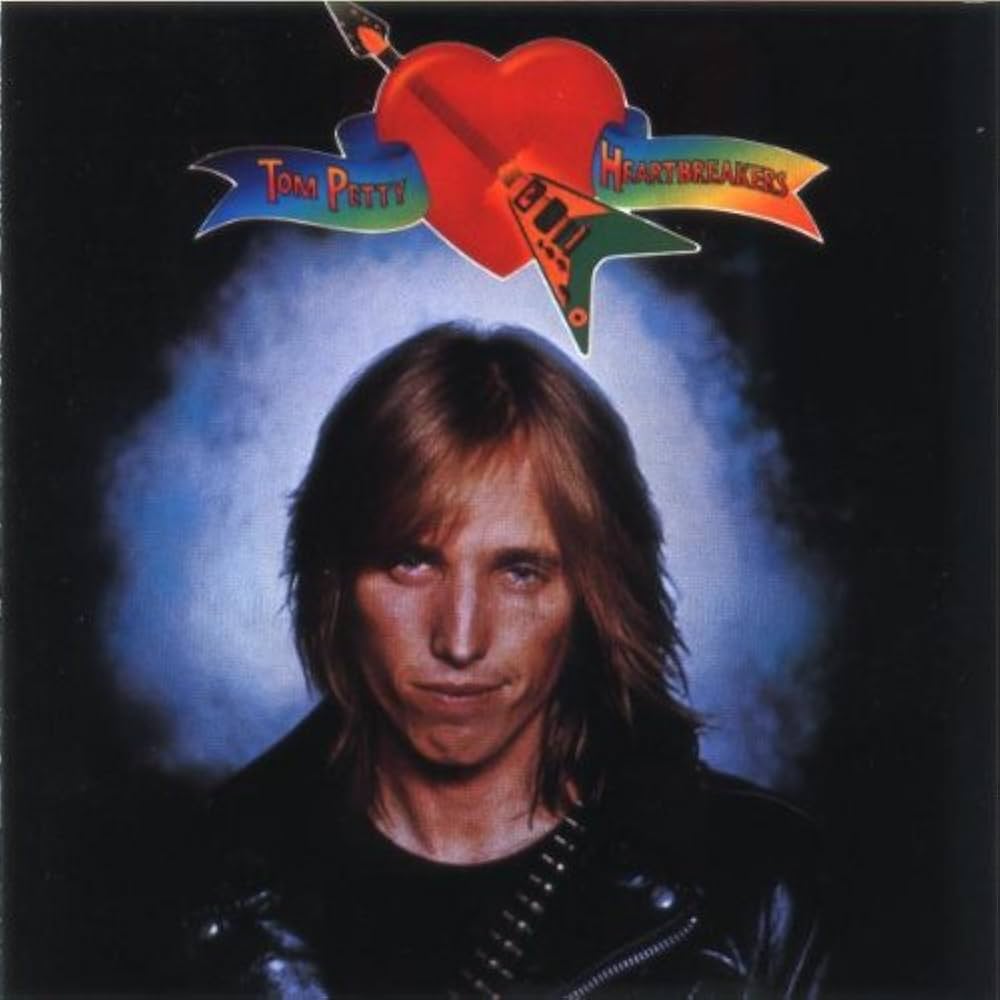
32. Tom Petty
Biggest hit: ‘I Won’t Back Down’with the Heartbreakers (#28, in 1989)
Like so many artists in this Top 40, Tom Petty was far more succesful in his native US (where this track made #12). And it’s kind of easy to see why, because this is proper, chugging, heartland rock that doesn’t quite translate to our green and sometimes pleasant land. But there’s a strong British influence on display here, with Jeff Lynne writing and producing (that beat has Lynne written all over it) and George Harrison on guitar. Speaking of Lynne and Harrison, the biggest UK hit that Petty featured on had come a year earlier: the Travelling Wilbury’s ‘Handle With Care’.
31. Van Halen
Biggest hit: ‘Jump’ (#7, in 1984)
Unlike every other act in this section, Van Halen’s biggest hit in the UK is the song you’d probably expect. In actual fact, ‘Jump’ was Van Halen’s first Top 40 hit in Britain. It’s interesting, American disinterest towards British glam rock in the seventies was largely replicated by the British public towards American glam metal in the eighties. And I have to admit that ‘Jump’ has always left this Brit fairly cold. It’s catchy, and the synth riff is memorable, but it pales in comparison to earlier, harder rocking Van Halen hits. It pales in comparison too to the other singles from ‘1984’, like ‘Panama’ and ‘Hot for Teacher. It was also perhaps a reason in lead singer David Lee Roth’s leaving the band the following year, as he saw it as too much of a departure from their original sound.
Before finishing this section, we should also mention three artists who would have featured here had they ever had a British hit. Luke Bryan (a 21st century C&W megastar who has had 30 Billboard country chart #1s), Johnny Hallyday (France’s biggest ever male star), and Ayumi Hamasaki (Japan’s best-selling solo star, and ‘Empress of Pop’ to much of Asia).
As in my two previous Cover Versions of #1s posts, I’m returning to Ruby Trax, a compilation released in 1992 to celebrate the 40th anniversaries of both the NME and the UK singles chart.
It’s a veritable gold mine of weird and wonderful covers of chart-topping hits by the big (and not so big) acts of the day. While this is the last time I’m going to feature these Trax, for a while at least, the album is definitely worth checking out if you enjoyed the covers by Bob Geldof and Sinead O’Connor, or Suede and Manic Street Preachers.
And of course, for a compilation of tracks celebrating number one singles, there had to be room for some interesting interpretations of Britain’s two greatest groups, the Beatles and the Stones. Some might say they are sacrosanct, I say have at them!
Probably sensibly, both covers are of the legendary acts’ less famous number ones. And it’s quite fun to hear ‘Lady Madonna’, famously Paul McCartney’s boogie-woogie tribute to Fats Domino, reimagined for guitars. Or maybe its because my favourite bit of the original is when George Harrison’s snarling guitar comes in for the second verse. At the same time, despite the switch in lead instrument, this is a fairly faithful cover.
I had never heard of Kingmaker before writing this post, and going by the limited number of views the above video has had on YouTube I think they’ve very much been consigned to the pre-Britpop dustbin. It seems they were nearly the next big thing back in the 1992-93, with a couple of #15 hits and tours with Radiohead and Suede as their support acts, before a falling out with their record label.
A much bigger name are ’80s shoegaze icons, and East Kilbride’s finest, The Jesus and Mary Chain. Their scuzzy, distorted, feedback drenched take on ‘Little Red Rooster’, the Stones’ 2nd #1 back in 1964, is a much more impressive proposition. The song dates back to the early sixties, written by Willie Dixon and made famous by Howlin’ Wolf, and despite all the noise-pop dressing the JAMC sensibly keep that driving blues riff as the song’s focal point.
‘Little Red Rooster’ may or may not be a phallic metaphor (the Stones’ version wasn’t released as a single in the US allegedly because of this), but the Jesus and Mary Chain replace bawdiness with menace. You would not be messing with this particular little red rooster on the prowl, who isn’t so much horny as he is looking for a fight.
If you are interested in hearing more of this album, it can be a bit tricky to Trax down, with many of the forty songs not available on Spotify or YouTube, at least not in great quality uploads. But if the idea of EMF covering ‘Shaddap You Face’, or Boy George doing ‘My Sweet Lord’, Vic Reeves doing ‘Vienna’ (they bent the rules to include that one…) or Billy Bragg covering The Three Degrees appeals to you, or at least sounds morbidly fascinating, then do have a browse. The full forty-track listing is here, on the LP’s Wikipedia page.
In 1992, to celebrate the 40th anniversary of the UK Singles Chart, the NME released ‘Ruby Trax’: an album of forty cover versions of number one singles. It featured acts as diverse as Billy Bragg, Dannii Minogue, and the Jesus and Mary Chain, and it is a wonder. And something I shall be mining for all my upcoming ‘Cover Versions of #1s…’ posts.
Starting with two covers by two of the early nineties’ biggest alternative bands. November 1992 saw British rock on the verge of a big shift. The following May, Blur would release the first of their Britpop trilogy, ‘Modern Life Is Rubbish’, shortly after the arrival of the eponymous debut LP from Suede.
Suede had only released two singles when they contributed this cover of the Pretenders’ ‘Brass in Pocket’ to ‘Ruby Trax’, but they were already darlings of the music press. ‘The Best New Band in Britain’ according to Melody Maker upon the release of their first single (and, in hindsight, probably the very first ‘Britpop’ single) ‘The Drowners’.
Their cover of ‘Brass in Pocket’, is a slow-burn, adding a layer of menace that the more upbeat, seize-the-day feel of the original lacks. Brett Anderson’s voice, though, has persuasive charm like Chrissie Hynde, albeit the persuasive charm of someone begging you for drugs at a party (note also the subtle lyrics changes that add some early-nineties edge). This cover wasn’t released as a single, but was included on a 2018 re-issue of Suede’s debut album.
The only single released from ‘Ruby Trax’ was by perhaps the hottest band in Britain in 1992: Manic Street Preachers. Their take on ‘Suicide is Painless’, AKA the theme from ‘M*A*S*H’, became the band’s first Top 10 hit, peaking at #7.
I’m reluctant to ever claim a cover version as ‘better’ than an original – can you ‘better’ something that isn’t your original work? – but I will say that the Manics’ version sounds much more how I imagine a song titled ‘Suicide Is Painless’ should sound. Despite the sombre topic, the light arrangment and the choral voices of the original theme mean it can’t help sounding like a TV show theme. Which, I’ll admit, was probably the point.
In the Manics’ hands, overwrought lyrics like The game of life is hard to play, I’m gonna lose it anyway… hit home. Even the clunky title line Suicide is painless, It brings on many changes… works. Just about. Of course, knowing now the widely-believed fate of Richey Edwards adds a very sad edge to the Manics singing a song about suicide. Here though, Edwards joins the band in bringing the song to a garage rock crescendo.
I hope you enjoyed these two covers, especially if they’re new to you. If anything, it’s been nice to break up the relentless pop and dance of the year 2000’s chart-toppers for a moment… A very brief moment. I’ll feature some more covers from ‘Ruby Trax’ later in the year.
Launching our second new feature of the year, we’re going to celebrate the flip-sides to some famous chart-toppers. In my posts on every UK #1 between 1952 and 1999, I’ve stuck fairly rigidly to reviewing just one side of each chart-topping disc. On occasion I may have mentioned them in passing, and I’ve always given them a spin if they’re listed as a double-‘A’; but by and large I’ve avoided the B-sides.
To be honest, I was born at the tail end of the B-side era, so sometimes overlook their importance. By the mid-to-late-nineties, when I started buying music, the bonus tracks on a CD or cassette single were often just remixes of the A-side, or maybe a live version of an earlier hit. And the download/streaming era has killed off the concept for good. But cast an eye back further, to the days when an act’s singles were the main event, rather than a plug for their current LP, and the ‘other’ side of a hit single was a source of countless hidden gems.
And besides (see what I did there), many’s the big chart-topping hit that was originally intended as back-up to a song that, for whatever reason, didn’t catch the imagination. ‘Rock Around the Clock’, ‘Maggie May’, ‘I Feel Love’… The list is long, and often surprising. So, let’s kick things off with one of the last bands to recognise the power of a good B-side…
‘Some Might Say’ made number one in April 1995, Oasis’s first chart-topping single. You can read all about that song here. It was only their sixth release, but already the Gallaghers and co. had built a reputation for spoiling their fans with cult classics hidden behind the actual hits. ‘Half the World Away’ on ‘Whatever’, ‘Listen Up’ and ‘Fade Away’ on ‘Cigarettes & Alcohol’. But on ‘Some Might Say’, the lead single from their soon to be multi-multi-platinum second album ‘(What’s the Story) Morning Glory?’, Oasis included not one, not two, but three great B-sides. Starting with…
‘Talk Tonight’ is a classic of the Noel-with-an-acoustic guitar genre, a common theme for their B-sides. It was written about a woman in San Francisco, to whom he escaped after a concert went wrong (another common Oasis theme). Oasis at their best produced songs about very specific moments – visiting a park with a woman you barely know – that feel very universal. Everyone has some absent friend with whom they would like to talk tonight.
‘Acquiesce’ meanwhile is Oasis with a capital OASIS. One of very few tracks on which the brothers share vocal duties: Liam at his sneery best on the verses, Noel stretching his vocal chords on the chorus. Plus, the lyrics speak to their brotherly bond: Because we need each other, We believe in one another… (Noel has claimed that the only reason he sang the chorus was because Liam couldn’t reach the high notes). The moment when the pair collide at the start of the second verse is possibly the best five seconds in Oasis’s entire back-catalogue.
For a famous rock band, the moments in which Oasis let loose and just fucking ROCKED are actually quite few and far between. ‘Headshrinker’ may well be the heaviest song they ever recorded, with ten-tonne weighted chords, and lyrics like Lost in the fog, I’ve been treated like a dog, And I’m outta here… about an unhinged lady-love. Their biggest hits may have long since been lost to bland ubiquity, but gems like this remind us that on their day Oasis could be pretty punk.
Noel Gallagher has long since bemoaned the fact that he used up so many great songs as B-sides, especially after years of fame (and booze and drugs) had blunted his songwriting edge. Stick any of these three featured songs onto ‘Standing on the Shoulders of Giants’ and they would instantly be the best tracks on the album. But then again, chucking classics like these away on the one CD single encapsulates the carefree, live-in-the-moment ethos of early Oasis, and of Britpop before it soured, and was a huge part of their appeal.
I hope you enjoyed this first installment in what I hope to make a semi-regular feature. If you have any suggestions for B-sides (to UK #1 singles) that I can feature, please let me know in the comments!
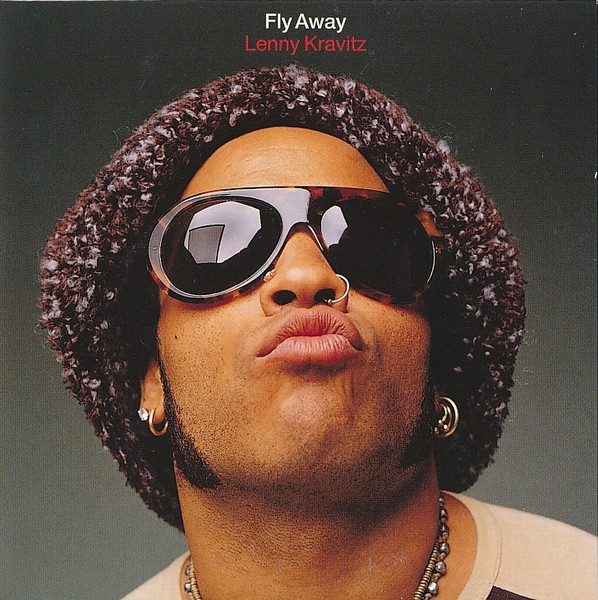
Lenny Kravitz then, bringing us three guitar-led number ones out of four…. Heady days!
Fly Away, by Lenny Kravitz (his 1st and only #1)
1 week, from 14th – 21st February 1999
The intro really rocks, a concrete-heavy riff that fills the room, so much that it sets us up for disappointment upon hearing the rest of the song. Not that it’s bad, not really. But the effect-laden guitars in the verses are interesting – I can’t help hearing someone struggling to swallow, in urgent need of a Heimlich manoeuvre – and Lenny Kravitz’s vocals somehow don’t do the tune any favours.
Plus, the lyrics are simplistic, verging on just plain bad. I wish that I could fly, Into the sky, So very high… Just like a dragonfly… Ignoring the fact that dragonflies usually hover at no more than tree-height, the insistence on dragging out rhymes across several lines, entire verses even, is annoying. I want to get away, I want to flyyyyy away… Kravitz pleads, so often that you begin to wish he’d just bloody well go. What’s stopping him?
I’ll admit that my opinion of this track is clouded by the fact I’ve never quite gotten Lenny Kravitz. He seems to me like a parody of an oversexed rock star, desperately wanting to be Prince, or Jimi Hendrix. But then again, Black rock musicians are hardly ten a-penny so I should give him credit for carving out an impressive career. Plus, ‘Are You Gonna Go My Way’ is a ten-out-of-ten classic, and would have made a much more worthy chart-topper.
Having claimed that ‘Fly Away’ isn’t bad, I realise I’ve just spent three paragraphs giving a pretty compelling argument as to why it is. Part of me relishes a brief period of rock dominance at the top of the charts, but at the same time I shouldn’t be uncritical of a song just because it’s got guitars, and isn’t by a boyband or a faceless DJ. This for me doesn’t come close to the gonzo pop-punk of the Offspring, or Blondie’s cool-as-fuck comeback.
It probably wouldn’t have made #1 either, if it hadn’t been used extensively in adverts for Peugeot (for some reason I misremembered it as Vodafone). Kravitz’s only previous visit to the UK Top 10 had been with the already-mentioned ‘Are You Gonna Go My Way’ six years earlier. Songs from Adverts has been a surprisingly successful chart-topping genre over the years, and this won’t be 1999’s last. ‘Fly Away’ does though finally bring to an end our run of ten consecutive one-weekers – by far the longest such run in chart history. It’s been an eclectic quickfire run through Xmas ballads, novelty funk, dance, and some good old fashioned rock and roll. And of course, the record that did finally manage to stay at the top for longer than seven days had to be something pretty special…
I wonder who had this on their 1999 bingo cards? New-wave icons Blondie stage a comeback, release their first single since 1982, and it only goes and makes number one…
Maria, by Blondie (their 6th and final #1)
1 week, from 7th – 14th February 1999
Okay, the first part had already happened in 1997, with the band spending much of 1998 on tour. But surely nobody expected this… Exactly twenty years since ‘Heart of Glass’ became their first chart-topper, and over eighteen since ‘The Tide Is High’ became what most assumed was their last.
‘Chocolate Salty Balls’ was a recent, perfect example of how to do a novelty hit. ‘Maria’ is, then, a textbook example of how to arrange a comeback smash. They’re still new-wave punks at heart, with razor sharp guitars in the intro and solo, Harry on top vocal form (for that chorus line needs belting out), and some trademark drum fills from Clem Burke. The subject matter also calls to mind earlier Blondie hits-about-girls, like ‘Sunday Girl’ and ‘Rip Her to Shreds’. But the production is clean, crisp, late-nineties alt-rock. A perfect balance that means ‘Maria’ could have come right in the middle of Blondie’s imperial phase; but that also guaranteed radio play in 1999. Plus, there’s wedding bells, which I don’t really get but sound great.
Who is ‘Maria’, though? One of rock’s great femme fatales, she was an imaginary woman, dreamed up by keyboard player Jimmy Destri, who had fantasised about such a girl while at a Catholic school. She sounds pretty high maintenance – She moves like she don’t care, Smooth as silk, Cool as air – but also like you’d give your right eye for her to just notice you. And the line about her Walking on imported air… has to be one of the coolest descriptions in rock ‘n’ roll. Ooh it makes you wanna die…
The slightly surprising thing here is that Blondie weren’t all that old in 1999… They were in their late forties/early fifties, which in 2024, when Beyonce and Eminem can still make number one, doesn’t seem that wild. Debbie Harry was fifty-three, which means she promptly usurps Cher (eleven months her junior) as the oldest female chart-topper. It also meant that Blondie joined a very select group of acts to have made #1 in three different decades, which in 1999 only numbered Cliff, Elvis, the Bee Gees, and Queen (and Paul McCartney, under various guises).
They have gone on to release four more albums since this comeback, the most recent coming in 2017. Chart hits have been harder to come by, but I would point you in the direction of their following lead single, 2003’s cracking ‘Good Boys’. I feel like a Blondie ‘Best of the Rest’ post is overdue…
Finally, we should mention that ‘Maria’ becomes the latest in a long, long line of chart-topping women. Off the top of my head we’ve had Tiffany, Frankie, Josephine, and Eleanor Rigby, but there are many, many more. Though, interestingly, number ones named after women seem to have been much more prevalent in the fifties and sixties than in the 1990s…
Comedy-rock is an underrepresented genre on the UK singles chart, if indeed it is a genre at all. Most of the comic songs we’ve met so far have been thoroughly pop-leaning, and most of them have been thoroughly awful…
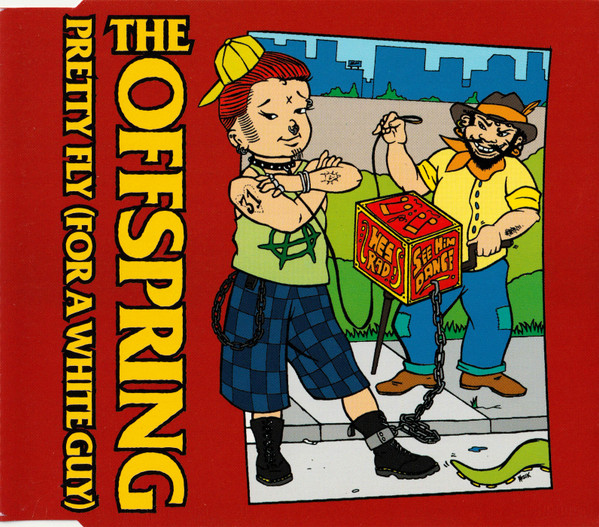
Pretty Fly (For a White Guy), by The Offspring (their 1st and only #1)
1 week, from 24th – 31st January 1999
Luckily this next record rocks, and isn’t awful. ‘Pretty Fly (For a White Guy)’ would be a hard-rocking #1 in any era, but in the extreme pop landscape of the late nineties it really stands out. And if any sub-genre of rock lends itself towards comedy, it would be this sort of gonzo nu-punk. From the faux-German intro (borrowed from Def Leppard), past the uno dos tres…, to the Give it to me baby, Aww-aww-aww-aww… this song is packed with several extremely dumb but catchy hooks.
Admittedly I turned thirteen on this song’s final day at #1, so was the perfect age for something this loud and obnoxious. But I will argue that it has held up pretty well, and in fact its poseur-bashing message is perhaps even more relevant in the social media age. Okay, some of the references are dated (Ricki Lake, mistaking Vanilla Ice for Ice Cube) but He may not have a clue, And he may not have style, But everything he lacks well he makes up in denial… is a line for all seasons. Fake it ‘til you make it, baby…
Frontman Dexter Holland made it clear that the song wasn’t a comment on Black/hip-hop culture, but a satire on middle-class white kids trying to ape it. My favourite line is when the hero of the song is cruising in his Pinto, waving at homies as they pass… But if he looks twice they’re gonna kick his lily ass… To this day, though, I don’t get the reference to him wanting a ‘13’ tattoo but getting a ‘31’. I’d appreciate it if one of my more fly readers could enlighten this particular white guy…
The Offspring, from southern California, had been around since 1984 under the name Manic Subsidal. They were proper punks back in the day, which inevitably led to some older fans seeing the poppier sound (not to mention the chart success) of this track as a sell-out. They presumably had conniption fits when they heard the ‘Ob-La-Di, Ob-La-Da’ aping follow-up ‘Why Don’t You Get a Job?’, which made #2 a few months later.
This smash hit set the Offspring up for a good few years of belated chart success, with tunes like ‘The Kids Aren’t Alright’, ‘Original Prankster’, and ‘Hit That’ to name a few of my favourites. They probably never quite hit the commercial heights of other ‘90s pop-punk acts like Green Day or Blink-182, but they have something that neither of those bands managed: a number one single.
I have a recap coming up in a couple of posts, in which I’ll name the best/worst/weirdest/dullest of the most recent number one singles. But if I ever decide to dish out awards for ‘Best Song Title’, then we’ll have an easy all-time winner…
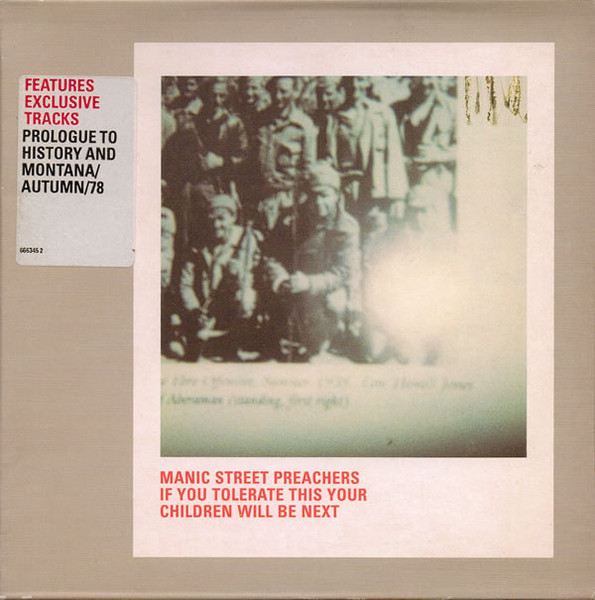
If You Tolerate This Your Children Will Be Next, by Manic Street Preachers (their 1st of two #1s)
1 week, from 30th August – 6th September 1998
I make the nine-word ‘If You Tolerate This Your Children Will Be Next’, to be the second longest chart-topping title not to feature brackets (and obviously not counting double-‘A’s). Bonus points for naming the eleven-word winner of that award… Anyway, so far so interesting. But is the song any good…?
Well, the dreamy reverb on the guitars is cool, and the song has a big, beefy wall-of-sound feel to it. It’s confident, and orchestral, and as the lead single from their fifth album it declares the Manics to be perhaps the biggest band in post-Britpop Britain. It’s also fairly mid-tempo, a bit Radio 2, when compared to some of their earlier, spikier hits.
Of course, with a title like that, the lyrics were surely going to be the most interesting aspect of this song. And on one level they don’t let us down. So if I can shoot rabbits, Then I can shoot fascists… is a line unlike most others in the preceding seven hundred and ninety-eight #1s. Inspiration for the song came from a Spanish Civil War-era poster, showing a child killed by Franco’s forces with the title-line printed below. The singer is singing from a modern viewpoint though, and feels gutless when he thinks about the generations before him who fought fascism.
The lyrics are also what leave me a little cold, when faced with writing a post on this record. I’d like to celebrate the Manics making number one – a rock song making number one in the very poppy charts of late ’98 – but they have better songs in their canon. And it’s not that I’m put off by the preachy-ness of it (the hint is in the band’s name, after all), but ‘A Design for Life’ did the socialist-statement-with-strings-and-a-massive-chorus much better than this two years earlier (and only made #2). ‘If You Tolerate This Your Children Will Be Next’ is a little too on the nose, a little too much edge without substance. And, removed from the song’s actual lyrics, it can be co-opted by any crackpot conspiracy theorists, as happened in 2009 when the BNP used the song on their website.
I go through phases with the Manics where I listen to them a lot; and then at other times I seem to forget they exist. They always remained somewhat outside the world of Britpop, pre-dating the movement by several years, and by managing hits well into the 2000s, long after most of the other big nineties rock acts had imploded. I do like them, though. And just to prove that I don’t mind political statements in songs, as long as the song itself is strong enough to carry said statement, I will be giving their second number one a glowing write-up.
***I should also mention that I’ve written a post for Kinks Week at Powerpop Blog, which was published earlier today. Please do check it out, along with the rest of Max’s always entertaining and informative posts on music and pop culture!***
A few months after the highest-selling number one single of all time, a slightly different chart record falls. Oasis were planning to release the penultimate track from ‘Be Here Now’ as that album’s final single, a track that ran to well over nine minutes (long even by that bloated album’s standards). Surely, people assumed, there would be a single edit? But of course not. For this was Oasis, the biggest, boldest band in the land, and nobody could tell them what to do.
All Around the World, by Oasis (their 4th of eight #1s)
1 week, from 18th – 25th January 1998
In fact, the single version of ‘All Around the World’ drags things out even further than the album version, meaning that it runs to a staggering nine minutes thirty-eight seconds. You wonder why they didn’t just keep it going to the ten-minute mark… Still, it stands as the longest number one single ever, almost two minutes ahead of Meat Loaf in second place. But what gets overlooked in all the chat about how long it is, and how OTT ‘Be Here Now’ is, is the fact that this is a pretty good song.
It’s one of the album’s clearer, more instant moments. It’s a simple enough concept, with slightly jazzy, slightly Beatlesy (duh!) chord progressions. The simple concept is built upon, with layers of overdub and na-na-na-ing, until it grows into a thumping gospel track, with Liam chanting his mantra: I know what I know, It’s gonna be okay… We all know now that by 1998 Oasis were a coked-up mess; but this is Oasis at their coked-up best. I’ve always thought it very underrated.
Perhaps ‘All Around the World’ stands out as different to the rest of ‘Be Here Now’ because it was actually one of Noel’s earliest song writing efforts, with live performances dating back to 1992. I don’t imagine those early versions of the song sounded as gigantic as this, but it does have that early-Oasis theme of everyone getting along, making better days. Plus it has Liam chewing the life out of the word sheeeiiiiinnnneeee, which is a real Oasis 101.
Added to this early-nineties seed of a song were seven whole minutes of coda. Lots of key changes, lots of subtle rearranging of the na-na-nas. I particularly like the seismic shift around 5:30, before Liam comes back bellowing through a loudspeaker. Of course it’s too long – it’s a preposterous length for a pop song – and of course it’s self-indulgent. Plus, of course the Beatles’ references are way too obvious (‘Hey Jude’, for one, and ‘Yellow Submarine’ in the mesmerising animated video).
But as with ‘D’You Know What I Mean?’, and as with ‘Be Here Now’ on the whole, you do just have to sit back and admire the sheer bravado of releasing this beautiful, overblown nonsense, and then lament the passing of rock music that is this big. It’s a shame that a track of ‘All Around the World’s size is relatively forgotten among the Oasis back-catalogue, and that it sneaked a January number one when competition was scarce. By now, a backlash had begun against Oasis, as always happens when acts become that popular. It will be over two years before their next chart hit, as the band take a much needed breather after the wild ride of the Britpop years.
Oi Oi! Here’s a Best Of for Britpop’s cheekiest chappies. And it’s got nothing to do with your Vorsprung durch Technik, y’know… For I haven’t chosen ‘Parklife’ as one of them. Nor have I chosen either of Blur’s #1s – ‘Country House’ and ‘Beetlebum’. What I have done is pick my favourite non-chart topping single (no album tracks allowed) from each of their nine studio albums, plus a couple of standalone singles for good measure. Off we swagger, then…
‘She’s So High’ – from Leisure
Blur’s first album stands out as something of an oddity. Apart from it clearly being Damon Albarn on lead vocals, they don’t sound like the Britpop icons that they would go on to become. ‘She’s So High’ was their first ever release, making #48 in October 1990. It’s very much a shoegaze single, lulling you in with its pounding drone and stoned vocals. It was twinned with ‘I Know’ as a double-‘A’, which is a more uptempo number with a funky Madchester beat. Both songs are a neat time capsule of what indie music sounded like at the dawn of the ’90s, long before anyone had heard of ‘Brit Pop’.
‘Popscene’ – non-album single
I’m cheating a bit here, as ‘Popscene’ wasn’t on any album, but it seems too important to miss off this list. It feels like the sound of Blur coming into their own, the Blur that would go on to become one of the decade’s biggest bands, and is a song that they were proud of and excited to release. When it stalled at #32, in 1992, they were disappointed, and blamed grunge for not allowing upbeat rock music to flourish. Which was sour grapes, even if they did have a point. However, ‘Popscene’ is now regarded as one of, if not the, first real Britpop single. One that would influence a whole genre with its mix of punk and glam, its energy and its snotty Britishness, even if its legacy isn’t reflected in its chart position.
‘Sunday Sunday’ – from Modern Life Is Rubbish
‘Modern Life Is Rubbish’ kicked off the Britpop phase of Blur’s career, and the album’s third single set the template for the sort of perky, Kinks-y hits that they would churn out by the dozen between 1993 and 1996. Many would say they surpassed it a year later on ‘Parklife’, but this song is saved by not having been bludgeoned into our skulls for the past three decades. Plus ‘Parklife’ also doesn’t have ‘Sunday Sunday’s frantic middle-eight, that sounds like a malfunctioning arcade game, or the big brass band that sees us home. The lyrics are no ‘Autumn Almanac’, but there’s charm here in its depiction of a lazy Sunday: He sings the Songs of Praise every week but always falls asleep… The three singles from the album all made the Top 30, and though a good case could be made for ‘For Tomorrow’, I think ‘Sunday Sunday’ best encapsulates Blur on the verge of becoming massive.
‘Girls & Boys’ – from Parklife
And massive they became, thanks to ‘Parklife’, and its lead single ‘Girls & Boys’. Sometimes Britpop gets written off as a regressive movement, a fin de siecle piss-up for the lads and ladettes. But that was just one half of it (the Oasis half). The other half was Brett Anderson’s floppy fringe and amyl nitrate innuendo, Jarvis Cocker’s knowing looks and camp asides. And of course Blur, singing about Girls who want boys, Who like boys to be girls, Who do boys like they’re girls, Who do girls like they’re boys… All over a squelching electro-disco beat, and a brilliantly cheap looking green-screened video. Yes, it’s a satire about 18-30s holidays, and could be viewed in a sneering ‘look at those plebs’ sort of way. But I don’t think you need to overthink brilliant pop like this.
All the singles from ‘Parklife’ could have been chosen, as all have a claim to being among Blur’s best. From the soaring lounge-pop of ‘To the End’, the ubiquity of the title-track, to the bittersweet ‘End of a Century’. But I’ll go with the lead-single, which made #5 in the spring of 1994, and really kicked Britpop into gear.
‘The Universal’ – from The Great Escape
‘The Great Escape’ gave Blur their first number one single, which also brought with it all the hullaballoo of the ‘Battle of Britpop’. But it was the album’s second single, a #5 hit in November 1995, which is the real highlight. It’s a sweeping ballad, more strings than guitars, about a future where technology has taken over. The looming end of the twentieth century was a theme that cropped up throughout Blur’s Britpop phase, never more so than in ‘The Universal’: No-one here is alone, Satellites in every home… Eerily prescient, perhaps, as we look back from our social media age. The video is similarly creepy, a tribute to a ‘A Clockwork Orange’, with Blur all in white, playing to a bar full of uninterested, and increasingly chaotic, yuppies. Can we also take a moment to appreciate Damon Albarn, already the ’90s best-looking frontman, in mascara… (Fun fact: former Tottenham forward and BBC pundit Garth Crooks bought one of the all-seeing golf balls from the video at a charity auction in 1999).
‘Song 2’ – from Blur
I’m going for the second single from their fifth album, as the lead single made #1 and I’ve already covered it. And while I do like ‘Beetlebum’, I probably would have chosen ‘Song 2’ because, well, it bloody rocks. It’s also perfectly named, as not only was it the second single, it is also exactly two minutes long, made #2 in the charts, and it is the second track on the album (the song’s title is a placeholder that they never bothered to change). Things had been going sour for Blur following ‘The Great Escape’, and it’s not much of an exaggeration to say that they helped kill off Britpop with the follow-up. Gone are the larking cheeky-chappies; it is much darker, grittier, electronic in places, and grungier… Speaking of which, since their ill-fated tour of the States in 1992, Blur had spoken out against grunge, and American rock, and some say that ‘Song 2’ was intended as a piss-take of the genre. They apparently had no idea that their label would want the song on the album, let alone want it released as a single. And of course, when it did come it out it became their best-known song in the US. Funny that… Going by Damon’s outburst when they played Coachella earlier this year, he still has some unresolved anger towards Americans…
(Also, an honorable mention to this album’s fourth single, ‘M.O.R.’, which also rocks.)
‘Coffee & TV’ – from 13
Second single from the album, again. ’13’ was even more experimental than ‘Blur’, coming out in 1999 with Britpop going through its death-spasms. The lead-single was the near eight-minute long ‘Tender’, which is a good song – a swampy, gospel oddity – stretched way too thin. It was famously (and rightfully) held off number one by ‘…Baby One More Time’. The follow-up was ‘Coffee & TV’, written and sung by Graham Coxon about his struggles with alcohol. It contains, for my money, one of the greatest opening lines of all time: Do you feel like a chain store, Practically floored… Plus there’s also the award winning video featuring Milky, the animated milk carton.
‘Out of Time’ – from Think Tank
In the four years between ’13’ and ‘Think Tank’, Graham Coxon had left the band and Damon Albarn had released a well-aclaimed and succesful album with Gorillaz. For their seventh album, the remaining three members decamped to Morrocco. ‘Out of Time’, the album’s lead single and Blur’s most recent Top 10 hit, features an orchestra from Marrakesh, who provide the eerie, ethereal sounds that swirl around this gorgeous song. It also features perhaps Albarn’s best vocal performance, so soothing and clear that it works as a form of ASMR. Following this album, and the subsequent tour, Blur disbanded for the better part of a decade. (A shout out too for ‘Think Tank’s second single, the completely different ‘Crazy Beat’, a sort of ‘Song 2’ on steroids.)
‘Under the Westway’ – non-album single
Since we had ‘Popscene’, we can have this one too. An out-of-the-blue release in 2012, of a song written by Albarn and Coxon for a charity performance. Perhaps Blur’s most melancholy ballad, written about a man sitting under the A40 flyover in West London. Think a 21st century ‘Waterloo Sunset’, but far less hopeful. And yet it’s beautiful, ending on a thumping piano note reminiscent of ‘A Day in the Life’. It is the band’s most recent Top 40 hit to date.
‘Ong Ong’ – from The Magic Whip
Blur reformed in the early 2010s, and went out on tour. A new album was not on the cards, however, until a festival they were supposed to be playing in Japan was cancelled, leaving the band in Hong Kong with time to spare. They booked a small studio in Kowloon, and bashed what would go on to become ‘The Magic Whip’ out in five days. ‘Ong Ong’ has a joyful bounciness to it that harks back to the goofiness of ‘Sunday Sunday’ and ‘Parklife’, but also has a middle-aged melancholy buried within. Plus I have somewhat personal reasons for choosing it, as it’s a cute tribute to my home of twelve years, a land of black kites and wishing trees (as well as tarmac that melts on hot, sunny days like today…)
‘St. Charles Square’ – from The Ballad of Darren
I have to admit to not being that enthused by Blur’s most recent album, last year’s ‘The Ballad of Darren’. The standout track by far was the second single, the grungey, crunchy ‘St Charles Square’. It’s a ghost story – theres something down here and it’s living under the floorboards – but they are the ghosts of Britpop past. Apparently ‘Tesco Disco’was a real unlicensed club, next to a Tesco in Notting Hill. Which is brilliant.
I hope you enjoyed this frolic through the best British band of the ’90s… (please do disagree with that statement in the comments below!) Up next we return to regular programming, starting out on 1998!








 The UK Number Ones Blog