Recap: #691 – #720

To recap, then…

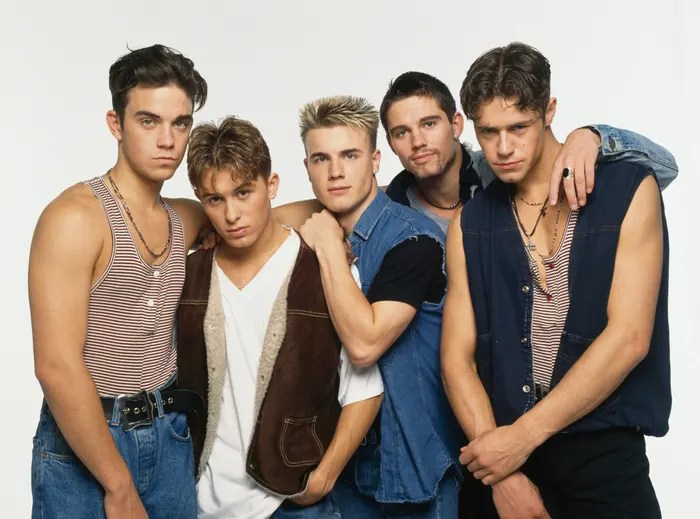
We ended the last thirty #1s on Oasis, and ‘Some Might Say’, a clarion call for the Britpop era to come. But, looking back, the previous era can go under one name only: ‘Take That Totality’! (Send any better words beginning with ‘T’ on a postcard, please…) Yes, Britain’s biggest-ever boyband scored six chart-toppers over the last thirty, which has to be some kind of record. I’m not sure that even Elvis or The Beatles, during their periods of domination in the 1960s, managed six in one recap.

Their hits have ranged from the super-famous-and-slightly-overrated (‘Back for Good’) to the surprisingly enjoyable (‘Sure’) to the predictably so-so (‘Babe’ and ‘Everything Changes’) to a fun intergenerational duet (‘Relight My Fire’, with the lovely Lulu). The best for me, though I didn’t quite appreciate it at the time, was their first: ‘Pray’. While they’re not done yet – in real-time we’re on the verge of Robbie’s walkout – by our next recap they’ll have long since split, and Gary will have embarked on his wildly successful solo career. For all their #1s, though, the best boyband hit of the past two years was not by Take That… More on that in due course.
In and around all the screaming teeny-boppers, we’ve had some par-for-the-course reggae, with two reinventions of ‘60s classics. Chaka Demus & Pliers gave us a fun take on ‘Twist and Shout’, while Pato Banton gave us a slightly more predictable run through of ‘Baby Come Back’ alongside the Campbell brothers from UB40. We’ve also had the pre-requisite ‘90s power ballads: Meat Loaf’s batshit ‘I Would Do Anything For Love’, Mariah Carey’s unnecessary cover of ‘Without You’, and Celine Dion’s much more welcome ‘Think Twice’.

We also met, and endured, another of the longest-running #1s ever. Wet Wet Wet’s cover of ‘Love Is All Around’ was much lighter and more enjoyable than the Bryan Adams and Whitney Houston behemoths from last time out, but still didn’t merit anything like fifteen weeks at the top. (As an aside, the number of times I’ve typed the words ‘cover’ or ‘version’ in the last few minutes has me wondering just how many of the past thirty #1s were covers. Seven, apparently, which seems like a lot, but I haven’t time to go back and check…)

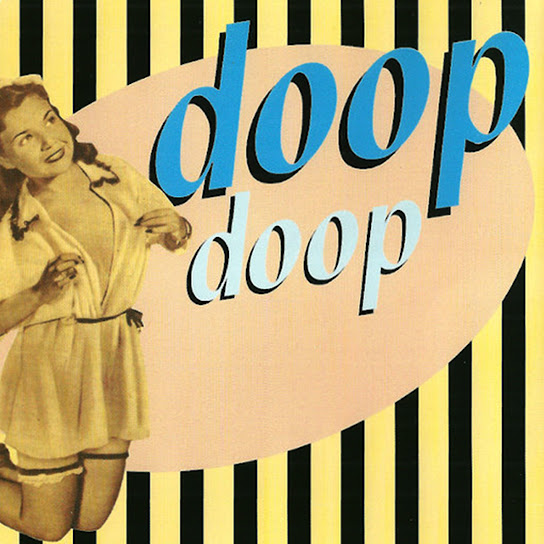
And of course, this being the mid-nineties, we’ve had our fair share of chart-topping dance records. Some classic, or at least well-respected – ‘Mr Vain’, D:Ream, ‘The Real Thing’ and Baby D – some very cheap and tacky – Doop, Whigfield, ‘Cotton Eye Joe’ and the Outhere Brothers (which was also the most profanity-strewn number one yet, by far …)
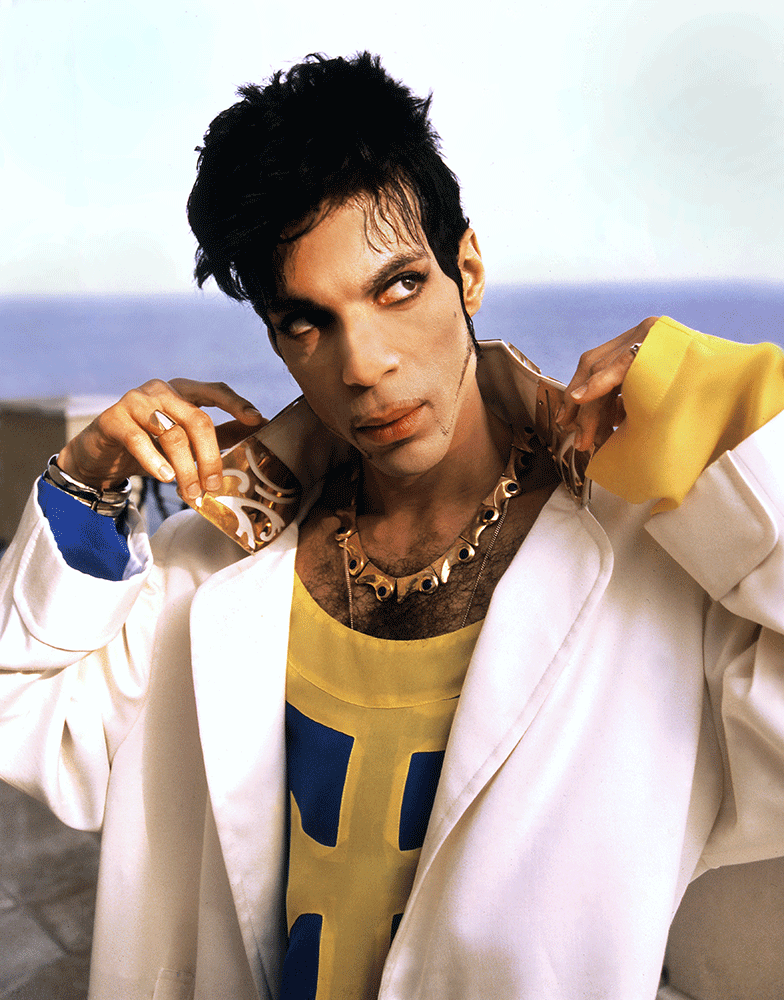
If all the above feels fairly expected, then we’ve also had a few firsts and anomalies. Some chap with a squiggly symbol for a name, formerly known as Prince, managed his one and only British chart-topper with the underwhelming ‘The Most Beautiful Girl in the World’. We also had our sole grunge #1: Stiltskin’s ‘Inside’, which added to the growing sub-genre of ‘chart-toppers brought about by Levi’s adverts’. And our first and last football club #1: Man Utd branching out from league domination to take over the singles charts (with a little help from Status Quo).
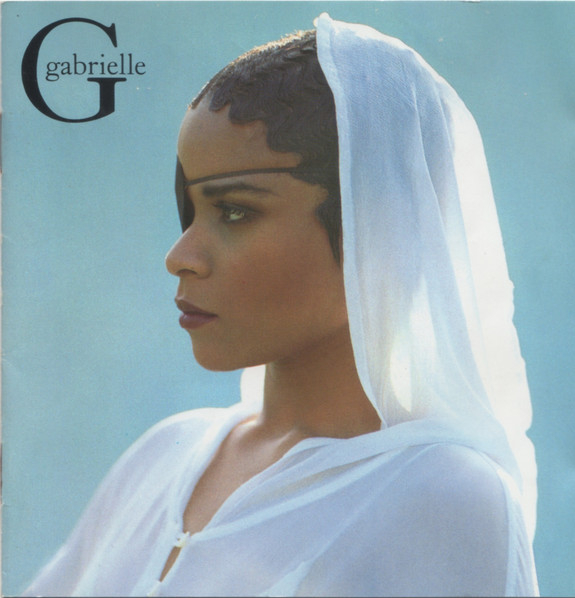
Awards time, then! Starting, as is customary, with The ‘Meh’ Award for songs that failed to get my pulse even mildly aroused. And there have been a few so-so chart-toppers recently. I could plump for a couple of Take That contenders, in ‘Babe’ and ‘Everything Changes’, but the former had a weird creepiness to it and the latter was catchy enough. ‘Love Can Build a Bridge’ – this recap’s charity effort – was also fairly bland, though with a cast of characters that caught the eye at least. I could be controversial and give it to Prince… But no, I’m going for Gabrielle’s ‘Dreams’: nice enough, dinner-party soul-pop. It may be because it’s not fresh in the memory – it was the first of the thirty – or it may be because it’s just plain boring.
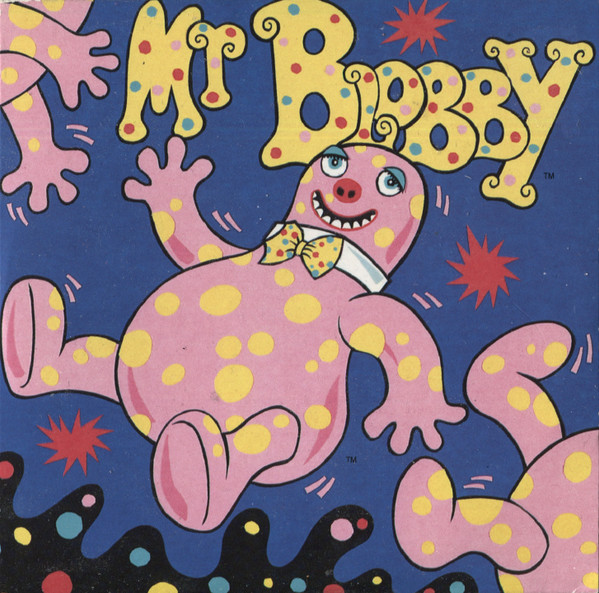
The WTAF Award for being interesting if nothing else is always a fun one to do. And boy, do we have an interesting range of contenders. Meat Loaf (and Jim Steinman’s) outrageous tale of all the things he would do for love barring one has to be in the mix for the bombast, the video, and the record-breaking runtime. Then there’s ‘Mr Blobby’ – a horrible record, but one which holds a strange, car-crash type fascination for me. And there’s Doop, with their eponymous hit, a disorienting fusion of Eurodance and ragtime…

It’s a toughie, and so I looked back at previous WTAF winners. It seems I’ve tended to go for songs I quite like – that are just a bit zany, or against the tide – rather than songs that disturb. ‘Nut Rocker’, ‘Kung Fu Fighting’, ‘Doctorin’ the Tardis’ and the like. So Blobby’s out. And so, sadly, are Doop. Meat Loaf wins!

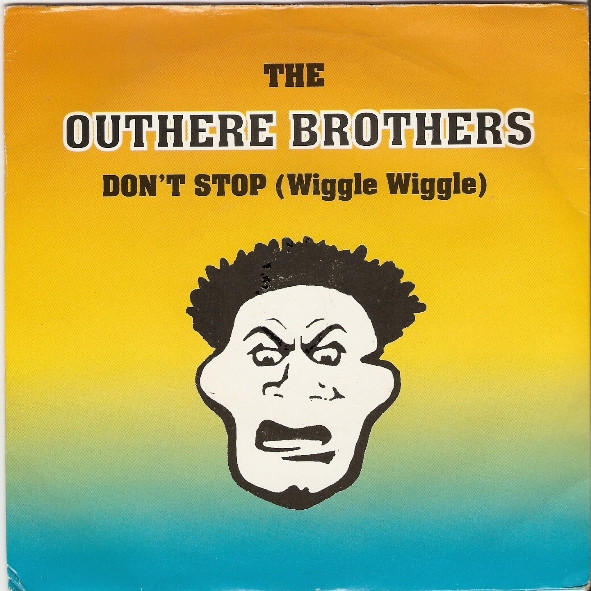
Perhaps I should save Blobby for the next award: The Very Worst Chart-Topper? For a long while I did think he’d have to win. But I didn’t reckon on two horror-shows from early 1995. When the Rednex came along sporting their brand of techno-bluegrass I thought they had it sewn up, for sure. Except then came The Outhere Brothers, with the moronic, repetitive, genuinely unfunny ‘Don’t Stop (Wiggle Wiggle)’, which none of its many remixes could redeem. In the interests of fairness, I should really listen to them both one more time… But why subject myself to that? ‘Cotton Eye Joe’ is a terrible song, but a song nonetheless. ‘Don’t Stop (Wiggle Wiggle)’ is a mess of tedious beats, shouting and swearing. It wins.

And finally, the 25th Very Best Chart-Topper. To be honest, the pickings were slim. Plenty of records I liked, few that I love. So I’ll dispense with the usual debating, the umming and aahing, and announce that since this was undoubtedly Take That’s era, I’m giving the award to East 17, for their classic Christmas ballad ‘Stay Another Day’. Tis the season, after all…
To recap the recaps:

The ‘Meh’ Award for Forgettability

  1. ‘Hold My Hand’, by Don Cornell.
  2. ‘It’s Almost Tomorrow’, by The Dream Weavers.
  3. ‘On the Street Where You Live’, by Vic Damone.
  4. ‘Why’, by Anthony Newley.
  5. ‘The Next Time’ / ‘Bachelor Boy’, by Cliff Richard & The Shadows.
  6. ‘Juliet’, by The Four Pennies.
  7. ‘The Carnival Is Over’, by The Seekers.
  8. ‘Silence Is Golden’, by The Tremeloes.
  9. ‘I Pretend’, by Des O’Connor.
  10. ‘Woodstock’, by Matthews’ Southern Comfort.
  11. ‘How Can I Be Sure’, by David Cassidy.
  12. ‘Annie’s Song’, by John Denver.
  13. ‘I Only Have Eyes For You’, by Art Garfunkel.
  14. ‘I Don’t Want to Talk About It’ / ‘The First Cut Is the Deepest’, by Rod Stewart.
  15. ‘Three Times a Lady’, by The Commodores.
  16. ‘What’s Another Year’, by Johnny Logan.
  17. ‘A Little Peace’, by Nicole.
  18. ‘Every Breath You Take’, by The Police.
  19. ‘I Got You Babe’, by UB40 with Chrissie Hynde.
  20. ‘Who’s That Girl’, by Madonna.
  21. ‘A Groovy Kind of Love’, by Phil Collins.
  22. ‘Do They Know It’s Christmas?’, by Band Aid II.
  23. ‘Please Don’t Go’ / ‘Game Boy’, by KWS.
  24. ‘Dreams’, by Gabrielle

The WTAF Award for being interesting if nothing else

  1. ‘I See the Moon’, by The Stargazers.
  2. ‘Lay Down Your Arms’, by Anne Shelton.
  3. ‘Hoots Mon’, by Lord Rockingham’s XI.
  4. ‘You’re Driving Me Crazy’, by The Temperance Seven.
  5. ‘Nut Rocker’, by B. Bumble & The Stingers.
  6. ‘You’ll Never Walk Alone’, by Gerry & The Pacemakers.
  7. ‘Little Red Rooster’, by The Rolling Stones.
  8. ‘Puppet on a String’, by Sandie Shaw.
  9. ‘Fire’, by The Crazy World of Arthur Brown.
  10. ‘In the Year 2525 (Exordium and Terminus)’, by Zager & Evans.
  11. ‘Amazing Grace’, The Pipes & Drums & Military Band of the Royal Scots Dragoon Guard.
  12. ‘Kung Fu Fighting’, by Carl Douglas.
  13. ‘If’, by Telly Savalas.
  14. ‘Wuthering Heights’, by Kate Bush.
  15. ‘Hit Me With Your Rhythm Stick’, by Ian Dury & The Blockheads.
  16. ‘Shaddap You Face’, by Joe Dolce Music Theatre.
  17. ‘It’s My Party’, by Dave Stewart & Barbara Gaskin.
  18. ‘Save Your Love’ by Renée & Renato.
  19. ‘Rock Me Amadeus’, by Falco.
  20. ‘Pump Up the Volume’ / ‘Anitina (The First Time I See She Dance)’, by M/A/R/R/S.
  21. ‘Doctorin’ the Tardis’, by The Timelords.
  22. ‘Sadeness Part 1’, by Enigma.
  23. ‘Ebeneezer Goode’, by The Shamen.
  24. ‘I Would Do Anything for Love (But I Won’t Do That)’, by Meat Loaf

The Very Worst Chart-Toppers

  1. ‘Cara Mia’, by David Whitfield with Mantovani & His Orchestra.
  2. ‘The Man From Laramie’, by Jimmy Young.
  3. ‘Roulette’, by Russ Conway.
  4. ‘Wooden Heart’, by Elvis Presley.
  5. ‘Lovesick Blues’, by Frank Ifield.
  6. ‘Diane’, by The Bachelors.
  7. ‘The Minute You’re Gone’, by Cliff Richard.
  8. ‘Release Me’, by Engelbert Humperdinck.
  9. ‘Lily the Pink’, by The Scaffold.
  10. ‘All Kinds of Everything’, by Dana.
  11. ‘The Twelfth of Never’, by Donny Osmond.
  12. ‘The Streak’, by Ray Stevens.
  13. ‘No Charge’, by J. J. Barrie
  14. ‘Don’t Give Up On Us’, by David Soul
  15. ‘One Day at a Time’, by Lena Martell.
  16. ‘There’s No One Quite Like Grandma’, by St. Winifred’s School Choir.
  17. ‘I’ve Never Been to Me’, by Charlene.
  18. ‘Hello’, by Lionel Richie.
  19. ‘I Want to Know What Love Is’, by Foreigner.
  20. ‘Star Trekkin’’, by The Firm.
  21. ‘Nothing’s Gonna Change My Love for You’, by Glenn Medeiros.
  22. ‘Let’s Party’, by Jive Bunny & The Mastermixers.
  23. ‘(Everything I Do) I Do It for You’, by Bryan Adams.
  24. ‘Don’t Stop (Wiggle Wiggle)’, by The Outhere Brothers

The Very Best Chart-Toppers

  1. ‘Such a Night’, by Johnnie Ray.
  2. ‘Cherry Pink and Apple Blossom White’, by Perez ‘Prez’ Prado & His Orchestra.
  3. ‘Great Balls of Fire’, by Jerry Lee Lewis.
  4. ‘Cathy’s Clown’, by The Everly Brothers.
  5. ‘Telstar’, by The Tornadoes.
  6. ‘She Loves You’ by The Beatles.
  7. ‘(I Can’t Get No) Satisfaction’, by The Rolling Stones.
  8. ‘A Whiter Shade of Pale’, by Procol Harum.
  9. ‘I Heard It Through the Grapevine’, by Marvin Gaye.
  10. ‘Baby Jump’, by Mungo Jerry.
  11. ‘Metal Guru’, by T. Rex.
  12. ‘Tiger Feet’, by Mud.
  13. ‘Space Oddity’, by David Bowie.
  14. ‘I Feel Love’, by Donna Summer.
  15. ‘Heart of Glass’, by Blondie.
  16. ‘The Winner Takes It All’, by ABBA.
  17. ‘My Camera Never Lies’, by Bucks Fizz.
  18. ‘Relax’ by Frankie Goes to Hollywood.
  19. ‘You Spin Me Round (Like a Record)’, by Dead or Alive
  20. ‘Stand by Me’, by Ben E. King (Honorary Award)
  21. ‘It’s a Sin’, by Pet Shop Boys.
  22. ‘Theme from S-Express’, by S’Express.
  23. ‘Nothing Compares 2 U’, by Sinéad O’Connor.
  24. ‘Would I Lie to You?’, by Charles & Eddie
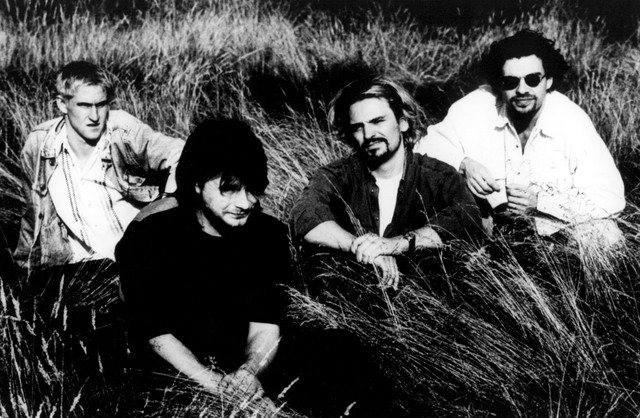
  25. ‘Stay Another Day’, by East 17

I’m planning on taking break over Christmas and New Year, but before I go I’ll be back next week with something special on Christmas #1s…
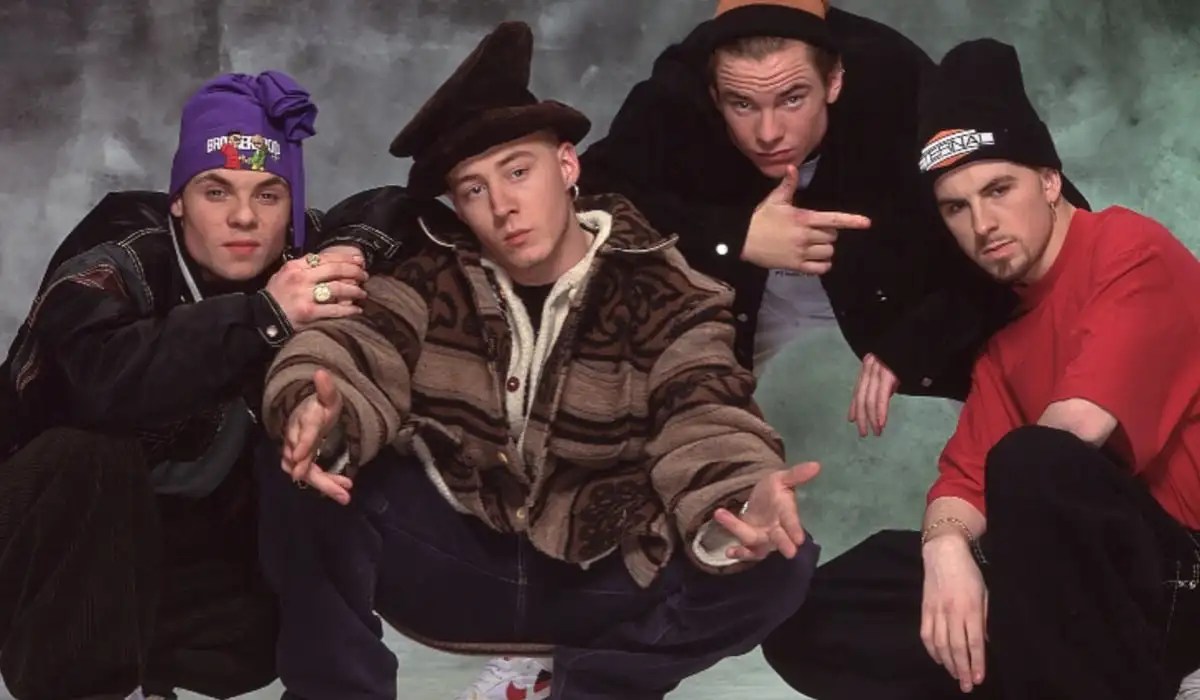
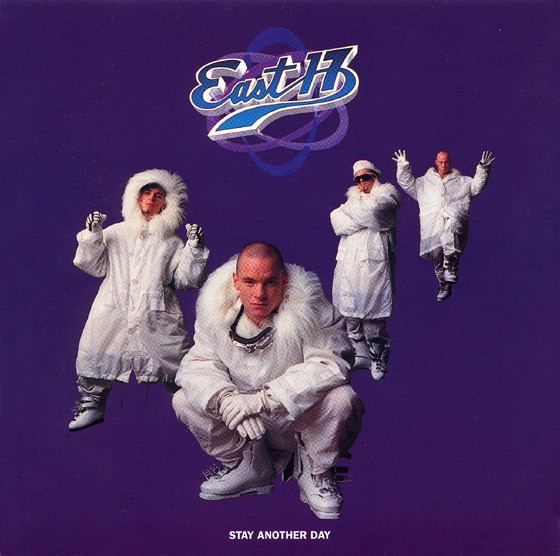
714. ‘Stay Another Day’, by East 17

Every good guy needs a bad guy. Every superhero a nemesis. And the cutest, cleanest-cut boyband of the day needed some rough east London lads as their foils…

Stay Another Day, by East 17 (their 1st and only #1)

5 weeks, from 4th December 1994 – 8th January 1995

Take That have dominated the charts of 1993-1995 like few acts ever do: they’re on five number ones in our countdown – and it’ll very soon be eight – having stuck to a winning pop formula. East 17 meanwhile had been ticking along since mid-1992, scoring five Top 10 hits packed with edgier dance and hip-hop touches, yet not coming close to matching Gary and the boys’ success.

Though the one thing East 17 can lay claim to that Take That can’t is a Christmas number one. A classic Christmas number one at that. A record… I’m just going to stick my neck on the line right now… better than any Take That ever released. (Yes, including that one…) And, ironically, to score their only number one they momentarily dropped the bad-boy posturing, and out-Barlowed Barlow himself; recording a sophisticated, grown-up ballad the likes of which Take That’s chief songwriter would have jumped at.

Baby if you’ve got to go away, Don’t think I could take the pain, Won’t you stay another day… It’s a ballad, of course, and on first listen the lyrics are standard weepy, break-up fare. The four voices meld together in an almost a cappella way – a nod to Christmas hits past? – led by a painfully young sounding Brian Harvey. It’s touching, but when you learn that Tony Mortimer actually wrote it following his brother’s suicide, then lyrics the might on the surface sound simplistic Oh don’t leave me alone like this… hit ten times harder, and elevate the song much higher.

The only controversy that surrounds this record is whether or not it’s a Christmas song. So pressing an issue is it that YouGov polls have been conducted on the subject (the ‘no’s had it, with a slim majority). I’d have to say it is though. It clearly ends in a hail of church bells, that were tacked on once the song had been slated for a festive release. Plus the video has snow in it! Luckily the fact that it now gets filed away with the other festive favourites for ten and a half months of the year means it’s not been done to death. Unlike some other boyband ballads from the mid-nineties…

Speaking of the video… It’s both iconic (those white parka jackets) and yet terrible (pretty much everything else – the dodgy green screen, the floating dancer, the white gloves…) But even that can’t ruin the song. East 17 would continue until the end of the decade – scoring a further six Top 10s – with their fair share of sackings, drama and drug-related controversies. Take That, it’s fair to say, won the war, if there ever was one. Though I was very surprised to learn that if you look beyond British shores, East 17 actually sold more records worldwide, thanks to their popularity in Europe and Australia. And recording one of the best ever boyband singles ever probably helped too.

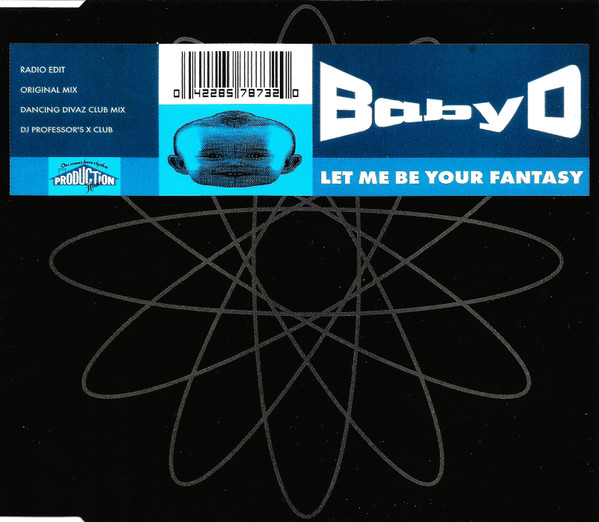
713. ‘Let Me Be Your Fantasy’, by Baby D

I know very little about dance music. I can just about tell my techno from my chillout, but you may have noticed from my previous posts on dance #1s that I play pretty fast and loose with the terminology. So indulge me while I throw around some ideas that may be complete nonsense…

Let Me Be Your Fantasy, by Baby D (their 1st and only #1)

2 weeks, from 20th November – 4th December 1994

‘Let Me Be Your Fantasy’ might be the most ‘hardcore’ dance chart-topper yet. The beat is either ‘house’, if we’re looking backwards, or ‘garage’ if we’re looking forwards. Is it maybe even the first ‘drum ‘n’ bass’ number one? I’ll also throw in the suggestion that it also incorporates ‘jungle’, if only because I think it sounds fun.

I could list dance sub-genres all day long (Wikipedia also suggests ‘breakbeat’ and ‘happy hardcore’) but to be honest, they mean little to me and probably mean as much to you. Let me give the quotation marks a rest, and describe what ‘Let Me Be Your Fantasy’ makes me feel… Well, it’s atmospheric – I like what sounds like a robot breathing in the mellow breaks between the verse – and the vocals are impressive. They’re the part of the song that feels the most familiar: a dance hit helmed by a large-lunged diva a la Black Box, or Snap!. Here the singer is Dorothy ‘Dee’ Galdes (presumably the ‘D’ in Baby D) and she has a wonderfully light-yet-full-bodied voice.

It’s another step towards the dance music that was dominating the charts when I came of age in the later part of the decade – dance music that had moved away from samples and novelty raps, dance music that had the confidence to strip things back, to drop the beats per minute, to let things breathe. This record is similar in that way to 1994’s other ‘cool’ dance hit by Tony Di Bart, rather than the more novelty offerings from Doop and Whigfield.

But I’ll also take that word ‘cool’, strengthen it into ‘cold’, and use it to describe how this song leaves me feeling. It’s not my thing, and as much as I try I can’t move past detached admiration as I listen and critique – much like I would an artefact in a museum – and I move on without particularly wanting to hear it again. I will always, sorry to say, enjoy the inane cheesiness of a 2 Unlimited song more…

Baby D had been around since the late eighties, and had scored a handful of minor hits earlier in the nineties. ‘Let Me Be Your Fantasy’ had been around since 1992, when it made #76 and become something of a lost classic. Until it was ‘found’, re-released, and it reached #1. Baby D followed it up with a couple of #3 hits before fading. Their last hit was a remix of this, their biggest hit, that made #16 in 2000. Their keyboard player, Terry Jones, took a slight change in direction and went on to write and produce for the Backstreet Boys, Eternal, and Peter Andre…

712. ‘Baby Come Back’, by Pato Banton ft. Ali & Robin Campbell of UB40

I thought it was about time… Time for our semi-regular blast of nineties reggae!

Baby Come Back, by Pato Banton (his 1st and only #1) ft. Ali & Robin Campbell of UB40 (their only solo #1s)

4 weeks, from 23rd October – 20th November 1994

Bookending 1994 are two reggae number ones, both covers of sixties classics. Back in January, Chaka Demus & Pliers reinvented ‘Twist and Shout’ for the beach bars of Montego Bay, and now Pato Banton has updated The Equal’s 1968 #1 ‘Baby Come Back’, with a little help from British reggae royalty.

It’s probably more ska than reggae, given the higher tempo and the short, sharp horn blasts (and the prevalence of two-tone black and white in the video), but it barrels along happily enough. It’s lively and enjoyable, without doing anything spectacular to the source material. It certainly isn’t as drastic a reimagining as Chaka Demus & Pliers, though it is nice that it is based one of the very first chart-toppers to have had a reggae influence (it made number one just months before the first ‘official’ reggae #1: Desmond Dekker’s ‘Israelites’). My favourite part of this version is the surf guitar playing the distinctive riff from the original.

Like ‘Twist and Shout’, one of the main updates is the addition of a various raps and toasts from Pato Banton. Come back man! Don’ leave me! Bring back me CD collection! Banton was a British singer and toaster from Birmingham, who had been active since the early eighties. He had appeared on UB40’s 1985 album ‘Bagariddim’, which presumably led to the Campbell brothers repaying the favour here. They take chorus duty, and score their fourth #1 in total, though the only one they’d ever manage away from their band. After this, Banton scored a couple more minor hits before seeming to slip off the radar. He released his last album in 2008.

In the course of his toasting, Banton does manage to slip in a cheeky drug reference of the sort that might have seen this record whacked with a BBC ban, had they known what he was on about. Come back, Yes with me bagga sensi… ‘Sensi’ being short for ‘sinsemilla’ – a cannabis plant that is seedless, and therefore much stronger than normal ganja.

Other than that, there’s not an massive amount to write home about here. It’s a fun record that breezes by nicely. Quite why it became the 4th highest selling single of 1994, I’m not totally sure. Though if writing this blog has taught me anything, it’s to never be surprised by the enduring popularity of reggae.

711. ‘Sure’, by Take That

Any act that racks up twelve number ones is going to have some chart-toppers that are better remembered than others… May I present to you, then, Take That’s all-but-forgotten #1.

Sure, by Take That (their 5th of twelve #1s)

2 weeks, from 9th – 23rd October 1994

I’m ‘sure’ I’ve heard this somewhere – the sure, so sure hook in the chorus was familiar – but the rest was a surprise. A pleasant surprise at that. The intro fools you, with lullabying chords suggesting that a syrupy ballad is on its way. But then everything goes a bit funky: with a squelchy bass, and lots of horns and scratchy turntables. If Take That’s previous hits had relied on retro, disco influences – ‘Relight My Fire’ and ‘Everything Changes’ – then ‘Sure’ sees the band turn to modern, American R&B.

Though, in fairness, this new jack swing beat had been around for a while, so they were actually quite late to the party. Still, it’s a solid pop song, and boybands are always at their most bearable when they’re keeping things upbeat. The lyrics are a bit PG, compared to similar acts – it’s been well over three years since Color Me Badd wanted to sex us up. Though there is a reference here to Gary Barlow’s relationship checklist: It’s got to be social, compatible, sexual, irresistible… (Take That’s big ‘rivals’ East 17 were a lot steamier on hits like ‘Deep’, but then they weren’t scoring #1 after #1. Definitely something to be said for keeping it family-friendly.)

Speaking of Mr Barlow, I do wish he’d relinquished lead vocal duty for this one. As fun a song as it is, he just doesn’t convince as a sexy alpha on the record, or when the lads cut a slick dance routine in the video. I’ve written in my previous posts on Take That that he clearly had ambitions above ‘boyband star’ – ambitions that will come to fruition with their next number one – and on the basis of their first five chart-toppers he was clearly the dominant force. Possibly too dominant. Small wonder Robbie wanted to break free…

‘Sure’ was the lead single from the band’s third album, and so was guaranteed to be a massive hit. It got the epic, seven-minute video treatment too. Though in truth half the video tells a very dull story in which the boys babysit a little girl while also trying to get ready for a house party. (Skip forward three and a half minutes if you just want to hear the actual song.) And yet, like I said in the intro, this record feels forgotten among their more famous hits. None more so than their sixth chart-topper: a genuinely huge pop-culture moment, coming along very soon.

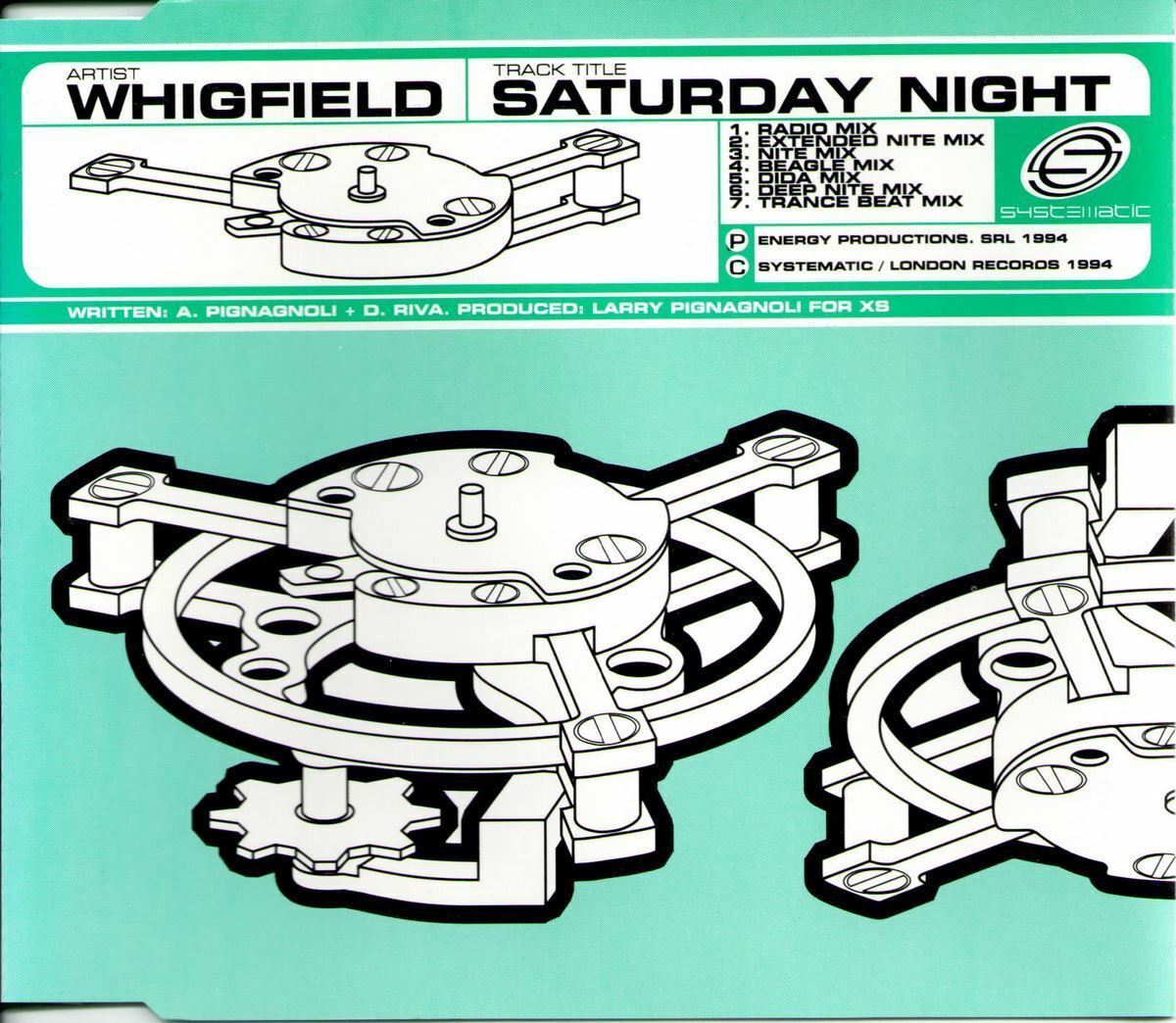
710. ‘Saturday Night’, by Whigfield

After fifteen weeks of ‘Love Is All Around’, I’m sure the nation (including Wet Wet Wet themselves) was happy for literally anything to come along and give us a new number one…

Saturday Night, by Whigfield (her 1st and only #1)

4 weeks, from 11th Sept – 9th Oct 1994

Well, here with the dictionary definition of the phrase ‘careful what you wish for’, is Danish beauty Whigfield, and her ode to the penultimate night of the week. I innocently thought I’d enjoy hearing this tune again, cheese that it is, while assorted memories of primary school discos came flooding back…

But, alas. It’s a bit crap. The first ten seconds are the most interesting. The famous di-di-da-da-da intro and the quacking synths. Here we go, I think, nostalgia central. Except, as ever, nostalgia ain’t what it used to. The remaining four minutes of ‘Saturday Night’ are repetitive and dull. The banal lyrics – Saturday night and I like the way you move… It’s party time and not one minute we can lose… Be my baby… and some la-di-dahs to fill the gaps… – the banal beat, the banal quacking. I notice that as part of the current ‘the nineties were the best decade ever’ movement, there are attempts to cast this as a ‘90s dance classic, up there with ‘Rhythm Is a Dancer’ and ‘Ebeneezer Goode’. But it’s really not.

Not that it’s terrible either. It’s a novelty, but not the most offensive kind. It’s biggest relevance, in chart terms, is in being the ultimate post-summer holiday hit. Presumably played in bars across the continent all summer, it smashed straight in at number one when finally released at the start of September. Oh, and there’s the fact that in entering at #1, Whigfield became the first act to have their debut single do so.

As with Alice Cooper, and Marilyn Manson (two artists to whom I didn’t expect to be drawing a comparison today) people make the mistake of referring to Whigfield as the singer rather than the band (or ‘musical project’ as Wikipedia refers to them). The singer, Sannie Charlotte Carlson, was Danish, and the producers were Italian. Carlson, though, was the very pretty star of the show. I’m sure the video, in which she prances around in a towel, getting ready for a big night out, did the song’s chances no harm. Whigfield would go on to have just two further Top 10 hits, though Carlson continues to record and perform.

I think another reason writing this post didn’t bring about a warm Proustian glow is that my repeated plays of ‘Saturday Night’ have reminded me of the dance routine. Interestingly, Carlson doesn’t do the dance in the video, and the craze seems to have stemmed from her backing dancers when she performed on Top of the Pops. However it started though, it quickly caught on, and the social anxiety that came from the being nine-years-old and the only person in the school who couldn’t do it properly remains to this day (see also: ‘The Macarena’).

709. ‘Love Is All Around’, by Wet Wet Wet

The charts of the first half of the 1990s have had many stories to tell: interesting one-hit wonders, new sounds coming, old sounds going, acts appearing and becoming huge… And yet from a certain angle it can look like the period was dominated by just three songs, all from film soundtracks, which together spent forty-one weeks atop the charts. (Set back to back that would stretch for over nine months, a period in which you could conceive, gestate, and birth a human child…)

Love Is All Around, by Wet Wet Wet (their 3rd and final #1)

15 weeks, from 29th May – 11th Sept 1994

We’ve already endured Bryan Adams and Whitney, and now here is the third and final chart-hogging behemoth. And thankfully it’s the best of the three, by far. It’s not an overwrought power-ballad, for a start. More a low-power ballad, with some jaunty flourishes among the cheesy sentiments and Marti Pellow’s over-singing.

I like the woozy fills before the chorus, and the way the band manage to update a song from the sixties with just enough nineties rock touches: a string section, some power chords, and a soaring guitar for the fade-out. ‘Love Is All Around’ was originally recorded by the Troggs, making #5 in 1967. This gave Reg Presley a writing credit on a second #1, after the band’s 1966 #1 ‘With a Girl Like You’. (Rather brilliantly, he spent the unexpected royalties on crop circle research…)

The fact that it’s a more upbeat number than its ginormous predecessors is also reflected in the movie it came from. ‘Four Weddings and a Funeral’ was a rom-com, compared to the epic ‘Robin Hood – Prince of Thieves’ and the slushy ‘Bodyguard’. For the soundtrack, Wet Wet Wet were asked to choose between covering this, Barry Manilow’s ‘Can’t Smile Without You’ and Gloria Gaynor’s ‘I Will Survive’ (which would have been interesting…) ‘Love Is All Around’ was, I’d imagine, an easy choice for the pop-rocking Wets.

As much as this record is a relief after the other two long-runners, I shouldn’t overstate its quality. It’s fine. It’s serviceable. It’s a decently done cover. Nothing more. The original has a low-key charm to it that this version cannot reproduce with its lush production, and the fact that Marti Pellow doesn’t do ‘low-key’. And of course, we can’t ignore that it far outstayed its welcome on top of the charts. You often hear talk about ‘The Song of the Summer’. Never has it been quite as literal as this, with the record on top from late-May to early-September.

By the end of its run, some radio stations were refusing to play it. The band were well aware of the record becoming a millstone around their necks, and deleted it from production. ‘We did everyone’s head in’, Pellow succinctly summed up. This meant that it fell one week short of matching Adams’ record for consecutive weeks at #1. ‘Love Is All Around’, however, did outsell both Adams and Houston in the long run, and currently sits at almost two million copies (number eleven in the all-time sales table).

This song’s success didn’t completely sour Wet Wet Wet’s reputations in the UK. They wouldn’t again make number one, but they scored five further Top 10s before splitting in 1997 after a dispute over royalties. They reformed a decade later, and continue touring and recording with two of the four original members.

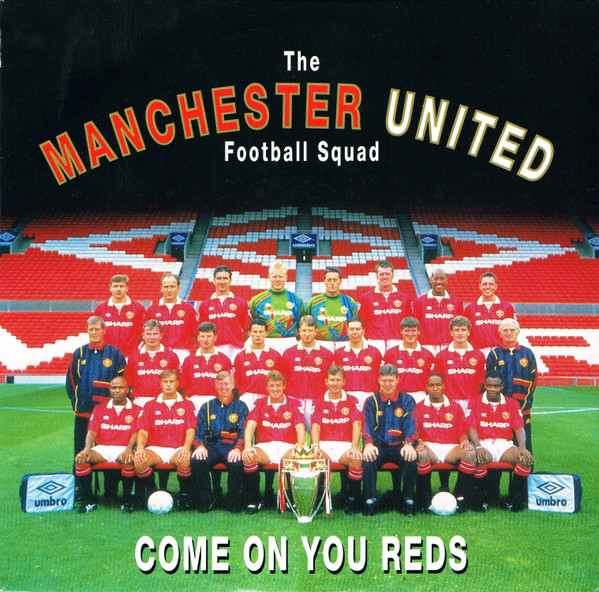
708. ‘Come On You Reds’, by The Manchester United Football Squad

After Tony Di Bart and Stiltskin, we smash one in at the near post to complete a hattrick of long-forgotten number ones…

Come On You Reds, by The Manchester United Football Squad (their 1st and only #1)

2 weeks, from 15th – 29th May 1994

A song featuring Britain’s most popular football team, and one of our longest-lasting rock acts, shouldn’t necessarily be consigned to the history books. And yet we’re probably all glad that this record never became as ubiquitous as some football songs. Because, even against the low bar set by most singing footballers, it’s pretty crap.

All the classic tropes are there. Piped-in crowd noises, commentary clips (‘Which number one single features Jonathon Pearce?’ would make a great pub quiz question), athletes looking far outside their comfort zones sharing a microphone in the video, lyrics that were probably scribbled out on the back of a beer mat: Come on you reds, Come on you reds, Just keep your bottle and use your heads… One verse, in fact, is literally just the team sheet: Robson, Kanchelskis and Giggs…

But away from all that, this is actually a fairly interesting number one. It is, to start with, Status Quo’s lost chart-topper. The records show that they have just the one – 1975’s ‘Down, Down’ – but this record was written and produced by the band, and is based on their 1988 hit ‘Burning Bridges’ (the ‘jig’ portion of which was in turn based on an old folk song called ‘Darby Kelly’). That isn’t one of my favourite Quo songs; but one of the few things that could have redeemed this tripe was if they had received a credit on the sleeve.

In footballing terms, it’s also a bit of a time capsule. It was released in advance of Utd’s FA Cup final against Chelsea (who released their own record for the game, making #23), and the idea that reaching the FA Cup final would merit a song seems bizarre in the modern football world. In fact, teams don’t record songs any more. No modern Premier League player would be seen dead singing along to cheesy lyrics written by some crusty old rockers. Which is both a slightly sad thing, and a great relief.

There have of course been two football number ones before this (‘Back Home’ and ‘World in Motion’) and a few more to come. But they are all songs about England, released ahead of World Cups and European Championships, with a whole country ready and willing to buy the record. ‘Come on You Reds’ is the only #1 by a club side, and they followed it up with two #6 hits for the ’95 and ’96 finals. Yes, not only did Man Utd dominate football in the nineties, they dominated the charts. No wonder we all hate them…

In case anyone is interested, the next biggest football club hits are Chelsea’s ‘Blue Is the Colour’ (#5 in 1972), Spurs’ ‘Ossie’s Dream’ (#5 in 1981), and Liverpool’s legendary ‘Anfield Rap’ (#3 in 1988). Back in the charts of 1994 though, and I’d have to say that the spring of this year has thrown up a run of fairly flash-in-the-pan, forgotten hits: ‘Doop’, ‘The Real Thing’, ‘Inside’, and now this. Up next, however, is a song that stayed at the top so long we had no choice but to remember every note…

(This video sadly cuts the last thirty seconds off the song… But you’ll have gotten the gist by then… It also features footage of the 1994 FA Cup final, suggesting it was produced after the record had made #1.)

707. ‘Inside’, by Stiltskin

In my previous post, I wrote that Tony Di Bart’s ‘The Real Thing’ must have been the most recent #1 that I’d never previously heard. Well, the very next chart-topper is probably just as forgotten…

Inside, by Stiltskin (their 1st and only #1)

1 week, from 8th – 15th May 1994

Luckily, though, my dad once owned a ‘Best Rock Album Ever…’ sort of compilation released sometime around 1994. In amongst all the Free, the Boston, and the Blue Oyster Cult, the compilers had clearly felt the need for something more contemporary. What better track to include, then, than that year’s big rock hit: Stiltskin’s ‘Inside’. Which means that this lumpy, grungy, one-hit wonder takes me right back to my childhood.

This should be a pretty cool moment for chart watchers. Grunge was the sound of the early-nineties, though it had never troubled the top of the charts until now. (By May ’94, the genre was on its last legs, Kurt Cobain having died just a month earlier…) Anyway, this is a very heavy, very sweaty, very hairy number one single, the hardest rocking since Iron Maiden brought our daughters to the slaughter. Listening to it now, for the first time in two decades, the chorus is a classic of the genre.

But it also feels a little like Grunge-by-AI. Listen and you can hear rip-offs of ‘Smells Like Teen Spirit’ in the quiet-loud chorus, and ‘Black Hole Sun’ in the two chiming notes during the verses. I swear to God there’s something by Pearl Jam buried in there, too, though I can’t quite root it out. People online have compared it to ‘Today’ by Smashing Pumpkins, but I don’t personally hear it. Basically, the songwriters have taken elements of the best grunge bands, smushed them up, and made a pretty decent song.

The lyrics are apparently based on Plato’s ‘allegory of the cave’, making this potentially the first UK #1 to reference the ancient Greek philosopher. To my ears, though, it sounds like the worst sort of Year 9 poetry: Strong words in a Ganges sky, I have to lie, Shadows move in pairs… culminating in the motivational slogan: If you believe it, Don’t keep it all inside… (To be fair, I was a fan of the fat man starts to fall line as a kid…)

‘Inside’ also loses a few more street-cred points from the fact that the song was written to order for a Levi’s jeans commercial (making this the fourth number one to come from a Levi’s ad, though the first that isn’t a re-release of an older track). A man called Peter Lawler wrote the song, and plays all the instruments on this recording. He needed a vocalist, and after some auditions found Ray Wilson, a Scottish singer/guitarist. This first incarnation of the band released only one album, and two more low-charting singles, but they reformed and have carried on to this day, in an ever-changing line-up with Wilson as the only constant. (He also spent four years as lead-singer for Genesis, replacing Phil Collins.)

‘Inside’ was probably fortunate to find itself on a compilation called ‘Best Rock Album Ever’ – right place, right time – and is similarly fortunate to hold the title of the UK’s sole grunge chart-topper. But variety is the spice of life, and I’m glad it sneaked its week at number one. Sadly, the fate that confirms once and for all if a record has been lost to the mists of time has indeed befallen ‘Inside’… It’s not on Spotify.

706. ‘The Real Thing’, by Tony Di Bart

Well, I didn’t expect this. To get to May 1994 and come across a number one hit I have genuinely never heard before…

The Real Thing, by Tony Di Bart (his 1st and only #1)

1 week, from 1st – 8th May 1994

This record both is, and isn’t, your average mid-nineties dance tune. It’s a banger, all throbbing synths and a bassline that goes right through you, but it’s main references aren’t techno, or Eurodance. It looks back to the house tunes of the late-eighties – meaning it probably qualifies as retro already – and in the beat and the piano chords it nods even further back, to the days of disco.

It’s a slow-build sort of song. I was about to write it off as bland on first listen, but on my second I heard a hook buried in the melancholy chords, and by the third listen I was intrigued. There’s something there. Despite its retro influences, it feels very modern. If I can’t have you, I don’t want nobody baby… Most dance hits in the mid-nineties were euphoric, in-your-face – the likes of 2 Unlimited and Snap! springing to mind. ‘Dancing through the tears’ is a very 21st century concept, popularised by acts like Robyn, and The Weeknd. The latter of whom I bring up, because Tony Di Bart sounds remarkably like Abel Tesfaye, with his falsetto, and the longing in his voice.

The man known as The Weeknd counting Tony Di Bart as an influence seems unlikely, given that ‘The Real Thing’ was the only Top 20, and one of only two Top 40 hits, Di Bart managed. Neither of which did very much in North America. This single hadn’t done much initially in the UK either, when it was released in November 1993. It took a remix to send it up the charts, and that’s why I haven’t attached a video below: none seems to have been made for the much more atmospheric remix. (Listen to the original version here.)

As Italian as Antonio Carmine Di Bartolomeo AKA Tony Di Bart sounds, he was actually from Slough. His Wikipedia page is sparse, with few details given as to how he went from selling bathrooms to the top of the charts. His post-fame entries make for sad reading: one of his more recent public appearances was at a village fête in Buckinghamshire, before he was arrested and pleaded guilty to assaulting a police officer earlier this year.

Still, assault charges or no assault charges, you can’t take away the fact that Tony Di Bart has a number one single. One that is actually quite good, the more you listen and get lost in its wistful synths. Up next, an equally forgotten one-week wonder…