408. ‘So You Win Again’, by Hot Chocolate

Taking up where The Jacksons left off – I’m sure any DJ worth their salt could spin this and ‘Show You the Way to Go’ together seamlessly – here’s Hot Chocolate with another slice of disco-lite.

So You Win Again, by Hot Chocolate (their 1st and only #1)

3 weeks, from 26th June – 17th July 1977

I love the guitar sound on this record. It sounds like a whale bellowing from the ocean’s depths: primal and deep. Is it even a guitar? A synthesiser? Electric violin? Whatever it is, it works brilliantly. It helps create a really thick, sticky sound, as if this whole record has been dipped in a vat of honey.

There’s also a hypnotic bass to drag you along. This record has a pretty sleazy-sounding undertone to it, which the lyrics don’t really justify. It’s a song about a man spurned: Your perfumed letters didn’t say, That you’d be leaving any day… She does sound flighty – can you really trust someone who sends perfumed letters?

So you win again, You win again, Here I stand again… Under all the heavy instrumentation, however, a great pop song lurks. There are plenty of hooks: the do-do-dodoops and a catchy middle-eight in the I can’t refuse her… line. Plus the way lead singer Errol Brown draws out the ‘lo-ser’ in the chorus is great. But I think what makes the whole song complete is the little ‘So’ in the title. It adds weight to the singer’s resignation, to the fact that he’s a schmuck who’s been fooled before and will be fooled again…

This is sophisticated, and layered pop music. There’s a marimba in there somewhere, a horn, and strings, while the rest of the band wrap themselves around the lead vocals. In my last post I mentioned bands whose sole #1 single isn’t their most famous. Hot Chocolate are better known for ‘You Sexy Thing’ (a #2) and probably ‘Every 1s a Winner’ (only a #12!) But, out of these three, I’d say ‘So You Win Again’ is the better record.

This was already their seventh Top 10 hit, though, in a run stretching right back to the start of the decade. They’d have a few more, and are still a going concern, still with three of the members that appeared on this record. Lead singer Brown, he of the velvety voice, left the group in the eighties and passed away in 2015.

Before I finish, can I just give a shout out to ‘Hot Chocolate’ as a brilliant band name? I recently called out ‘Pussycat’ for having a ridiculous name, and there is an even worse one coming up shortly. But ‘Hot Chocolate’ stays just the right side of cheesy, and sums up the group’s sound perfectly.
406. ‘Lucille’, by Kenny Rogers

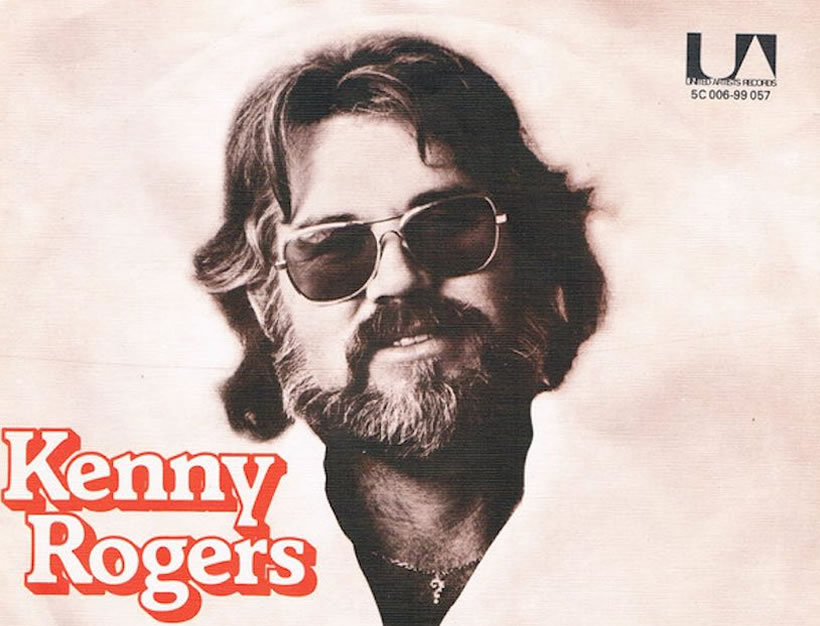
So, while The Sex Pistols perhaps should have kicked Rod Stewart off the top, in the end he was replaced by another crazy-haired, middle-finger sticking punk rocker… Only kidding, he was replaced by Kenny Rogers.

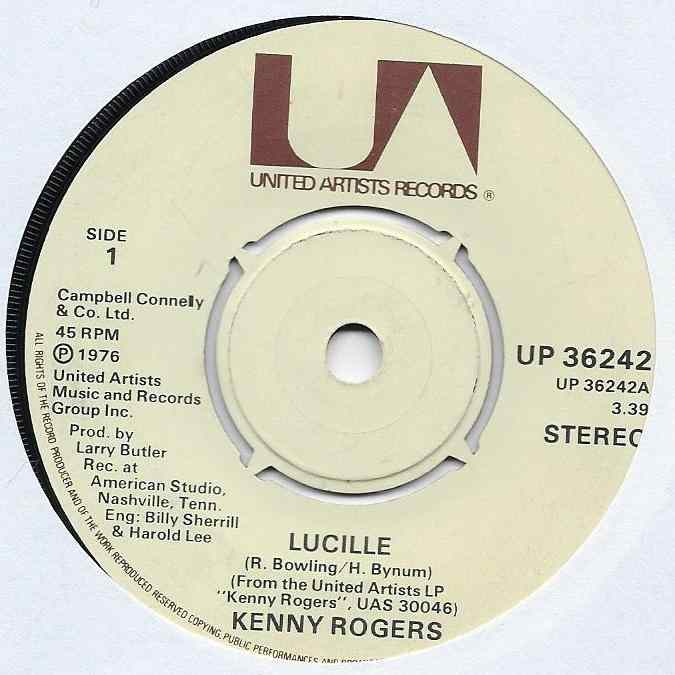
Lucille, by Kenny Rogers (his 1st of two #1s)

1 week, from 12th – 19th June 1977

The two main sounds of the mid to early-late seventies, since glam died, have undeniably been disco and slushy soft-rock. But coming up behind, in the bronze medal position, surprisingly, is country and western. We’ve had Tammy Wynette, Billy Connolly as Tammy, J. J. Barrie, Pussycat… and now a proper legend of the genre.

Country music is often sad; and yet often ridiculous. It is a melodramatic genre. And the opening line of this record is up there with some of the very best. In a bar in Toledo, Across from the depot, On a bar stool she took off her ring… Talk about setting a scene! A tawdry tale is told, as the singer approaches this beautiful, sad woman.

She’s been living on dreams, she’s finally had enough, she needs more out of life… Kenny’s about to make his move, when in through the barroom doors strides Lucille’s ex. The big hands were calloused, He looked like a mountain, For a minute I thought I was dead… As silly as all this is, when Kenny Rogers is on form he tells a story like no other.

You picked a fine time to leave me, Lucille… The story spins on its head. Four hungry children and a crop in the fields… We assumed she was the victim, finally breaking away from hardship and abuse… But is she? Kenny takes her to a hotel, but when the time comes to do the deed, all he can hear is her estranged husband’s voice… This time your hurtin’ won’t heal…

What this song really needs is a third and final verse. Who’s really to blame? Who’s telling the truth? Does she go back to her family farm? Does Kenny get his leg over? We need closure! Instead we get the chorus and a slow, slow fade. He may have set an excellent scene; but Rogers needs practice in wrapping up a story. Thankfully, come his next #1 single – yes, he has more than one – he will have mastered the art of storytelling, and produced a classic.

If it weren’t for the pretty gritty subject matter, I’d describe this as a lullaby. The guitar sways and soothes, while the bass keeps time like a metronome. Many Kenny Rogers hits I can think of do this, hide a tough subject matter behind a soothing rhythm: ‘Ruby’, ‘The Gambler’, his aforementioned 2nd chart-topper… ‘Lucille’ was his first big smash since breaking with his band The First Edition, and it set him off on an extended run of hits.

I was going to ask why on earth this record made #1, for a near forty-year-old country singer. But perhaps we’re past that. ‘Lucille’ made #1 simply because country and western music was a very popular genre at the time. It’s not an ever-present, but this is far from the last time we’ll be hearing it…

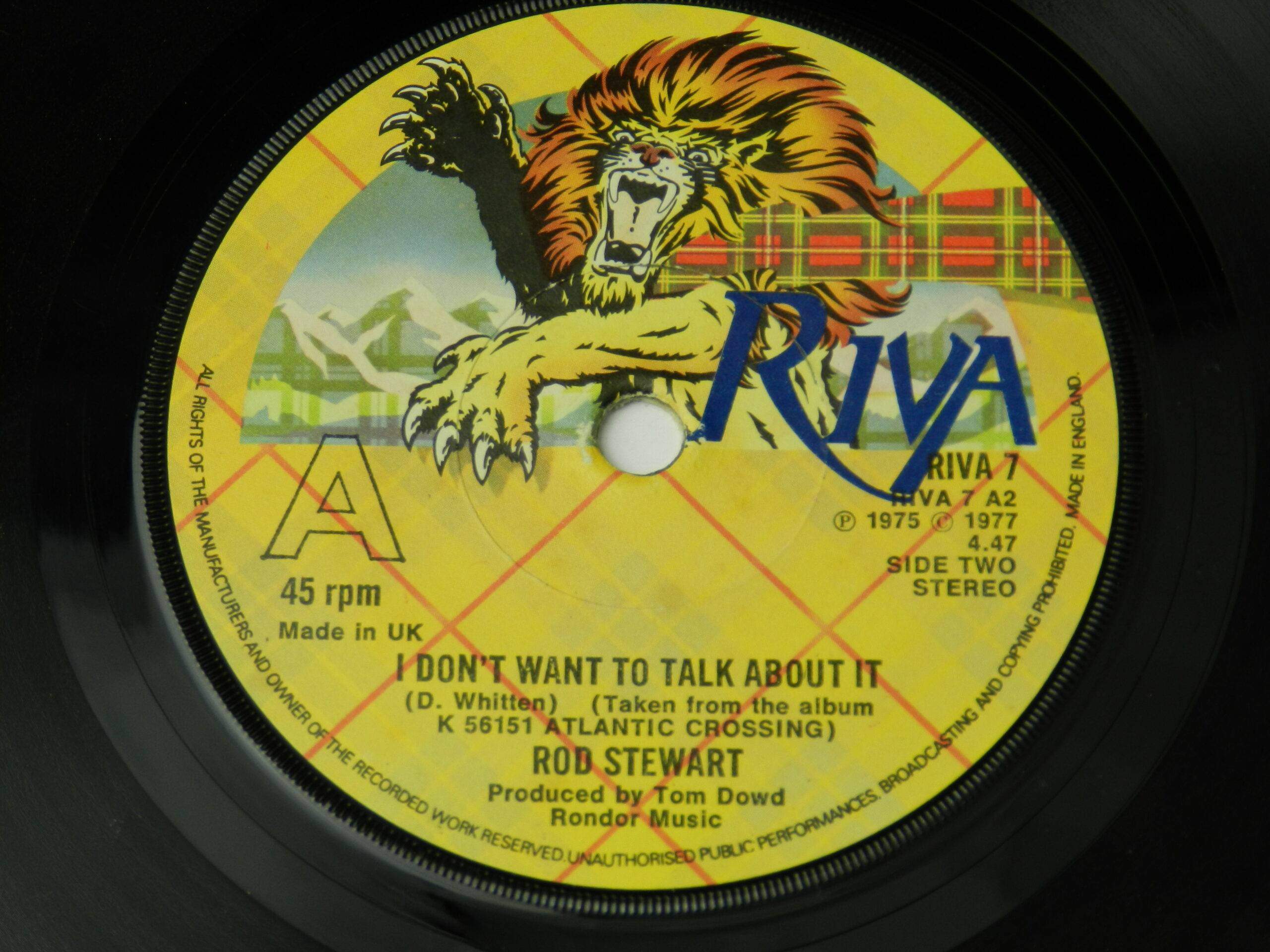
405. ‘I Don’t Want to Talk About It’ / ‘The First Cut Is the Deepest’, by Rod Stewart

The most interesting thing about this next number one is the song which could, maybe should, have replaced it at #1. More on that later. First, Rod’s got some ballads to sing…

I Don’t Want to Talk About It / The First Cut Is the Deepest, by Rod Stewart (his 4th of six #1s)

4 weeks, from 15th May – 12th June 1977

Actually, another interesting thing is that ‘I Don’t Want to Talk About It’ comes from the same album – ‘Atlantic Crossing’ – as Rod’s last chart-topper, ‘Sailing’, which reached the top almost two years ago! That’s a pretty rare feat, mining a LP for singles for that long.

Perhaps you can tell that I’m grasping for interesting things to write about this one, as I’m not finding the music all that gripping. It’s fine: Rod Stewart knows his way around an acoustic ballad like this in his sleep. And perhaps that’s the problem – it’s Rod on autopilot. It’s not got the novelty factor, or the drive, of ‘Maggie May’, or the ridiculous singalong chorus of ‘Sailing’. It’s simply pleasant.

I like the way the strings and guitars lift us to the chorus line: I don’t wanna, Talk about it… Which in itself is also a great line, sung with a lot of feeling. But it’s not enough to hang a whole, five-minute song on. (And that’s another thing – did nobody suggest a ‘single edit’ for this one?)

The guitars, fried and country, are cool, but especially towards the end the song does begin to meander. ‘I Don’t Want…’ was a cover of a 1971 song by Crazy Horse, Neil Young’s sometime band. Rod hasn’t strayed too far from the original, though his version is more polished… and that’s not a good thing. Anyway. What could we possibly need after that? Another heartfelt ballad, of course.

‘The First Cut Is the Deepest’ is another, probably more famous, cover, this time of a Cat Stevens original. It’s another acoustic, bittersweet love song. In fact, I’ll go further than that. It is a thoroughly miserable love song: If you want, I’ll try to love again… As declarations go, it’s certainly honest. He wants her by his side, but only to wipe the tears that he cries… Baby I know, The first cut is the deepest…

Hey, some people are into damaged goods. Again, this ticks all the classy ballad boxes, and Stewart’s voice is as smoky as ever. But, again, it washes over me. Maybe it’s not my thing. Or maybe it’s just dinner party background music. Plus, there’s always the earlier, superior version of ‘The First Cut…’, released by P.P Arnold a decade earlier.

The best double-‘A’ sides have a bit of yin and yang to them. Think of the most famous #2, ‘Strawberry Fields Forever’ / ‘Penny Lane’. Or Louis Armstrong’s ‘What a Wonderful World’ / ‘Cabaret’. Even our most recent double-‘A’ #1 from David Cassidy had two very different sounding songs on each side. Interestingly – here I go again – ‘The First Cut…’ was from a more recent album, ‘A Night on the Town’, making this potentially the only double-‘A’ to feature songs from different LPs by the same artist. (I say ‘potentially’, I have neither the time nor the inclination to check.)

So, we are two thirds through Rod Stewart’s chart-topping career, and it’s been wall to wall ballads so far. Luckily, his last two #1s up the tempo quite a bit. Wahey! It’s not that these are bad songs, far from it; they just don’t scream ‘four weeks at #1!’ to me. But, of course, there’s a good chance that, during the last of those four weeks, Rod Stewart didn’t really have the best-selling single in the land. Controversy ahead, then. More to come…

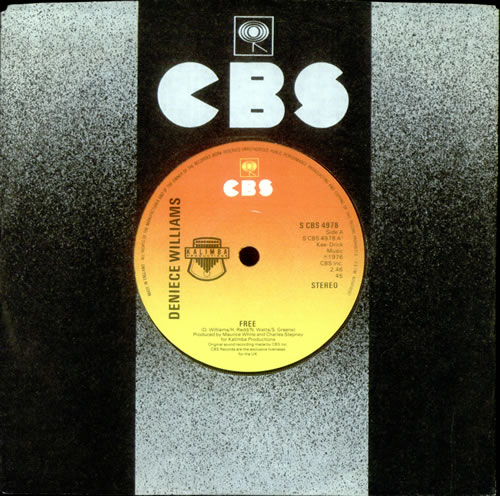
404. ‘Free’, by Deniece Williams

Yet again – and this is happening a lot recently – a record comes along that I realise I know as soon as the vocals begin.

Free, by Deniece Williams (her 1st and only #1)

2 weeks, from 1st – 15th May 1977

But before we get to the lyrics, we have a sexy, slinky bass-line that enters and wraps itself around us. Mmm yes… Is there a more seventies sound than a funky bass-line? And I just got to be me… Free… Deniece Williams’ voice is very pure, crystal clear. She sounds very young. Was she?

Not particularly, she was twenty-six when she recorded her one and only chart-topper. Still, there’s something very girlish about the way she sings, teasing the words around the beat. Whispering in his ear, My magic potion for love… On first listen, this is standard light-soul fare. Except, she just wants to be free. She wants a man, but not the commitment. How that man pleases me… But I want to be free…

That’s quite the feminist statement, and not one that we’ve heard much so far in our four hundred plus chart-toppers. Women can be steadfast (Cilla, Dusty), they can be playful (Connie Francis, Rosemary Clooney), and they can definitely be disappointed by the men in their lives (Freda Payne, Tammy Wynette). But Williams here is brazen in wanting her cake and eating it too. And good for her!

Perhaps the message is the best bit of this song. On the whole, it’s a bit too slickly soulful, with a bit too much tinkly, shimmering production for my tastes. I’ve noticed that in the first throws of this disco/soul era, around 1974, the production was very thick and layered. Here it’s stripped back and feels a little lightweight. My heart sank when I saw ‘Free’s runtime of close to six minutes, but the single edit chopped things down to three. Actually, though, the six-minute version works as an extended slow jam, with a bit more guitar.

Deniece Williams (from Gary, Indiana, like a certain pop icon we’ll be hearing from very soon) had been releasing singles since the late sixties. ‘Free’ was her big breakthrough hit, though it only hit #1 in the UK. She would have to wait a few months to reach top spot in her homeland, in a duet with our most recent Christmas chart-topper, Johnny Mathis. Then came ‘Footloose’, and the classic ‘Let’s Hear It For the Boy’.

I suppose, in a way, this song brings us back to the easy listening, balladry that was bogging us down a few posts ago. But I can stomach this kind of short, sweet and slightly sassy kind of easy-listening. Next up… a whole double ‘A’-side of hardcore balladry. Party on!

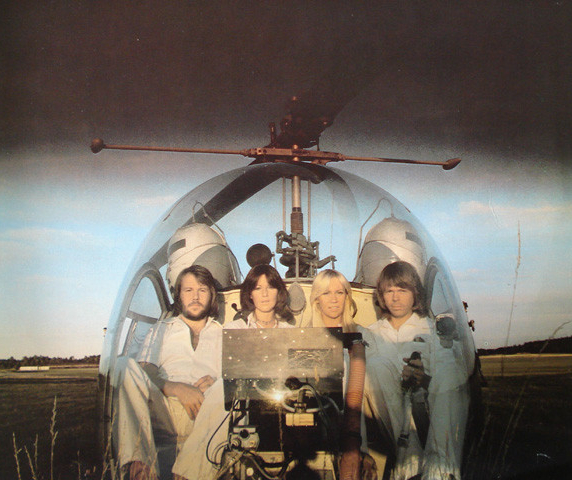
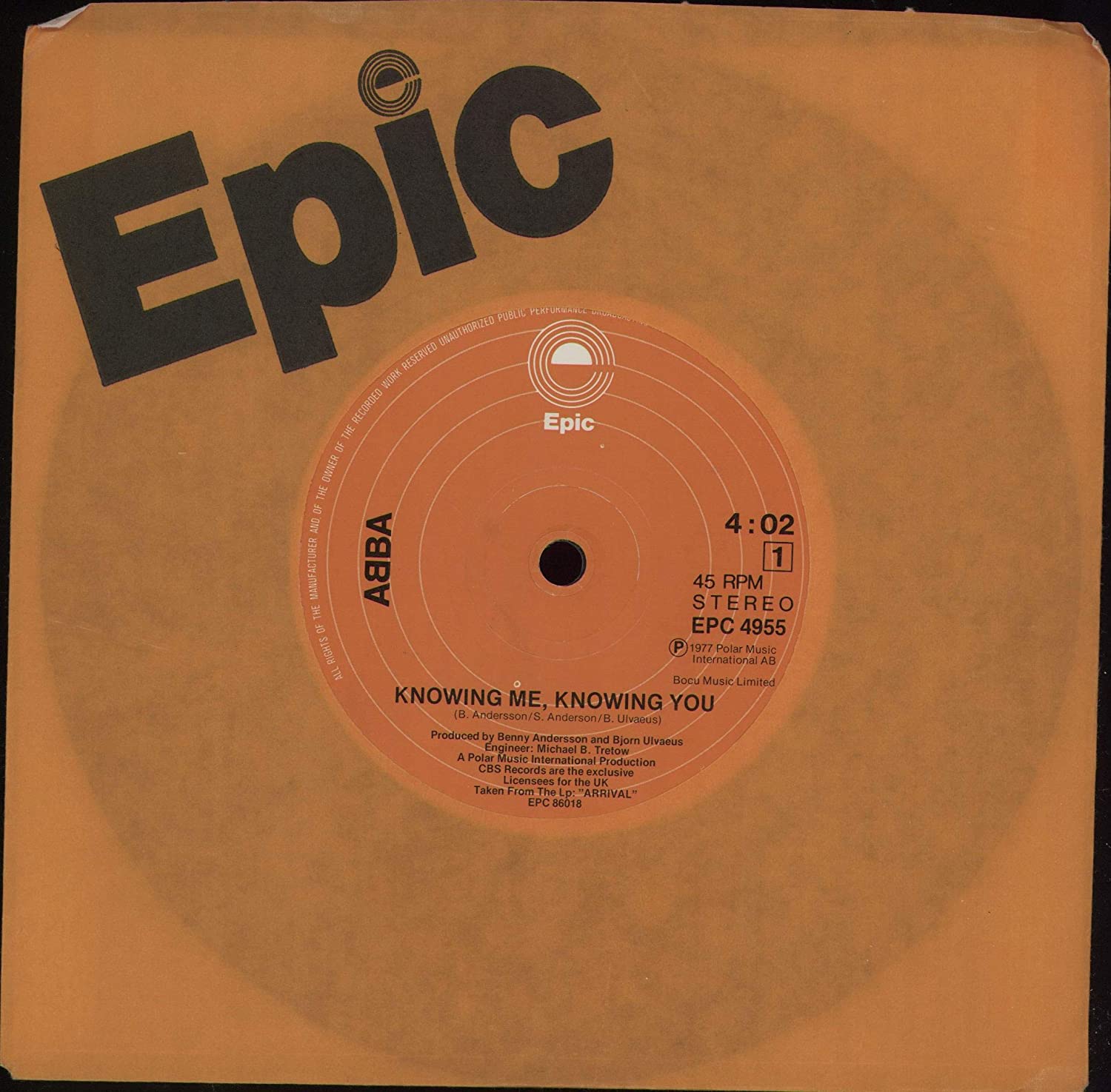
403. ‘Knowing Me, Knowing You’, by ABBA

Already we reach the mid-point of ABBA’s chart-topping run! Their fifth #1, coming from the same album (‘Arrival’) as both ‘Dancing Queen’ and ‘Fernando’. Hit packed!

Knowing Me, Knowing You, by ABBA (their 5th of nine #1s)

5 weeks, from 27th March – 1st May 1977

Speaking of ‘Fernando’, the intro to this record sounds like a leftover from that recording session – acoustic guitars and a hint of pan-pipes. Fear not, though, for straight away that funky bass-line comes to our rescue and actually, the nearest comparison from the band’s earlier hits is to ‘SOS’. Power chords and actual hard rock guitars.

No more, Carefree, Laughter, Silence ever after… I’ve mentioned ABBA’s unique brand of English before, and I do love these rhymes that you can see coming from a mile off. Then we get a bit emo: Walkin’ through an empty house, Tears in my eyes… We are a long way from ‘Mamma Mia’s camp exclamations, or ‘Dancing Queen’s affirmation.

Knowing me, Knowing You, There is nothing we can do! It’s a break-up song, but at least it sounds like it’s mutual. A conscious uncoupling, if you will, and the intricate male backing vocals in the chorus do make it sound like a conversation. Breaking up is never easy I know but I have to go… Meanwhile the image of empty rooms in which children used to play is a powerful one.

In fact, it’s an early example of the sorts of songs ABBA would go on to make in the 80s, after their imperious phase and their disco phase. It doesn’t hit as hard as, say, ‘One of Us’, though; because the band had yet to go through their famed break-ups. Agnetha and Bjorn were still together, while Benny and Frida wouldn’t get married until 1978. Perhaps, then, we can say it’s a fictional story about a break up; while those later hits were documentaries.

I have seen ‘Knowing Me, Knowing You’ on top of several ‘ABBA – Ranked’ articles over the years, which has always surprised me a bit. It’s a cracker of a chorus (I mean, it’s ABBA, duh), but it’s never been my favourite. I have, for example, never really understood the song’s signature hook: the a-haaaaa. What does it mean? What does it signify? Meanwhile, Brits of a certain age will never now be able to listen to this song without picturing Alan Partridge.

Maybe it’s because those writers didn’t want to choose the obvious singles, or maybe the song’s slightly low-key vibe makes it a hipsters’ choice. (Though ‘SOS’ is the true hipster’s favourite ABBA single.) It is not as instant as their earlier #1s, but still a classic. Few bands have runs like ABBA did in the mid-to-late seventies. ‘Knowing Me, Knowing You’ gave them their 4th chart-topper, and their seventeenth week at #1, in little over a year. And they will be back soon enough…

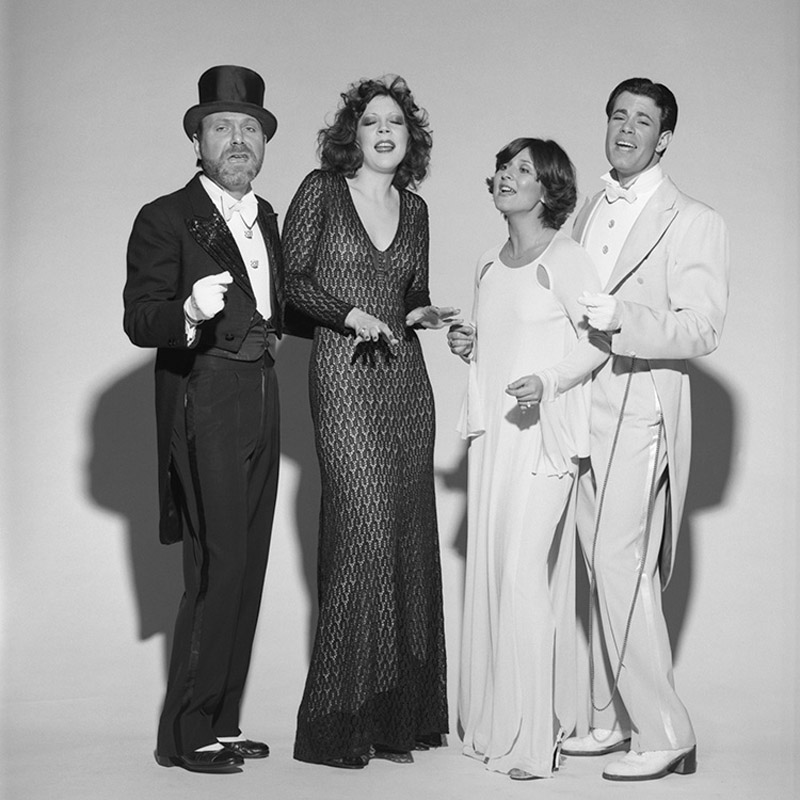
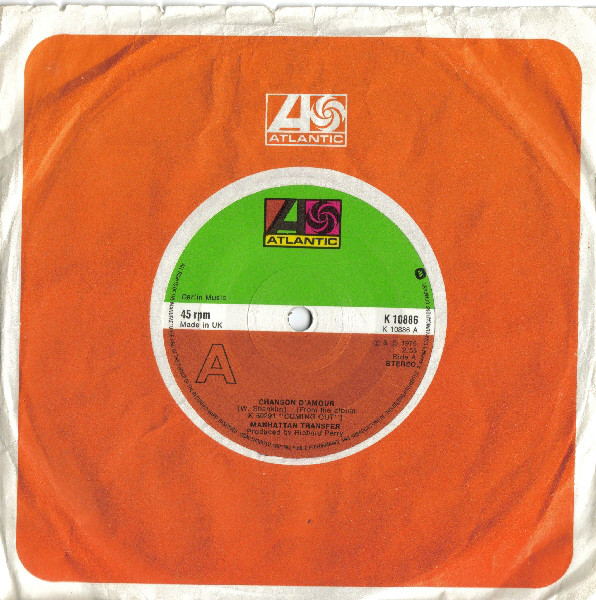
402. ‘Chanson d’Amour’, by The Manhattan Transfer

At the end of my last post, I claimed that I had never heard this song before. I also offered a prayer that it might break our recent run of bland soft-rock…

Chanson d’Amour, by The Manhattan Transfer (their 1st and only #1)

3 weeks, from 6th – 27th March 1977

Well, I can state that I have heard this song before – somewhere, sometime long forgotten. Or, maybe it’s just that this sounds like a standard, a melody that we all have running through us. As for whether it ups the tempo…? It does, a bit.

I like it, though; for it immediately has a boozy, saucy, pub singalong feel to it. A rolling piano, accordions… Chanson d’amour, Play encore… I also like it because, while half the lyrics are French, they are at my level of French – i.e. very basic high school. Chanson d’amour, Je t’adore… And then there’s an inane refrain: rah-ta-rah-ta-dah…

Actually, so bad is the French that I feel qualified to pick them up on it. The pronunciation is well off, coming out more like Chanson d’amooor, Joo t’adooor… Safe to say there were no actual French people involved in the making of this record. But it’s fun. It kind of sounds like Edith Piaf having a singalong, half-cut on Pernod, down an East End boozer.

There’s another saxophone solo. Make that two in a row and throw in a comment about London buses. (This one grates less than ‘When I Need You’, but I still would have preferred them to stick to the piano, or the accordion.) Then we roll to a gentle finish, and I’m left to wonder what on earth this record was doing at the top of the charts in early 1977. It’s completely pointless, but catchy and – praise be! – fun.

Manhattan Transfer were a band from New York, around since the late sixties. They did swing, jazz, a cappella stuff and largely stayed away from the charts until this hit smashed out of nowhere. They are still a going concern, still with three long-term members. ‘Chanson d’Amour’, meanwhile, was first written and recorded in the late fifties, by Art and Dotty Todd. Going off on a complete tangent… the Todd’s had also recorded the original version of another UK #1 single: ‘Broken Wings’, which was one of the very earliest chart-topping singles back in 1953, for The Stargazers. (Never thought I’d be mentioning them again!)

Viewed in this way, then, the record makes more sense. We can slot it in amongst the rock ‘n’ roll revival records – some covers, some originals – that have been peppering the charts for a few years now (Showaddywaddy, the Rubettes, etc.) Meanwhile, perhaps the definitive version of ‘Chanson d’Amour’ came from the cast of ‘Are You Being Served’, in the show’s final episode. Come to think of it, that’s probably how I knew this song… From post-Sunday lunch re-runs as a child.

401. ‘When I Need You’, by Leo Sayer

Oh boy. More soft-rock…

When I Need You, by Leo Sayer (his 1st of two #1s)

3 weeks, from 13th February – 6th March 1977

We’re really hitting a slow and slushy moment in chart history. It must have been great at school discos, I suppose, with no shortage of last-dance tunes in which to snag your latest crush. But it doesn’t make for a very exciting listen forty odd years later.

It’s got all the instruments we’ve come to expect: gentle guitars, tinkly percussion, a glossy echo to everything. (Plus, this record has a secret weapon – more on that in a moment.) When I need you, I just close my eyes and I’m with you… Leo Sayer’s missing his girl while he works away from home… For some reason that I can’t quite place, I’m enjoying this more than the last-but-one chart topper, David Soul’s equally smoochy ‘Don’t Give Up On Us’. I think it’s the slightly funkier rhythm. If this one was sped up – a lot – it could be a disco classic.

I also like the emphatic It’s cold out, Just hold out… line. Plus, Leo Sayer’s voice has got a lot more oomph to it than Soul’s. He lets loose, in a fashion, for the fade-out. But, before that, we come to the secret weapon… the sax solo! Unleashed from out of the blue! They’re something we’ll have to get used to as the ’80s loom, but they’ve never sat well with me. Done well they’re fine; done badly they sound like the soundtrack to a bad date, or a porno.

It is sometimes hard to focus on the lyrics in songs like this, as they’re usually of the don’t leave me baby hold me baby variety. But, on closer inspection, on listen three or four, as Leo talks about closing his eyes and touching love while on the phone to his girl, and beseeching her to ‘do as he does’… I begin to wonder… Is this record actually about phone sex??

Or am I grasping to make it more interesting than it is? ‘When I Need You’ was the follow-up to the dorky but super catchy ‘You Make Me Feel Like Dancing’, which I would have much preferred as a #1. As it stands, this makes it four slow and soft #1s in a row, and five out of the last six. It’s not something that you say every day, but thank God for Showaddywaddy! Looking to the next chart-topper on my list, a record I have never heard before, I offer a silent prayer that it might be up-tempo.

Leo Sayer had been scoring hits since 1973, and had peaked at #2 three times before this one took him all the way. He will be back on top, but not for twenty-nine years, when he’ll feature on a remix of one of his seventies hits. That’s one of the longest gaps between number ones, ever. Meanwhile, ‘When I Need You’ has been covered by the great and the good of easy listening: Cliff, Julio Iglesias, Luther Vandross, Celine Dion… Leonard Cohen wasn’t as impressed by it, though – he sued Sayer for plagiarising his song ‘Famous Blue Raincoat”.

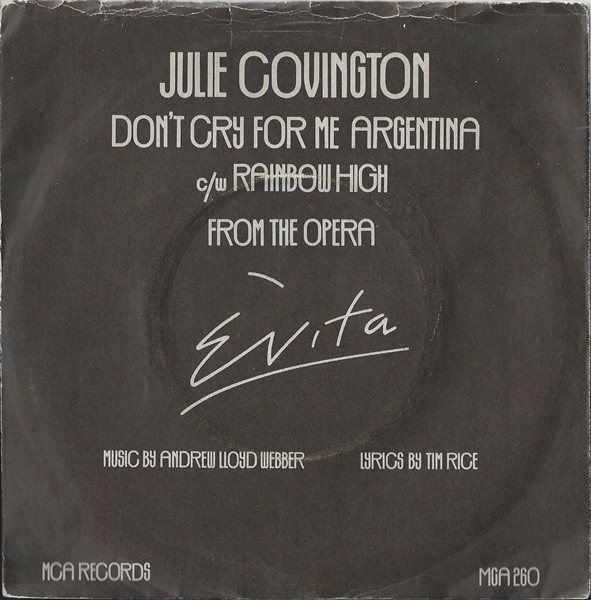
400. ‘Don’t Cry for Me Argentina’, by Julie Covington

Time for a proper show tune! The first, unless I am mistaken, since Shirley Bassey way back in 1961?

Don’t Cry For Me Argentina, by Julie Covington (her 1st and only #1)

1 week, from 6th – 13th February 1977

It’s a long one, too. Five and a half minutes, with nearly a whole minute of portentous introing before Julie Covington actually sings. It won’t be easy, You’ll think it strange… Gosh she sings it proper. When I try to explain how I feel… Musical theatre really stands out against pop songs, belted out as they are with cut-glass diction, aiming for the back row.

We’re approaching two and a half minutes, and still no appearance of the chorus. I have never seen ‘Evita’, neither on stage nor on screen, but I can sing this chorus. (I’ll show my age by saying I’m more familiar with Madonna’s version, which made #3 in 1996.) Come on Julie, love… Don’t cry for me Argentina, The truth is I never left you… It’s a love song, with all the usual trimmings, but about a country!

Show tunes also sound a bit strange divorced from their play, plonked into the singles chart. Who is she, and why is she singing about Argentina? Amazingly, this record was released well before ‘Evita’ debuted on the West End. Nobody had seen the show… and yet there was enough interest in this record to get it to the top of the charts!

To be honest, that first chorus was a bit underwhelming. I’m waiting for her to go around again, to really belt it out for the finale. While we wait – cause this is a record that isn’t afraid to take its time – a little bit of history. ‘Evita’, the musical by Andrew Lloyd-Webber, tells the story of Eva Perón, First Lady of Argentina between 1946 and ’52 and, since her death, official ‘Spiritual Leader of the Argentine Nation’ (with a fair few allegations of fascism thrown in from those who were against her).

Finally, a full four minutes in, and were back at the chorus. I’m ready for Ms. Covington’s big finale. But it never materialises… The orchestra does the soaring, we could be back in the charts of 1954, and I’m left a little bored. What a strange #1 hit… Bring back Dame Shirley. She’d have belted the life out of this.

Julie Covington never actually played Eva Perón on stage – she turned the role down – and when the show finally opened Elaine Paige took the part. Covington was a fixture on the West End stage throughout the seventies and eighties, but doesn’t seem to have done much in recent decades. Andrew Lloyd-Webber’s show tunes will be back, though – off the top of my head I can think of at least two more chart-toppers penned by him.

As this is the 400th (!) number one, I had planned to take stock, to see where we stood in the musical landscape. Except, this is a completely random one-week wonder that has no bearing on the real sound of the mid-seventies. In an ideal world, we could tell the story of British popular music tastes through every hundredth chart-topper. Number 100 would have been Elvis… (It wasn’t, it was Anthony Newley’s clipped and clicky ‘Do You Mind’), 200 would have been The Beatles… (It was! ‘Help’.) 300 would have been something glam… (Instead it was Tony Orlando’s sex-pest anthem ‘Knock Three Times’.) And 400 would have been a disco classic… Instead we aren’t crying for Argentina. Funny old things aren’t they, music charts…?

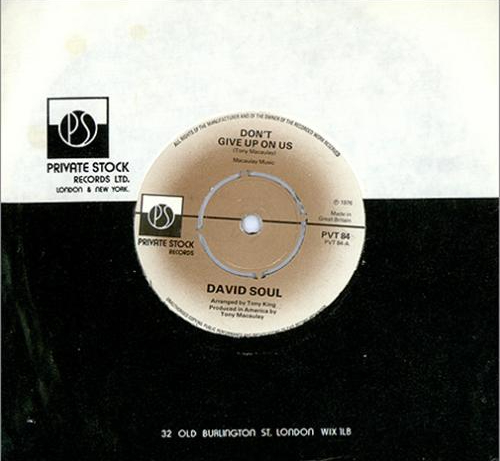
399. ‘Don’t Give Up On Us’, by David Soul

And it is onwards into 1977. Officially the late seventies! Bring it on!

Don’t Give Up On Us, by David Soul (his 1st of two #1s)

4 weeks, from 9th January – 6th February 1977

Actually… I’m tempted to write the entire year off after thirty seconds of this next number one. It’s been creeping up on us, slowly but surely, with Demis Roussos, Chicago, Johnny Mathis… I fear the soft-rock years may officially be upon us.

In fact, I think this record has the exact same gloopy, doopy backing track from Johnny Mathis’s Christmas #1. They sure sound similar. Though David Soul’s voice has nowhere near the gravitas that Mathis had. Don’t give up on us baby, Don’t make the wrong, Seem right… It’s a decent voice, but a very soppy one.

I want to get a foothold on this song, a way in to appreciating it, but I can’t. It’s a puff of smoke. There’s nothing actually there. It’s a ‘check your watch’ kind of song, in that you start to wonder how long it’s going to go on for… Pulses are raised slightly come the middle-eight: I really lost my head last night… though you struggle to imagine the singer of this song being capable of any strong emotions… and then we get the blandest solo you could ever imagine, featuring a mish mash of guitars, strings and a French horn.

And then there’s a key change! Of course. Is there a more divisive trick in the songwriters’ handbook than the key change? Some make you punch the air and shout ‘YES!’; others make you wish the song would just end right there and then. No prizes for guessing which camp this record falls into…

Before coming to this record, I knew David Soul as being famous for his role in ‘Starsky and Hutch’, though I needed to check which one he was (Hutch). Soul’s record career came slap bang in the middle of the show’s four series run. So, he had the exposure and was perhaps always going to score a huge hit. But ‘Starsky and Hutch’ was a cop show, in which the two main characters used their wits and traded blows to catch the bad guys. They were cool, bad-ass. Yet, it is hard to think of another song that is as far away from being cool, or bad-ass, as ‘Don’t Give Up on Us’ is.

I just wish it had a bit more – a lot more! – life about it, is all. And glancing down the list of up and coming #1s for the year – including one more from Hutch – I worry that this might become a recurring wish. Not that there aren’t plenty of classics to come, though. So come on – think positive! I won’t give up on 1977 yet… (see what I did there?)