318. ‘You Wear It Well’, by Rod Stewart

In which Rod Stewart scores his second number one single, by releasing a song that sounds suspiciously like his first. I mean, ‘Maggie May’ had been such a huge hit, his now-signature song, that you can’t blame him for trying to re-bottle lightning.

c1lq-28tuss-_sl1000_1

You Wear It Well, by Rod Stewart (his 2nd of six #1s)

1 week, from 27th August – 3rd September 1972

Not that it’s a rip-off (can you even rip-off your own song?), but it’s similar enough to sound like an off-cut from the same recording session. The intro meanders, as it did in ‘Maggie May’, before two drumbeats – dun dun – signify that we’re ready for the song proper to get underway.

I had nothing to do, On this hot afternoon, But to settle down and write you a line… Rod’s reminiscing about a woman he once loved. Who knows, maybe it’s Maggie…? He’s been meaning to call her, but thinks a handwritten letter would tug the old heartstrings a bit more effectively. You wear it well, A little old fashioned but that’s alright…

He reminisces about basement parties, her radical views, a birthday gown he bought her in town… Then he lays on the charm: Madame Onassis got nothing on you… It’s another wordy ballad, a little more electric than acoustic this time, while the fiddle from ‘Reason to Believe’ – the flip-side of his first #1 – makes another appearance to add some homespun charm. To be honest, I’m struggling to get into ‘You Wear It Well’. It’s a bit plodding, and the words sometimes get lost in the mix.

-688033

When you look the lyrics up, though, you see that there are some nice touches. The fact that he didn’t call because he’s in Minnesota and, y’know, that’d be a bit pricey, and the line: My coffee’s gone cold and I’m getting told, That I gotta go back to work… While at the end Rod hopes that she’s still at the same address. It’s not a record without charm; you just have to give it a few listens and dig a little deeper to find it.

But, you’d have to admit that if he had been trying to recapture the magic of his debut chart-topper then he’s not quite managed it. It’s strange to think that of all Rod Stewart’s big seventies hits which didn’t make the top of the charts – ‘You’re In My Heart’, ‘Tonight’s the Night’, ‘Hot Legs’ – ‘You Wear It Well’ did.

A short post, then. A nice enough song, and a nice enough addition to 1972’s parade of chart-toppers. It seems that to hit #1 in the summer of ’72 your record either had to be glammed up to the eyeballs, soppy teenybopper fluff, or an acoustic ballad. Let’s spin the tombola and see what pops up next…!

Follow my #1s playlist on Spotify:

317. ‘School’s Out’, by Alice Cooper

Aw, hell yeah! School heartthrob Donny Osmond finds himself elbowed out the way by school bad boy, and shock-rocker supreme, Alice Cooper. No more mister nice guy indeed!

D5rMk28WAAAr1nl

School’s Out, by Alice Cooper (their 1st and only #1)

3 weeks, from 6th – 27th August 1972

The charts of 1972 continue to swing wildly: acoustic ballad to glam to teeny bopper pap to this. Some anarchic hard rock. And it’s a great record, right from the start. The riff rings out, loud and clear, before the drums and the bass are added. (There are three songs that I cannot tell apart for the first five seconds or so: this, ‘Born to Be Wild’ by Steppenwolf, and Iggy Pop’s ‘The Passenger’. They don’t even sound that similar, so I’m not really sure why I have this problem…)

Vince Furnier said in an interview that in ‘School’s Out’ he was trying to capture the last three minutes of the school year which, along with Christmas morning, is the best moment of a child’s life: the nervous tension, the excitement, the sense that wonderful chaos is just around the corner. I’d say he managed it. Well we got no choice, All the girls and boys, Make all the noise, Cos they’ve found new toys…

There are famously no real punk-rock #1s… Is this, then, the first and only punk #1, several years before anyone knew what ‘punk’ was? It soon becomes clear that this isn’t just a song about two months of sun and no homework; it’s an anarchist’s manifesto. School’s out for summer… then it’s out for ever… then it’s been blown to pieces. The playground chants in between the verses move from No more pencils… To We might not come back at all…

R-15604226-1594390979-2958.jpeg

The best bit is the second verse, with its word-play: Well we got no class, And we principles… and the so dumb its actually pretty clever last line: We can’t even think of a word that rhymes! And then there’s the final verse – perhaps the heaviest moment in a #1 single so far – where the lead guitar squeals, and the drums beat out a pounding, tribal rhythm, as if the kids have rounded up all the teachers for a ritual sacrifice. Morality campaigner Mary Whitehouse managed to get it banned from featuring on ‘Top of the Pops’, an act for which Furnier sent her a bouquet of flowers in thanks for the free publicity.

‘School’s Out’ was the breakthrough hit for Alice Cooper, who had been seen as a bit of a novelty act until then with all their make-up and on stage pyrotechnics (they were friends of Arthur Brown). And actually, maybe ‘School’s Out’ still suffers from being seen as a novelty song, when in actual fact it’s a great hard rock track. The band would score a few more Top 10s off the back of this, before ‘Alice Cooper’ became Vince Furnier’s solo act. His biggest hit will arrive many years later: ‘Poison’ coming oh so close to the top in 1989.

In the end the bell rings, everybody cheers and then we all get sucked into a blackhole, a cool effect that caps off a startlingly fresh sounding #1 single. OK, in the end it might not quite be ‘punk’, but I’ll bet it felt amazing blasting this record out on the final day of 1972’s summer term. And speaking as a teacher, I have to say that this song speaks more to me now than it ever did as a kid…

316. ‘Puppy Love’, by Donny Osmond

Oh man. It seems that for every great song we get at the moment, there’s a bloody awful one coming right up behind. ‘Metal Guru’ – transcendent, ‘Vincent’ – beautiful, ‘Take Me Back ‘Ome’ – gritty… ‘Puppy Love’… Oh…

5ef4de88e533c9dd50033fb8bf65da15

Puppy Love, by Donny Osmond (his 1st of three #1s)

5 weeks, from 2nd July – 6th August 1972

Well, we all know how this one goes, don’t we? I’m not sure how, because it’s not a song you will ever hear on the radio these days, but ‘Puppy Love’ has still somehow seeped into our collective conscience. And it’s a record that sets its stall out from the start – from the opening seconds you are left with no doubt that this song will be as saccharine and cloying as the title suggested.

The intro soars and pirouettes, like they used to in the fifties, before wee Donny goes for it: And they called it, Puppy love, Oh I guess they’ll never know, How a young heart really feels, And why I love her so… His voice doesn’t sound real. I don’t mean that it’s touched up with autotune, or any other kind of modern-day trickery. I mean that it’s impossible to imagine an actual human being sounding this soppy.

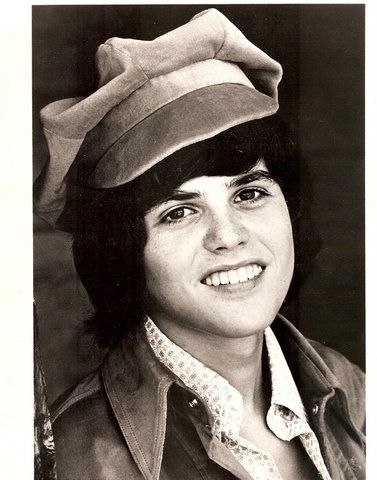
And they called it, Puppy love, Just because we’re in our teens… The song’s premise being that ‘puppy love’ is what you call the sort of chaste, pecks-on-the-cheeks-and-notes-passed-in-class crush you get in Year 6. While Donny is quite adamant that his love is for real, that he and his girl should be taken seriously: How can I, Oh how can I tell them, This is not a puppy love…? Which means, you realise with a shudder, that lil’ Donny – just look at those eyes up there! – is actually a randy little horn-dog.

I am clearly not the target of this song. I am not a thirteen year old girl from the early 1970s, for a start. But it is terrible. If you wanted to write a cheesy pastiche of a fifties pop hit, you’d write a song that sounds a lot like ‘Puppy Love’. The bit where the music drops off and Donny pleads: Someone, Help me, Help me please… is simultaneously one of the most annoying moments in a #1 single, and yet quite funny. If you don’t think too much, it is just about possible to get swept away by the stupid melodrama of this record.

donny-osmond-puppy-love-mgm

This is actually quite a significant moment at the top of the charts, I’d say. Of course, Donny Osmond is not the first teen-idol to trouble the hit parade, or the #1 spot. And ‘Puppy Love’ is not the first piece of schmaltz to catch the public’s imagination. But having the two thrown together so shamelessly? It feels very post-sixties. Very glam, in a way. A complete triumph of looks over substance. Though ‘Puppy Love’ was a much older song (almost older than Osmond himself) having been recorded by Paul Anka in 1960, making #33. Having listened to Anka’s version, it’s actually a relief to return to this cover…

Donny Osmond was fourteen when this hit top spot, making him the joint-youngest chart-topper, tied with Helen Shapiro. But for God’s sake, listen to Shapiro’s ‘You Don’t Know’ and compare it with this drivel. They do say girls mature quicker than boys… Would tweenage girls still fall for someone like Osmond in 2020? Probably, if their version of ‘Puppy Love’ was Tik-Tok friendly. I remember being at high school (so not that long ago) when the legendary S Club Juniors took a version of it back into the Top 10. And actually, my first thought when I saw the picture of Osmond above was that he looked just like a 2010 Justin Bieber. Which goes to show: a cute white boy with a bowl-cut always has, and always will, sell…

https://www.youtube.com/watch?v=Mkn1kFmUW5E

315. ‘Take Me Back ‘Ome’, by Slade

As great as our last chart-topper ‘Vincent’ was, you wouldn’t want to listen to it every day. Thank God, then, for Slade, getting us back into a hard-rocking, glam-boogying groove.

Slade 00

Take Me Back ‘Ome, by Slade (their 2nd of six #1s)

1 week, from 25th June – 2nd July 1972

Their first number one, ‘Coz I Luv You’, was great but, as I noted at the time, it didn’t sound like the Slade that would go on to grab the charts by the balls. Their second chart-topper, though, sounds 100% like Slade. We’ve got Noddy hollering, a nasty riff, and some

Imagine the scene: closing time at a pub in Wolverhampton. Last orders, in more ways than one. Noddy needs a girl for the night, so he gets a wooing. Came up to you one night, Noticed the look in your eyes, Saw you was on your own, And it was alright… He has a way with words to rival Mungo Jerry and their attempts on ‘Baby Jump’: You and your bottle of brandy, Both of you smell the same… Is she really as rough as she sounds, or is he just a brute? Either way, I love the complete and utter lack of glamour.

So take me back home, Take me back home, And we can find plenty to do, And that will be alright… It’s an unsophisticated song. The hook is simply Holder drawing out his ‘all-rights’ in a sneery way. But, it’s great. I kept thinking that the riff sounded familiar, and then I realised that it simply sounds like 50% of Oasis’s mid-nineties output. (They always get the Beatles comparisons, but to me they ripped Slade off just as much. Anyway, more on Oasis in twenty years or so.)

SLADE_TAKE+ME+BAK+OME+-+WIDE-686833

By the second verse, the handclaps have turned into terrifying horse-whips, increasing the glam-stop even further. And by the third verse, the girl’s boyfriend, who’s twice the size of Noddy, has turned up. I didn’t stay around to say goodnight… But it was alright… We fade out with Holder trying to punch through brick walls with his voice, then doing his best Marc Bolan stutter.

So Slade are a-go. Although I’d rank ‘Take Me Back ‘Ome’ more alongside the Stones’ bluesy numbers from the sixties, ‘Honky Tonk Women’, ‘Little Red Rooster’ and the like, than  the pure glam that was to come. Few #1s have been as low-down and dirty as this. But, I like that this came just two weeks after T. Rex’s final chart-topper, ‘Metal Guru’, and that it feels like a passing of the glam-rock flame. Slade were now poised to become the biggest band in the country, and we’ll hear a lot more from them in the next year and a half.

314. ‘Vincent’, by Don McLean

From the glorious, life-affirming swagger of ‘Metal Guru’… to one of the saddest #1 singles ever recorded.

mclean-american-pie-getty--735x413

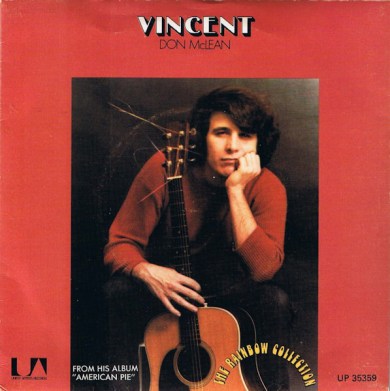
Vincent, by Don McLean (his 1st of two #1s)

2 weeks, from 11th – 25th June 1972

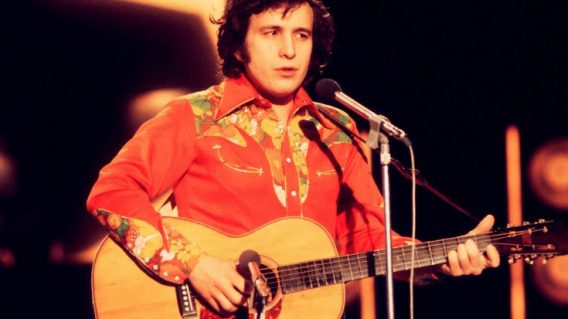
The ‘Vincent’ in question is the Dutch artist Vincent Van Gogh, who lived and painted in the late 19th century, to little recognition and with failing mental health until severe poverty and depression led to him shooting himself. Not the cheeriest of topics to start with, even before we get to the song itself, and certainly not the usual territory of pop singles.

It’s also one of the most articulate and descriptive chart-topping singles yet. Don McLean takes Van Gogh’s most famous works and turns them into lyrics: Starry, starry night, Paint your palette blue and grey, Look out on a summer’s day, With eyes that know the darkness in my soul…

It’s just a voice, an acoustic guitar, and some light, light backing touches. The gist of the song is that the singer sympathises with Vincent, that he recognises something of himself in the artist’s struggle (this was written before McLean hit the big time with ‘American Pie’), and that perhaps Vincent was the sane one after all. If people know one thing about Vincent Van Gogh, it’s that he cut off his ear and sent it to his brother. But that’s not all that he was. Now I understand, What you tried to say to me, And how you suffered for your sanity… It works also in the voice of Van Gogh’s brother, Theo, who was entwined in Vincent’s life, and who suffered equally under his brother’s illness. It’s strong stuff.

I love the idea that Van Gogh was too pure, too good for this ordinary world. It comes to a height midway through, as McLean describes the day Van Gogh committed suicide: For they could not love you, But still your love was true, And when no hope was left inside on that starry, starry night, You took your life as lovers often do… Some artistic license there, as he shot himself in a wheat field during the day, but it’s a powerful image – that he could have died on a night like the one in his most famous painting. But I could have told you Vincent, That this world was never built for one as beautiful as you… There’s also an urban legend that ‘Vincent’ was played to rapper Tupac on his death-bed, after he had suffered the same fate as Van Gogh. It was, apparently, his favourite song.

R-1456931-1342348675-5628.jpeg

It ends on a gut-punch. Each previous verse has ended on the hope that: They did not listen, They did not know how… Perhaps they’ll listen now…. On the final note, however, this changes to: They were not listening, They’re not listening still, Perhaps they never will… The idiots will always outnumber us. We’re all doomed…

Acoustic singer-songwriter type music is far from being my favourite genre. It’s all too easy to sound clever and profound as long as you sing softly enough and don’t plug your guitar in. Especially in the past few years, every male solo artist to hit the charts seems to have a beard, a beanie hat and observations to make. (I blame Ed Sheeran, personally, but then I’d happily blame all the world’s problems on Sheeran.) However, when a song is written and performed as beautifully as this, with a genuine message and genuine emotion, it’s very powerful. Don McLean had made his name just a few months before with ‘American Pie’, another song built around the death of a cultural icon. You have to wonder if ‘Vincent’ would have been such a big hit had ‘American Pie’ not come along first (it had reached #2 in the UK), especially as this sounds so out of place in a chart dominated by glam and bubblegum, though you’d hope it would have.

Last winter, in those final, blissful pre-coronavirus days, I visited the Van Gogh Museum in Amsterdam. If you have the chance to go one day, do! It displays his pictures in chronological order, and gives the background to his circumstances and mental state at the time of painting. When you get to the end, and see his very last works, it’s genuinely affecting. Maybe this song wouldn’t be hitting me so hard, had I not been there? Who knows. Under the museum is buried a time-capsule containing Vincent’s paintbrushes, and the sheet music to this song. Tens of thousands walk above it every year, to see the work of a once-ignored painter. People did listen, eventually.

313. ‘Metal Guru’, by T. Rex

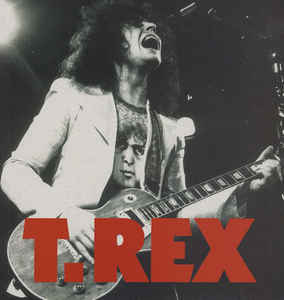
I do love the fact that whenever a T. Rex #1 comes along, it usually whacks something terrible out of the top spot. ‘Get It On’ deposed ‘Chirpy Chirpy Cheep Cheep’, ‘Telegram Sam’ ended The New Seekers’ attempts to teach the world to sing. Now this, T. Rex’s final (!) UK chart-topper ends five long weeks of bagpipes.

359c31ba10d7bd50a4c4f0558f61ab4f

Metal Guru, by T. Rex (their 4th and final #1)

4 weeks, from 14th May – 11th June 1972

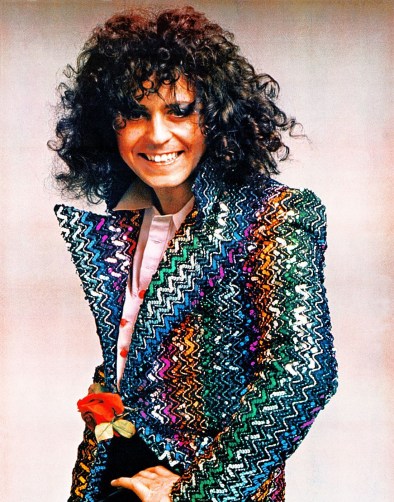
And while we wipe a tear at the thought of never hearing Bolan’s boys again in this countdown, are we consoled by the fact that perhaps they saved their best for last…? It’s a record that soars in from on high, one that starts right in the thick of the action: Woah-oah-oah-oah… Yeaaaaaaahhhh!!!

Everything you want from a T. Rex song is present and correct. Stomp and swagger? Check. An irresistible, bubblegum hook? Check. Nonsense lyrics? Check. Metal guru, Is it you… Sitting there in your armour plated chair, Oh yeah… There’s as much point in asking what a ‘Metal Guru’ is as there was in enquiring about a ‘Telegram Sam’. Apparently, it is Marc Bolan’s idea of a God, on his throne. All alone without a telephone, Aw yeah…

And, as usual, in amongst all the madness, there’s a gem or two. Who wouldn’t want to have a silver-studded, sabre-toothed dream? Bolan’s delivery is imperious: camp, floaty, playful. He’s at the height of his powers, and you can imagine this being played at the end of a concert, the final song in the second encore, as the tired and emotional crowd sing and sway along.

R-475934-1149151136.jpeg

I called this their best #1, as it’s everything that makes T. Rex great, distilled and concentrated into the perfect two-point-five minute pop song. The sound is beefier than their earlier chart-toppers – just listen to the cascading drums, for example – as if glam rock were being mixed and produced by Phil Spector. (If the thought of a Glam-Rock Spector does nothing for you, then you are dead inside.) At the same time, ‘Metal Guru’ is so short and throwaway, so quick and effortless, that you could almost call it disposable. And yet – isn’t that the essence of glam? It’s not to be taken seriously; all sugar and little substance…

Has there been any other band that has had four consecutive number ones of such high quality. ‘Hot Love’, to ‘Get it On’, to ‘Telegram Sam’, to this. The Beatles, for sure, and maybe the Stones. Away from the very top of the charts, their run of ten hits from late 1970 to mid 1973 is superb. The likes of ‘Jeepster’, ‘20th Century Boy’, and ‘Children of the Revolution’ – all of which charted no lower than #4. They were the biggest band in the land, by far, and Bolan was the rock ‘n’ roll idol of his day – a position which he was born to fill.

I’ll do a T. Rex Top 10 soon, so will go easy on the bio for now. Suffice to say, the glory days didn’t go on much longer – glam rock wasn’t built to last – and Bolan started taking lots of drugs and rubbing people up the wrong way. Not that he lost the ability to write brilliant pop songs – some of the smaller hits from 1975-77 are great – but he certainly fell from his pedestal. He was just starting to get it together, working with up and coming punk acts and fronting his own TV series, when the car he was travelling in with his girlfriend Gloria Jones slammed into a tree in South London. He died instantly, aged just twenty-nine. And who knows – perhaps he went on up to meet the big Metal Guru in the sky…?

Follow my playlist below for all the #1s so far:

312. ‘Amazing Grace’, by The Pipes & Drums & Military Band of the Royal Scots Dragoon Guards

So, um… Our next number one single, from the spring of 1972, is… *checks notes*… a bagpipe instrumental.

71QWAN5HxoL._SL1280_

Amazing Grace, by The Pipes & Drums & Military Band of the Royal Scots Dragoon Guard (their 1st and only #1)

5 weeks, from 9th April – 14th May 1972

I really don’t think I can write anything interesting about the record itself. It is literally just the well-known hymn, ‘Amazing Grace’, played by a military band. There have been plenty of outliers hit the top of the charts before this – singers and styles that have stood out like a sore thumb against the sounds of the time – Russ Conway’s piano, Frank Ifield’s yodelling, traditional ballads from the likes of Ken Dodd and Des O’Connor. None, though, have stood out as much as this.

Why was this a huge, five-week #1 single? There must be a story behind it. ‘Amazing Grace’ had been recorded in a popular version by American folk singer Judy Collins in 1969, whose arrangement the Royal Scots Dragoon Guard copied. Hers was a statement against the Vietnam War, part of the late sixties counter-culture that gave us ‘Woodstock’ and ‘In the Year 2525’. Meanwhile, Johnny Cash, Rod Stewart and Aretha Franklin all recorded their own versions of the hymn in the early to mid-seventies.

Is it that simple, then? A record by some soldiers – albeit not ones directly involved in any conflict – appealing to a public that were seeing images of war on their TV sets every night? I’m not a religious person, but ‘Amazing Grace’ is a spectacular piece of music, one that touches somewhere deep within. It’s one of the best known songs in the English language, and so for it to appear at the top of the charts in some form seems apt, though it was apparently much more popular in American churches than in the UK.

The-Pipes-And-Drums-And-The-Military-Band

A bit of history: ‘Amazing Grace’ dates from the 1790s, instantly making it one of the very ‘oldest’ chart-toppers. Its writer, John Newton, had been a slave trader whose ship ran aground in a storm. This caused him to reassess his life, become a clergyman, and write this hymn about his experiences: Amazing grace, How great thou art, That saved a wretch like me… In the 1800s it became an abolitionist anthem and then very popular in African-American churches.

My problem with this record lies not in the religious-ness of it, or that it’s old-fashioned… My problem is with the bagpipes. I am Scottish. Yet I hate the sound of bagpipes. Something went wrong, somewhere, and I malfunctioned. It’s like being a cat that has no interest in pieces of string. Where most people hear a heart-tugging call from the misty glens and shimmering lochs; I just hear a shrill banshee-shriek. Listen to the first five seconds of this record: the drone and then the shriek. It’s not pleasant.

I enjoy it more when the brass section takes over in the second half of the song. But by the end we’re back to the lone piper. Except pipers are never really ‘lone’: they’re ten-a-penny on Edinburgh’s street corners in summer, quite often blasting out dirges like this. In conclusion, then, I’m with the stuffy old Director of Bagpipes at Edinburgh Castle who, when this record hit the charts, summoned the Pipe Major of the Royal Scots for a dressing down. How dare he demean the venerable bagpipe by featuring it on a pop record! Sadly for him, and all bagpipe haters around the world, ‘Amazing Grace’ is not even the biggest hit record of the 1970s to feature the instrument… Sigh.

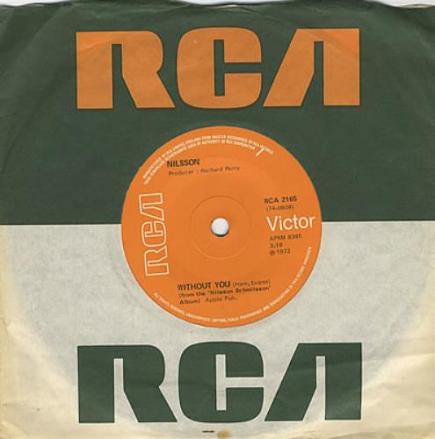
311. ‘Without You’, by Nilsson

If anyone’s feeling a little fragile, a little unlucky in love, then they may want to skip this next #1. Things are about to get emotional

unnamed

Without You, by Nilsson (his 1st and only #1)

5 weeks, from 5th March – 9th April 1972

In our previous post – ‘Son of My Father’ – we had the first uber-electronic chart-topper. This time out, another new genre gets its turn to debut – the power ballad. Plus there’s the small matter of one of the best ever vocal performances on a #1 record.

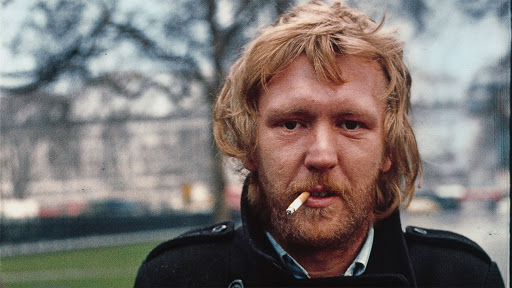
It starts off with a piano. Just a piano, jabbing and stabbing like audible heartache. Well I can’t forget this evening, Your face as you were leaving, I guess that’s just the way the story goes… Harry Nilsson’s voice is slightly on edge, pitched slightly higher than you might expect. Strings are added in, as is a bass guitar for the second verse… No I can’t forget tomorrow, When I think of all my sorrow… We’re building steadily towards a chorus that everyone knows.

I can’t live, If living is without you… Can’t live, I can’t give anymore… It’s soft, gentle to start with, but not for long. He’s been holding it in, and now he just has to let her know what she should know. He tries again. Can’t live, If living is without you…! This time there’s a growl in his voice. Anger, along with the pain.

Power ballads are a much, much-maligned genre. And that’s because people automatically think of the late-eighties, early-nineties monstrosities from the likes Bryan Adams and Celine Dion (I do enjoy that type of power-ballad, in a completely ironic way, honest…) But when they’re done right, when they build subtly to a heart-wrenching climax, like this bad boy. Ooft. It gets you. The chorus comes around a second time, and Nilsson’s not hanging around anymore. A rush of drums, and then he slams into it: Can’t liiiiiivvvvvveeeeee….. His voice up an octave, sweat on his brow. This is the line that everyone thinks of, when they think of ‘Without You.’

HARRY_NILSSON_WITHOUT+YOU+-+SOLID+CENTRE-386106

Cliched as it may be: this is a song for belting out by yourself, an empty bottle (or two) of wine on the floor. And all this time I’ve been thinking that she left him high and dry, unannounced. But of course, there’s the When I had you there but then I let you go… line. He did something to drive her away. It only adds to the heartbreak. The song slowly fades, and you can imagine a camera panning out, leaving the singer alone on his sofa. Cut to black.

Actually, it’s striking that, in a song that’s all about the vocals, Nilsson stops singing thirty seconds before the end of the song. We’re used to bloated power ballads dragging on for at least five minutes, with multiple chorus repetitions and plenty of chest-beating. ‘Without You’ keeps it to a minimum, clocking in at just over three minutes. Short, sweet and effective.

There’s no point trying to place this in context. It’s a classic, one that would work in any era. But it’s also one of those songs that few people realise is a cover. The band Badfinger had written it and released it as an album track in 1970. Their version is slower, slightly less intense, but still really good. (The band sadly didn’t receive any royalties from the song, but that’s a story for a different post…) And, of course, the song will be exhumed, and returned to the top of the charts, as one of those aforementioned OTT early nineties power-ballads, by none other than Queen of the OTT early-nineties power-ballad: Mariah Carey. We’ll cover that one when the time comes but, just to give you a sneak preview of my write-up… It’s nowhere near as good.

Nilsson really was a bit of a one-hit wonder in the UK (OK, a two-hit wonder). ‘Everybody’s Talkin’’ made a modest #23, and that was pretty much that. Considering his body of work and the esteem with which he’s held, that seems pretty surprising. He passed away in January 1994, just as Mariah’s cover of ‘Without You’ was climbing the charts. We can only hope that the two were not related…

All 310 previous #1 singles, in one handy playlist:

310. ‘Son of My Father’, by Chicory Tip

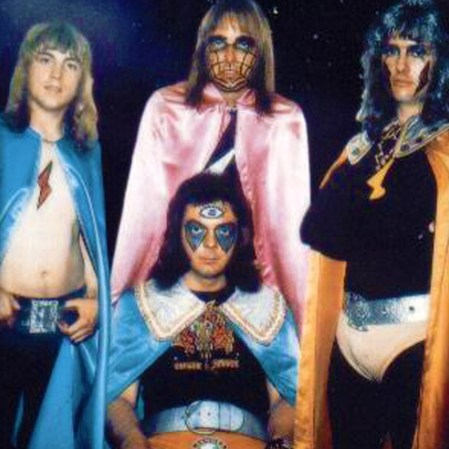
Time for something a little different. A record with a glam rock beat to it – as is becoming the norm – but with twiddly, electronic bits too. Think Joe Meek producing a Slade song, sung a sarfLahndan accent.

17f822b98c99613f28f2d9b578c7a1c5

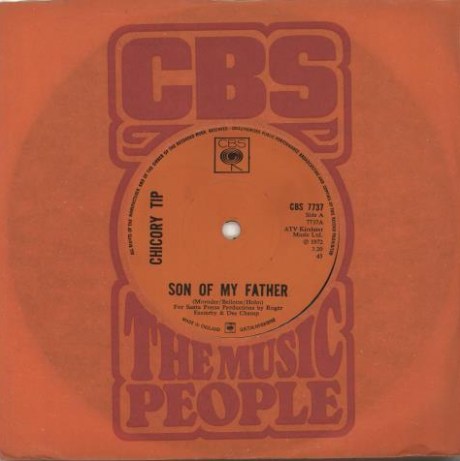
Son of My Father, by Chicory Tip (their 1st and only #1)

3 weeks, from 13th February – 5th March 1972

The initial riff is simple and repetitive; but effective. It drills into your head and stays there. There’s a reason why this song lives on to this day in football chants. And at the end of each line there’s an electronic flourish. It sounds futuristic, but also old-fashioned in its simplicity. And then completely of its time thanks to the glam-stomp. An impossible record to place…

Adding another layer are the lyrics. This is no love-song, nor a party anthem. It’s a song about breaking with tradition. In the first verse, a mum is advising her son as he grows up: Be just like your dad lad, Follow in the same tradition, Never go astray and stay an honest loving son… (Though to be honest I’m relying on ‘LyricFind’ here, thanks to the thick accent and the mix, which pushes the synthesisers right to the front.)

Son of my father, Molded, I was folded, I was preform-packed… It’s an anthem of frustrated youth, of the need to make your own way in the world. It’s got a message… Which is overshadowed by the fact that this is the first completely electronic #1. It’s just, to my ears anyway, synthesisers and hand claps. (I know, there’s a bassist in the video below.) We’ve had ‘electronic’ chart-toppers before… ‘Runaway’ by Del Shannon, and The Tornadoes seminal ‘Telstar’, but none so completely sold to the sound. The solo here is a fifties piano-rag, but one beamed in from another planet.

CHICORY_TIP_SON+OF+MY+FATHER-419911

‘Son of My Father’ was based on a German hit from the year before, the melody of which was composed by none other than Giorgio Moroder. Moroder himself had released a version with English lyrics – listen to it here, it’s slightly faster and with a bit more ‘oomph’ to it, I think I like it better – but it did nothing. Then Chicory Tip got hold of the song and sold a million with it.

By the end of the song, the son has broken away from the pressures of his family and tradition. Son of my father, Changing rearranging into something new, Collecting and selecting independent views… But he’s still the son of his father. You can reject the past while still respecting it. I like it.

It’s a strange little song. I have to keep reminding myself that it really is quite ground-breaking. It’s easy to lose sight of that, and to get distracted by the fact that it’s also a catchy pop hit. Chicory Tip had been around since 1967, without much success. ‘Son of My Father’ was their first hit of any kind, and they scored two further Top 20s in its wake. They released one album before calling it a day in 1975, though they soon reformed in different versions that still tour.

So then. We have a huge #1 smash, combining two of the 1970s foremost sounds: glam and electronica. (Throw in a dash of disco and it would have been a hat-trick.) This is a big hit, and a big step forward.

309. ‘Telegram Sam’, by T. Rex

Oh yes. Thrusting The New Seekers out of the way, thank God, with one flick of his corkscrew hair… Marc Bolan, ladies and gentlemen.

R-3472462-1331733929.jpeg

Telegram Sam, by T. Rex (their 3rd of four #1s)

2 weeks, from 30th January – 13th February 1972

With a chunky, crunchy riff that is part-electric guitar and part-sax, and some wonderful nonsense lyrics, T. Rex score their 3rd chart-topper in well under a year. This is a single that swaggers in to the room oozing arrogance and attitude – a band at the peak of their powers and popularity ever so slightly phoning it in. (OK, ‘Telegramming’ it in.)

Telegram Sam, Telegram Sam, You-ooh, Are my main man… The song is a list of characters, introduced one after the other. Golden Nose Slim, Golden Nose Slim, I-I-I, Knows where you’ve been… Who are these people? Are they people? Are they a band? Are they cocaine-fuelled imaginings? Who knows, who cares, when you can join Purple-Pie Pete, whose lips are like lightning making girls melt in the heat…

I did read that the line Bobby’s alright, Bobby’s alright, He’s a natural born poet, He’s just outta sight… is a reference to Bob Dylan, while the other references are people close to Bolan. His ‘main man’ was his manager, for example. And then there’s ‘Jungle-face Jake’, about whom one must make no mistake… That would be his managers assistant. Who was black. Yeah… Not the kind of lyric you would get away with writing these days. Moving swiftly on…

T-REX__TYRANNOSAURUS_REX_TELEGRAM+SAM-558429

Because this is a song written by Marc Bolan, there is of course a verse dedicated solely to himself. And isn’t the line: Me I funk, But I don’t care, I ain’t no square with my corkscrew hair… just perfect? There’s always a gem in amongst the nonsense with T. Rex. For the mini solo we get the same electric violin from Slade’s ‘Coz I Luv You’, and there’s lots of squealing and breathing from Bolan throughout.

Maybe it’s because it’s coming hot on the heels of Benny Hill and bloody ‘I’d Like to Teach the World to Sing’, but this record sounds super-thrilling and fresh – a blast from the future. Of all the bands that have ever existed, T. Rex are the one that I wish I’d been around for in real time. Of course it would have been great to have been a teenager at the birth of rock ‘n’ roll, or to have been around to hear ‘She Loves You’ for the first time in 1963, but I know that if I had been a fourteen-year-old in 1972, then I would have been sending my parents into a tizzy with my love of mascaraed Marc and his boys.

But I have to admit that, of T. Rex’s four number ones, ‘Telegram Sam’ is my least favourite. It’s a solid eight out of ten – that’s how good a band they were – but it doesn’t quite hit the heights of their other chart-toppers. Like I said at the start, it sounds like it’s been written to order. Still, as Marc Bolan can be heard breathing orgasmically just before the chorus: Sounds like the good stuff… Yes Marc, it certainly does.

https://www.youtube.com/watch?v=nYUkAXrqWvY