Today’s Top 10 – July 28th, 1967

Another trip back in time then, with my second ever ‘Today’s Top 10’ (we went back to 1970 a few months ago – check it out if you have the time). This time I thought we’d go back to the summer of 1967… AKA The Summer of Love, in which for a few months the hippy ideal looked like perhaps becoming reality. Three very famous flower-power anthems topped the charts that summer, and all three are on this chart, dated 26th July-1st August 1967. But was the rest of the Top 10 as awash with peace and love? Let’s find out…

#10 – ‘Death of a Clown’, by Dave Davies (up 13 / 2 weeks on chart)

We start with a couple of big climbers, as Dave Davies’ debut solo effort enters the Top 10 this week. ‘Death of a Clown’ often gets classed as a Kinks’ song, and in fairness it does feature all four Kinks playing on it, and it did appear on the album ‘Something Else by the Kinks’. But it charted as a Dave solo number, with Ray contributing the la-la-la refrain, sung by his then wife. Its subject matter is that old rock ‘n’ roll chestnut – the grind of endless touring: I’m drownin’ my sorrows in whisky and gin… Dave Davies, who often chafed under his big brother’s domination of the group’s songwriting, had hoped that this song’s success (it would peak at #3) might lead to a solo album, but it didn’t. As a starter for our 1967 countdown it doesn’t scream ‘Summer of Love’, but Davies’ cravate in the video below is possibly the perfect encapsulation of the phrase ‘baroque pop’.

#9 – ‘Up, Up and Away’, by the Johnny Mann Singers (up 17 / 3 weeks on chart)

A bit more like it, now. An appropriately high climb for the Johnny Mann Singers going ‘Up, Up and Away’ in their beautiful balloons. It’s hardly the height of psychedelia, and it has much more of an upbeat, cabaret cheesiness to it, but it could also serve as a metaphor for indulging in some mind-bending substances. Most of the world knows it as a hit for the 5th Dimension but their version didn’t chart in the UK, leaving the coast clear for composer/arranger Johnny Mann and his singers.

#8 – ‘There Goes My Everything’, by Engelbert Humperdinck (down 2 / 10 weeks on chart)

Hang around the charts of 1967 long enough, and sooner rather than later you’ll come across Engelbert Humperdinck. He had two monster #1s, ‘Release Me’ and ‘The Last Waltz’, with this #2 smash sandwiched in between. ‘There Goes My Everything’ had been a huge US country hit for Jack Greene, before The Hump brought it to the pop charts. There’s more than a whiff of ‘The Green, Green Grass of Home’, a massive success for Tom Jones a few months earlier. Not very ‘Summer of Love’ but, let’s be honest, who could say no to a night of passion with this magnificent pillow-lipped crooner.

#7 – ‘A Whiter Shade of Pale’, by Procol Harum (down 3 / 10 weeks on chart)

Aha! Here we are then. One of the big three Summer of Love anthems, which had been at number one for six weeks and was now on its way down the chart. A stone cold, all-time classic which I’ve already named as one the Very Best #1s. Not much more to say, other than read my original post on it here, and give it a play regardless of how many times you’ve heard it before.

#6 – ‘See Emily Play’, by Pink Floyd (up 2 / 6 weeks on chart)

And if Procol Harum weren’t trippy enough, here is some true psychedelica from up and comers Pink Floyd. Written by founder member Syd Barrett, about a girl that he had seen in a forest while tripping on LSD. It is a deeply strange pop single, with lyrics about losing your mind, a demented harpsichord break, and a discordant, feedback-drenched solo. It was only their second single, and Barrett was opposed to releasing it as he didn’t think it was up to scratch. He would leave the band only a few months later, with mental health problems possibly brought on by drug use, and became a famous recluse. Pink Floyd meanwhile went on to release some of the biggest albums of the ’70s. They didn’t release many singles, though, and the next time they visited the Top Ten was with their surprise 1979 Christmas number one, ‘Another Brick in the Wall Pt. II’.

#5 – ‘She’d Rather Be With Me’, by The Turtles (up 2 / 7 weeks in chart)

Into the Top 5, with one of the decade’s great forgotten pop records, by one of the decade’s great forgotten pop groups. If the Turtles have made it into the public consciousness, then it’s for the single that they released just before this, the Billboard #1 ‘Happy Together’. Surprisingly for a song that constantly pops up in movies and on TV as shorthand for ‘The Swinging Sixties!’, ‘Happy Together’ only made #12 in the UK. Perhaps buoyed by that song’s greatness, ‘She’d Rather Be With Me’ went all the way to #4 later in August ’67. And for my money, it’s even better. Chunky production, unashamedly cheerful lyrics, cowbells, and a big, brassy marching band finish crammed into a little over two minutes. The Turtles would have one further Top 10, ‘Elenore’, which they wrote as a parody of ‘Happy Together’, but which manages to be even more ludicrously catchy.

#4 – ‘Alternate Title’, by The Monkees (down 2 / 4 weeks on chart)

Even The Monkees get into the spirit of the time, releasing a record as trippy as anything a better respected band might have put out. ‘Alternate Title’ is a very literal name for this record, as it was released elsewhere as ‘Randy Scouse Git’. (RCA refused to put it out in the UK with that name, as it sounded “somewhat rude to a British audience”.) Micky Dolenz had heard the phrase on the sitcom ‘Till Death Do Us Part’, which British audiences had somehow managed to watch without reaching for the smelling salts. If the Monkees were better respected, then the lyrics to this might warrant as much chin scratching as ‘American Pie’. It’s a bonkers record, with the verses telling the story of a party, referencing The Beatles (the four kings of EMI), the model – and Dolenz’s future wife – Samantha Juste (the being known as ‘Wonder Girl’), and Mama Cass in a yellow dress. The shouty chorus meanwhile represents the establishment yelling at the youth of the day (why don’t you cut your hair?!). And when I call it ‘bonkers’, I mean it in the best possible sense of the word.

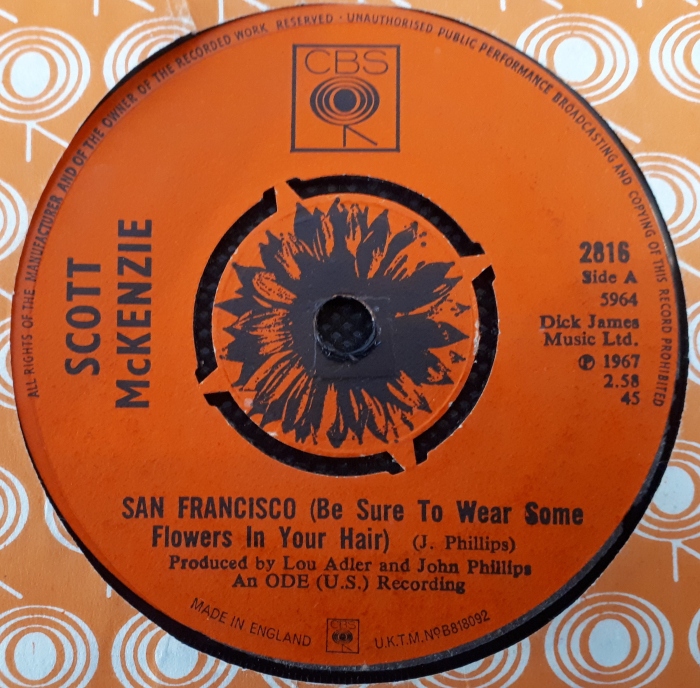
#3 – San Francisco (Be Sure to Wear Some Flowers in Your Hair), by Scott McKenzie (up 2 / 3 weeks on chart)

On its way to the top, another anthem for the Summer of Love: an ode to the city where it all began. In fact, ‘San Francisco’ was written as promotion for the Monterey International Pop Festival, held in June that year. So it’s basically an advert… which isn’t super compatible with the hippy ethos, but hey ho. It worked, and young folks flocked to the city that summer, many with the requisite flowers in their hair. Of the three Summer of Love anthems, this one is perhaps the most stuck in that time, and hasn’t transcended to become an all-time classic. But it’s hard to argue with that sweet, wistful melody. Read my original post on it here.

#2 – It Must Be Him (Seul Sur Son Etoile), by Vikki Carr (up 1 / 9 weeks on chart)

Just to remind us that the singles chart is at heart a collection of songs ordered by cold, hard data, with no interest in the trends of the time, this was the #2 single as the Summer of Love reached its peak. American Vikki Carr provides the easy-listening filling between two hippy anthems, with a tune originally written and sung in French. In ‘It Must Be Him’, Carr – who has a lovely, strident voice – waits by the phone hoping her ex will call: Let it please be him, Oh dear God, It must be him, Or I shall die... I’d suggest Vikki might have played it a bit cooler, if only because all that talk of death and God probably brought this close to a BBC ban…

#1 – ‘All You Need Is Love’, by The Beatles (non-mover / 3 weeks on chart)

In the middle of a 3-week run at the top, this chart’s third, and perhaps ultimate, flower-power anthem. You can read my original post here. (I can’t remember what I wrote five years ago, but I’m sure it was largely positive!) Listening again now, I’m struck by how much fun this record is. From the opening bars of La Marseillaise, through Paul’s ‘all together now’s, the snatches of Bach, ‘Greensleeves’, and ‘In the Mood’, to brief glimpses of ‘Yesterday’ and ‘She Loves You’, the worthy message is dressed up in a lot of singalong fun. Brian Epstein, who would die just a few weeks later, described the band’s performance of the song for the ‘Our World’ television link-up as their finest moment.

So I’d say half the Top 10 for this week in July 1967 does the Summer of Love (and LSD) proud. The other half is more standard sixties: middle-of-the-road ballads, quality pop, and some high-grade crooning. Hope you enjoyed this detour, and I’ll do another one before the year is out.
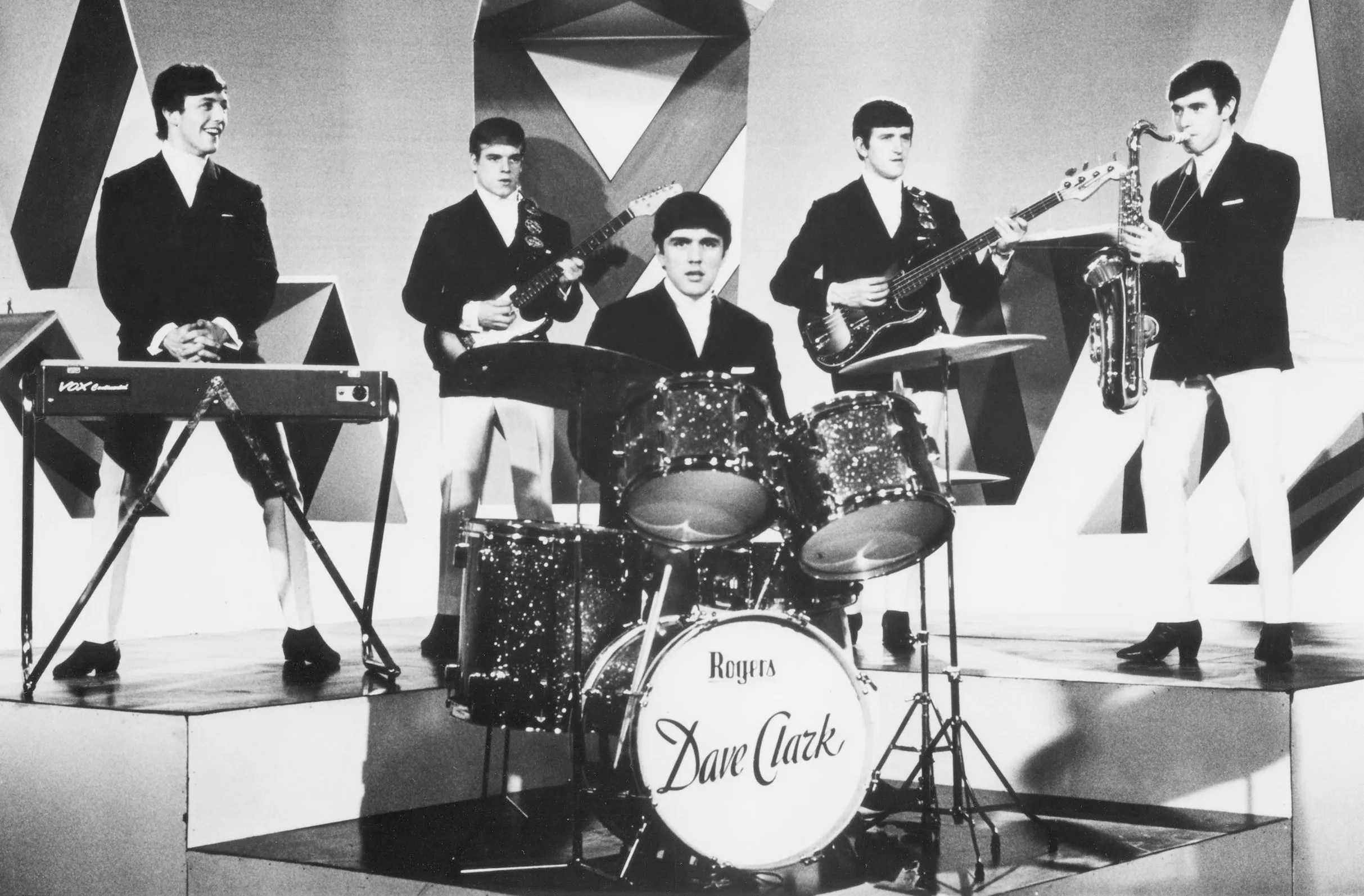
Random Runners-Up: ‘Everybody Knows’, by The Dave Clark Five

Our next #2 takes us back to the winter of 1967 – The Winter of Love, as nobody called it – and a band who had scored their sole chart-topper almost four years earlier…

‘Everybody Knows’, by the Dave Clark Five

#2 for 2 weeks, from 29th November to 5th December and 13th to 19th December 1967, behind ‘Let the Heartaches Begin’ and ‘Hello, Goodbye’

Of the five songs that I’ll feature this week, this is the one I’d never heard before writing the post. And it’s a tune that’s very typical of the time. A waltzing rhythm, soaring strings, glossy, chiming guitars… A world away from the pounding pop of ‘Glad All Over’. In fact I’d say it owes a large debt to the big breakout star of 1967 – pillow-lipped crooner extraordinaire, Engelbert Humperdinck. (The Hump went and covered ‘Everybody Knows’ for his ‘Last Waltz’ LP, and made the bold choice to change the lyrics so that he was singing about a man…)

This is a nice enough song, with a lovely key change in the build up to the chorus. But it’s a sign of where pop music was post-British Invasion, when the hippy dream started to go sour, and the sixties started to lose a little of their swing. The best bands ploughed their own furrows: The Beatles went to India; The Stones went satanic; The Kinks hopped down a rabbit-hole of nostalgia… While the rest were left trying to remain relevant. Hence perhaps why The Dave Clark Five ended up sounding like something your gran might shimmy around the living room to, rather than being at the forefront of the hot pop sounds.

Despite it being unashamedly old-fashioned, this single gave the DC5 their biggest hit since ‘Glad All Over’. Possibly the time of year helped, as who can resist a bit of schmaltz at Christmas time? Contrarily, the band had already released a song called ‘Everybody Knows (I Still Love You)’ in 1964, meaning that this one has become unoffically known as ‘Everybody Knows (You Said Goodbye)’. And though it may sound like a swansong, this wasn’t the end for the Five. They still had three Top 10 hits to come, the last of which came in 1970, meaning they outlasted many of their contemporaries.

Tomorrow we’ll have our final runner-up of the series, and if it isn’t another of the most famous #2 singles of all time…

Number 1s Blog 5th Anniversary Special – Readers’ Favourite #1s – ‘Silence Is Golden’

This week marks FIVE YEARS since I launched this blog with a post on Al Martino’s ‘Here in My Heart’, the first number one single on the first NME chart, published on November 14th, 1952. Over the course of this half-decade, I’ve picked up some dedicated readers and commenters, to whom I’m very grateful for making this whole thing worthwhile. So, to celebrate the milestone, I’m going to hand the blog over to four of my long-time followers. They’ve all chosen their own favourite UK number one single (from between 1952 and 1988 because, well, we don’t want spoilers!)

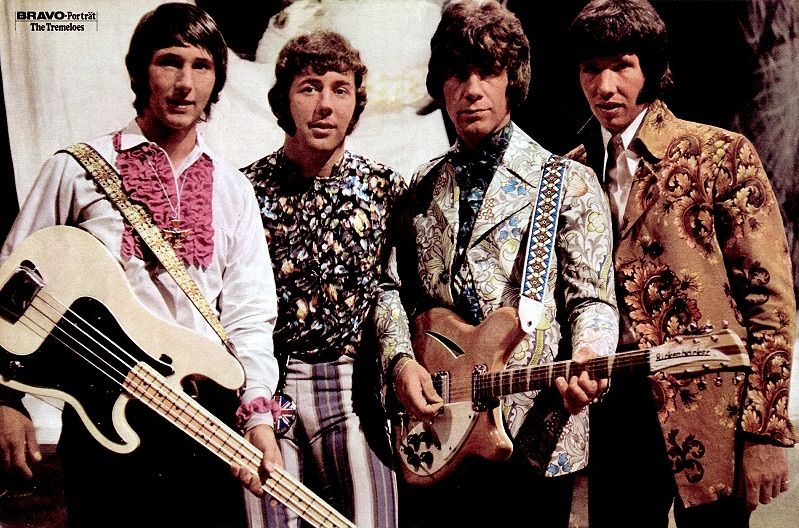
Up first is John Van der Kiste, and his choice of The Tremeloes ‘Silence Is Golden’. John is a writer and historian, whose recent projects include a book on Manfred Mann in the 1970s, and ‘Eagles on Track: Every Album, Every Song’. His work can be found on Amazon.

‘Silence Is Golden’, by The Tremeloes – #1 for 3 weeks in 1967

When Brian Poole and the Tremeloes parted company in 1966, music pundits thought the former would remain a major star while his band would disappear without trace. They were wrong. After struggling with their first two singles, ‘Blessed’ (a Paul Simon song) and ‘Good Day Sunshine’ (Beatles), the band scored with Cat Stevens’ ‘Here Comes My Baby’, a No. 4 in 1967. Stevens disliked their version, complaining that they had turned his heartfelt love-gone-wrong song into a party romp.

For their fourth single, again they decided to take a sad song and make it better (see what I did there). ‘Silence is Golden’, originally the B-side of The Four Seasons’ ‘Rag Doll’ in 1964, was recommended as a potential hit to them by Mick Clarke, who briefly joined as their bassist before being (amicably) replaced by Len Hawkes. Taking a slow, slightly bitter number marked a change in style for them. In three verses and a chorus, the observer tells of his pain at seeing a girl (whom he presumably fancies) being deceived by a guy who obviously doesn’t deserve her. He’s dying to warn her, held back only by the fear that she will tell him he’s lying, so he’d better shut up. A miserable little triangle.

Even so, it flew out of the shops on both sides of the Atlantic. Most of the Trems’ songs featured Hawkes or drummer Dave Munden on lead vocal, but this time they gave the job to lead guitarist Rick West. It shows off the band’s harmonies to perfection. For the most part it follows the arrangement of the original closely with a change in key after the second chorus, the only change coming with a couple of repeats of the final line in a different melody instead of fading out.

1967 may have been the year of Sergeant Pepper, San Francisco and Monterey, but as far as the British charts went, it was big ballad time, with Frank and Nancy Sinatra, Engelbert Humperdinck, Long John Baldry, Tom Jones and The Dave Clark Five all getting sentimental and reaching No. 1 or else getting close. ‘Silence is Golden’ still remains a much-loved staple on 1960s oldies playlists, though some people have never forgiven it for denying The Kinks’ sublime ‘Waterloo Sunset’ the summit after three chart-toppers in three previous years.

(The Trems performing ‘Silence Is Golden’ live in 1967)

The Trems had their chance of repeating history not once but twice, but threw it away. In 1968 they were offered but rejected ‘(If Paradise Is) Half as Nice’, and Amen Corner reaped the benefit. Later they recorded Jeff Christie’s ‘Yellow River’ and scheduled it as a single, though after a change of heart they turned it down, whereupon their producer Mike Smith helped Christie form his own self-named band (with drummer Mike Blakley, whose brother Alan was a Tremeloe) – and take it all the way there in 1970. Also it’s interesting that, of their remaining singles, the most successful were back to the up-tempo party style, with other ballads faring poorly.

Their run of hits continued until 1971 and then faded away (apart from a minor chart entry in 1983 with their version of F.R. David’s ‘Words’), but they have continued to earn a living on the live circuit. Their line-up became something of a revolving door, with West leaving in 1972 after a battle with labyrinthitis, later rejoining on condition that he wouldn’t sing on stage but concentrate on guitar instead. Clarke, who had his moment at the top in 1974 with ‘Sugar Baby Love’ with The Rubettes, has recently been part of the line-up from time to time. The original foursome have all had health issues, with Blakley passing away in 1996 and Munden in 2020, though The Tremeloes have endured in one form or another. Hawkes is still a regular member, while his sons Chesney (as in ‘The One and Only’, No. 1 in 1991) and Jodie often join the line-up on guitar and drums respectively. No mean feat, for a band originally formed in 1958. 

241. ‘Hello, Goodbye’, by The Beatles

We round off 2019 with the final number one from 1967. Top of the charts fifty-two years ago today was…

SgtPepper1_700

Hello, Goodbye, by The Beatles (their 13th of seventeen #1s)

7 weeks, from 6th December 1967 – 24th January 1968

… of course it was. Who else? (As a kid, listening to ‘Pick Of The Pops’ on Radio 2, we’d always have a contest in the car to guess who would be number one. And if it was a chart from the sixties I’d always guess The Beatles because, well, the odds were with you.) And, speaking of being a kid, ‘Hello, Goodbye’ was one of my first favourite Beatles hits. But, to be honest, it’s appeal has faded as the years have gone on, and as I’ve gotten older and more cynical.

You say yes, I say no, You say stop, And I say go, go, go… Oh no… It’s a song that explodes into life – no waiting around. You say goodbye, And I say hello… A song about an argument, about two people that are deliberately disagreeing with one another. One says ‘high’, the other says ‘low’. So on and so forth. It’s tempting to read into it – is it a seemingly nonsensical, childish pop song documenting the start of the slow break-up of the world’s biggest band…? Or a glimpse into the marriage of Paul McCartney and Linda… Actually no, that theory is dead in the water – they didn’t marry until 1969.

McCartney did write this one, which I think is probably quite obvious. It’s got that slightly irritating chipper-ness to it that shows up more often in his solo work, once John wasn’t around to check his worst impulses. Lennon reportedly didn’t care much for ‘Hello, Goodbye’, and pushed for ‘I Am the Walrus’ to be released instead. If only… (‘Walrus’ was the B-side.)

169602920

But, but, but… I’m making it sound as if I hate this record, when I don’t. Beatles’ ‘average’ is still pretty good. I like the backing vocals, which remind me of ‘Help!’ in the way that they sing different lines to the lead, and the reverb on the Why-why-why-why do you say goodbye-bye-bye-bye… And Ringo’s drumming is great on this. The outro, though… The Hare Krishna-ish Hey-la-hey-bah-hello-ah… Nah. Not for me.

Perhaps this is the Beatles playing it safe, worrying that they had spooked people too much with their much more avant-garde stuff: ‘Eleanor Rigby’, ‘Penny Lane’, ‘Strawberry Fields’ and ‘All You Need is Love’. Playing it safe with a huge Christmas hit – their 4th Xmas #1 in five years. It’s just that, for the first time in ages, a Beatles song doesn’t feel like a step forward.

But, what do I know? ‘Hello, Goodbye’ gave The Fab Four their joint-longest run at the top of the charts, tied with their debut #1 ‘From Me to You’. (It has to be mentioned, though, that charts were often repeated for a week over the Christmas and New Year holidays in those days.) It’s also fitting that 1967 ends with a blockbuster number one. It’s been a quick year to get through, with lots of long runs at the top from Tom Jones, Engelbert, Procol Harum and now The Beatles. It’s one of the very few years in chart history where every single #1 stays there for longer than one week.

It’s also fitting that I end 2019 by thanking everyone who has read, liked and commented on this blog over the past twelve months, and wish you all a very happy new year. See you all on the other side… 1968 awaits!

My #1s playlist:

Recap: #211 – #240

Recap number… let me check… eight! We are exactly fifteen years, and two hundred and forty #1 hits, into the UK Singles Chart. It bears repeating every so often, but to listen back to the very first chart-toppers – the likes of ‘Here in My Heart’, ‘She Wears Red Feathers’ and ‘Answer Me’ – is to take a step back in time that feels much deeper than fifteen years.

Especially after this recap, because we have just passed through possibly the most diverse, fertile, wonderful couple of years in popular music history. 1963-65 brought some brilliant songs together at the top of the charts, but they were mostly in the same Beat-pop vein. Recently, we’ve had runs in which experimental psychedelic rock has sat shoulder to shoulder with schmaltzy easy-listening, in which the grittiest soul has been followed by cute country ballads. It’s also been a year or two of blockbuster hits, some big long stretches at number one – five weeks here, six weeks there, seven even, for Tom Jones.

These are thirty chart-toppers that I think we’ll have to split into two. The first half – 1966 – contains some of the finest pop songs ever recorded. Choosing the very best one out of a list that includes ‘The Sun Ain’t Gonna Shine Anymore’, ‘Eleanor Rigby’, ‘Good Vibrations’, among others, ain’t gonna be easy…

Which is why it might be easier to start with the worst. 1967 saw a big shift away from experimental sounds and, for the most part, easy-listening ruled. Suddenly we were back in the pre-rock days. Engelbert, Jim Reeves, Petula Clark and Sir Tom all crooned for their supper over a six month period. But the only one of those songs that I truly disliked – and the winner of this recap’s Very Worst Chart-Topper Award, is Mr. Humperdinck, he of the luxurious sideburns and pillowed lips, with the dreary ‘Release Me’, which must have had people crying out to be released from its six week run at the top. He did redeem himself, I think, with his second #1, ‘The Last Waltz’, which stayed on the right side of cheesy.

That was an easy award. And so it is with this recap’s ‘Meh’ Award, for the hit that was simply dull, rather than terrible. I considered giving it to Jim Reeves, for ‘Distant Drums’, but he was just doing what he did best, and he was dead… So I’m going to give it to The Tremeloes, for their cover of ‘Silence is Golden’. Not awful, but far from their best effort. They were capable of much more.

Why was it, do we think, that things went ever so slightly bland in 1967? Was it a backlash to all the experimentation? A return to what felt safe and comfortable, and not at all scary? Or was it that everyone had given their gran and their maiden aunt an HMV voucher for Christmas? It really is strange, and it makes the Summer of Love, in which ‘normal’ service was restored by Procol Harum, The Beatles and Scott McKenzie, stand out like a sore-thumb. Our more recent #1s suggest that the blip might be over, though – The Foundations and Long John Baldry bringing a bit more grit and streetwise savvy to the number one spot.

So strong are some of the recent chart-topping records that, looking back, you might completely miss some hugely significant hits. Frank Sinatra had a comeback! And duetted with his daughter! Dusty Springfield scored her one and only number one single! The Monkees invented the boy band, while strong, eight-out-of-ten pop songs like ‘Pretty Flamingo’ and ‘With a Girl Like You’, pass by almost un-noted. In previous updates ‘All or Nothing’ by The Small Faces might have been the main story, or might even have been getting the awards… Not this time. We also met The Bee Gees for the first time! And then there was ‘Paint It, Black’. Yep, I almost forgot about one of The Stones’ biggest hits. Admittedly it has never been one of my favourite Stones’ songs, but in terms of its sound and lyrical content it is hugely significant. I thought about giving it my ‘WTAF’ Award, the gong for the more ‘interesting’ chart toppers around, but I already gave them that award last time out, and if I gave them it twice in a row I’d be in danger of painting them as some kind of novelty… So, if it’s not ‘Paint It, Black’ then there’s only one other candidate… Not ‘All You Need Is Love’, because that makes sense in context. Step forward, Sandie Shaw with ‘Puppet on a String’ – a loopy record that makes no sense in any context. (Apart from the Eurovision Song Contest context, but shhh…)

On, then, to the very best that the charts of 1966-67 had to offer. This is a hell of a decision. I have to disregard classics like ‘Sunny Afternoon’, ‘Out of Time’ and ‘Reach Out I’ll Be There’ because they just weren’t quite brilliant enough. As usual, I’ve whittled it down to four. The three I mentioned earlier: The Walker Brothers’ ‘The Sun Ain’t Gonna Shine Anymore’, The Beatles’ ‘Eleanor Rigby’, The Beach Boy’s ‘Good Vibrations’ plus Procol Harum’s ‘A Whiter Shade of Pale’. All worthy winners in any other recap…

In 4th place – The Walker Brothers. A superb pop record, but not a game-changer like the others. In 3rd place… ‘Eleanor Rigby’. (Gasps from the back row!) A pop song that sounds nothing like a pop song. A heart-breaking story of loss and ageing that takes barely two minutes to tell, accompanied by nothing but strings. But… it was a double-‘A’ side, and if I name ‘Eleanor Rigby’ as the very best #1 then I am also naming ‘Yellow Submarine’ as the very best #1, and that’s not something that I’m prepared to do. In 2nd place… ‘Good Vibrations’. An amazing work of art, but one that can’t quite escape the fact that it is a work of art. And so, The Very Best Chart-Topper of the past thirty goes to ‘A Whiter Shade of Pale’ – a confident beast of a record that strode in the room, sounding unlike any other, and was extremely proud of it.

To recap the recaps, then:

The ‘Meh’ Award for Forgettability: 1. ‘Hold My Hand’, by Don Cornell. 2. ‘It’s Almost Tomorrow’, by The Dream Weavers. 3. ‘On the Street Where You Live’, by Vic Damone. 4. ‘Why’, by Anthony Newley. 5. ‘The Next Time’ / ‘Bachelor Boy’, by Cliff Richard & The Shadows. 6. ‘Juliet’, by The Four Pennies. 7. ‘The Carnival Is Over’, by The Seekers. 8. ‘Silence Is Golden’, by The Tremeloes.

The ‘WTAF’ Award for Being Interesting if Nothing Else: 1. ‘I See the Moon’, by The Stargazers. 2. ‘Lay Down Your Arms’, by Anne Shelton. 3. ‘Hoots Mon’, by Lord Rockingham’s XI. 4. ‘You’re Driving Me Crazy’, by The Temperance Seven. 5. ‘Nut Rocker’, by B. Bumble & The Stingers. 6. ‘You’ll Never Walk Alone’, by Gerry & The Pacemakers. 7. ‘Little Red Rooster’, by The Rolling Stones. 8. ‘Puppet on a String’, by Sandie Shaw.

The Very Worst Chart-Toppers: 1. ‘Cara Mia’, by David Whitfield with Mantovani & His Orchestra. 2. ‘The Man From Laramie’, by Jimmy Young. 3. ‘Roulette’, by Russ Conway. 4. ‘Wooden Heart’, by Elvis Presley. 5. ‘Lovesick Blues’, by Frank Ifield. 6. ‘Diane’, by The Bachelors. 7. ‘The Minute You’re Gone’, by Cliff Richard. 8. ‘Release Me’, by Engelbert Humperdinck.

The Very Best Chart-Toppers: 1. ‘Such a Night’, by Johnnie Ray. 2. ‘Cherry Pink and Apple Blossom White’, by Perez ‘Prez’ Prado & His Orchestra. 3. ‘Great Balls of Fire’, by Jerry Lee Lewis. 4. ‘Cathy’s Clown’, by The Everly Brothers. 5. ‘Telstar’, by The Tornadoes. 6. ‘She Loves You’ by The Beatles. 7. ‘(I Can’t Get No) Satisfaction’, by The Rolling Stones. 8. ‘A Whiter Shade of Pale’, by Procol Harum.

It’s very telling that the four award winning songs came practically one after the other in the spring/summer of 1967. That’s how varied and eclectic the charts have been recently – weird followed by boring followed by brilliant. And that is really how the charts should be: anything can top them and anything should top them… Long may it continue!

https://www.youtube.com/watch?v=o9CDdybFlVY

240. ‘Let the Heartaches Begin’, by Long John Baldry

I start to fear the worst when I press play on this latest #1, and find that it begins with a soft and swaying intro… The type of intro that we’ve heard at least five times too often in recent posts. The type of intro that Engelbert Humperdinck would have licked his lips at…

Dzna6QlWkAEahw1

Let the Heartaches Begin, by Long John Baldry (his 1st and only #1)

2 weeks, from 22nd November – 6th December 1967

But no, this record is a cut above the run-of-the-mill, middle-of-the-road, so-so-ness that has made up so much of the past year’s chart-topping material. That becomes clear the second that Long John Baldry’s voice comes in, all smoky and croaky. It reminds me of Chris Farlowe – another British singer that you would think was American.

I can hear the guitars start to play… The first verse is innocuous enough. Boy’s lost girl etc. etc. It does nothing to prepare you for the soaring beauty of the chorus… So let the heartbreaks begin, I can’t help it, I can’t win… It’s a sad song – the title makes that pretty obvious – but it’s also kind of uplifting.

It’s the sort of chorus that makes you wish it wouldn’t finish, and that makes you count the seconds through the next verse until it returns. And Baldry’s voice… When he pauses for the Anymore… at the end of the final chorus you can actually picture him crying. (Apparently he was quite drunk when he recorded the song…)

As with Chris Farlowe, it’s really hard to imagine that voice coming out of the man in the picture above. But it did. And ‘Long John’ Baldry is a brilliant stage name, isn’t it? Anything combining rock stars and pirates is bound to be pretty badass. It was an appropriate name, too, as he measured six foot seven in height!

XD7_1026

I’m getting lots of different notes from this record. It’s got a strong 1967, easy-listening vibe, but it’s also yet another British soul hit in the tradition of Farlowe and Fame, and following hot on the heels of the The Foundations. It’s also forward-facing – this could easily be an early-seventies Rod Stewart record, especially when the acoustic guitar comes in on the second verse. Which makes sense, as both Stewart and Elton John played with Baldry before they hit the big time. Long John would never reach similar heights, but his #1 does feel like a bit of a marking post…

It’s also a perfect winter hit, and it makes perfect sense that it hit the top spot as the nights drew in and folks huddled around their fireplaces. And it’s perfect that I’m publishing this just before Christmas. Grab your loved one – even though it’s a song about heartbreak, literally, but hey – a mug of something mulled, and enjoy. Long John enjoyed quite the life beyond ‘Let the Heartbreaks Begin’, including time in a mental health institution and saving Elton John from suicide (he’s who ‘Someone Saved My Life Tonight’ is about.) And, apparently, he had a brief romantic relationship with Dave Davies from The Kinks. A biography worth reading! He passed away in 2005.

Before we go, I’d like to wish a very merry Christmas to every one of you UK #1s Blog readers. I hope that it is both merry and bright! Next up, before the New Year… a recap!

239. ‘Baby, Now That I’ve Found You’, by The Foundations

When I first scanned down my big long list of number ones and saw that ‘Baby, Now That I’ve Found You’ by The Foundations was coming up, I started imagining what it would sound like. I do that with bands and songs that I’ve not heard much before. And I pictured a Detroit four-piece – like The Four Tops, or The Temptations – and lots of vocal harmonies.

the-foundations-feature

Baby, Now That I’ve Found You, by The Foundations (their 1st and only #1)

2 weeks, from 8th – 22nd November 1967

But no. The Foundations were British. And, while I could have sang at least half the chorus of ‘Baby, Now That I’ve Found You’, the rest of the song sounds quite different to how I’d imagined. It is uplifting, and catchy. It soars upwards on line after ascending line. There are strong hints of Motown in there. But it’s a record that owes just as much, if not more, to British soul – the Georgie Fames, Chris Farlowes and The Spencer Davis Groups that have been popping up over the past couple of years.

Baby, Now that I’ve found you I can’t let you go, I’ll build my world around you, I need you so… It could be a Motown recording, if the production were a little slicker, and the vocals a little more polished. But it’s down to Earth-ness, it’s rough around the edges-ness – dare we say its Britishness? – is a big part of this record’s charm. Especially in the bridge, when the drums go all rocky, and the voices all come together like its last orders down the pub: Now you told me that you wanna leave me, Darling I just can’t let you… Clem Curtis, the lead singer, gives it his all.

R-3778913-1397040218-5925.jpeg

It’s a fun song, a catchy interlude that makes 1967 an even more eclectic year in terms of its chart-topping singles. It was the debut single of The Foundations, who are a band that deserve a bit of attention drawn their way. They were the first inter-racial band to have a #1 in the sixties, their members coming from the West Indies, the UK and Sri Lanka. Plus there were – I think – nine people in the band when ‘Baby, Now That I’ve Found You’ was released (I know there are only eight in the picture above, but I’m going on what I’ve read…) That’s a big pop group in anyone’s books, but not a record… The Temperance Seven also numbered nine members back when they hit top spot back in 1961. The Foundations’ oldest member was thirty-eight; the youngest just eighteen.

From the sounds of it, they found it very difficult to keep a band of that size and with that wide an age-range together. They only released ten singles before splitting up in 1970 – the second biggest of which was the even catchier ‘Build Me Up Buttercup’, which would reach #2 in 1968.

To be honest, if a year or so ago somebody had asked me about ‘British soul in the 1960s’ I would have had to politely shrug. But having now written posts on all these hits that have kept on cropping up at the top of the charts for almost three years now, I feel I should hang my head in shame. British soul was a big part of the sixties-sound, that seems to have been overshadowed by the likes of Merseybeat, folk and flower-power… Maybe it’s because, like me, people just assume the songs and the bands were American. Hopefully if you were as oblivious as I was then you too have enjoyed discovering this fascinating sub-genre. And hopefully the British soul hits keep on coming!

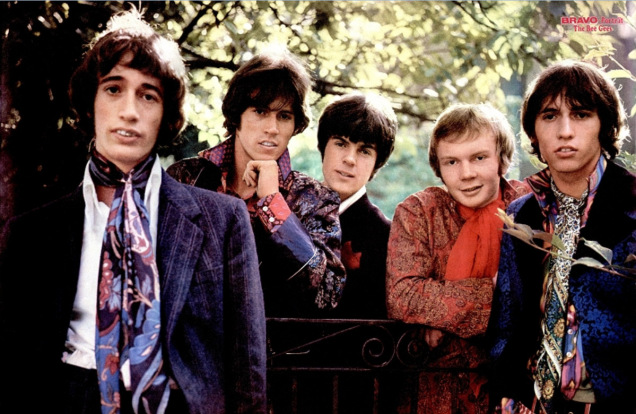
238. ‘Massachusetts (The Lights Went Out In)’, by The Bee Gees

A couple of posts ago, as I wrote about Scott McKenzie’s ‘San Francisco’, I made a big deal about #1 hits that reference places, and how uncommon they were. Of course, just to prove me wrong, the charts now throw up a song about Massachusetts.

6709-bee-gees

Massachusetts (The Lights Went Out In), by The Bee Gees (their 1st of five #1s)

4 weeks, from 11th October – 8th November 1967

And that’s not all that this next chart-topper has in common with McKenzie’s hit. It also, you know, sounds a lot like it. The same light guitar and the same chimes. The same chilled-out vibes. It even references San Fran in the second verse. It’s the (Indian) Summer of Love! Is it harsh to suggest that The Bee Gees were simply jumping on the hippy bandwagon?

Actually, yeah, it would be harsh. This is a retort to songs like ‘San Francisco’. It’s being sung from the point of view of someone who has left his home, in Massachusetts, to join in the summer’s festivities, and who now feels a bit homesick. Feel I’m going back to Massachusetts, Something’s telling me, I must go home… He left his girl standing alone, as the lights all went down in Massachusetts… But he’s now seen the error of his ways: They brought me back, To see my way with you…

It’s an interesting concept, and a quick piece of song writing to get the record out and in the charts mere weeks after the hits that it references. It turns what I initially felt was a so-so, slightly bland song into one worthy of note. The lights are going down in Massachusetts because everybody’s buggering off to the West Coast! I will remember Massachusetts… I wonder if the Massachusetts Tourist Board have ever used it in an ad campaign?

Bee+Gees+Massachusetts+-+Solid-300929

Moving on – largely because ‘Massachusetts’ is a really difficult word to keep typing – let’s take a look at the band. The debutants atop the UK Singles Chart. The Bee Gees. You know, the band that in a decade’s time will take disco to the masses. I think that’s the ‘Bee Gees’ that most people think of: jumpsuits and sparkles and you should be dancing… It’s there in this record, mainly in the vocal harmonies that tremble a little higher than your regular pop record. (Though Robin Gibb sang lead on this one, while Barry sang falsetto on most of their seventies hits.)

They’re a fascinating band, actually. They will spread their five chart-toppers over exactly twenty years, covering three completely different versions of themselves, in terms of sound and image. But they’re not a band I’ve ever really been able to love, and I wish I could like their debut #1 more than I do… (Personally I think their final #1 is by far the best of the five.)

Anyway, they will be back soon enough. In between this and their next #1, they will release ‘Words’, which I can look on fondly as one of the first songs I ever learned to play on keyboard. Other interesting, and less self-revolving, bits of trivia about sixties-era Bee Gees include the fact that none of them had ever actually been to Massachusetts – they just liked the sound of it, and the fact that it was about as far away from San Francisco as you can get on the continental USA. (The Bee Gees, of course, weren’t American – they’re British/Australian.) And… I really like this one… ‘Massachusetts’ was the first ever non-Japanese #1 single on the Japanese charts! How about that…

237. ‘The Last Waltz’, by Engelbert Humperdinck

The Summer of Love is over. The VWs are rolling back home. People are sobering up and cutting their hair. Squeezing back into starchy old suits rather than baggy tie-dye. And the top of the UK singles charts reflects this. Engelbert is back; and he has no time for hippies.

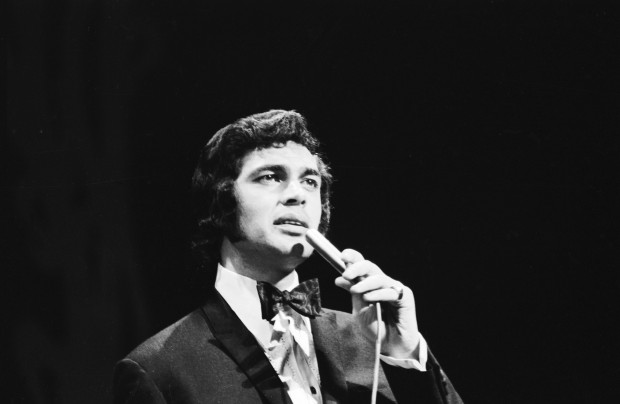
Engelbert Humperdinck

The Last Waltz, by Engelbert Humperdinck (his 2nd and final #1)

5 weeks, from 6th September – 11th October 1967

‘The Last Waltz’ is indeed a waltz. Any hope that it might just be a misleading title is crushed in the opening bars. I wonder should I go, Or should I stay, The band had only one more song to play… We’re in a dancehall, and it’s time for the final song of the night. Engelbert’s out on the pull, but hasn’t had any luck. Until… I saw you out of the corner of my eye, A little girl alone and so shy…

Immediately I like this more than his earlier #1, the dreary ‘Release Me’. It’s just got a little more of a swagger, more of a wink in its eye, a certain je ne sais quoi… It also sounds a lot more contemporary, with a touch of the swinging sixties buried in amongst all the schmaltz. It’s the la-lalalalala-lalas, I think, that shimmer in an oh so sixties way. They remind me of Jackie Trent’s ‘Where Are You Now (My Love)’ from a couple of years back.

And then comes the chorus, and it is undeniable. I had the last waltz with you, Two lonely people together… Engelbert croons like the fate of the world depends on it. And the way he powers through the I fell in love with you… line is spectacular. The last waltz should last forever… Classy.

ENGELBERT_HUMPERDINCK_(SINGER)_THE+LAST+WALTZ-511473

In the end, however, it hasn’t lasted. They’ve split up (though the tense keeps switching between past and present in a way that doesn’t make it immediately obvious.) And so they have truly had their last waltz. I know it’s pure and utter cheese but – keep this secret, will you? – I kind of like it. And I really like the way he doesn’t go for the all-out big finish. He just allows it to slide away with some more lalalas.

So. Just what should 1967 be remembered for? For the Summer of Love? Or for blockbuster easy-listening hits like this? Or an uncomfortable mix of both? Engelbert Humperdinck’s two chart-toppers – one in the spring, one in the autumn – straddle the year like pillow-lipped bookends. After this the hits kept coming for a while, before he settled into a life of Vegas-residencies and TV specials. In 1996 he recorded the song ‘Lesbian Seagull’ for the soundtrack of ‘Beavis and Butthead Do America’. In 2012 he represented the UK at the Eurovision Song Contest. Clearly, despite his multi-decade success, he isn’t a man that takes himself too seriously. Let’s leave him here. Engelbert Humperdinck. The ultimate housewives’ choice. The man, the myth, the name…

236. ‘San Francisco (Be Sure to Wear Some Flowers in Your Hair)’, by Scott McKenzie

And so we reach the final part of our Summer of Love trilogy. Three songs. Thirteen weeks. One summer that (kind of) changed the world. The psychedelic weirdness of Procol Harum, The Beatles going for a full-on hippy love-in, and now this. An ode to the city where it all started.

483967-g-cvr-120820-mckenzie-638a.jpg

San Francisco (Be Sure to Wear Some Flowers in Your Hair), by Scott McKenzie (his 1st and only #1)

4 weeks, from 9th August – 6th September 1967

If you’re going, To San Francisco, Be sure to wear, Some flowers in your hair… The music is acoustic: folky and wistful… Very 1965 – already sounding a little old-fashioned in mid-’67. Something’s going ‘ting’. Somebody’s clapping their hands. In the streets, Of San Francisco, Gentle people, With flowers in their hair… (Apparently all the references to ‘flowers’ and ‘gentle people’ were added to make hippies sound less frightening!)

The singer, Scott McKenzie, also sounds as if he’s from another time, a little old-fashioned. Kind of clipped and proper. A bit square, if we’re being honest, like he’s chronicling the scenes in the parks of San Francisco, an observer rather than a partaker. I dunno, I’m left slightly underwhelmed. For the ‘unofficial anthem of the flower-power movement’ I’d have expected something a little more revolutionary…

But, you know, it’s a cute song. I like it. I knew it, as most people do, as a chorus in the back of my mind. And the most interesting bit comes in the middle-eight, when McKenzie breaks the fourth wall and explicitly references the counter-culture movement: All across the nation, Such a strange vibration, People in motion… There’s a whole generation, With a new explanation… The beat here is spikier, more urgent. It sounds almost like a rallying call.

879118791154_1

I’ve been to San Francisco twice. Once as a kid, and once just last summer. When one night, in the heart of downtown, a guy walked past us bellowing this very song out at the top of his lungs. San Fran being San Fran, he wasn’t oddest oddball we’d seen that day, or even that evening. But I liked the fact that the song was still there, still an anthem of the city fifty years on. And there is something about San Francisco, still, even if downtown is full of meth addicts and Haight-Ashbury is now a bit of a tourist trap. Something in the air that suggests that it could start a revolution again, if it wanted to…

I’m still not sure if Scott McKenzie himself was much of a hippy. He had quite long hair, but then everybody did in the sixties… What I do know is that he is a near perfect example of a one-hit wonder: his only other charting single in the UK reached #50. He was something of a journeyman singer-songwriter, even in 1967, having been in doo-wop and folk bands since the start of the decade. Post ‘San Francisco’, he performed with The Mamas and the Papas, and co-wrote The Beach Boys’ eighties hit ‘Kokomo’. He passed away in 2012.

So that’s that for the Summer of Love. Three game-changing #1 singles: one timeless, one crazy, and one pretty nice. Up next, we slip right back into the easy-listening mulch that has made up so much of 1967. But let’s not think about that just yet. Let’s focus instead on the fact that this is only the 3rd chart-topper to reference a city, after Jimmy Young’s ‘The Man From Laramie’ in 1955, and Winifred Atwell’s ‘The Poor People of Paris’ back in 1956. If we extend that to ‘places’, we could include The Song from ‘Moulin Rouge’, and, at a bit of a push, ‘The Garden of Eden’… Worth noting, though, as it’s not a common topic for #1 hits…

My Spotify playlist, for your pleasure: