174. ‘A Hard Day’s Night’, by The Beatles

Has there ever been a more memorable, yet concise, intro in the history of pop? One chord. Literally just one chord. But I’d bet anyone with even a passing interest in popular music would be able to identify it.

The_Beatles_Hard_Day_s_Night_1964_l

A Hard Day’s Night, by The Beatles (their 5th of seventeen #1s)

3 weeks, from 23rd July – 13th August 1964

I’d also wager that entire theses have been devoted to this chord… (*Edit* Check out a 2004 report entitled “Mathematics, Physics, and ‘A Hard Day’s Night’” if that’s your thing.) As chords go, it’s quite a complicated one, with George Harrison playing an F and a G, while Paul McCartney adds a D on the bass, plus lots of other bits of wizardry from George Martin. Try the Wiki entry on the song for more detail. I didn’t really understand…

To the actual song, then. The intro fades, and we race into the first verse. It’s been a hard day’s night, And I’ve been working like a dog… And what’s that in the background, setting the frantic pace… Bongos?? Sure sounds like it. It’s been a hard day’s night, I should be sleepin’, Like a log…

Coming hard on the heels of two R&B chart-toppers, ‘House of the Rising Sun’ and ‘It’s All Over Now’, this sounds a bit light. Perhaps even a bit dated. So 1963… The But when I get home to you, I find the things that you do… line sounds like the climax to a cheesy sitcom theme. (‘One Foot in the Grave’, maybe…)

But the bridge comes in, and blasts all these doubts away. When I’m home, Everything seems to be right… Insistent cowbell, and the way that Paul half-screams Tight… Yeah! It’s actually a pretty filthy song. When he gets home to his girl, he finds the things that she does, make him feel alright… Who knows, maybe she’s just fetching him his pipe and slippers… Then scream! And solo. I love a scream before a solo. It’s second only to shouting the guitarist’s name in my list of ‘Brilliant Ways to Introduce a Solo’.

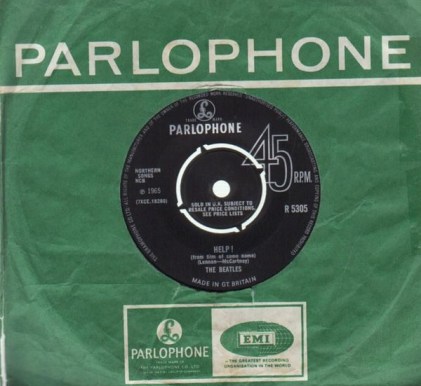
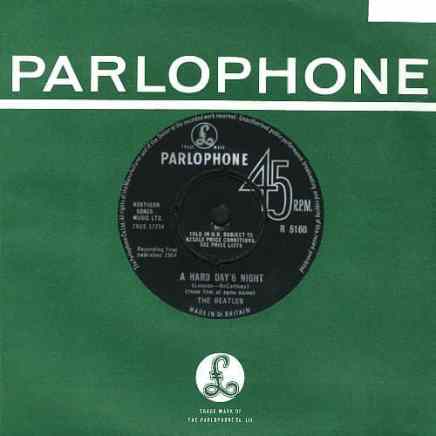
uk_a-hard-days-night_single

Actually, listening properly to ‘A Hard Day’s Night’ for the first time in years, it feels like this is actually four songs in one. You’ve got the intro, the cheesy verses, the intense bridge, then the outro… The jingly, jangly, echoey outro that sounds as if it’s coming from a year or two in the future. It kills of Beatles Mk I, and suddenly this record doesn’t sound lightweight, or like a re-tread of their previous hits. Those last five seconds basically announce that Merseybeat is dead; but that The Fab Four will continue setting the tone for the next few years. Everyone knows that The Beatles were ‘very good’; but it’s tiny moments like this that confirm it.

This song was, of course, from a film of the same name, all about the boys carousing their way around London, getting up to all sorts of hi-jinks. It was their first feature film appearance and, whaddya know, it’s one of the most influential music-movies ever made. Even their films turned out that way. They simply had the Midas touch.

Interestingly, what with this disc being released at the height of Beatlemania, as part of the soundtrack to the biggest film of the year, it didn’t enter the charts at #1. Entering the chart at the top was a big deal back then – Elvis had done it twice, Cliff once… That’s it. It seems natural to assume that The Beatles would have done so too in pretty short order. But they never did. ‘A Hard Day’s Night’ entered at #3, before climbing. They would have to wait until ‘Get Back’, their penultimate #1 in 1969, to hit the summit in release week… I say ‘interesting’; but maybe it’s just me. A strange quirk, anyway. Onwards.

159. ‘You’ll Never Walk Alone’, by Gerry & The Pacemakers

Gerry and his gang make it three number ones in a year – three in ‘63. A feat that not many acts manage. But this is a disc light-years away from their first two chart-toppers.

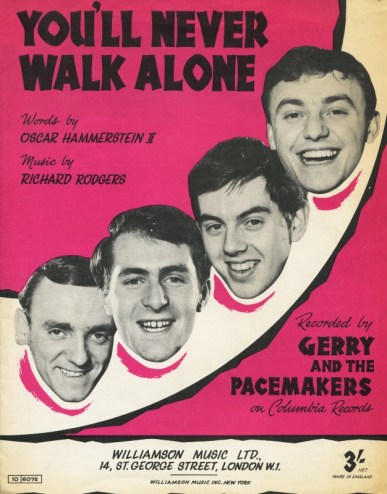
gerry-and-the-pacemakers-youll-never-walk-alone-1963-8

You’ll Never Walk Alone, by Gerry & The Pacemakers (their 3rd and final #1)

4 weeks, from 31st October – 28th November 1963

It starts very simply. When you walk… A voice, a piano, a sparse drumbeat, and a bass… Through a storm, Hold your head up high, And don’t be afraid, Of the dark… Yup, we are definitely a long way from ‘I Like It’.

It’s a motivational song – a ‘never-give-up’ number about holding onto your dreams, even in your darkest hour. And Gerry Marsden certainly sells it here, building in confidence as the song progresses with his slightly rough-round-the-edges scouse crooning, and an affecting tremble in his voice. Walk on, Through the rain, Though your dreams be tossed, And blown…

Then the violins kick in, and the band and George Martin pull out all the stops to make sure there isn’t a spine left untingled. Walk on… Walk on… With hope in your heart, And you’ll never walk alone…. It’s a classic, an anthem. There’s a quick drop following the first chorus and then BOOM – we’re back for a big ol’ finish.

What on earth, though, were Gerry and The Pacemakers doing recording a version of ‘You’ll Never Walk Alone’ in the first place? It’s such a weird trio of chart-toppers: ‘How Do You Do It?’ – perky Beat-pop, ‘I Like It’ – perky Beat-pop, ‘You’ll Never Walk Alone’ – umm… It’s from a Rodger’s & Hammerstein musical, ‘Carousel’, first performed in 1945 as their follow-up to ‘Oklahoma!’ In the show, the song is sung by the lead-female character’s sister to comfort her following her death of her husband.

However, in the UK, and much of Europe, ‘You’ll Never Walk Alone’ has become completely disassociated from the original musical, and even from Gerry & The Pacemakers. Ask your average youngster in the street today if they know the song and they’ll probably say ‘yes – it’s the Liverpool Football Club song.’ It’s a record – more so than any of the other chart-toppers that we’ve covered so far – that has, for better or worse, taken on a completely new role in the decades since its release. At every Liverpool home game, just as the players run out onto the pitch, you’ll hear that piano and Gerry Marsden’s husky tones. Then, just as it arrives at the big finish, the P.A system will cut out and the crowd will take it home.

Gerry-The-Pacemakers-Youll-Never-Walk-Alone

Legend has it that in the early sixties the P.A. would play the Top 10 ahead of each match at Anfield. For four weeks in November 1963, ‘You’ll Never Walk Alone’ was the last song played due to it being atop the charts. But even after it was knocked off the top and dropped out the charts, the crowd kept singing it. The Pacemakers were hometown lads, after all, and the lyrics and melody of the song do lend themselves to being sung en-masse at a football match. So it stuck. ‘You’ll Never Walk Alone’ is the Liverpool FC song now. It’s sung at every game. It’s carved above the gates at Anfield. Liverpool supporters sign off from message boards and forums with ‘YNWA’.

But… Football being a tribal game, this means that any supporter of a club that isn’t LFC has to, basically, hate this song. Especially those who grew up in the seventies and eighties, when the buggers were winning everything. I would never particularly choose to listen to this song, as I’m not a Liverpool fan. It’s left ‘You’ll Never Walk Alone’ in a very weird position in British popular culture – a song that everybody knows; but one that only a select portion of the population will actively enjoy. And, amazingly, I’ve only just scratched the surface here. The song will top the charts again, and will become indelibly connected to two of the biggest tragedies in recent British history. All that for another day…

Away from football, ‘YNWA’ (those Liverpool fans might be on to something here) has been recorded by everyone who’s everyone: Elvis, through Roy Orbison, to Susan Boyle. It would literally take half an hour for me to type out all the artists who’ve done their take in the song. Gerry and The Pacemaker’s version remains, in the UK at least, the definitive one. But I’ve not answered my initial question from several paragraphs back… Why on earth did they take such a big step away from their Merseybeat roots, and so early in their careers? Could it have, perhaps, been their downfall? You can’t imagine The Beatles ever recording a showtune, can you? It was the band’s last #1, and they would only have three further Top 10s. By 1965 their chart-careers would be over. It’s a huge collapse (similar to the way Liverpool threw away the league title at Crystal Palace a few seasons ago… I couldn’t resist…)

Still, three #1s from their first three singles was an unprecedented achievement at the time, and one that wouldn’t be matched for over twenty years. They split up in 1966, with Gerry going into cabaret and children’s entertainment.

Before we finish, I have one big problem with this record (and it’s nothing to do with football). I’ve mentioned ‘The big finish’ a couple of times now; but the song doesn’t actually have one. The song build and builds, and builds, for two minutes and twenty seconds, and is crying out for a huge, epic, grandiose finish. But they bottle it. In the middle of the last ‘never’, Gerry pauses, the soaring violins fall away, and the song ends with a bit of an anti-climax. It’s a strange decision. I don’t know if it was Marsden’s, another band member’s, George Martin’s or maybe even Rodger’s or Hammerstein’s back in the forties. But for me it doesn’t work. It leaves me feeling a little flat. I’ll leave it to the crowd at Anfield to give this song the big finish that it deserves.

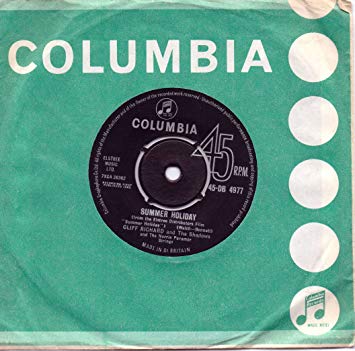
148. ‘Summer Holiday’, by Cliff Richard & The Shadows

The doors are locked, the suitcases stowed in the boot, the dog’s at the kennels. Dad starts the car and mum turns to the kids in the backseat. We’re all going on a summer holiday… she sings… No more working for a week or two…

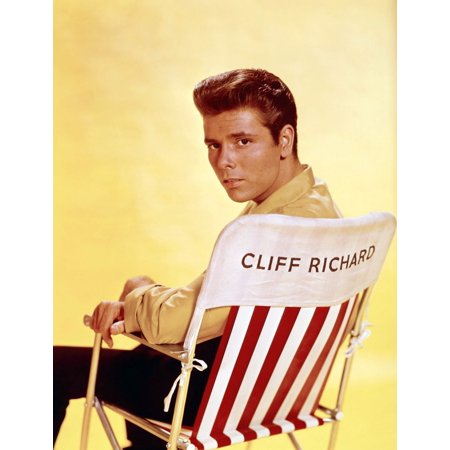
602bb35a-ef2d-4113-b481-6ad4b02f8f33_1.bfe8d4d664a2e2f37aa93658ea409266

Summer Holiday, by Cliff Richard (his 7th of fourteen #1s) & The Shadows (their 11th of twelve #1s)

2 weeks, from 14th – 28th March / 1 week, from 4th – 11th April 1963 (3 weeks total)

Chances are, if you had any sort of semi-regular, middle-class British childhood in the latter half of the twentieth century, you will have lived through that very scene. I know I have – more than once. There can’t be many better known #1 hits than this? I’m racking my brain to think of chart-toppers that more people will know the words to, and I can come up with ‘Hey Jude’, and ‘Bohemian Rhapsody’…

We’re goin’ where the sun shines brightly, We’re goin’ where the sea is blue, We’ve seen it in the movies, Now let’s see if it’s true… It’s a horrendously twee song. The jaunty guitar ‘riff’, the glockenspiel, the strings that are apparently now a constant part of Cliff’s musical journey… And those lyrics. So we’re goin’ on a summer holiday, To make our dreams come tr-u-u-u-ue… Fo-or me and you… ‘Trite’ doesn’t even begin to cover it. Then there’s the key-change, and the humming to fade. Humming!

This should be an awful song. It is awful. And yet, it’s not. Not really. Because deep down in even the hardest, most cynical and blackened hearts there remains a kernel of the-child-that-was. And that little kid, in the backseat of his family’s Ford Escort, cares not for the sickeningly perky guitar and the vomit-inducing lyrics; to him it is simply the sound of, well, the summer holidays.

91ueecyvlfL._SX355_

This song is Cliff doing what he does best. Cliff at his Cliffest. Peak Cliff. This will be his last chart-topper for a while, and it’s kind of fitting that we pause here. ‘Summer Holiday’ draws to an end his teeny-bopper stage – very soon he’ll be usurped by a four-piece from Liverpool as Britain’s foremost pop-act of the age. And it’s the perfect song to do so with, as any lingering hope that Cliff was Britain’s great rock ‘n’ roll hope is finally, brutally, irrevocably snuffed out in this record’s opening chords. Looking back at his seven #1s so far, only ‘Please Don’t Tease’ came anywhere close to being a rocker; and even then it was a super-mild rocker. The coconut korma of rock ‘n’ roll records. ‘Summer Holiday’ is, of course, one of the songs that Cliff performed on Wimbledon’s Centre Court during that rain delay, a moment still commemorated every year in Middle England’s village halls…

‘Summer Holiday’ is also the second chart-topping record from the hit movie of the same name, after ‘The Next Time’ / ‘Bachelor Boy’. Which is impressive – not many movies spawn two #1s (and it’s not finished with the chart-toppers yet!)

It also, and this is something that’s just came to me, confirms ‘Summer’ as the biggest single theme in pop music, after Christmas. We’ve already had ‘Here Comes Summer’ by Jerry Keller as a chart-topper in 1959, and I can think of at least three more summer-themed number ones through the years (there are surely others…) Which makes it all the odder that winter was barely finished when this song actually topped the charts… The power of Cliff! Even the seasons couldn’t contain him!

133. ‘Can’t Help Falling in Love’ / ‘Rock-A-Hula Baby’, by Elvis Presley

Wise men say, Only fools… would be surprised at Elvis Presley claiming yet another UK #1. His sixth inside fifteen months. And with it, he takes his chart-topping singles account into double figures.


91eaiwS0ygL._SY355_

Can’t Help Falling in Love / Rock-A-Hula Baby, by Elvis Presley (his 10th of twenty-one #1s)

4 weeks, from 22nd February – 22nd March 1962

One of the good things about Elvis’s post-army career is that he never released two similar records in a row. We’ve had operatics (‘It’s Now or Never’) followed by a ballad (‘Are You Lonesome Tonight?’) followed by oompah (‘Wooden Heart’) followed by a return to La Scala (‘Surrender’) then a spot of rock ‘n’ roll (‘Little Sister’ / ‘His Latest Flame’) and now some more balladry.

Some supreme balladry. Because ‘Can’t Help Falling in Love’ is Elvis at the height of his crooning powers – a classy, classy record. Not one that I probably have to describe in too much detail, given its ubiquitousness, but I’ll give it a go anyway. A simple piano melody, the ‘ting’ of a xylophone, and The King: Wise men say, Only fools rush in, But I can’t help, Falling in love with you… Oh, Elvis, do go on… Shall I stay, Would it be a sin, If I can’t help, Falling in love with you…? That voice. There are no operatics, nothing fancy; but you’re dragged in, and left as putty in his hands. It’s a very chivalrous love song, too – with the singer almost apologising for his affections.

It’s like an update of the big fifties ballads – ‘Here in My Heart’, ‘Answer Me’ and so on – with the same OTT emoting (Take my hand, Take my whole life too…), but much more stripped back. And yet compared to its contemporaries, this record – all of Elvis’s records for that matter – sounds incredibly polished. Very crisp and very clear. As if it’s been recorded in the most palatial of recording studios using the most up-to-date equipment (to be fair, it probably was). If ‘Can’t Help Falling in Love’ was in a high-school class with all the other recent #1 singles – suspend your disbelief for just a second, please – then it would be the cool kid, the rich kid, the captain of the football team with the cutest cheerleader girlfriend.

Two bits stand out in particular: the twang of the guitar in the bridge, and the moment when Elvis and the backing singers combine for the final verse. Mmmm. Shivers. Elvis released some drivel in the 1960s; but when he was at the top of his game, releasing beauties such as this, there was no touching him. Cliff could but watch and weep.

For proof of the transcendent nature of this song, look no further than the fact that this is both the unofficial club anthem of Sunderland F.C. and my parents’ ‘song’ – despite the fact that they had barely started primary-school when this was at the top of the charts. And just a few weeks ago, while on holiday in Cambodia, I heard a busker performing it in the street.

r-553725-1311448310.jpeg.jpg

So: ‘Can’t Help Falling in Love’ is an utter classic. The song on the flip-side of this disc, on the other hand… Well, let’s pull no punches here: it’s Elvis at his shitty B-movie contractual soundtrack worst. ‘Rock-A-Hula Baby’, or to give it its’ bandwagon-jumping full title ‘Rock-A-Hula Baby (Twist Special)’, sets out to be a fun song, with a Rock-a-hula, rock rock-a-hula, Wow! intro, and I want to find it fun… But I can’t.

Because I don’t believe Elvis himself is having much fun here. He sounds like he’s going through the motions as he describes his Hawaiian lover with silly lines like: When she starts to sway, I gotta say, She really moves the grass around… and Although I love to kiss my little hula-miss, I never get the chance, I wanna hold her tight, All through the night, But all she wants to do is dance… And if he ain’t enjoying it, then how are we meant to?

Couple this with the terrifying guitar effects – Rock! Whhrrraa! – and the ridiculously cheesy chorus-line ending, and you’ve got a hot mess. Still, at least it’s a rocker – ridiculously fast-paced and over in under two minutes. An up-tempo bad record is always, I repeat always, better than a slow-tempo bad record.

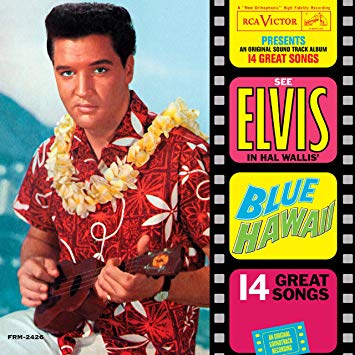
Both sides of this disc featured on the latest Elvis film, ‘Blue Hawaii’ – a film that I’ve never seen but, going by its write-up on Wiki, might be worth checking out. Sample sentence: “Before Ellie can drown herself, Chad (Elvis’s character) saves her and administers an overdue spanking.” Quite. And though we’ve covered a fair few double ‘A’-sides up to now, none of them have contrasted as much as this pair of songs do. Surely ‘Can’t Help Falling in Love’ could have stood alone and still made it to #1? Surely people weren’t buying this disc for ‘Rock-A-Hula Baby’?? But it’s there, in the annals of British chart history, as much of a hit as its far-superior twin. And that egalitarianism, that chance that any song can get to number-one as long as enough people buy it, is why we love the charts. Isn’t it…?

132. ‘The Young Ones’, by Cliff Richard & The Shadows

We enjoyed/suffered through (delete according to personal preference) a Cliff-less 1961. But Britain’s great rock ‘n’ roll hope kicks off 1962 with… (pause for dramatic effect)… his most famous hit?

The-Young-Ones-1961-film-images-630814b5-6ace-499e-8614-12e90dccdd6

The Young Ones, by Cliff Richard (his 5th of fourteen #1s) and The Shadows (their 7th of twelve #1s)

6 weeks, from 11th January – 22nd February 1962

OK, there are the Christmas songs. And ‘Summer Holiday’. And ‘Congratulations’… Let’s just say that this is his most famous song not about festivities and/or vacations. Though this latest chart-topper is a celebration of sort – a celebration of being young!

Its starts with some Shadows ™ guitar, before Cliff comes in with his gossamer-light voice… The young ones, Darlin’ we’re the young ones, And the young ones, Shouldn’t be afraid… I am slightly loathe to admit it, but I have missed that voice of late… To live, Love, While the flame is young, ‘Cause we may not be the young ones very long… Any song performed by The Shadows and sung by Cliff can’t fail to be of a certain standard. It may well be cheesy, and the lyrics might be very trite, but downright bad? Unlikely.

And ‘The Young Ones’ does have its moments. I love the beat-band drum fills, while the guitars are very reminiscent of Buddy Holly’s mid-tempo hits – ‘Heartbeat’, ‘Maybe Baby’ and the like. Yet it’s far from perfect –  corny couplets like: Oh I need you, And you need me, Oh my darlin’, Can’t you see…? make sure of that.

And then there are the violins. Yep, Cliff’s gone orchestral. By the end the strings are swirling and cascading, drowning out Hank and Bruce’s guitars. (I can’t help wondering if this was one of those tracks, like the minimalist ‘Travellin’ Light’, on which The Shadows were a little bored…) I had to double-check that I was listening to the original version, rather than some kind of polished re-release… I’d see this as Cliff’s attempt to move away from teeny-bop discs like ‘Please Don’t Tease’ and ‘I Love You’ – his bid for adult-artist longevity.

7140gXm67-L._SL1280_

In that regard it’s a very clever record. The lyrics are about being young; and yet the production is very grown-up. It isn’t enough of a departure to alienate the screaming fifteen year-olds, but it’s classy enough to get grandma interested. And there’s a bittersweet edge to the closing lyrics that will appeal to mum and dad: And someday, When the years have flown, Darlin’ then we’ll teach the young ones, Of our own…

I wouldn’t call it a sell-out in the same way that Elvis prancing about in Lederhosen singing ‘Wooden Heart’ was a sell-out. Because, let’s face it, Cliff has never – in terms of his chart-topping singles, at least – managed to justify his tag as Britain’s foremost rock ‘n’ roller. From the opening chords of his first #1 he’s been planted firmly in the middle of the road. But… Something definitely clicked here, and his career has kicked up a gear. Thanks to its role on the soundtrack to Cliff’s movie of the same name, ‘The Young Ones’ had built up a staggering 500,000 pre-orders before its release, meaning that it rocketed straight in to the charts at Number One – only the 3rd single (and the 1st single not released by a certain Elvis Presley) to do so. It remains his biggest seller in the UK.

And its legacy was such that twenty years later it became the theme tune to BBC sitcom ‘The Young Ones’, in which Rik Mayall played a lisping, tantrum-throwing, anarchy-loving Cliff fan. The joke of course being that, by 1982, young people with any aspirations towards being cool couldn’t possibly be Cliff fans. But, the eighties are a long way off yet in our world. It’s January of 1962, Cliff and The Shadows are the biggest pop-stars in the country, and they’ve just scored their biggest hit yet. Though, as with all of us, they may not be the young ones very long…

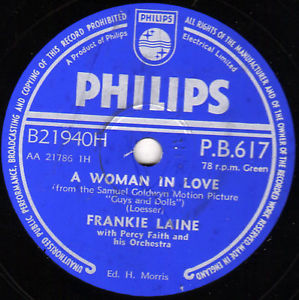
‘A Woman in Love’, by Frankie Laine – The UK Number 1s Blog Anniversary Special

This week marks the 1st anniversary of The UK Number 1s Blog (** Trumpet Fanfare**)! In the past year we’ve covered the period from Nov. ’52 to Nov’ 61, with 129 chart-topping songs featured. We’ve survived pre-rock, rode the rock ‘n’ roll revolution, and are now well on our way towards the swinging sixties… Thanks to everyone who has read, followed, commented and enjoyed.

To celebrate this milestone, I’m going to take a short break from the usual countdown to repost seven songs that I have really enjoyed discovering over the past year. These aren’t necessarily the best songs to have topped the charts – there’ll be no Buddy Holly, Johnnie Ray, Connie Francis, Elvis or The Everly Brothers (follow the links if you want to read about them) – as I’ve been listening to, and loving, those artists for years. This week will be all about the forgotten gems, the hits I’d never heard before, the songs that have slipped through the cracks…

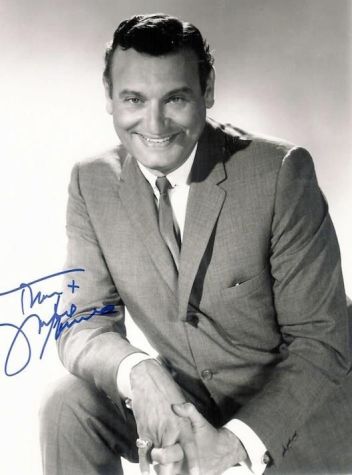
Song number five: the King of Pre-Rock – Mr. Frankie Laine. Laine, along with Guy Mitchell, was the most consistent chart-topper before Elvis came along. His 1st #1 – ‘I Believe’ – still holds the record for most weeks at the top of the charts. ‘A Woman in Love’ was his swan song – one of his last big hits – and I remember thinking, when I wrote this post, that it felt as if it came out of nowhere. The swing and swagger of the big band on this record, and the glint in Laine’s eye as he sang it, were a world away from his earlier, painfully earnest ballads. I can’t say I’m a fan of all his work; but this is a great song…

s-l300 (2)

A Woman in Love, by Frankie Laine (his 4th and final #1)

4 weeks, from to 19th October to 16th November 1956

Look who’s back!

Almost three years since we last saw him, Frankie Laine is back at the top of the charts for one final hurrah. And it’s not too much of an exaggeration to say that this is something of a re-invention.

I think this is the very first ‘big band’ #1 we’ve seen. It’s from the film version of ‘Guys and Dolls’, and I think it might be a tango, or a foxtrot (I ain’t no dancer). Either way, it begins with a bang, and then it starts swinging. Frankie Laine is a-swingin’.

Your eyes are the eyes of a woman in love, And oh how they give you away… Why try to deny, You’re a woman in love, When I know very well, When I say…

Who is this woman head over heels with? Well, Frankie of course. At least that’s what he thinks: Those eyes are the eyes of a woman in love, And may they gaze ever more into mine…

Contrast these lyrics with Laine’s last chart-topping single from December ’53. ‘Answer Me’ was all about him pleading for a sign that his lover was still, well, in love with him. In ‘A Woman in Love’ he doesn’t need any reassurance, any prayers answered. He knows she’s hot for him. The times they are a-changing.

And then we have one of the best musical interludes that we’ve heard so far in this countdown. The previous chart-toppers haven’t really gone in for solos, but this one does. The whole band gets stuck into a swinging little thirty seconds. There is a lot of swagger in this record. I’m quite enjoying sticking one-word labels on these recent #1s: Pat BooneCrooner, Anne SheltonTwee, Frankie Laine – Swagger! We’ve had an eclectic run of songs hitting the top spot recently, perhaps the most varied run of this countdown so far, but in a way they’ve all been very of their time. Popular music right on the cusp of the rock ‘n’ roll invasion.

The only thing that spoils this record is the finale. Frankie may have re-invented himself, but he still loves a big ending: Crazily, ga-aze, e-ever mo-ore into MIIIIIIINNNNEEE! Every time I hear an ending like that it sounds more and more old-fashioned. I can’t imagine there’ll be many more, though. Surely. But, overall, this is a small complaint. It’s a great song. Laine’s voice is as warm and as listenable as ever. He and Doris Day should have recorded a duet (*edit* they did – ‘Sugarbush’ back in 1952).

06cab955448883c79c5103ab82addae5--arthur-godfrey-singer

And so we bid farewell to perhaps the biggest of all the pre-rock stars. Four number one singles adding up to 32 (thirty-two!) weeks at the top. That’s pretty darn impressive, and leaves him at 5th place in the all-time list behind only…. I’ll give you a few seconds to guess… Elvis, The Beatles, Cliff and The Shadows. And, actually, I’m harping on about this being a ‘re-invention’ and a ‘comeback’ for Laine, but he hadn’t been anywhere. In the three years between his 3rd and 4th #1s he had still racked up a whole pile of top ten hits. He was huge. ‘A Woman in Love’ would, though, be his penultimate top ten single in the UK.

One final thought… This track made Frankie Laine the artist with the most UK #1s at this point. With four. It’s noticeable that we haven’t yet met an artist who has scored, or will even go on to score, more than four. These early charts were a very egalitarian place – songs only got to the top because they were… I don’t want to say ‘good’ because, well… let’s say: ‘universally popular’. The days of super-star idols, of huge fan-base acts whose every release races to the top of the charts – your Take Thats, Westlifes, Spice Girls – are still not upon us. But they will be sooner than you might think, and their arrival has a lot to do with this new-fangled thing called rock ‘n’ roll.

125. ‘Reach For the Stars’ / ‘Climb Ev’ry Mountain’, by Shirley Bassey

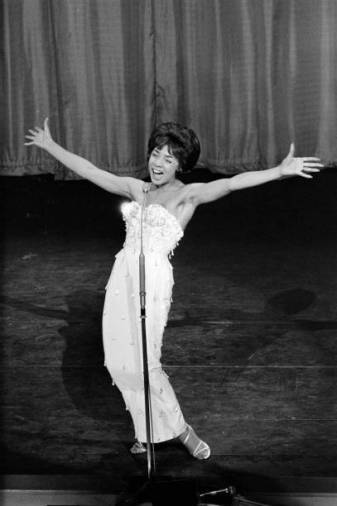
Ladies and Gentlemen, it’s time to welcome back on stage a member of British pop royalty. Dame Shirley, of Bassey, claiming her rightful place atop the UK charts…

gettyimages-873989666-612x612

Reach for the Stars / Climb Ev’ry Mountain, by Shirley Bassey (her 2nd and final #1)

1 week, from 21st – 28th September 1961

Except, despite being singer of huge repute, a diva with a seven-decade long career in the upper echelons of British popular culture, the singles charts never were Shirley Bassey’s natural stomping ground. This is only her second number one – and it’s her last! She’s had five weeks in total at the top of the listings, and only ever had twelve top ten hits in her whole career… Compare that to the titans of the UK Singles Charts – Elvis, Cliff, The Beatles, Madonna – and that ain’t nothing.

But perhaps it’s not so surprising when, amid the teeny-bopper pop and the rock ‘n’ roll that was shaping the sound of the early sixties, she was releasing discs like this. Perhaps the biggest surprise here is that this record got to #1 at all… The first song, ‘Reach for the Stars’, sounds out of place the second the soaring intro kicks in.

I reach for the stars, When I reach for your love, For so far above me, You always will be… It’s a song about adoring someone, about loving them completely… When you come to my arms, In that moment divine, All the stars in the sky, Are mine… It’s not a song about longing, or about a love unrequited. It’s a song about being utterly besotted with someone. (A song that might terrify you slightly if it were about you…)

The lyrics are all about stars and clouds, and the sky, and Dame Shirley sings it as if making sure that she’ll be heard up there in the firmament. The last chorus and verse are absolutely belted out, while the way she packs around four different notes into that last sky-y-y is spine-tingling, as is the way she drags the final all mine…! out to within an inch of its life. In terms of pure singing technique, this is one of the very best-sung chart-toppers so far.

shirley_bassey_reach+for+the+stars-560466

You might, then, expect the flip-side of this disc to be a subtler affair – yin and yang, and all that. But nope. That’s not how this Dame plays. On ‘Climb Ev’ry Mountain’, she cranks the operatics up even further… Climb ev’ry mountain, Search high and low, Follow ev’ry bye-way, Ev’ry path you know… (on a song that’s already pretty old-fashioned, that Victorian apostrophe in ‘ev’ry’ is just the icing on the cake)… She’s following rainbows, fording streams, doing all these things in search of her dream. It’s a motivational number, lyrically very simple, about never giving up.

Before writing this, I wasn’t familiar with either of these songs – but I had strong suspicions from the first listen that ‘Climb Ev’ry Mountain’ was a piece of musical theatre (the David Whitfield-esque backing singers are a dead giveaway). But I was astounded to learn that this song wasn’t just from any old two-bit musical – it’s from the bloody ‘Sound of Music’! How did that pass me by? Admittedly I’ve managed to go through thirty-three years on this earth without ever seeing said movie, but I’ve picked up a lot through pop-culture osmosis – the Von Trapps, nuns and Nazis, ‘The Hills are Alive..’ ‘Doe, a Deer…’, the one about the flowers… ‘Climb Ev’ry Mountain’, though…? No idea. You learn something new every day.

This song ends with a bang every bit as big as ‘Reach for the Stars’. Perhaps too big a bang. While on the former song Bassey stayed the right side of bombastic; here she over-eggs the pudding. The recording crackles as she launches into the final Till you find your dream…, the equipment clearly unable to cope with Shirley’s lung-power. The woman could sing, and still can. Aged eighty-one, she still regularly appears at Royal Variety performances, at the Queen’s garden parties and on her own TV specials – 2011’s ‘Shirley’ for example (no surname required, clearly). As we leave her here, in September 1961, her most famous songs still lie ahead – ‘Goldfinger’, ‘Diamonds Are Forever’, ‘Big Spender’ and so on – while her biggest hits have come and gone – this and ‘As I Love You’ almost forgotten in 2019.

It’s slightly sad to wave such a premature goodbye to Dame Shirley. But this disc is a real outlier in the charts of ’61 and, as I wrote at the start, perhaps offers an insight as to why she never really set the singles charts alight. These are two superbly sung and gorgeously orchestrated ballads, but they aren’t indicative of the general trends in popular music at this time. They do, however, add the eclectic mix of chart-toppers that we’ve enjoyed in 1961 –long may that continue.

Finally, it would be remiss not to mention that this double ‘A’-side lives on in a much more recent song… S Club 7’s smash-hit from 2000, ‘Reach’, which incorporates the titles of both these songs into its chorus; but whose bubble-gum pop cheesiness couldn’t be further from Dame Shirley’s ear-drum shattering balladry. Anyway, I’m happy I got to link to an S Club song several decades earlier than I thought I would (what an utter guilty pleasure that one is…) Onwards!


115. ‘Wooden Heart’, by Elvis Presley

Oooh, what’s that? An accordion? Yay!… Said no-one ever. Nothing good ever starts with an accordion.

011117podcastmain

Wooden Heart, by Elvis Presley (his 7th of twenty-one #1s)

6 weeks, from 23rd March – 4th May 1961

And what could you possibly add to said accordion to make an even more annoying sound? Ah, yes – an oompah band. Or at least the flaccid remnants of an oompah-band. So with this pair of musical buzzkills we enter Elvis’s short-lived ‘Lederhosen phase’: Can’t you see, I love you, Please don’t break my heart in two, That’s not hard to do, Cos I don’t have a wooden heart…

This is – for want of a better, more descriptive word – bad. At least Elvis has the decency to sing it like he’s embarrassed. He’s on auto-pilot – none of the emotion we were hearing on ‘Are You Lonesome Tonight?’, none of the bombast from ‘It’s Now or Never’ and certainly none of the energy we were hearing from him a couple of years ago on ‘Jailhouse Rock’ and ‘I Got Stung’. The song, like the oompah-rhythm, plods along until it fizzles out.

There’s no strings upon, This love of mine, It was always you from the start… And then, if you thought it sounded lame in English, just wait until you hear it in German! Or, more accurately, in Swabian – a southern German dialect. Interestingly, this adds to the list of unusual-languages-other-than-English to feature on #1 hits. We’ve had cod-Italian (‘Mambo Italiano’), cod-Scots (‘Hoots Mon!’) and now Swabian-German, but still no French, Spanish or Italian…

Anyway, at least Elvis keeps this bilge short. Two minutes; done. ‘Wooden Heart’ featured on the soundtrack to ‘G.I. Blues – the movie shot by Elvis during his time stationed in Germany with the army, in which he plays an American soldier stationed, with the army, in Germany. And if you watch the song in the context of the movie – here – with the puppets and the children and everything it kind of works. It’s kind of cute. Separated from the movie soundtrack, though, and restricted to a black vinyl disc… I struggle to understand why anyone needed to buy this. It’s genuinely one of the worst #1s so far.

Elvis-Presley-Wooden-Heart-Tonight-Is

And. AND! This single didn’t just sneak a week at the top… It spent six weeks there. A month. And a half! This is how famous Elvis was in 1961. Whenever anyone makes the old joke about an artist being so popular that they could release a fart and it would go to #1, this is what they’re talking about – the six weeks across March, April and May 1961 in which ‘Wooden Heart’ was Britain’s top-selling record. Which makes sense, since the oompah parts do, to an infantile mind such as mine, sound a bit like someone farting…

If nothing else, this disc confirms what we have long suspected: that rock ‘n’ roll Elvis is long dead. Long, long dead. ‘Wooden Heart’ isn’t so much the final nail in the coffin of Elvis the rock ‘n’ roller as the litre of gasoline chucked on the coffin while it burns. When I was a teenager just getting into Elvis I always skipped this track on his Greatest Hits. Even then. But – grasping for a silver lining here – at least this means that Ricky Valance has some competition for Worst #1 in my next recap!

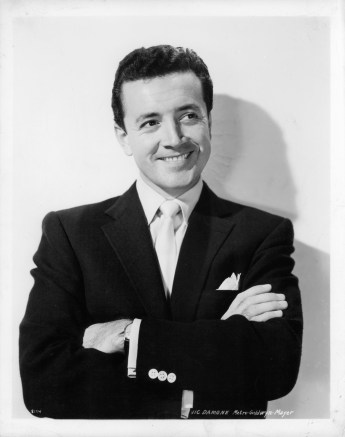
72. ‘On the Street Where You Live’, by Vic Damone

vic-damone-with-percy-faith-on-the-street-where-you-live-philips

On the Street Where You Live, by Vic Damone (his 1st and only #1)

2 weeks, from 27th June – 11th July 1958 (including 1 week joint with The Everly Brothers from 4th – 11th July)

Oh Lordy, that intro! Whipping us right back to 1952. The crescendo that kicks us off here is almost identical to that which announced the very first UK chart-topper, Al Martino’s ‘Here in My Heart’Plus ca change…

Oooooh, the towering feeling! Just to know somehow you are near… Vic Damone howls the opening line as if on a mission to wake the dead. And then… we sit back down, chill out, and listen to a song about a man wandering down a street.

This is, of course, a song from ‘My Fair Lady’ – I know it well; without ever having heard this version. I’ve always thought of ‘My Fair Lady’ as the musical without any decent songs. Or without anywhere near as many decent songs as other musicals of similar stature. Apart from this song, and maybe ‘Wouldn’t It Be Lovely’ or ‘I Could Have Danced All Night, the others are short, semi-comic skits, while Professor Higgins’s numbers are almost early-form rap tracks.

Anyhoo… From ‘My Fair Lady’ it is, which makes sense in as much as the show debuted on Broadway in ’56 and in the West End two years later. Damone sings it well, with cut-glass, stage school diction, and goes from full-on belting it out – see above – to subtle, almost whispered lines like: People stop, and stare, They don’t bother me… On a technical level, this is ‘better’ singing than that of the young rock ‘n’ roll stars we’ve been hearing from recently, and my gran would certainly have preferred Viccy D to Buddy H. But it already sounds – and bear in mind it is only the summer of 1958 here – super old-fashioned. And again we have an easy-listening interlude after a couple of rock ‘n’ roll chart-toppers. This is definitely the ongoing theme of ’58.

Vic Damone

One problem – and this is one that regularly arises when stage songs are recorded away from the context of the show for which they were written – is that lyrically this song sounds pretty weird. It is essentially about a man lurking outside the house of a woman with whom he is besotted. Does enchantment pour, Out of Ev’ry door? No, it’s just on the street where you live… I’m getting flashbacks to Eddie Fisher’s ‘I’m Walking Behind You’. At least, though, when heard towards the end of Act I of ‘My Fair Lady’, this song is quite cute. Fisher, on the other hand, was just being a creep.

Another problem with stage-show songs being recorded as pop records arises here too: namely the question of how to finish. On stage you can’t fade out. But the flourishes that signal the end of the song in a show sounds trite and cheesy on record. Here they’ve gone for the flourish, and I can’t help but think there must have been a better way to end this song than with a plop!

But it is a diverting little interlude in UK Chart history, if nothing else. Showtune #1s don’t come along every day, and Vic Damone won’t go on to have much further success in the UK. I would have bet a large sum of money, before doing any sort of research, that Vic Damone was some sort of Italian-American, Rat-Pack type singer. And… of course he was. He idolised Sinatra, had various mob connections, married five times, and died earlier this year, aged eighty-nine. A life well lived, it would seem.

And note – yet another tie for number one. The third time it’s happened, and it will happen one final time before the decade’s out. I covered the reasons for these anomalies a few posts back – if you care to read further – but it does raise an important issue. Do we record Vic Damone’s ‘On the Street Where You Live’ as having spent a single week at the top? Or two weeks? Or one and a half? Questions, questions, questions…

67. ‘Jailhouse Rock’, by Elvis Presley

ELVIS_PRESLEY_JAILHOUSE+ROCK+-+1ST-562625

Jailhouse Rock, by Elvis Presley (his 2nd of twenty-one #1s)

3 weeks, from 24th January – 14th February 1958

Ready? This is another song that grabs you from the get-go – just as ‘Great Balls of Fire’ before it – and for two and a half minutes gives you a good shaking. 1958 really did get off to a storming start in terms of chart-toppers.

But whereas Jerry-Lee Lewis grabbed us with his opening lyrics; Elvis here – or rather his band – grab us with their intro. With that guitar and those drums. Durrrr-durr (dun-dun)…, Durrrr-durr (dun-dun)… The most instantaneous intro yet? I mentioned, recently, the start of ‘That’ll Be the Day’, and that the jangly guitar there was iconic. ‘Jailhouse Rock’ kicks off in a much less subtle way; but since when has rock ‘n’ roll been about subtlety?

This is the Elvis that people think of in the early days; before GI Elvis, or Movie Star Elvis, or Comeback Elvis or Bloated Vegas Elvis. Jailhouse Rock Elvis, and that iconic picture of him in his black and white striped T, frozen, mid-yelp, on his tiptoes. Type his name into Wikipedia – go on… – and what is the picture that introduces one of ‘the most significant cultural icons of the 20th century’? In a way, I’m sad that this wasn’t his first ever UK #1 – rather than the nice but very understated ‘All Shook Up’. Imagine this snarling guitar announcing Elvis’s arrival at the top of the charts.

MV5BMTU3NTg5ODU3M15BMl5BanBnXkFtZTcwNzM5MDQyNw@@._V1_SY1000_CR0,0,790,1000_AL_

But… But, but, but. Those famous pictures of Elvis in a convict’s uniform (a very sexy, rock ‘n’ roll convict’s uniform, but still) gyrating outside the prison gates? They were promotional shots for the movie: ‘Jailhouse Rock.’ We are already in Movie Star Elvis phase here. ‘Jailhouse Rock’ was his 3rd feature film. The argument I put forward during his first stint at the top – that Elvis was ‘over’ before he got started, that if it ain’t his ‘Sun’ recordings then it ain’t worth shit – gains further ground here. Because this record is an early step into Cheesy Elvis. The music may be rocking; but the lyrics are nothing but a bunch of silly vignettes about prisoners dancing in a jail yard.

Let’s rock… Everybody let’s rock… Everybody in the whole cell block… Was dancin’ to the Jailhouse Rock… The warden throws a party, encourages everyone to get dancing, even if they have to dance with chairs, and madness ensues.

Two verses stand out for having more than a whiff of music-hall comedy to them – thereby somehow tying this classic record to the likes of The Stargazers’ ‘I See the Moon’, from the depths of the pre-rock era (that’s a connection I never thought I’d make). There’s the ‘gay’ verse, in which two prisoners – presumably male – proposition one another: Number 47 said to Number 3, Now you the cutest jailbird I ever did see, I sure would be delighted with your company, Come on and do the Jailhouse Rock with me… I’ve read some interpretations of these lines as a revolutionary moment in the history of popular music. Personally, I think the songwriters were just taking the piss.

And there’s the final verse: …The wardens lookin’ out, A chance to make or break… Bugsy turned to Shifty and he said ‘Nix Nix, I wanna stick around a while an’ get my kicks… They could have escaped, you see, but they were having such a good time. It’s fun, and silly, but I think it also gives this record slightly less authenticity when compared to immediate contemporaries such as ‘Great Balls…’ and ‘That’ll Be the Day.’

Still, though… this is an absolute cornerstone of music history. On Spotify, even today, ‘Jailhouse Rock’ is second only to ‘Can’t Help Falling in Love’ as Elvis’s most listened to track. And it was the first ever record to enter at #1 in the UK. That’s right. The sixty-five previous chart-toppers had all spent at least a week – often much longer – climbing to the top. Elvis barged right in there; he wasn’t waiting for no-one. And – give me a second as I put on my chart-geek hat – up until the 1990s entering at #1 on the UK Singles Chart was an honour reserved for the very biggest stars: Cliff, The Beatles, Elvis, Slade, Frankie Goes to Hollywood… um, Gary Glitter… or the BIGGEST records, like ‘Do They Know It’s Christmas’. In the ’90s it became de rigeur, and in the early ’00s it was the only way to arrive on the charts. Nowadays, in the streaming era, it’s become slightly less common once again. But in 1958 it was unheard of. Only Elvis was that big.

To finish, something that I’ve come to realise since starting this blog: that ‘pre-rock’ didn’t just mean ‘pre-Elvis’. I used to think that ‘Rock Around the Clock’ kicked off the rock ‘n’ roll revolution before Elvis took over. But I’ve now seen that The King was actually kind of late to the party. And it’s been good to give Johnnie Ray, Guy Mitchell, Lonnie Donegan and Tommy Steele a bit of recognition, even if it’s been to the detriment of a singer that I was pretty well obsessed with in my teenage years. He may have been The King of it, but rock ‘n’ roll didn’t begin, or end, with Elvis Aaron Presley.