524. ‘Wherever I Lay My Hat (That’s My Home)’, by Paul Young

Delving deeper into the decade, we arrive at another synthed-up, peak-eighties sounding hit…
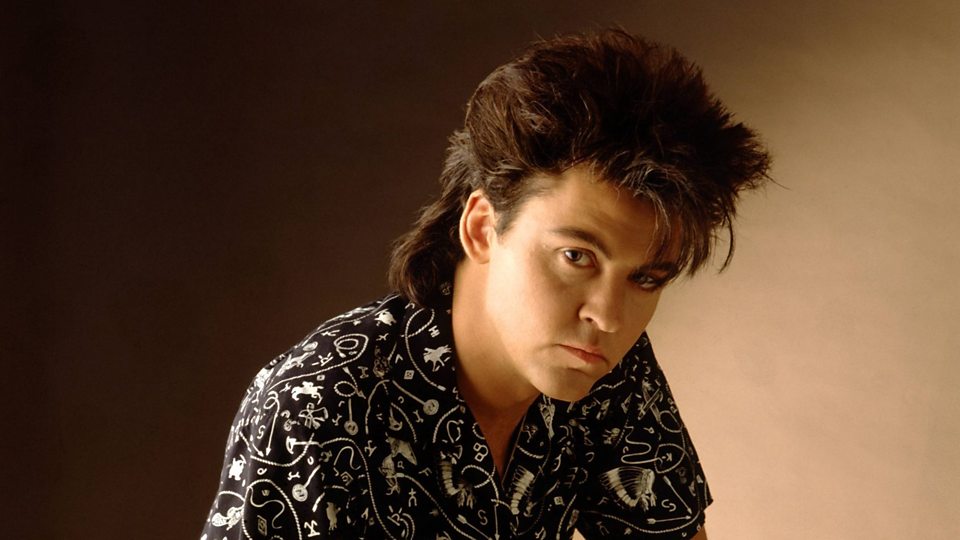
Wherever I Lay My Hat (That’s My Home), by Paul Young (his 1st and only #1)

3 weeks, 17th July – 7th August 1983

First things first, let’s mention the things I like about this record. The bassline, or whatever effect has been applied to it, is very eighties but very cool. It’s bendy, and twangy. It sounds like a beast emerging from the depths… There’s an ominous edge to its funk, that reminds me of something I can’t place.

Then there’s Paul Young’s voice, which is also good. A strong, blue-eyed soul voice, that takes command of this song, and sings it with conviction. For I’m the type of the boy, Who is always on the run… You could argue that he over sings it at times, but it’s fine. He’s listing all the ways he’s a dick to women: he loves and leaves them, he gives them the eye before upping sticks and disappearing… It’s basically ‘Desperado’, sung from Desperado’s POV. I think we’re meant to pity him, to sense a hint of regret, or false bravado, in his voice, but I’m not sure we do. In the video, meanwhile, one of the women he’s dumped returns to shoot him… Or, at least he dreams she does.

Away from the bass, and the voice… I’m already checking the runtime. It’s a bit dull. And the dullness lies, yes, in the production. It’s very polished, perfect for playing in the background at a dinner party, but I’m not getting ‘number one single’. Rather, I’m not getting ‘number one single at any time other than mid-1983’. It’s very of its time. If you love eighties music, you’ll like this. If not, then it’ll drag…
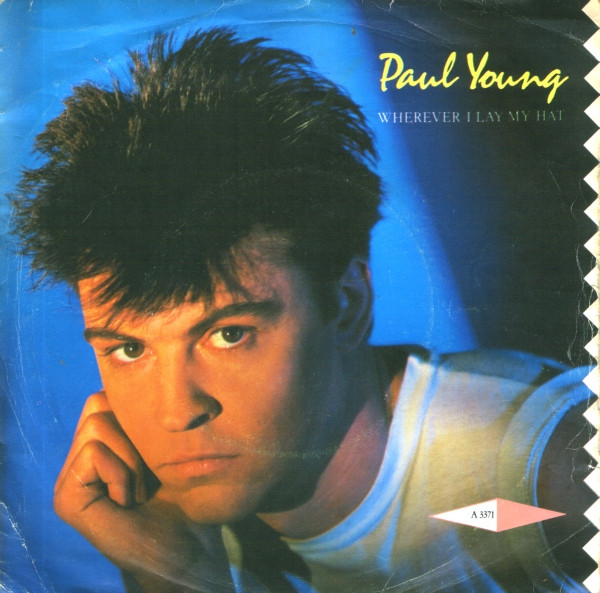
I did wonder if ‘Wherever I Lay My Hat’ perhaps followed Young’s bigger hits. I could name ‘Love of the Common People’ and ‘Every Time You Go Away’ ahead of this. It smacks of ‘shadow number one’ (a concept I’ve explained in other posts). But no. This was his breakthrough hit. ‘…Common People’ made #2 as the follow-up to this, and ‘Every Time…’ #4 a couple of years later.

I was also amazed to find that this song dates from as far back as 1962. And that it was originally recorded by one Marvin Gaye. Two more different versions of the same song you will struggle to find. The original’s Motown vibe, while far from being a classic, just sounds better to my ears. I have been programmed from a very young age to prefer the sixties, and seventies, to the eighties… Earlier, when I wondered what this bassline reminded of, perhaps it just reminds me of ‘the mid-1980s’ in general…

The last time I focused so much (nay, complained…) about the ‘sound’ of the time was way back in the pre-rock days, when I despaired of the never-ending parade of overwrought ballads occupying top spot for weeks on end. I’ll try not to focus so much on the fact that the 1980s has a certain sound. It just does. It’s the summer of 1983. Paul Young is #1. Get over it!

Young won’t be chart-topping under his own steam again, but he’ll have hits until the early ‘90s. He is still touring and recording as we speak. His voice will appear at #1 again, though. In fact, next year he will utter one of the most famous lines in British pop history… Until then, then…

Advertisements

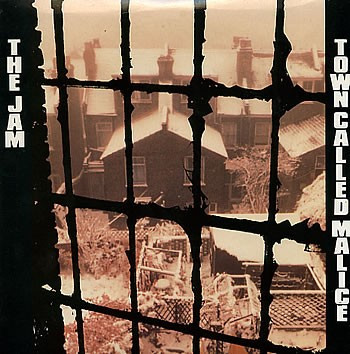
495. ‘Town Called Malice’ / ‘Precious’, by The Jam

Straight in at number one with the lead-single from their final album… The Jam do Motown.

Town Called Malice / Precious, by The Jam (their 3rd of four #1s)

3 weeks, 7th – 28th February 1982

We’ve been treated to some iconic intros in recent weeks: ‘Under Pressure’, ‘Don’t You Want Me’, ‘The Model’… ‘Town Called Malice’ is right up there too. It’s not really a riff, more an explosion of exuberance, a technicoloured smile with a jaunty bassline and a cheesy organ. I know it’s The Jam, because it’s a well-played classic, but it sounds a world away from their earlier #1s.

This being Paul Weller and The Jam, however, things aren’t as rosy as they sound. The title perhaps gives it away, and a quick google of the lyrics (sorry Paul, but they are quite hard to make out) reveals a deeply downtrodden song. Malice is a town where people dream of rosy days and the quiet life, where decisions have to be made: buy beer or clothes for the kids. Some of it is darn near poetic: Rows and rows of disused milk floats stand dying in the dairy yard, And a hundred lonely housewives clutch empty milk bottles to their hearts…

When he starts to sing about Sunday’s roast beef, I get a huge sense that this is an early-eighties take on Ray Davies’ suburban odes from a generation earlier. Weller wrote it based on his childhood in Woking, a commuter town outside London. Funnily enough, this middle-eight is the most modern-sounding bit of the song, as we go from The Supremes to The Specials’ ska tones. And at its core – which wasn’t always the case with The Kinks – I think ‘Town Called Malice’ is optimistic. It’s up to us to change, A town called Malice… Life may be shit, but you still have to live it as best you can.

Despite being as biting as ever, The Jam do sound happier than they did in 1980. Success puts distance between you and any hardships you’ve endured, and maybe that left them feeling free to experiment with different sounds. It’s certainly a sneak-preview of the soulful sounds that Weller would push to the forefront with The Style Council. And in my mind this song will forever be associated with the scene in ‘Billy Elliot’, where he dances across the rooftops of County Durham (though, much like the contrast between ‘Malice’s melody and lyrics, Billy was dancing in frustration, rather than joy…)

For the second post in a row, we have a double-‘A’ to write about. I’m not sure how much airplay ‘Precious’ got, but the history books have it at #1 and so we must give it a spin. If ‘Town Called Malice’ was a departure for The Jam, then ‘Precious’ is a giant leap. I’d describe it as ‘disco-funk’. There are chucka-chucka guitars, there are horns… I’m half-waiting for Weller to shout ‘Shaft!’ It’s another moment where you can see that The Jam were nearing the end of their shelf-life.

Not that it’s bad. Or that bands shouldn’t try new things. But when you’ve gone from punk to funk in barely five years, it’s clear that the confines of a three-piece, guitar, bass ‘n’ drums band are not enough to satisfy the members’ creativity. Like ‘Malice’, the lyrics are very hard to make out, but unlike ‘Malice’, I feel no compulsion to look them up. This record is a groove, a mood. There’s a short single edit and a longer album version, towards the end of which things go very acid, with a free-styling saxophone.

It all adds to the fact that this has been a brilliantly eclectic start to 1982, with all four number ones (six songs, if you count the two double-‘A’s) bringing something very different to the top of the charts. And for all this talk of the end nearing for The Jam, they have one more #1 to come: their very last release. They’ll be going out on top, then, one of the decade’s most distinct and successful bands. Until then…

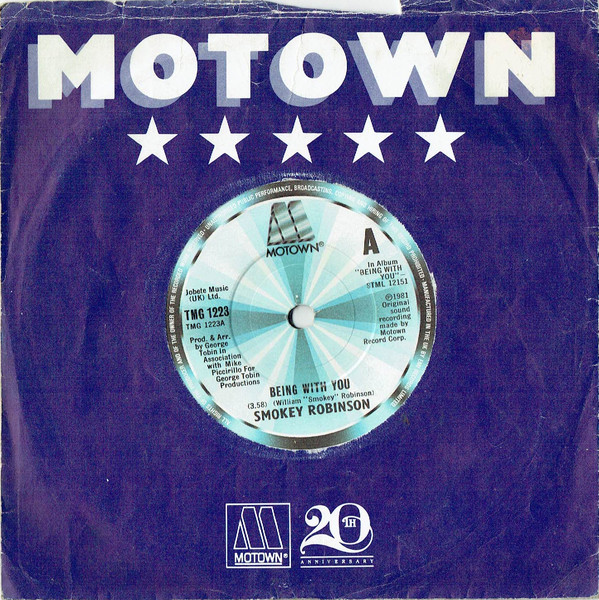
480. ‘Being With You’, by Smokey Robinson

You’re listening to the silky smooth sounds of Smooth Radio, and up next we have a sexy soul number from Smokey Robinson…

Being With You, by Smokey Robinson (his 2nd of two #1s)

2 weeks, 7th – 21st June 1981

After building a nice, oh-so-eighties, head of steam with Shakey, Bucks Fizz, and the aggressively modern Adam & The Ants, we’re temporarily dragged back a few years to the slick, glossy days of the mid-late seventies. And wait… That piercing sax line sounds mighty familiar. It’s… ‘Baker Street’, right? At least, it sounds like someone launching into ‘Baker Street’, before quickly realising that this isn’t the right song.

I don’t care what they think about me and, I don’t care what they say… A disco beat and soft-rock guitars soundtrack this unrepentant tale. Smokey is prepared to commit social suicide, to lose friends and relations, just to be with a woman. I don’t care about anything else but being with you, Being with you… His voice sounds softer, older… In fact pretty unrecognisable from his earlier chart-topping hit, ‘The Tears of a Clown’. It’s still a fine voice, though.

At first, this is simply pleasant background music but, after a few listens, I’m starting to come around to this record’s slowly revealed charms. It’s a solidly written pop song, maybe suffering from not being as cheesily instant as, say, ‘Making Your Mind Up’. Yet it’s still lacking a definite hook, something to grab onto, something to explain why this record became a #1 single.

I genuinely don’t think I’ve ever heard this song before, though I’m sure it does still get some late-night spins on Smooth Radio and the like. But, regardless of this record being slightly on the dull side, it is very impressive that Smokey Robinson was able to score a chart-topping single this far into his career. He was forty-one when this record came out, having released his first discs (with the Miracles) as far back as 1958.

In the UK, none of Robinson’s other solo releases came anywhere near to the top of the charts, but in the US he was more of a presence. He scored a Top 20 album a few years ago, and has duetted with current chart star Anderson Paak, one half of Silk Sonic, on their Grammy Award winning album. He is bona-fide pop music legend. Next up for us… a recap.

457. ‘Geno’, by Dexys Midnight Runners

Our next number one starts off with some live chanting, and a short, sharp horn riff, giving the impression that we’re heading off in the same 2-tone, ska direction that The Specials took us… Until it switches tack and suddenly we’ve got a brassy, soulful saxophone line leading the way.

Geno, by Dexys Midnight Runners (their 1st of two #1s)

2 weeks, 27th April – 11th May 1980

And that’s not the only abrupt shift over the course of ‘Geno’ – it’s a song that’s chopped up into lots of little bits. Lots of catchy little chunks. There are the woozy verses… Back in sixty-eight in a sweaty club… with lyrics that need serious Googling thanks to lead-singer Kevin Rowland’s unique delivery… Before Jimmy’s Machine and the Rocksteady Rub…

It’s a potted history of the band, or of Rowland’s formative years, bunking school and sneaking in to clubs to see soul legend Geno Washington step on stage, swinging his towel high… Then the tempo swings again, and there’s an insistent post-punk drive to the middle-eight. Academic inspiration, You gave me none… And then there’s the live chanting, which is actually sampled from a Van Morrison live album.

When writing these posts, I usually jot down my impressions on a song without looking at any other sources. You know, if you read that such-and-such a song is included in the Rolling Stone magazine’s Top 500 of all time, then it might influence your judgement… But with this record, I’m a bit stumped. The components are catchy, the oh-oh-oh Geno hook is great, but I’m struggling to place it.

It’s another insistent record, yet another chart-topper from ’79-’80 that is brimming with confidence and with ideas. Listening to this era’s chart-toppers is like going to an art school’s open day and being performed at by some very confident young wannabes. It’s all very impressive; but it can get a bit much.

So, do I like this song? Should I be enjoying this? The consensus seems to be that this is a classic… but that’s probably just because the Runners’ next chart-topper is so overplayed and people want to look cool. I think the big negative here is that the song’s topic is quite niche – a description of a gig – and the vocals so unintelligible. Still, it’s not boring, and that is always something.

This was just the second single that Dexys Midnight Runners’ had ever released, after their formation in Birmingham in 1978. Their name is the shortened version of Dexedrine, an amphetamine popular in clubs at the time, and which is referenced in this song: This man was my bomber, My dexys, My high… Oh Geno! It’s also the reason why there’s no apostrophe in the band’s name, which goes against all my English teaching instincts… They will be back, in good time, with one of the decade’s signature hits. One that may be overplayed, but that I will have no problem justifying as a classic!

455. ‘Working My Way Back to You / Forgive Me, Girl’, by The Detroit Spinners

As vital as The Jam’s polemic first #1 was, you wouldn’t want every chart-topper to be that angry… Luckily for us, here come the (Detroit) Spinners with a relentlessly positive classic.

Working My Way Back to You / Forgive Me, Girl, by The Detroit Spinners (their 1st and only #1)

2 weeks, 6th – 20th April 1980

They are far from the first well-established band to try a disco-ified take on the old vocal-group sound. In fact, they’re pretty late to the party. This record could have been a hit from any point since 1975. And you can approach this in one of two ways… Way A) rolling your eyes at the cheese, and at the drunken memories of every wedding disco you’ve ever attended, or Way B) joining in with the undeniable fun.

I’ll keep working my way back to you babe… The singer’s made a mistake, told some lies, thought he could have his cake and eat it, but now he’s feeling remorse… With a burning love inside… And I love his very deep voiced counterpart: Been prayin’ every day… It has a bit of a karaoke-backing track feel, but that’s part of the charm. It gives you no choice but join in.

When you do, you realise how much of a dick the singer has been. He played around, he loved to make her cry… That matters not. He is coming back, and we are left in no doubt as to his success. ‘Working My Way Back to You’ was (yet another) UK #1 that began life as a song by The Four Seasons, in 1966. Theirs is a very ‘sixties’ version, as good if not better than this cover.

Here, the Spinners had it spliced with a few bars from ‘Forgive Me Girl’, a composition by producer Michael Zager (nothing to do with Zager & Evans, unfortunately), giving us our 2nd recent chart-topping medley after Boney M’s last-but-one Christmas number one. You wouldn’t realise that these were two songs mixed together – ‘Forgive Me Girl’ works perfectly as the bridge – and I’m left relieved that this isn’t another double-‘A’ side (as they take twice as long to write about!)

The Spinners had been around since 1954, and had been charting in the US since the early sixties. Which means that by the time their one and only British chart-topper came around, all four members were in their early-forties. One of the original ‘man-bands’, then! They join the aforementioned Four Seasons, and The Tymes, and even The Tams, in scoring #1s beyond their eras thanks to the popularity of soul and, of course, disco. They are still an active group, too, with one founding member, Henry Fambrough, still present.

Why, though, were the plain old Spinners marketed as The Detroit Spinners, and sometimes the Motown Spinners, in the UK? Well, all thanks to a British folk group who had already laid claim to the name. A couple of decades later the Americans would repay the compliment by forcing Suede to become the considerably less cool London Suede for their US releases…

453. ‘Together We Are Beautiful’, by Fern Kinney

Let’s slow things down a bit, with this next number one. A soft, slinky beat, some strings, and a breathy vocal…

Together We Are Beautiful, by Fern Kinney (her 1st and only #1) 

1 week, 9th – 16th March 1980

Fern Kinney’s voice reminds me a bit of Anita Ward’s: high-pitched and slightly nasal. But it doesn’t grate in the same way. This record doesn’t grate like ‘Ring My Bell’ at all – for better or worse. ‘Ring…’ might have been annoying; but you remembered it. ‘Together We Are Beautiful’ isn’t annoying, really, but it does wash over you without leaving much of a lasting impression.

He walked into my life, And now he’s taking over… It’s a decent opening line, that the song fails to build upon. I’ve gone with better looking guys, He’s gone with prettier lookin’ girls… It’s a middle-aged love song – settling down with someone on a deeper level. Fern doesn’t need love affairs any more… Except the lyrics still descend into stock-standard, love song cheese: I am the rain, He is the sun, And now we’ve made a rainbow… Ick!

What saves this song from being truly cloying – and when Kinney starts wishing that the whole world could fall in love like her and her man, it comes very close – is that it’s delivered in such a fluffy, tongue-in-cheek way that you can easily treat it as a camp novelty. It does drag on a bit, though: another song that shouldn’t have come anywhere near the four-minute mark.

The disco earthquake may have passed, but there will still be aftershocks like this for some time to come. Fern Kinney had been a backing singer who had given it up to be a housewife, before having one final crack at a solo career. And it worked – for this record… She is a bona-fide one-hit wonder. ‘Together We Are Beautiful’ had been around in different versions for a few years, before Kinney had her go.

I had a very vague memory of hearing this song years ago, in an advert that featured a guy with a miniature-sized version of Arsenal and England centre-back Tony Adams… And I am reassured to find out that I hadn’t dreamt it. It was used in a 1999 deodorant ad, which you can now enjoy in all its glory. What would we do without YouTube…?

425. ‘Three Times a Lady’, by The Commodores

We are racing through 1978 now. In the space of just three #1s, we’ve leapt from early May to late September. And I thought we’d escaped, really I did. I thought we’d finally pulled ourselves from the late-seventies easy-listening swamp. But, just as we wrenched our back feet free from the sludge, Lionel Richie grabs us by the ankles and drags us back down…

Three Times a Lady, by The Commodores (their 1st and only #1)

5 weeks, from 13th August – 17th September 1978

Let’s start with the positives. I know this chorus, can sing this chorus, can drop this chorus jokingly into everyday counting situations… You’re once, Twice, Three times a lady… without ever having properly listened to the rest of the song. Which is a sign of a certain ubiquity, of a song’s place among the big boys. What does it mean, to be ‘three times a lady’? I had hoped it might be something dirty… But, apparently Richie wrote it after hearing his dad describe his mum as a great lady, a great friend and a great mother.

I must have heard the rest of this song, surely, but I can’t remember doing so. In fact, I’ve listened to this song several times in writing these past two and a bit paragraphs, and have already forgotten everything but the chorus. I am listening to it right now, and it is still not going in. It is background music, plain and simple.

Lionel’s voice is nice, the piano is nice, the percussion is… nice, I guess? But Good Lord it’s dull. Ballads like this are always at a disadvantage with me, but the best can pull through and convince. (Chicago’s ‘If You Leave Me Now’ was one such fairly recent example.) But here, chorus aside, it’s too slow, it’s not catchy, it’s nowhere near OTT enough (unlike Richie’s solo chart-topper…)

Just once does the song break away from its plod. Before the final chorus it builds, some drums and cymbals enter, and some backing vocalists harmonise… But it’s gone. The pace slows again and we trudge towards the end. It is genuinely terrifying to discover that the album version of ‘Three Times a Lady’ runs to almost seven minutes! Give whoever at Motown records decided to chop three minutes off for the 7” a medal.

The Commodores had been around for a few years before this gave them a trans-Atlantic #1. ‘Easy’ was their big breakthrough in the UK (it’s better than ‘Three Times…’, but I’d still be picking holes in it had it been a chart-topper…) They did release upbeat, funky tunes – try their debut single ‘Machine Gun’ – but sadly that wasn’t what sold. Lionel Richie left the band in 1980, and went to absolutely dominate the next decade on the Billboard chart. The remaining Commodores kept at it though, to decent success, and are still active today.

411. ‘Float On’, by The Floaters

Two of the 1970’s most forgotten number ones back to back, then. From ‘Angelo’, to ‘Float On’, as the world shrugs and thinks ‘Nope, don’t remember them…’

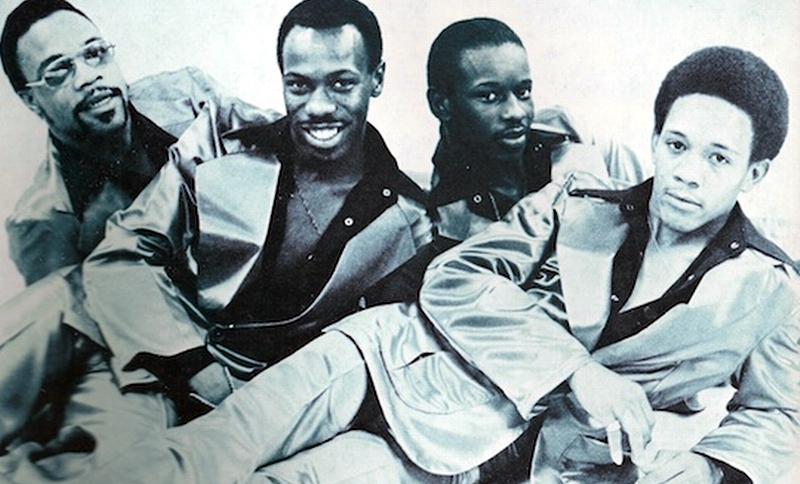
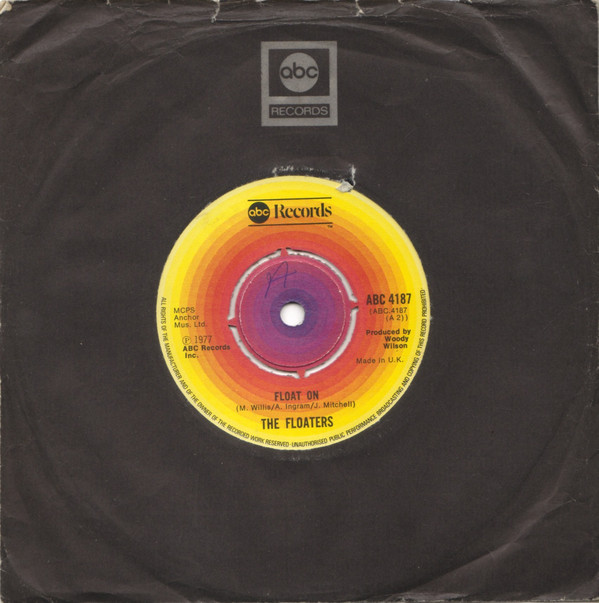
Float On, by The Floaters (their 1st and only #1)

1 week, from 21st – 28th August 1977

Musically, this is dense, lush, soul-cheese. The bassline is smooth, while the production has a ‘sounds of rainforest’ vibe, all echoey and dripping, with what sounds like tropical birds in the distance. While, lyrically, it’s a lonely hearts ad. There are four members of The Floaters, and they all take turns at introducing themselves, their star-signs, and the kind of women they’re after.

First up is Ralph, an Aquarius. Now I like a woman who loves her freedom, And who can hold her own… Then Charles, a Libra, who likes a woman who carries herself like Miss Universe… He really goes for it with the falsetto, in a kind of vocal peacocking move. (And is there a more seventies line than let me take you Loveland…?) Actually, by the late nineties, every pop group worth their salt had a gimmick for introducing the members in their debut single. In this respect, The Floaters were well ahead of their time.

Anyway. Our Leo, Paul, isn’t picky. See, I like all women of the world, he announces proudly. And last up is Larry, who delivers his sign, Cancer!, slightly too loudly. He likes… Oh to be honest, who cares? The descriptions are deliberately vague in order to not put off any woman who might buy the record. I guess sociology students could look back, forty-plus years later, at this song as a first-hand example of what men of the late-1970s looked for in a woman (if that was their ultra-niche specialist subject).

Float, Float on… I’m not sure where they’ll be floating, or what they’ll be on, but I’m getting an image of each Floater with his girl, in a swan-shaped boat, cruising down one of those old ‘Tunnel of Love’ rides. It all goes a bit weird at the end, with some trippy flutes and heavy breathing, as we wonder just what is going on as those boats float out of sight…

The Floaters were from Detroit, and are stone-cold, one-hit wonders. ‘Float On’ floated to #1 in the UK, and to #2 in the USA, and that was that. To be honest, naming your band after your debut single, or vice-versa, pretty much guarantees that you will remain in one-hit purgatory for all eternity. They do, though, usurp Pussycat as the chart-topping act with the worst name because to me a ‘floater’ is, at best, an unwelcome object in your drink and, at worst, an unwelcome returnee to your toilet bowl…

408. ‘So You Win Again’, by Hot Chocolate

Taking up where The Jacksons left off – I’m sure any DJ worth their salt could spin this and ‘Show You the Way to Go’ together seamlessly – here’s Hot Chocolate with another slice of disco-lite.

So You Win Again, by Hot Chocolate (their 1st and only #1)

3 weeks, from 26th June – 17th July 1977

I love the guitar sound on this record. It sounds like a whale bellowing from the ocean’s depths: primal and deep. Is it even a guitar? A synthesiser? Electric violin? Whatever it is, it works brilliantly. It helps create a really thick, sticky sound, as if this whole record has been dipped in a vat of honey.

There’s also a hypnotic bass to drag you along. This record has a pretty sleazy-sounding undertone to it, which the lyrics don’t really justify. It’s a song about a man spurned: Your perfumed letters didn’t say, That you’d be leaving any day… She does sound flighty – can you really trust someone who sends perfumed letters?

So you win again, You win again, Here I stand again… Under all the heavy instrumentation, however, a great pop song lurks. There are plenty of hooks: the do-do-dodoops and a catchy middle-eight in the I can’t refuse her… line. Plus the way lead singer Errol Brown draws out the ‘lo-ser’ in the chorus is great. But I think what makes the whole song complete is the little ‘So’ in the title. It adds weight to the singer’s resignation, to the fact that he’s a schmuck who’s been fooled before and will be fooled again…

This is sophisticated, and layered pop music. There’s a marimba in there somewhere, a horn, and strings, while the rest of the band wrap themselves around the lead vocals. In my last post I mentioned bands whose sole #1 single isn’t their most famous. Hot Chocolate are better known for ‘You Sexy Thing’ (a #2) and probably ‘Every 1s a Winner’ (only a #12!) But, out of these three, I’d say ‘So You Win Again’ is the better record.

This was already their seventh Top 10 hit, though, in a run stretching right back to the start of the decade. They’d have a few more, and are still a going concern, still with three of the members that appeared on this record. Lead singer Brown, he of the velvety voice, left the group in the eighties and passed away in 2015.

Before I finish, can I just give a shout out to ‘Hot Chocolate’ as a brilliant band name? I recently called out ‘Pussycat’ for having a ridiculous name, and there is an even worse one coming up shortly. But ‘Hot Chocolate’ stays just the right side of cheesy, and sums up the group’s sound perfectly.

404. ‘Free’, by Deniece Williams

Yet again – and this is happening a lot recently – a record comes along that I realise I know as soon as the vocals begin.

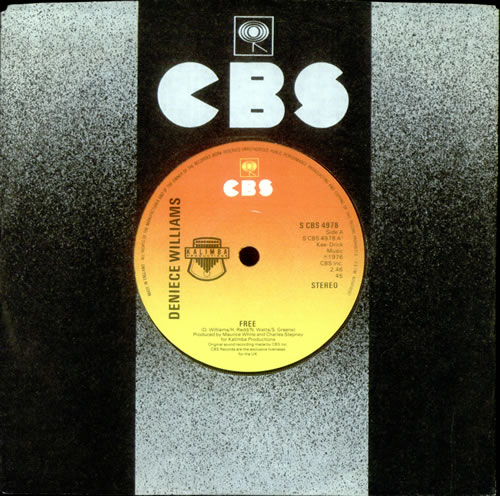
Free, by Deniece Williams (her 1st and only #1)

2 weeks, from 1st – 15th May 1977

But before we get to the lyrics, we have a sexy, slinky bass-line that enters and wraps itself around us. Mmm yes… Is there a more seventies sound than a funky bass-line? And I just got to be me… Free… Deniece Williams’ voice is very pure, crystal clear. She sounds very young. Was she?

Not particularly, she was twenty-six when she recorded her one and only chart-topper. Still, there’s something very girlish about the way she sings, teasing the words around the beat. Whispering in his ear, My magic potion for love… On first listen, this is standard light-soul fare. Except, she just wants to be free. She wants a man, but not the commitment. How that man pleases me… But I want to be free…

That’s quite the feminist statement, and not one that we’ve heard much so far in our four hundred plus chart-toppers. Women can be steadfast (Cilla, Dusty), they can be playful (Connie Francis, Rosemary Clooney), and they can definitely be disappointed by the men in their lives (Freda Payne, Tammy Wynette). But Williams here is brazen in wanting her cake and eating it too. And good for her!

Perhaps the message is the best bit of this song. On the whole, it’s a bit too slickly soulful, with a bit too much tinkly, shimmering production for my tastes. I’ve noticed that in the first throws of this disco/soul era, around 1974, the production was very thick and layered. Here it’s stripped back and feels a little lightweight. My heart sank when I saw ‘Free’s runtime of close to six minutes, but the single edit chopped things down to three. Actually, though, the six-minute version works as an extended slow jam, with a bit more guitar.

Deniece Williams (from Gary, Indiana, like a certain pop icon we’ll be hearing from very soon) had been releasing singles since the late sixties. ‘Free’ was her big breakthrough hit, though it only hit #1 in the UK. She would have to wait a few months to reach top spot in her homeland, in a duet with our most recent Christmas chart-topper, Johnny Mathis. Then came ‘Footloose’, and the classic ‘Let’s Hear It For the Boy’.

I suppose, in a way, this song brings us back to the easy listening, balladry that was bogging us down a few posts ago. But I can stomach this kind of short, sweet and slightly sassy kind of easy-listening. Next up… a whole double ‘A’-side of hardcore balladry. Party on!