264. ‘Albatross’, by Fleetwood Mac

One question springs immediately to mind upon listening to our next #1: This is Fleetwood Mac? The Fleetwood Mac? The ‘Don’t Stop’, ‘Go Your Own Way’, ‘Little Lies’… Fleetwood Mac? Well yes, yes, and yes.

R-14619902-1578317634-8874.jpeg

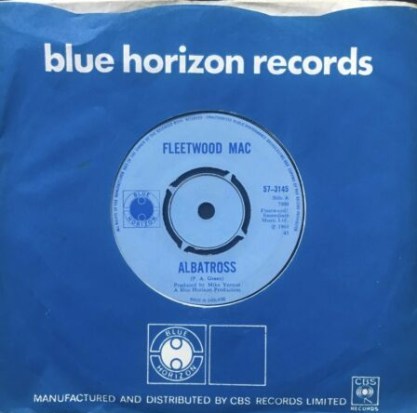
Albatross, by Fleetwood Mac (their 1st and only #1)

1 week, from 29th January – 5th February 1969

And that’s not the only strange thing about this record. In fact, pretty much everything about this record is strange. It is one of the least ‘number one’ sounding number one records ever. It’s a musical interlude, the background soundtrack to an advert for roast lamb, the music played in a wellness spa… It’s ‘Chillout – Vol I’, three decades early.

That’s not to say it’s bad. I like it. It’s not the sort of thing I usually like; but I do. It’s a song called ‘Albatross’, which sounds exactly like an albatross soaring over the ocean. The insistent, see-saw bass is the bird’s wings, the guitar its call, and the cymbals the waves crashing below… As an instrumental it works. It doesn’t need lyrics. Lyrics might, and I’m going to contradict everything I’ve ever written about instrumental records here… Lyrics might have ruined it.

Placing this in context, in the late sixties, it is definitely the sort of record that you’d slip on before lighting up your bong and settling down to stare at a magic-eye picture. So, in some ways it’s a random January chart-topper; in other ways it makes complete sense for it to have hit #1 when it did.

$_12

What makes less sense is that this record will be Fleetwood Mac’s sole UK #1 single. One of the biggest bands of the seventies and eighties scored their one week at the top in 1969. In truth, they enjoyed far more singles chart success in the States than in their homeland. 1969 was actually their best year in the UK – one number one and a couple of number twos. Their huge hits from ‘Rumours’: ‘Dreams’, ‘Don’t Stop’ and ‘Go Your Own Way’ were huge hits only in America. Over the Atlantic none of them broke the Top 20.

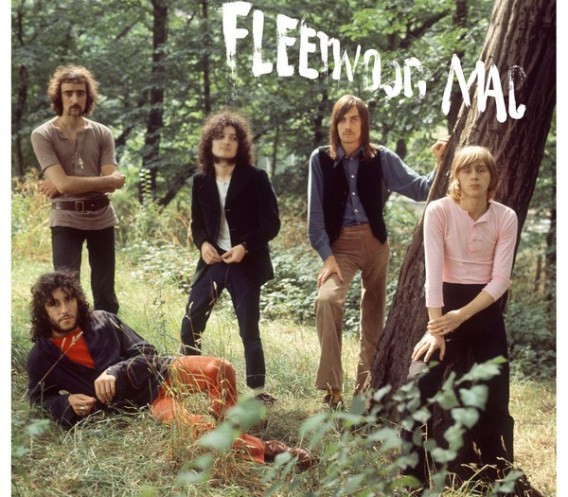
Having said that, this Fleetwood Mac are a very different Fleetwood Mac to the one that everyone thinks of. Christine McVie would join in the early seventies, Stevie Nicks and Lindsay Buckingham in the middle of that decade. Only Mick Fleetwood and John McVie were around for ‘Albatross’, when they were a much blues-ier band.

In my mind, Fleetwood Mac will be forever linked with The Moody Blues, for the simple reason that my parents would play them – a lot – during long car journeys, and my heart would always sink when the tape came out. The Beatles, The Stones, The Eagles or ABBA? No problem. Simon and Garfunkel? Tolerable. The Moody Blues or Fleetwood Mac? Time to get my Walkman out. I’ve grown to like the Mac in old age more than I have The Moody Blues. But still, when I hear the synth intro to ‘Little Lies’ I instinctively shudder. Perhaps if the ‘Greatest Hits’ my parents owned had included their sixties hits, and their one and only chart-topper, I might have been won over much earlier…

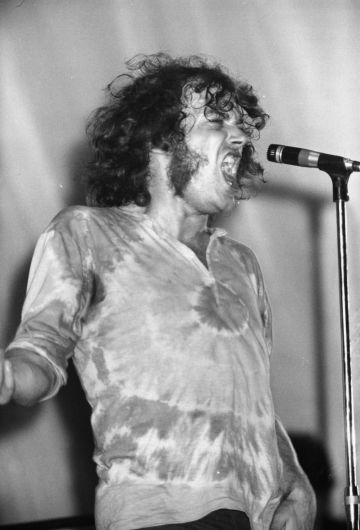
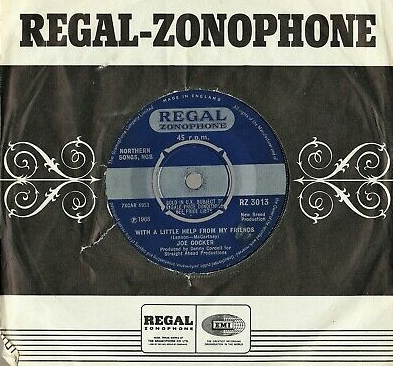
260. ‘With a Little Help From My Friends’, by Joe Cocker

I recently did a series of posts on cover versions of #1 songs – previous chart-toppers that had been reimagined in different ways by different artists. ‘Different’ being the important word – a good cover version should bring something new to the table. What’s the point in releasing a karaoke version of the original? And while we have had plenty of cover versions hit number one already, this one takes the concept to another level.

Joe Cocker

With a Little Help From My Friends, by Joe Cocker (his 1st and only #1)

1 week, from 6th – 13th November 1968

The Beatles’ version of ‘With a Little Help From My Friends’ had been released the year before, on the ‘Sgt. Pepper’s Lonely Hearts Club’ LP. Joe Cocker, a British blues-rocker who had been around for a few years without enjoying much chart success, took it and made it his own. It’s slower, heavier, longer, downer and dirtier… Re-acquaint yourself with the original here, then settle in for the Cocker treatment.

It begins with a distant organ, as if you were standing outside a church before evensong. It’s an ominous build-up… You’re ready for something to happen. Then wham. Guitar! Proper hard-rock guitar. Hendrix and Clapton kind of guitar. The type of guitar that’s been nowhere near the top of the charts before. It’s bombastic, and outrageous. It makes you want to make devil-horns and punch the air.

The lyrics are the ones you know. What would you do, If I sang out of tune, Would you stand up and walk out on me…? But it sure isn’t Ringo singing it. Cocker’s voice is husky, and soulful. He delivers the lines late, squeezes the words in before the next one comes along. The backing singers, so important in any version of this song, sound like a gospel choir: How do I feel at the end of the day…? Are you sad because you’re on your own?

The best bit is the bridge – the Do you need anybody… bit. The guitars go super heavy and crunchy, like a motorbike revving up. The second time around, especially, when Cocker howls and the backing singers soar and we launch into the final minute of a mini rock-opera. I know we’ve had a lot of soul number ones in recent years – The Small Faces, Chris Farlowe, Long John Baldry and more – but this takes it to the next level.

s-l400

It kind of sounds a bit like a jamming session, or at least a live version, and that really adds something to the song. They captured lightning here. They would never have been able to re-record this exactly the same – it’s too raw, too intense. It lacks the polish of a regular #1 single, but you’re oh so glad that it somehow managed to have its week in the top spot

As I mentioned, it’s another long number one. You wait years for a #1 single that lasts longer than five minutes, then three come along at once. And that’s not all that links this to the previous two #1s. We’ve now had a number one recorded by The Beatles (‘Hey Jude’) replaced by one that was produced by a Beatle (‘Those Were the Days’) replaced in turn by a number one written by The Beatles. In case you’ve lost count, this is the fourth Beatles cover to reach the top in the past five years. They may have been reaching the end of their career as a band, but their grip on the charts wasn’t weakening.

We end in a frenzy of organs and guitars, as Cocker ad-libs over the fade-out. Phew. It’s not a subtle re-interpretation, I will admit, but for me it works. I knew this record by reputation, but it’s been great to give it an in-depth listen. ‘With a Little Help From My Friends’ is a song that will pop up another two times in this countdown, and I don’t think it’s giving too much away to say that neither of the upcoming covers are fit to lick this one’s boots…

Joe Cocker will only have one more Top 10 hit, until the early-eighties when he will record ‘Up Where We Belong’ with Jennifer Warnes for the soundtrack to ‘An Officer and a Gentleman.’ From Sheffield, but sadly no relation to Jarvis Cocker, he was still scoring Top 20 albums in the ‘00s and the 2010s. He died in 2014.

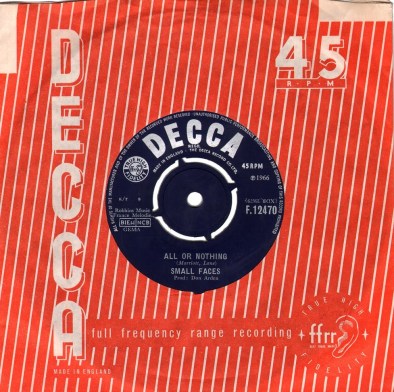
223. ‘All or Nothing’, by The Small Faces

1966 has been a pretty cool year in terms of its chart-toppers. Nancy’s boots, The Walker Brothers, the cynical Stones and Dusty finally making it… Plus a lot of soul: The Spencer Davis Group, Georgie Fame and, most enjoyably of all, Chris Farlowe. To that list you can now add The Small Faces.

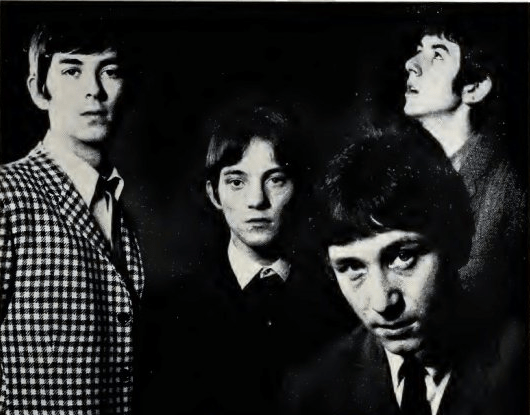
SmallFaces1966

All or Nothing, by The Small Faces (their 1st and only #1)

1 week, from 15th – 22nd September 1966

This is another cool record, and it’s cool from the very start – from the fade-in drum roll. We’ve not had one of those before at the top of the charts. Then a trippy riff, and a wistful voice: I thought you’d listen, To my reasoning, But now I see, You don’t hear a thing… Intelligent lyrics, and I do love the bravado required to rhyme ‘reasoning’ with ‘hear a thing’. The singer is trying to make his lover see that he doesn’t share. Things could work out, Just like I want them to, If I could have, The other half of you… And then an ultimatum: All or nothing, For me…

The guitars in the chorus are thick and chunky. Very forward-thinking. Very power-pop. It’s The Undertones come a decade early. I’d rank it along with ‘You Really Got Me’ and ‘Get Off Of My Cloud’ as one of the heaviest #1 singles so far. Although ‘All or Nothing’s heaviness is more subtle, not as in your face.

And it doesn’t last the whole song through. There’s a mellow ba-ba-ba-baba refrain mid-way through, and then a funky breakdown towards the end. And lots of great soul shout-outs from the lead-singer Steve Marriott. It’s amazing to think that he was just nineteen when this was recorded. Aw Yeahs, and Hear my children sing!, and Gotta keep on tryin’! And when he belts out the crucial I ain’t tellin you no lie, So don’t just sit there and cry! line, it’s a real finger-kiss moment. It’s a record that packs a lot in to its three minutes. Funky, heavy, soulful… A song I knew vaguely; but hadn’t realised just how forward facing it sounded. If you were a pop-loving kid in 1966, this is what your cool older brother would have been listening to.

7503405132_3ee2877a47_b.jpg

That’s the best word for this record. Cool. No point searching for a better one. Another cool chart-topper for the year. In pictures from the time, The Small Faces look the part too. Mods, with long hair and sharp suit jackets. And they crammed a lot into their four years together. (It is amazing, isn’t it, how many of these mid-sixties groups fell apart after just a few years – with a couple of obvious exceptions…) Like The Troggs from two posts back, certain other of their hits far outshine their one and only chart-topper. ‘Itchycoo Park’ made #3 the following year, and ‘Lazy Sunday’ – for many a year the only Small Faces song I knew – made the runners-up position in 1968. Neither of those songs sound anything like the heavy, soulful R&B on ‘All or Nothing’, which speaks to the band’s quality and creativity.

I have to admit that I thought I had imagined some link between The Small Faces and The Faces – assuming that it was just a coincidence in naming. But no, I was right: Marriot left, the remaining Faces dropped the ‘Small’ and recruited Rod Stewart. Rod the Mod, as he was back then. The rest is history. Marriot died tragically young, in a house-fire aged just forty-four. He’s kind of forgotten today, in the pantheon of sixties stars, which is a shame, as his legacy helped shape both punk and Britpop. The Jam and Blur certainly owe him a debt, anyway.

The Small Faces, then, with their one and only week atop the British Singles chart. Sit back, and Hear the children sing!

Keep up with this Spotify playlist:

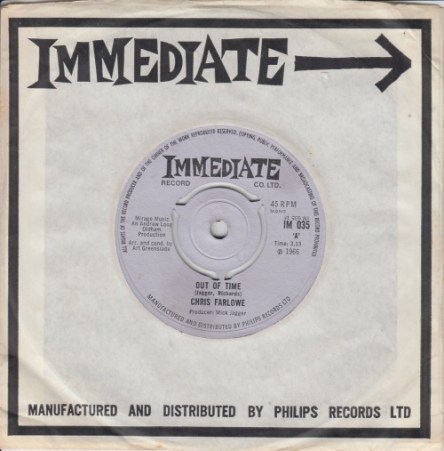
220. ‘Out of Time’, by Chris Farlowe

Amidst all the great pop being produced in the mid-sixties, two acts inevitably stand out above the rest. The Beatles and The Stones. Lennon & and McCartney, Jagger & Richards. Trading blows at the top of the charts. But John and Paul could always boast one original claim: that, on top of the ten #1 singles they have appeared on, they had written three more for other artists. ‘Bad to Me’, ‘A World Without Love’, and ‘Michelle’… Until now.

p01bqs74

Out of Time, by Chris Farlowe (his 1st and only #1)

1 week, from 28th July – 4th August 1966

For it is with much fanfare that we announce Mick and Keef as official ‘Chart-Topping Songwriters For Other Artists’, as Chris Farlowe takes ‘Out of Time’, from The Stones’ ‘Aftermath’ album, to the very summit of the hit parade! For a long time, I must admit, I did not know this was a Stones original. Which is strange, as the lyrics are straight from page one of the Rolling Stones’ songbook.

You don’t know what’s going’ on, You’ve been away for far too long, You can’t come back, Think you are still mine… A patronising, slightly threatening approach to women? Ladies and Gentlemen – The Rolling Stones! (See also ‘Under My Thumb’, ‘Heart of Stone’, ‘Stupid Girl’.) You’re out of touch my baby, My poor, old-fashioned baby… Baby, baby, baby, You’re out of time… It’s a song about a miscommunication: the girl was under the impression her BF would wait for her while she was away; BF was under no such illusion. And yes, he’s a dick, no disputing, but calling somebody ‘obsolete’ while you dump them is pretty bad-ass.

Chris Farlowe has one hell of a voice. It’s soulful and husky. He sounds like he smoked at least twenty a day. Maybe the reason that I went for so long without realising that ‘Out of Time’ wasn’t his song is down to the fact that he completely owns this record. He sounds like he’s having a ball. He sings it with a cocky confidence, a knowledge that there will be twenty more girls where this last one came from… I love the drawn-out sneer in the ‘tiiiiiimeee’, the ‘Ha!’ and the ‘Yeah!’ before the final chorus, and the way they call ‘Is everybody ready?’ before launching into an encore. (Some sources suggest that that is Mick and Keith themselves on the backing vocals…)

CHRIS_FARLOWE_OUT+OF+TIME+-+1ST+-+3PR-77306

Compared to The Stones’ version (which you can listen to here), and even though Mick Jagger produced this cover, Farlowe’s is a very different beast. Soaring strings, crashing Wall of Sound drums, and swooping, doo-wop backing singers accompany him. The original is much more stripped back: all organs and finger clicks. It’s also much harsher: switch ‘old-fashioned’ for ‘discarded’, and add a verse about how the girl has ‘had her day.’ Farlowe’s version is more likeable, way more over the top, making it easier not to notice how unpleasant the song is. The Rolling Stones leave you in no doubt…

Chris Farlowe featured on the first sixties compilation I ever heard, as young boy, on a cassette in my parents’ car. It was his version of ‘Handbags and Gladrags’, which came before Rod Stewart, and then The Stereophonics, did it to death. And I remember thinking distinctly, even as an eight year old, that he had a voice and a half. Why he wasn’t bigger than he was is a strange one. He had had one, minor hit before this, and his biggest hit after ‘Out of Time’ was ‘Handbags…’ which only made #33. And I have to admit, while listening to him sing in the car as a kid, and for years afterwards, I imagined him to be black. Racial profiling by voice? Maybe. As you can see from the picture up there, he is most definitely white.

His sound is – I’m starting to notice – very 1966, coming hot on the heels of The Spencer Davis Group’s couple of #1s, and Georgie Fame. All white boys doing soul. And that, like most hot sounds of the sixties, didn’t last long. Flower power is coming. Maybe Farlowe just couldn’t adjust. He still tours, with jazz bands and Van Morrison, and was included in the 50th Anniversary celebrations of England’s Football World Cup win (‘Out of Time’ was at #1 the week of the final against West Germany.)

Follow along with this handy playlist:

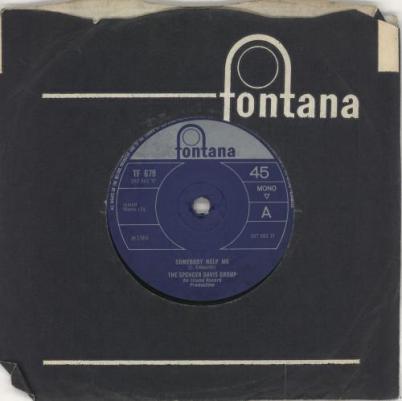
212. ‘Somebody Help Me’, by The Spencer Davis Group

The Spencer-Davis’s return with a quick-fire #1, barely three months after the first. It’s not a record that rings a bell but, as soon as I press play, I know I’ve heard this before, somewhere, sometime…

Spencer_Davis_Group_1966

Somebody Help Me, by The Spencer Davis Group (their 2nd and final #1)

2 weeks, from 14th – 28th April 1966

Like ‘Keep on Running’, it all kicks off with a bass riff. But one a bit mellower, a bit more understated, and not quite as filthy sounding as in their first chart-topper. Somebody help me, yeah… Somebody help me, now… Won’t somebody tell me what I’ve done wrong…

It’s a song that tells a bit of a story. The singer had a girl, his Queen, back when he was seventeen, but lost her. Since then he’s been unable to find a new one. Now I’m so lonesome, On my own… (If the stalker-ish lyrics to ‘Keep on Running’ were anything to go by, it’s easy to guess why she dumped him.) And that’s about it. A simple enough rock ‘n’ roll record.

Like its predecessor, ‘Somebody Help Me’ has got a nice soulful vibe to it – especially in the bridge – in the I need a girl, To hold me tight… – plus I like the funky guitar licks at the end of the lines. The Spencer-Davis’s liked a crunchy guitar, which gives their songs quite a Kinks-y feel. And it’s the shortest chart-topper we’ve had in a long time, coming in at bang-on two minutes. Which is fine – there’s absolutely no need for this disc to be any longer.

SPENCER_DAVIS_GROUP_SOMEBODY+HELP+ME+-+SOLID-710811

It’s a forgotten record, I’d say. A forgotten gem…? I’m not sure. Is it quite a ‘gem’? It’s definitely a groovy little record (we’re allowed to say ‘groovy’, by the way – it was the style of the time…) One that adds texture to the way Beat pop was splitting into different sub-genres. I’m not sure whether to go as far as calling it a ‘Shadow Number One’ – a song that only hits the top because of its more famous predecessor. Because A) it’s a good enough record to have reached the top on its own merits, and B) it managed a fortnight at the top while ‘Keep on Running’ only got a single week.

Interestingly, this song was, like ‘Keep on Running’, written by reggae singer Jackie Edwards. But he doesn’t seem to have ever recorded it. And, like so many bands of this era, The Spencer Davis Group didn’t last very long. They had a couple more Top 10s – including the classic ‘Gimme Some Lovin’, which is probably better known than either of their chart-toppers – before lead singer Steve Winwood left.

And that was all she wrote for the Spencer-Davis’s at the top of the UK Singles Chart.  They’ve reformed over the years in a variety of guises. Except… Winwood would go on to have a half-decent solo career, with a handful of eighties hits. One of which – ‘Valerie’, from 1982 – went on to be noticed by Swedish DJ Eric Prydz. He loved the vocals, persuaded Winwood to re-record them, and they formed the basis for his 2004 #1 ‘Call on Me’. So… we will hear the soulful tones of Winwood one more time in this countdown, in precisely thirty-eight years’ time. Aren’t the charts fascinating?

185. ‘Go Now!’, by The Moody Blues

Hot on the heels of Georgie Fame & The Blue Flames’ snazzy ‘Yeh Yeh’, an equally quirky record pops up for a week at the top of the UK charts.

moodycircle

Go Now!, by The Moody Blues (their 1st and only #1)

1 week, from 28th January – 4th February 1965

We’ve already sa-id… I like records that just get on with it – no drawn out intro, no nothing – and this is one such disc. Goodbye… Voice, then piano. A thumpingly, clumpingly unsubtle piano. I mean this with no disrespect, but the piano here sounds like it’s being played by an elephant. I’d bet they overlaid several tracks one on top of the other to get the rich, heavy sound. I love it. Since you gotta go, Oh you better go now…!

It’s a song about a break up. The singer doesn’t want to break up, but if it has to be done then he’d rather his S.O. just got on with it. Cos darlin, darlin’, Can’t you see I want you stay, yeah-ah-yeah-ah… The singer – Denny Laine – has a voice every bit as soulful as Georgie Fame before him, and he holds nothing back. The way he sings/spits out lines like I don’t want you to tell me just what you intend to do now…, for example, is great, and deceptively hard to recreate.

The production too is thick and soulful, with hints of Phil Spector’s Wall of Sound and the baroque minor keys that were about to become a big thing in sixties pop. (It’s actually a cover of an American R&B hit from earlier in the decade.) It’s also a very rough-and-ready recording – not perfect – with lots of crackly patches, as if the tape were struggling to contain the volume and the power of this band. I love the piano solo, one that rolls and cascades – a cross between a ship being tossed on stormy seas and Dante’s descent into hell. The ending is also a lot of fun, with a huge finish – the whole band appearing to shout out the title of the song before a very quick, slightly wonky fade.

‘Go Now!’ is another grown-up pop record – make that two in a row – and one that perfectly encapsulates the way pop music is now fragmenting and moving away from the Beat sound that has dominated for most of the past two years. New year, new sound etc. etc. It’s also a record that I’ve loved for many years – The Moody Blues being a staple of long family car journeys as a child. But, here’s the ironic bit… I really, really can’t stand any of The Moody Blues’ other songs…

725017250110_1

You see, after this – their one and only chart-topper – they started getting all experimental. Denny Laine left the band and a bloke called Justin Hayward came in, they ditched the pop/R&B and they went… (shudder)… progressive. Now, I love rock music. To me ‘rock’ is the foundation upon which all great music is made. Stick ‘garage’, or ‘hard’, or ‘glam’, or ‘electronic’, or ‘punk’, or ‘surf’, or even ‘yacht’, in front of ‘rock’, and I’m usually in. ‘Prog-rock’, though? I run a mile. Jethro Tull, Marillion, Pink Floyd, Yes!… No, no, no! Lock me in and call it ‘Room 101’. You can be experimental, and forward-thinking, as avant-garde as you like… but ‘Prog’? The minute you call yourself prog then your head’s gone too far up your arse. And The Moody Blues are the worst culprits for me because A) They started it and B) I had to sit through their ‘Best Of’ on many a long car journey, aged eleven.

It would start off well enough. Track 1 was ‘Go Now!’. Three minutes of pop bliss. But then there were nineteen other songs to sit through before it was over – none of which sounded anything like ‘Go Now!’. And prog-rock songs are never, ever as short as they should be… ‘Give me ABBA’, I would cry, ‘The Eagles or The Stones. Even Fleetwood Mac if you must. Anything but this.’ But my dad would stand firm, and we’d listen to the bitter end… I have especially painful memories of ‘Nights in White Satin’… And ‘Tuesday Afternoon‘…

Having studied The Moody Blues history ahead of this post, it seems that the blame can be laid squarely at this Justin Hayward fellow’s feet. Once he was in and Laine was out (Laine later joined Wings), ‘Go Now!’ seems to have been written out of the band’s history. They rarely performed it live, and it didn’t appear on any of their ‘Greatest Hits’ until the mid-1990s. (Which was precisely when my dad bought said CD for the car… Just think – there might easily have been no good songs on that album…)

Yes, let’s end this post on a positive note. Nineteen of the twenty tracks on The Moody Blues ‘Greatest Hits’ album may well be terrible songs. But the one good song on that album also happens to be their only #1 single. We won’t hear from them again on this countdown! We can just pretend that they were one-hit wonders! Pretend that the glorious ‘Go Now!’ was the only piece of music that the band ever offered to the world. Isn’t that a comforting thought…

184. ‘Yeh Yeh’, by Georgie Fame & The Blue Flames

No sooner have I mentioned that 1965 might be a more eclectic year in terms of its chart-topping singles, when along comes one Georgie Fame with a swaying slice of Latin soul.

maxresdefault

Yeh Yeh, by Georgie Fame (his 1st of three #1s) & The Blue Flames (their 1st of two #1s)

2 weeks, from 14th – 28th January 1965

Wham and then Bam. In the space of three #1s we’ve gone BluesBeat rock-Latin. I might even go so far as to describe this as a Bossanova, if I was at all certain what exactly a ‘Bossanova’ was… Whatever it is, it’s not a sound that we’ve heard very often at the top of the UK charts. After months of Merseybeat things are really starting to splinter in different directions.

The song is about a guy who, after finishing work every evening, calls up his baby and asks her what she wants to do… I mention movies, But she don’t seem to dig that, And then she asks me, Why don’t I come to her flat…Yeh Yeh’ is his response. The words are spat out at a rapid pace, half-rapped (this might be the hardest number one yet in terms of making out the lyrics). But it still becomes clear just what his baby’s game is. She suggests supper and listening to some records, and soon the kissing starts: And when she kisses, I feel the fire get hot, She never misses, She gives it all that she’s got…

I love the break in the middle, when one long tongue twister line – We’ll play a melody and turn the lights down low so that none can see… – ascends to a natty drum fill and lots of We gotta do that’s! and Yeh Yehs! Then there’s a full-blown sax solo for all you hip cats out there.

Georgie-Fame-Blue-Flames-Yeh-Yeh

It’s a cool record, there’s no doubting that. I can imagine it as the soundtrack to a lot of groovy, hipster parties during the winter of ’64 – ’65. And Georgie Fame – before googling him I pictured him in a turtle neck and a pork pie hat, and after googling him I was slightly disappointed to find that he favoured suits and sharp ties. (He did like a cigarette, dangling all loose and louche, from the corner of his mouth, however.) Plus, finding out that he was born Clive Powell, in Lancashire, rather than Georgie Fame, New York City, took the shine off even further.

Still, despite being Clive from Lancashire, Fame has a real soulful voice. He goes fast then slow, loud then quiet, and – while the band are really tight – his voice is the most impressive instrument in the record. The way it blends together with the organ and the sax to draw out the final note is particularly cool. The Blue Flames had been the backing band for British rock ‘n’ roller Billy Fury, and Georgie Fame their piano player, but when they parted ways Clive AKA Georgie Fame became their leader and they went off down the path of R&B-slash-soul.

‘Yeh Yeh’ is nice, and funky; but it’s a hard record to classify. The best way I can describe is that it would sit perfectly next to ‘Green Onions’ by Booker T. & The MGs on a compilation called ‘Sexy Sixties’, or something. Plus, both Fame and The Flames will pop up sporadically as the sixties progress, so we’ll save any further bios for another day. In the meantime, sit back, grab a glass, and enjoy the sound of the swinging, sexy sixties floating through your earholes. Yeh Yeh!

Never miss a number one single with this playlist…

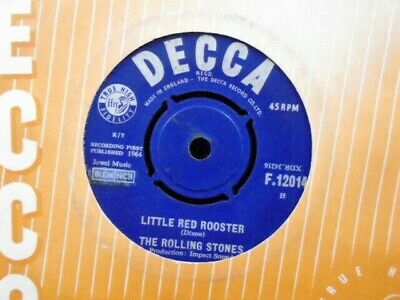
182. ‘Little Red Rooster’, by The Rolling Stones

Pack your welly boots, your straw hat and some industrial strength bug spray – we’re off to the country. To a farm somewhere in the Miss’ippi Delta. With The Rolling Stones.

TV Rehearsal

Little Red Rooster, by The Rolling Stones (their 2nd of eight #1s)

1 week, from 3rd – 10th December 1964

It feels like the Stones’ arrival, earlier this year, passed us by. ‘It’s All Over Now’ sneaked a week at the top in the summer, but surrounded as it was by some colossal pop tunes from some legendary acts I had basically forgotten about it. The first Stones #1 should have been a bigger thing, I feel. So, they’re back. And this time they’re making sure we notice them.

Their tactic? To return with a song so unlike any of the one hundred and eighty-one previous chart-toppers that you instantly sit up and start listening. A slow, woozy blues riff comes along, reeling you in, lulling you into a vision of sipping ice-tea on a farmhouse veranda, before Mick Jagger’s languorous vocals… I am the little red rooster, Too lazy to crow for days… I am the little red rooster, Too lazy to crow for days… It’s an atmospheric song – the dusty, heat-hazed farmyard unfolds before your very eyes. Dogs begin to bark, And hounds begin to howl… All the while the hypnotic, twelve-bar blues riff continues to drag you along. Watch out strange cat people, Little red rooster’s on the prowl…

1964 has been a year, by and large, of peerless pop. But this is no pop song, not by any stretch of the imagination. There are no verses, or chorus, or bubble-gum bridge here. This is low-down and dirty blues. It’s like the band pressed record on a jamming session, a warm-up before recording the actual single, and decided to release it instead. I’m listening to it on repeat as I write this, and it’s very easy to miss when the song starts over. It could be three minutes long; or thirty minutes.

THE-ROLLING-STONES-LITTLE-RED-ROOSTER

While the lyrics might sound like the Mick Jagger manifesto – I am the little red rooster… Keep everything in the farmyard upset in every way… – one that he’s been following for the best part of sixty years, the real star here is Brain Jones and his slide guitar. The main rhythm is acoustic, but Jones’s electric guitar flirts, and slinks, and playfully cavorts around every line. One minute it’s making the sound of dogs barking, then horses rearing, then it’s the little red rooster itself. Jones was blues through and through, and felt some discomfort at the band ‘selling out’ and becoming a pop group. As the sixties progressed and the Stones moved further and further away from their bluesy roots, he became a marginalised figure on the edge of the band, until his tragic death. Looking back, it’s easy to forget that he was as much a part of the original Stones as Jagger and Richards. This record is perhaps his finest hour, and a kind of vindication. He had managed to get a full-on blues song to #1 in the British charts – the only time that has ever happened.

‘Little Red Rooster’ had originally been recorded by Howlin’ Wolf, one of the Stones’ biggest early influences, in 1961. But it’s a folk song at heart, handed down through the mists of time, probably from well back in the 1800s. His version is very raw, while another version by Sam Cooke is much more polished, with a snazzy organ doing the work of Brian Jones’s slide guitar. In those earlier versions the singer has a little red rooster, rather than being the little red rooster – which brings to mind some saucy connotations. I’m surprised Mick and the lads changed it…

Understandably, the band’s management was against releasing this as a single. It doesn’t exactly scream ‘#1 smash hit’. But it was. And I feel that this, along with all their earliest singles, have been somewhat erased from The Rolling Stones canon. For years I thought – according to the greatest hits CDs I had – that their career began with ‘Time Is On My Side’. But now I know. And while I would never name ‘Little Red Rooster’ as one of my favourite Stones songs, I am truly glad that they took this slice of Delta blues to the top of the charts for a cold and drizzly December’s week.

173. ‘It’s All Over Now’, by The Rolling Stones

Lock up your daughters, the headlines screamed. It’s The Rolling Stones! And with a discordant, clanging intro – an intro that strongly hints at this being a band about to get up to no good – here they are.

chron1964

It’s All Over Now, by The Rolling Stones (their 1st of eight #1s)

1 week, from 16th – 23rd July 1964

Once the intro is out of the way, the song settles down into a jaunty, chugging rhythm. There’s a natty little bassline and jazzy drum-fills. In my previous post I billboarded this as Pt. II of the Great British Blues Invasion, following on from ‘The House of The Rising Sun’. But ‘It’s All Over Now’ sounds a little lightweight compared to The Animals’ record – a song that could have rattled the gates of hell. Anything would feel lightweight after that, to be fair.

Well baby used to stay out, All night long, She made me cry, She done me wrong… Lyrically this #1 follows a well-trodden path – the brave-face-on-a-break-up theme we’ve heard in discs like ‘That’ll Be the Day’, ‘Who’s Sorry Now’ and ‘Needles and Pins’ to name but a few. Except this is The Stones, authors of feminist anthems like ‘Heart of Stone’ and ‘Under My Thumb’, and so the barbs are aimed a little lower and hit a little harder than those fired by, say, The Searchers.

Well, She used to run around, With every man in town, Spending all my money… At this point we arrive at a momentous occasion in our countdown – the first genuine swear word!… Playing her half-assed game. (I know it’s nothing shocking in this day and age, but I bet the BBC weren’t playing it at the time.) She put me out, It was a pity how I cried, Tables turn and now, Her turn to cry…

51nBOTurhML._SX355_

It’s a slightly sloppily written song: note the ‘cried’ being rhymed with ‘cry’, while the line about ‘every man in town’ is also recycled in the final verse. It wasn’t originally a Stones song either, as it had been released, in the US at least, in a much more soulful, funkier version by Bobby Womack & The Valentinos. In this sense, then, it is a Stones song – the ominous, passive-aggressive, arrogance of this version is all them. It’s a song with swagger. The Stones were here, with added swearing and no time for heartache.

We reach the solo – a manic, disjointed effort from Brian Jones which I don’t think would win any technical awards but which sums up the early-Stones perfectly. This and the solo from Elvis’s ‘Devil in Disguise’ were the two solos I wanted to learn guitar in order to play, aged sixteen. (I still haven’t got round to it…) Mick Jagger squawks and squeals in the background, in a manner we just haven’t heard over the past hundred and seventy two #1s. Then we fade to black with the same clanging chords from the intro, but only after Jagger has promised that he won’t be taken for that same old clown. Because he used to love her; but it’s all over now.

There we have it. Two debut number ones. Both of which managed only a solitary week at the top of the UK singles charts; but both of which changed the direction of British pop as we know it. The bad boys were on top! Listen to ‘It’s All Over Now’ and then ‘I Like It’ by Gerry and The Pacemakers and tell me who you think would win in a fight… One thing’s for sure – pop music was evolving at an astonishing rate in the mid-sixties and we can now safely declare that – barely a year after it broke through – Merseybeat is dead, trampled under Jagger, Richards, Jones and co’s wedge-heeled brogues.

Listen to every #1 so far in this handy playlist:

172. ‘The House of the Rising Sun’, by The Animals

What have we here, then? A riff kicks in – and keeps on kicking for the next four and a half minutes – beckoning us towards a song about a whorehouse-slash-gambling den. Is this the moment in which the ‘and roll’ is dropped, and ‘rock’ strikes out on his own, with a capital R, O, C and K?

via-abkco-records-b8dfd84a5f29dc9250e2a8cc1c62a10fe6b81eab-s800-c85

The House of the Rising Sun, by The Animals (their 1st and only #1)

1 week, from 9th – 16th July 1964

It’s an ominous, minor-key intro. Nothing good is going to come of it. And when the vocals start, the mood darkens further. There is, A house, In New Orleans… They call the Rising Sun… (I’ve always liked the flamboyant way that the singer pronounces ‘New Orlay-ons’ in his sonorous voice.) And it’s been the ruin, Of many a poor boy, And God, I know, I’m one…

A young man, son of a tailor-woman and a gambler, heads into the latter-day Sodom and Gomorrah that is The Big Easy, and comes unstuck. How exactly he comes unstuck isn’t elaborated on – it is still only 1964, after all – but you can imagine. Cards, booze, women… If this were a movie, then the frenzied organ solo at the midway point would be the soundtrack to his descent into depravity.

Then comes a word of warning: Oh mother, Tell your children, Not to do what I have done… Except, the singer can’t heed his own advice – can’t resist the temptation of New Orleans: I got one foot on the platform, The other foot on the train, I’m going back to New Orleans, To wear that ball and chain… The organ grows more and more intense, the vocals wracked and howling – a voice that could cause avalanches. It’s completely different to Roy Orbison’s approach in the preceding #1, but it’s every bit as impressive. And the final, drawn-out horror movie chord that the song ends on is, frankly, terrifying.

This is something different… Every so often we arrive at #1s which feel like a level-up – chart-topping discs that raise the stakes (gambling pun very much intended). ‘Rock Around the Clock’, ‘Great Balls of Fire’, ‘How Do You Do It?’… and now this. After ‘House of the Rising Sun’ has blasted your eardrums, The Beatles and their Merseybeat chums sound like school kids. The Animals were men. The name alone is raw, and untamed. It’s also the longest number one single so far by some distance. The Animals didn’t edit their singles for nobody!

The-Animals-The-House-Of-The

They were a five-piece from Newcastle, and the lead singer with the voice of a wolf was one Eric Burden, a man who started smoking aged 10, fell in love with an older woman aged 13, and who preferred drinking ale to going to school (they breed them tough in the north-east.) He is, allegedly, The Eggman of ‘I Am the Walrus’ fame, due to an incident involving amyl nitrate and a fried breakfast… I really want to read his autobiography. Besides this disc, The Animals gave us two more ‘Best of the 60s’ perennials – ‘Please Don’t Let Me Be Misunderstood’ and ‘We’ve Got to Get Out of This Place’. They weren’t ones for shortening their song titles either…

‘House of the Rising Sun’ has an equally interesting, and hard-edged history. Sources differ, but it seems certain that the song is as old as the 17th century. It originated either in England or France. The lyrics were originally about a woman led astray; The Animal’s version was the first to reverse the gender.

If this record hitting #1 is a game-changer – giving us pure, southern R&B at the top of the hit parade – then it has to be viewed as the first of a two-parter. While this is a seminal record; The Animals chart career didn’t last. Our next, bluesy chart-topper may not be as well-known, but the group that recorded it are perhaps the most famous rock ‘n’ roll band in history…