636. ‘You Got It (The Right Stuff)’, by New Kids on the Block

The 1990s, the decade that we are on the verge of entering, will mean many musical delights. Grunge, Britpop, blockbuster movie soundtracks, Girl Power, the Vengaboys… But you could argue that, ahead of everything, it will be the decade of the Boy Band ™

You Got It (The Right Stuff), by New Kids on the Block (their 1st of two #1s)

3 weeks, from 19th November – 10th December 1989

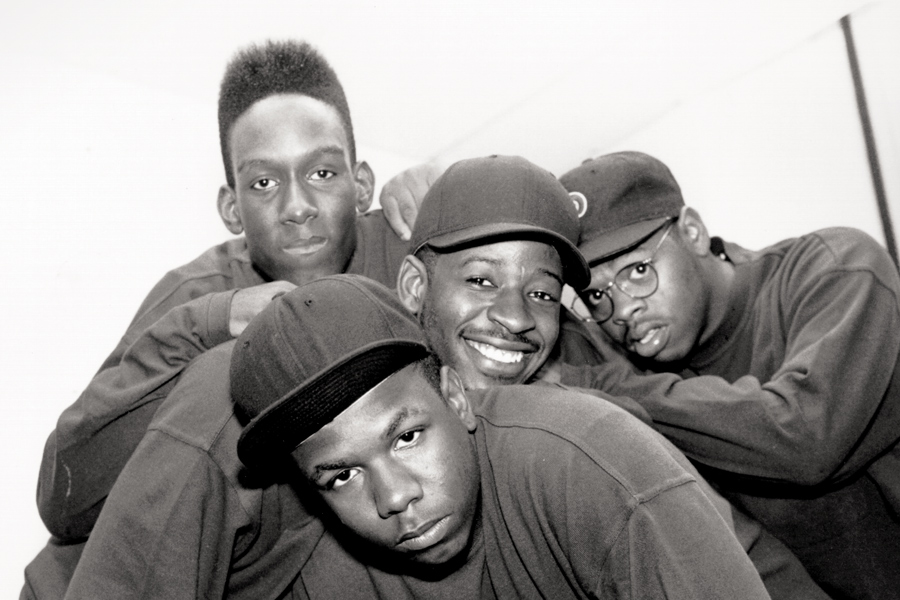
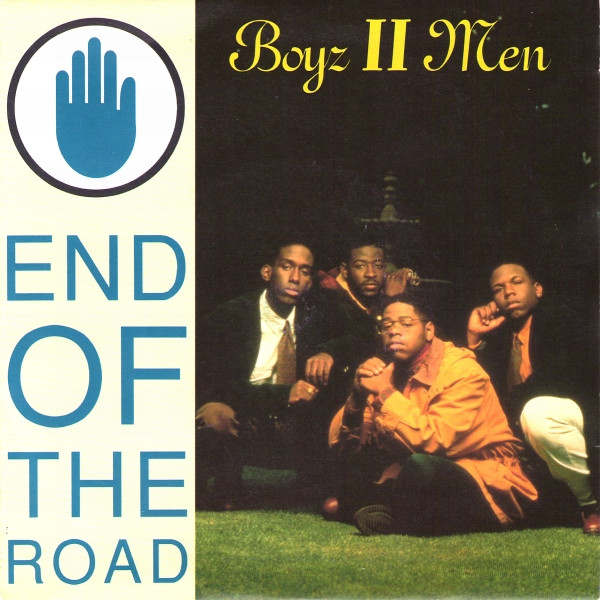
From beginning to end – literally, as the first and last #1s of the decade will be by a boyband – groups of three to five handsome young men in baggy jeans and backward-facing caps will dominate. Boyz II Men, Take That, Boyzone, Hanson, 5ive to name but a few. And all kicked off by five boys from Dorchester, Massachusetts.

Let’s take a moment, before we start dissecting this record properly, to thank the stars that it’s not a ballad. Wherever boybands go, a drippy love song is never far behind. But no, ‘You Got It (The Right Stuff)’ is a classic serving of late-80s R&B fused with hints of new jack swing. The drums ratatat, the synths swoosh, the bassline is actually pretty cool… It all sounds wonderfully dated. And, in true boyband fashion, the lyrics amount to some pretty nothings and some half-hearted innuendo. First kiss was a sweet was a kiss, Second kiss had a twist… What the ‘twist’ is, or indeed the ‘right stuff’ of the title, is never specified. It’s all dates and kisses, with one mildly risqué mention of being ‘turned on’.

The bridge is the most modern part of the record, a soaring template to be followed by every boyband to come. All that I needed was you, Oh girl, You’re so right… You can just picture the clenched fists as the Kids meet that line. And then there’s the hook in the chorus, the oh-oh-ohohohs that’s as catchy as it is annoying. The video – again, as was traditional for ‘90s boybands – sees them dressed like idiots, dancing like idiots, having a great time in a deserted bar. They then chase some girls around a graveyard, for reasons best left mysterious…

To suggest that New Kids on the Block (NKOTB if you’re in the know) were the first boyband is wrong. At the same time, defining a ‘boyband’ is like catching mist in a jar. If you go by the literal definition – boys in a band – then we’re going to go back to the Crickets, at least. If you insist on the manufactured aspect of it, then we start at the Monkees. But what of the Jacksons and the Osmonds? What of New Edition? Bros? (And I was only mentioning acts we’ve met earlier in this blog.)

Let’s say NKOTB are the first ‘modern’ boyband, then. They were managed by Maurice Starr (also the mastermind behind New Edition) and composed of four school friends led by Donnie Wahlberg (brother of actor Mark) and a younger boy, Joey McIntyre. Unlike some boybands, the path to success hadn’t been smooth for NKOTB: they’d been together since 1984 and were on the verge of being dropped by their label before ‘Please Don’t Go Girl’ made #10 in the US. ‘You Got It’ was the second single from their second album, and their first chart hit in the UK. They’d go on to have nine more Top 10 singles between 1989 and 1992, including one further #1 coming up very soon.

And so we enter the era of the (modern) boyband. And for a taster, ‘You Got It (The Right Stuff)’ is neither a classic of the genre, nor terrible. There are much better boyband chart-toppers to come, and much worse.

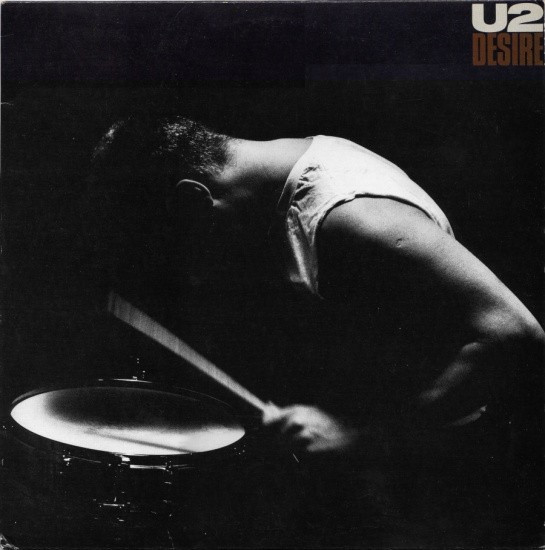
616. ‘Desire’, by U2

Go on, who had this down as the song that finally gave U2 their first #1…?

Desire, by U2 (their 1st of seven #1s)

1 week, from 2nd – 9th October 1988

For as good as this record is, and it’s a great little rocker, it’s not the first U2 song that springs to mind for most people. There haven’t been many bluesy chart-toppers, and the ones that have appeared came in the mid-sixties for the likes of the Stones and the Animals. But this one bangs straight in with a Bo Diddley beat, and a tale of an irresistible woman – She’s the candle, In my room… Or is it about drugs – I’m the needle, Needle and spoon…? Either way, it’s about something you just can’t say no to.

For a band not afraid of grandiosity this is a simple song; and all the better for it. They were influenced in recording it by The Stooges, and released what had been the demo version after deciding that the finished take was too polished. It’s short, sharp, and possibly one of Bono’s best vocal performances. Say what you want about Bono (and I just might, over the course of U2’s seven #1s) he’s a great rock star, when he remembers that he is a rock star, and not Jesus. Here he stutters, he growls and he soars, and sounds genuinely like a man crazed with desire.

Then there’s the harmonica which, after ‘He Ain’t Heavy…’ makes it two #1s in a row that have been heavy on the tin sandwich. And whisper it, but is 1988 turning out to be a good year for rock music…? I wasn’t expecting it in the era of SAW and house music, but chart-toppers for Fairground Attraction and Billy Bragg, Beatles covers, glam rock samples, a re-release for the Hollies, now this… It feels like it’s come out of nowhere, but it’s certainly welcome!

‘Desire’ was the lead single from ‘Rattle & Hum’, the follow-up to U2’s worldwide breakthrough album ‘The Joshua Tree’. They were probably the biggest rock band on the planet in 1988, and so whatever they released first from their new album may well have rocketed to the top. I’m glad it was this, though. A lot of U2’s music suffers, in my eyes, from the same problem ‘He Ain’t Heavy…’ suffered: grandiosity, and not a little pomposity. Not this one (and to be fair, not too many of their UK #1s – they usually like to announce a new album with a rocking single).

And so, U2 are up and running as a chart-topping force. Off the top of my head, they’re the 4th most successful rock act in terms of #1s, behind only the Beatles, the Stones and Oasis. But sadly, after me making such a big deal of it, this is where 1988 stops rocking… A block-busting ballad looms over the horizon.

584. ‘I Knew You Were Waiting (For Me)’, by Aretha Franklin & George Michael

I spent much of my last new post hailing a brave new world of modern dance. As is often the way, the song that follows a ground-breaking #1 proves the more things change the more they stay the same… Or something… For we are still firmly in the mid-1980s here – ‘peak mid-eighties’, if you will – and when the mid-1980s are giving us songs as fun as this, why would we want to leave?

I Knew You Were Waiting (For Me), by Aretha Franklin (her 1st and only #1) & George Michael (his 3rd of seven solo #1s)

2 weeks, from 1st – 15th February 1987

I love the revving guitar in the intro, and the glossy period-piece drums. It’s a lot beefier, a lot more upbeat than either of George Michael’s two previous chart-toppers. There’s a swagger to it, a confidence. It’s very ‘American’, for want of a more sensible expression. On ‘Careless Whisper’ and ‘A Different Corner’, Michael was sad and introspective. Here he’s bubbling with confidence. And that’s probably because he’s duetting with an icon. The motherfunking Queen. Of. Soul.

It’s Aretha who kicks off the first verse. In fact, Aretha takes control of the second verse, too. Make no mistake: this is her song. George Michael may have been one of the hottest pop stars on the planet, but he’s very much the understudy here. He was apparently terrified when he got the call – who wouldn’t be? – but he keeps up nicely. Like all the best duets, the couple riff off one another well: I kept my faith… sings George… I know ya did… replies Aretha.

There’s a clear nod to a Motown classic in the chorus: When the river was deep, I didn’t falter… When the mountain was high, I still believed… Which is great. In the video, the pair perform in front of a screen showing other legendary duets – Ike and Tina, Sonny and Cher, Marvin Gaye and Tammi Terrell. And I also love the way Aretha starts letting loose in the second half of the song: belting, trilling and whooping, as if she knows this will (unjustly) be her one and only moment atop the British singles chart.

You could say that Franklin’s hit-scoring days were over by 1987, though it wouldn’t strictly be true – she had visited the Top 10 the year before in a duet with Eurythmics on ‘Sisters Are Doin’ It for Themselves’. But if we’re being honest, she never really scored many hits in the UK. She’d had just two Top 10 hits in the sixties – ‘Respect’ and ‘I Say a Little Prayer for You’ – and none in the seventies. In the US she was much more successful, but this record still brought about her first chart-topper since she’d spelled out those seven famous letters.

Meanwhile, this was quite the statement for George Michael in his first release following his split from Andrew Ridgeley. Ahead of him lay ‘Faith’ and solo superstardom (though none of those late-eighties hits will feature in this countdown), and here he was, duetting with one of his heroes. I admit I was surprised to see that ‘I Knew You Were Waiting (For Me)’ is GM’s 6th most listened to song on Spotify, as I don’t think it’s one you hear too often these days. It feels as if it’s been overshadowed by his other big duet from a few years later, with another famous diva: Elton John. For my money, though, this one’s better, and ripe for re-discovery…

Advertisements

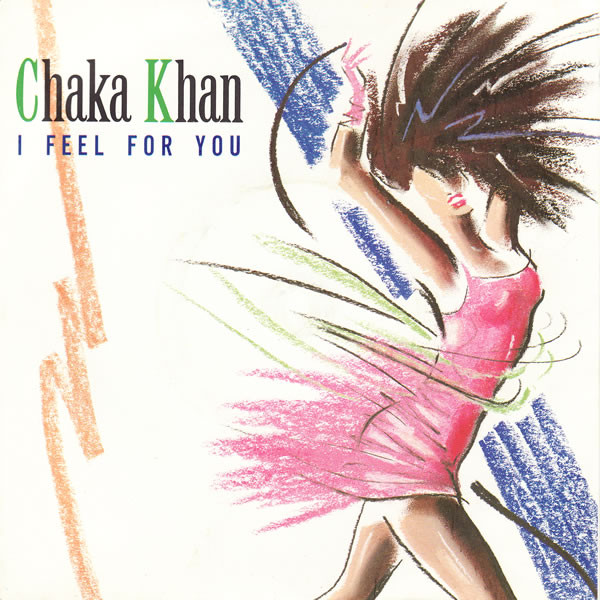
540. ‘I Feel for You’, by Chaka Khan

Chakakakakakaka-chakakhan… 1984 truly was the year of the in-your-face intro. ‘The Reflex’, ‘Wake Me Up Before You Go-Go’, now this. The most in your face of the lot?

I Feel for You, by Chaka Khan (her 1st and only #1)

3 weeks, from 4th – 25th November 1984

It probably stands out so much because of the rapping. Only the second example of rap at the top of the charts and, with all due respect to New Edition, this is the real stuff. The Lemme rock you Chaka Khan… lines are delivered at break-neck speed by one of hip-hop’s founding fathers, Melle Mel of Grandmaster Flash. It feels incredibly modern, a female singer being introduced at the start of a song, decades before Beyonce and Jay-Z, or Rihanna and Drake.

I did wonder if the rap might have been supplied by the writer of this song, one Prince Rogers Nelson. Prince is someone with a giant discrepancy between his fame and his UK chart-toppers (one, fairly lame, #1 a decade from now). But here at least is one of his songs, transformed from the slinky disco-soul original into a clattering beast of a record.

It seems that every song which topped the charts in 1984 was either a ballad or a banger, and ‘I Feel for You’ is very much the latter. Like Frankie and Duran Duran before, this record grinds and pounds, chops and changes, with that mid-eighties reimagining of Phil Spector’s Wall of Sound that’s become the vibe of the year. But while much of ‘84 has been Brit-dominated, this is a very American sounding disc, with its snatches of harmonica and horns, and its new jack swing energy.

Said harmonica was actually played by the last chart-topper but one, Stevie Wonder, while the song also features samples from his 1963 hit ‘Fingertips’, though you’d be hard-pressed to pick them out. It’s a bit of an all-star ensemble then: Chaka Khan, Melle Mel and Stevie Wonder, on a song by Prince. And it delivers: this is a great dance song, with a brilliantly funky bassline, a song that sounds like nothing we’ve heard at #1 before…

You can tell that this was written by Prince. Few people could throw out a line like I wouldn’t lie to you baby, I’m physically attracted to you… and make it work. Khan, in a brilliant move, delivers the lines like Prince, especially in the chorus: I fee-eel for you-oo… The one thing that I would change is that her voice is a little too far back in the mix.

The video ups the ‘80s Americana even further. Khan performs in an inner-city courtyard, with graffiti and wire fences, while a DJ scratches and spins, and break dancers throw shapes around her. It looks a bit funny now, but again must have looked very modern and very cool to suburban Britain in November 1984. In fact, ‘I Feel for You’ feels both new, in terms of its position in this countdown, and pretty dated, when you listen to it through your 2022 ears.

Maybe that’s why Khan’s only #1 isn’t as well remembered as her two other big hits: ‘I’m Every Woman’ and ‘Ain’t Nobody’, which would both chart twice, before ‘I Feel for You’ and then a few years later in remixes. It’s possibly the hip-hop element – of all the genres, rap ages the worst – but it’s a shame. It’s been great to discover this funky gem. Next up: a recap. Could ‘I Feel for You’ contend for the top prize…? Watch this space…

Advertisements

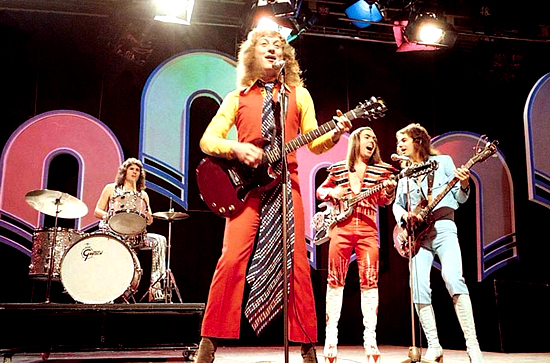
315. ‘Take Me Back ‘Ome’, by Slade

As great as our last chart-topper ‘Vincent’ was, you wouldn’t want to listen to it every day. Thank God, then, for Slade, getting us back into a hard-rocking, glam-boogying groove.

Slade 00

Take Me Back ‘Ome, by Slade (their 2nd of six #1s)

1 week, from 25th June – 2nd July 1972

Their first number one, ‘Coz I Luv You’, was great but, as I noted at the time, it didn’t sound like the Slade that would go on to grab the charts by the balls. Their second chart-topper, though, sounds 100% like Slade. We’ve got Noddy hollering, a nasty riff, and some

Imagine the scene: closing time at a pub in Wolverhampton. Last orders, in more ways than one. Noddy needs a girl for the night, so he gets a wooing. Came up to you one night, Noticed the look in your eyes, Saw you was on your own, And it was alright… He has a way with words to rival Mungo Jerry and their attempts on ‘Baby Jump’: You and your bottle of brandy, Both of you smell the same… Is she really as rough as she sounds, or is he just a brute? Either way, I love the complete and utter lack of glamour.

So take me back home, Take me back home, And we can find plenty to do, And that will be alright… It’s an unsophisticated song. The hook is simply Holder drawing out his ‘all-rights’ in a sneery way. But, it’s great. I kept thinking that the riff sounded familiar, and then I realised that it simply sounds like 50% of Oasis’s mid-nineties output. (They always get the Beatles comparisons, but to me they ripped Slade off just as much. Anyway, more on Oasis in twenty years or so.)

SLADE_TAKE+ME+BAK+OME+-+WIDE-686833

By the second verse, the handclaps have turned into terrifying horse-whips, increasing the glam-stop even further. And by the third verse, the girl’s boyfriend, who’s twice the size of Noddy, has turned up. I didn’t stay around to say goodnight… But it was alright… We fade out with Holder trying to punch through brick walls with his voice, then doing his best Marc Bolan stutter.

So Slade are a-go. Although I’d rank ‘Take Me Back ‘Ome’ more alongside the Stones’ bluesy numbers from the sixties, ‘Honky Tonk Women’, ‘Little Red Rooster’ and the like, than  the pure glam that was to come. Few #1s have been as low-down and dirty as this. But, I like that this came just two weeks after T. Rex’s final chart-topper, ‘Metal Guru’, and that it feels like a passing of the glam-rock flame. Slade were now poised to become the biggest band in the country, and we’ll hear a lot more from them in the next year and a half.

304. ‘Hey Girl Don’t Bother Me’, by The Tams

Our last number one was a glossy, highly polished number from one of the world’s biggest female stars – Ms. Diana Ross. Which contrasts completely with this rough-and-ready next chart topper.

9EcPD9eRbZXQzczmypYkeZKHPW4@383x305

Hey Girl Don’t Bother Me, by The Tams (their 1st and only #1)

3 weeks, from 12th September – 3rd October 1971

It starts with a simple drums and guitar intro. Then a refrain: Hey girl, don’t bother me… Hey girl, don’t bother me… Standard male vocal group stuff – think the Four Tops or the Miracles – but on a budget. Someone’s going for the Motown sound but without the backing of a major record label.

The lead singers voice is raspy and endearing: I heard about you from my friends… (I love the way he drags ‘friends’ out in a very ‘Murican way) The word really gets around… They say you broke the heart, Of every boy in town… He begs this floozy to stay away: Stay outta my arms, Don’t try to use your charms… Don’t bother me…

It’s a sweet song, despite the subject matter, and one that’s likeable from the start. When the handclaps start it seals this disc’s lo-fi charm. In the second verse, the singer admits that the girl is tempting, despite her reputation: But I really gotta say, You look so fine… He stands firm, though, determined not to be added to her list.

‘Hey Girl Don’t Bother Me’ stands right out in this countdown. We’re in the autumn of 1971, but this song sounds like a complete throwback. And that makes sense, seeing as it was recorded in 1964. To my ears it could have been even earlier. The Tams were a vocal group from Atlanta, who had had minor chart successes in the sixties but whose records were picked up by northern soul clubs in the UK. I can’t claim to be an expert on the northern soul scene in the seventies, but it was an offshoot of Mod culture, mainly in clubs in the north of England: Manchester, Wigan, Blackpool, down to Birmingham. They pushed lots of old soul discs back into the charts, and this one by The Tams made it all the way to the top.

611KpmwaVEL._AC_SL1280_

You can see why ‘Hey Girl…’ took off like it did. It’s a throwback, but it has enough of a guitar line and a stomp for it to fit in with the early seventies’ sound. You can imagine Mud doing a soft-glam cover version. Though I’m sure The Tams weren’t complaining, or inquiring as to the reasons for their sudden career resurgence in the UK. They will enjoy another mini-comeback fifteen years later, when their hit ‘There Ain’t Nothing Like Shagging’ makes #21 in 1987. (Stop giggling there at the back!) The ‘Shag’ is a dance, you see, (the official state dance of South Carolina!) and according to the song: There ain’t nothing like shagging, When you’re shagging with the one you love… There was a follow-up too – ‘My Baby Sure Can Shag!’ (Stop it!) Unfortunately, both were banned by a humourless BBC because ‘shagging’ means, erm, something else in Britain…

Anyway, back to ‘Hey Girl…’ It’s worth nothing that this is the third re-release to make #1 in the space of a year, following ‘The Tears of a Clown’ and ‘Voodoo Chile’. Not sure what to make of that… Were people already missing the sixties? Was it just a coincidence? It’s certainly adding to the already very eclectic feel of the charts in the early seventies!

Follow the #1s Blog playlist here.

288. ‘In the Summertime’, by Mungo Jerry

So we reach one of the most distinctive intros ever. Is it beatboxing? A comb and paper? A kazoo? Uh, ch-ch-ch… Who cares, it’s groovy, silly, fun, and it sets the tone for a brilliant #1 hit.

mungojerry002

In the Summertime, by Mungo Jerry (their 1st of two #1s)

7 weeks, from 7th June – 26th July 1970

Maybe it helps that I’m writing this in the garden on a fine spring afternoon, as the world prepares to tick over into what is hopefully a long, hot summer. But I’m sure that even if I were listening to this on a frigid mid-January’s morn, I’d get that holiday feeling. It’s irresistible – a record that sounds exactly as its title suggests. You can see why it settled in for a long old stretch at the top of the charts over June and July.

In the summertime, When the weather is high, You can stretch right up and touch the sky… It’s a little reggae-ish. There’s a music-hall piano in the mix, and a gentle guitar. Plus all the zzzhhs and the ooops that create the distinctive rhythm. It sounds like lots of things, and yet it’s distinctly original… Wiki lists it as ‘Skiffle’ and, yep, I can see that too… When the weather’s fine, You got women on your mind…

A group of lads, out looking for fun. The lyrics hit a little harder than the carefree beat suggests. Have a drink, Have a drive… (not a line you’d get away with these days, and indeed Shaggy had changed it by the time he took the song back into the Top 5 in the mid-nineties…) Go out and see what you can find…

And then a classic piece of advice: If her daddy’s rich take her out for a meal, If her daddy’s poor just do what you feel… They get away with it, though, by sounding like clumsy kids just looking for a good time. You can imagine them giving a cheeky wink as they sing it, the rascals. Life’s for livin’ that’s our philosophy…

R-4325405-1408464197-6623.jpeg

We get a little break, and some motorbike-revving sound effects thrown into the eclectic mix. Imagine driving along country roads to this, windows down, roof off. I have to admit I thought, right up until now, that the line in the second verse went ‘You can make it really good in the lay-by…’, you know, what with the driving theme. But no, that was just my mind in the gutter as usual. It’s: You can make it, make it good and really fine…

Mungo Jerry were a band led by Ray Dorset and an ever-changing cast of other musicians – even before they’d recorded this, their first hit, the line-up had changed, and it will do so again before their second chart-topper next year. The only thing I really knew about them, prior to writing this, was that Dorset had some spectacular lamb chop side-burns. But, they grew so big so quickly in the summer of 1970 that the phrase ‘Mungomania’ was coined. ‘In the Summertime’ hit #1 in a staggering twenty-six countries! We’ll meet them one more time, like I said, before long.

This is our third ‘summer’ themed number one, after Jerry Keller’s ‘Here Comes Summer’ and Cliff’s ‘Summer Holiday’, but I’d suggest that this is the definitive summer hit, one that still hits the spot fifty years on. Plus, it’s the only one of the three to actually hit #1 in the summer! Uh, ch-ch-ch… Uh, ch-ch-ch…

(EDIT! Having watched this video I’m now convinced that I’m correct on the ‘lay-by’ line! Watch his lips… And, to answer my question from the start – it’s a bottle!)

274. ‘Honky Tonk Women’, by The Rolling Stones

A few weeks after bidding The Beatles farewell, we’ve now reached the end of The Rolling Stones’ chart-topping career.

rollingstoneshydeparkextra1969a-5

Honky Tonk Women, by The Rolling Stones (their 8th and final #1)

5 weeks, from 23rd July – 24th August 1969

But, while The Fab Four bowed out with a not-very-Beatles-sounding #1, The Stones wrap things up by doing what they do best – some low-down, dirty rhythm and blues. It starts with a cow-bell, Charlie’s drums, some filthy guitar licks, and Mick’s drawl: I met a gin-soaked bar-room queen in Memphis… (was there ever a more Stonesy opening line than that?) She tried to take me upstairs for a ride…

In my post on their last #1, I wrote that ‘Jumpin’ Jack Flash’ was a new leaf for The Stones, in that they gave up on their attempts at flower-power and psychedelica, and returned to straight-up rock ‘n’ roll. ‘Honky Tonk Women’, then, is a consolidation of that. It sets the template for the next fifty years of the band, through the twin glories of ‘Sticky Fingers’ and ‘Exile on Main St’, through to them becoming the biggest stadium fillers the world has ever seen.

It’s also, basically, Mick Jagger listing women that he’s shagged. The bar-room queen is followed by a divorcee in New York City, and the outrageous She blew my nose and then she blew my mind… line. Goodness. It’s the ho-o-o-onky tonk women, Gimme, gimme, gimme the honky tonk blues… It’s always easy to forget that Mick and Keith were from Dartford, Kent and not Tennessee or Alabama, such is the Americana that fills some of their biggest hits.

There is an elephant in the room, though. This is the first Stones’ single not to feature founding member Brian Jones, whose slow and acrimonious departure from the band had been confirmed earlier in the year. He was found dead in his swimming pool just three weeks before ‘Honky Tonk Women’ hit #1. A blues purist; we can but wonder if this song would have sounded different with him playing on it.

R-387942-1492417780-3326.jpeg

Who knows? As it stands we get a sax solo, and a punch the air Woooo! at the very end. It must have been a fun song to write, to record, and to perform every night for the past half-century. I love it. A pure, unadulterated blast of rock ‘n’ roll. You can hear the seventies hits-to-come buried in it – the likes of ‘Brown Sugar’, ‘Tumbling Dice’, ‘It’s Only Rock ‘n’ Roll’ and the like, right through to ‘Start Me Up’. Unfortunately, none of those records will reach top spot in the UK. The Rolling Stones bow out on eight.

Impressively, their final chart-topper gave them their longest run at number one. Quite unusual, that. Though the particularly eagle-eyed among you will notice that 23rd July to 24th August isn’t quite the five-weeks advertised. This is due to the chart publication dates, and collation methods, changing in the midst of ‘Honky Tonk Women’s’ run.

Farewell to The Rolling Stones, then. Without them and The Beatles around to hit #1 every few weeks it leaves a lot of room for some new guys to come along and dominate. The Stones would slowly fade into obscurity as their chart-topping days receded into the distance… Only joking! They remain a going concern – give or take a few changes in line-up – well into their seventies, while Keith Richards’ continued existence remains one of life’s great mysteries… Their most recent album ‘Blue and Lonesome’, even hit #1 in the UK in 2016.

I’ll maybe do a Stones Top 10 soon, covering all their UK singles, but just for fun here’s my ranking of their eight British chart-toppers – based completely on personal preference – from ‘worst’ to best. *Clears throat*:

‘Little Red Rooster’ > ‘It’s All Over Now’ > ‘The Last Time’ > ‘Paint It, Black’ > ‘Jumpin’ Jack Flash’‘Honky Tonk Women’ > ‘Get Off Of My Cloud’ > ‘(I Can’t Get No) Satisfaction’

Let me know if you agree, or not.

Listen to every number one, including all eight from The Stones, here:

264. ‘Albatross’, by Fleetwood Mac

One question springs immediately to mind upon listening to our next #1: This is Fleetwood Mac? The Fleetwood Mac? The ‘Don’t Stop’, ‘Go Your Own Way’, ‘Little Lies’… Fleetwood Mac? Well yes, yes, and yes.

R-14619902-1578317634-8874.jpeg

Albatross, by Fleetwood Mac (their 1st and only #1)

1 week, from 29th January – 5th February 1969

And that’s not the only strange thing about this record. In fact, pretty much everything about this record is strange. It is one of the least ‘number one’ sounding number one records ever. It’s a musical interlude, the background soundtrack to an advert for roast lamb, the music played in a wellness spa… It’s ‘Chillout – Vol I’, three decades early.

That’s not to say it’s bad. I like it. It’s not the sort of thing I usually like; but I do. It’s a song called ‘Albatross’, which sounds exactly like an albatross soaring over the ocean. The insistent, see-saw bass is the bird’s wings, the guitar its call, and the cymbals the waves crashing below… As an instrumental it works. It doesn’t need lyrics. Lyrics might, and I’m going to contradict everything I’ve ever written about instrumental records here… Lyrics might have ruined it.

Placing this in context, in the late sixties, it is definitely the sort of record that you’d slip on before lighting up your bong and settling down to stare at a magic-eye picture. So, in some ways it’s a random January chart-topper; in other ways it makes complete sense for it to have hit #1 when it did.

$_12

What makes less sense is that this record will be Fleetwood Mac’s sole UK #1 single. One of the biggest bands of the seventies and eighties scored their one week at the top in 1969. In truth, they enjoyed far more singles chart success in the States than in their homeland. 1969 was actually their best year in the UK – one number one and a couple of number twos. Their huge hits from ‘Rumours’: ‘Dreams’, ‘Don’t Stop’ and ‘Go Your Own Way’ were huge hits only in America. Over the Atlantic none of them broke the Top 20.

Having said that, this Fleetwood Mac are a very different Fleetwood Mac to the one that everyone thinks of. Christine McVie would join in the early seventies, Stevie Nicks and Lindsay Buckingham in the middle of that decade. Only Mick Fleetwood and John McVie were around for ‘Albatross’, when they were a much blues-ier band.

In my mind, Fleetwood Mac will be forever linked with The Moody Blues, for the simple reason that my parents would play them – a lot – during long car journeys, and my heart would always sink when the tape came out. The Beatles, The Stones, The Eagles or ABBA? No problem. Simon and Garfunkel? Tolerable. The Moody Blues or Fleetwood Mac? Time to get my Walkman out. I’ve grown to like the Mac in old age more than I have The Moody Blues. But still, when I hear the synth intro to ‘Little Lies’ I instinctively shudder. Perhaps if the ‘Greatest Hits’ my parents owned had included their sixties hits, and their one and only chart-topper, I might have been won over much earlier…

260. ‘With a Little Help From My Friends’, by Joe Cocker

I recently did a series of posts on cover versions of #1 songs – previous chart-toppers that had been reimagined in different ways by different artists. ‘Different’ being the important word – a good cover version should bring something new to the table. What’s the point in releasing a karaoke version of the original? And while we have had plenty of cover versions hit number one already, this one takes the concept to another level.

Joe Cocker

With a Little Help From My Friends, by Joe Cocker (his 1st and only #1)

1 week, from 6th – 13th November 1968

The Beatles’ version of ‘With a Little Help From My Friends’ had been released the year before, on the ‘Sgt. Pepper’s Lonely Hearts Club’ LP. Joe Cocker, a British blues-rocker who had been around for a few years without enjoying much chart success, took it and made it his own. It’s slower, heavier, longer, downer and dirtier… Re-acquaint yourself with the original here, then settle in for the Cocker treatment.

It begins with a distant organ, as if you were standing outside a church before evensong. It’s an ominous build-up… You’re ready for something to happen. Then wham. Guitar! Proper hard-rock guitar. Hendrix and Clapton kind of guitar. The type of guitar that’s been nowhere near the top of the charts before. It’s bombastic, and outrageous. It makes you want to make devil-horns and punch the air.

The lyrics are the ones you know. What would you do, If I sang out of tune, Would you stand up and walk out on me…? But it sure isn’t Ringo singing it. Cocker’s voice is husky, and soulful. He delivers the lines late, squeezes the words in before the next one comes along. The backing singers, so important in any version of this song, sound like a gospel choir: How do I feel at the end of the day…? Are you sad because you’re on your own?

The best bit is the bridge – the Do you need anybody… bit. The guitars go super heavy and crunchy, like a motorbike revving up. The second time around, especially, when Cocker howls and the backing singers soar and we launch into the final minute of a mini rock-opera. I know we’ve had a lot of soul number ones in recent years – The Small Faces, Chris Farlowe, Long John Baldry and more – but this takes it to the next level.

s-l400

It kind of sounds a bit like a jamming session, or at least a live version, and that really adds something to the song. They captured lightning here. They would never have been able to re-record this exactly the same – it’s too raw, too intense. It lacks the polish of a regular #1 single, but you’re oh so glad that it somehow managed to have its week in the top spot

As I mentioned, it’s another long number one. You wait years for a #1 single that lasts longer than five minutes, then three come along at once. And that’s not all that links this to the previous two #1s. We’ve now had a number one recorded by The Beatles (‘Hey Jude’) replaced by one that was produced by a Beatle (‘Those Were the Days’) replaced in turn by a number one written by The Beatles. In case you’ve lost count, this is the fourth Beatles cover to reach the top in the past five years. They may have been reaching the end of their career as a band, but their grip on the charts wasn’t weakening.

We end in a frenzy of organs and guitars, as Cocker ad-libs over the fade-out. Phew. It’s not a subtle re-interpretation, I will admit, but for me it works. I knew this record by reputation, but it’s been great to give it an in-depth listen. ‘With a Little Help From My Friends’ is a song that will pop up another two times in this countdown, and I don’t think it’s giving too much away to say that neither of the upcoming covers are fit to lick this one’s boots…

Joe Cocker will only have one more Top 10 hit, until the early-eighties when he will record ‘Up Where We Belong’ with Jennifer Warnes for the soundtrack to ‘An Officer and a Gentleman.’ From Sheffield, but sadly no relation to Jarvis Cocker, he was still scoring Top 20 albums in the ‘00s and the 2010s. He died in 2014.