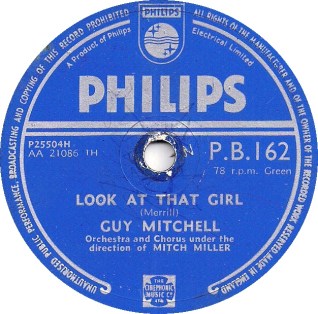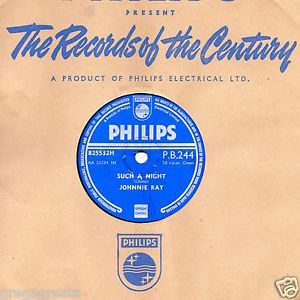
12. ‘Look at That Girl’, by Guy Mitchell

guy-mitchell-look-at-that-girl-1953-78

Look at That Girl, by Guy Mitchell (his 2nd of four #1s)

6 weeks, from 11th September to 23rd October 1953

I promise, sincerely, that there will be no mention of ‘fanny’ in this post. OK?

Anyway, ladies and gentlemen, we have something else to talk about here. We are finally rocking and rolling. The invasion is here.

Not at first, mind. We begin on familiar territory. We’ve got the jaunty guitars from ‘Don’t Let the Stars…’ and Mitchell’s previous #1, ‘She Wears Red Feathers’ (compared to which this is ten times better!), and some trumpets (or clarinets, or bassoons, whatever…), and Mitchell’s voice still sounds like he thinks he should be singing a comedy number.

Look at that girl, she’s like a dream come true… Ah look at that girl, can blue eyes be so blue…? But this is no simple song of longing. No, Sir. It turns out the girl is already his. We think. With each word my heart just skips, oh if I could kiss those lips… He’s keeping it ambiguous. Maybe they’ve got a thing going. Maybe not.

And as the song goes on – we start to rock. And I don’t mean ROCK (tongue out, fist raised). I mean ‘rock’, like it’s 1953. There are hand-claps. Mm-hmm. And a guitar. Woo! And Mitchell has a little call and response with the backing singers, when they take the lead lyric Look at that girl… and he quips back I don’t believe it they’re making it up! And then there are the lyrics: the kissing, the holding her tight… Pass the smelling salts…

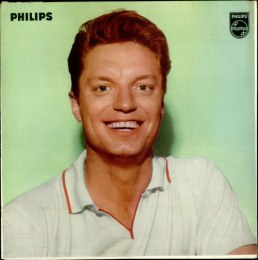
GUY_MITCHELL_SHOWCASE+OF+HITS-529846

It sounds to me as if a battle is taking place here, between traditional easy-listening and the burgeoning rock ‘n’ roll movement. On the one hand you’ve got the usual twee backing singers and floaty trumpets, parping away at the end of each line; on the other you have the hand claps and the guitar solo. That’s right. Solo. In a symbolic move, the trumpets begin the solo and play it in tandem with the guitar for a couple of bars, before the guitar takes it over completely.

And having said that Mitchell sings the song with a slight giggle in his voice, after the 3rd or 4th listen it works. He’s having a good time. We’re having a good time. He’s a nice singer – he sounds like he could be belting it out if he wanted to, but he doesn’t. The song doesn’t require belting out (That’s something old Eddie Fisher could have learned to look out for…)

If you stick with this blog for long enough, you’ll soon see I’m a sucker for a straight-up, unpretentious pop song. A couple of verses, couple of choruses, a solo and a final verse. Maybe a key change. Then finish. The sort of song that sounds simple but is pretty darn hard to get right. (I say, having never even attempted to write a song in my life). This is one such song. And I like it. It’s my favourite so far.

8. ‘(How Much Is) That Doggie in the Window’, by Lita Roza

R-1981783-1400074086-8543.jpeg

(How Much Is) That Doggy in the Window, by Lita Roza (her 1st and only #1)

1 week, from 17th to 24th April 1953

Before I’ve even played it, I know how this song goes!

This was one of the first pop songs I was ever aware of, actually. I have a vague memory of being two, or three, and hearing this song. Or at least the opening lines: How much is that doggie in the window? The one with the waggly tail… Looking back, I have no idea where I heard it: the TV, a toy, a grandparent… Maybe it was this version that reached number one that I heard; maybe it wasn’t. But still, this is the first song on this countdown that I was able to sing a line from before listening to it. So well done, Lita! You are officialy engrained in British popular culture.

The record sounds pretty much as expected – the same jaunty guitar and flutes that accompanied Guy Mitchell pop up at the end of every line so we know that this is a NOVELTY RECORD! There is also a barking dog, which sounds surprisingly real. Even on my third or fourth listen I can’t tell if it’s a dog with a great sense of timing, or a backing singer, or even Roza herself. In the song, the singer has to take a trip to California, and so wants to buy a dog to keep her sweetheart safe. If he has a dog he won’t be lonesome, and the doggy will have a good home… She’s heard about robbers, you see, and she’s understandably concerned. Other pets won’t do – no bunnies or kitties. Neither does she want a bowl of fish as he can’t take a goldfish for walks…

It’s quite cute, I suppose, and at a lick over two minutes long it doesn’t outstay its welcome. And it provides us with lots of UK chart firsts: first #1 by a British female, first #1 to feature brackets in the title, first #1 to feature a question in the title, first of many #1s to come out of Liverpool, first #1 about a dog…

Lita-Roza_1362708c

The strangest thing about the whole song, though, is Roza’s voice. It’s very husky, very sexy – it has a sort of giggle and a wink to it that is completely wasted on this asexual, childish nonsense. And a quick image search throws up lots of pictures of her looking very sultry, very exotic (she had Filipino heritage), and wearing dresses that would turn heads today never mind the early 1950s. So I went one step further and listened to her next biggest UK hit (‘Jimmy Unknown’, #15, three years after this). It’s a world away from ‘How Much is That Doggy?’ – a slow, seductive number to which her voice, all melted caramel, is much more suited.

It turns out that Roza hated this song. And not simply after it turned out to be her biggest hit, a millstone around her neck for the rest of her career. She had to be persuaded to record it in the first place, and only did so on the proviso that she would never have to sing it live. And she never did: “I sang it once, just one take, and vowed I would never sing it again. When it reached number one, there was enormous pressure to perform it but I always refused. It just wasn’t my style.” She lived for a long time too, dying in 2008, aged eighty-two. I have a fabulous image of her sitting in a dusty ball gown, in a dusty parlour, throwing a plate at a lackey who has just brought yet another request for her to perform her biggest hit. ‘Don’t ever mention that awful song again!’ she yells as he runs for cover. The Miss Havisham of UK pop. She even adopts a little girl, and trains her from an early to be a huge singing sensation, but with a secret plan to ensure that this starlet’s first and only hit will be a piece of throwaway tripe… Too far?

Anyway, not wanting to slander the dead too much, but it’s great to get a #1 hit with a tale behind it. And perhaps Ms Roza didn’t really hate the song all that much (or perhaps she just had a very knowing sense of humour) because she left a large chunk of her fortune to stray dogs’ homes.

And it turns out that ‘Doggy’ actually has a much more sinister legacy than that of a throwaway novelty that overshadowed its singer for the rest of her career. It was also…(gasp!)… Margaret Thatcher’s favourite record.

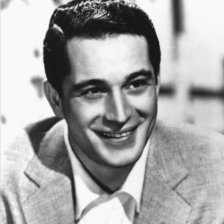
5. ‘Don’t Let the Stars Get in Your Eyes’, by Perry Como with The Ramblers

perry-como-with-the-ramblers-dont-let-the-stars-get-in-your-eyes-1953
Don’t Let the Stars Get in Your Eyesby Perry Como with the Ramblers (Como’s 1st of two #1s)

5 weeks, from 6th February to 12th March 1953

One of my biggest chart bugbears, back when I started chart-watching, was one-week number ones. In the late ’90s and early ’00s it seemed like there were a never ending parade of songs waiting to shoot straight in at number one, only to be replaced by another brand new song a week later, as if record companies had worked it all out beforehand in some sort of dastardly pact. And I assumed that it never used to be that way, that ye olden charts were creaky, slow moving things where records languished at the top for weeks and months. Which is true to an extent – Al Martino had nine weeks, and wasn’t alone in having that length of stay, while later in 1953 we’ll reach the song which still holds the record for most weeks at number one…

But what we have here is a fourth new chart topper in as many weeks. It turns out that the record buying public of the pre-rock era were just as fickle as those in 1999! Perry Como, though, did halt the turnover and kept this jaunty little tune at the top for a month and a bit. That’s star quality shining through.

This track is a welcome relief after it’s overwrought predecessor. Perky guitars, a lively brass section, and tongue-twister lyrics: Love blooms at night in daylight it dies don’t let the stars get in your eyes or keep your heart from me for some day I’ll return and you know you’re the only one I’ll ever love delivered in just the one breath. This seems to have been a thing, a gimmick almost (at least it seems gimmicky to modern ears), as Kay Starr was at it in ‘Comes A-Long A-Love’. It’s not vocal gymnastics of the Mariah Carey kind; more lyrical gymnastics, if such a thing can exist.

We’ve also heard similar lyrics already in this countdown, in that Como is telling his sweetheart not to forget about them, or to stray, while away. The best bit of it all, though, is the trumpet solo. At least I think they’re trumpets; I really can’t tell one brass instrument from the other. Anyway, they put me in mind of the oompah band at a German Bierfest.

The one downside to the song is the backing singers, The Ramblers. They’re just a bit… barbershop, in that they are basically there to repeat verbatim the line that Como just sang. In case some one missed it? I don’t know. And their one bit of improvisation is to sing what sounds like pa-pa-papaya between lines. Are they imitating the trumpets? Is it just gibberish? Are they actually singing about papayas?

600x600

Perry Como (American! Died aged 88! The run continues!) is the biggest name to top the chart so far. I’d say, at least. Both of the female chart toppers were new to me, Al Martino was known to me solely as the singer of the first ever UK #1, and Eddie Fisher had entered my consciousness due to his ladykilling (the romantic type of ladykilling, that is). Perry Como was a big star and I could have named his biggest hit (‘Magic Moments’, fact fans) without looking it up. And after looking up his discography it’s clear that if the the charts had begun earlier he would have racked up a load more hits – he was scoring US #1s throughout the ’40s. Now, in 2018, he’s no longer a household name, a Sinatra or Presley, I wouldn’t have thought. Very few of these stars from sixty-odd years ago are, I suppose.