523. ‘Baby Jane’, by Rod Stewart

Following on from The Police, another superstar act returns for a final bow atop the UK singles charts…

Baby Jane, by Rod Stewart (his 6th and final #1)

3 weeks, 26th June – 17th July 1983

And if we might continue the comparison for a few moments more… This record isn’t as ‘good’, or as well-regarded, as ‘Every Breath You Take’. But it’s a lot more fun to listen to…

Baby Jane, Don’t leave me hangin’ on the line… I knew you when you had no one to talk to… Lyrically, it’s a throwback to Rod’s earliest hits – ‘Maggie May’ and ‘You Wear It Well’ – in that he’s singing about an old flame. One who loved him and left him, and who now moves in ‘high society’. Musically, though, he’s slap-bang in 1983, with a synth riff and an outrageous saxophone solo (I’m often quite down on sax solos, but this one’s a belter.)

Actually, it’s not completely given over to the sounds of the day. The beat that drives this song along, and that makes it such a fun listen, is decidedly disco. (I miss disco…) Rod’s last #1 had come almost five years before – ‘Da Ya Think I’m Sexy’ – and ‘Baby Jane’ was a bit of a comeback hit for him (he’d only had one Top 10 single between these two chart-toppers.) It was a wise decision to keep the disco guitars and drums, for me, and not to go completely electronic.

I mentioned it in an earlier post, but it’s interesting that the run of huge eighties hits we are on have largely been released by established stars, or those on the comeback trail: Michael Jackson, Bonnie Tyler, Bowie, now Rod Stewart. Bowie is perhaps the most obvious comparison for Rod, and his performance on ‘Let’s Dance’, while iconic nowadays, wasn’t typical of a dance record. I’m not sure he enjoyed making ‘Let’s Dance’, as much as Rod enjoyed ‘Baby Jane’. Just listen to the Yeah! before the final chorus.

Fans of Rod the Mod, who enjoyed his work with the Faces, and his earlier, acoustic, solo hits, are probably as down on ‘Baby Jane’ as they are on ‘Da Ya Think I’m Sexy’. And I can understand, to an extent. Sir Rod hasn’t always exercised the greatest quality control over his work. But then again, I think most people could find it in themselves to enjoy this big, dumb puppy dog of a song; while recognising that it’s not among his very best.

This may be the end of Rod Stewart’s chart-topping career, but he’d go on scoring big hits well into the 1990s. Which is in itself very impressive: he was thirty-eight when ‘Baby Jane’ made #1, and has a twelve year span between his first and last number ones – a longevity that not many acts can boast of. His most recent album made #5 last Christmas, while he has also branched out into model railwaying, and drunken Scottish cup draws. Here’s to Sir Rod, then, a true legend, in more ways than one…

Advertisements

521. ‘Candy Girl’, by New Edition

Hmm… On the one hand, you could argue that this next #1 emphatically breaks the run of eighties classics that we’ve been enjoying. On the other, you could argue that this record is as much an eighties classic as ‘Billie Jean’ or ‘Let’s Dance’

Candy Girl, by New Edition (their 1st and only #1)

1 week, 22nd – 29th May 1983

I mean ‘classic’ not so much in the sense that this song is any good; but that it is jam-packed with eighties flourishes. There is no mistaking when this record was released. And this is American eighties. We’ve had lots of ‘British’ eighties over the past three years, in the new-wave, post punk, New Romantic acts that have topped the charts. The 2nd British invasion is well underway but, as the decade wears on things will get a lot more US-led. Starting here…

Candy girl, You are my world… First things first, this is a pretty blatant rip-off of The Jackson 5’s ‘ABC’. And not just in terms of the melody: we’ve got five young, black Americans bringing a bright and peppy pop tune to the top of the charts. (They weren’t shy about the comparison either: the group’s name refers to them being a ‘new edition’ of the Jacksons.) Second things second: we’ve got rapping!

We’ve had bands toy with rap – mainly reggae acts like Dave & Ansil Collins and Musical Youth (who are another point of comparison with New Edition) – but this is the first genuine hip-hop number one. No other genre will dominate the next forty years of the charts as much as rap, so this is a bit of a moment. My girl’s like candy, A candy treat, She knocks me right off my feet… People complain about modern hip-hop lyrics, but… My girl’s the best and that’s no lie, She tells me I’m her only guy… Give me ‘WAP’ any day of the week.

It’s not just the rapping that makes this sound so modern though. The beat is clear and heavy – a glimpse ahead to new jack swing later in the decade – and the squelchy, farty synths are almost a voice in their own right. Which isn’t a good thing… Someone was let loose on the decks, and needed to be reined in. By the end they’re mimicking ‘ring a ring a roses’ like a demented playground chant…

In a classic boy-band debut single move, there’s a break to allow an introduction to the members who will soon be adorning bedroom walls the world over. Check out Mike and Bobby’s ladies… Ooh-wee… What about Ronnie’s? She’s bad… It’s incredibly cringey, but these moments always are. I’m forty years too late, and thirty years too old, to appreciate it.

If that write up sounded harsh then I didn’t really mean it to. I have to admit I’m enjoying this… Sort of. If you’re going to build a song so obviously around ‘ABC’ then you’re giving yourself a solid foundation. There’s an endearing energy to it, the boys were all just fourteen or fifteen when this was released, even if the farty synths and the high-pitched voices are a bit too much. Plus there is one of the clunkiest key-changes ever heard in a chart-topping single.

This was New Edition’s first ever release, and for some reason the UK took to them much quicker than the US (‘Candy Girl’ only made #46 on the Hot 100). In the long run, though, their American chart success would be much more long-lasting, reaching well into the 1990s. The members would also try their hand away from the group, the most prominent career being that of founder Bobby Brown’s (and not always for musical reasons…)

Advertisements

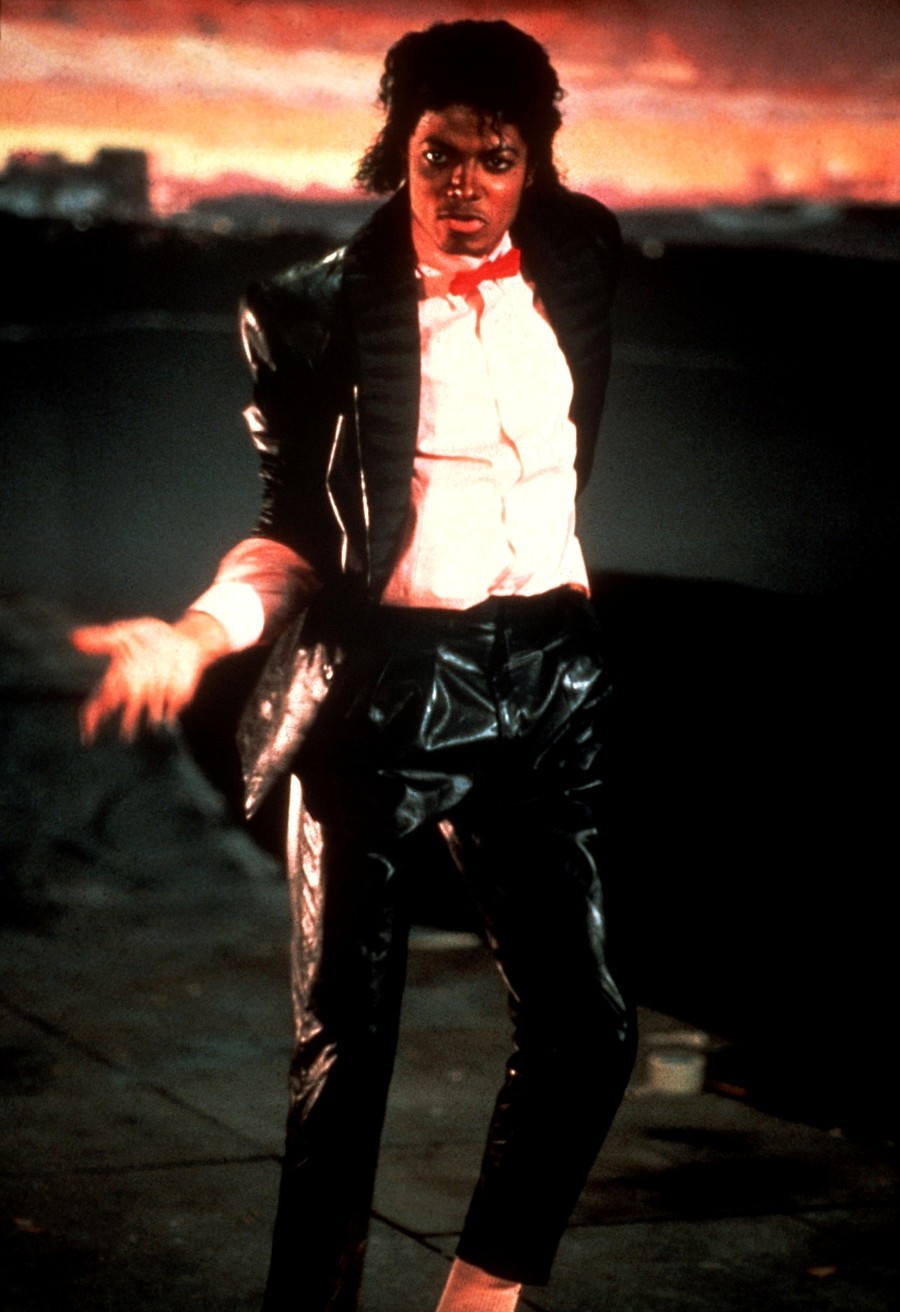
516. ‘Billie Jean’, by Michael Jackson

In my last post, on Kajagoogoo’s ‘Too Shy’ I announced it as the eighties-est moment yet. (I also quite liked the intro.) And here we have a ginormous smash hit that is even more ‘eighties’, from the biggest album of the decade, by the biggest star of the decade. (With another pretty cool intro.)

Billie Jean, by Michael Jackson (his 2nd of seven solo #1s)

1 week, 27th February – 6th March 1983

We won’t come across many songs more famous than ‘Billie Jean’ on this countdown. Everyone knows it, has danced to it, has sang along to it. We’re familiar with every ‘hee’ and every ‘hoo’. But it’s the sort of ultra-ubiquitous song that you don’t – or I don’t, at least – stop to pay attention to anymore. And what stands out now is how much there is going on. In my head, ‘Billie Jean’ is that bass riff and Jackson’s voice. But there’s a lot more than that.

There are strings, finger-clicks, a guitar, and about ten different synth lines and effects. It doesn’t feel cluttered, though. Everything is in its right place, where and when it needs to be. Even the vocal ad-libs feel planned and thought-out beforehand. You could argue that music this well-produced can come across as soulless, and you might have a point. But that would be a harsh criticism of an almost perfect pop song.

Billie Jean is not my lover, She’s just a girl who claims that I am the one… It’s a grown-up topic for a former child star. Billie Jean was an amalgam of the groupies who had thrown themselves at his older brothers in the Jackson 5. But the kid is not my son… And the singer of this record sounds like a different person to the boy from his first #1, ‘One Day in Your Life’ – a false start if ever there was one. This is the moonwalking, ‘hee-hee’-ing MJ, who has been parodied ever since. It’s also the first sign of a troubled Michael Jackson, in the ominous lyrics and the paranoid vocals. Of the fact that being world-famous since the age of ten might have made him a little… odd.

Since it’s the 1980s, and this is Michael Jackson, we also have to take the famous music video into the equation. Like the song as a whole, it’s a video I could picture without ever having watched in its entirety. My main take-aways… Jackson still looks very young (he was only twenty-four), there are more cats than I remembered, and it actually looks pretty dated in its slow-motion sequences and its graphics. It suits the song well, though, which isn’t something you can always say about Jackson’s later videos, where it felt like he was just throwing money at them rather than trying to tell a story.

Famously, ‘Billie Jean’ was one of the first songs by a black artist to get played on MTV. But that was only after the president of CBS records threatened to pull all the label’s other acts from the channel. You could spend a day lost down the rabbit-hole of ‘Billie Jean’ trivia. Producer Quincy Jones, for example, didn’t think it was strong enough to even be an album track. My favourite factoid, though? That someone suggested the song be called ‘Not My Lover’, lest people thought Jackson was singing about tennis legend Billie Jean King.

As is so often the case with the biggest stars, the UK singles charts never really played fair when it came to MJ’s imperial phase. ‘Billie Jean’ got a solitary week on top of the charts. While almost all the other singles taken from ‘Thriller’ –famously there were seven from the one album – were Top 10 hits, he only has one further #1 in this decade. But, despite not being the biggest-selling, or longest-lasting, number one ‘Billie Jean’ will probably outlive us all. Deep into the 21st century it is still regularly voted as ‘Best Pop/Dance/Eighties Song Ever’, while in 2021 it became the first music video from the 1980s to reach a billion YouTube views.

Advertisements

515. ‘Too Shy’, by Kajagoogoo

I think it may have arrived, the moment I’ve been anticipating for a while now… The official start of the 1980s.

Too Shy, by Kajagoogoo (their 1st and only #1)

2 weeks, 13th – 27th February 1983

This is the most eighties chart-topper yet. Everything here has been filtered through some kind of ‘80s-ifier: the synths, the electronic drums, the bass, the icy piano… And that’s before you get to the band’s hair-dos… Just look at those mullets! I really like the intro, though: the slow build up and funky bass riff. There’s also a killer, if slightly nonsensical, chorus: You’re too shy shy, Hush hush, Eye to eye…

Singer Limahl’s delivery is also very of its time. It’s very arch, very airy and knowing. I don’t want to plant the ‘New Romantic’ flag, as I don’t think Kajagoogoo were quite that, but that’s where we’re heading. The rest of this song, though…? It’s OK. The nice touches aren’t enough to cover up the fact that it’s a bit lightweight, and a bit dull in places. I’ve heard of ‘landfill indie’… Can this be ‘landfill eighties’?

While the song is fine, we have to take a moment to examine the band name. Potentially one of the worst band names in history? It’s based on the sounds babies make, apparently. Before Kajagoogoo they were known as ‘Art Nouveau’, which is the sort of name you’d give a fictional parody of a new-wave band. They weren’t around for very long. Limahl left after just two years as lead-singer, citing personality differences, and the band officially spilt up in 1985.

I do think this is a moment where any remnants of what went before have been ditched. There’s no disco here, no post-punk or soft rock. Just pure and unadulterated eighties. Even the big, decade-specific acts we’ve met so far – Adam Ant, Culture Club, Human League – didn’t have the mid-eighties glossiness that ‘Too Shy’ has. But I think we’re set now, and about to foray into the deepest depths of it.

And I have to admit that I’m making that statement not based solely on this one record – though it is very now. I’m also making it with one eye on the chart-toppers that will immediately follow. The next five number ones will feature either some of the decade’s biggest stars, or its biggest songs. Kajagoogoo’s ‘Too Shy’ is the appetiser to a giant ‘80s feast that is on its way…

513. ‘You Can’t Hurry Love’, by Phil Collins

We embark on 1983, then. And we start off with a classic. Well, a version of a classic…

You Can’t Hurry Love, by Phil Collins (his 1st of three #1s)

2 weeks, 9th – 23rd January 1983

I’m a big fan of The Supremes. Who in their right minds isn’t? They only had one (1!) chart-topper in the UK – unlike the States, where they went toe-to-toe with The Beatles for the most #1s in the ‘60s – but they churned out pop gem after pop gem. ‘Baby Love’, ‘Stop! In the Name of Love’, ‘Where Did Our Love Go’, and this ‘You Can’t Hurry Love’. (They loved to ‘love’ in a title…)

All of which is my long-winded way of saying that this song is classic… And, actually, Phil Collins does a decent enough job of covering it. He doesn’t ruin it. He keeps all that makes it great – most notably that much-copied bass intro (which we last heard on the Jam’s ‘Town Called Malice’.) He doesn’t go all ‘eighties’ on us, and he doesn’t strip it back. As a record, it stands out as ‘retro’ among the class of ’82-’83.

In recent months, we’ve seen Captain Sensible, and before him Dave Stewart & Barbara Gaskin, take fifties and sixties classics and, well, re-invent them. Collins doesn’t do that. But the problem with sticking so close to the original is that it’s clear when it’s not in the same league. Phil Collins is not Diana Ross, in more ways than one. You do wonder why he bothered…? It sounds nothing like his stuff with Genesis, or his biggest previous solo hit: ‘In the Air Tonight’. But then again, it delivered him his first number one. So whatever he was going for worked.

Like The Supremes, Collins had much more (solo) chart success in the USA than in Britain (seven #1s to three). As someone who wasn’t around at the time, he’s always seemed such an unlikely figure for one of the decade’s biggest stars… Michael Jackson, Madonna, Prince, Phil Collins… It just seems weird.

Then I grew up with him as half-laughing stock beloved by estate agents, half-reclaimed hip-hop icon. He’s never been an easy man to categorise, I suppose. And that’s not a bad thing. But, he will be back atop the UK charts again, so we don’t need to sum his career up just yet. This looks like it’s going to be quite a short post; but I don’t think a straight-forward cover such as this needs much more analysis…

Though if even that was too much, here’s my TL;DR: ‘You Can’t Hurry Love’ is a great song, and Phil Collins neither ruins it, nor makes it his own.

Advertisements

510. ‘I Don’t Wanna Dance’, by Eddy Grant

The final part of our autumn of reggae comes from Eddy Grant. It’s a cute, catchy tune. But, alas, Eddy does not want to dance to it…

I Don’t Wanna Dance, by Eddy Grant (his 1st and only solo #1)

3 weeks, 7th – 28th November 1982

This record has a likeable homemade feel to it. So homemade, in fact, that I had to double-check that I wasn’t listening to a cheap, karaoke version instead of the original. Once upon a time, not so long ago, the sound of synths in a chart-topper was genuinely exciting. Now they more often tend towards cheap and tacky.

‘I Don’t Wanna Dance’ is a break-up song. But it is such a perky break-up song that you don’t really notice. Eddy is tired of his girl’s flirty ways, and has had enough. I don’t wanna dance, Dance with you baby no more… He’ll remain a gentleman, though. I’ll never do something to hurt you, Though the feeling is bad…

My favourite bit is the unexpectedly scuzzy guitar solo. It’s a really raw moment in what is a pretty safe, reggae-pop number. And in the video he cuts a very Slash-esque figure, plucking it out on a floating raft. Don’t wanna dance, Don’t wanna dance… he chants for the fade-out. It’s an undemanding number, a bit slow and repetitive, but enjoyable enough.

Of the three reggae hits in a row, I’d rate the first one – ‘Pass the Dutchie’ – as my favourite, and this second. ‘Do You Really Want to Hurt Me’ was by far the most culturally significant, and best remembered, but it just didn’t grab me. Though I may be getting ahead of myself – I should save all this retrospection for the upcoming recap.

I did wonder if this was the follow-up to ‘Electric Avenue’ – the Eddy Grant solo hit that pretty much everybody knows – and perhaps rode the wave of that record’s success to top spot. But no, ‘Electric Avenue’ was actually this disc’s follow-up, making #2 in early 1983. And we mustn’t forget that Grant has been at #1 once before. Well over fourteen years earlier, in 1968, he and his band The Equals topped the charts with ‘Baby Come Back’, one of the very, very first #1s with a hint of reggae.

You could link this hit – and the gap between group and solo #1s – to Smokey Robinson, who also waited over a decade before his very own chart-topper away from his group. Eddy Grant continues to record and perform, and released his most recent album in 2017. It was titled ‘Plaisance’, after his hometown, in Guyana. Which is nice. Up next, that recap.

Advertisements

508. ‘Pass the Dutchie’, by Musical Youth

It is a truth universally acknowledged, that when it comes to the UK singles chart you are never too far away from a country, or a reggae, hit. These two genres seem to withstand the vagaries of taste, and trend, to pop up time and time again.

Pass the Dutchie, by Musical Youth (their 1st and only #1)

3 weeks, 26th September – 17th October 1982

And you’ll be relieved (at least, I am) to find out that this next #1 is of a reggae persuasion, rather than a country one. The intro is exuberant: a young voice announcing that This generation, Rules the nation! Attention duly grabbed, we slip into a gentle rhythm. Pass the dutchie pon de left-hand side…

First things first: what’s a dutchie? It’s a Jamaican cooking pot, which makes sense given the song’s refrain: How does it feel when you’ve got no food…? (And which probably seemed quite relevant given unemployment rates in the early ‘80s…) Except, one of the songs on which this is based is called ‘Pass the Kouchie’, and a kouchie is a cannabis pipe. So, what we actually have here is a bunch of kids hitting #1 with a thinly-veiled ode to the pleasures of the herb! Except all drug references are now food references.

This is a really fun record. You can imagine Musical Youth as the children of Dave and Ansil Collins, or the younger brothers of Althea and Donna. They were British-Jamaicans from Birmingham, aged between eleven and fifteen when this record made top spot. I was fully prepared for this to be a cheese-fest – ‘Musical Youth’ conjures up images of an after-school theatre club – but it’s pretty authentic. Yes, it’s on the poppier side of reggae, but there’s an grittiness to it that shines through.

The star of the show is the band’s youngest member: Kelvin Grant was only ten when he recorded that memorable opening line, and his subsequent tongue-twisting raps. (Legitimate question: Is he rapping? Or is he scatting? Or is there another reggae-specific term for what he’s doing? If he is rapping, then I’d say we have our first rap chart-topper!)

Musical Youth didn’t last too long beyond their sole chart-topper. They had one further Top 10 hit, but they packed a lot into their short time together. They worked with Donna Summer, won a Grammy (‘Pass the Dutchie’ also made the Billboard Top 10) and were the first black act to be played on MTV, which seems amazing given that MTV had been around for over a year before this record came out…

Sadly, the members haven’t had the happiest of lives since their early fame. Legal troubles broke the band up, and bassist Patrick Waite ended up in prison before dying aged just twenty-four. Musical Youth are now a duo, but they have continued to record and perform. More happily for fans of the genre, we are hitting a bit of a reggae groove at the top of the charts. More to follow…

Advertisements

506. ‘Come On Eileen’, by Dexys Midnight Runners

You can imagine, when this next number one started getting airplay on radios up and down the country, people pausing for a moment. What’s this? It’s an intriguing intro, a mix of country and funk. Not something you hear every day…

Come On Eileen, by Dexys Midnight Runners (their 2nd and final #1) & The Emerald Express

4 weeks, 1st – 29th August 1982

And then a glissando. Do glissandos ever lead to anything bad? You need self-confidence to use them – you don’t just go around throwing glissandos around willy-nilly – but they always enhance. Into an Irish jigging, beer sloshing, knees-up of a song. Try not dancing to this. Just try!

Kevin Rowland’s vocals are as hard to make out as they were on ‘Geno’ (probably the only similarity between this and Dexys’ first chart-topper). I think that’s part of the appeal – when you’re drunk and jiving along you can just make them up! Come on Eileen, I swear I’ll be mean, I’ll come on less, Take off on every wing…

The line that I could always make out was the opening one: Poor old Johnnie Ray… Shout out to Mr. Ray, AKA The Prince of Wails, my favourite of the pre-rock chart-toppers. Footage of him also featured in the video. After that, it’s the story of a boy trying to seduce a well brought-up Catholic girl. You in that dress, My thoughts I confess, Verge on dirty…

I like the fact that she means everything to him… at this moment. Don’t do it, Eileen. He’s not to be trusted! And then there’s the best bit – the middle eight, where we slow down to a beer-hall stomp that gradually gets faster and faster. It’s pure music hall. It’s outrageously catchy. It’s one of the eighties’ biggest hits; but one that sounds completely out of place in this, or any, decade.

Do Irish people secretly hate this song? All the too-ra-loo-rahs might get on my nerves if I were from the Emerald Isle. We just need a ‘begorrah’ to cap it all off. Maybe it’s the Irish equivalent of ‘Hoots Mon’ (though I’m Scottish, and I loved that one). And at least Kevin Rowland is of Irish descent. Dexys had only had one further Top 10 hit since ‘Geno’, and this was the lead single from only their 2nd album. The ‘Emerald Express’ featured in the title was just for show – though the band did go through several line-up changes in their short time together.

And I’m going to end on something of a downer. As fun as ‘Come On Eileen’ is – and it is hard to write a song that is such a communal crowd-pleaser – I feel it’s been bestowed with almost mythic qualities. There’s a scene in ‘The Perks of Being a Wallflower’ where the cool kids hear the song’s opening bars and act as if they’ve heard the voice of God himself. Is it one of the greatest ever chart-toppers? Is it transcendent? Or is it just the perfect song to throw on towards the end of a wedding disco, so that your drunken uncle can do the can-can?

Advertisements

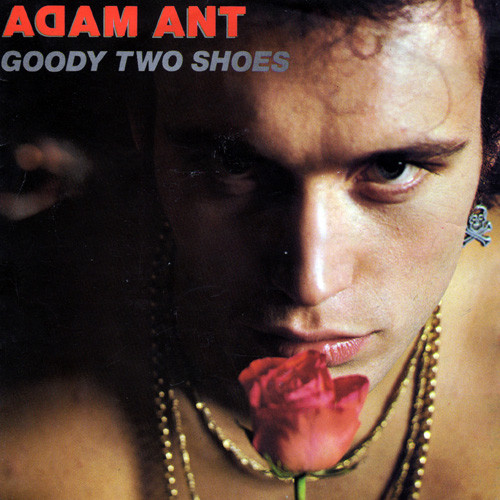
502. ‘Goody Two Shoes’, by Adam Ant

In which Adam breaks away from the Ants, and goes solo with a chilled-out, lo-fi, slow-burn debut…

Goody Two Shoes, by Adam Ant (his 1st and only solo #1)

2 weeks, 6th – 20th June 1982

Or not. ‘Goody Two Shoes’ is even more frenetic than either of his band’s chart-toppers. It’s a bit of throwback – twanging rockabilly mixed with a jiving big-band brass section – and it’s all kept galloping along by a relentlessly simple drum beat that Does. Not. Let. Up. Once.

Like ‘Prince Charming’ it is a repetitive song that you need to be in the mood for. Goody two goody two goody goody two shoes… I can see why this might get on some people’s nerves. But if you are in the mood for Adam’s hyperactive musical mind, then this is a great pop single, and the perfect song on which to launch a solo career. We don’t follow fashion, That would be a joke…

People repeat to Adam (in the video it’s a crowd of journalists) the song’s iconic hook: Don’t drink, Don’t smoke, What do you do…? He doesn’t give the press what they want! He doesn’t conform! Is he up to something…!? This might be the first chart-topping example of a ‘haters gonna hate’ hit, the art form so beloved of Taylor Swift. No-one’s gonna tell me, Who to eat with, Sleep with…

What does he do, then? In the lyrics, the answer is an ambiguous: Must be something inside… In the video it’s a little less subtle: he takes the sexiest journalist to bed and shows her just what he does do. Phwoar! It is a bit repetitive, but it’s short, and pacy, and doesn’t outstay its welcome. Of Ant’s three number ones in just over a year, I’d sandwich this nearer to ‘Stand and Deliver!’ (the best) than ‘Prince Charming’ (the worst).

For this record he kept a guitarist and the drummer from his earlier band, letting the other members go due to a ‘lack of enthusiasm’. Sadly this didn’t launch Adam Ant to a long-lasting solo career. He’d have two more Top 10s and two more albums before moving into acting later in the decade (shout out here for my favourite of his solo singles, the characteristically bonkers ‘Apollo 9’). There have been a few comeback albums, alongside some mental health issues. He still writes and performs, and has a tour ready to go when covid allows.

I may not have truly loved any of his chart-toppers, but I am glad that Adam Ant has had his moment at the top of the UK charts. A year in which he was undeniably the biggest pop star in the country. He’s a true British eccentric, always interesting, with a great sense for the theatricality of pop. Line this up alongside the preceding #1, Madness’s ‘House of Fun’, and it has made for a technicoloured, hyperactive double at the top of the charts.

Advertisements

499. ‘Ebony and Ivory’, by Paul McCartney with Stevie Wonder

We’re almost at the five-hundredth number one single. Thirty years since the very first chart, twenty years since Stevie Wonder released his first singles, well over ten years since The Beatles disbanded… It’s amazing that we had to wait this long to meet a solo McCartney, or any kind of Wonder, chart-topper.

Ebony and Ivory, by Paul McCartney (his 1st of three solo #1s) with Stevie Wonder (his 1st of two #1s)

3 weeks, 18th April – 9th May 1982

I’d have happily waited a bit longer, to be honest. The best you can say about this anthem of love and acceptance is that it’s well-intentioned. Ebony and ivory, Live together in perfect harmony, Side by side on my piano keyboard… If piano keys, inanimate slices of elephant tusk and timber, can sit happily together then Oh Lord, why don’t we…? (To be fair, the metaphor of ebony and ivory as black and white people wasn’t invented by McCartney and Wonder. It had been around since the 1840s.)

Did this song sound clumsy at the time? It’s not as if the early ‘80s were a racial utopia; but given the events of the past few years this definitely sounds clumsy. Yet you can’t judge the past by the standards of today. You also shouldn’t judge a song by the artists involved but, come on, how can you listen to this and not compare it to what you know both McCartney and Stevie Wonder were actually capable of?

Away from the lyrics, the music does little to save this record: soft-rock guitars, horns, and a cheesy-sounding sitar mean that the song coasts along fairly forgettably. And yet, beating at the heart of this record is a good pop song. No way were two of the century’s best songwriters going to get together and write something completely irredeemable. It’s not awful – though I can see why it would be tempting to kick this record more than it deserves – and of course it was a ginormous hit around the globe. (Apart from South Africa, where it was banned after Wonder dedicated it to Nelson Mandela.)

It’s tempting to imagine what John Lennon would have had to say, had he been alive. Is it a coincidence that McCartney started churning out crap like this not long after his one-time partner died? Probably. But compare Lennon’s great protest songs – ‘Working Class Hero’, ‘Give Peace a Chance’, ‘Imagine’ and ‘Happy Xmas’ – to this. Even at his most idealistic (and I gave ‘Imagine’ some stick when it topped the charts) he was hectoring us, berating us, making us confront uneasy truths, rather than simply singing about how nice it would be if we were all chums. Lennon often sang those songs like he knew he’d be disappointed: listen to his sneering It’s easy… on ‘All You Need Is Love’. McCartney sings this like he believes every word.

Anyway. ‘Ebony and Ivory’ has nothing to do with John Lennon. It’s hard on Macca that his late bandmate gets brought up. Hard, but inevitable. The saddest thing here is that this is probably neither McCartney nor Stevie Wonder’s worst musical crime of the decade. There is more to come from both of them as we forage towards the heart of the 1980s. Up next, we hit 500! *Applause* With another song about peace and love! *Groans*