On This Day… 6th December

Time for another look back at a date in chart history. What were the songs and the stories at number one on December 6th through the years…

On this day in 1980, ABBA were about to begin their thirty-first and final week on top of the UK singles chart with ‘Super Trouper’. My favourite ABBA chart-topper probably changes on a weekly basis, and I could make a case for all of them (apart from ‘Fernando’, sorry). ‘Super Trouper’ is a late-era classic, with that perfect balance of upbeat melancholoy. Songs about how tiring it is being famous can be, well, tiring; but this is a colossus of the genre. I was sick and tired of everything, When I called you last night from Glasgow… is a quintessential ABBA opening line: slightly odd, poetic, beautifully to the point.

Eleven years earlier, on this day in 1969, the Rolling Stones headlined the infamous Altamont Free Concert in California. Supposed to be the West Coast’s answer to Woodstock, it ended up becoming synonymous with the end of the swinging sixties and the death of the hippy dream. Violence which had been brewing throughout the day erupted during the Stones’ delayed set, and ended in the death of an eighteen year old spectator, Meredith Hunter, stabbed by one of the Hells Angels who had been brought in as security.

The Stones are perhaps the perfect band to encapsulate that loss of ’60s innocence, as they had never been particularly innocent, and had struggled with the psychedelic, hippy side of things. Also, they’re the sixties juggernaut that has lasted, and lasted, and lasted, far beyond the decade that birthed them… Here then is their big hit from earlier that year, their final UK #1, and perhaps the ultimate rock and roll tune, ‘Honky Tonk Women’.

In recent posts I’ve been bemoaning/celebrating the end of the Golden Era of the Boyband, which I think came to an end in late 2002. There are arguments to be had for boybands dating back to the fifties, with the likes of the Teenagers, or to the Monkees in the sixties. New Edition in 1983 and Bros in 1988 could lay claim to being the first modern boyband, but for my money the true holders of that title, and the openers of the floodgates, were New Kids on the Block. Who just so happened to be sitting at #1 on this day in 1989 with ‘You Got It (The Right Stuff)’. They were the first of twelve boybands (fourteen, if we bend my rules and count Hanson and Blazin’ Squad) to provide forty (or forty-two) #1s over thirteen years…

Let’s go way back now, sixty-seven years to be exact. Number one on this day in 1958 is what I called ‘the Scottish #1’ at the time, and which I still intend to make our national anthem when I become First Minister, replacing the dirge that is ‘Flower of Scotland’. The fifties was at times a musical desert, strewn with overwrought ballads, and the occasional rock ‘n’ roll tune. Then there were the novelties. So many novelties. Of which ‘Hoots Mon’ stands out as one of the finest. It’s got a wonderful rock ‘n’ roll energy, but it’s also a relic of a much earlier music hall era, with its singalong spirit and its Hammond organ. It’s based on an old folk tune, ‘A Hundred Pipers’, and features classic phrases such as ‘och aye’, ‘there’s a moose loose aboot this hoose’ and ‘it’s a braw, bricht, moonlicht nicht’, none of which a Scotsperson has ever actually uttered.

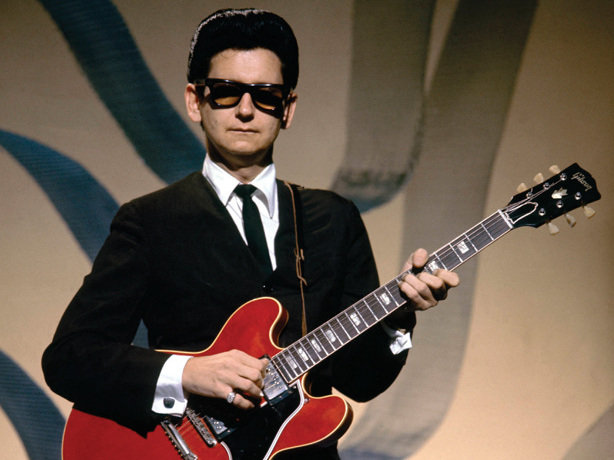
Finally, 6th December is perhaps best known as a date in music history for being the anniversary of Roy Orbison’s untimely death. In 1988, Orbison was just getting his career back on track through the success of the Travelling Wilburys, his supergroup alongside George Harrison, Bob Dylan, Jeff Lynne and Tom Petty, whose first album had been released earlier that year. Orbison had also just put the finishing touches to his first solo album in a decade, when he died suddenly, of a heart attack. The album ‘Mystery Girl’, and the lead single ‘You Got It’, posthumously returned him to the Top 10 the following year. But to celebrate his genius, let’s go back to 1960, and enjoy his first of three UK #1s: the hauntingly dramatic ‘Only the Lonely’.

On This Day… 28th August

Welcome one and all to our fourth ‘On This Day’ feature, in which we take a look back at chart-topping history through the records which have made #1. (Please feel free to check out the previous dates that we have covered here, here, and here.)

What, then, were the stories atop the UK singles chart on August 28th through the years…?

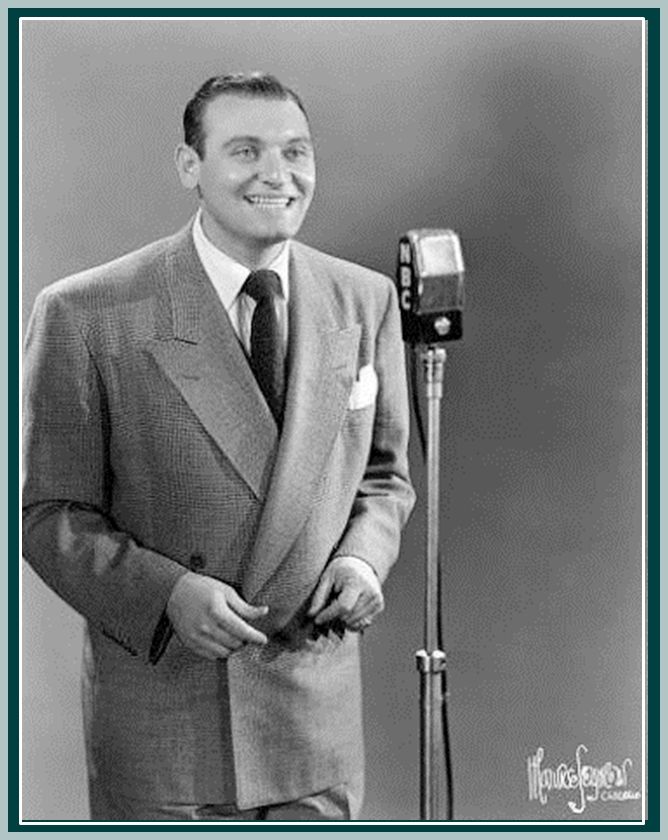
Well, way back in 1953 Frankie Laine’s ‘I Believe’ was starting its seventeenth of eighteen weeks at number one. That’s a lot of weeks. Amazingly, no other record in the intervening seventy-two years has managed to equal it. The record set by just the 9th number one single – the charts having begun less than a year earlier – still stands! Interestingly, two of the records that came closest – ‘(Everything I Do) I Do It for You’ (16 weeks, and the record holder for consecutive weeks) and ‘Love Is All Around’ (15 weeks) – were also both at number one on this date. The only other 15-weeker, Drake’s ‘One Dance’, was sadly not at #1 on the 28th August. ‘I Believe’ returned to #1 in the nineties ‘thanks’ to Robson & Jerome, but I won’t bother linking to that.

Eleven years later, and sitting at #1 was the Honeycomb’s stomping ‘Have I the Right?’ It was the third and final chart-topper produced by the visionary Joe Meek. Of the three, this is probably the most traditionally ‘pop’ sounding, though it is still crammed with wacky techniques – such as having the band stomping on the staircase outside his studio – and instruments, such as the slicing synths. It hit the charts in that glorious autumn of ’64, one of the most fertile times for British pop with ‘A Hard Day’s Night’, ‘Do Wah Diddy Diddy’, ‘You Really Got Me’, ‘I’m Into Something Good’, and this, taking turns on top.

28th August is also the birthday of The Honeycombs’ female drummer, Honey Lantree. One of few women to take up the sticks – I can only think of Karen Carpenter and Meg White – she had been discovered while working as a hairdresser. Her salon manager was in a band, let her try out, and was so impressed that he incorporated Lantree and her brother into his group. She retired from music when the Honeycombs split in 1967 following Meek’s death, but she rejoined them every so often for tours right up until 2005.

August 28th has seen not one, but two versions of ‘I Got You Babe’ sitting at number one in the singles chart. The original was, of course, by Sonny and Cher in 1965…

It was their only #1 as a duo, and Cher’s first of four, spanning thirty-three years. Exactly twenty years later, and a cover by UB40 and Chrissie Hynde was spending its solitary week on top. I gave this record a ‘Meh’ award, and my opinions on it haven’t changed much. It’s still a bit of a slog…

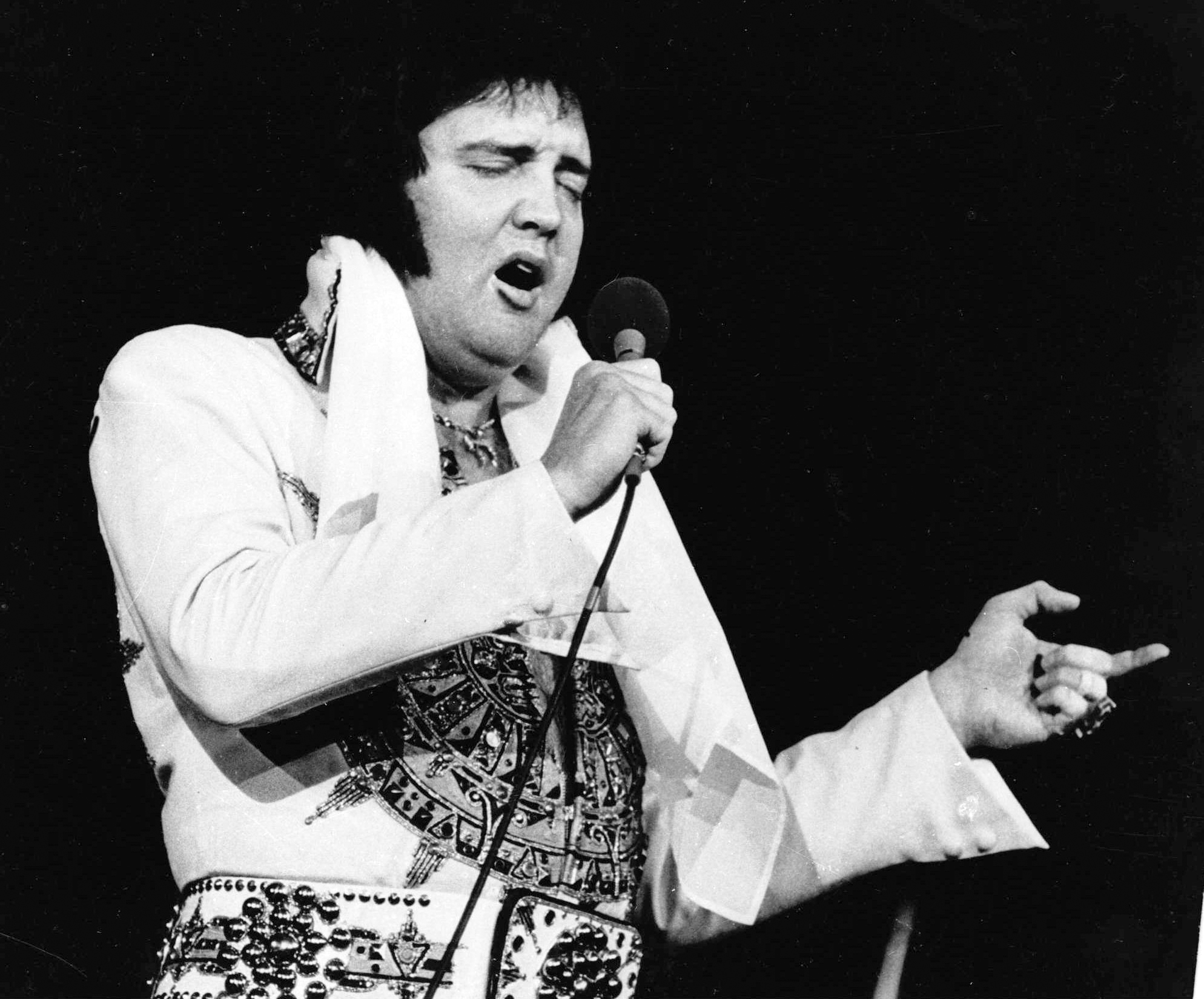
On this day in 1977, and the world still coming to terms with his death aged just forty-two, Elvis Presley’s current single climbed to #1, the first of his record five posthumous chart-toppers. ‘Way Down’ had spent its first two weeks on chart climbing from #46 to #42, so its safe to assume that it wouldn’t have been a massive hit without tragedy striking. However, it would also be wrong to suggest that The King was a spent force at this point in his career, as his previous single ‘Moody Blue’ had made it to #6. In my original post on it, I rejoiced in the fact that fate ensured Elvis’s final single was a rocker, given that he’d spent much of the ’70s releasing schmaltzy ballads. Lyrically, it’s also fitting for the recently deceased star, given that it’s called ‘Way Down’, and compares a woman’s love to prescription drugs… However, fun as the song is, and as lively as Elvis’s perfomance is, the show is stolen by JD Sumner’s astonishingly low closing note.

Finally, on this day in 1993, Culture Beat’s ‘Mr. Vain’ was enjoying its first of four weeks at #1. I bring this to your attention not just because it’s a banger – and it is – but because it was the first chart-topper in forty years not to be released as a 7″ single. Vinyl was on its way out after a century as the medium of choice, to be replaced in the space of twenty years by CDs, then digital downloads, then streaming…

Thanks for joining this delve back through the decades. Next up, we continue our journey through 2001 with a similarly retro reboot…

On This Day… 27th May

Time for another instalment of ‘On This Day’, and how the 27th May has tied in to various number one singles over the years (links to my original posts for each one).

Starting off with the record sitting atop the charts sixty-seven years ago today…

Many of the 1950s’ biggest hits were boringly straight-faced declarations of love, done in a bombastic fashion. Thank goodness for Connie Francis’s classic tale of sass and schadenfreude, then, which is one of my favourite number ones of the decade. I love the bluntness of the closing line: I’m glad that you’re sorry now… ‘Who’s Sorry Now’ isn’t a fifties original however, as it dates all the way back to 1923. What’s amazing is that 1923 to 1958 is what 1990 is to 2025… Like Sabrina Carpenter covering ‘Vogue’, or something. All of which begs a discussion as to how much popular music changed between 1923 and 1958, and how much it hasn’t changed in the past thirty-five years. A discussion for another day, perhaps. Anyway, Connie Francis is still with us, aged eighty-seven, having only retired from music in 2018.

Meanwhile on this day in 1943, ‘ar Cilla was born in Liverpool. Proud achiever of eleven top ten singles between 1964 and 1971, the first two of which gave her a brace of #1 singles, before she moved more into TV. ‘Anyone Who Had a Heart’ was the UK’s biggest-selling single by a female artist through the entirety of the 1960s – a fine achievement considering some of the legendary divas she was up against.

Next up, a Stones double-header. For not only was ‘Paint It, Black’ number one on this day in 1966 (meaning that the coolest comma in rock history had its moment in the sun), but on May 27th two years earlier newspapers were reporting that eleven fifth-form boys had been suspended from Woodlands Comprehensive School in Coventry for having ‘Mick Jagger haircuts’. Donald Thompson, their headmaster, decried the boys’ hair as ‘long and scruffy’, and that they could return to school only ‘with a neat Beatle cut’. We can clearly see what side of that great rock rivalry Mr Thompson was on…

Finally, on May 27th 1977, just in time for Her Majesty’s Silver Jubilee, the Sex Pistols released the number one that never was. In my Should Have Been a #1 post on ‘God Save the Queen’ I erred on the side of caution, not committing to sensationalism without proper evidence like a proper, upstanding blogger. This time, though, I’m just going to come out and say it: ‘God Save the Queen’ was the best-selling single the week of the Silver Jubilee, but was kept from the top by some very selective book-keeping. (For one week only, records bought in a shop owned by the label they were released under didn’t count towards the chart. It’s as if they knew Virgin’s Sex Pistols might sell quite a few singles in Virgin Megastores…)

It seems I’m not alone, as many sources have retrospectively awarded the Sex Pistols a number one, and the furore over it now seems incredibly quaint. How society has changed in forty-eight years… And hey, being blocked from number one by the establishment is way more punk than actually getting there. I’m sure Johnny Rotten and co. weren’t at all bothered.

On This Day… 8th March

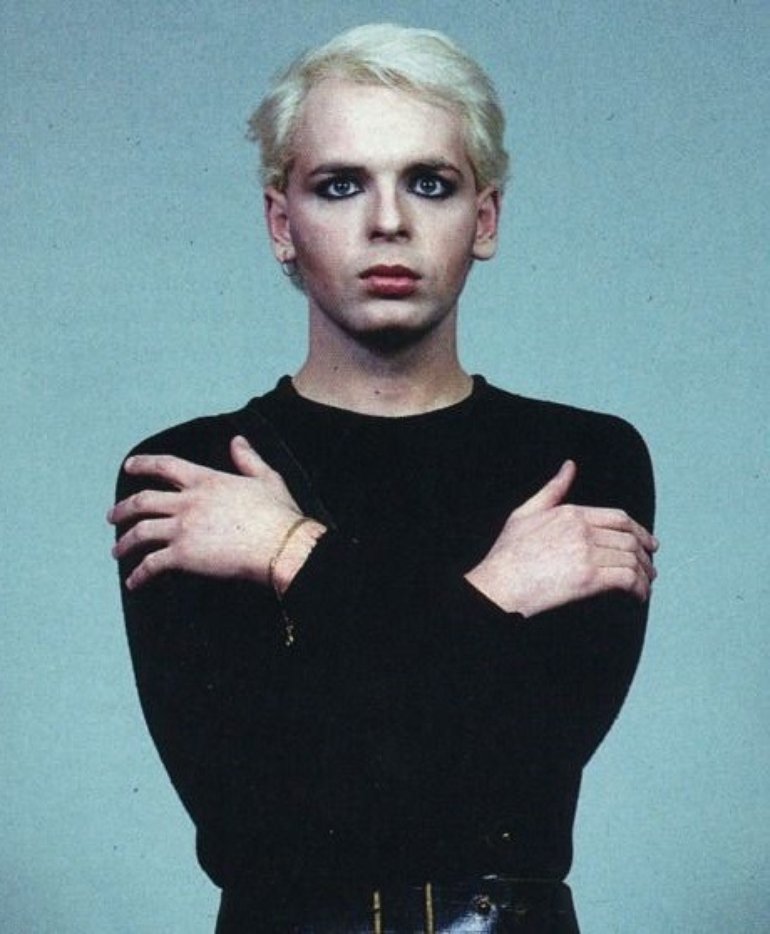
For our second On This Day feature, we start with a birthday. New wave, synth pop, goth rock legend Gary Numan celebrates his 66th today. He is probably best known for his solo number one ‘Cars’, but I’m going to link this to his slightly earlier chart-topper with Tubeway Army, the eerie, industrial ‘Are “Friends” Electric’.

Looking back, I think the period between 1979 and 1981 had some of the strangest, most un-commercial sounding #1s, and this has to be one of the strangest, most un-commercial sounding of the lot.

On this day in 2016, the world bid farewell to producer Sir George Martin. He is of course most famous for his work with the Beatles, but he also sat behind the desk on #1s for Billy J Kramer, Gerry & The Pacemakers, Cilla Black, and on the best selling single of all time, ‘Candle in the Wind ’97’. Here though is his first chart-topper, the completely unexpected, yet quite magical, ‘You’re Driving Me Crazy’, by the Temperance Seven.

While in 2003, March 8th saw the death of one of the first modern British pop stars, Adam Faith. He had two number ones, the second of which, ‘Poor Me’, also happened to be at the top on this day in 1960. I remember quite liking the dramatic strings and Buddy Holly-inspired vocals when I wrote my post on it, and it remains a striking number one record. Faith moved into acting, and remained on stage and screen right through to his death. And on the anniversary of his passing, it would be remiss of me not to quote his supposed final words: “Channel 5 is all shit, isn’t it?” Few truer words have ever been uttered.

On This Day… 5th January

A very Happy New Year to you all, and a warm welcome back to the UK Number Ones Blog. I hope you had a good festive period, managed to celebrate, relax, and (in my case) catch up with writing about some soon-to-come number ones. Before we resume our journey through the late, late-nineties, I’m debuting a new feature!

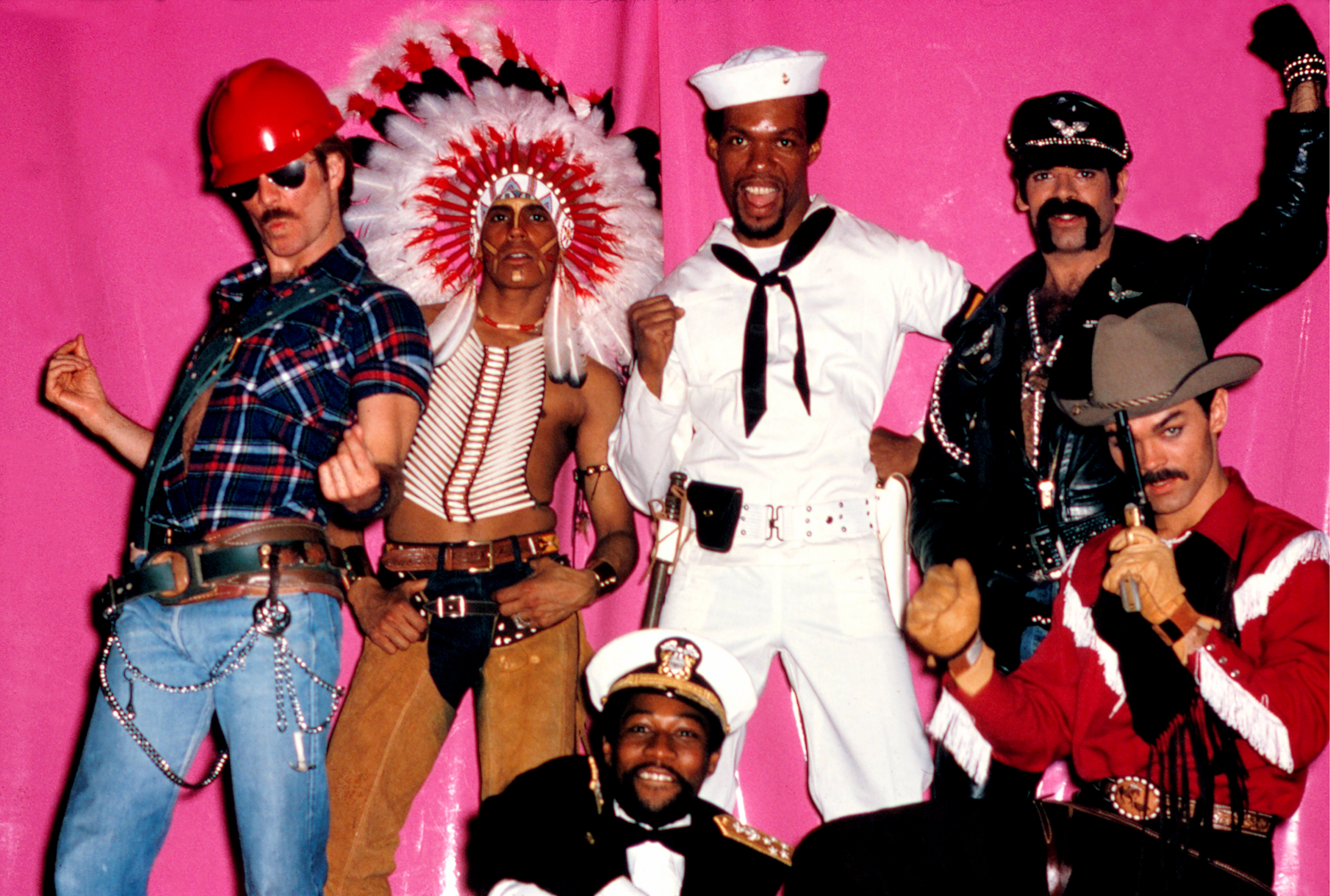
The Village People, group portrait, New York, 1978. (Photo by Michael Putland/Getty Images)

‘On This Day…’ will do pretty much exactly what it says on the tin. I’ll intro a few of the records that have been top of the charts on a particular date in history, as well as mentioning a few births, a few deaths, and a few interesting occasions that tie into a particular chart-topper. The hope is that readers will be able to delve into my back-catalogue of posts, and find something I wrote long before they started following this blog. Or people can, y’know, just enjoy the tunes!

First up, number one on this day in 1962, we have a stone-cold classic:

‘Moon River’, from the soundtrack to ‘Breakfast at Tiffany’s’ is one of the great songs of that supposedly fallow period between rock ‘n’ roll and The Beatles. In the film it is sung by Audrey Hepburn, at the Academy Awards that year it was performed by Andy Williams, while an instrumental version by the song’s composer Henry Mancini and a version by Jerry Butler were hits in the US. In the UK, however, it was left to South African-born Danny Williams to have the most succesful version of all. You can read my original post on ‘Moon River’ here.

Meanwhile on this day in 1923, radio host, record producer, and founder of the legendary Sun Records label, Sam Phillips was born in Alabama. He is most famous for his work with a young Elvis Presley, although he also produced Roy Orbison, Johnny Cash, Carl Perkins and many of the other early rock and roll stars. His only contribution to the top of the UK singles chart, however, was this banger:

Here’s my original post on ‘Great Balls of Fire’. If you’re only going to top the charts once, might as well make it good ‘un. Speaking of which, number one on this day in 1979 we have perhaps the ultimate guilty pleasure. There is not a soul alive who hasn’t done the dance to the ‘YMCA’, however grudgingly, and not even the recent gyrations of Donald Trump can truly sour this wedding reception classic. Even more recently, Village Person Victor Willis (AKA the cop) has been threatening to sue anyone who claims that ‘YMCA’ – a song with the lyric: They have everything for young men to enjoy, You can hang out with all the boys… – has any homosexual connotations. Whatsover. No sirree. To which we can all say, ‘Okay honey…’ (Original post here.)

In sadder news, on this day in 1998, Sonny Bono died following a skiing accident in Nevada. He was of course the singing partner, and former husband, of Cher, with whom he enjoyed his sole chart-topper ‘I Got You Babe’ in 1965. I wrote about it, the 201st #1 single, way back in 2019.

Finally, one of the least likely number one singles of all time was sitting astride the charts on January 5th 1991. Early January is a bit of a dead zone for chart-toppers, as in most years the Christmas leftovers are still clinging on top with little competition. Iron Maiden spotted an opportunity, and released ‘Bring Your Daughter… To the Slaughter’ in the final week of 1990. Their devoted fanbase, as well as the publicity of knocking the God-bothering Cliff Richard’s ‘Saviour’s Day’ off #1, delivered the heavy metal legends their biggest hit. (Original post here.)

I hope everyone enjoyed this new feature, and won’t mind if it pops back up ever few weeks. I’m also going to be doing more regular posts on cover versions, number two singles, ‘Remembering’ features, ‘Best of the Rests’ and ‘Today’s Top 10s’, as well as a new look at the ‘B’-sides to famous number ones. The main focus will of course still be on the chart-toppers; just a little more regularly interspersed with interesting detours through chart history!

Here’s to a great 2025!