796. ‘Deeper Underground’, by Jamiroquai

And so Jamiroquai, a nineties chart mainstay, score their only number one single. Should we class them alongside Dusty, Quo, and a-Ha, as one of the great one and only #1 acts? Or is one chart-topper par for their course…?
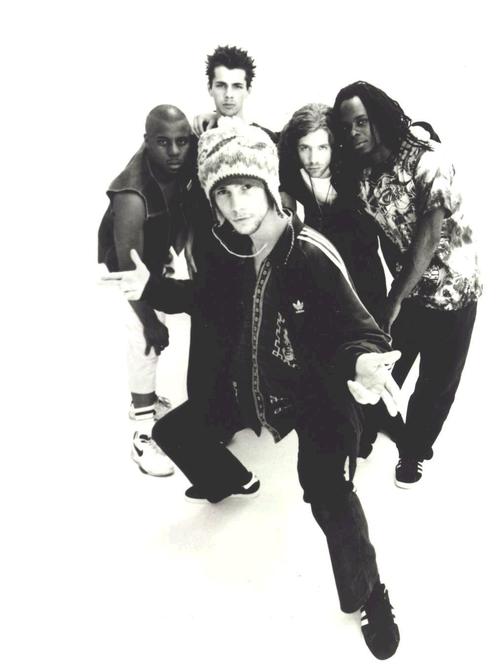
Deeper Underground, by Jamiroquai (their 1st and only #1)

1 week, from 19th – 26th July 1998

‘Deeper Underground’ isn’t the first record you’d think of as Jamiroquai’s only #1, and it’s not a record I’ve heard much over the years. So two things strike me as I listen to it now. First, that it’s obviously from a movie soundtrack, as no normal pop single has this much time to open, with strings and ominous chords, never mind a monster’s roar. It was from the big 1998 summer blockbuster ‘Godzilla’, which was fairly successful at the box office but was panned by critics.

The second thing I notice is how heavy this record is. By the time I was a teenager, Jamiroquai were a byword for naffness, mainly brought about by lead singer Jay Kay’s collection of silly hats. Many of their other big hits veered towards a disco cheeriness, but ‘Deeper Underground’ has an edge to it, underpinned by a scuzzy funk riff. They had been acid funk pioneers in the early nineties, and this is definitely not their most commercial moment. When the lyrics finally arrive, Jay Kay almost freestyles over the aggressive beat.

As a soundtrack hit, the lyrics have to relate to the movie they feature in. But Jamiroquai manage to twist lyrics about going deeper underground to escape a massive, city-smashing monster, into what seems like a song about paranoia: Something’s come to rock me, And I can’t keep my head, I get nervous in the New York City streets, Where my legacy treads… The video takes a more literal approach to the subject matter, with Jay Kay dancing his way around death as Godzilla, and any number of crashing taxis and helicopters, destroy a cinema, all with very dated CGI.

I had thought that this record sampled Led Zeppelin, and although the riff is cool it’s not quite at Led Zep standards. This is because I was confusing it with the other big hit from the ‘Godzilla’ soundtrack, Puff Daddy and Jimmy Page’s ‘Come With Me’, which is based around ‘Kashmir’. That one made #2 around the same time (and is Page’s only Top 10 hit in the UK, either with or without Led Zeppelin).

As ‘Deeper Underground’ descends into even nastier, funkier territory, the synths grow harsher and harsher until it sounds a bit like I imagine electro-shock therapy would. It’s cool. I like it. I’m glad that this is Jamiroquai’s only #1, over the much more mum-friendly ‘Canned Heat’ or ‘Cosmic Dancer’. Though their greatest moment remains ‘Virtual Insanity’, which was one of my favourite tracks on ‘Now 37’ back, as they say, in the day.

In my intro I called Jamiroquai a ‘nineties mainstay’, but that wouldn’t seem to do them justice. I’ve just discovered that they were the 3rd best-selling UK act of the decade, behind Oasis and The Spice Girls. Which is very impressive for a band that many write off as one guy and some hats (though as much as I’ve enjoyed writing this review I was probably hasty in naming them alongside Dusty and Status Quo…) ‘Deeper Underground’ remains forgotten amongst their back-catalogue it seems, as it is nowhere to be seen on their Spotify popular tracks. On the same platform’s ‘This Is Jamiroquai’ playlist, it is buried away as track twenty-eight.
675. ‘Deeply Dippy’, by Right Said Fred

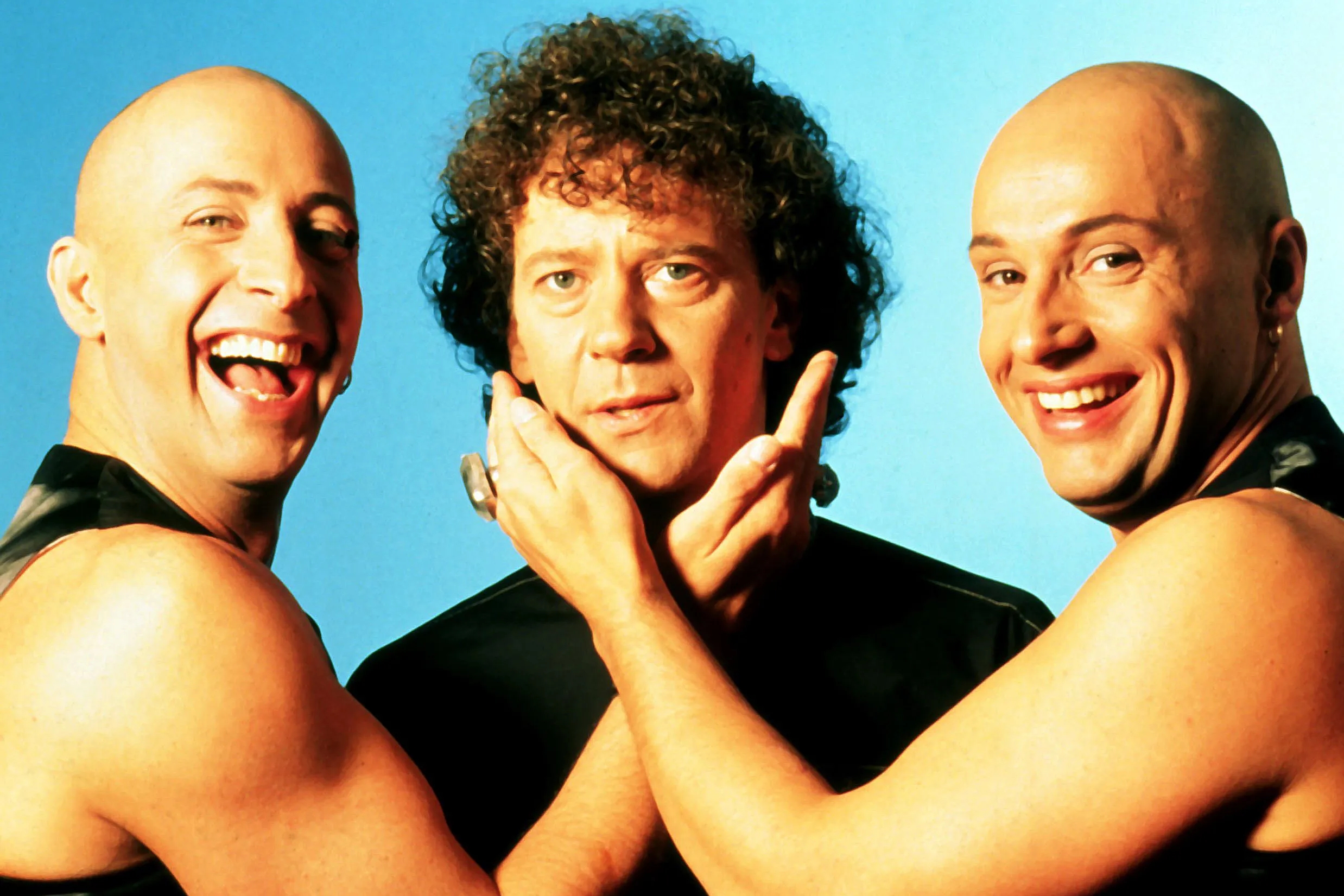
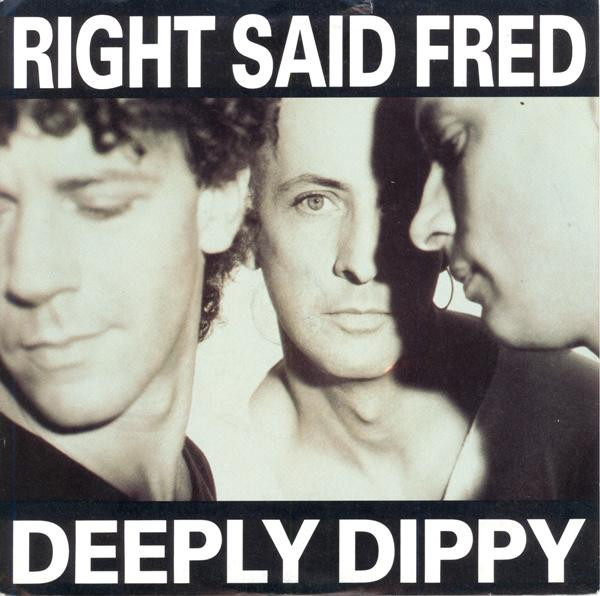
I play the intro to our next number one, and am convinced that I am actually listening to The Proclaimers’ ‘I’m Gonna Be (500 Miles)’. Listen to the two of them back to back, and you won’t be able to un-hear it. But this is not the brothers Reid (their time will eventually come), but the brothers Fairbrass…

Deeply Dippy, by Right Said Fred (their 1st and only #1)

3 weeks, from 12th April – 3rd May 1992

It’s also slightly discombobulating to hear Right Said Fred singing a song that isn’t ‘I’m Too Sexy’, their monster hit from a few months before, which had spent six weeks at #2, prevented from featuring on this blog by the dreaded Bryan Adams. But yes, they had other songs. One of which did make number one. And, in all honesty, it might be the better tune.

I’m finding it hard to write about this record without using horrible words like ‘jaunty’, or ‘ditty’. For this is undeniably a jaunty ditty. From the alliterative title, to the springy acoustic rhythm, to the brass section that comes blasting in mid-way through. And then there’s the nonsense lyrics: Deeply dippy ‘bout the curves you got…

It’s actually just as sex-obsessed as ‘I’m Too Sexy’ – love as a ‘contact sport’ (let the neighbours talk) – but also has a swing at being romantic. Oh my love, Let’s set sail for seas of passion… It’s a song, like Vic Reeve’s ‘Dizzy’ not so long before, that just about manages the balance of being a novelty, and remaining listenable. In fact, if you were in the right mood, the moment where the horns come in could be downright jubilant.

It’s also an odd number one for this moment in time, wedged in among the dance tracks and ballads, one that might have been a hit in any era, that is as likely to get your granny dancing as it is your five-year-old nephew. But there’s little doubt that this wouldn’t have been anywhere near as big a hit without ‘I’m Too Sexy’ laying the groundwork. We can add Right Said Fred to acts like Don McLean, Alvin Stardust, and a-Ha, whose ‘big’ hit isn’t actually their biggest.

Right Said Fred were Richard and Fred Fairbrass, plus guitarist Rob Manzoli, and were named not for that Fred, but after a Bernard Cribbins song from 1962. Richard had already had a fifteen year career as a bassist for Boy George, Mick Jagger and David Bowie, while Fred had played guitar for Bob Dylan. In the late seventies, the pair toured with Joy Division. So, quite the musical chops for a duo often written off as one-hit wonders.

‘Deeply Dippy’ was the third of four Top 10 hits for Right Said Fred, but they continue to record. Fairbrass the elder has had quite the career since his chart-topping days, hosting ‘GayTime TV’ (the first BBC programme to be aimed at an LGBT audience), being targeted and beaten up by Russian ultra-nationalists, and in later years turning into something of a Twitter conspiracy theorist, as well as most recently accusing Beyonce of ripping him off. Deeply dippy, indeed.

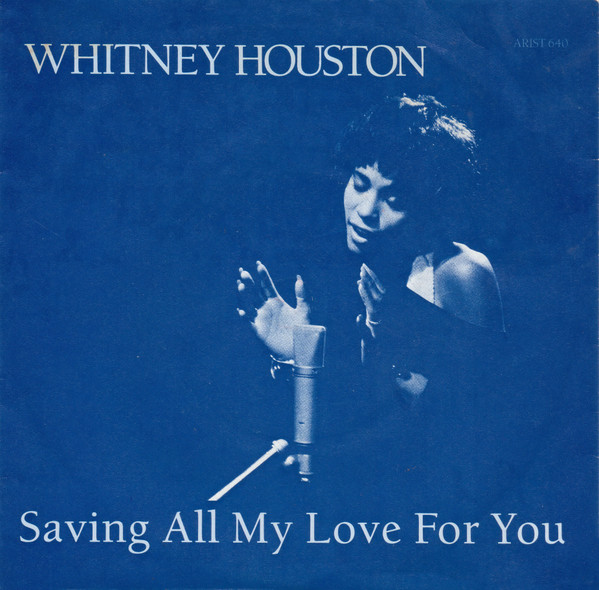
561. ‘Saving All My Love for You’, by Whitney Houston

The second last chart-topper of 1985 (an eclectic year of decidedly mixed chart-topping vintage) introduces one of the most famous, most powerful voices in pop history.

Saving All My Love for You, by Whitney Houston (her 1st of four #1s)

2 weeks, from 8th – 22nd December 1985

And it’s a pretty low-key entry for such a mighty voice. The intro is very of-its-time, soft, soft soul… Elevator-soul, I’m going to call it from now on, even though playing muzak in lifts hasn’t been a thing for many years. Houston’s voice also comes in very softly. A few stolen moments, Is all that we share…

Following on from Wham’s ode to spontaneous and anonymous (and possibly gay) sex, this record is keeping the illicit theme going. You’ve got your family, And they need you there… Whitney, the homewrecker, is having an affair with a married man! They’re making love the whole night through, while his children ask why daddy’s not home for dinner… Whitney’s mother, Cissy, was against her daughter recording such an immoral song, but to no avail.

Personally, I like the fact that she’s completely unrepentant. Her friends warn her off, she pines away lonely at home… But, she sings, no other man’s gonna do…. So I’m saving all my love for you… She doesn’t come across as very sorry about it at all. The way she slams her fist down on lines like For tonight, Is the night…! In the video, she’s having a great time at a club with her lover, as the wife serves side-eye from the balcony. (In the end, though, the couple re-unite while Whitney walks home alone. You wonder if this scene was thrown in last-minute, by a nervous record label…)

It’s very classy, and well-produced. I’m even enjoying the lounge-bar saxophone that’s crooning away in the background. I could complain about the slick-as-a-seal’s-arse eighties production, but by this point I’d just be shouting into a typhoon. It’s December 1985, things are glossy, and they’ll be staying that way for some time to come. It does feel like a slightly understated song to have been the breakthrough hit for a voice such as Houston’s, but there are moments where she shows what she’s capable of. The that’s just an old fantasy… line, for example, as well as some impressively long notes at the end of the choruses.

I may well be pining for this understated version of Whitney come her final, monster #1 (you know the one). Here she was just twenty-two, with a massively successful career ahead of her. It’s elegant, and very well sung: a grower not a show-er. In the US, ‘Saving All My Love for You’ was the first of seven chart-toppers in a row for her. While never quite as successful in Britain, she would be a big chart presence for the next twenty years. More to come very soon, then, from Miss Houston …

Advertisements

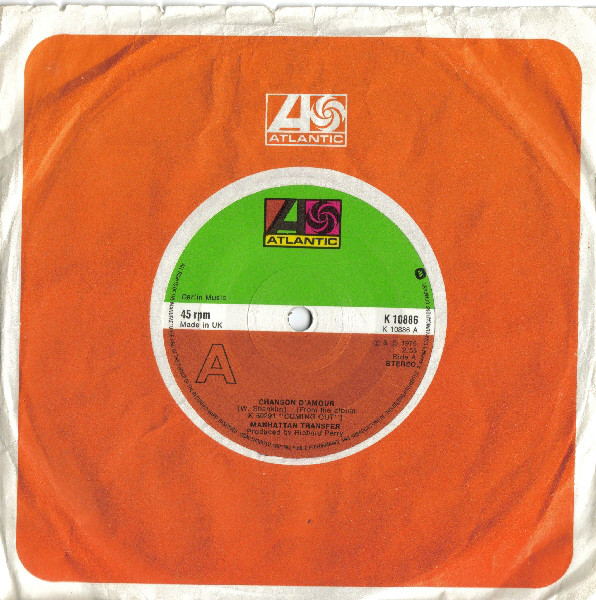
402. ‘Chanson d’Amour’, by The Manhattan Transfer

At the end of my last post, I claimed that I had never heard this song before. I also offered a prayer that it might break our recent run of bland soft-rock…

Chanson d’Amour, by The Manhattan Transfer (their 1st and only #1)

3 weeks, from 6th – 27th March 1977

Well, I can state that I have heard this song before – somewhere, sometime long forgotten. Or, maybe it’s just that this sounds like a standard, a melody that we all have running through us. As for whether it ups the tempo…? It does, a bit.

I like it, though; for it immediately has a boozy, saucy, pub singalong feel to it. A rolling piano, accordions… Chanson d’amour, Play encore… I also like it because, while half the lyrics are French, they are at my level of French – i.e. very basic high school. Chanson d’amour, Je t’adore… And then there’s an inane refrain: rah-ta-rah-ta-dah…

Actually, so bad is the French that I feel qualified to pick them up on it. The pronunciation is well off, coming out more like Chanson d’amooor, Joo t’adooor… Safe to say there were no actual French people involved in the making of this record. But it’s fun. It kind of sounds like Edith Piaf having a singalong, half-cut on Pernod, down an East End boozer.

There’s another saxophone solo. Make that two in a row and throw in a comment about London buses. (This one grates less than ‘When I Need You’, but I still would have preferred them to stick to the piano, or the accordion.) Then we roll to a gentle finish, and I’m left to wonder what on earth this record was doing at the top of the charts in early 1977. It’s completely pointless, but catchy and – praise be! – fun.

Manhattan Transfer were a band from New York, around since the late sixties. They did swing, jazz, a cappella stuff and largely stayed away from the charts until this hit smashed out of nowhere. They are still a going concern, still with three long-term members. ‘Chanson d’Amour’, meanwhile, was first written and recorded in the late fifties, by Art and Dotty Todd. Going off on a complete tangent… the Todd’s had also recorded the original version of another UK #1 single: ‘Broken Wings’, which was one of the very earliest chart-topping singles back in 1953, for The Stargazers. (Never thought I’d be mentioning them again!)

Viewed in this way, then, the record makes more sense. We can slot it in amongst the rock ‘n’ roll revival records – some covers, some originals – that have been peppering the charts for a few years now (Showaddywaddy, the Rubettes, etc.) Meanwhile, perhaps the definitive version of ‘Chanson d’Amour’ came from the cast of ‘Are You Being Served’, in the show’s final episode. Come to think of it, that’s probably how I knew this song… From post-Sunday lunch re-runs as a child.

249. ‘What a Wonderful World’ / ‘Cabaret’, by Louis Armstrong

*Insert now standard comment about 1968 being an eclectic year* The eclecticism continues with the oldest chart-topper yet, a jazz trumpeter who was a veteran even before the charts, before rock ‘n’ roll, before popular music as we know it. Ladies and Gentlemen, Mr. Louis Armstrong.

Louis Armstrong1968

What a Wonderful World / Cabaret, by Louis Armstrong (his 1st and only #1)

4 weeks, from 24th April – 22nd May 1968

‘What a Wonderful World’ is the sort of song for which the word ‘timeless’ was invented. It hit #1 in 1968, but it could have similarly done so in 1948, or ’88, or in 2168. It will hit the top spot again, in a different version, in 2007. It’s a song that you all know, one that doesn’t need me to dissect and examine it…

But still, that’s kind of why I’m doing this. It drifts in on a lullaby’s melody, before Louis begins to sing, listing all the things that he sees – trees of green, red roses too – which remind him of just how wonderful the world is. The colours of the rainbow, So pretty in the sky… There’s a tremble in his voice at the end of every line, either from age or from emotion, that is beautiful.

You could be cynical, and remind yourself of all the things he must not be seeing – the litter on the street, the homeless person sleeping on the bench – but no. What would that achieve? Despite its simplicity and childlike optimism, this is a song whose opening chords cannot fail to make you go all warm inside. It is pop music as hymn, the closest comparison in terms of previous number ones would be Frankie Laine’s ‘I Believe’. It’s an old man looking back on life with the weight of experience… I especially love the I hear babies crying, I watch them grow, They’ll learn much more, Than I’ll ever know… line. The fact that Armstrong died just three years after recording this record, and was already in declining health, makes it even more touching.

He ends with an Oh yes…, which lingers as you consider that the babies of 1968 are now well into middle age, while the babies of 2020 are being born into a world that may not exist for much longer… But hey-ho. Before we depress ourselves completely, let’s flip the disc and enjoy the other side of this double-‘A’.

Louis-Armstrong-What-A-Wonderful-World-7-HMV

For all the loveliness of ‘What a Wonderful World’, it is nothing like the music that Satchmo had spent the previous forty years recording. His cover of ‘Cabaret’, though, is a lot more jazzy. His voice, the exact same voice which was a second ago trembling with emotion, now flirts and tempts: Come taste the wine, Come hear that band, Yes it’s time for celebratin’, Right this way your table’s waitin’…

It is, of course, the theme from the musical of the same name, the one made much more famous by Liza Minelli. Life is a cabaret, Old chum… So come to the cabaret… (Though it omits the verses about Elsie the whore/corpse…) It makes for the perfect double-‘A’ disc, the yin to ‘Wonderful World’s yang. And Armstrong’s famous trumpet gets an outing here, as it simply had to at some point on his sole chart-topper.

It’s always good to have some jazz at #1, and I make this the 3rd jazz-based chart-topper of the year, after ‘The Ballad of Bonnie and Clyde’ and ‘Cinderella Rockefella’. Though, honestly, it feels a bit wrong to mention those discs in the same breath as this. Not that it’s Louis Armstrong’s most influential moment or anything, but still… Perhaps I’m biased. The first CD I ever bought, aged seven or so, was a discount box-set of Satchmo’s Greatest Hits, from the thirties through to the fifties. Completely true – I’m not making that up to sound precocious (while The Spice Girls would soon come along to ruin my taste in music). I even went through a wanting-to-be-a-saxophonist phase, though my parents – probably quite sensibly – never shelled out and bought me one.

Neither ‘What a Wonderful World’ or ‘Cabaret’ featured on those CDs, because come the sixties Armstrong had changed record labels and become a pop star, scoring #1s on either side of the Atlantic. His bio is too long and storied to go into in any sort of detail. A jazz icon, he was one of the first black artists to enter the white public’s consciousness. He released his first single in 1923 (!), was born in 1901 – as close as we’ll come to a chart-topper being born in the nineteenth century – and was the oldest ever chart-topper, at sixty-seven, until Tom Jones popped up again and spoiled it a few years ago. The term ‘legend’ is overused, but we’ll make an exception here, for the one and only Louis Armstrong. Take it away, Satch…

https://www.youtube.com/watch?v=_82OxM5I5iA

All the #1 singles so far in one place:

245. ‘Cinderella Rockefella’, by Esther & Abi Ofarim

Why, isn’t 1968 just turning into the most eclectic year? Ballads about infamous crime duos, folk-pop about Eskimos… and now this.

OFARIM2

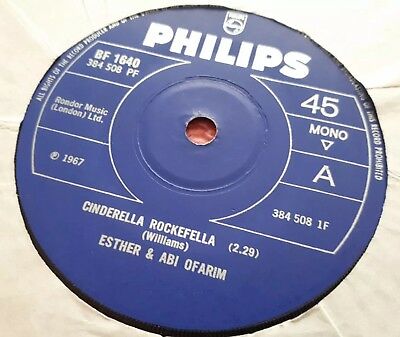
Cinderella Rockefella, by Esther & Abi Ofarim (their 1st and only #1)

3 weeks, from 28th February – 20th March 1968

We start off with a trad-jazz vibe – woozy pianos, banjos and illicit cocktails – and I’m enjoying it because I’m genetically programmed to like this kind of music hall silliness. But then the yodelling starts. Yodelladayodalladay… Pure Alpine throat-bending, which turns out to actually be saying You’re the lady, You’re the lady that I love… I’m the lady, The lady whooooo…

But before the Frank Ifield flashbacks really hit, thankfully they start singing more normally. A man and a woman. Woman: I love your touch… Man: Thank you so much… The lyrics aren’t up to a great deal (Man: I love your chin… Woman: Say it again…), but at least they aren’t being yodelled.

The man, Abi, and the woman, Esther are wooing one another, in a speakeasy. Musically, this could be from the soundtrack to ‘Chicago’ – minus the yodelling – and it means that half of this year’s #1 singles so far have had a retro-jazz vibe to them. Though, for my money ‘The Ballad of Bonnie and Clyde’ was far superior to this. It’s a song that doesn’t really go anywhere, and one that raises plenty of questions… What? Who? Why?

Esther-Abi-Ofarim-Cinderella-Rockefella-Uk

That ‘What?’ first. Rockefeller is the New York magnate responsible for The Rockefeller Centre. Cinderella is, well, Cinderella. Cinderella is beautiful and JD Rockefeller was rich ergo = the perfect couple. ‘Cinderella Rockefeller’, I know, is a school musical staple – though one I’ve neither been involved in nor seen. Any song list from the musical that I can find online does not list ‘Cinderella Rockefella’ as one of its songs. And the Wiki page for the song doesn’t mention the musical…

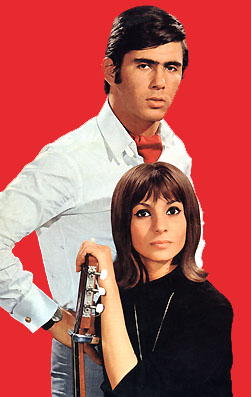
On to the ‘Who?’ Esther and Abi Ofarim were an Israeli husband and wife duo – the one and only Israeli act to top the British charts. Abi sings low; Esther sings high. She’s very shrill. The song had been performed on various US variety shows before they picked it up.

And the ‘Why?’ I really don’t know. Novelty hits are novelty hits and often come out of nowhere. Maybe you had to have been there, in the spring of ’68. Maybe people were getting sick of all the high-brow, forward facing, boundary pushing pop of the recent years and were ready to embrace some cheesy tosh.

I can’t say I hate it. It’s kind of fun, and I do love the musical arrangement. But… the yodelling. If, before starting this blog, someone had asked me how many #1 hits would feature yodelling I would have answered with a flat zero. But no. Slim Whitman, old Frank and now this. It’s a record that’s 20% intriguing, and 80% irritating. One things for sure, in my next recap it’s going to be difficult to choose the weirdest chart-topper from this most recent bunch…

Listen to every #1 hit so far:

242. ‘The Ballad of Bonnie and Clyde’, by Georgie Fame

Happy New Year! We step into 20… I mean 1968, but if you were expecting the penultimate year of the sixties to bring daring news sounds to the top of the UK charts… then keep waiting. The first #1 of the year is a step back in time. To the saloon bars of 1920s America…

p01g89hr

The Ballad of Bonnie and Clyde, by Georgie Fame (his 3rd and final #1)

1 week, from 24th – 31st January 1968

We’ve got banjos, trombones, honky-tonk pianos, an intro with very strong hints of Fats Domino… To be honest, I love it from the get-go. It’s fun, it’s kinda dumb… It’s a history lessons at number one!

Bonnie and Clyde, Were pretty lookin’ people, But I can tell you people, They were the devil’s children… Georgie Fame’s back for one final moment of glory, but he’s traded the blue-eyed soul for some trad-jazz. He lists the famous duo’s crimes – robbing stores, stealing cars, before they made the graduation into the banking business – and sounds like he’s having a load of fun in doing so.

It’s a chart-topping record with a hefty body count – the bloodiest #1 since ‘Mack the Knife’. Sample line: They left him lyin’ in a pool of blood, And laughed about it all the way home… And it’s a chart-topping record with sound-effects! Getaway cars, sirens and, best of all, a round of carbines as the heroes of the tale meet their end. Yep, Fame sticks to the facts – no riding off into the sunset for Bonnie and Clyde here. And very few #1 singles will ever feature lines like: Actin’ upon, Reliable information, A federal deputation laid a deadly ambush…

It’s odd, isn’t it? A chart-topping single that so glorifies two serial killers. There’s a glamour to Bonnie and Clyde, though, isn’t there? The romance, the fast cars, the cigars… You can’t imagine ‘The Ballad of Harold Shipman’ being such a smash… The famous movie starring Warren Beatty and Faye Dunaway had been a hit the previous year. ‘The Ballad…’ hadn’t featured in the film, but Fame had been inspired to write the song after seeing it.

Georgie+Fame+The+Ballad+Of+Bonnie+And+Clyde-652822

The record, fittingly, ends on a melodramatic note. A long drawn out coda, in which the duo draw their last breath. And finally together, They died… A few years back, any mention of death in a hit single seemed guaranteed to cause controversy. The Everly Brothers, Ricky Valance and co. all got airplay bans for their ‘death-discs’. Society has clearly moved on during the sixties, in more ways than one. (Though this was apparently censored in the US thanks to the machine-gun sound effects.)

I like it. A completely random interlude to the swinging sixties, the sort of bizarre post-Christmas number one that the charts can sometimes throw up as they wait for the first big hits of the year. Though perhaps we should class Georgie Fame as a ‘big’ artist. This is, after all, his third #1. The same total as The Kinks, The Searchers, Sandie Shaw and other sixties royalty. Two more than Dusty! Three more than The Who and Dylan! Somehow, though, he’s kind of slipped under the radar, with his soulful, bluesy, Latin-tinged hits. I do love the fact that he never had a top ten hit that didn’t make #1. All or nothing for Mr. Fame. He’s now seventy-six, and still performs from time to time. The pop charts of the 1960s were a better place for his sporadic appearances at the top.

1968 is off with a bang, then. Literally, what with the mass shooting that ends this record. I made a point in the last post about 1967 having no one-week chart-toppers, and now the first one of this year has lasted only seven days. Here’s to what’s looking like an eclectic year! Onwards…

https://www.youtube.com/watch?v=r3yu94Fz1kw

Listen to the first fourteen (and a bit) years’ of #1 singles with my handy playlist:

185. ‘Go Now!’, by The Moody Blues

Hot on the heels of Georgie Fame & The Blue Flames’ snazzy ‘Yeh Yeh’, an equally quirky record pops up for a week at the top of the UK charts.

moodycircle

Go Now!, by The Moody Blues (their 1st and only #1)

1 week, from 28th January – 4th February 1965

We’ve already sa-id… I like records that just get on with it – no drawn out intro, no nothing – and this is one such disc. Goodbye… Voice, then piano. A thumpingly, clumpingly unsubtle piano. I mean this with no disrespect, but the piano here sounds like it’s being played by an elephant. I’d bet they overlaid several tracks one on top of the other to get the rich, heavy sound. I love it. Since you gotta go, Oh you better go now…!

It’s a song about a break up. The singer doesn’t want to break up, but if it has to be done then he’d rather his S.O. just got on with it. Cos darlin, darlin’, Can’t you see I want you stay, yeah-ah-yeah-ah… The singer – Denny Laine – has a voice every bit as soulful as Georgie Fame before him, and he holds nothing back. The way he sings/spits out lines like I don’t want you to tell me just what you intend to do now…, for example, is great, and deceptively hard to recreate.

The production too is thick and soulful, with hints of Phil Spector’s Wall of Sound and the baroque minor keys that were about to become a big thing in sixties pop. (It’s actually a cover of an American R&B hit from earlier in the decade.) It’s also a very rough-and-ready recording – not perfect – with lots of crackly patches, as if the tape were struggling to contain the volume and the power of this band. I love the piano solo, one that rolls and cascades – a cross between a ship being tossed on stormy seas and Dante’s descent into hell. The ending is also a lot of fun, with a huge finish – the whole band appearing to shout out the title of the song before a very quick, slightly wonky fade.

‘Go Now!’ is another grown-up pop record – make that two in a row – and one that perfectly encapsulates the way pop music is now fragmenting and moving away from the Beat sound that has dominated for most of the past two years. New year, new sound etc. etc. It’s also a record that I’ve loved for many years – The Moody Blues being a staple of long family car journeys as a child. But, here’s the ironic bit… I really, really can’t stand any of The Moody Blues’ other songs…

725017250110_1

You see, after this – their one and only chart-topper – they started getting all experimental. Denny Laine left the band and a bloke called Justin Hayward came in, they ditched the pop/R&B and they went… (shudder)… progressive. Now, I love rock music. To me ‘rock’ is the foundation upon which all great music is made. Stick ‘garage’, or ‘hard’, or ‘glam’, or ‘electronic’, or ‘punk’, or ‘surf’, or even ‘yacht’, in front of ‘rock’, and I’m usually in. ‘Prog-rock’, though? I run a mile. Jethro Tull, Marillion, Pink Floyd, Yes!… No, no, no! Lock me in and call it ‘Room 101’. You can be experimental, and forward-thinking, as avant-garde as you like… but ‘Prog’? The minute you call yourself prog then your head’s gone too far up your arse. And The Moody Blues are the worst culprits for me because A) They started it and B) I had to sit through their ‘Best Of’ on many a long car journey, aged eleven.

It would start off well enough. Track 1 was ‘Go Now!’. Three minutes of pop bliss. But then there were nineteen other songs to sit through before it was over – none of which sounded anything like ‘Go Now!’. And prog-rock songs are never, ever as short as they should be… ‘Give me ABBA’, I would cry, ‘The Eagles or The Stones. Even Fleetwood Mac if you must. Anything but this.’ But my dad would stand firm, and we’d listen to the bitter end… I have especially painful memories of ‘Nights in White Satin’… And ‘Tuesday Afternoon‘…

Having studied The Moody Blues history ahead of this post, it seems that the blame can be laid squarely at this Justin Hayward fellow’s feet. Once he was in and Laine was out (Laine later joined Wings), ‘Go Now!’ seems to have been written out of the band’s history. They rarely performed it live, and it didn’t appear on any of their ‘Greatest Hits’ until the mid-1990s. (Which was precisely when my dad bought said CD for the car… Just think – there might easily have been no good songs on that album…)

Yes, let’s end this post on a positive note. Nineteen of the twenty tracks on The Moody Blues ‘Greatest Hits’ album may well be terrible songs. But the one good song on that album also happens to be their only #1 single. We won’t hear from them again on this countdown! We can just pretend that they were one-hit wonders! Pretend that the glorious ‘Go Now!’ was the only piece of music that the band ever offered to the world. Isn’t that a comforting thought…

184. ‘Yeh Yeh’, by Georgie Fame & The Blue Flames

No sooner have I mentioned that 1965 might be a more eclectic year in terms of its chart-topping singles, when along comes one Georgie Fame with a swaying slice of Latin soul.

maxresdefault

Yeh Yeh, by Georgie Fame (his 1st of three #1s) & The Blue Flames (their 1st of two #1s)

2 weeks, from 14th – 28th January 1965

Wham and then Bam. In the space of three #1s we’ve gone BluesBeat rock-Latin. I might even go so far as to describe this as a Bossanova, if I was at all certain what exactly a ‘Bossanova’ was… Whatever it is, it’s not a sound that we’ve heard very often at the top of the UK charts. After months of Merseybeat things are really starting to splinter in different directions.

The song is about a guy who, after finishing work every evening, calls up his baby and asks her what she wants to do… I mention movies, But she don’t seem to dig that, And then she asks me, Why don’t I come to her flat…Yeh Yeh’ is his response. The words are spat out at a rapid pace, half-rapped (this might be the hardest number one yet in terms of making out the lyrics). But it still becomes clear just what his baby’s game is. She suggests supper and listening to some records, and soon the kissing starts: And when she kisses, I feel the fire get hot, She never misses, She gives it all that she’s got…

I love the break in the middle, when one long tongue twister line – We’ll play a melody and turn the lights down low so that none can see… – ascends to a natty drum fill and lots of We gotta do that’s! and Yeh Yehs! Then there’s a full-blown sax solo for all you hip cats out there.

Georgie-Fame-Blue-Flames-Yeh-Yeh

It’s a cool record, there’s no doubting that. I can imagine it as the soundtrack to a lot of groovy, hipster parties during the winter of ’64 – ’65. And Georgie Fame – before googling him I pictured him in a turtle neck and a pork pie hat, and after googling him I was slightly disappointed to find that he favoured suits and sharp ties. (He did like a cigarette, dangling all loose and louche, from the corner of his mouth, however.) Plus, finding out that he was born Clive Powell, in Lancashire, rather than Georgie Fame, New York City, took the shine off even further.

Still, despite being Clive from Lancashire, Fame has a real soulful voice. He goes fast then slow, loud then quiet, and – while the band are really tight – his voice is the most impressive instrument in the record. The way it blends together with the organ and the sax to draw out the final note is particularly cool. The Blue Flames had been the backing band for British rock ‘n’ roller Billy Fury, and Georgie Fame their piano player, but when they parted ways Clive AKA Georgie Fame became their leader and they went off down the path of R&B-slash-soul.

‘Yeh Yeh’ is nice, and funky; but it’s a hard record to classify. The best way I can describe is that it would sit perfectly next to ‘Green Onions’ by Booker T. & The MGs on a compilation called ‘Sexy Sixties’, or something. Plus, both Fame and The Flames will pop up sporadically as the sixties progress, so we’ll save any further bios for another day. In the meantime, sit back, grab a glass, and enjoy the sound of the swinging, sexy sixties floating through your earholes. Yeh Yeh!

Never miss a number one single with this playlist…

‘Comes A-Long A-Love’, by Kay Starr – The UK Number 1s Blog Anniversary Special

This week marks the 1st anniversary of The UK Number 1s Blog (** Trumpet Fanfare**)! In the past year we’ve covered the period from Nov. ’52 to Nov’ 61, with 129 chart-topping songs featured. We’ve survived pre-rock, rode the rock ‘n’ roll revolution, and are now well on our way towards the swinging sixties… Thanks to everyone who has read, followed, commented and enjoyed.

To celebrate this milestone, I’m going to take a short break from the usual countdown to repost seven songs that I have really enjoyed discovering over the past year. These aren’t necessarily the best songs to have topped the charts – there’ll be no Buddy Holly, Johnnie Ray, Connie Francis, Elvis or The Everly Brothers (follow the links if you want to read about them) – as I’ve been listening to, and loving, those artists for years. This week will be all about the forgotten gems, the hits I’d never heard before, the songs that have slipped through the cracks…

First up: only the 3rd song ever to top the UK charts, in January 1953, and the song that showed me that the pre-rock years weren’t just going to be a procession of melodramatic ballads and perfectly-pronounced pop. Miss Kay Starr, take it away…

R-3253615-1392841568-2094.jpeg

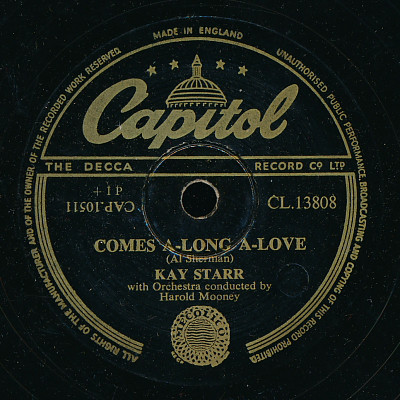
Comes A-Long A-Love, by Kay Starr (her 1st of two #1s)

1 week, from 23rd to 30th January 1953

Snazzy! And jazzy! I really thought – and more fool me – that these pre-Rock ‘n’ Roll hits would be dull, twee, chaste… one step up the danceability chart from hymns, basically. How wrong I was. It wasn’t all bluebirds over the white cliffs of Dover.

Though bluebirds do feature in this song, they do so as a symbol of being in love and suddenly becoming aware of the world around you. Birds! Flowers! The sun! Comes A-Long A-Love suddenly though you never sang you’re always singing… Comes A-Long A-Love suddenly chimes you never heard begin a-ringing… The lyrical message being that falling in love will make you a better, livelier person.

Kay Starr’s voice is in complete contrast to the Jo Stafford record that went before. It’s husky, then sing-songy, she pauses where you least expect it and then rushes through tongue twister lines phrases like petty little things no longer phase you, which I’ll bet you can’t say five times fast. You might even say she’s flirting with the listener… And, yes, a quick search shows Ms. Starr was quite the little minx (that’s what they called them in those days). Those eyebrows! What didn’t they suggest! This song could be seen as a challenge – she’s daring you not to fall in love with her.

kay-starr-cropped

But again, it’s another song that paints love in a positive light. Three number ones in and nobody’s had their heart broken… Even lonely old Al Martino was hopeful that his lover would say ‘yes’. That’s something I’m going to look out for: the first ever reference to heartbreak in a UK number one hit. And, again, Kay Starr enunciates so damn well. This isn’t an easy song to sing, but she makes it sound like she’s ad-libbing her way through it. I’ve got to hand it to these old-timers, before the days of auto-tune, because they really could sing. Gran was right all along…

Some bits do jar, slightly. Starr uses ‘Mister’, and ‘Brother’, in a way that you wouldn’t these days. And the aforementioned reference to being in love and seeing bluebirds is a bit of a Disneyfied image. It must have been easy for songwriters, at the birth of modern pop music – love is great, you see bluebirds, do-bee-do – before people discovered cynicism. So far, though, all three number ones have been recorded by American artists. Perhaps that explains the saccharine sentiments! As everyone knows, Americans are sickeningly positive. How brilliant would it be, then, if the first UK recorded #1 turned out to be a piece of proto-Morrissey miserabilism…

One final thing I’ve noticed, while looking up these first three UK chart toppers, is how long they all lived. Jo Stafford died in 2008, aged ninety. Al Martino died in 2009 at eighty-two. Kay Starr died in November 2016, having reached a grand old innings of ninety-four. That means two of them outlived Michael Jackson, who wouldn’t have his first number one hit for another twenty-eight years. They were made of sterner stuff in those days, mind.