135. ‘Nut Rocker’, by B. Bumble & The Stingers

Now this is how you make an instrumental rock ‘n’ roll record! At the risk of sounding like a complete pleb, this latest chart-topper is ten-times better than its highly-regarded (but pretty dull) predecessor, The Shadows’ ‘Wonderful Land’.
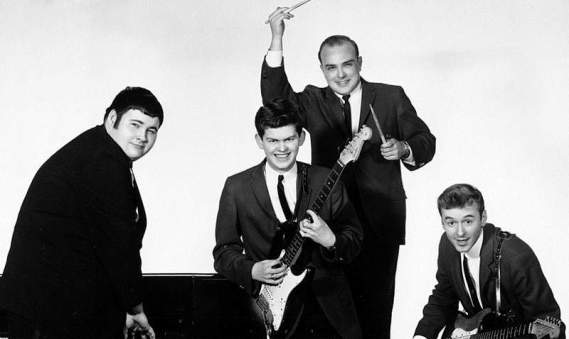
bbumblestingers00

Nut Rocker, by B. Bumble & The Stingers (their 1st and only #1)

1 week, from 17th – 24th May 1962

Imagine a Buzzfeed listicle entitled ‘23 Things You Never Knew You Needed in Your Life, But Totally Do’. Top-spot on that list would surely go to “the march from The Nutcracker done in a rollicking, boogie-woogie-slash-rock ‘n’ roll style”. And as it so happens – that is exactly what ‘Nut Rocker’, by B. Bumble & The Stingers, is!

This is a bizarre, wacky, completely unexpected record. Coming as it does after pretty sedate efforts from Cliff, The Shadows and Elvis, it sounds like a drunken uncle bundling his way onto the dance-floor at a wedding. And I mean that as a good thing. This is a superb record. I might even go as far as saying that it’s life-affirming. This is why humans were put on the planet – to make songs such as this. This needs to swap places with ‘Wonderful Land’ as the record that spent eight weeks atop the charts.

I don’t actually have much to write about the song itself – I tried to take notes, but ended up just smiling and tapping my feet. Plus, it races to an end in under two minutes. But those two minutes include the following: a stupidly dramatic intro, piano riffs, superb drum fills, and a natty little guitar solo. It is undeniably the march from ‘The Nutcracker’, but it’s so much more than just the march from ‘The Nutcracker’. Listen to that here, then listen to ‘Nut Rocker’ through the link below. It’s pretty special, actually, how they’ve stayed true to the original piece of classical music but added everything you need for a rock ‘n’ roll song. It is a novelty, it is silly; but I wouldn’t call it a piss-take. It’s clearly done with love.

B._BUMBLE_&_THE_STINGERS_NUT+ROCKER-570931

For perhaps the first time in this countdown, I can remember exactly where I was when I first heard this song. I was in the passenger seat of my mum’s car, aged fourteen or so, on a Saturday afternoon in May. We were listening to ‘Pick of the Pops’, a radio show that replays the charts from any given year. That week it was the chart from 1962, and we had been guessing who might have been at the top of the charts – Cliff? Elvis? Roy Orbison? It was a bit too early for The Beatles… When B. Bumble & The Stingers were announced as the #1 we… well, we burst out laughing. In a good way. It’s that kind of record.

The Stingers were very much a flash-in-the-pan kind of act. They had had success with a version of ‘Flight of the Bumblebee’ before ‘Nut Rocker’, and they followed their sole chart-topper up with a version of the William Tell Overture ,‘Apple Knocker’, and ‘Dawn Cracker’ – based on Greig’s ‘Morning Mood’ (they had clearly found their niche). All were done in the same boogie-woogie style, but having had a listen I can confirm that none come close to the genius of this track. ‘Nut Rocker’ really was a case of capturing lightning.

Just in case you somehow remain unconvinced about how good, yet slightly mental, this record is, here are a couple of things to chew on before we finish. One – this song was almost banned by the BBC, as they had a policy of not playing records which parodied classical music. How dare these teddy boy upstarts lampoon proper music! (In the end they let it pass, as even the stuffed-suits in Broadcasting House saw ‘Nut Rocker’ for the heartfelt homage that it clearly was.) Two – and if this doesn’t convince then you are beyond redemption – it means that Pyotr Ilyich Tchaikovsky has a writing-credit on one of the silliest chart-topping records in history. Roll over Beethoven, indeed…
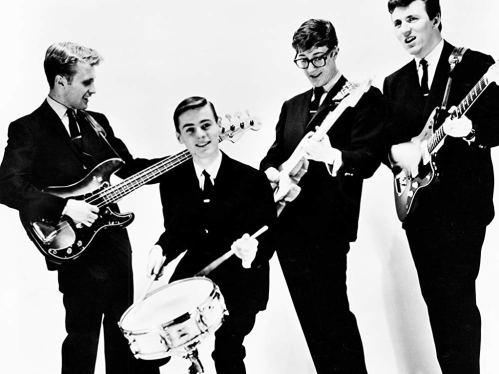
134. ‘Wonderful Land’, by The Shadows

In the wake of Elvis scoring his tenth #1 single, The Shadows are just about keeping up the pace with their eighth. With added strings! And horns!

A1x5FMeD9GL._SL1000_

Wonderful Land, by The Shadows (their 8th of twelve #1s)

8 weeks, from 22nd March – 17th May 1962

Just as they did with Cliff on ‘The Young Ones’, Hank, Bruce and the boys have gone all orchestral. ‘Wonderful Land’ soars high, off above the clouds and away, sounding for all the world like the theme to a middle-of-the-road Western.

I wonder – as I wondered with Cliff on ‘The Young Ones’ – if the band were looking to broaden their appeal, to go after the teeny-boppers and their parents (and maybe even their grandparents). Whatever the plan – it clearly worked. Only two other records in the whole of the 1960s spent eight weeks at number one.

Personally, I am really struggling to see why this record connected in such a way with the general, record-buying public. It’s nice enough; but eight weeks at the top of the charts…? It’s not that nice. I’ll refer back to my complaint about previous instrumental chart-toppers – that an instrumental simply has to try that much harder than a song with lyrics. The lyrics are what draw you in, are 70% of what you remember about a song. Ok, ok, so you might remember a riff, or an intro, or a guitar solo – but not in the same way that you connect with a song’s lyrics. It means that, to me, instrumental records remain a little abstract; difficult to truly love. A few instrumentals get it so, so right (‘Cherry Pink and Apple Blossom White’, by ‘Prez’ Prado) while most fall flat to some degree (‘Side Saddle’, by Russ Conway.) For me, ‘Wonderful Land’ falls into the latter category. But maybe I’m just a philistine.

THE_SHADOWS_WONDERFUL+LAND+-+2ND-570309

I do like the bit with the jingly-jangly guitars, the flickery bit… I have no idea what the official guitaring terminology is… Lightly-plucked? It’s cool, and drenched in an other-worldly echo. And ‘Wonderful Land’ gets a lot of love – even to this day – as one of The Shadows best songs. But I enjoyed their previous chart-topper, the crunchy, surfy ‘Kon-Tiki’, more than this. What do I know?

I feel like I should be giving a record such as this – a colossal, chart-humping giant of a record – more of a write-up. But I’m pretty much out of things to say. It’s not like this is the last we’ll hear from The Shadows – they’ll be back soon enough (with much better songs!) Still, worthy of note is the fact that, after 1961 gave us lots of one-week chart-toppers, lots of bye-roads to wander up and get lost in; the first three #1 singles of 1962 have taken us right into the middle of May!

‘Hoots Mon’, by Lord Rockingham’s XI – The UK Number 1s Blog Anniversary Special

This week marks the 1st anniversary of The UK Number 1s Blog (** Trumpet Fanfare**)! In the past year we’ve covered the period from Nov. ’52 to Nov’ 61, with 129 chart-topping songs featured. We’ve survived pre-rock, rode the rock ‘n’ roll revolution, and are now well on our way towards the swinging sixties… Thanks to everyone who has read, followed, commented and enjoyed.

To celebrate this milestone, I’m going to take a short break from the usual countdown to repost seven songs that I have really enjoyed discovering over the past year. These aren’t necessarily the best songs to have topped the charts – there’ll be no Buddy Holly, Johnnie Ray, Connie Francis, Elvis or The Everly Brothers (follow the links if you want to read about them) – as I’ve been listening to, and loving, those artists for years. This week will be all about the forgotten gems, the hits I’d never heard before, the songs that have slipped through the cracks…

My penultimate choice is one that pays homage to my homeland – Bonnie Escocia. It’s a song that, at the time of writing, I suggested should become our new national anthem. With the advantage of hindsight… I still think that’s a great idea. This is a record that sounds like it was recorded on a cocktail of Irn-Bru, soor-plooms, the Best Of ‘Oor Wullie’ and just a splash of Buckfast Tonic Wine. It’s a wild and zany chart-topper, that makes no sense and yet complete sense. One more time then… Och Aye!

Lord-Rockingham_s-XI-Hoots-Mon-1958-7”

And so on we roll towards the United Kingdom’s seventy-seventh chart topping single. And it’s a song that I’ve never… No, wait… Ah! I know this… We all know this…

Hoots Mon, by Lord Rockingham’s XI (their 1st and only #1)

3 weeks, from 28th November – 19th December 1958

Dooooo-doo-doo-do-do… Dooooo-doo-doo-do-do… It’s an intro that smacks of slightly misplaced grandeur, like an aged diva swishing onto the stage before slipping on a banana. We know what follows is going to be absurd. And, oh boy, it is…

Na-nana-na-nana, Na-nana-na-nana, Nana-nanananana… Na-nana-na-nana, Na-nana-na-nana, Nananananananana… Apologies for my woeful attempts to render this riff using the medium of ‘na’s. The minute this starts playing you will know it.

It’s an instrumental, and it’s been a while since we featured an instrumental. I make Winny Atwell’s ‘The Poor People of Paris’ our most recent lyric-less number one, and that was two and a half years back. And it is undeniably catchy. It bores its way in on the first listen and will, I’m sorry, remain for days. And days. And days. There are key-changes, oh yes! And the bass! One of my main complaints about the rock ‘n’ roll numbers we’ve heard so far is that, while there have been some undeniable classics – your ‘Great Balls of Fire’s, your ‘That’ll Be the Day’s and your ‘Rock Around the Clock’s – they’ve all sounded a bit light to modern ears. Listen to this, though, especially through headphones. It fills your ears, in a way that makes it sound like a modern record. Every instrument – the throbbing bass, the slapdash drums, the natty organs – are, if you’ll forgive the cliché, turned up to eleven. And a half.

Actually, I called this an instrumental; but it’s not quite. There are a few words, shouted out above the clatter, foremost among them being: There’s a moose loose aboot this hoose… and It’s a braw, bricht, moonlicht nicht… Then there are the Och Ayes! thrown in towards the end and the big Hoots Mon! upon which the record ends. Yes, this is, as they say in theatre circles, The Scottish Number One. All we’re missing is a ‘Help ma Boab!’

large

The ringleader of Lord Rockingham’s XI was a man named Harry Robinson, a Scot if ever there was one. But, being from Scotland myself, I’m not sure how I feel about this record, and the manner in which it reduces the culture, language and heritage of my homeland to a handful of trite, drunken catchphrases…

Actually, screw it. It’s as catchy as crabs and a hell of a lot more fun than some of the more ‘official’ Scottish songs – ‘500 miles’ (Jings!), ‘Scotland The Brave’ (Crivvens!), ‘Caledonia’ (Shudder… and boak!) In fact, I think that this song I hadn’t ever properly listened to until twenty minutes ago should become our new national anthem, in place of the dirge that is ‘Flower of Scotland’. And when I fulfil my manifest destiny in replacing wee Nicky Sturgeon as First Minister, that’ll be the first act I sign into law.

Anyway, file this record under ‘complete and utter novelty’. It’s no coincidence that it hit the top spot in the weeks leading up to Christmas and New Year. Lord Rockingham’s XI wouldn’t go on to much more success and so for the first time, I think, we have two (semi) one-hit wonders replacing one another at the top of the charts. File this also under ‘British Rock ‘n’ Roll’. It’s something that I’ve long been noting – the gradual handing over of the rock ‘n’ roll baton from the US to the UK – and with this anarchic British track following soppy efforts from The Everly Brothers and The Kalin Twins the transition may be complete.

I’ll finish by reminiscing on how this song stirred in me a long-discarded, foggy memory of a commercial for something or other, way back in the late eighties or early nineties… I knew I knew this song, but I didn’t know how I knew it – if you catch my drift. I suppose whatever it was will be forever lost in the mists of time… Actually, no it won’t. The advert was for Maynard’s Wine Gums, back in 1993. Thanks, internet.

‘Cherry Pink and Apple Blossom White’, by Perez ‘Prez’ Prado & His Orchestra – The UK Number 1s Blog Anniversary Special

This week marks the 1st anniversary of The UK Number 1s Blog (** Trumpet Fanfare**)! In the past year we’ve covered the period from Nov. ’52 to Nov’ 61, with 129 chart-topping songs featured. We’ve survived pre-rock, rode the rock ‘n’ roll revolution, and are now well on our way towards the swinging sixties… Thanks to everyone who has read, followed, commented and enjoyed.

To celebrate this milestone, I’m going to take a short break from the usual countdown to repost seven songs that I have really enjoyed discovering over the past year. These aren’t necessarily the best songs to have topped the charts – there’ll be no Buddy Holly, Johnnie Ray, Connie Francis, Elvis or The Everly Brothers (follow the links if you want to read about them) – as I’ve been listening to, and loving, those artists for years. This week will be all about the forgotten gems, the hits I’d never heard before, the songs that have slipped through the cracks…

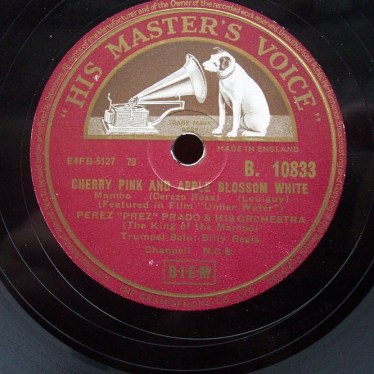
Next up is the one song, out of the 129 covered, that I’m happiest about discovering. Mambo isn’t a style of music that I’m very familiar with, and a trumpet-led instrumental wasn’t the type of record that I expected to blow me away. But, hoo boy, it did. ‘Sexiness’ was in short supply as we plodded through the very earliest UK #1 singles – with the focus on pure and proper romantic declarations from frightfully earnest young singers.  David Whitfield, Eddie Fisher and Vera Lynn I’m looking at you… But ‘Prez’ Prado… well, this disc just oozes sexiness. Listen to that low, low note he hits at strategic moments throughout this song, and try to tell me that it doesn’t put the filthiest thoughts in your mind! I named this as ‘Best Song’ in one of my recaps, and need no excuse to revisit it again here…

s-l1000

Cherry Pink and Apple Blossom White, by Perez ‘Prez’ Prado & His Orchestra (his 1st and only #1)

2 weeks, from 29th April to 13th May 1955

I’ve given instrumentals a hard time so far in this rundown. The lack of any lyrics creates a barrier, for me, between the song and the listener. You can listen to a Mantovani record and think “Isn’t that a nice melody”, but the fact that there are no words to tie it to a particular feeling or experience in your life means that the record is that step further removed from you. Like a film beautifully acted but in a language you cannot understand.

Having said all that… I’m going to prove myself massively wrong with this post. The fourth instrumental to top the UK Singles chart is also, by far, the sexiest record to top said singles charts. And there are no words. Well – there are no words aside from ‘Huh!’, ‘Hah!’ and ‘Oooh’. Which is a large part of this track’s said sexiness.

Following on from ‘Mambo Italiano’ (which wasn’t really a mambo, but hey), the UK was clearly in some sort of Latin fever in early 1955. Though perhaps not, as a quick glance at the chart for the week Perez ‘Prez’ hit the top shows only one other record that sounds vaguely Latino… A different version of ‘Cherry Pink and Apple Blossom White’ (which we’ll meet very soon at the top of the charts). But, for the purposes of this narrative, let’s say that the UK – finally casting off the shackles of rationing and wartime rubble – wanted to shake some booty and, while perhaps not quite ready for straight up rock ‘n’ roll, turned to some equally raunchy mambo. Further evidence towards my idea that rock ‘n’ roll didn’t just arrive with ‘Rock Around the Clock’ – it was slowly filtering in through Rosemary Clooney’s giggle, Winifred Atwell’s boogie and Johnnie Ray’s yelps. And Perez ‘Prez’ Prado’s trumpet.

Except the trumpet that makes this record isn’t being played by the man on the credits. We’ll get to that in a second. First – this record has perhaps the most intense intro we’ve heard yet. Basically it’s BOOM BOOM BOOM BOOM BOOM BOOM BOOM on a load of trumpets and cymbals, before the rhythm kicks in. The lead trumpet was played by a man called Billy Regis, who absolutely makes this record by drawing out one note in particular over and over again, by sliding it down then up in a manner that sounds a little bit drunk, a little bit woozy, and that, most importantly, would allow a couple in a Southend ballroom to draw that little bit closer for a second, before the main melody jumped back in.

R-582429-1341876426-2330.jpeg

Prado was more of a conductor, I guess, and it is his ‘Huhs’ and ‘Hahs’ that can be heard as he exerts his charges to squeeze every drop of sexiness from their instruments (that sounded ruder than I intended – you know what I mean). There are also some other trumpets (I guess they are trumpets) playing notes so low that it’s almost obscene. I recognise them from Lou Bega’s classic cover of ‘Mambo No.5’, from another golden age of Latin music in the UK charts, which we won’t be getting to for a long, long time. Incidentally, Perez Prado recorded the original version of that song, too.

But the final word has to go to Billy Regis, whose trumpet ends the record. He reimagines the bombastic ending – from which so many earlier chart-toppers have suffered – and it works so much better without lyrics. THIS IS THE END OF THE SONG becomes DOOO DOOO (pause) DOOOOOOOOO, and it again allows Janet and John from Southend to draw close and to feel one another’s bodies, taught and trembling from two and a half minutes of intense mambo.

‘Huh!’ and, indeed, ‘Hah!’

126. ‘Kon-Tiki’, by The Shadows

As we continue our slow meander along the highways and bye-ways of 1961 –it does feel that this year is taking a little longer to get through than previous ones – it’s time for a little interlude.

the-shadows-kon-tiki-1961-5

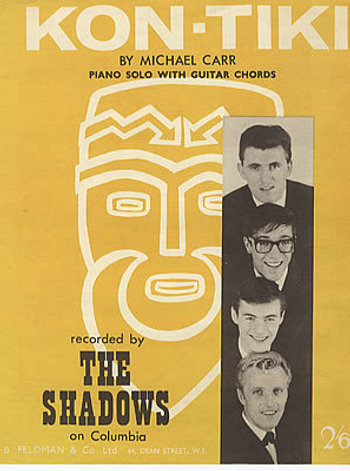
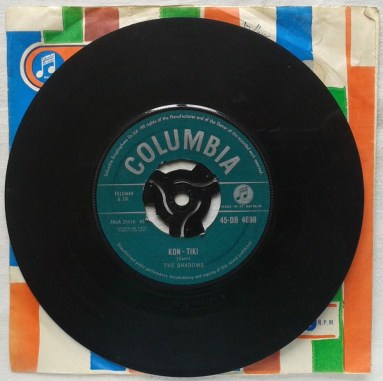
Kon-Tiki, by The Shadows (their 6th of twelve #1s)

1 week, from 5th – 12th October 1961

Picture, if you possibly can, the year 1961 as a TV variety show. On the bill are some huge, established stars – Elvis, the Everlys, Shirley Bassey – along with some new up and coming teen sensations – Johnny Tillotson, Helen Shapiro – and some quirky little gems – Floyd Cramer and The Temperance Seven. Maybe Cliff – who won’t actually be hitting #1 this year – can be the MC. OK? Well, to this weird mental image you can add the house band, the ones that pop up and play as the curtains drop and the scenery gets shifted. They are, of course, The Shadows.

‘Kon-Tiki’ is another instrumental. A lilting little slice of surf-rock. It’s got cool drum-fills, a nice crunchy, tinny edge to the guitars and a hint of reverb around the main riff. There’s a couple of call and response bits between the lead and the bass, and the ending has some gnarly (did they say ‘gnarly’ in the early sixties?) echo. It’s a decent enough record – I’m not sure that the Shadows made many poor ‘solo’ records – but when it ends less than two minutes in you’re left wondering… Is that it?

It’s far from being one of their bigger hits (I wasn’t particularly familiar with it before starting this post) and it kind of feels like filler. Something thrown together as the guys were jamming. A ‘B’-side, maybe? But hey, what do I know. It was a UK number one single; only the band’s second solo chart-topper.

the-shadows-kon-tiki-36.jpg

The Kon-Tiki was actually a raft used in a 1947 expedition across the Pacific Ocean by the Norwegian explorer, Thor Heyerdahl. ‘Kon-Tiki’ was chosen as it was an old name for the Incan sun-god. What all this had to do in inspiring the writing of this perky guitar instrumental is, to be honest, unknown. My best guess is that it sounds kinda tropical, kinda surfy, and could work well as the soundtrack to a sunset luau on the beaches of Hawaii. Compared to ‘Apache’, which really did conjure up images of Indian braves galloping across the plains, ‘Kon-Tiki’ is a little more abstract.

Maybe that’s fine, though. It’s a nice enough tune, a pleasant one-week interlude on our journey through 1961. It reminds us that The Shadows are still around, are still the biggest British band of the time. Maybe it needs no further meaning than that.

As I mentioned at the start of this post, it does feel like we’ve been lingering in 1961 for quite a while now. In actual fact, with twenty-one number one singles, 1961 has by far the most chart-toppers of any year yet covered. But that’s OK. It’s proving a nice place to be. Jazz, rock, showtunes, instrumentals… all genres are welcome here. And, if you thought it’s been eclectic recently; just wait till you hear what’s up next!

117. ‘On the Rebound’, by Floyd Cramer

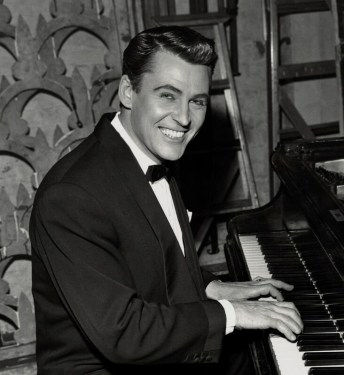
What do we have here then? A piano instrumental, with a perky little riff, strong notes of – deep breath – Russ Conway

floyd-cramer-h7i

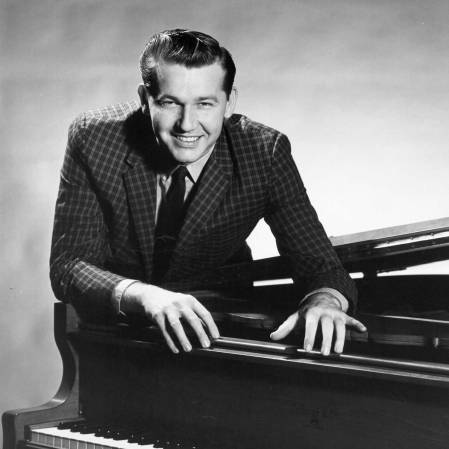
On the Rebound, by Floyd Cramer (his 1st and only #1)

1 week, from 18th – 25th May 1961

For the first twenty seconds of this record, which I’d never heard before, I was beginning to envision myself giving it a terrible write-up. Cheesy, irritating, repetitive… And it is. But. Unlike, say, Russ Conway’s records (sorry Russ, I do end up picking on you every time an instrumental #1 comes along, but you were awful…) there is a lot more to this than just the piano.

Thirty seconds in the main riff drops away and we get a little blast of honky-tonk swagger, drenched in ‘ooohs’ from the backing singers, which acts as a prelude for the brilliant moment one minute in when it all breaks down and we’re left with drums, clapping and a natty little bassline. Russ never did anything like this… This is pretty funky. Then the violins come in for a little call-and-response with Floyd’s piano. By the time the main piano riff comes back, lifted up by the backing singers, it all makes sense. And by the end, as the riff is deconstructed piece by piece and we finish with a thump, you’ve actually enjoyed it.

I feel as if I must know this song from somewhere, that I have heard it before in an advert, or a movie… It sounds really familiar. The only thing I can find is that ‘On the Rebound’ featured in ‘An Education’, a film I saw once, years ago. It surely cannot have lingered in my subconscious for so long just from that… Or maybe this is simply a sign of well-written, nicely executed little tune – that it sounds ubiquitous even when it’s not. This is a lost gem of a number one single, its week at the top buried among the leviathans of early sixties pop: Elvis, The Everlys, Cliff. It sounds simultaneously old-fashioned – this could be 1955 and that could be Winfred Atwell at the piano – and modern – the rock ‘n’ roll swagger that the drums, the guitar and the handclaps lend means that this isn’t 1955 and that certainly isn’t Ms. Atwell. The piano instrumental, though, has proved a surprisingly resilient genre over the course of this countdown… We haven’t had a trumpet, or a violin instrumental hit the top for many a year but the piano keeps on popping back up!

FLOYD_CRAMER_ON+THE+REBOUND-420365

Anyway, now the song is done we can focus on the main event of this post – Floyd Cramer himself. This is his one and only week as a credited chart topping star. Note, though, the emphasis on the word ‘credited’… Because the list of songs on which Cramer featured as a session pianist is mighty impressive. We’ve already heard him in the background on ‘All I Have to Do Is Dream’ by The Everly Brothers, ‘That’ll Be the Day’ by The Crickets, ‘Only the Lonely’ by Roy Orbison, and on Elvis’s ‘Are You Lonesome Tonight?’ We’ll go on to hear him on pretty much every other Elvis #1 from here ‘till 1963. The list of classic hits he featured on that failed to top the UK charts is also pretty darn impressive… *clears throat*… ‘Heartbreak Hotel’, ‘Wake Up Little Susie’, ‘The End of the World’, ‘Big Hunk ‘o Love’ and, oh yes, ‘Rockin’ Around the Christmas Tree’ (which I’m providing a link for because, hey, it’s the right time of year.)

However, Cramer struggled to score another ‘solo’ hit in the UK, and so the record books will know him solely for ‘On the Rebound’. He was known for his ‘slip-note’ style of piano playing, in which he would ‘slip’ from an out of key note into the correct note (sounds like an excuse I should have tried during my ill-fated attempt at keyboard lessons – “I didn’t play the wrong note, Sir, I was just playing in the ‘slip-note’ style. Haven’t you heard of it?”) It is this trick, I think, that gives the main riff it’s annoyingly perky, jangly feel, but what do I know? Floyd obviously felt it worked for him.

One final thing… Why’s it called ‘On the Rebound’? Honest answer: who knows? If I’ve learned one thing while writing this blog it’s that you can give an instrumental whatever the hell name you want.

106. ‘Apache’, by The Shadows

The Shadows are back. But sans-Cliff. Who’s doing the singing then? Nobody! That’s who. Yep, it’s time for another instrumental interlude…

p01bqktf

Apache, by The Shadows (their 4th of twelve #1s)

5 weeks, from 25th August – 29th September 1960

I’ve struggled to place my feelings on the instrumentals featured in this countdown. We’ve veered from the decidedly pleasant Song from ‘The Moulin Rouge’, to the undeniably perky Winifred Atwell, to the Oh-God-Make-It-Stop! of Russ Conway and Eddie Calvert. And then I went and named Perez Prado’s ‘Cherry Pink and Apple Blossom White’ as one of the very best records we’ve heard thus far… I know that ‘Instrumental’ itself isn’t a genre – you can’t pigeon hole them all together. But still… Where does this latest one fit in the grand scheme of vocals-less chart-toppers?

It’s different, for a start, in that it’s a guitar-led track. I make this the 9th instrumental chart-topper (10th if you count ‘Hoots Mon’ with its sporadic shouting) and the first to use guitars as the lead instrument. Lots of pianos, trumpets and violins thus far; not many guitars. It starts, though, with drums. What might be described as ‘Injun Drums’, which would make sense in a song called ‘Apache’. Which means that this track, alongside Johnny Preston’s ‘Running Bear’, ensures that 1960 will go down as the year of the Native American in Popular Music.

It’s a song with a long and varied history – The Shadows’ version being neither the first nor the last – but it was originally inspired by a 1954 western movie, starring Burt Lancaster and entitled, funnily enough, ‘Apache.’ (A 1973 version of the song, by the Incredible Bongo Band, has become one of the most sampled tracks of all time, earning it the title of ‘hip-hop’s national anthem’, but that’s a story for another day…)

Perhaps one of the reasons that I struggle with instrumentals is that I find them so hard to write about. What are they about, for a start? ‘The Poor People of Paris’ didn’t sound like it was about poor people. ‘Moulin Rouge’ had precious little to do with the can-can. Russ Conway’s efforts were ice-cream van jingles in search of an actual melody. But ‘Apache’  -and this is a big point in its favour – does actually sound as if it’s about a Native American soldier, riding out into the sunset for one final showdown… Close your eyes as you listen and you’ll see him. Plus the bit where the guitars sound like a galloping horse is really cool.

It makes sense as a song, too. There’s a verse, a bridge, and then a chorus. You can kind of sing along to it. Plus, there’s a riff! Make that three from three! Dun-dun-Dun-dan-dun-dun-dan-dun… The guitars sound great, and just as twangy as those used in ‘Shakin’ All Over’. This is a great piece of music, actually. But subtle; its greatness taking time to become apparent.

R-562860-1476192301-4079.jpeg

I mentioned during my post on ‘Travellin’ Light’ that for their first two #1s The Shadows, or The Drifters as they were for ‘Living Doll’, had little more to do than just turn up and tickle their instruments (so to speak). They did a bit more on ‘Please Don’t Tease’, riffing and soloing and the like, but I half suspect that they went solo just so that they could let loose a little. Hank Marvin and Bruce Welch were too talented to stay as Cliff’s backing band forever. ‘Apache’ was their first ‘solo’ release to chart, and it charted in style: five weeks at the top making it, for now, the second biggest hit of 1960 behind ‘Cathy’s Clown’. And this is only the beginning – for the next three years The Shadows will utterly dominate the UK charts. I make it 33 (thirty-three!) Top 10 hits, both with and without Cliff, before the glory days draw to an end.

Even with this early hit, The Shadows already manage two very impressive feats. Firstly, they become the first ever act in UK chart history to replace themselves at #1. And they draw level with giants such as Elvis, Frankie Laine and Guy Mitchell as the artists with the most UK chart-toppers. All of this with a record that doesn’t have any lyrics! How about that! Maybe from now on I should try harder to appreciate instrumentals… Maybe instrumentals are the way forward… Down with lyrics! Yeah! Put that on a T-shirt…

86. ‘Roulette’, by Russ Conway

I think we’ve heard this record before… ‘Roulette’ may, in fact, be identical to Russ Conway’s first number one. Or it may sound completely different. Who knows? Who even cares?

71zX-m93JPL._SX355_

Roulette, by Russ Conway (his 2nd of two  #1s)

2 weeks, from 19th June – 3rd July 1959

Actually, they do sound the same. Same perky piano, same lightly strummed guitar as accompaniment. In fact, to illustrate my point, let me quote verbatim from my post on ‘Side Saddle’ (which was #1 barely two months before):

“Upon first listen of this latest chart-topping record, two questions spring immediately to mind: What is this? And why did it spend a whole month at the top of the charts? It’s an instrumental, Mr. Russ Conway tinkling away at his piano, and… that’s about it. It’s got a melody, which plods along pleasantly enough without going anywhere very far, and then it ends, in under two minutes.”

Swap ‘whole month’ for ‘two weeks’- and ‘pleasantly’ for ‘irritatingly’ because that’s the mood I’m in today – but you’re still pretty much there. This record is equally short, similarly jaunty, and is still searching for a tune that never quite seems to materialise. And why ‘Roulette’? Is it because the cascading notes that tumble at intervals throughout the song sound like a rolling roulette wheel? Or is that me putting way too much though in?

I think I hate this more than I did Conway’s first #1. It was bland; this is criminally perky and is played in an irritatingly high key. Plus those little flourishes at the end of every second note are starting to make me feel a little sick. Way, way back in one of my early posts I claimed the idea of the ‘shadow number one’ – the chart topping record that only gets there due to the reflected glow of a preceding hit. Frankie Laine had one when ‘Hey Joe’ followed the chart-humping ‘I Believe’. Rosemary Clooney had one with ‘Mambo Italiano’ hot on the heels of ‘This Ole House’ (though ‘Mambo…’ was probably the bigger record). Guy Mitchell had one in ‘Rock-A-Billy’ after his huge hit ‘Singing the Blues’. And now we have to suffer a second dose of Russ Conway because grannies across the land liked ‘Side Saddle’, and probably thought he looked like a nice boy.

roulette-featuring-russ-conway-piano-solo

In fact, for a ‘nice boy’ Conway led a fairly troubled life. Let’s face it, anyone who records songs of such fake jollity and forced perkiness is going to be a little screwed-up inside… Alcoholism, crippling self-doubt, a reliance on anti-depressants, an eighty (80!) a day cigarette habit – all of which can probably be attributed to his being gay but having to keep it hidden for fear of losing everything (shades of Johnnie Ray there). Unlike Ray, however, Conway remained fairly popular throughout his career, and was still performing publicly just two weeks before he died in 2000. He had actually sliced the tip of a finger off during the war, so it’s pretty impressive that he could play the piano at all I suppose.

God, I have been a little harsh on ole Russ here, haven’t I? I just had a quick listen to some of the other hits from his late fifties heyday – the likes of ‘China Tea’ and ‘Party Pops’ – in an attempt to redeem his chart career. But. I’m sorry to confirm that they ALL. SOUND. THE BLOODY. SAME! In desperation I tried to look for some clue as to the inspiration for ‘Roulette’, but the Wiki entry is one line long and there ain’t much else out there. What little I could find all seemed to prefer this disc to ‘Side Saddle’ (come on, people!) But then I found this, and I started with a quote so I’ll end with one too.

Thanks to the guy(s) at fiftiesnumberones.blogspot.com – which I will wholeheartedly recommend as long as you promise to still read my blog – for their brilliant description of ‘Roulette’ as an ice-cream van jingle… “albeit an ice cream van plying its trade around the dusk tinged streets of a council estate on a late October evening. In the rain.”

<kiss fingers gif>

End post

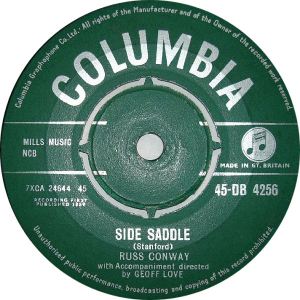
83. ‘Side Saddle’, by Russ Conway

And so, The Winter of the Ballad, which I took such pains to introduce in my previous post, experiences a sudden thaw. Spring has sprung, and has brought with it a perky piece of piano-pop.

russ-conway-side-saddle-columbia

Side Saddle, by Russ Conway (his 1st of two #1s)

4 weeks, from 27th March – 24th April 1959

Upon a first listen of this latest chart-topping record, two questions spring immediately to mind: What is this? And why did it spend a whole month at the top of the charts? It’s an instrumental, Mr. Russ Conway tinkling away at his piano, and… that’s about it. It’s got a melody (of sorts), which plods along without going anywhere very far, and then it ends, in under two minutes.

The obvious comparison to draw here is with Winifred Atwell, who has already claimed two UK chart-topping singles with records sounding very similar to this. But Atwell at least had a kind of frantic energy about her piano-playing – you could picture her bashing out the hits with a smile and a bead of sweat rolling down her temple. Whereas you can only imagine Conway plodding his way through ‘Side Saddle’ with a cheesy grin-slash-wink combo. The other piano-led #1 single which springs to mind at this time is, of course, ‘Great Balls of Fire’. But to compare that record to this record is, to my mind, heresy of the highest order. There is a slight concession to rock ‘n’ roll here, in that someone in the background is tickling a drum kit in time to Conway’s piano, but that’s strictly it.

It’s a strange chart-topping record, this. At best I’d describe it as incidental music, or silent movie music: you can imagine it going down quite well as an accompaniment to Buster Keaton running down a railroad track. It is very 1932. Which means we have to pose a 3rd question: Why now? Why did this curio of a record zoom to the top of the charts in the spring of 1959? My research has thrown up no answers. It wasn’t an old song; it was written and released in ’59, apparently recorded for a TV adaptation of ‘Beauty and the Beast’ – which at least helps explain the olde-worlde feel of the song. There’s no clue as to how the melody concerns a horse-riding style popular with posh old ladies. According to Wiki “the song was a staple of the BBC’s ‘Housewives Choice’ radio programme”, which perhaps says more than anything I could ever write.

mw148586

Due to summer holiday commitments, this is the first time in over a fortnight that I have sat down to write one of these posts. In that time, I’ve listened to very little music, and the music I have heard has been radio-friendly, modern pop. Perhaps ‘Side Saddle’, then, is suffering from being the oldest record I’ve heard for a while. Perhaps if I were in the swing of things – in my mid-season form of writing a post every couple of days – it wouldn’t stand out so much. But then again… maybe not. I fear that, whatever way you look at it, this track is simply a relic. And, glancing down my list o’ number one singles… Oh, goody. There’s more to come from our Russ in very short order.

One final thing of note… If you click on the video below and discover a hitherto unrevealed love of bland, piano-based background Muzak, Spotify has the most extensive collection of Russ Conway back-catalogue ever seen. Like, seriously. There must be fifty-odd albums on there. Knock yourselves out!

77. ‘Hoots Mon’, by Lord Rockingham’s XI

And so on we roll towards the United Kingdom’s seventy-seventh chart topping single. And it’s a song that I’ve never… No, wait… Ah! I know this… We all know this…

Lord-Rockingham_s-XI-Hoots-Mon-1958-7”

Hoots Mon, by Lord Rockingham’s XI (their 1st and only #1)

3 weeks, from 28th November – 19th December 1958

Dooooo-doo-doo-do-do… Dooooo-doo-doo-do-do… It’s an intro that smacks of slightly misplaced grandeur, like an aged diva swishing onto the stage before slipping on a banana. We know what follows is going to be absurd. And, oh boy, it is…

Na-nana-na-nana, Na-nana-na-nana, Nana-nanananana… Na-nana-na-nana, Na-nana-na-nana, Nananananananana… Apologies for my woeful attempts to render this riff using the medium of ‘na’s. The minute this starts playing you will know it.

It’s an instrumental, and it’s been a while since we featured an instrumental. I make Winny Atwell’s ‘The Poor People of Paris’ our most recent lyric-less number one, and that was two and a half years back. And it is undeniably catchy. It bores its way in on the first listen and will, I’m sorry, remain for days. And days. And days. There are key-changes, oh yes! And the bass! One of my main complaints about the rock ‘n’ roll numbers we’ve heard so far is that, while there have been some undeniable classics – your ‘Great Balls of Fire’s, your ‘That’ll Be the Day’s and your ‘Rock Around the Clock’s – they’ve all sounded a bit light to modern ears. Listen to this, though, especially through headphones. It fills your ears, in a way that makes it sound like a modern record. Every instrument – the throbbing bass, the slapdash drums, the natty organs – are, if you’ll forgive the cliché, turned up to eleven. And a half.

Actually, I called this an instrumental; but it’s not quite. There are a few words, shouted out above the clatter, foremost among them being: There’s a moose loose aboot this hoose… and It’s a braw, bricht, moonlicht nicht… Then there are the Och Ayes! thrown in towards the end and the big Hoots Mon! upon which the record ends. Yes, this is, as they say in theatre circles, The Scottish Number One. All we’re missing is a ‘Help ma Boab!’

large

The ringleader of Lord Rockingham’s XI was a man named Harry Robinson, a Scot if ever there was one. But, being from Scotland myself, I’m not sure how I feel about this record, and the manner in which it reduces the culture, language and heritage of my homeland to a handful of trite, drunken catchphrases…

Actually, screw it. It’s as catchy as crabs and a hell of a lot more fun than some of the more ‘official’ Scottish songs – ‘500 miles’ (Jings!), ‘Scotland The Brave’ (Crivvens!), ‘Caledonia’ (Shudder… and boak!) In fact, I think that this song I hadn’t ever properly listened to until twenty minutes ago should become our new national anthem, in place of the dirge that is ‘Flower of Scotland’. And when I fulfil my manifest destiny in replacing wee Nicky Sturgeon as First Minister, that’ll be the first act I sign into law.

Anyway, file this record under ‘complete and utter novelty’. It’s no coincidence that it hit the top spot in the weeks leading up to Christmas and New Year. Lord Rockingham’s XI wouldn’t go on to much more success and so for the first time, I think, we have two (semi) one-hit wonders replacing one another at the top of the charts. File this also under ‘British Rock ‘n’ Roll’. It’s something that I’ve long been noting – the gradual handing over of the rock ‘n’ roll baton from the US to the UK – and with this anarchic British track following soppy efforts from The Everly Brothers and The Kalin Twins the transition may be complete.

I’ll finish by reminiscing on how this song stirred in me a long-discarded, foggy memory of a commercial for something or other, way back in the late eighties or early nineties… I knew I knew this song, but I didn’t know how I knew it – if you catch my drift. I suppose whatever it was will be forever lost in the mists of time… Actually, no it won’t. The advert was for Maynard’s Wine Gums, back in 1993. Thanks, internet.