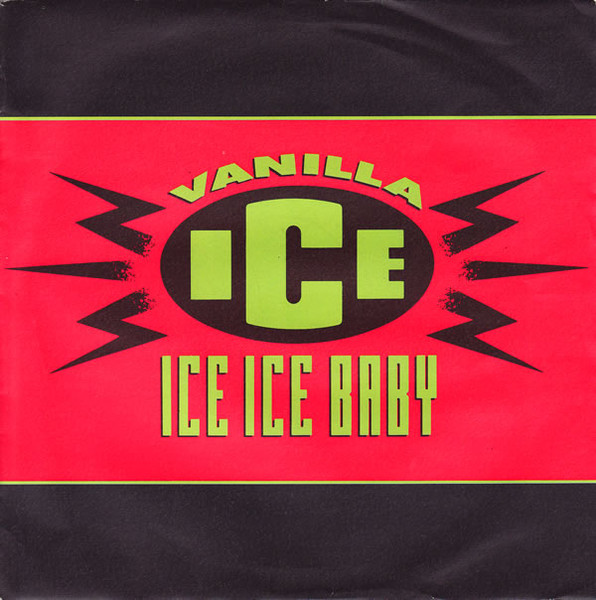
643. ‘The Power’, by Snap!

The spring of 1990 truly was an age of interesting intros. Well, I don’t know if two songs quite make an ‘age’, but following on from Beats International’s famous rap, our next #1 kicks off with a burst of Russian LW radio. Something something transceptor technology…

The Power, by Snap! (their 1st of two #1s)

2 weeks, from 25th March – 8th April 1990

Then boom: a riff that sounds like an electric shock, and (another) dance diva with big lungs bellowing about having the power. So far so famous, a hook that pretty much everyone of a certain age knows. Unfortunately, the less-remembered remainder of the song struggles to match the energy of the title line.

It’s much lower-tempo than you’d think: I’d mis-remembered it as a madcap ride, akin to S-Express, but it’s nowhere near as fun. There’s a rapper – in fact this might be the most rap-heavy chart-topper so far, at the start of the decade in which hip-hop will finally go mainstream. Turbo B has a couple of good lines: Maniac, Brainiac, Winnin’ the game, I’m the lyrical Jessie James… and a real clunker: So peace, Stay off my back, Or I will attack, And you don’t want that… While Penny James, the female lead, has a voice that contrasts with him well.

Both the rap and the vocals were based on earlier songs, by a Chill Rob G and a Jocelyne Browne respectively, and for a while it seemed there might be lawsuits on the horizon when the producers tried to use the originals without permission. The record was quickly re-recorded by Turbo B and James, inadvertently setting up Snap! as an actual band with a hit making future rather than a one-hit wonder.

There’s another good moment, when the electric shock riff takes over and performs a bit of a solo; but for me, as a whole, this record struggles to build up a head of steam. I can’t imagine dancing to it, unlike recent dance bangers from Black Box and Beats International. Snap! (note the Wham!-like exclamation mark) were a German creation, and I get “Boney M for the ‘90s” vibes, what with their nationality, their take on Eurodance, and the questions over whose voices you’re actually hearing… (Though both Turbo B and Penny James were American.)

‘The Power’ was Snap!’s first release, and they would go on to have an impressive nine further Top 10 hits between 1990 and 1994. So popular were they that their fifth single was a medley of the previous four, which still made #10. And while this record may not reach the heights of ‘Ride on Time’, you could argue that it was just a warm-up for Snap!’s globe-humping second, and definitive, chart-topper: one of the biggest dance records of all time. Until then, then…

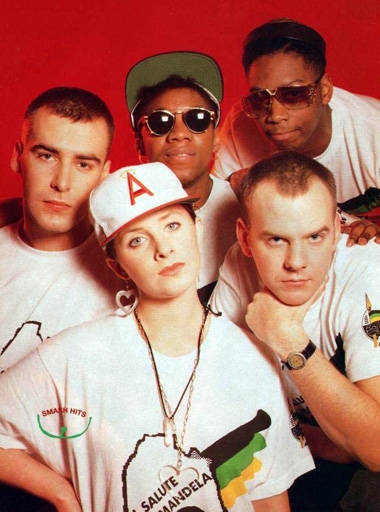
642. ‘Dub Be Good to Me’, by Beats International

Tank fly boss walk jam nitty-gritty, You’re listening to the boy from the big bad city, This is jam hot…

Dub Be Good to Me, by Beats International (their 1st and only #1)

4 weeks, from 25th February – 25th March 1990

I often find writing intros to be the hardest part of a new post. Not today: for who can argue with those opening lines? Jam hot, indeed. (Not that I have a clue what he’s on about, but hey ho…) Off we go, then, into a #1 single a little less intense than ‘Nothing Compares 2 U’, but perhaps every bit as iconic (that word again…)

If you listen carefully, both this record and Sinéad O’Connor’s predecessor follow a similar beat. It’s very nineties, as if both these records were setting the tempo for the decade to come. Other than that, though, they’re very different beasts. ‘Dub Be Good to Me’ takes us for a stroll through the backstreets of the big bad city. The laconic harmonica sounds like a train rumbling past, the horn towards the end sounds like a sad busker, the humming break in the middle sounds like the crazy guy you’d cross the road to avoid…

Meanwhile, you can just picture the singer walking along with a ghetto blaster, singing the title line: I don’t care about your other girls, Just be good to me… Like Soul II Soul and Black Box before it, this record is a more modern, stripped-back version of dance music, another step away from the sample-heavy culture of the 1980s. Just a beat, that harmonica, and a female diva giving it large (Lindy Layton, who in some places gets a ‘featuring’ credit on the record).

Not that ‘Dub Be Good to Me’ doesn’t contain a sample, or two. Actually, it’s pretty much all samples. The lyrics and melody come from The SOS Band’s 1983 song ‘Just Be Good to Me’. The bassline is the Clash’s ‘Guns of Brixton’, the harmonica is from Ennio Morricone’s theme for ‘Once Upon a Time in the West’, and the catchy intro rap is called ‘Jam Hot’, and is by Johnny Dynell. I know that for some sampling is a sin, that music should always be original. But it takes a special ear to hear music from acts as disparate as The Clash, Morricone, and a little-known rapper, and spot a number one hit lurking among the noise. And, unlike some recent dance hits, all the samples seem to have been cleared and consensual, with no subsequent legal battles for Beats International.

For the record, I have no problem with sampling. The more imaginative, the better. Sometimes you’re maybe left with a hot mess. But this record is a masterclass in sampling various pieces into a very smooth, very cool piece of music. Beats International were the brainchild of Norman Cook, whom we last met playing bass for The Housemartins. To say that Beats International were a musical departure for him is something of understatement, but I’d also say that there’s a cheeky, indie ethos to both acts. Beats International are described on Wiki as a ‘loose confederation’ of DJs, rappers and musicians, as well as a graffiti artist who would paint as the band played on stage.

They weren’t around for long, as after two albums they disbanded (they did get one Billy Bragg sampling follow-up Top 10 in the wake of their biggest hit). Cook moved quickly on to form another band, ‘Freak Power, before going it alone as Fatboy Slim. We’ll meet him again before the decade is out. Back in 1990, though, we’re left with a cool and funky glimpse of things to come. And it’s jam hot…

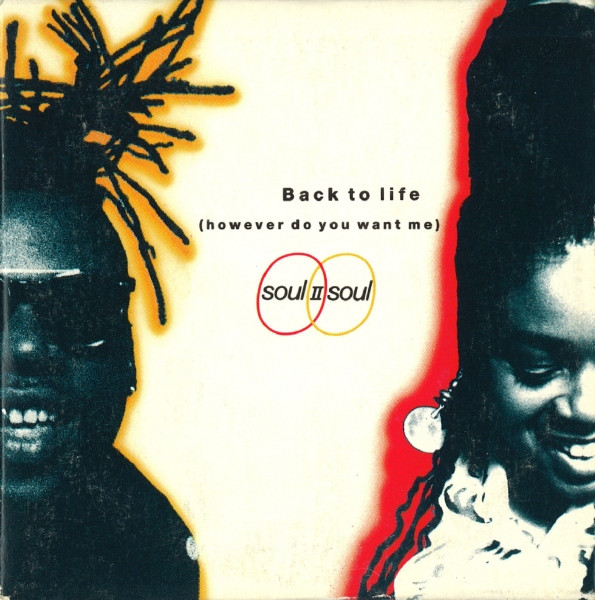
630. ‘Back to Life (However Do You Want Me)’, by Soul II Soul

As fun as 1989 has been so far – and I’ve enjoyed it, at least – it’s not been very cool. Cheesy pop a-plenty, earnest balladeering, charity singles and sixties covers. Madonna romping with our Lord and Saviour in ‘Like a Prayer’ has been as edgy as it’s got…

Back to Life (However Do You Want Me), by Soul II Soul (their 1st and only #1)

4 weeks, from 18th June – 16th July 1989

Until now, though. For ‘Back to Life’ is a cool record. A mix of hip-hop beats and soulful vocals. It’s a little bit of dance, a little bit of house. Wikipedia lists it as ‘proto-jungle’, which sounds slightly terrifying but very fun. Yet for all these influences, it’s not a cluttered track. The production is sparse – just a beat and some strings for the most part – and ‘sparse’ is not something I’ve not been able to say about the sample-heavy dance hits we’ve met in recent years.

It started out life as an a cappella track, which makes sense, as Caron Wheeler’s vocal turn is the stand out star of this record. It’s her that makes me want to announce this as the start of the nineties, six months early, as the next decade will be dotted throughout with dance tracks ft. female divas. Elsewhere, the beat and the production is unfussed, and unhurried, almost unbothered whether you like it or not, whether you think it’s upbeat enough to dance to. It’s very contemporary, a world away from SAW’s cheap and cheerful approach, until a scrrraaatch on the DJ’s decks places it firmly in 1989.

Proto-jungle is not my kind of thing (I prefer my jungle fully formed…), but a good record is a good record, and this is a good record, if you know what I mean. It’s moving things along, like a mini ‘Rock Around the Clock’ or ‘I Feel Love’, and for that I respect it. It’s the future, and we’ll be hearing a lot more like it soon…

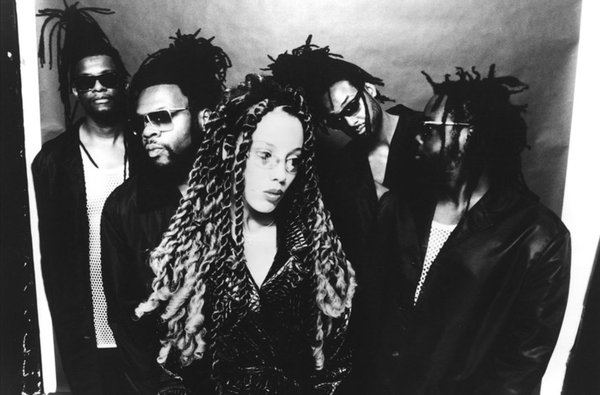
Soul II Soul were a musical collective of some nine members, founded by DJ Jazzie B, who ran a club night in Brixton that played music with British, African, Caribbean and American influences. They had even hosted a hot new LA rap group called NWA in 1988. ‘Back to Life’ was just their fourth single, and their second Top 10 hit. ‘Keep On Movin’’ had been their breakthrough, but for me that one’s lacking ‘Back to Life’s hook. Impressively, ‘Back to Life’ also made the Top 10 in the US, where it had homegrown hip-hop/R&B to compete with.

As I mentioned above, the difference between this and the earlier dance #1s, like ‘Pump Up the Volume’ or ‘Theme from S-Express’, is that it’s not at all heavy on the samples. There’s just one: the drums from funk band Graham Central Station’s ‘The Jam’. Or two, if you count Caron Wheeler’s a cappella original. This was Wheeler’s last single with Soul II Soul – she would leave to pursue a solo career before returning in 1996.

So, we start a new chart-topping chapter here. And appropriately enough, before we delve further towards the nineties, we have a recap…

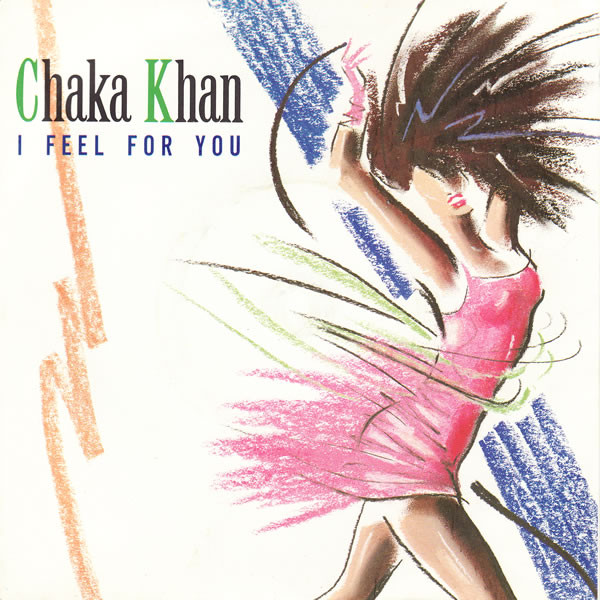
540. ‘I Feel for You’, by Chaka Khan

Chakakakakakaka-chakakhan… 1984 truly was the year of the in-your-face intro. ‘The Reflex’, ‘Wake Me Up Before You Go-Go’, now this. The most in your face of the lot?

I Feel for You, by Chaka Khan (her 1st and only #1)

3 weeks, from 4th – 25th November 1984

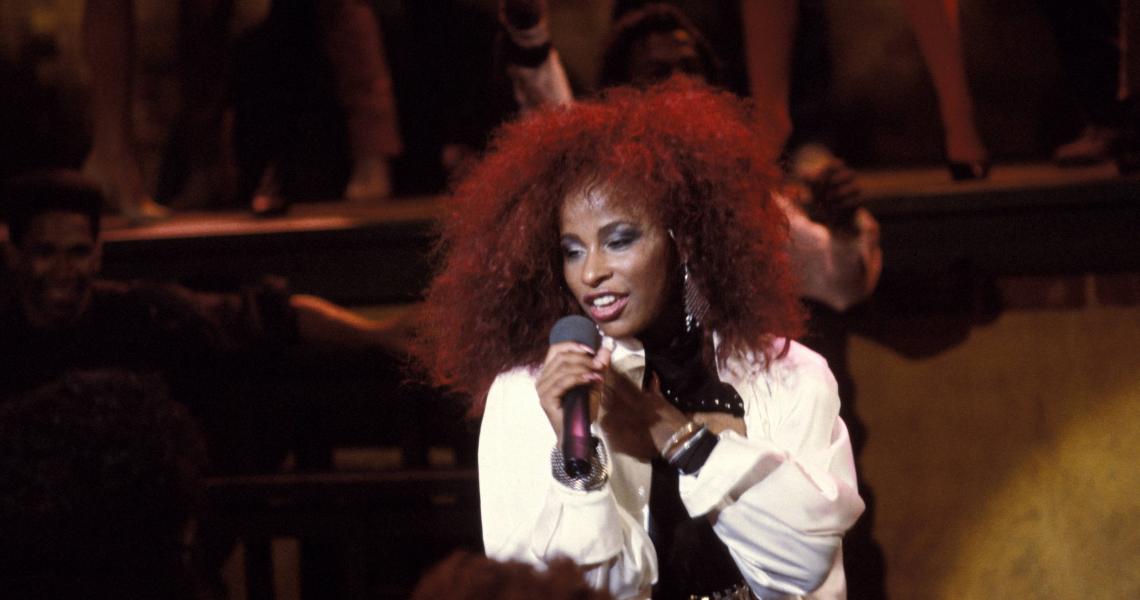
It probably stands out so much because of the rapping. Only the second example of rap at the top of the charts and, with all due respect to New Edition, this is the real stuff. The Lemme rock you Chaka Khan… lines are delivered at break-neck speed by one of hip-hop’s founding fathers, Melle Mel of Grandmaster Flash. It feels incredibly modern, a female singer being introduced at the start of a song, decades before Beyonce and Jay-Z, or Rihanna and Drake.

I did wonder if the rap might have been supplied by the writer of this song, one Prince Rogers Nelson. Prince is someone with a giant discrepancy between his fame and his UK chart-toppers (one, fairly lame, #1 a decade from now). But here at least is one of his songs, transformed from the slinky disco-soul original into a clattering beast of a record.

It seems that every song which topped the charts in 1984 was either a ballad or a banger, and ‘I Feel for You’ is very much the latter. Like Frankie and Duran Duran before, this record grinds and pounds, chops and changes, with that mid-eighties reimagining of Phil Spector’s Wall of Sound that’s become the vibe of the year. But while much of ‘84 has been Brit-dominated, this is a very American sounding disc, with its snatches of harmonica and horns, and its new jack swing energy.

Said harmonica was actually played by the last chart-topper but one, Stevie Wonder, while the song also features samples from his 1963 hit ‘Fingertips’, though you’d be hard-pressed to pick them out. It’s a bit of an all-star ensemble then: Chaka Khan, Melle Mel and Stevie Wonder, on a song by Prince. And it delivers: this is a great dance song, with a brilliantly funky bassline, a song that sounds like nothing we’ve heard at #1 before…

You can tell that this was written by Prince. Few people could throw out a line like I wouldn’t lie to you baby, I’m physically attracted to you… and make it work. Khan, in a brilliant move, delivers the lines like Prince, especially in the chorus: I fee-eel for you-oo… The one thing that I would change is that her voice is a little too far back in the mix.

The video ups the ‘80s Americana even further. Khan performs in an inner-city courtyard, with graffiti and wire fences, while a DJ scratches and spins, and break dancers throw shapes around her. It looks a bit funny now, but again must have looked very modern and very cool to suburban Britain in November 1984. In fact, ‘I Feel for You’ feels both new, in terms of its position in this countdown, and pretty dated, when you listen to it through your 2022 ears.

Maybe that’s why Khan’s only #1 isn’t as well remembered as her two other big hits: ‘I’m Every Woman’ and ‘Ain’t Nobody’, which would both chart twice, before ‘I Feel for You’ and then a few years later in remixes. It’s possibly the hip-hop element – of all the genres, rap ages the worst – but it’s a shame. It’s been great to discover this funky gem. Next up: a recap. Could ‘I Feel for You’ contend for the top prize…? Watch this space…

Advertisements

521. ‘Candy Girl’, by New Edition

Hmm… On the one hand, you could argue that this next #1 emphatically breaks the run of eighties classics that we’ve been enjoying. On the other, you could argue that this record is as much an eighties classic as ‘Billie Jean’ or ‘Let’s Dance’

Candy Girl, by New Edition (their 1st and only #1)

1 week, 22nd – 29th May 1983

I mean ‘classic’ not so much in the sense that this song is any good; but that it is jam-packed with eighties flourishes. There is no mistaking when this record was released. And this is American eighties. We’ve had lots of ‘British’ eighties over the past three years, in the new-wave, post punk, New Romantic acts that have topped the charts. The 2nd British invasion is well underway but, as the decade wears on things will get a lot more US-led. Starting here…

Candy girl, You are my world… First things first, this is a pretty blatant rip-off of The Jackson 5’s ‘ABC’. And not just in terms of the melody: we’ve got five young, black Americans bringing a bright and peppy pop tune to the top of the charts. (They weren’t shy about the comparison either: the group’s name refers to them being a ‘new edition’ of the Jacksons.) Second things second: we’ve got rapping!

We’ve had bands toy with rap – mainly reggae acts like Dave & Ansil Collins and Musical Youth (who are another point of comparison with New Edition) – but this is the first genuine hip-hop number one. No other genre will dominate the next forty years of the charts as much as rap, so this is a bit of a moment. My girl’s like candy, A candy treat, She knocks me right off my feet… People complain about modern hip-hop lyrics, but… My girl’s the best and that’s no lie, She tells me I’m her only guy… Give me ‘WAP’ any day of the week.

It’s not just the rapping that makes this sound so modern though. The beat is clear and heavy – a glimpse ahead to new jack swing later in the decade – and the squelchy, farty synths are almost a voice in their own right. Which isn’t a good thing… Someone was let loose on the decks, and needed to be reined in. By the end they’re mimicking ‘ring a ring a roses’ like a demented playground chant…

In a classic boy-band debut single move, there’s a break to allow an introduction to the members who will soon be adorning bedroom walls the world over. Check out Mike and Bobby’s ladies… Ooh-wee… What about Ronnie’s? She’s bad… It’s incredibly cringey, but these moments always are. I’m forty years too late, and thirty years too old, to appreciate it.

If that write up sounded harsh then I didn’t really mean it to. I have to admit I’m enjoying this… Sort of. If you’re going to build a song so obviously around ‘ABC’ then you’re giving yourself a solid foundation. There’s an endearing energy to it, the boys were all just fourteen or fifteen when this was released, even if the farty synths and the high-pitched voices are a bit too much. Plus there is one of the clunkiest key-changes ever heard in a chart-topping single.

This was New Edition’s first ever release, and for some reason the UK took to them much quicker than the US (‘Candy Girl’ only made #46 on the Hot 100). In the long run, though, their American chart success would be much more long-lasting, reaching well into the 1990s. The members would also try their hand away from the group, the most prominent career being that of founder Bobby Brown’s (and not always for musical reasons…)

Advertisements