825. ‘Sweet Like Chocolate’, by Shanks & Bigfoot

I was about to sound the random dance hit klaxon, 1999’s most used alarm, before I noticed that this next number one isn’t really dance. I was going to claim it as drum ‘n’ bass, but then realised that it was actually our first example of a very turn-of-the-century genre: garage.
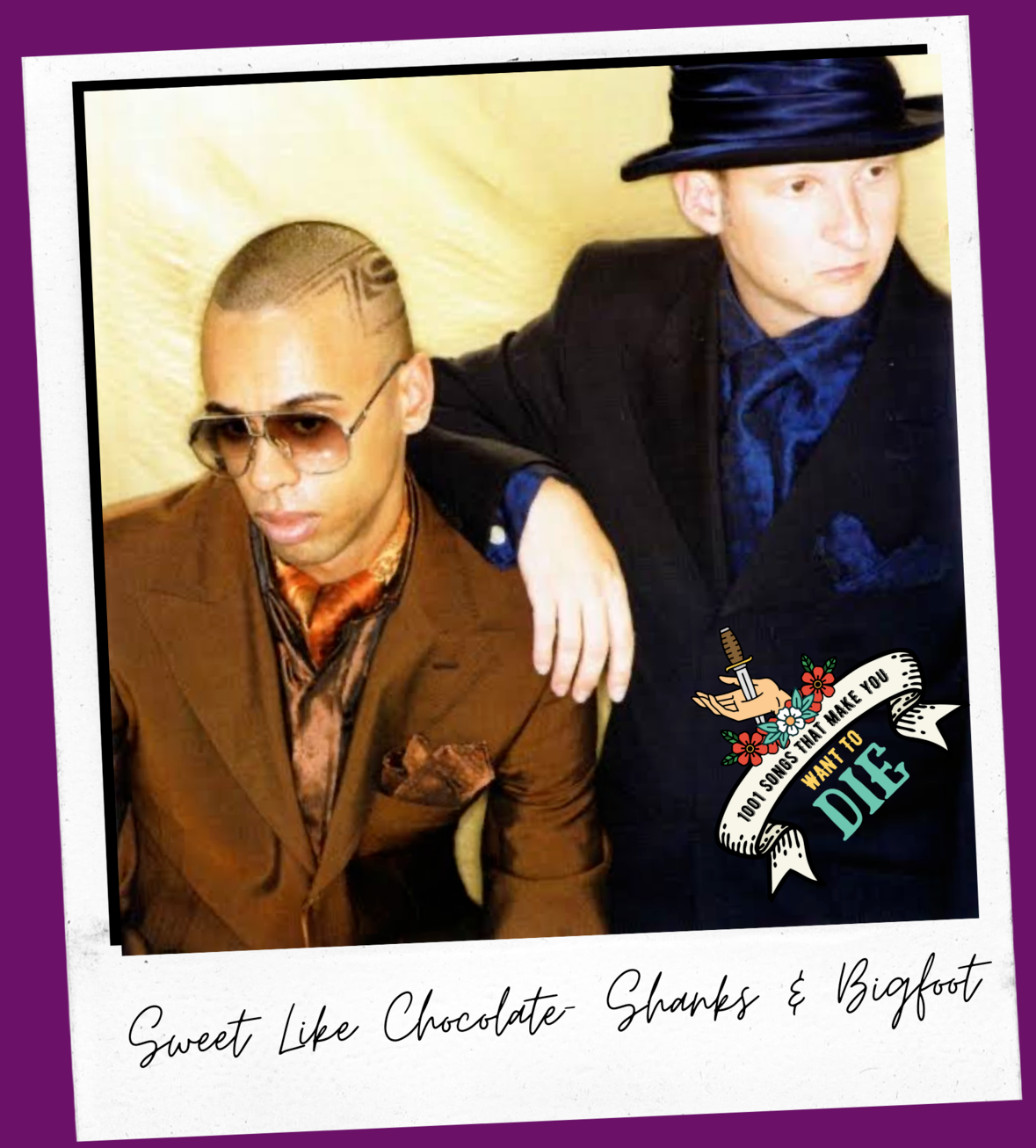
Sweet Like Chocolate, by Shanks & Bigfoot (their 1st and only #1)

2 weeks, from 23rd May – 6th June 1999

Sadly this has nothing to do with garage rock. Or with car repair. The genre stems from Paradise Garage, a NYC gay nightclub popular in the ‘70s and ‘80s (and which had been built as a parking garage back in the ‘20s). From there we can trace a route from disco in the seventies, to garage house in the eighties (alongside Chicago house acts like Steve ‘Silk’ Hurley), to the 90s when it crossed the Atlantic, got sped up, and became known as UK garage. From there we can look into a future of grime, and drill… A rushed potted history I know, but I’m very amused to discover that this often misogynist and homophobic genre can trace its family tree back to a gay bar presumably full of leather queens and cock-duster moustaches…

Not that there’s anything offensive about ‘Sweet Like Chocolate’. No, our introduction to garage is as light and fluffy as they come, with some staccato strings and a gentle brass section that builds over the 2-step beat that will become one of the sounds of the next few years. I’ll readily admit that I was never – now, or at the time – the biggest fan of the genre, but also that this is as pleasant an intro as we could have wished for.

What I’ve always remember about this record are the high-pitched vocals, from a singer named Sharon Woolf. And the animated video, in which the entire world is made of chocolate (and which now looks wonderfully dated). Oh yes, and the jokes at school about how this might not actually be about chocolate… You are sweet on the tip of my tongue, You are warm like the rays of the sun… (The steamy noises that Woolf makes in the extended original mix only serve to confirm my teenage suspicions.)

Shanks & Bigfoot were a duo called Steven Meade and Danny Langsman, who had had a #20 hit the year before, ‘Straight from the Heart’, under the name Doollally. Following the success of ‘Sweet Like Chocolate’, they released the same song, as Shanks & Bigfoot, and made #9. I wonder if there are any other songs which have charted twice by ‘different’ acts?

Though I’ll probably be down on the many of the garage records which will top the charts between now and 2002, I should emphasise the authenticity of the genre. Garage relied on underground nightclubs, MCs, and pirate radio to break through. I may not much like it, but it was the sound of the streets, like skiffle and punk had been to generations before. Which is something, in an era where manufactured pop held so much sway.

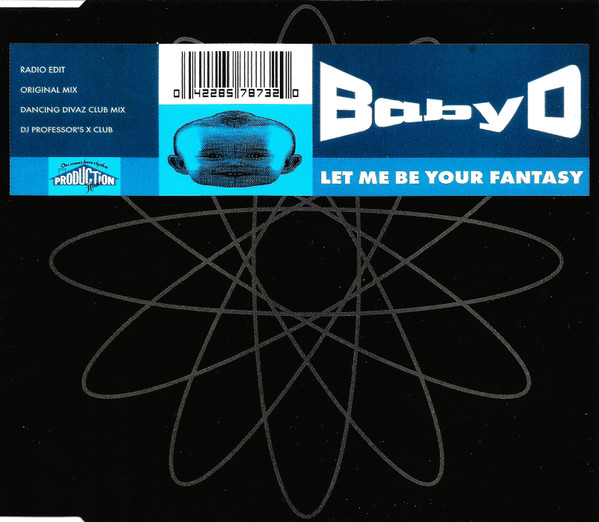
713. ‘Let Me Be Your Fantasy’, by Baby D

I know very little about dance music. I can just about tell my techno from my chillout, but you may have noticed from my previous posts on dance #1s that I play pretty fast and loose with the terminology. So indulge me while I throw around some ideas that may be complete nonsense…

Let Me Be Your Fantasy, by Baby D (their 1st and only #1)

2 weeks, from 20th November – 4th December 1994

‘Let Me Be Your Fantasy’ might be the most ‘hardcore’ dance chart-topper yet. The beat is either ‘house’, if we’re looking backwards, or ‘garage’ if we’re looking forwards. Is it maybe even the first ‘drum ‘n’ bass’ number one? I’ll also throw in the suggestion that it also incorporates ‘jungle’, if only because I think it sounds fun.

I could list dance sub-genres all day long (Wikipedia also suggests ‘breakbeat’ and ‘happy hardcore’) but to be honest, they mean little to me and probably mean as much to you. Let me give the quotation marks a rest, and describe what ‘Let Me Be Your Fantasy’ makes me feel… Well, it’s atmospheric – I like what sounds like a robot breathing in the mellow breaks between the verse – and the vocals are impressive. They’re the part of the song that feels the most familiar: a dance hit helmed by a large-lunged diva a la Black Box, or Snap!. Here the singer is Dorothy ‘Dee’ Galdes (presumably the ‘D’ in Baby D) and she has a wonderfully light-yet-full-bodied voice.

It’s another step towards the dance music that was dominating the charts when I came of age in the later part of the decade – dance music that had moved away from samples and novelty raps, dance music that had the confidence to strip things back, to drop the beats per minute, to let things breathe. This record is similar in that way to 1994’s other ‘cool’ dance hit by Tony Di Bart, rather than the more novelty offerings from Doop and Whigfield.

But I’ll also take that word ‘cool’, strengthen it into ‘cold’, and use it to describe how this song leaves me feeling. It’s not my thing, and as much as I try I can’t move past detached admiration as I listen and critique – much like I would an artefact in a museum – and I move on without particularly wanting to hear it again. I will always, sorry to say, enjoy the inane cheesiness of a 2 Unlimited song more…

Baby D had been around since the late eighties, and had scored a handful of minor hits earlier in the nineties. ‘Let Me Be Your Fantasy’ had been around since 1992, when it made #76 and become something of a lost classic. Until it was ‘found’, re-released, and it reached #1. Baby D followed it up with a couple of #3 hits before fading. Their last hit was a remix of this, their biggest hit, that made #16 in 2000. Their keyboard player, Terry Jones, took a slight change in direction and went on to write and produce for the Backstreet Boys, Eternal, and Peter Andre…