915. ‘Gotta Get Thru This’, by Daniel Bedingfield

After working our way through several UK garage #1s, of varying quality, we arrive at the ultimate early-noughties garage anthem…

Gotta Get Thru This, by Daniel Bedingfield (his 1st of three #1s)

2 weeks, from 2nd – 16th December 2001 / 1 week, from 6th – 13th January 2002 (3 weeks total)

That feels like a controversial statement, because garage is a genre of the streets, for young, black kids; whereas Daniel Bedingfield always seemed very white and very middle-class. And he isn’t even British! He’s a Kiwi. Maybe the fact that I’m classing this as the ‘ultimate early-noughties garage anthem’ shows how middle-aged and middle-class I am…

But that’s fine, because it’s a good song. And it still, surprisingly, feels fresh. It blends the garage beats with some nice dance touches, and a big pop sensibility. It’s not confronting, it’s not annoying – unlike some earlier garage chart-toppers – but it doesn’t lose its credibility. (Though, the spelling of ‘through’ as ‘thru’ in the title does come off as trying a little too hard to be ‘with it’.)

My main complaint with 2-step, garage songs is that the beat can be too light, too lacking in oomph. Bedingfield recorded this in his bedroom, using a mic and his PC, and pressed a few early copies which he sent out to DJs. For the label release, D’N’D Productions helped with remixing, and I’m not sure how responsible they were for the beefed up, poppier feel that this has compared to the earlier garage #1s.

‘Gotta Get Thru This’ is also refreshingly short, coming in at well under three minutes, which is another thing that makes it feel very modern. At 2:42, it is the shortest #1 since Robson & Jerome’s ‘I Believe’. And if we (happily) ignore that record’s existence, it is the shortest, semi-relevant chart-topper since Kylie’s ‘Tears on My Pillow’ twelve years before.

Perhaps another aspect of my reluctance to crown Daniel Bedingfield as champion of UK garage is that this record, his debut, wasn’t totally representative of his ‘sound’. His two further number ones are a lot more middle-of-the-road, a lot more mum-friendly (though this is certainly as mum-friendly as garage ever got). He released an impressive six singles – in a variety of genres – from his first album, across almost two years, and five of them made the Top 10.

Another noteworthy thing here is that when ‘Gotta Get Thru This’ returned to the top in the second week of January 2002, it did so with the lowest-ever sales for a number one single (around 25,500 copies). That was a sign of things to come, as the CD-single boom came to a rapid end, and is a record that will be ‘bettered’ by thirteen further #1s between now and 2008, when downloads eventually started to overtake physical sales.

905. ’21 Seconds’ by So Solid Crew

Garage music continues on its mission to be as annoying a genre as possible…

21 Seconds, by So Solid Crew (their 1st and only #1)

1 week, from 12th – 19th August 2001

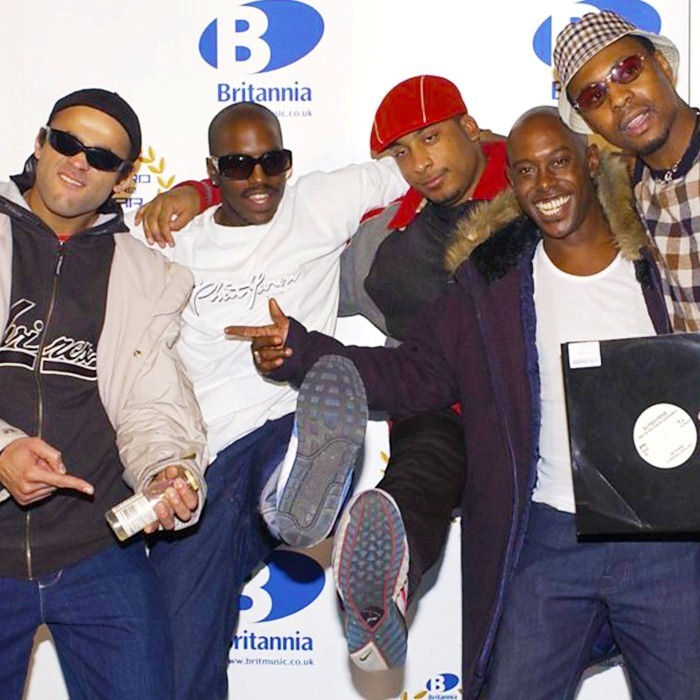
The three hardcore UK garage number ones – ‘Bound 4 da Reload’, ‘Do You Really Like It?’, and now this – feel like the musical equivalent of a teenager playing their music out loud at the back of the bus.

I could argue that I’m just an old fogey; but actually, I was fifteen when this made number one. I could easily have been that twatty teen. And while I’m sure me and my schoolmates were plenty obnoxious, none of us were ever into garage music. It felt very inner-city London; not small-town Scotland.

Like the two earlier garage #1s, this has lots of MCs spitting rhymes over a minimal 2-step production. The title refers to the fact that each performer gets twenty-one seconds to deliver their verse. Which at least keeps things quite fast-paced, and if one rapper doesn’t grab you then you know they won’t be on for long. Problem is, none of them grab me. And this isn’t me speaking as someone who doesn’t like rap music. There are rap songs I love. I named a rap song as my most recent Very Best Number One. It’s just that none of the rappers involved on this track have anything interesting to say.

What the title doesn’t refer to is there being twenty-one MCs on this track, though it starts to feel like it. There was actually a mathematical formula involved in creating the record. According to Wikipedia: “21 seconds is arrived at as the song’s tempo is approximately 140BPM, has a key of G minor, and each rapper has 12 bars of 4 beats (48 beats at 140BPM, when worked out to the nearest integer, rounds to 21 seconds).”

So Solid Crew had, at any one time, somewhere between nineteen and thirty members. Which makes them by far the biggest group to reach #1, although fewer than ten were involved in this track. The one member of So Solid that I can name with any confidence is Lisa Maffia, who is the only MC who sings her verse. Turns out I also recognise Romeo and Harvey, who had decent-ish solo careers away from the Crew. Interestingly, Oxide & Neutrino (of ‘Bound 4 da Reload’ fame) were So Solid members but didn’t feature on this track.

Of the three garage chart toppers that I mentioned, I would rank this in the middle. It’s not as intentionally annoying as DJ Pied Piper, and there is a lot of cultural relevance here. It’s punk for the new millennium, the sound of rebellious youth. It’s extremely modern, and there’s a clear line from this through to modern UK rap hits from the likes of Stormzy or Central Cee, while the I got twenty-one seconds to go, I got twenty-one seconds to flow chorus went just as viral, by 2001 standards, as Do you really like it, Is it is it wicked... I don’t like this record, but that’s down to personal taste. I must say, when I reviewed ‘Bound 4 da Reload’ I never thought I’d be placing it top of any list, but there was a joie de vivre in its ‘Casualty’ sampling novelty that is lacking in this song’s charmless slog through five minutes’ worth of identikit rapping.

One other thing worth mentioning here is the first appearance of the N-word in a number one single, in Megaman’s opening verse. I’m a big fan of tracking offensive language in chart-topping singles, from Lonnie Donegan’s ‘bloomin’’, to John Lennon’s ‘Christ!’, to Paul Weller’s ‘bullshit’. It feels like a switch was flicked the moment we hit the 21st century, with Oxide & Neutrino, and then of course Eminem, cramming their chart-toppers with vulgarity. All that’s left is the debut appearance of the c-word on top of the charts (and I don’t mean Coldplay…)

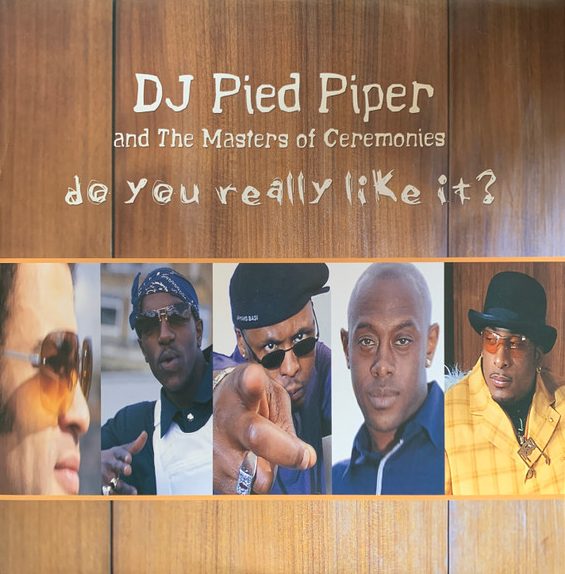
898. ‘Do You Really Like It?’ by DJ Pied Piper & the Masters of Ceremonies

Our next number one poses us a couple of questions… Do you really like it? Is it, is it wicked? And if these questions refer back to said next number one then my answers are no, and NO.

Do You Really Like It?, by DJ Pied Piper & the Masters of Ceremonies (their 1st and only #1)

1 week, from 27th May – 3rd June 2001

It’s hard to underestimate how much, back in 2001, this song’s hook became engrained in the popular conscience. We’re lovin’ it, lovin’ it, lovin’ it… We’re lovin’ it like that… It’s also hard to underestimate how annoying it became. Or maybe it isn’t hard. Maybe all it will take is one listen for the uninitiated to realise how terrible this record is.

At least the Do you really like it? and the Lovin’ it, Lovin’ it sections are memorable. They’ve been living rent free in my mind since I was fifteen. They’re only ten percent of this song, though. And I never realised, or had blanked out, how bad the rest of this record is: repetitive, nonsensical, unlistenable, with ugly, lurching changes in direction and tempo that make it difficult to even call it a song.

I thought that Oxide and Neutrino’s ‘Bound 4 da Reload’ was a low-point for 2-step garage, but I think that ‘Do You Really Like It?’ is even worse. At least the former had a kind of novelty value in the ‘Casualty’ theme sample, and the sweary spoken word bit from ‘Lock, Stock and Two Smoking Barrels’. Not a song I’d ever want to hear again, but sort of amusing at the same time. This though… Yeesh.

Though it is interesting how that 2-step beat has become a sort of early 2000’s shorthand, used by everyone from Craig David, to Bob the Builder, to this. And how garage can be incredibly hardcore, like I suppose this is, and also very poppy. DJ Pied Piper was the main driver behind this song, and was joined by four Masters of Ceremonies: MC DT, Melody, Sharky P and the Unknown MC. Maybe that explains its messiness, with all five members given their slot in which to impress. Sadly none of them do.

They got back together for one further single, ‘We R Here’, later in the year, but that failed to chart completely. And so DJ Pied Piper and the Masters of Ceremonies go down as gold star one-hit wonders. We will, however, have to grapple with further garage records in the near future. We can say with some confidence that none of them will be as bad as this.

868. ‘7 Days’, by Craig David

Of all the year 2000’s many, many number ones (this being twenty-four out of forty-two), is Craig David’s ‘7 Days’ its most famous…?

7 Days, by Craig David (his 2nd and final #1)

1 week, from 30thJuly – 6th August 2000

There aren’t many Brits of my vintage who can’t still recite Craig’s week of wooing: I met this girl on Monday, Took her for a drink on Tuesday, We were making love by Wednesday, and on Thursday, and Friday, and Saturday… (sounds exhausting, to be honest…) We chilled on Sunday…

Like his first chart-topper, ‘Fill Me In’, this is light and airy commercial garage. The Spanish guitar riff and insistent beat make it more instantly appealing than its predecessor, and the chorus is as memorable as they come. It’s calmer, more confident, a fact also reflected in the lyrics. No longer is Craig David creeping around behind his girlfriend’s parents’ backs. Oh no, here he’s picking up a twenty-four year old ‘cinnamon queen’ in an underpass… She asks him for the time, and the rest is history.

The call and response bit, in which his friends quiz him on his conquest, is fun too, Was it for real…? Damn sure… It’s like ‘Summer Nights’ for the new millennium. Elsewhere, though, it does meander a little. Again, this is garage’s problem, in that it is so breezy in places that sometimes it fails to land. But, I’ll stick with my initial claim, in terms of the record’s sound being peak-2000, and the chorus being an era-defining earworm.

It also feels very old-fashioned too, twenty-five years down the line, when everyone now meets their romantic partners on the apps. Imagine approaching someone in a subway (he’s using the word in the British sense, rather than the American) and asking them out on a date. The 2025 version of this song wouldn’t get past day one, and would probably end in a restraining order.

It would be easy to argue that Craig David’s career peaked early, with his first two solo singles giving him his only two number ones. But he’s had a near twenty-year stretch of Top 40 hits, and thirteen further Top 10s. I’ll give a shout out to ‘Walking Away’ and ‘Don’t Love You No More (I’m Sorry)’ as two favourites of mine. However, he is probably just as well known in Britain for being played in caricature by Leigh Francis on ‘Bo’ Selecta!’, a massively popular comedy. David has both claimed to have been fine with his portrayal in the show; and has described it as “racist blackface”, and “hurtful beyond belief”. He probably does have a point, though, in claiming that it affected his career.

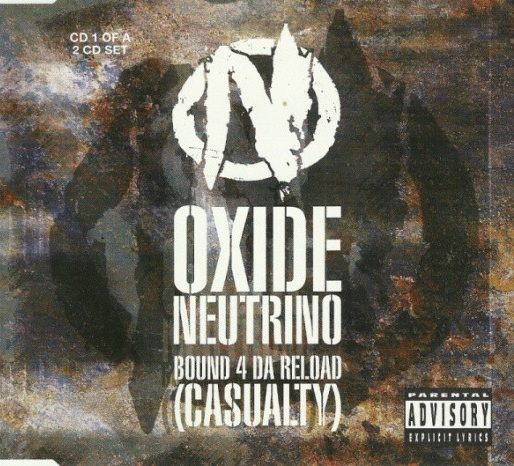
857. ‘Bound 4 da Reload (Casualty)’, by Oxide & Neutrino

The garage revolution picks up pace. All three so-called ‘garage’ chart-toppers that we’ve met so far, though, have been light and fluffy. Garage with the edges softened. Garages that you might find on a semi-detached house in a middle class suburb (Craig David did sing about a jacuzzi, after all).

Bound 4 da Reload (Casualty), by Oxide & Neutrino (their 1st and only solo #1s)

1 week, from 30th April – 7th May 2000

Here though is some proper garage. A garage covered with graffiti on an inner-city estate. Sirens. Gun shots. The theme tune from a long-running BBC hospital drama… Okay, that last bit doesn’t sound too street, but the sample from the ‘Casualty’ theme lends this record its name. It adds a dramatic energy to parts of the song, and works interestingly well when repeated on staccato synths. And it’s the only good thing about this record…

The rest of this song is abrasive nonsense. Bound for da bound bound for da reload… is the hook, repeated over and over, against a simple two-step beat. There’s some rapping, toasting, scatting, call it what you will. There’s a jarring spoken sample from the film ‘Lock, Stock and Two Smoking Barrels’ (Ah! Shit! I’ve been shot…) I was fourteen when this came out, and yet hearing it now I feel like an old fogey. It’s borderline unlistenable.

Having said that, the sweary sample above meant that ‘Bound 4 da Reload’ received little radio play, and so this probably passed me by unnoticed at the time. It does mean that it becomes one of a handful of chart-toppers so far to have featured swearing, and only the second after The Outhere Brothers to feature an F-bomb. But we’re on the precipice of swearing in number one singles becoming commonplace. Glancing down the list I can see the imminent debut of a certain bleach-blonde rapper, which will contain more swears than any previous number one combined.

Oxide and Neutrino were members of garage/hip-hop collective So Solid Crew, a group of anywhere between nineteen and thirty singers, rappers, DJs and MCs. In just over a year the group will score their one and only chart-topper, but it is Oxide & Neutrino who struck first here. Leading me to wonder, is this the only instance of someone enjoying a solo number one before their group has had one…?

Full, un-edited version:

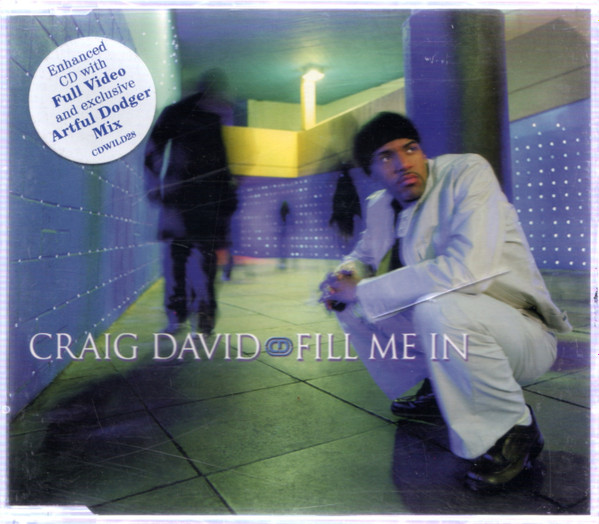
855. ‘Fill Me In’, by Craig David

If the year 2000 has a defining sound – and I’m far from convinced that it does, with so many chart-toppers crammed into its fifty-two weeks – then UK garage would be a strong candidate.

Fill Me In, by Craig David (his 1st of two #1s)

1 week, from 9th – 16th April 2000

These staccato, two-step beats have started to appear more regularly, with Shanks & Bigfoot last year, and to a lesser extent Gabrielle a few weeks ago. I never particularly liked garage at the time – it always felt too light, too airy, too difficult to grab a hold of. It dances around the beat, without ever committing to it. Garage makes me think of a hummingbird flitting from flower to flower, impossible to catch. A strange image for a musical genre, perhaps, but one that works for me.

And eighteen-year-old Craig David, Southampton’s most famous chart-topper, is an equally strong candidate for the year’s breakout star. He has a soft, honeyed voice, and controls this lyric-heavy song despite lacking what I would describe as ‘oomph’. (That’s what garage lacks – oomph!) It tells the story of a young couple trying to get jiggy in the face of her over-protective parents. Calls diverted to answer phone, Red wine bottle half the contents gone, Midnight return, Jacuzzi turned on… Can you fill me in? her folks ask.

Clearly Southampton is a bit posher than where I grew up, as I never knew anyone with a jacuzzi. The Wikipedia entry for ‘Fill Me In’ amusingly claims the song as a commentary on helicopter parenting, though I’m not sure there are many parents, helicopter or otherwise, that would be thrilled upon discovering their teenage daughter had been in a jacuzzi with the next door neighbours’ randy son, guzzling their wine. It is an interesting twist, however, to have a song about teenage lust told from the parents’ point of view.

Listening back to this now, a quarter of a decade later, and I’m more disposed to it than I was at the time. There’s something light, yes, but carefree too; though maybe that’s just nostalgia. As garage goes, this is way over to the poppier side of the genre. It owes as much to American R&B – TLC, Usher, Destiny’s Child and the like – as it does to UK MCs spitting rhymes on council estates.

Craig David had announced himself to the world as the vocalist on Artful Dodger’s ‘Re-Rewind (The Crowd Say Bo Selecta)’ right at the end of 1999. That is an era-defining single, although it fell just short of appearing in this countdown. (‘Bo Selecta’ is a phrase that will come to haunt David, but more on that later.) His second #1 is also a real cultural moment, leaving ‘Fill Me In’ in the strange position of being Craig David’s first chart-topper, but not one of the two songs everyone remembers him for.

847. ‘Rise’, by Gabrielle

If there was an award for the artist that has flirted most with the number one spot on the UK charts without ever getting a date – the ‘nearly number one’ award – then Bob Dylan would be hot favourite to win. ‘Mr. Tambourine Man’ and ‘The Mighty Quinn’ were written by him, he sang a couple of lines on ‘We Are the World’, while ‘Knockin’ on Heaven’s Door’ made it in a cover version. All we need now is for someone to sample Dylan on a chart-topping single…

Rise, by Gabrielle (her 2nd and final #1)

2 weeks, from 30th January – 13th February 2000

Well wouldn’t you know… Here is the Bob Dylan-sampling number one. He liked this record so much that he allowed Gabrielle to use the sample – the guitar chords and his vocal harmonies from ‘Knockin’ on Heaven’s Door’ – free of charge. This sample adds a certain excitement to ‘Rise’, but I’m not quite sure what about the song convinced the often cantankerous Dylan to donate his work for gratis.

It’s a delicate, pretty ballad, nicely sung and sparingly arranged, with the gentlest of garage beats. In the ultra-processed, ultra-poppy early days of the 21st century it is a pleasant change of pace at the top of the charts. But ‘Rise’ never quite, ahem, rises above that word: ‘pleasant’. It’s nice enough to hear when it comes on Smooth FM (it has probably been on their playlists for twenty-five years straight), but I’d never rush to search it out.

I’m pretty sure I wrote much the same about Gabrielle’s first #1, ‘Dreams’ (in fact, I gave that a ‘Meh’ Award). There is something safe and very mum-leaning about her two biggest hits. I’ll argue that ‘When a Woman’ (the retro-pop follow-up to ‘Rise’), ‘Out of Reach’ (the ‘Bridget Jones’ soundtrack hit from 2001), or 1996’s big, brassy ‘Give Me a Little More Time’ – would have been worthier number ones.

As much as neither particularly excites me, it is worth noting the near seven-year gap between Gabrielle’s two number one singles. So much musical water has gone under the bridge since 1993 (for a snapshot: ‘Dreams’ knocked UB40 off the top, while ‘Rise’ displaces Britney Spears) that it is impressive how she managed to come back with such a big hit. She would go on scoring Top 20 hits until 2004, and released her most recent album just last year.

So, two number ones for Gabrielle, the most famous eye-patch wearing pop star since Johnny Kidd. And only ten letters between both titles, ‘Dreams’ and ‘Rise’. Has any singer managed to get more success out of even shorter song names? Nichest of niche pop knowledge, but let me know in the comments if you can think of one!

845. ‘The Masses Against the Classes’, by Manic Street Preachers

The new millennium. The 21st century. The two thousands. The noughties. Here we go. Off with a bang.

The Masses Against the Classes, by Manic Street Preachers (their 2nd and final #1)

1 week, from 16th – 23rd January 2000

Could it be any more Manic to combine rushing punk rock, some of the most instant chord progressions of this entire year’s run of #1s, and extracts from Noam Chomsky and Albert Camus? All in a song named after a quote by Victorian-era Prime Minister William Gladstone.

Whatever you make of the their politics (the sleeve art for this was literally the Cuban flag), you can hopefully admire the way the Manics unashamedly used it in creating some of the day’s best rock music. Their first chart-topper ‘If You Tolerate This…’ referenced the Spanish Civil War, but the band had also received criticism from some of their die-hard fans for allegedly selling out with a softer, more pop-leaning sound.

Which means that ‘The Masses Against the Classes’ works as a socialist anthem, but also as a middle finger to those that accused them of discarding their punk roots. Hello it’s us again… sneers James Dean Bradfield, after a distorted rip-off of the Beatles’ ‘Twist and Shout’… We’re still so in love with you… Success is an ugly word, Especially in your tiny world… It all culminates, as the guitars splinter and distort, with that Camus quote: A slave begins by demanding justice, And ends by wanting to wear a crown… Which, if you think about it, is the best description of toxic fandom going.

For such an influential genre, punk rock has been very poorly served at the top of the charts. Which makes sense, for what could be less punk than having commercial success? I have at various points argued for ‘School’s Out’, ‘Pretty Fly (For a White Guy)’, and even Mr. Blobby, being the most punk number ones. Add to that stellar list, then, ‘The Masses Against the Classes’. Punk aside, it’s just nice to hear some freaking guitars back at the top of the charts!

Not this record’s success indicates in any way that the year 2000 is going to see a rock resurgence after the pop-heavy late-nineties. Sorry, things are going to stay just as poppy over the course of this year’s forty-two chart-toppers (a record turnover of #1s). The Manic Street Preachers were one of the few guitar acts that could break through to the top at this time, and they did so by releasing in dead mid-January, and by publicly deleting the single from production on the Monday it was released (which is also very punk, to be fair).

All this also means that it stands out as a bit of an oddity in the Manics’ back-catalogue. One of their two #1s, that very few casual listeners could sing the chorus to. There are far better known songs by the band that didn’t make it so high in the charts, but then isn’t that the way with so many acts? They would go on scoring Top 20 hits until the early 2010s, and are releasing their 15th studio album later this month. I feel a Manic Street Preachers’ ‘Best of the Rest’ is a post I’ll be doing soon enough…

The only video made was this live version, recorded in Cardiff on the Millennium’s Eve…

The studio version…

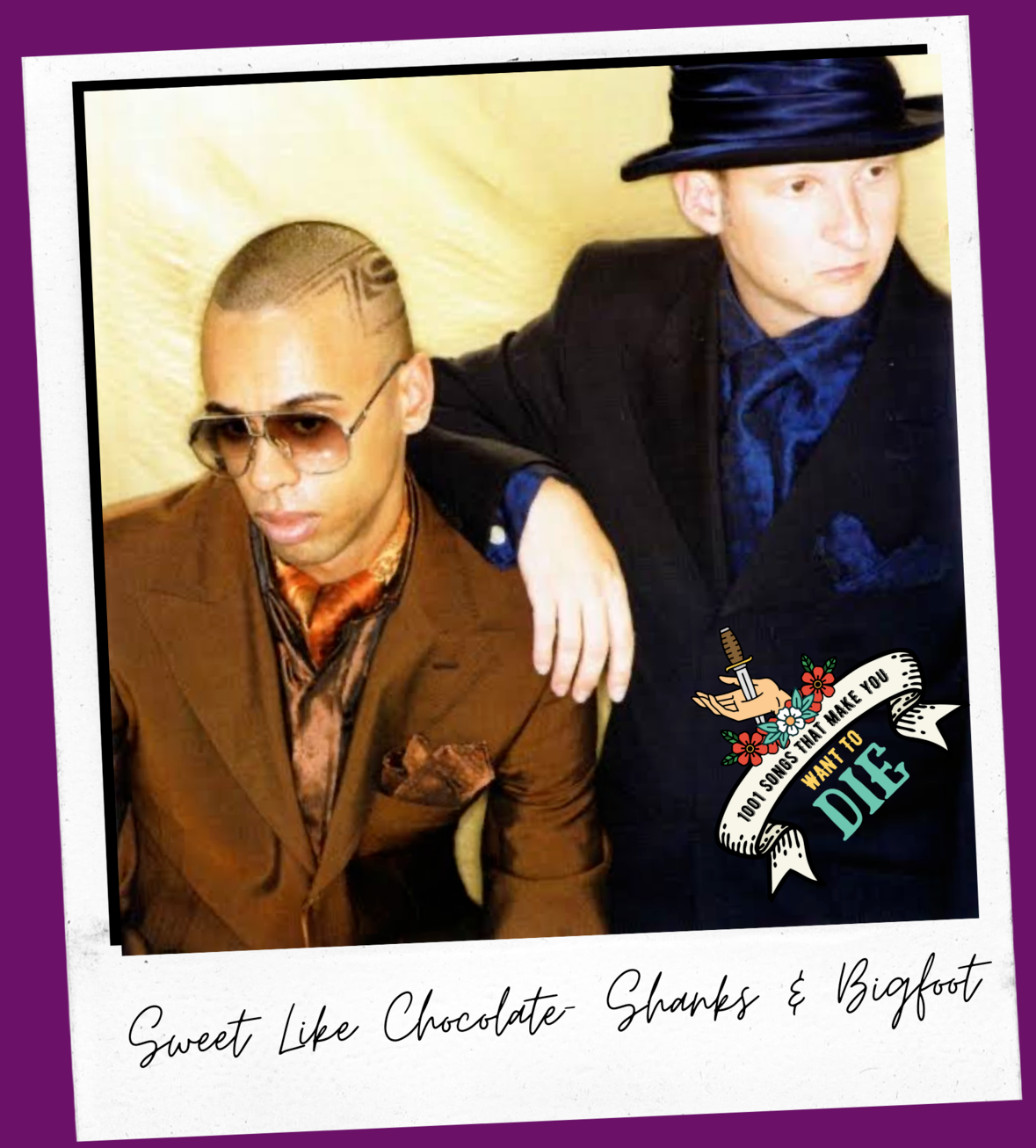
825. ‘Sweet Like Chocolate’, by Shanks & Bigfoot

I was about to sound the random dance hit klaxon, 1999’s most used alarm, before I noticed that this next number one isn’t really dance. I was going to claim it as drum ‘n’ bass, but then realised that it was actually our first example of a very turn-of-the-century genre: garage.

Sweet Like Chocolate, by Shanks & Bigfoot (their 1st and only #1)

2 weeks, from 23rd May – 6th June 1999

Sadly this has nothing to do with garage rock. Or with car repair. The genre stems from Paradise Garage, a NYC gay nightclub popular in the ‘70s and ‘80s (and which had been built as a parking garage back in the ‘20s). From there we can trace a route from disco in the seventies, to garage house in the eighties (alongside Chicago house acts like Steve ‘Silk’ Hurley), to the 90s when it crossed the Atlantic, got sped up, and became known as UK garage. From there we can look into a future of grime, and drill… A rushed potted history I know, but I’m very amused to discover that this often misogynist and homophobic genre can trace its family tree back to a gay bar presumably full of leather queens and cock-duster moustaches…

Not that there’s anything offensive about ‘Sweet Like Chocolate’. No, our introduction to garage is as light and fluffy as they come, with some staccato strings and a gentle brass section that builds over the 2-step beat that will become one of the sounds of the next few years. I’ll readily admit that I was never – now, or at the time – the biggest fan of the genre, but also that this is as pleasant an intro as we could have wished for.

What I’ve always remember about this record are the high-pitched vocals, from a singer named Sharon Woolf. And the animated video, in which the entire world is made of chocolate (and which now looks wonderfully dated). Oh yes, and the jokes at school about how this might not actually be about chocolate… You are sweet on the tip of my tongue, You are warm like the rays of the sun… (The steamy noises that Woolf makes in the extended original mix only serve to confirm my teenage suspicions.)

Shanks & Bigfoot were a duo called Steven Meade and Danny Langsman, who had had a #20 hit the year before, ‘Straight from the Heart’, under the name Doollally. Following the success of ‘Sweet Like Chocolate’, they released the same song, as Shanks & Bigfoot, and made #9. I wonder if there are any other songs which have charted twice by ‘different’ acts?

Though I’ll probably be down on the many of the garage records which will top the charts between now and 2002, I should emphasise the authenticity of the genre. Garage relied on underground nightclubs, MCs, and pirate radio to break through. I may not much like it, but it was the sound of the streets, like skiffle and punk had been to generations before. Which is something, in an era where manufactured pop held so much sway.

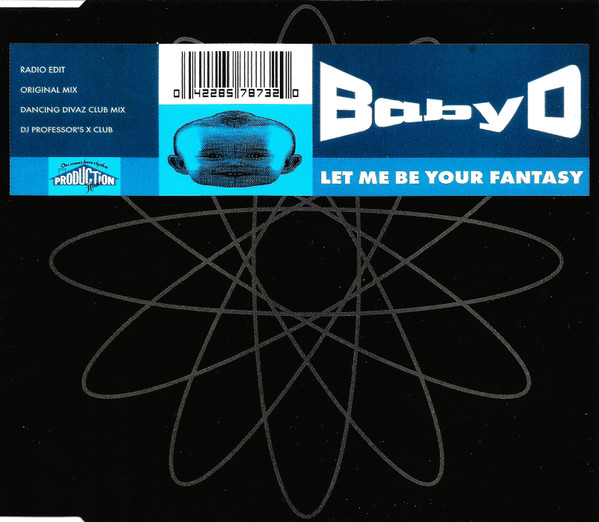
713. ‘Let Me Be Your Fantasy’, by Baby D

I know very little about dance music. I can just about tell my techno from my chillout, but you may have noticed from my previous posts on dance #1s that I play pretty fast and loose with the terminology. So indulge me while I throw around some ideas that may be complete nonsense…

Let Me Be Your Fantasy, by Baby D (their 1st and only #1)

2 weeks, from 20th November – 4th December 1994

‘Let Me Be Your Fantasy’ might be the most ‘hardcore’ dance chart-topper yet. The beat is either ‘house’, if we’re looking backwards, or ‘garage’ if we’re looking forwards. Is it maybe even the first ‘drum ‘n’ bass’ number one? I’ll also throw in the suggestion that it also incorporates ‘jungle’, if only because I think it sounds fun.

I could list dance sub-genres all day long (Wikipedia also suggests ‘breakbeat’ and ‘happy hardcore’) but to be honest, they mean little to me and probably mean as much to you. Let me give the quotation marks a rest, and describe what ‘Let Me Be Your Fantasy’ makes me feel… Well, it’s atmospheric – I like what sounds like a robot breathing in the mellow breaks between the verse – and the vocals are impressive. They’re the part of the song that feels the most familiar: a dance hit helmed by a large-lunged diva a la Black Box, or Snap!. Here the singer is Dorothy ‘Dee’ Galdes (presumably the ‘D’ in Baby D) and she has a wonderfully light-yet-full-bodied voice.

It’s another step towards the dance music that was dominating the charts when I came of age in the later part of the decade – dance music that had moved away from samples and novelty raps, dance music that had the confidence to strip things back, to drop the beats per minute, to let things breathe. This record is similar in that way to 1994’s other ‘cool’ dance hit by Tony Di Bart, rather than the more novelty offerings from Doop and Whigfield.

But I’ll also take that word ‘cool’, strengthen it into ‘cold’, and use it to describe how this song leaves me feeling. It’s not my thing, and as much as I try I can’t move past detached admiration as I listen and critique – much like I would an artefact in a museum – and I move on without particularly wanting to hear it again. I will always, sorry to say, enjoy the inane cheesiness of a 2 Unlimited song more…

Baby D had been around since the late eighties, and had scored a handful of minor hits earlier in the nineties. ‘Let Me Be Your Fantasy’ had been around since 1992, when it made #76 and become something of a lost classic. Until it was ‘found’, re-released, and it reached #1. Baby D followed it up with a couple of #3 hits before fading. Their last hit was a remix of this, their biggest hit, that made #16 in 2000. Their keyboard player, Terry Jones, took a slight change in direction and went on to write and produce for the Backstreet Boys, Eternal, and Peter Andre…