236. ‘San Francisco (Be Sure to Wear Some Flowers in Your Hair)’, by Scott McKenzie

And so we reach the final part of our Summer of Love trilogy. Three songs. Thirteen weeks. One summer that (kind of) changed the world. The psychedelic weirdness of Procol Harum, The Beatles going for a full-on hippy love-in, and now this. An ode to the city where it all started.

483967-g-cvr-120820-mckenzie-638a.jpg

San Francisco (Be Sure to Wear Some Flowers in Your Hair), by Scott McKenzie (his 1st and only #1)

4 weeks, from 9th August – 6th September 1967

If you’re going, To San Francisco, Be sure to wear, Some flowers in your hair… The music is acoustic: folky and wistful… Very 1965 – already sounding a little old-fashioned in mid-’67. Something’s going ‘ting’. Somebody’s clapping their hands. In the streets, Of San Francisco, Gentle people, With flowers in their hair… (Apparently all the references to ‘flowers’ and ‘gentle people’ were added to make hippies sound less frightening!)

The singer, Scott McKenzie, also sounds as if he’s from another time, a little old-fashioned. Kind of clipped and proper. A bit square, if we’re being honest, like he’s chronicling the scenes in the parks of San Francisco, an observer rather than a partaker. I dunno, I’m left slightly underwhelmed. For the ‘unofficial anthem of the flower-power movement’ I’d have expected something a little more revolutionary…

But, you know, it’s a cute song. I like it. I knew it, as most people do, as a chorus in the back of my mind. And the most interesting bit comes in the middle-eight, when McKenzie breaks the fourth wall and explicitly references the counter-culture movement: All across the nation, Such a strange vibration, People in motion… There’s a whole generation, With a new explanation… The beat here is spikier, more urgent. It sounds almost like a rallying call.

879118791154_1

I’ve been to San Francisco twice. Once as a kid, and once just last summer. When one night, in the heart of downtown, a guy walked past us bellowing this very song out at the top of his lungs. San Fran being San Fran, he wasn’t oddest oddball we’d seen that day, or even that evening. But I liked the fact that the song was still there, still an anthem of the city fifty years on. And there is something about San Francisco, still, even if downtown is full of meth addicts and Haight-Ashbury is now a bit of a tourist trap. Something in the air that suggests that it could start a revolution again, if it wanted to…

I’m still not sure if Scott McKenzie himself was much of a hippy. He had quite long hair, but then everybody did in the sixties… What I do know is that he is a near perfect example of a one-hit wonder: his only other charting single in the UK reached #50. He was something of a journeyman singer-songwriter, even in 1967, having been in doo-wop and folk bands since the start of the decade. Post ‘San Francisco’, he performed with The Mamas and the Papas, and co-wrote The Beach Boys’ eighties hit ‘Kokomo’. He passed away in 2012.

So that’s that for the Summer of Love. Three game-changing #1 singles: one timeless, one crazy, and one pretty nice. Up next, we slip right back into the easy-listening mulch that has made up so much of 1967. But let’s not think about that just yet. Let’s focus instead on the fact that this is only the 3rd chart-topper to reference a city, after Jimmy Young’s ‘The Man From Laramie’ in 1955, and Winifred Atwell’s ‘The Poor People of Paris’ back in 1956. If we extend that to ‘places’, we could include The Song from ‘Moulin Rouge’, and, at a bit of a push, ‘The Garden of Eden’… Worth noting, though, as it’s not a common topic for #1 hits…

My Spotify playlist, for your pleasure:

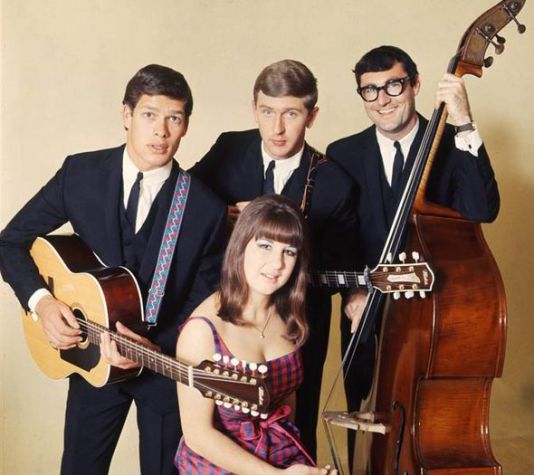
206. ‘The Carnival Is Over’, by The Seekers

Another dose of easy-listening, faux-folk from Australia’s biggest band? (That wasn’t a question – you’re getting it whether you like it or not.)

1965_music_seekers_03

The Carnival Is Over, by The Seekers (their 2nd and final #1)

3 weeks, from 25th November – 16th December 1965

I just about managed to see the positive side of The Seekers’ first number one, ‘I’ll Never Find Another You’, for all it’s tweeness. But I think I’ll have to draw the line here… The term ‘dirge’ has cropped up once or twice in recent entries – The Beatles experimented with it in the background on ‘Ticket to Ride’, while ‘I Got You Babe’, for all its cuteness, was propped up with a pretty flat bass rhythm. ‘The Carnival Is Over’, though, is A Dirge, plain and simple.

The beat plods, the backing vocals are lifeless. You can almost picture the coffin being lowered into the ground. You start wishing they’d just get on with it… Say goodbye, My own true lover, As we sing, A lover’s song, How it breaks it my heart to leave you, Now the carnival is gone… Judith Durham, the lead singer, is once again on fine Sunday school teacher round the campfire form. Don’t get me wrong, she sings it very well; but it’s painfully proper.

It’s a song about two lovers, Pierrot and Columbine. Has Columbine fallen in love with a traveller? A handsome stranger who set up camp for a week or two? It’d have to have been a sailing carnival, thanks to the line about ‘harbour lights’… So maybe not. Or is ‘the carnival’ a metaphor for love, a love that’s no longer? Though the carnival is over, I will love you ‘till I die…

This record follows the same formula as The Seekers’ first #1, in that it was written and produced by Tom (brother of Dusty) Springfield. The melody was borrowed from an old Russian folk song, and once you learn that you think ‘Yes!’, this tune would make complete sense when bellowed out by a sturdy serf, gathering hay on the steppe. Not so much as a hit single in 1965. Yes, yes, yes it’s part of the folk-rock movement that’s become huge this year, but it’s a spectacularly lifeless song. You just want to shake them by the shoulders and tell them to liven it up a bit.

Apparently Springfield was inspired to write the lyrics after seeing the Rio carnival. Which seems hard to believe, as this record doesn’t exactly scream samba and piña coladas on the beach. In the bridge, there is an attempt at livening things up, with a nifty Spanish guitar riff. But that’s it. Plus the bridge also has a line about kisses ‘sweet as wine’, which is a metaphor I’ve never understood, what with most wines not being sweet at all. It should be ‘sweet as sherry’ is all I’m saying.

Scan-from-2019-05-22-04_05_28-PM-2-500x510

And so we plod to a close. That’s that for The Seekers at the top of the UK charts. They would have three further Top 10 singles before splitting in 1968. They’ve reformed twice since then, and still perform to this day, minus Durham who retired in 2013. They were huge in their homeland, and were even voted ‘Australians of the Year’. I can see why, too, what with US and UK acts dominating since the dawn of rock ‘n’ roll, it’s always nice to feel a local connection to a successful artist.

One more thing to say about ‘The Carnival Is Over’ – it was a spectacularly high-selling record. Late 1965 seems to have been a high point for record sales as, after Ken Dodd’s ‘Tears’ had become the 3rd best-selling single of the decade, this disc also did well over a million. At last count it was sitting at No. 30 in the best-sellers of all time list. Not bad for a dirge. I’m clearly in the minority…

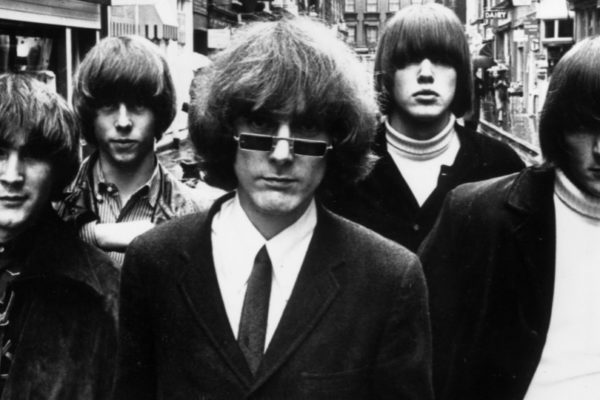
199. ‘Mr. Tambourine Man’, by The Byrds

Heading towards the big two zero zero, and our next record opens with a riff that every man and his dog has heard, probably more than once. File it alongside ‘Shakin’ All Over’ and ‘You Really Got Me’ as one of the most prominent riffs to have wound up at the top of the charts so far.

the-byrds-Getty-600x400

Mr. Tambourine Man, by The Byrds (their 1st and only #1)

2 weeks, from 22nd July – 5th August 1965

But, unlike the two records I just mentioned, this isn’t an aggressive riff. There’s no lust here. It’s a riff that, instead, aims for the heart. It’s the musical equivalent of the sun streaming out from behind a cloud. And when the vocals kick in it only adds to the effect. Hey mister tambourine man, Play a song for me… I’m not sleepy and, There ain’t no place I’m goin’ to… Suddenly we’re in California, on a long stretch of golden sand, watching the surf break and the gulls soar…

Lyrically, too, we’re far from home. These are the most abstract, poetic lyrics we’ve heard in this countdown. ‘Mr. Tambourine Man’ is the only #1 so far to have an ‘Interpretations’ section to its Wikipedia page. Take me for a trip upon your magic swirling ship, Oh my senses have been stripped, And my hands can’t feel to grip… Not weird enough for you? How about the moment when you expect a chorus (I love the way they draw it out, prolong the pleasure, by adding this gorgeous bridge) but get an insistent plea: I’m ready to go anywhere, I’m ready for to fade, On to my own parade, Cast your dancin’ spell my way…

Huh. I think, you know, that they may be making some drug references there. Going for trips, and senses being stripped… It’s the summer of ’65, and counter-culture has arrived at the top of the UK singles charts. The sixties are really starting to swing. Groovy, baby!

It’s not just the lyrics that feel like something new, though. There’s the jingle-jangle guitars (referenced in the jingle-jangle morning lyric), the structure of the song – chorus, verse, verse, chorus – and the long, trippy fade-out. As with so many of our chart-toppers over the past two years, ‘Mr. Tambourine Man’ sounds like the stakes being raised. It’s the sound of pop music being pushed forward.

P6180009_ml

It’s folk rock, but it’s a mile away from the couple of folk rock hits we’ve covered previously. The Highwaymen’s ‘Michael’ sounds like it was from another century – well, it was 1961 – while The Seekers sounded like they were merely playing at being folkies. The Byrds are the real deal. Who was the tambourine man? What was his ship? Does it matter? Just listen, and let yourself be swept away… Meanwhile, this song’s folk-rock credentials are helped massively by the fact it was written by a certain Robert Allen Zimmerman.

Bob Dylan will never (gasp!) top the singles charts as an artist. But this is the first of three #1s that he will enjoy as a composer. (I think it’s three… please correct me if I’m wrong… He has written an awful lot of songs…) Dylan’s version is, naturally, twice as long as this one – and it’s safe to say that The Byrds make it their own. He’s also gone on to deny that it’s in any way about drugs. So there you go.

‘Mr. Tambourine Man’ was The Byrds first hit in both the US and the UK – impressive considering they had only formed the year before. Following this, they were more successful in their homeland (‘Turn! Turn! Turn!’ hit the top there while it only reached #26 in Britain.) But even in the US their popularity didn’t last long. They were just too darn experimental, it seems, to maintain chart success. They went psychedelic, then Indian, then country, all the while changing members like most bands change socks… It couldn’t last; but their influence lingers on.

I’ve mentioned it many times before, but the vast majority of Merseybeat, R&B and rock groups that we’ve met since the Beat explosion have been British. Compare that to the fifties, when every rock ‘n’ roll hit, good or bad, was coming from across the Atlantic. Slowly but surely, though, the Americans are now staking their claim on the sixties. We’ve had some Motown, some Spector-patented Wall of Sound, and now some sun-drenched Californian folk-rock. There may not be too many US #1s at the moment; but when they do arrive, they’re golden.

188. ‘I’ll Never Find Another You’, by The Seekers

For the first time in a good nine months – since The Four Pennies’ bland ode to ‘Juliet’ – do we arrive at a #1 single that I have never heard before. This is how it used to be, of course, in the pre-rock days – before rock ‘n’ roll came along, with all those famous songs in tow. Almost every post was a step into the unknown…

152374

I’ll Never Find Another You, by The Seekers (their 1st of two #1s)

2 weeks, from 25th February – 11th March 1965

Speaking of rock ‘n’ roll, and the fifties and all that… The opening chords of this latest chart-topper sound a lot like ‘La Bamba’. A mellower, more folksy version of the Ritchie Valens hit to be sure, but they’re there. It’s a promising opening… that lasts until the singers open their mouths…

There’s a new world somewhere, They call the promised land, And I’ll be there someday, If you could hold my hand… Several earnest, fresh-faced voices chime together. I’m getting strong Christians-round-a-campfire vibes… I still need you there beside me, No matter what I do, For I know I’ll never find another you… Or maybe proto-hippies, the first feelers of a movement that will go full-on mainstream in a couple of years? The lyrics sure do sound like they could be about joining a commune (‘The promised land’?)

Not quite. This record is, though, our first slice of sixties folk-rock. The gentle guitars, the clear vocals, the tambourine that gets a good shaking in the background… It’s a genre that I don’t think was ever quite as popular in the UK as in America, where Peter, Paul and Mary, The Byrds, The Mamas and the Papas, Simon & Garfunkel and, of course, Bob Dylan were big, big stars. But we’d had fair warning of it – remember back in 1961, when the collegiate folk band The Highwaymen scored a surprise #1 with their version of ‘Michael’ (Row Your Boat etc. etc.)? They were from across the pond, too.

731107311054_1

I’m not convinced by this song, to be honest… There’s something a bit cloying about it, a bit happy-clappy. And the lead singer – Judith Durham – sounds kind of like a Sunday school teacher gone rogue. Plus the lyrics don’t really go anywhere – it’s just a long list of what she can do with her man by her side… When I walk through the storm you’ll be my guide… and I could lose it all tomorrow, And never mind at all… etcetera and so on. It’s not terrible; but it’s the worst number one for a while. Probably since ‘Juliet’, the last chart-topper that I’d never heard of… And in its defence, we’ve just enjoyed the highest-quality run of #1 singles in British chart-history, and it would be unfair to completely write a record off just because it doesn’t hit the heights of ‘A Hard Day’s Night’ or ‘You’ve Lost That Lovin’ Feelin’.

I am, for example, a sucker for those yearning chords that pop up time and time again in folk-rock. See lines like You’ll be my someone, Forever and a day… Or If I should lose your love dear, I don’t know what I’ll do… The first song I ever loved – I’m reliably informed, as I was too young to remember – was ‘Puff the Magic Dragon’, which I would sing anywhere and everywhere as a toddler, driving everyone around me to the edge of insanity. And ‘Puff’’s got plenty of those yearning, minor-key chords in it. Who knows – maybe I’m a folky at heart?

Of course, all that stuff I just spouted about ‘I’ll Never Find Another You’ being an all-American slice of hippyish folk is undone by the fact that The Seekers were Australian, and that the song was composed by British songwriter Tom Springfield (brother of Dusty – who keeps cropping up via other people’s songs – when will she appear on her own merits?) But hey. It sounds American, and was definitely influenced by American folk-rock artists of the day, so we’re claiming it for the Yanks.

To finish, I’ll return to the pre-rock days that I mentioned at the start of the post. Back then, as Vera Lynn, Dickie Valentine, Winifred Atwell et al were jostling for attention at the top of the charts, the word I reached for more often than most was ‘twee’. And that’s what this is: the twee-est number one single we’ve had in a long time. Altogether then, grab the marshmallows and back round the campfire for another singalong!

Catch up with this handily compiled playlist!

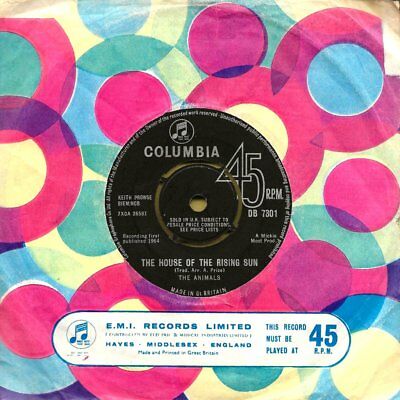
172. ‘The House of the Rising Sun’, by The Animals

What have we here, then? A riff kicks in – and keeps on kicking for the next four and a half minutes – beckoning us towards a song about a whorehouse-slash-gambling den. Is this the moment in which the ‘and roll’ is dropped, and ‘rock’ strikes out on his own, with a capital R, O, C and K?

via-abkco-records-b8dfd84a5f29dc9250e2a8cc1c62a10fe6b81eab-s800-c85

The House of the Rising Sun, by The Animals (their 1st and only #1)

1 week, from 9th – 16th July 1964

It’s an ominous, minor-key intro. Nothing good is going to come of it. And when the vocals start, the mood darkens further. There is, A house, In New Orleans… They call the Rising Sun… (I’ve always liked the flamboyant way that the singer pronounces ‘New Orlay-ons’ in his sonorous voice.) And it’s been the ruin, Of many a poor boy, And God, I know, I’m one…

A young man, son of a tailor-woman and a gambler, heads into the latter-day Sodom and Gomorrah that is The Big Easy, and comes unstuck. How exactly he comes unstuck isn’t elaborated on – it is still only 1964, after all – but you can imagine. Cards, booze, women… If this were a movie, then the frenzied organ solo at the midway point would be the soundtrack to his descent into depravity.

Then comes a word of warning: Oh mother, Tell your children, Not to do what I have done… Except, the singer can’t heed his own advice – can’t resist the temptation of New Orleans: I got one foot on the platform, The other foot on the train, I’m going back to New Orleans, To wear that ball and chain… The organ grows more and more intense, the vocals wracked and howling – a voice that could cause avalanches. It’s completely different to Roy Orbison’s approach in the preceding #1, but it’s every bit as impressive. And the final, drawn-out horror movie chord that the song ends on is, frankly, terrifying.

This is something different… Every so often we arrive at #1s which feel like a level-up – chart-topping discs that raise the stakes (gambling pun very much intended). ‘Rock Around the Clock’, ‘Great Balls of Fire’, ‘How Do You Do It?’… and now this. After ‘House of the Rising Sun’ has blasted your eardrums, The Beatles and their Merseybeat chums sound like school kids. The Animals were men. The name alone is raw, and untamed. It’s also the longest number one single so far by some distance. The Animals didn’t edit their singles for nobody!

The-Animals-The-House-Of-The

They were a five-piece from Newcastle, and the lead singer with the voice of a wolf was one Eric Burden, a man who started smoking aged 10, fell in love with an older woman aged 13, and who preferred drinking ale to going to school (they breed them tough in the north-east.) He is, allegedly, The Eggman of ‘I Am the Walrus’ fame, due to an incident involving amyl nitrate and a fried breakfast… I really want to read his autobiography. Besides this disc, The Animals gave us two more ‘Best of the 60s’ perennials – ‘Please Don’t Let Me Be Misunderstood’ and ‘We’ve Got to Get Out of This Place’. They weren’t ones for shortening their song titles either…

‘House of the Rising Sun’ has an equally interesting, and hard-edged history. Sources differ, but it seems certain that the song is as old as the 17th century. It originated either in England or France. The lyrics were originally about a woman led astray; The Animal’s version was the first to reverse the gender.

If this record hitting #1 is a game-changer – giving us pure, southern R&B at the top of the hit parade – then it has to be viewed as the first of a two-parter. While this is a seminal record; The Animals chart career didn’t last. Our next, bluesy chart-topper may not be as well-known, but the group that recorded it are perhaps the most famous rock ‘n’ roll band in history…

127. ‘Michael’, by The Highwaymen

We begin our next chart-topper with a whistle. We haven’t had a whistle-y #1 for a while, maybe not since the ‘Age of Whistling’ back in 1957-’58. And then an oh-so gentle, almost soothing acoustic guitar comes in…

the-highwaymen_thumb

Michael, by The Highwaymen (their 1st and only #1)

1 week, from 12th – 19th October 1961

Back in my last post, I asked you to imagine this year, 1961, as a huge variety show, with all manner of artists on the bill. Well, keep that image in mind and picture, as The Shadows wrap up their little Hawaiian interlude, the curtains parting to reveal a forest backdrop, a pile of leaves and upturned logs, a ‘fire’ made from strips of crepe paper and a fan, and five fresh-faced boys – The Highwaymen.

The tune is instantly recognisable, by anyone who’s visited a church, or been a Boy Scout, or attended a Primary School… Michael row the boat ashore, Hallelujah, Michael row the boat ashore, Hallelujah… Just when you thought 1961 couldn’t get any more eclectic – we’re getting a hymn!

Fifty percent of this song is that very chorus, repeated over and over, and over. In between, each Highwayman takes turns in singing a single-line verse: Sister help to trim the sails, Hallelujah… The river Jordan is chilly and cold, Hallelujah… The river is deep and the river is wide, Milk and honey on the other side… Hallelujah, Hallelujah and Hallelujah… It ends with the same haunting whistles that kicked us off. And that’s it.

Wiki lists this as ‘Collegiate Folk’, and I am 100% certain that this is the first and only ‘Collegiate Folk’ record to top the UK Singles Charts. It’s a very accurate genre title too, as all five Highwaymen were undergraduate students at Wesleyan University in Connecticut. Under what circumstances they went from a mere college band to trans-Atlantic chart-toppers is unclear. It really does beg the question…

the-highwayman-michael-ex-united-artists-1961

…what in seven hells is this doing atop the UK hit parade? If you thought The Temperance Seven or Shirley Bassey’s show-tunes were a bit on the random side then this is completely out of the left-field. At the same time, though, I will at some point have to realise and accept that literally anything can top the singles chart. We’ve had some weird number ones; and there is weirder to come, trust me on that.

And yet… This may be a weird chart-topper; but it’s a very simple, very normal song. Kinda dull. You can understand why Benny Hill, and Mr Blobby, and The Teletubbies – with all their technicolour silliness – have UK #1s more than you can understand this becoming the biggest selling single in the country for one week in the autumn of ’61. The five boys in this band – Dave, Bob, Chan and two Steves – are spectacular in their ordinariness. They look like the sweetest bunch of apple-pie lovin’, church-goin’, all-American boys-next-door. A ‘highwayman’, as far as British readers will be aware, was a 17th-18th century armed robber, which makes it look like an odd choice of band name for such sweet looking lads. Even their voices are – how to put this nicely? – fairly ordinary. But what do I know – maybe their ordinariness is what won people over? They are clearly not trying to be Elvis, or Liberace, or even Cliff, and people do like an everyman with an acoustic guitar…

I have to admit that – as one of the most irreligious people around – I want to hate this record. But I can’t. It’s a nice song. It’s soothing. I’ll put it on next time I can’t sleep. And The Highwaymen didn’t much bother the charts after this. All but one of them returned to their studies after the success died down. But maybe, just maybe, the folk scene that grew so big in the mid-to-late sixties – The Byrds, The Seekers, Peter, Paul and Mary, even Bob Dylan – can perhaps trace a small part of its popularity back to this unlikely smash hit.

Two other things to mention before we’re done… One: that these Highwaymen are in no way related to the Willie Nelson, Johnny Cash supergroup (though they did try to sue them for appropriating their name). And two: the fact that this great African-American gospel hymn was white-washed to such success at the height of the US Civil Rights movement perhaps says something about American society at the time… Something that I am in no way qualified to discuss and will just leave hanging here…

That aside, I’m just excited to see what on earth 1961 will throw up at the top of the UK singles charts next! Pan-pipes? The can-can? Mongolian throat-singing?? Whatever’s coming – bring it on!

https://www.youtube.com/watch?v=xDN2qLb2pn4