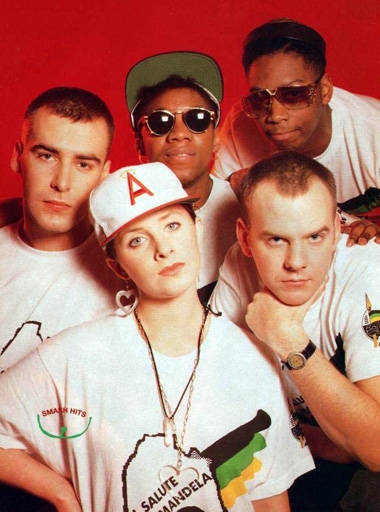
642. ‘Dub Be Good to Me’, by Beats International

Tank fly boss walk jam nitty-gritty, You’re listening to the boy from the big bad city, This is jam hot…

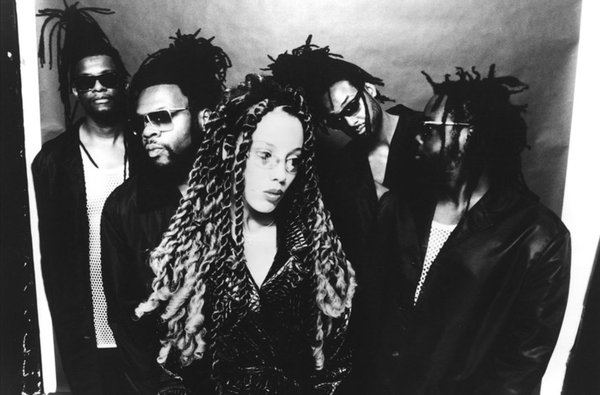
Dub Be Good to Me, by Beats International (their 1st and only #1)

4 weeks, from 25th February – 25th March 1990

I often find writing intros to be the hardest part of a new post. Not today: for who can argue with those opening lines? Jam hot, indeed. (Not that I have a clue what he’s on about, but hey ho…) Off we go, then, into a #1 single a little less intense than ‘Nothing Compares 2 U’, but perhaps every bit as iconic (that word again…)

If you listen carefully, both this record and Sinéad O’Connor’s predecessor follow a similar beat. It’s very nineties, as if both these records were setting the tempo for the decade to come. Other than that, though, they’re very different beasts. ‘Dub Be Good to Me’ takes us for a stroll through the backstreets of the big bad city. The laconic harmonica sounds like a train rumbling past, the horn towards the end sounds like a sad busker, the humming break in the middle sounds like the crazy guy you’d cross the road to avoid…

Meanwhile, you can just picture the singer walking along with a ghetto blaster, singing the title line: I don’t care about your other girls, Just be good to me… Like Soul II Soul and Black Box before it, this record is a more modern, stripped-back version of dance music, another step away from the sample-heavy culture of the 1980s. Just a beat, that harmonica, and a female diva giving it large (Lindy Layton, who in some places gets a ‘featuring’ credit on the record).

Not that ‘Dub Be Good to Me’ doesn’t contain a sample, or two. Actually, it’s pretty much all samples. The lyrics and melody come from The SOS Band’s 1983 song ‘Just Be Good to Me’. The bassline is the Clash’s ‘Guns of Brixton’, the harmonica is from Ennio Morricone’s theme for ‘Once Upon a Time in the West’, and the catchy intro rap is called ‘Jam Hot’, and is by Johnny Dynell. I know that for some sampling is a sin, that music should always be original. But it takes a special ear to hear music from acts as disparate as The Clash, Morricone, and a little-known rapper, and spot a number one hit lurking among the noise. And, unlike some recent dance hits, all the samples seem to have been cleared and consensual, with no subsequent legal battles for Beats International.

For the record, I have no problem with sampling. The more imaginative, the better. Sometimes you’re maybe left with a hot mess. But this record is a masterclass in sampling various pieces into a very smooth, very cool piece of music. Beats International were the brainchild of Norman Cook, whom we last met playing bass for The Housemartins. To say that Beats International were a musical departure for him is something of understatement, but I’d also say that there’s a cheeky, indie ethos to both acts. Beats International are described on Wiki as a ‘loose confederation’ of DJs, rappers and musicians, as well as a graffiti artist who would paint as the band played on stage.

They weren’t around for long, as after two albums they disbanded (they did get one Billy Bragg sampling follow-up Top 10 in the wake of their biggest hit). Cook moved quickly on to form another band, ‘Freak Power, before going it alone as Fatboy Slim. We’ll meet him again before the decade is out. Back in 1990, though, we’re left with a cool and funky glimpse of things to come. And it’s jam hot…

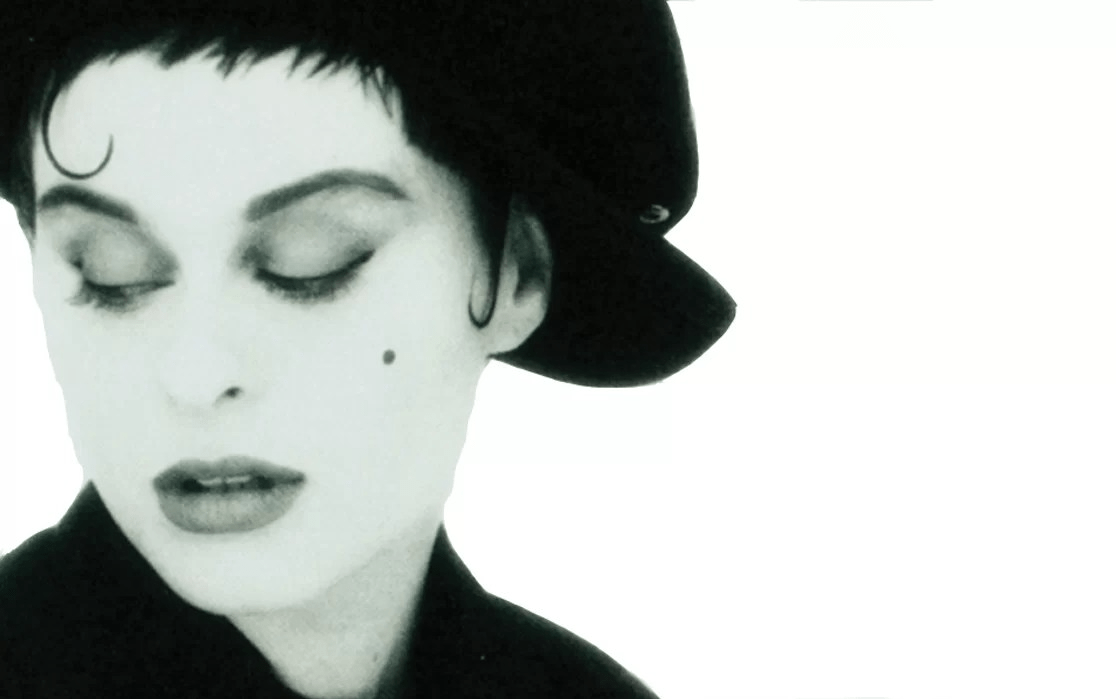
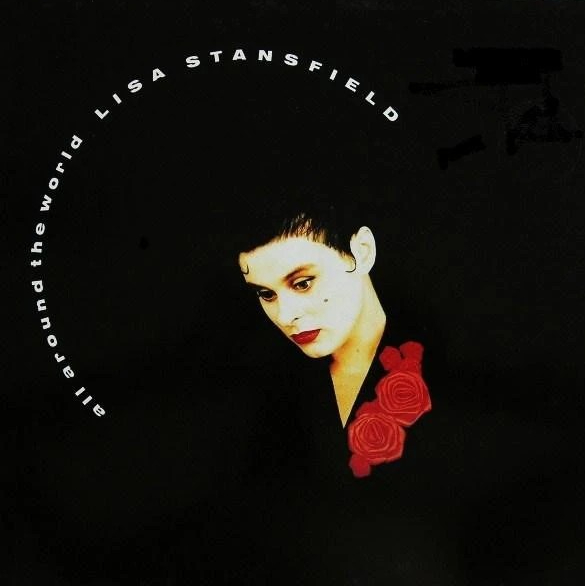
635. ‘All Around the World’, by Lisa Stansfield

An under-represented genre at the top of the British charts, in the late 1980s, was the neo-soul of Seal, Sade, and Terence Trent D-Arby… Even Prince went without a UK #1 for a long time. Perhaps Lisa Stansfield’s first chart-topper is as close as we’re going to get…

All Around the World, by Lisa Stansfield (her 1st of two #1s)

2 weeks, from 5th – 19th November 1989

If you’re being harsh you might call this sort of smooth and glossy R&B ‘dinner-party soul’ – soft background music you’d hear while munching asparagus tips in an Islington townhouse. And it would be especially harsh on this record, as it’s a lot more lively than some of its contemporaries. I don’t know where my baby is… Lisa Stansfield purrs in the spoken intro… But I’ll find him… She is famously northern, from Manchester, but she does a passable American accent (which was probably wise, as it might not have made #3 in the US if she’d sounded like someone from ‘Coronation Street’).

The verses are a little too tidy, a little too glossy. Bland, even. This is what the late ‘80s would have sounded like without Stock Aitken Waterman to liven them up (I’ve resigned myself to missing SAW when their hits dry up…) But the chorus picks things up, and it comes with a great hook: Been around the world and aye-aye-aye, I can’t find my baby…

There’s drama too, in the strings and the middle-eight: I did too much lyin’, Wasted too much time… and through the length of the record Stansfield shows off the full-range of her vocal talents. She trills, growls, and hits some impressive high-notes. If you didn’t know what she looked like, you might imagine a black soul diva rather than a skinny Manc lass. By the end, as she starts harmonising with herself, it’s a little OTT; but you can forgive the exuberance.

Lisa Stansfield had been releasing music since 1981 – both solo and as part of the band Blue Zone – but to little fanfare until she teamed up with production duo Coldcut. Earlier in ’89 they had released the house classic ‘People Hold On’, establishing her as a vocalist. ‘All Around the World’ was her second solo hit, helped by her distinctive look in the video, the short hair with Betty Boop kiss-curls.

Stansfield would continue scoring Top 10 hits throughout the nineties, including one further chart-topper to come. Meanwhile, we find ourselves with just three #1s left in this decade! Time flies… And if ‘All Around the World’ gives us a perfect mash-up of late-80s/early-90s sounds, our next chart-topper is an ear-popping vision of the decade to come.

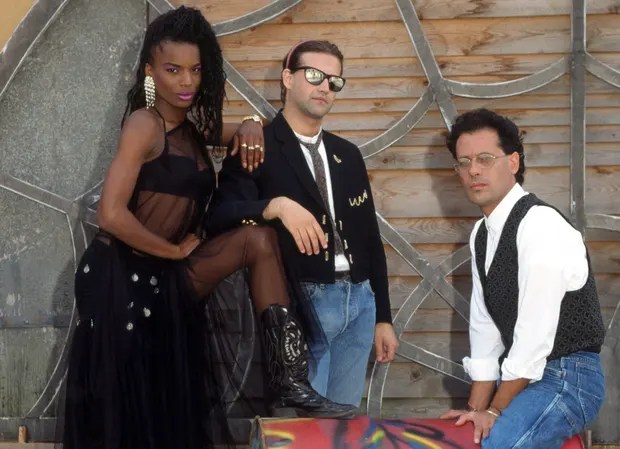
633. ‘Ride on Time’, by Black Box

In which we meet the first modern dance record…?

Ride on Time, by Black Box (their 1st and only #1)

6 weeks, from 3rd September – 15th October 1989

I’m a child of the nineties, the decade in which the music we recognise today as ‘dance’ really came into being. There have been dance #1s popping up regularly throughout the second half of the 1980s but, as good as many of them have been (‘Theme from S-Express’ says ‘hello’), they have sounded quite dated – often chaotic mish-mashes of samples and sound effects.

‘Ride on Time’, however, is much less cluttered – just a beat, a few synth hooks, a classic piano riff – but all the more weighty for it. One of the song’s creators mentioned wanting to create a dance track with the power of a rock song. And then there are the vocals. Though I think describing them as just ‘vocals’ isn’t quite doing them justice. They are colossal, momentous… add whatever synonym for ‘very big’ you want. There aren’t many lines, and half of them are just woah-wa-wa-wa-oh, but not for nothing is this record classed under the sub-heading ‘diva house’. The singer does a great job. I hesitate in naming this ‘singer’, as there was a lot of controversy over who they actually were. The record originally used the vocals of a 1980 hit by Loleatta Holloway, called ‘Love Sensation’, which Black Box didn’t have the rights to. They then re-recorded the track with Heather Small, soon to become a star in her own right with M People.

To confuse matters further, the woman in the video and the record sleeve below is model Katrin Quinol, who had been brought in to mime on TV performances and the like. I’m not 100% sure which version I’ve been listening to – a search for ‘Ride on Time Heather Small’ on YouTube throws up nothing – but since Black Box finally bought the rights to ‘Love Sensation’ in 2018 I assume it’s Loleatta Holloway’s big lungs that are blasting my cobwebs away. Sadly she died in 2011, though she did eventually receive enough royalties from the song to, as she put it, buy herself a fur coat.

Every time an electronic dance number one comes along, I feel contractually obliged to mention that it isn’t my favourite genre. I’m guitars and drums all day long. But good dance, just like good rap and good reggae, can transcend my fussy tastes. Good is good, and ‘Ride on Time’ is pretty darn good. (I said a lot of the same stuff about Soul II Soul’s ‘Back to Life’ and, although the two songs have very different vibes, they are two sides of the same futuristic dance coin.) I’d go as far as to say that, in the right nightclub, in the right mood, ‘Ride on Time’ could be euphoric. And it also feels like a direct riposte to the cheap ‘n’ cheesy tat that it replaced at #1…

And as I said above, ‘Ride on Time’ feels much more streamlined and precise after previous years’ big dance hits. But that’s not the only reason, I don’t think, for it being a huge, game-changing hit. It also, cleverly, harks back to disco, with its big-voiced diva on lead vocals, giving a timeless sheen to its very modern sound. And also, we have to nod our heads to acts like Pet Shop Boys, and even Stock Aitken Waterman, for making pop music much more dance-oriented over the past couple of years. In the ‘60s and ‘70s ‘pop’ usually equalled ‘rock’ (think Merseybeat, and glam), while in the 80s ‘pop’ has shifted in a dancier direction. The 90s will see pop shift back to guitars, and then towards an R&B/hip-hop future.

Black Box were an Italian act, kicking off a trend for European DJs and dance acts scoring big hits across the Channel, often in the autumn after Brits had spent the summer on Mediterranean beaches. The Euro-house influences are clear, and very different from the American house we’ve met up to now. Clearer, classier… dare we give into stereotypes and say ‘chic’? My favourite aspect of the song is that the lyrics are clearly Because you’re right on time… But the Italian DJs’ English wasn’t great, and they misheard it as ‘Ride’. Which I think is cute (and much more memorable than the correct phrase).

And yet, for all my talk of game-changing modernity, the charts will do what they always do and completely disprove all my blethering with the next number one. Yes, that damn rabbit is back, next.

631. ‘You’ll Never Stop Me Loving You’, by Sonia

We’re fresh from a recap – a recap that I dubbed the ‘Stock Aitken Waterman Recap’ due to their domination of the past few months’ chart-toppers – and as we crack on with the next thirty those synthesised drumbeats can only mean one thing…

You’ll Never Stop Me Loving You, by Sonia (her 1st and only #1)

2 weeks, from 16th – 30th July 1989

Yes, they’re not done yet! The production team get their sixth (!) #1 of the year, while it’s only July. And while the Euro-disco beat and the tinny synths are by this point very familiar, I do sense that this is a step up from their previous #1s with Kylie and Jason, which were starting to feel phoned-in.

It’s got a cooler, dancier production to it, not the relentless, in-your-face cheese of ‘I Should Be So Lucky’ (though the verses do bear a resemblance), or ‘Never Gonna Give You Up’. Swap Sonia’s girl-next-door charms for a proper dance diva and this mightn’t have sounded out of place at the Hacienda. Listen to the eight minute extended mix, where there are long stretches in which the beat is left to do its thing and it starts to sound dangerously like a proper dance record.

‘You’ll Never Stop Me Loving You’ also has a great hook in the chorus: It doesn’t really matter what you put me through, You’ll never stop, Me from loving you… with a brilliant key-change tease on the ‘never stop’. It reminds me of the records SAW did with Donna Summer; though Sonia’s voice, as fine as it is, can’t quite compete with the Queen of Disco.

The only thing I can’t quite get behind is the caterwauling ‘solo’, in which the vocals are looped into something of a grating mess. Still, if the sign of a good pop song is that you’re singing along before the first play has finished then this is officially a good pop song (because I was). It was Sonia Evans’ debut single, reaching #1 when she was just eighteen. Between 1989 and 1993 she’d have eleven Top 30 hits, and even represent the UK at Eurovision, though none of her subsequent singles rose higher than #10.

And just like that, we reach the end of SAW’s golden age. They’re still on production duties for two upcoming #1s, but ‘You’ll Never Stop Me Loving You’ was the last chart-topper that they would write. They may well be a bye-word for late-eighties cheese but, while I have found some of their stuff slightly repetitive, their short burst of complete chart domination has been impressive. And when you see the act that’s about to dominate the second half of 1989, Stock Aitken and Waterman might not be such a terrible thing after all…

630. ‘Back to Life (However Do You Want Me)’, by Soul II Soul

As fun as 1989 has been so far – and I’ve enjoyed it, at least – it’s not been very cool. Cheesy pop a-plenty, earnest balladeering, charity singles and sixties covers. Madonna romping with our Lord and Saviour in ‘Like a Prayer’ has been as edgy as it’s got…

Back to Life (However Do You Want Me), by Soul II Soul (their 1st and only #1)

4 weeks, from 18th June – 16th July 1989

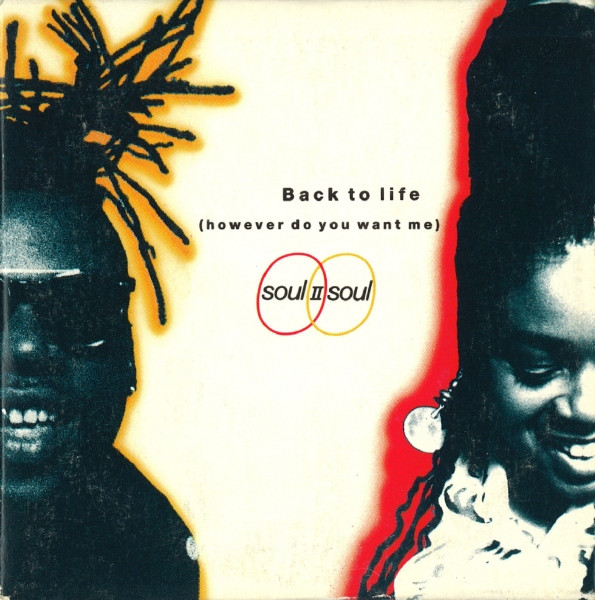
Until now, though. For ‘Back to Life’ is a cool record. A mix of hip-hop beats and soulful vocals. It’s a little bit of dance, a little bit of house. Wikipedia lists it as ‘proto-jungle’, which sounds slightly terrifying but very fun. Yet for all these influences, it’s not a cluttered track. The production is sparse – just a beat and some strings for the most part – and ‘sparse’ is not something I’ve not been able to say about the sample-heavy dance hits we’ve met in recent years.

It started out life as an a cappella track, which makes sense, as Caron Wheeler’s vocal turn is the stand out star of this record. It’s her that makes me want to announce this as the start of the nineties, six months early, as the next decade will be dotted throughout with dance tracks ft. female divas. Elsewhere, the beat and the production is unfussed, and unhurried, almost unbothered whether you like it or not, whether you think it’s upbeat enough to dance to. It’s very contemporary, a world away from SAW’s cheap and cheerful approach, until a scrrraaatch on the DJ’s decks places it firmly in 1989.

Proto-jungle is not my kind of thing (I prefer my jungle fully formed…), but a good record is a good record, and this is a good record, if you know what I mean. It’s moving things along, like a mini ‘Rock Around the Clock’ or ‘I Feel Love’, and for that I respect it. It’s the future, and we’ll be hearing a lot more like it soon…

Soul II Soul were a musical collective of some nine members, founded by DJ Jazzie B, who ran a club night in Brixton that played music with British, African, Caribbean and American influences. They had even hosted a hot new LA rap group called NWA in 1988. ‘Back to Life’ was just their fourth single, and their second Top 10 hit. ‘Keep On Movin’’ had been their breakthrough, but for me that one’s lacking ‘Back to Life’s hook. Impressively, ‘Back to Life’ also made the Top 10 in the US, where it had homegrown hip-hop/R&B to compete with.

As I mentioned above, the difference between this and the earlier dance #1s, like ‘Pump Up the Volume’ or ‘Theme from S-Express’, is that it’s not at all heavy on the samples. There’s just one: the drums from funk band Graham Central Station’s ‘The Jam’. Or two, if you count Caron Wheeler’s a cappella original. This was Wheeler’s last single with Soul II Soul – she would leave to pursue a solo career before returning in 1996.

So, we start a new chart-topping chapter here. And appropriately enough, before we delve further towards the nineties, we have a recap…

613. ‘The Only Way Is Up’, by Yazz & The Plastic Population

There are some songs that get to #1 because they’re great. And there are some songs that get to #1 perhaps in part thanks to the terrible-ness of the #1 that went before…

The Only Way Is Up, by Yazz & The Plastic Population (their 1st and only #1)

5 weeks, from 31st July – 4th September 1988

‘The Only Way Is Up’ is undoubtedly a great pop song, but it sounds even greater when played straight after Glenn Medeiros’s limp ‘Nothing’s Gonna Change My Love for You’. Did the record buying public hear Medeiros at number one throughout July, decide that they couldn’t have that as 1988’s Song of the Summer, and so sent this banger to #1 for the whole of August…?

Probably not. Most people just buy songs because they like them. But from the opening horn blast, sounding like an express train about to flatten any drippy teenagers left in its wake, this tune means business. I love the squelchy synths, and I love the way Yazz channels Donna Summer herself in the opening note.

But the best bit is the Hold on… build up to the chorus – perfect for belting out on a crowded dancefloor, before punching the air on the title line. Things are certainly getting dancier as we move away from the gloopy mid-80s and towards the nineties… (And yes, I realise that we literally just covered one of the gloopiest hit singles of all time.) Dance is a difficult genre to define – what’s dance, what’s just pop? – but I’d make this the 6th such #1 in just under a year.

Hits like this, and the recent ‘Theme from S-Express’, are bigger budget takes on the SAW Euro-disco sound, with the anarchic feel of acid house. Basically it’s an amalgam of all that was good and fun in pop music at this time. Some of the production does sound dated, yes – the scratching at the end, and the barking dog synths – but with a song as exuberant as this who cares!

I was pretty certain that this would be a cover of a Motown/soul/disco song, much in the mould of ‘Don’t Leave Me This Way’, and I was correct in my convictions. ‘The Only Way Is Up’ was originally recorded in 1980 by soul singer Otis Clay. His version is fine – very different, lots of horns equally uplifting – but it wasn’t a hit until Yazz got her hands on it.

It’s hard to distinguish who The Plastic Population were… It looks like maybe they were Yazz’s backing singers? After this hit they were never credited again. Yazz scored two further Top 10s, and continued releasing low-charting singles throughout the 1990s. She’s since moved into Christian and gospel music. Meanwhile, I just discovered that a version of ‘The Only Way Is Up’ is the theme tune to ‘The Only Way Is Essex’… Have to admit, if I were scoring these chart-toppers, that fact would cost this one half a point…

607. ‘Theme from S-Express’, by S’Express

Dance music will never be my favourite genre. I will always go for guitars over keyboards and synthesisers. But sometimes, just sometimes, a dance tune will hit my sweet spot in a way that most rock songs could only hope to do…

Theme from S-Express, by S’Express (their 1st and only #1)

2 weeks, from 24th April – 8th May 1988

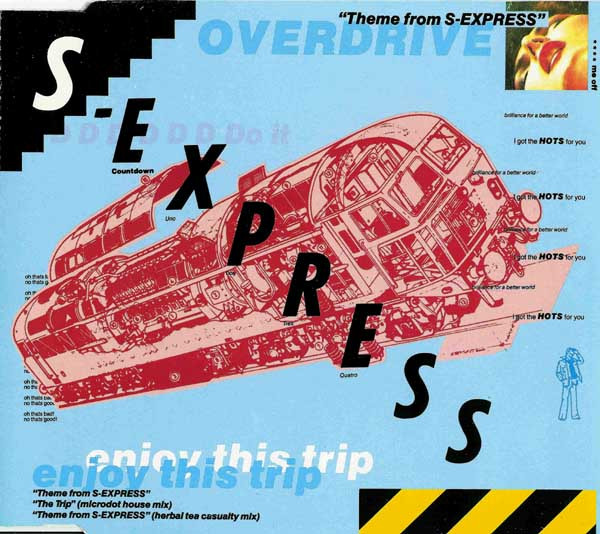
And this is one of them. It’s far from the first dance #1, it’s not even the first house #1, but it’s the first that I’ve really liked, the first that’s been more than just an interesting distraction. From the opening note of this industrial meat grinder of an intro, as a voice announces Enjoy this trip…and someone counts down in Spanish, I’m sold. I’m quite a fussy dancer, ready to leave the floor the moment a song I even slightly dislike comes on. But I’d be working up a sweat all night if dance music always sounded like this.

To my ears, the two earlier house #1s, ‘Jack Your Body’ and ‘Pump Up the Volume’ were a mess of samples, thrown together for the sake of it rather than because they should have been. But the ‘Theme from S-Express’ is a masterclass in picking the right samples. The foundation of the song is from Rose Royce’s ‘Is It Love You’re After’, which sounds incredibly modern for a song released at the height of disco. And all the vocal hooks work: Come on and listen to me baby now ooh… I’ve got the hots for you boop boop… and the wonderfully dated Drop! That! Ghetto blastah! It all genuinely works well together. It’s still busy, there’s still a lot going on, but it never feels like overkill. Even the screeching. (In the comments to the YouTube video below, someone has kindly listed and time-tagged all the samples.)

I love the Rio carnival interlude that comes along a minute in, as it provides a moment of lightness. But most of all I love the pounding Oh my God… break halfway through (though I don’t know if songs like this can have breaks, verses, choruses and bridges – normal songwriting rules go out the window) The dance music that works for me is dance that could be rock, and there’s something almost metal in this record’s relentless beat. It’s when dance goes all light and airy, with a piano hook and a breathy female vocal, that I tend to lose interest.

But that kind of EDM is a decade or more off. Here we are in the early days of the genre, where people were having fun with samples and filling dancefloors with the results. These results weren’t always perfect, but when they worked – as they do here – it was great. S’Express was a collective helmed by British DJ Mark Moore, and their ‘Theme’ was their first ever chart hit. They’d enjoy two more Top 10s in 1988, and hung around through the golden age of acid house before Moore ended the project in 1994. Whether they were ‘S-Express’ or ‘S’Express’ seems to depend on what font they used when printing their record sleeves, so I’ve used both. (And I’ve just noticed that it clearly spells ‘Sex Express’.)

I first heard this song when I worked in a bowling alley as a student – the very same bowling alley I mentioned in my post on ‘Give It Up’. Who knew bowling alleys would offer such formative musical experiences? But if you can picture bowling to ‘Theme from S-Express’ with the lights dimmed and the neon flashing, then you’ll know why it worked so well.

606. ‘Heart’, by Pet Shop Boys

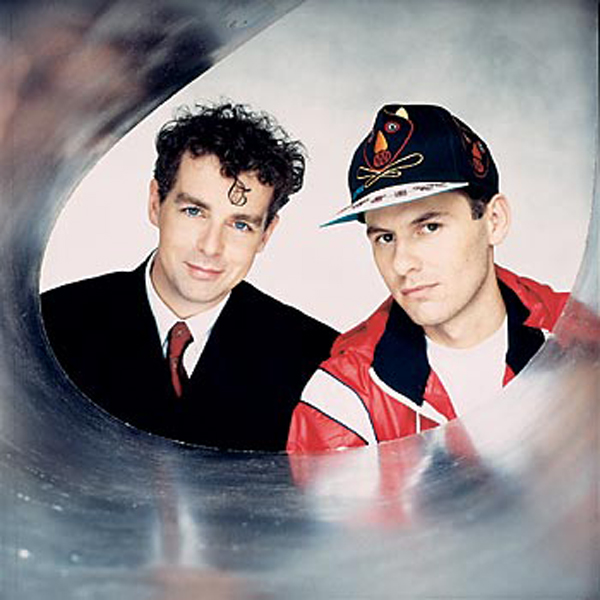
Neil and Chris are back again. And when acts score #1s in such quick succession – it’s been barely three months since ‘Always on My Mind’ – you know they’re at the peak of their fame.

Heart, by Pet Shop Boys (their 4th and final #1)

3 weeks, from 3rd – 24th April 1988

But are they at the peak of their game? Or is this Pet Shop Boys-by-numbers? It’s undeniably them, identifiable after about two point five seconds of the soaring synth intro and the dead-panned Beat…! Heartbeat…! The main riff is a fun one: a vocal riff, a collage of different ‘oh’s and ‘ah’s (one of which is apparently Pavarotti!), and it’s a great hook. Despite their songs rarely featuring guitars, Pet Shop Boys had some great riffs (their previous two #1s, ‘It’s a Sin’ and ‘Always on My Mind’ being two prime examples).

Actually, I just wrote that last paragraph before realising that I was listening to the album version of ‘Heart’. The single remix is slightly less PSB; a little more Euro-disco, and a little more instant. That intro sounds like a cross between Damian’s ‘The Time Warp’ and Kelly Marie’s early-eighties banger ‘Feels Like I’m in Love’, with the heartbeat pew-pew effects. It was the 4th single from the ‘Actually’ album, and they clearly felt they needed to do something different with it.

The Pet Shop Boys themselves are a little down on this record, claiming it inferior to some of their other big hits. And lyrically, yes, it doesn’t have the edge or the wit of ‘West End Girls’, or ‘Rent’. It’s a simple enough love song: I hear your heart beat next to me, I’m in love with you, I mean what I say… Nor is it as well remembered as their other chart-toppers. I wonder how many people at the time thought that this would be the duo’s final UK number one…?

It may not be as well remembered, but I’d argue it deserves to be. It’s incredibly catchy, and danceable, and yet sweet. Not every song has to be clever and caustic. Plus, the Boys kept it and released it themselves, despite writing it with Madonna in mind (they never sent it to her, fearing rejection). So they must have liked it at the time. Plus I’d like to shout out to the brilliantly unexpected false ending, which I’m guessing represents a heart that keeps missing a beat… In the video it matches the moment a vampire, played by none other than Sir Ian McKellen, plunges his teeth into Neil Tennant’s newlywed bride…

I mean, that’s reason enough to love this forgotten mini-classic before you even hear the song. Like I said, this would be Pet Shop Boys’ final #1, though they’d have two further decades of Top 10 hits to come, as well as producing songs for the likes of Madonna (they got in there eventually), Robbie Williams and Girls Aloud. They’re icons, bizarre at times and very British, and with a mystique and a presence that makes them genuine pop legends. We bid them adieu here…

601. ‘Always on My Mind’, by Pet Shop Boys

The Christmas #1 record for 1987 wasn’t a novelty, a charity record, or a song about snow and sleighbells. (Thank God.) It was simply the biggest pop act in the country, the freshly-crowned winners of my most recent ‘Very Best Chart Topper’, at the height of their powers, covering a classic.

Always on My Mind, by Pet Shop Boys (their 3rd of four #1s)

4 weeks, from 13th December 1987 – 10th January 1988

Not just ‘covering’ a classic. More grabbing a classic by the scruff of the neck, dressing it up in glitter and lycra, and shoving it onto the dancefloor. Cover versions work best when they take a song away from its usual environs, and this take on what was originally a hit for Elvis Presley certainly does that. From soaring balladry, to pounding Hi-NRG disco…

Great cover versions are also almost always of great originals. The shift in tones, in styles and in genres brings out different shades of meaning, different ways of appreciating the song, but at heart they remain very good in whatever dressing a band hangs on them. Elvis’s version is slick seventies bombast, made for belting out at his Vegas residencies; and the Pet Shop Boys’ take keeps the song’s humungous presence, swapping lush orchestration for thumping synths, while Neil Tennant’s detached performance of the heartfelt vocals adds an almost comic element.

Do they also change the words? The Elvis version is quite clearly: Maybe I didn’t love you, Quite as often as I could have… Whereas PSBs seem to be singing Quite as often, As I couldn’t… I just be mishearing it, but if they are changed they add a different meaning to the song, and it’s not quite as apologetic.

‘Always on My Mind’ has also been covered by Willie Nelson, as a country ballad, having first been recorded by Brenda Lee in 1972. Elvis’s version, though, was the first to become a hit and so feels like the original. Pet Shop Boys first performed their take for an ITV special on the tenth anniversary of Presley’s death, and it was so well received that they released it as a single a few months later. And as Pet Shop Boys singles go, it’s pretty straightforward. There’s nothing particularly clever, or knowing: it’s just an all-out dancefloor banger – one of those songs that pretty much commands you to get up and start making shapes.

What is the name of that pre-set, synthesised chord – the one that sounds like a dog barking, but compressed? It’s a sound that’s synonymous with the late-eighties and early-nineties, to me, and the Boys use it liberally here. It works, but also completely dates the song. Never mind, though. It was the perfect Christmas hit: both a fun pop tune from two huge chart stars, and a song that mums and grans up and down the land knew too. A smash for all the family! And that’s that as far as 1987’s concerned. Never fear, though. The pop classics keep on coming. Stay tuned…

Advertisements

598. ‘Pump Up the Volume’ / ‘Anitina (The First Time I See She Dance)’, by M/A/R/R/S

Right at the start of this year (and by ‘this year’ I mean 1987, not the actual year in which you are reading this) we had our first ever house #1: Steve ‘Silk’ Hurley’s ‘Jack Your Body’. That was Chicago house, and here we now have Britain’s answer…

Pump Up the Volume / Anitina (The First Time I See She Dance), by M/A/R/R/S (their 1st and only #1)

2 weeks, from 27th September – 11th October 1987

I’m pretty sure everybody’s heard the classic title line: Pump up the volume… Dance! Dance! The adjacent, ominous piano note is iconic, too. Problem is, that line and the piano note add up to about five seconds of music. The rest of the song – four minutes in its shortest edit; a good seven minutes on the 12” – suffers from the same gimmicky feel as ‘Jack Your Body’.

But whereas ‘Jack…’ was just repetitive, ‘Pump Up the Volume’ suffers from an everything but the kitchen sink, ‘what does this button do?’ approach. It makes for an interesting, if rarely very enjoyable listen. It’s a mix of distorted guitars, whale noises, your neighbours letting off fireworks in their back garden, and someone shouting Brothers and sisters, Pum-pump it up! ‘Less is more’ was clearly not the M/A/R/R/S motto.

I like the funky, more hip-hop leaning break that pops up a couple of times, in which all the effects are discarded. It’s the only part of the record that makes me want to Dance! Dance! and it doesn’t last long enough. I also like the ‘Indian’ sounding section. But, at the risk of sounding like my late grandmother, a lot of the song is just noise.

There isn’t an original note in it, either. This was a watershed moment for sampling in popular music. In its various edits and mixes, a grand total of twenty-nine different samples feature on the record, from acts such as Public Enemy, Run DMC, James Brown and Stock Aitken Waterman (who took legal action). Some of these samples amount to nothing more than a ‘Hey’ or a couple of musical notes. Anyone opposed to sampling on the grounds of musical puritanism should probably stop and consider that it would likely have been easier to write a completely original song than to stitch all these parts into something even vaguely listenable.

And that isn’t all. It’s been a while since we had a double-‘A’ single on top of the charts: well over five years. While ‘Pump Up the Volume’ is a ground-breaking record, it’s still a pop song at heart, that sits comfortably on top of the chart. The flip-side, ‘Anitina (The First Time I See She Dance)’ is a completely different beast. This has no business being at #1…

It’s abstract, arty, and avant-garde. It’s grungy and acidic. Trippy, distorted vocals with yet more samples reverberating around them, and everything absolutely dripping in harsh feedback. It’s not an easy listen, and it’s definitely not anything you’ll be dancing to – the title is misleading in the extreme. But I like it more than its gimmicky twin. It’s harsh and uncompromising, and potentially the most uncommercial track ever to make the top.

I say ‘potentially’, for I’m not sure how much airplay ‘Anitina’ got at the time. I’m guessing next to none. But it’s there, listed in the records, and from it you can pretty much trace a straight line to the Prodigy and the Chemical Brothers a decade hence. And these were the only two songs that M/A/R/R/S ever released. They were a supergroup of sorts, composed of an electronic act called Colourbox and an alternative rock band called A.R. Kane, brought together in an uncomfortable arranged marriage by their label manager. Colourbox added the dancier elements to A.R. Kane’s ‘Anitina’, while A.R. Kane added the wailing guitars to ‘Pump Up the Volume’. Neither particularly liked the other’s song and they refused to work together again. And so M/A/R/R/S are one-hit wonders in the purest sense.

At least one half of this record lives on, though. ‘Pump Up the Volume’, and its nods towards hip-hop and the beginnings of acid house make it as central to the late-eighties as Madonna and the SAW stable of hitmakers. While up next, following on from this most modern of chart-toppers, come a group who have been popping up on this blog for quite a while now…

Advertisements