144. ‘The Next Time’ / ‘Bachelor Boy’, by Cliff Richard & The Shadows

As in 1962, the first number one of 1963 is by Cliff and his gang. New year; new Cliff? Well, kind of. His sound is changing… For the worse, mostly.

1444315144-a30ba8d4cf695a5867db18bd869743e3-600x337

The Next Time / Bachelor Boy, by Cliff Richard (his 6th of fourteen #1s) and The Shadows (their 9th of twelve #1s)

3 weeks, from 3rd – 24th January 1963

The first thing I noticed after pressing play on ‘The Next Time’ was that there’s an awful lot of piano. Previously, no matter how bland and soppy Cliff got – and he’s been plenty bland and soppy in his five previous chart-toppers – they were all guitar-led tracks. The Shadows are here, apparently, but quite why they were deemed necessary is beyond me. If I were Hank Marvin I wouldn’t have bothered getting out of bed for this one.

Away from the instruments, Cliff is properly crooning. They say I’ll love again someday, A true love will come my way, The ne-e-e-ext time… But after you there’ll never be a next time, Fo-o-o-or me… The song unravels at a snail’s pace, the verses and chorus blending together in a soggy mush. Lord, this is dull. It sounds like something Cliff should have been releasing in his forties; not when he was twenty-two!

There are lots of recurring themes here. It isn’t the first time that The Shadows have had their name on a disc to which their contribution was minimal (see ‘Travellin’ Light’.) It isn’t the first time that Cliff – the man who just three years ago was being hailed as Britain’s great rock ‘n’ roll hope – has released bland, saccharine crap (see ‘I Love You’.) But the more it happens the less I find I have the patience to listen to it.

By the time Cliff’s gone all nineties Hugh Grant, mumbling that he’s Still so very much in love… I’m over it. Grow some balls, Clifford. I can’t think of many previous #1s that were so lacking in oomph, so in need of a kick up the backside.

513F9A3QraL

Can the flip-side of this double-‘A’ redeem it? Well, straight away I’m getting strong whiffs of ‘Whatever Will Be Will Be’, both in the lilting rhythm and in the lyrics. When I was young, My father said, ‘Son I have something to say…’ And what he told me, I’ll never forget, Until my dying day… What is it that his dad imparts, in this testosterone-fuelled ‘Que Sera Sera?’ Well… Son you are a bachelor boy, And that’s the way to stay, Son you be a bachelor boy, Until your dying day…

Why his father is so anti-marriage is not explored, which is a shame, but Cliff wastes no time in putting Pop’s wise words into action. When I was sixteen, I fell in love, With a girl as sweet as can be, But I remembered just in time, What my daddy said to me… There’s no suggestion that he is staying unattached for any kind of racy, sow-my-wild-oats kind of reasons. No, not our saintly Cliff. He concedes, grudgingly, that he probably will fall in love eventually; though he doesn’t sound thrilled at the prospect. Until then though he’s Happy to be a bachelor boy… so on and so forth.

It’s better than ‘The Next Time’, but that’s a very low bar to get over. It’s faster paced, and at two minutes doesn’t outstay its welcome. I suppose this song would have been forgotten completely in the canon of British pop, even in the canon of Cliff, if it hadn’t become a sort of self-fulfilling prophecy: Sir Cliff has famously never married. Never even had a serious girlfriend, it seems. Which means that every time the ‘Daily Mail’ runs a story about Cliff and one of his female friends they will, without fail and to this very day, though he’s pushing eighty, trot out the ‘Bachelor Boy’ headlines. I bet he wishes he’d never recorded the bloody song.

Of course, there have always been rumours that Cliff is something of a ‘confirmed bachelor’, ‘not the marrying kind’, a ‘friend of you-know-who’ if you know what I mean, nudge, nudge… And people always argue that, in these enlightened times, he should just come out with it. But when you’ve been courting the evangelical Christian market for decades, and risk losing the only people that still buy your records in doing so… Anyway, all this is neither here nor there. The fact that I’ve started blethering on about this rather than the chart-topping record in question is a sign that I should wrap up.

Both ‘The Next Time’ and ‘Bachelor Boy’ featured on the soundtrack to ‘Summer Holiday’ – Cliff’s latest box-office smash (the 2nd biggest movie of 1963). And I hope you’re ready for more from Cliff and more from The Shadows, because they are going to utterly dominate the first three months of this year. Yay….
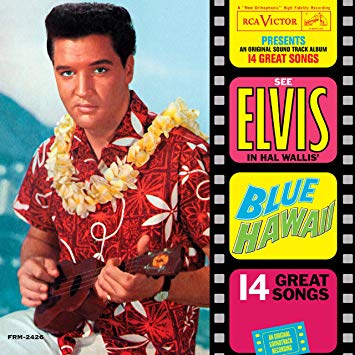
133. ‘Can’t Help Falling in Love’ / ‘Rock-A-Hula Baby’, by Elvis Presley

Wise men say, Only fools… would be surprised at Elvis Presley claiming yet another UK #1. His sixth inside fifteen months. And with it, he takes his chart-topping singles account into double figures.


91eaiwS0ygL._SY355_

Can’t Help Falling in Love / Rock-A-Hula Baby, by Elvis Presley (his 10th of twenty-one #1s)

4 weeks, from 22nd February – 22nd March 1962

One of the good things about Elvis’s post-army career is that he never released two similar records in a row. We’ve had operatics (‘It’s Now or Never’) followed by a ballad (‘Are You Lonesome Tonight?’) followed by oompah (‘Wooden Heart’) followed by a return to La Scala (‘Surrender’) then a spot of rock ‘n’ roll (‘Little Sister’ / ‘His Latest Flame’) and now some more balladry.

Some supreme balladry. Because ‘Can’t Help Falling in Love’ is Elvis at the height of his crooning powers – a classy, classy record. Not one that I probably have to describe in too much detail, given its ubiquitousness, but I’ll give it a go anyway. A simple piano melody, the ‘ting’ of a xylophone, and The King: Wise men say, Only fools rush in, But I can’t help, Falling in love with you… Oh, Elvis, do go on… Shall I stay, Would it be a sin, If I can’t help, Falling in love with you…? That voice. There are no operatics, nothing fancy; but you’re dragged in, and left as putty in his hands. It’s a very chivalrous love song, too – with the singer almost apologising for his affections.

It’s like an update of the big fifties ballads – ‘Here in My Heart’, ‘Answer Me’ and so on – with the same OTT emoting (Take my hand, Take my whole life too…), but much more stripped back. And yet compared to its contemporaries, this record – all of Elvis’s records for that matter – sounds incredibly polished. Very crisp and very clear. As if it’s been recorded in the most palatial of recording studios using the most up-to-date equipment (to be fair, it probably was). If ‘Can’t Help Falling in Love’ was in a high-school class with all the other recent #1 singles – suspend your disbelief for just a second, please – then it would be the cool kid, the rich kid, the captain of the football team with the cutest cheerleader girlfriend.

Two bits stand out in particular: the twang of the guitar in the bridge, and the moment when Elvis and the backing singers combine for the final verse. Mmmm. Shivers. Elvis released some drivel in the 1960s; but when he was at the top of his game, releasing beauties such as this, there was no touching him. Cliff could but watch and weep.

For proof of the transcendent nature of this song, look no further than the fact that this is both the unofficial club anthem of Sunderland F.C. and my parents’ ‘song’ – despite the fact that they had barely started primary-school when this was at the top of the charts. And just a few weeks ago, while on holiday in Cambodia, I heard a busker performing it in the street.

r-553725-1311448310.jpeg.jpg

So: ‘Can’t Help Falling in Love’ is an utter classic. The song on the flip-side of this disc, on the other hand… Well, let’s pull no punches here: it’s Elvis at his shitty B-movie contractual soundtrack worst. ‘Rock-A-Hula Baby’, or to give it its’ bandwagon-jumping full title ‘Rock-A-Hula Baby (Twist Special)’, sets out to be a fun song, with a Rock-a-hula, rock rock-a-hula, Wow! intro, and I want to find it fun… But I can’t.

Because I don’t believe Elvis himself is having much fun here. He sounds like he’s going through the motions as he describes his Hawaiian lover with silly lines like: When she starts to sway, I gotta say, She really moves the grass around… and Although I love to kiss my little hula-miss, I never get the chance, I wanna hold her tight, All through the night, But all she wants to do is dance… And if he ain’t enjoying it, then how are we meant to?

Couple this with the terrifying guitar effects – Rock! Whhrrraa! – and the ridiculously cheesy chorus-line ending, and you’ve got a hot mess. Still, at least it’s a rocker – ridiculously fast-paced and over in under two minutes. An up-tempo bad record is always, I repeat always, better than a slow-tempo bad record.

Both sides of this disc featured on the latest Elvis film, ‘Blue Hawaii’ – a film that I’ve never seen but, going by its write-up on Wiki, might be worth checking out. Sample sentence: “Before Ellie can drown herself, Chad (Elvis’s character) saves her and administers an overdue spanking.” Quite. And though we’ve covered a fair few double ‘A’-sides up to now, none of them have contrasted as much as this pair of songs do. Surely ‘Can’t Help Falling in Love’ could have stood alone and still made it to #1? Surely people weren’t buying this disc for ‘Rock-A-Hula Baby’?? But it’s there, in the annals of British chart history, as much of a hit as its far-superior twin. And that egalitarianism, that chance that any song can get to number-one as long as enough people buy it, is why we love the charts. Isn’t it…?

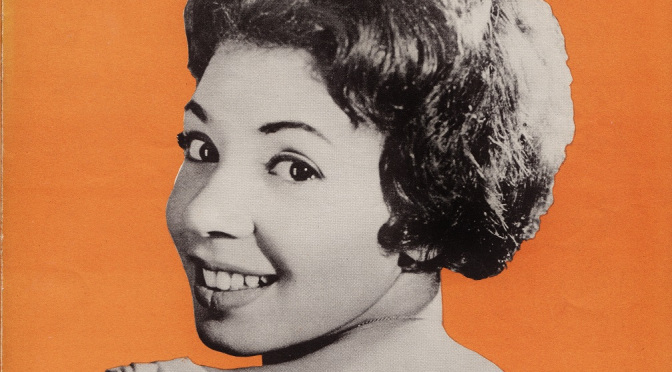
125. ‘Reach For the Stars’ / ‘Climb Ev’ry Mountain’, by Shirley Bassey

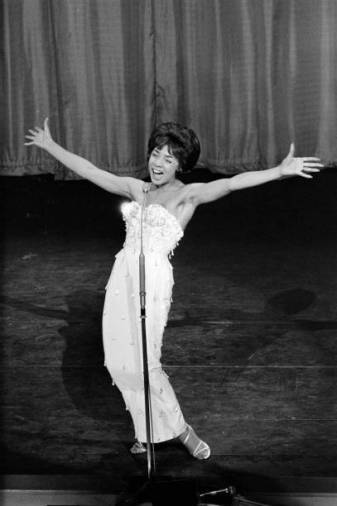
Ladies and Gentlemen, it’s time to welcome back on stage a member of British pop royalty. Dame Shirley, of Bassey, claiming her rightful place atop the UK charts…

gettyimages-873989666-612x612

Reach for the Stars / Climb Ev’ry Mountain, by Shirley Bassey (her 2nd and final #1)

1 week, from 21st – 28th September 1961

Except, despite being singer of huge repute, a diva with a seven-decade long career in the upper echelons of British popular culture, the singles charts never were Shirley Bassey’s natural stomping ground. This is only her second number one – and it’s her last! She’s had five weeks in total at the top of the listings, and only ever had twelve top ten hits in her whole career… Compare that to the titans of the UK Singles Charts – Elvis, Cliff, The Beatles, Madonna – and that ain’t nothing.

But perhaps it’s not so surprising when, amid the teeny-bopper pop and the rock ‘n’ roll that was shaping the sound of the early sixties, she was releasing discs like this. Perhaps the biggest surprise here is that this record got to #1 at all… The first song, ‘Reach for the Stars’, sounds out of place the second the soaring intro kicks in.

I reach for the stars, When I reach for your love, For so far above me, You always will be… It’s a song about adoring someone, about loving them completely… When you come to my arms, In that moment divine, All the stars in the sky, Are mine… It’s not a song about longing, or about a love unrequited. It’s a song about being utterly besotted with someone. (A song that might terrify you slightly if it were about you…)

The lyrics are all about stars and clouds, and the sky, and Dame Shirley sings it as if making sure that she’ll be heard up there in the firmament. The last chorus and verse are absolutely belted out, while the way she packs around four different notes into that last sky-y-y is spine-tingling, as is the way she drags the final all mine…! out to within an inch of its life. In terms of pure singing technique, this is one of the very best-sung chart-toppers so far.

shirley_bassey_reach+for+the+stars-560466

You might, then, expect the flip-side of this disc to be a subtler affair – yin and yang, and all that. But nope. That’s not how this Dame plays. On ‘Climb Ev’ry Mountain’, she cranks the operatics up even further… Climb ev’ry mountain, Search high and low, Follow ev’ry bye-way, Ev’ry path you know… (on a song that’s already pretty old-fashioned, that Victorian apostrophe in ‘ev’ry’ is just the icing on the cake)… She’s following rainbows, fording streams, doing all these things in search of her dream. It’s a motivational number, lyrically very simple, about never giving up.

Before writing this, I wasn’t familiar with either of these songs – but I had strong suspicions from the first listen that ‘Climb Ev’ry Mountain’ was a piece of musical theatre (the David Whitfield-esque backing singers are a dead giveaway). But I was astounded to learn that this song wasn’t just from any old two-bit musical – it’s from the bloody ‘Sound of Music’! How did that pass me by? Admittedly I’ve managed to go through thirty-three years on this earth without ever seeing said movie, but I’ve picked up a lot through pop-culture osmosis – the Von Trapps, nuns and Nazis, ‘The Hills are Alive..’ ‘Doe, a Deer…’, the one about the flowers… ‘Climb Ev’ry Mountain’, though…? No idea. You learn something new every day.

This song ends with a bang every bit as big as ‘Reach for the Stars’. Perhaps too big a bang. While on the former song Bassey stayed the right side of bombastic; here she over-eggs the pudding. The recording crackles as she launches into the final Till you find your dream…, the equipment clearly unable to cope with Shirley’s lung-power. The woman could sing, and still can. Aged eighty-one, she still regularly appears at Royal Variety performances, at the Queen’s garden parties and on her own TV specials – 2011’s ‘Shirley’ for example (no surname required, clearly). As we leave her here, in September 1961, her most famous songs still lie ahead – ‘Goldfinger’, ‘Diamonds Are Forever’, ‘Big Spender’ and so on – while her biggest hits have come and gone – this and ‘As I Love You’ almost forgotten in 2019.

It’s slightly sad to wave such a premature goodbye to Dame Shirley. But this disc is a real outlier in the charts of ’61 and, as I wrote at the start, perhaps offers an insight as to why she never really set the singles charts alight. These are two superbly sung and gorgeously orchestrated ballads, but they aren’t indicative of the general trends in popular music at this time. They do, however, add the eclectic mix of chart-toppers that we’ve enjoyed in 1961 –long may that continue.

Finally, it would be remiss not to mention that this double ‘A’-side lives on in a much more recent song… S Club 7’s smash-hit from 2000, ‘Reach’, which incorporates the titles of both these songs into its chorus; but whose bubble-gum pop cheesiness couldn’t be further from Dame Shirley’s ear-drum shattering balladry. Anyway, I’m happy I got to link to an S Club song several decades earlier than I thought I would (what an utter guilty pleasure that one is…) Onwards!


113. ‘Sailor’, by Petula Clark

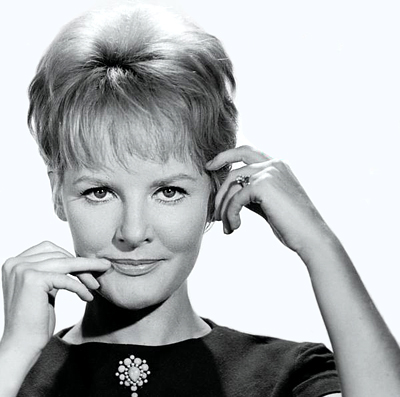
Ladies and Gentlemen, something strange is about to occur atop the British Singles Chart. For the first time since 20th March 1959 – that’s twenty-three months and thirty-two #1s ago – the following chart-topper will be sung by – dun dun dun – a woman!

clark-p

Sailor, by Petula Clark (her 1st of two #1s)

1 week, from 23rd February – 2nd March 1961

The gap between this song and Shirley Bassey’s ‘As I Love You’ is, I’m going to assume, some kind of record for the longest gap between female-led number ones. Though, quickly glancing down my list o’ chart-toppers, it is genuinely surprising how male-dominated the sixties will be. Certain consistent stars aside – Cilla Black, Sandie Shaw, Nancy Sinatra and the like – there will be huge swathes of #1 territory taken up by blokes with guitars. I wonder that more hasn’t been made of it, to be honest. But, I suppose, that’s all a story for another day. We have a new number one – let’s take a look at it…

It starts with a harmonica, an instrument under-represented so far in this countdown… Sailor, Stop your roamin’, Sailor, Leave the sea… Sailor, When the tide turns, Come home, Safe to me… It’s cute, and lilting, like the waves upon the ocean. Then comes the chorus, and it’s a proper sing-along one: As you sail across the sea all my love is there beside you…

It’s kind of old-fashioned. Kind of cheesy. Above all I’d describe it as ‘sentimental;  what the Germans call a ‘schlager’ song. It’s a hard one to place –  a song that might have been a hit any time between 1940 and 1975 – and one that reminds me of certain #1s from years already gone by. It’s a ‘Come Home to Me, My Love’ kind of song, the sailor in the title presumably being in the navy and separated from his amour against his will, as in Anne Shelton’s 1956 hit ‘Lay Down Your Arms’. But I’m more reminded of Jo Stafford’s ‘You Belong to Me’ – the second ever UK #1 – when Clark lists all the countries to which her man is sailing: In Capri or Amsterdam, Honolulu or Siam… (not sure which war he’s fighting in to take him on that erratic route, but anyway).

And then the pub-at-closing time feel of the chorus puts me in mind of The Stargazer’s 1954 smash ‘I See The Moon’, albeit with the crazy dialled back several shades. It’s a light little song that just about stays on the right side of cheesy, aside from the line about his final destination being ‘the harbour of her heart’…

PETULA_CLARK_SAILOR-419791

To be honest this song is perhaps best used as an excuse to draw people’s attention to the Life and Times of Petula Clark. In my post on the last female chart topper, I referred to Shirley Bassey as the First Lady of British pop. But that title might just as equally go to Ms. Clark. She went from being a childhood star, to a WWII Forces’ Sweetheart, to a global, multi-lingual superstar – equally as popular in France (‘Sailor’ was released there, in French  as ‘Marin’, reaching #2) and the USA as she was in Britain. Her first chart hit – ‘The Little Shoemaker’ – came in 1954, although she had been releasing singles since the dusty pre-chart days of 1949. And then, while all the big female pre-rock stars fell by the wayside – Vera Lynn, Kitty Kallen, Kay Starr, Rosemary Clooney et al – Clark kept going. Rock ‘n’ roll didn’t hurt her. In fact, she grew in popularity. Not even the Merseybeat revolution will be able to see her off!

We’ll meet Petula again in six years or so for her second #1, which is officially A Good Thing. Between then and now she will release her signature hit, ‘Downtown’, and my personal favourite – possibly the most uplifting song ever – ‘I Couldn’t Live Without Your Love’, which featured on a cassette of sixties hits that stayed on heavy rotation in our family car back when I was eight or nine. The songs on it were strictly 2nd-tier hits in chart terms – no Beatles, Elvis or Stones for obvious licensing reasons but plenty of Tremeloes, Emile Ford, Kenny Ball and T. Rex (sixties T. Rex, before they were particularly famous) – but I’d give anything to find out what the hell that tape was called. My love for all this glorious fifties and sixties pop stems directly from that compilation – in fact this very blog probably stems from what that tape awakened in me. As a small child I listened to very little music recorded post-1969. Until I turned ten and The Spice Girls came along, that is… But that’s yet another story for yet another day.

112. ‘Are You Lonesome Tonight?’, by Elvis Presley

What is Elvis’s most famous ballad? If you were an Elvis impersonator looking to slow things down on stage, to which song would you turn? I’d say either ‘Love Me Tender’, ‘Always on My Mind’, ‘The Wonder of You’, or, perhaps most likely, this.

o1AJ9qDyyJNSpZWhUgGYc3MngFqoAN11fwBPDEsYVSALnuGHU

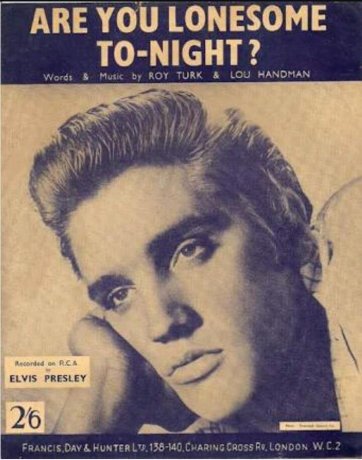
Are You Lonesome Tonight?, by Elvis Presley (his 6th of twenty-one #1s)

4 weeks, from 26th January – 23rd February 1961

Are you lonesome tonight, Do you miss me tonight, Are you sorry, We drifted, Apart? This is a country-tinged record – I mean, ‘lonesome’, come on! – during which you can imagine Elvis sat on a hay-bale, gently strumming, as the embers of the evening’s fire grow weak. It’s also perhaps the most minimalist #1 yet: no drums, no bass – just a guitar, some mellow backing vocals from The Jordanaires, and Mr. Presley.

I feel that Elvis, throughout much of his career, struggled to keep things subtle. Just look at those jumpsuits for a start… He had some really beautiful, low-key moments early on (his version of ‘Blue Moon’, for a start) but come his post-army days he was becoming ever more a fan of the semi-operatic, belt-em-out at full volume type hits (see ‘It’s Now or Never’). But he really does hold back here, purring the lines like a lovesick cat. Every so often he adds a bit of oomph – shall I come back… again? – but he quickly reigns it in. And this gentle approach really teases out the emotion in each line. I’ve always loved the Do the chairs in your parlour, Seem empty, And bare? Do you gaze at your doorstep, And picture me there? line. It’s kinda deep – a step above your usual rock ‘n’ roll love song.

And then… Oh my. Elvis talks. I wonder if… You’re lonesome tonight… Elvis couldn’t half talk. I make this only the second #1 to have featured a spoken-word section, after Pat Boone’s ‘I’ll Be Home’. And this isn’t just a couple of lines we’re talking about here. In a three minute record, Elvis talks for well over a minute of it. That’s more than a third of the song, people! Only The King could have gotten away with it. He ‘quotes’ Shakespeare, and describes a love in three acts… It’s amazing, and it peaks when his voice goes all serious, like a disappointed teacher: Honey, You lied when you said you loved me… But no matter how upset he is, he just can’t get over this woman. If you won’t come back to me, Then they can bring the curtain down…

ELVIS_PRESLEY_ARE+YOU+LONESOME+TONIGHT++-+1ST-62170

I struggle to believe that someone like Elvis had to spend many lonesome nights over the course of his life, without specifically choosing to; but he sells it here. He sounds heartbroken and vulnerable. Legend has it that he recorded this track at 4am, alone in the studio with all the lights out. And you can believe it, you really can. Contrast ‘Are You Lonesome Tonight?’ with Cliff’s most recent chart-topper ‘I Love You’ – another simple-as little love song. But where that came off as cheesy and trite, this one comes off as timeless, and will actually make your spine tingle if you let it. This record is all about Elvis: The Voice. And that’s true star quality. Sorry Cliff.

‘Are You Lonesome Tonight’ has a history that goes way beyond the 1960s, and beyond Elvis. Add this to ‘Who’s Sorry Now’, ‘It’s All in the Game’, ‘Mack the Knife’ and countless other songs from earlier in this countdown, as being originally written and recorded decades before. In this case it dates from 1926. Though – and I’m being kind here – Elvis’s version makes those from the twenties sound pretty darn lightweight. BUT. If you think I’m finally, six number ones into his UK chart career, giving The King of Rock ‘n’ Roll the credit that he deserves then to you I say this: ‘Are You Lonesome Tonight?’ may be his best chart-topper so far (yes, I’m going there) but his next #1, not too long from now, will not be ‘lonesome’. Oh no. It will be genuinely loathsome.

109. ‘It’s Now or Never’, by Elvis Presley

More musical one-upmanship at the top of the charts! The Big ‘O’ has just finished teaching Ricky Valance how to do heartbreak properly; now Elvis has heard Roy’s operatic vocals and clearly thought to himself ‘So, this Orbison thinks he can sing an aria, does he? We’ll show him how it’s done! Uh-huh-huh.”

elvis-presley-1960_a-G-13384728-14258387

It’s Now or Never, by Elvis Presley (his 5th of twenty-one #1s)

8 weeks, from 3rd November – 29th December 1960

If only that’s how the pop charts worked – a never ending attempt to outdo the chart-topper that went before you… At least that’s how the autumn of 1960 is turning out. Hot on the heels of ‘Only the Lonely’, this is more opera-lite. Except, while Orbison kept the operatics to a minimum in what was still a rock ‘n’ roll disc; Elvis really lets fly. The King was never one for understatement.

We open with backing singers – the Jordanaires – and a slice of cheesy Italian guitar… And then boom: some very famous lines indeed. It’s now or never, Come hold me tight, Kiss me my darling, Be mine tonight… Elvis croons the verses and belts out the choruses. It’s a rhumba, or perhaps a bossanova – the kind of rhythm that gets your hips swaying gently. It’s a very sexy record.

Or, at least, it’s trying to be a sexy record. Something, though, is lacking. You can’t fault the voice – Elvis sings it very well, and very properly – but to my modern ears it just sounds a bit… silly. A bit camp? Maybe it’s the flourishes of said Italian guitars. Maybe it’s the lyrics straight from an 8th grader’s poetry collection – When I first saw you, With your smile so tender, My heart was captured, My soul surrendered – plus some of the rhymes: excite me with invite me, a lifetime with the right time

I don’t suppose the song’s cause has been helped by the intervening fifty-eight years since it was released. It’s now a standard of the white jump-suited, microphone twirling Elvis impersonator. Plus anyone who has been to Venice will have heard it mangled by hundreds of gondoliers all high on the fact that they’re getting a hundred euros for twenty minutes work. Plus, anyone who grew up in the UK in the ‘80s and ‘90s will instinctively start singing ‘Just one Cornetto, Give it to me, Delicious ice-cream, From Italy…’ when the intro kicks in. This is a song laden with pop-culture baggage.

Perhaps it’s impossible to view this song as it sounded in 1960. Though it was far from being a ‘new’ song even then. ‘O Sole Mio’, the Neapolitan folk song upon which it is based was written way back in 1898, and people would have known the melody. Whatever this record was – or is – perhaps depends on your age, or on whether you’ve holidayed in Italy, or on whether you’re a fan of cheap, mass produced ice-cream cones…

ELVIS_PRESLEY_ITS+NOW+OR+NEVER+-+1ST-62169

One thing that isn’t up for debate is the success of this disc. Eight weeks at the top. Presley’s best-selling single in the UK – with 1.3 million copies sold it is his only British million-seller and was, at the time, the 2nd biggest selling single of all time behind ‘Rock Around the Clock’. A brand new entry at number one, only the 2nd single to ever do so. A monster hit. Some sources claim that its success was down to it being Elvis’s big comeback after a year away in the army. That’s not quite right, however. His first new recording, ‘Stuck on You’ had already hit #3 earlier in the year.

Whatever the reason for this record’s success, it’s what I’d call the beginning of Elvis MKIII – the neutered, granny friendly, chart-humping behemoth. MKI was the rough an’ ready country boy making his Sun Recordings – a version we never saw at the top of the UK charts. MKII was Elvis the Pelvis, singing ‘All Shook Up’ and ‘Jailhouse Rock’, scandalising TV audiences across the globe with his thrusting. The big shock here is that this Elvis sounds so different to that Elvis. He’s dropped all the mumbling, and the growling and the uh-huh-huh-ing, and is singing perfectly, like an angelic choirboy in front of an archbishop. We caught a whiff of it in his last #1 – the cabaret-ish ‘A Fool Such As I’ – but the difference is quite shocking. I’ve mentioned it before, but hearing these famous records in context, surrounded by their contemporaries, really lets you hear them afresh.

One thing I do like about this song, I have to admit, is the ending. And not in an ironic, thank-God-it’s-over kind of way, no, no, no. I like the way Elvis slows it down, the guitars twiddle their way to silence, and we await the big finish. It’s now or never… But… with a great bit of showmanship, and in a way that drags this song well past the three minute mark, Elvis goes round one more time… my love won’t wait. And then he belts the ending out: It’s now or never… MY LOVE WON’T WAIT (chun-chun-chun)!

Before I go, I must mention that – way ahead of schedule – I get to celebrate one of my birthday #1s. ‘It’s Now or Never’ spent another week at the top of the UK charts at the end of January 2005, just in time for my nineteenth birthday. Which kind of annoys me, actually, as it spoils the flow of my ‘Birthday #1s’ playlist by sitting there amongst Limp Bizkit, Enrique Iglesias and Lady Gaga like a big old sore thumb. Anyway. First world problems. You better get used to hearing Elvis over the next few months, as he has the British Singles charts in something of a choke-hold from this point on – hitting the top at least three times per year – until a certain bunch of lads from Liverpool come along and kick him off his perch.

107. ‘Tell Laura I Love Her’, by Ricky Valance

So, you know how I had a bit of a moan about instrumentals in my previous post, about them having no lyrics and being difficult to write about…? Well. How I find myself wishing that this next record was an instrumental…

rickyvalance000

Tell Laura I Love Her, by Ricky Valance (his 1st and only #1)

3 weeks, from 29th September – 20th October 1960

Laura and Tommy were lovers, He wanted to give her everything, Flowers, Presents, And most of all… A wedding ring… (I’m not summarising here – these are the actual lyrics, verbatim) He saw a sign for a stock-car race, A thousand dollar prize it read…

Musically there is very little going on here. A lilting guitar guides us through the story of Laura and Tommy and, what with Ricky Valance’s stiff and stilted delivery, this could almost qualify as a spoken word track. If it weren’t for the overwrought chorus – Tell Laura I love here (Bum-Bum-Bum), Tell Laura I need her, Tell Laura I may be late, I’ve something to do, That cannot wait – which is caterwauled out like, well, a cat. On heat.

He drove his car to the racing ground… Actually, I will summarise, as I don’t think I can face typing much more of this doggerel out: Tommy gets to the race, finds out that he’s the youngest driver there, drives really fast, his car overturns in flames… As they pulled him from the twisted wreck, With his dying breath, They heard him say… Can you guess? Yep… Tell Laura I love her (Bum-Bum-Bum) etc and so on.

What we have here is an example of a uniquely early-sixties phenomenon: the ‘death disc.’ “Ballads lamenting tragic (and usually teenage) deaths in an extremely melodramatic fashion.” That pretty much sums up this song, with a large emphasis on the ‘MELODRAMATIC’. Often they were banned by the BBC, who felt that their lyrics were too upsetting for public consumption. ‘Running Bear’, which hit the top a few months back, was a death-disc of sorts, and we’ll meet at least another couple such songs over the next year or so, though unfortunately not the one true masterpiece of this genre: The Shangri-La’s ‘Leader of the Pack’.

Anyway, back to the song. We’re now in the chapel. Laura is praying for her beloved… It was just for Laura he lived and died, Alone in the chapel she can hear him cry… What can she hear him cry? But, of course… Tell Laura I love her (Bum-Bum-Bum)

Ricky-Valance-Tell-Laura-I-Love-Her-7

Boy, oh boy. The voice, the lyrics, the delivery, the weird rhythm… This is an irredeemable record, one of the very worst yet. If I were the BBC, I’d have banned it too. Can we just wrap it up here and move on? This happened, it hit #1 in the UK charts – a national embarrassment up there with Brexit – let’s never mention it again (except for in my next recap, where it will undoubtedly win worst song). Ricky Valance had a few other minor hits and now performs for old folks on the Costa Blanca in Spain.

Actually, to finish, I should mention that I have a friend called Laura, and the first time that this song came to my consciousness was when she named it as the only song she knew with her name in it. Then The Scissor Sisters released their own ‘Laura’, and I remember her being happy. Having now listened to ‘Tell Laura I Love Her’ on repeat for the last half-hour, I can understand her happiness, and would like to thank The Scissor Sisters on behalf of Lauras the world over, for freeing them from the shadow of this song. Now if only someone could do the same for the Mandys…

82. ‘Smoke Gets In Your Eyes’, by The Platters

I feel it is time to make one of my semi-regular proclamations about just where we are in popular music history. Remember back in March ’56 when I announced the beginning of the ‘The Post-Pre-Rock Age’ (i.e. after the pre-rock era but before the rock era had really got going)? Or when we killed off the first wave of rock ‘n’ roll in early ’57? Or when we passed through the ‘Age of Whistling’ a year or so ago? Well… What with The Platters’ stately ‘Smoke Gets in Your Eyes’ now grabbing a week at the top, all but one of 1959’s four chart-toppers have been ballads.

THE_PLATTERS_SMOKE+GETS+IN+YOUR+EYES-562934

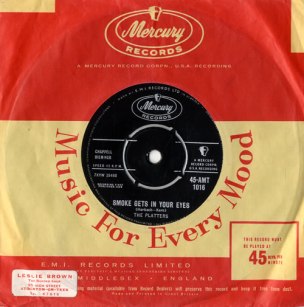
Smoke Gets in Your Eyes, by The Platters (their 1st and only #1)

1 week, from 20th – 27th March 1959

Elvis aside, we’ve had Jane Morgan’s ‘The Day the Rains Came’ (very jazzy, but still what I’d class as a ballad) and Shirley Bassey’s ‘As I Love You’, plus Conway Twitty’s ‘It’s Only Make Believe’ from the tail-end of last year further slowing things down at the top, and this record does nothing to change the tempo. I’m not sure that this four-month stretch qualifies as an ‘Age’ or an ‘Era’, but I feel confident enough in christening it ‘The Winter of the Ballad’.

I’ve been a bit harsh on ballads recently. I didn’t hate either the Jane Morgan or the Shirley Bassey efforts, but they did rather pass by without grabbing me. I think it’s because, while you can chuck a load of guitars and drums at a rock song and usually come out with something passable, ballads are a lot more delicate. They can be great, or they can go really, really wrong. Lay the strings on a bit thick, let the singer go a little too wild with the vocal gymnastics, or have the writers get too schmaltzy with the lyrics, and you’ve got a mess on your hands. But this… now this is a ballad that gets it RIGHT.

It starts slowly. No dramatic swirl of violins or crashing cymbals. Just a piano, and a voice. They… Ask me how I knew, My true love was true, Oh…. I of course replied, Something here inside, Cannot be denied… The singer is sure that his woman loves him; his friends are less convinced. The singer scoffs. But…

Yet today, My love has flown away, I am without… My… Love… His friends – who sound like dicks, by the way – laugh at him and his misplaced confidence. His reply? I smile and say, When a lovely flame dies, Smoke gets in your eyes…

the-platters

What’s the difference then, between this ballad and the one it replaced at #1: ‘As I Love You’? If pressed, I’d have to say the lyrics. While Shirley Bassey was singing – albeit very beautifully – some trite lines about the thrill of being in love; this song employs some great imagery. Your heart’s on fire – smoke gets in your eyes and stops you from seeing clearly. The flame is extinguished; smoke gets in your eyes and makes you cry…

Still, though, there is a big, bombastic ending – the title of the song belted out at the top of the singer’s voice – which spoils things slightly. I just have to accept that it was the style of the time. It’s a great song, however; a classy song. A classy classic. And a ‘classic’ it truly is, having first been recorded back in 1933. It seems to have been something of a tactic in the late fifties – getting modern singers to record updated versions of songs from the twenties and thirties (Connie Francis did it on ‘Who’s Sorry Now’ and ‘Carolina Moon’, while Tommy Edwards borrowed an old melody for ‘It’s All in the Game’) to lure in both the kids and their parents.

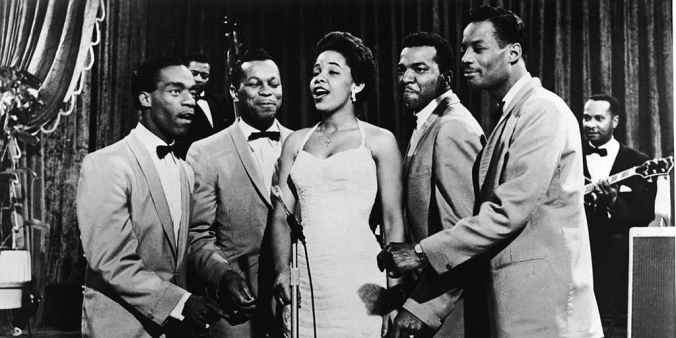
This is The Platters’ one and only appearance at the top of the UK charts, but that does their reputation something of an injustice. They had had several Top 10 hits before this, and were the foremost vocal group in the US – quite an achievement considering that they were five black guys and a girl, and that this is the 1950s we’re talking about. They are still rolling on to this day, albeit with enough line-up changes to make The Sugababes look steady (Wiki lists ten past members).

Unlike the earlier tear-jerkers that have made up this ‘Winter of the Ballad’, I had heard this one before. I’m sure most people will have. It’s one of those songs that have become part of life’s backing track. And to know a song without knowing how you know it – as I’ve said before – is a sure-fire sign that said song is a stone-cold classic.

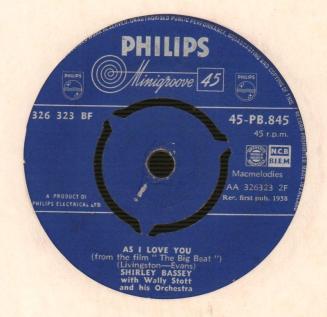
81. ‘As I Love You’, by Shirley Bassey

And so – as happens every once in a while on this countdown – we meet a legend. A British legend, at least. And not ‘British Legend’ as in Robin Hood or Merlin or anything like that. No, no, no. I mean ‘British Living Legend’ – as in Barbara Windsor, or David Attenborough, or Sir Clifford of Richard. People so woven in to the very fabric of British life – of Saturday evenings on ITV and audiences with the Queen – that everybody upon everybody upon everybody knows them.

7M_1369_2

As I Love You, by Shirley Bassey (her 1st of two #1s)

4 weeks, from 20th February – 20th March 1959

Dame Shirley Bassey is one of these people (she is a Dame after all), and the foundations of her ‘National Treasure’ status were laid right here: in the singles charts of the late 1950s, and in this polished and expertly sung record. It’s a very good song: a grown-up ballad of a pop song. But, and after that big old build up I feel a bit bad writing this… I’m not really feeling it.

It starts with a flourish, and then: I will love you, As I love you, All my life… Ev’ry moment spent with you, Makes me more content with you… She loves a guy. Loves him a lot! Ev’ry single, Touch and tingle, I adore… Ev’ry kiss from you to me, Always seems so new to me… Each one warmer, Than the one before… It’s a love song in the very purest sense – in that it’s a song about being utterly in love. Which is nice, I suppose. There’s certainly a real sparkle in her voice, with just the cutest whiff of a Welsh accent, and if the quality of her singing were being judged by a panel then she might just sweep the board. And the ending… My that ending. She gives it everything, and then some. AND MOOOORRRREEEE…. It’s another real throwback of a record, following hot on the heels of Jane Morgan’s – albeit somewhat jazzier – ‘The Day the Rains Came’.

18

Why, then, am I struggling to like this song? Well, it wouldn’t be the first time I’ve failed to really ‘get’ one of the many old-time ballads that we’ve featured thus far. ‘Stranger in Paradise’, ‘Secret Love’ and ‘Three Coins in the Fountain’ were all records that somewhat passed me by, and that’s before we get to the God-awful Eddie Fisher and David Whitfield efforts. ‘As I Love You’ is nowhere near as terrifying as anything by either of those chaps, but I’ll have to file it under ‘Can appreciate; Can’t enjoy.’

The situation isn’t helped by the fact that I originally found a version of ‘As I Love You’ that was much jazzier, much snazzier, and sung at a much higher tempo. I was all prepared to write a post championing it as one of the best tracks so far – it really was that good. It sounded so modern that I was going to announce it as the first ‘1960s Number One’. But something nagged at me as I listened. Something sounded too good to be true… And it was. The version I had been listening to – click here for a listen, it’s good isn’t it? – was a re-recording from, I’m guessing, the late sixties / early seventies. Sigh.

But! We shouldn’t judge a record by what it is not. ‘As I Love You’ is the first chart topper by Dame Shirley of Bassey, the foremost British female voice of the past half-century, the yin to Sir Cliff’s yang (and note that she got to the top a good few months before Cliff ever did). She will only get one (one!) more chart-topper and I will perhaps shock you when I reveal that it is neither ‘Goldfinger’ (#21), nor ‘Big Spender’ (#21) nor ‘Diamonds Are Forever’ (#38!), but something else entirely. Stay tuned.

It is also the very first Welsh #1, meaning that we finally complete our ‘British Isles Chart-Toppers Map’ by adding Dame Shirley to hits from The Stargazers (England), Ruby Murray (Northern Ireland) and Lonnie Donegan (Scotland). So – this record is many things. And yet… It could have been, and later was, so much more!

78. ‘It’s Only Make Believe’, by Conway Twitty

Before we begin writing anything about this record, let’s take a minute to appreciate the name of the man who recorded it… Mr. Conway Twitty. It’s a strange name – ‘Conway’ being quite rugged and windswept, and ‘Twitty’ being somewhat less so. It’s a name you don’t forget in a hurry; which I suppose is a good thing in show-business.

R-7902310-1451306561-6539.jpeg

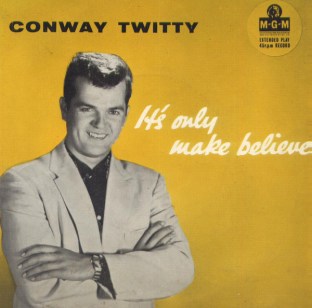
It’s Only Make Believe, by Conway Twitty (his 1st and only #1)

5 weeks, from 19th December 1958 – 23rd January 1959

And note! I’ve finally – seventy-eight number ones in! – managed to locate some genuine cover art to stick at the top of my post. This, I am strongly led to believe, was the genuine cover that people would have seen in British record stores when they went to pick up their copies of ‘It’s Only Make Believe’.

To the song. A guitar strums… People see us everywhere… Another strum… They think you really care… Strum… But myself I can’t deceive… I know it’s only… Make… Believe… Conway loves a gal, but she ain’t lovin’ him back. Bizarrely enough, it sounds quite like the intro to ‘Runaround Sue’ – but that’s a story for another day.

My only prayer will be, Some day you’ll care for me, But it’s only Make… Believe… Is she using him to get back at an ex? Is she leading him on? Is she just a tease…? The reasons as to why they are leading this pretend-life remain tantalisingly out of reach. But Conway’s got it bad. His heart is a-achin’.

This is a rock ‘n’ roll ballad. We’ve toyed with the concept up to now. Was ‘It’s Almost Tomorrow’ the first? Or was it ‘Young Love’? Or was it neither? Because this is heart on your sleeve balladry. This is the real deal, and the starting point for all manner of Bon Jovi / Aerosmith-type fist clenching, air-punching soft-RAWK. Not that it actually sounds anything like a late ’80s power ballad; but mark my words – the seeds are being sown. The lyrics are super-overwrought: lots of my all, my everything, I’d give my life for you etc. etc. But Twitty sells it, just about, with some top-notch wailing. You really believe that his heart is cracking in twain as he sings.

This is also, I’m pretty confident in saying, our first slice of country rock at the top of the UK charts. We’ve had country before – a bit of Frankie Laine here, a little Slim Whitman there – but this is rock ‘n’ roll with a country twang. The Eagles, Dolly and Shania, even Tay-Tay before she went basic, stem from this kind of thing.

I know, I know… That’s a very bold statement. But it’s useful, as we reach the end of 1958, to take a step back and admire the bigger picture. We’re over two years into the ‘rock’ age and, as I’ve commented on several recent chart-toppers, there is more and more of a fusion going on. Songs like ‘The Story of My Life’, ‘All I Have to Do Is Dream’ and ‘It’s All in the Game’ topped the charts this year, and were all pop songs – hummable, easy listening numbers – with a distinct whiff of rock ‘n’ roll. The year started out with two utter classics – tracks one and two on Now That’s What I Call Rock N Roll: ‘Great Balls of Fire’ and ‘Jailhouse Rock’. Since then, though, the overriding theme of 1958 has been one of much ‘blander’ rock ‘n’ roll. And so ‘It’s Only Make Believe’, is in many ways the perfect track to round the year off – a rock song much more likely to appeal to mum, and gran, than the kids.

twitty2

The worst thing about this whole record is that Conway Twitty was not the singer’s real name. Boo! He was actually one Harold Jenkins, and apparently got his stage name after blindly opening a map and finding a town named Conway in Arkansas and one called Twitty in Texas. So far, so C&W. ‘It’s Only Make Believe’ was his only big success on the UK charts, so I make it three-in-a-row in the one-hit wonders stakes. He stumbled through the 1960s before becoming an absolute demon on the US Country Charts in the ’70s and ’80s, with hits like ‘Tight Fittin’ Jeans’ and ‘Red Neckin’ Love Makin’ Night’. Yee-haw! Best of all, he lived in a self-built multi-million dollar ‘country music entertainment complex’ called, wait for it… ‘Twitty City’. He died in 1993, aged but fifty-nine.

We’ll leave him here, caterwaulin’ us into 1959, the final year of the decade that gave us rock ‘n’ roll, Elvis, Buddy and Jerry Lee. Beyond that lie the 1960s, and nothing much of musical interest happened then. Did it?