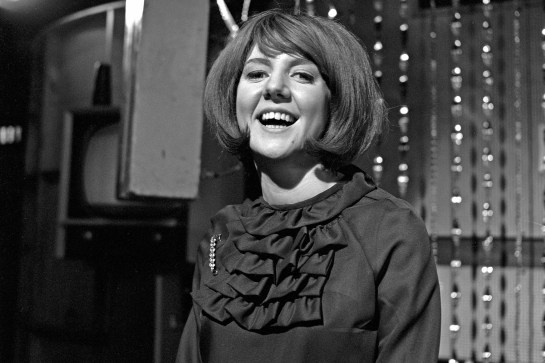
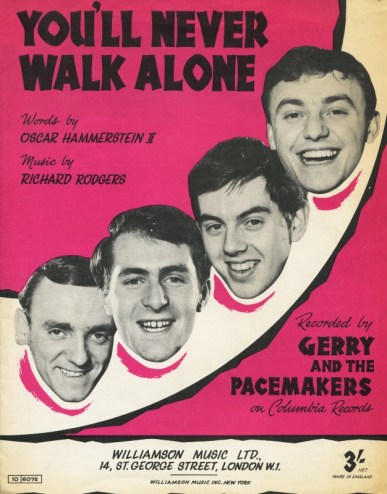
213. ‘You Don’t Have to Say You Love Me’, by Dusty Springfield

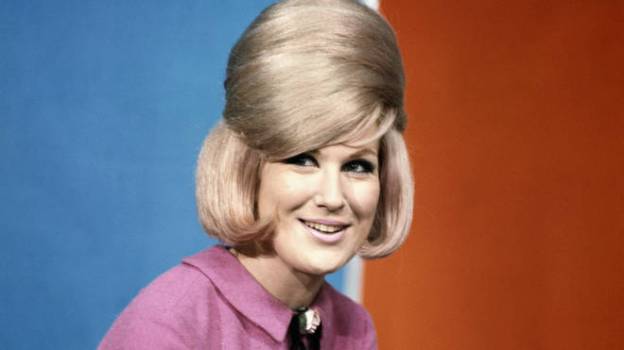
Before we get going with this next number one single, I have to go on record and state that only allowing Dusty Springfield, the greatest British female singer ever, one measly week at the top of the singles charts, is one of the British people’s greatest embarrassments. Hang your heads in shame, British record-buying public!
46703

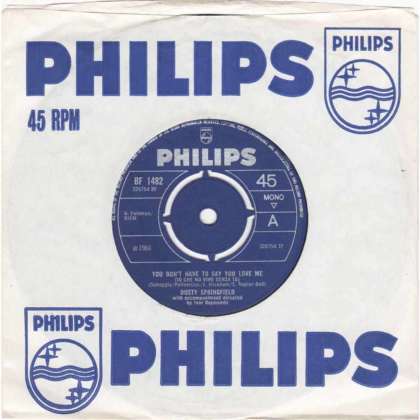
You Don’t Have to Say You Love Me, by Dusty Springfield (her 1st and only #1)

1 week, from 28th April – 5th May 1966

Now that’s off my chest… To the song. And what a song. I’d like to follow my earlier statement with the caveat that, if you were going to give Dusty Springfield, the greatest British female singer ever, only one #1 single, then you could do a lot worse than allowing that single to be ‘You Don’t Have to Say You Love Me’.

The intro sets a scene. It’s a throwback of an intro, straight from the melodramatic pre-rock days. It’s a Shirley Bassey intro. An intro you’d make up as a piss-take of a Bond theme. Horns blast, cymbals crash, and a choir welcomes the coming apocalypse… And then… Dusty. Whose voice, after all that, sounds kind of small.

But what a voice. I’ll have to remind myself that this is a post on ‘You Don’t Have to Say You Love Me’, the two hundred and thirteenth UK #1 single, not a post on the life and times of Dusty Springfield. But she did have a voice on her. When I said, I needed you… You said, You would always stay… It wasn’t me who changed, But you… And now you’ve gone… Away… It’s default Dusty – heartbroken, but defiant. Nobody does defiant heartbreak like her. And then comes the chorus, with it’s very rational approach to a broken relationship: You don’t have to say you love me, Just be close at hand… (For years, I though it was ‘just because you can’, which, to be fair, would also work.) You don’t have to stay forever, I will understand…

I love the dramatic way the second verse comes in… Left alone!… and the violin flourish that accompanies it. And then the two Believe me’s that prelude the final, sweeping chorus. And the key change. Because a song like this simply couldn’t finish without a key change. God, it’s a good record. I want to name it as one of the best yet. Except, my next recap is ages off. Damn. I’ve always felt that it’s a frustratingly short record, even though it comes in at not much under three minutes. They could have stuck another verse in. But no. They didn’t need to. It’s perfect as it is. It’s a complete side-step from the predominant sounds of the mid-sixties, a record that could have been a hit at any time. If Adele released a cover of it tomorrow, it would still work.
118898513

And that’s it. One song. One week. Dusty Springfield as chart-topping artist. It’s nowhere near enough, but at least she got it. And, of course, her career is not defined by this one hit. It’s just one of her sixteen UK Top 20 singles. There’s ‘I Only Want to Be With You’, her 1963 debut, ‘Stay Awhile’, ‘In the Middle of Nowhere’, ‘I Just Don’t Know What to Do With Myself’ (brilliantly covered by The White Stripes)… And then there’s her Memphis records, ‘Son of a Preacher Man’, and ‘Breakfast in Bed’, her cover of ‘The Look of Love’, one of the most sensual recordings ever made. And then there’s her late-career revival, courtesy of The Pet Shop Boys, culminating in the superb ‘What Have I Done to Deserve This’ (she loved a good long song title, did our Dusty.)

But my favourite Dusty is the one that belted out ballads like ‘Losing You’, ‘All I See Is You’, ‘I Close My Eyes and Count to Ten’, and, of course, this. ‘You Don’t Have to Say You Love Me’ was, apparently, based on an Italian pop hit from the year before, which had reduced Dusty to tears upon hearing it. Her song-writing team put together English lyrics for the melody, and she allegedly took forty-seven takes before she was happy with her vocals. The diva!

I better end this post before I go overboard on the links… One final thing, though. Dusty’s career was famously damaged by a 1970 interview in which she announced she was gay (‘bent’, in her own words.) For much of seventies and eighties she battled with alcoholism and self-harm. And listening back to the lyrics of ‘You Don’t Have to Say You Love Me’, you notice there are no pronouns used other than ‘you’ and ‘me’. And then you listen to the refrain: Believe me, Believe me, I can’t help but love you… And you realise that you are perhaps listening to a gay love song, which hit #1 in a time when it was socially unacceptable, if not illegal, to be that way. A powerful subtext, to an already very powerful record. Ladies and gentlemen: Dusty Springfield.

Catch up here:
211. ‘The Sun Ain’t Gonna Shine Anymore’, by The Walker Brothers

Back to business, then. And not a bad record to get back to! Though it starts with an intro that is as folksy as anything we’ve had so far. Very of its time. Guitars round the campfire, a tambourine shakes… I’m getting Seekers flashbacks. Am I about to be underwhelmed by The Walker Brothers, for the second time…?

The-Walker-Brothers-1

The Sun Ain’t Gonna Shine Anymore, by The Walker Brothers (their 2nd and final #1)

4 weeks, from 17th March – 14th April 1966

Of course not. Because in come the drums. Suddenly it’s not a folk song – it’s gorgeous, string-drenched, Wall of Sound-at-its-finest, pop. Loneliness, Is a cloak you wear… A spaghetti Western lone whistle… Because, why not? A deep shade of blue, Is always there…

Then it all comes together. The drums cascade, the voices swirl together… The sun ain’t gonna shine anymore, The moon ain’t gonna rise in the sky… It’s a song about being dumped, essentially. About being sad and lonesome. But never has sadness sounded so appealing. By the time we get to the Bay-yay-ay-bay! I’m sold. Sign me up for the misery!

It’s a brilliantly melodramatic record. All the things that I didn’t think worked on The Walker’s 1st chart-topper – the slightly knowing ‘Make It Easy on Yourself’ – come together here. I think it’s because the music is so compelling, so lush and enveloping, that the OTT lyrics work. I criticised Scott Walker’s crooning on that record, but I love it here. It all culminates in the middle-eight: Lonely, Without you, Baby… through to a glorious I can’t go o-o-o-on…! It’s a song for wallowing in, with a bottle of wine and the curtains drawn.

The-Walker-Brothers-The-Sun-Aint-Gonna-Shinebw-After

Everything about ‘The Sun Ain’t Gonna Shine Anymore’ points towards one man: Phil Spector. He must, you think, have produced this record. It sounds like the inside of his head. But, no. One Johnny Franz was on production duties. And yet the debt is clear. This is a Phil Spector record, even if he was nowhere near the studio.

It all builds to a climax, with the layered vocals on the fade-out working brilliantly. And it ends on a high, leaving you uplifted despite the subject matter. This could be a sad, depressing song, if you stripped it all back, but it isn’t. Thank God. It is ten, twenty times, better than the Walker’s previous chart-topper, and an early contender for best record in my next recap. It’s that good.

Interestingly, this isn’t the original version of ‘The Sun Ain’t Gonna…’ It had been recorded a year earlier by Frankie Valli. His version sounds a little heavy-handed, but surprisingly similar to this one. It, however, made no impact on the charts. It’s also been covered by Cher, in the ‘90s. She is perhaps the only person who could make this song sound more OTT than Scott Walker…

This was the peak of The Walker Brother’s success, their popularity such that their fan-club allegedly had more members than The Beatles’. They had several further hits, and yet disbanded in 1968, largely due to Scott Walker’s dissatisfaction with being seen as a mere teen-idol. I can’t say I’ve listened to that much of his solo output, though I do know it has a reputation for being ‘challenging’… That’s probably what’s putting me off. It’s also been very influential: David Bowie, Pulp, Radiohead, The Arctic Monkeys… the list is a long one. He passed away in March of this year. John Walker had died in 2011, leaving Gary as the sole surviving ‘brother’.

But we’ll leave them here. Bowing out with their crowning glory. A song I knew was good, but hadn’t realised quite how good. Yet another supreme mid-sixties pop moment. Keep ‘em coming!

Catch up with all the Number Ones so far, here:

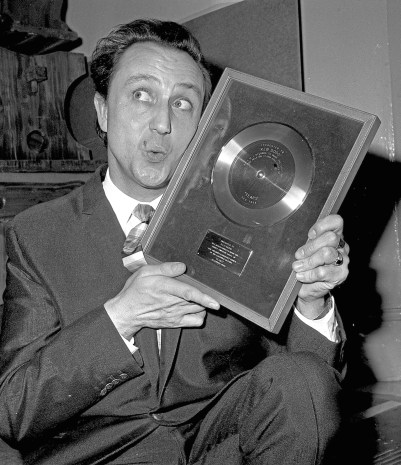
204. ‘Tears’, by Ken Dodd

The best thing about a pop chart, about a list of the best-selling songs in any given week, is that anything can, technically, get to the top. Get enough people to buy it, download it, stream it, whatever, and you get yourself a #1 single.

Ken Dodd

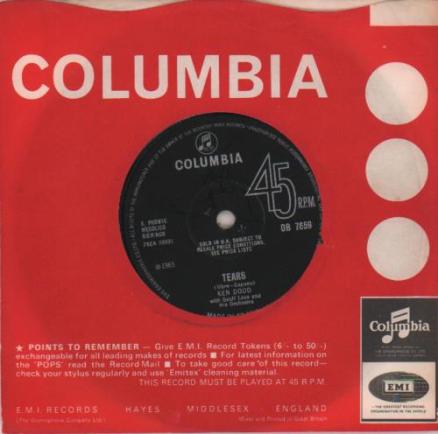
Tears, by Ken Dodd (his 1st and only #1)

5 weeks, from 30th September – 4th November 1965

Which means, try as you might to apply some kind of sense to the ebb and flow of number ones, to christen new eras and to identify the overall ‘sound’ of a time, you’ll always get anomalies. Which means… In amongst The Beatles and The Stones, The Byrds and the Baroque, we have comedian Ken Dodd, covering a sentimental ballad, first written in 1929.

Tears for souvenirs, Are all you left me… Mem’ries of a love, You never meant… The rhythm floats by like a placid river, the guitar trills, the strings swirl… Tears have been my only, Consolation… But tears can’t mend a broken heart, I must confess… He sings it perfectly well, but not spectacularly. I’m picturing a busker on the banks of the Seine, accompanied by an accordion (this would totally work in French, and was actually based on an old French aria from the 1870s.)

Is it a parody? A novelty? I don’t know. What it definitely is is a throwback. This is pure music hall. It’s not cool and it doesn’t care. A record for your gran. It’s almost not worth writing any more about ‘Tears.’ It is what it is. Move on.

KEN_DODD_TEARS+-+SOLID-644474

But. But, but, but… That really wouldn’t be fair. Because this isn’t a flash in the pan, one-week wonder. It’s a disc that lodged itself in at the top for five whole weeks – a length of time reserved solely these days for The Beatles. It was the biggest selling record of 1965. Let that sink in… In the year of ‘You’ve Lost That Lovin’ Feelin’’, ‘Help!’, ‘Satisfaction’, and ‘Mr. Tambourine Man’; Ken Dodd’s ‘Tears’ outsold them all. It was the 3rd best-selling single of the entire decade, the only non-Beatles single in the Top 5. As of 2017, it still sat in 39th place on the list of best-selling singles ever. The middle of the road is always the best place from which to sell a record.

And then there’s the man behind the song. The voice that guides us through this tale of heartbreak and regret. Sir Ken Dodd, of the tickling sticks and the Diddy Men. Of Saturday night telly, Christmas pantos and the Blackpool lights. Of a type of humour and a style of show that was uniquely British. I know some of my readers are not British and… I don’t know if I can even begin to explain him. Look him up. I’m a bit young to have really been ‘into’ him, but my mum liked him. I think that this was the first record she ever bought… He died last year, aged ninety, having performed his final stand-up show just a few months earlier.

Not that this was his only musical success. He was a genuine chart presence throughout the sixties, with several other Top Tens. And I have to admit that, as I listen to ‘Tears’ now for the seventh or eighth time, with a glass (or two) of wine as I write, that this is a pretty nice song. A song that actually fits in quite well with the strings, and the lush production, found in the more ‘respectable’ pop songs of the time. (Plus – whisper it – I think I might be enjoying it more than the previous, overwrought #1, ‘Make It Easy on Yourself’…)

Anyway, before I get too carried away, and claim ‘Tears’ to be the most underrated pop song of the decade, or something, I’ll finish. And glancing forward… Ah yes, normal service is about to be resumed, with a vengeance.

197. ‘Crying in the Chapel’, by Elvis Presley

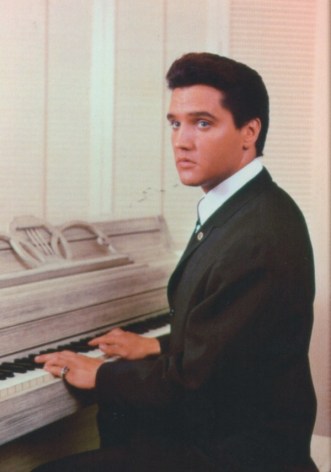
Well, well, well. Look who’s back. The man with the most #1 singles ever (then and now), whose every release was once guaranteed several weeks at the top of the British pop charts, assumes his rightful place. Bow down to The King.

GospelStandup3

Crying in the Chapel, by Elvis Presley (his 15th of twenty-one #1s)

1 week, from 17th – 24th June / 1 week from 1st – 8th July 1965 (2 weeks total)

He’s taken a break from his ever-diminishing run of lame movie-soundtracks, to get all holy on us. Elvis does gospel. You saw me crying in the chapel, The tears I shed were tears of joy… he croons, over a simple guitar strum – reminiscent of ‘Are You Lonesome Tonight?’ – and a tinkling piano – reminiscent of ‘Can’t Help Falling in Love’. I know the meaning of contentment, Now I’m happy with the Lord…

This is by far the most overtly religious chart-topper yet. In fact, the only others to have referenced The Almighty and his Gang were ‘Answer Me’, way back in 1953, and ‘Mary’s Boy Child’, from Christmas 1957. But this isn’t a preachy, buttoned-up number. This is Elvis we’re talking about, and he’s in his element. He whispers, he purrs, he croons, while the way he lowers his voice for the …just to sing and, Praise the Lord… line would get even the most pious of nuns a little hot under the collar.

No, Elvis is enjoying himself here. I once read a description – I can’t remember where – of Elvis’s gospel records as being sung as if ‘The King was trying to blow the pearly gates from their hinges’. You can imagine him striding up to God and asking him to make some room on the throne…. But not here. Elvis keeps it low-key on this disc. Actually, his vocals aside, it’s pretty dull. I always skipped this one back when I had his Greatest Hits on heavy rotation.

7103uEeOMgL._SX466_

But it is in keeping with what has been a very eclectic 1965. We’ve had ballads, country-pop, Latin soul, some cabaret-pop and some Phil Spector Wall of Sound gloss. And now some gospel. While it’s easy to say ‘well, only someone like Elvis could take this to #1’, bear in mind he hasn’t been drowning in hit records recently. This is his first chart-topper for two years; while he won’t reappear again until the 1970s. His recent hits before this one included ‘Bossa Nova Baby’ (#13) and ‘Do the Clam’ (#19). This record got to the top for reasons beyond Elvis’s fading star-power. Maybe it was Christian-power…? Church-goers heading out in force to get what is basically a hymn-in-disguise to the top of the charts? It worked for Cliff in the ‘80s and ‘90s…

It would also be remiss to suggest that Elvis was attempting some kind of reinvention here. He was always, in fairness, a deeply religious man, and had released his first gospel album, ‘His Hand in Mine’, years before. (‘Crying in the Chapel’ was actually recorded way back in 1960, but for some reason never saw the light of day until five years had passed.) He’d go on to release several more before his death, including the seminal ‘How Great Thou Art’ in 1967. Nope, it seems that this was simply one of his few gospel singles that caught on with the general public. It’s a million miles away from the swinging sixties, and you know what, that’s fine for a couple of weeks.

It’s interesting, looking at Elvis’s discography, to see how he seems to have been much more appreciated by British audiences come the mid-sixties. Between ‘Surrender’ in mid-1961, and now, he scored just one Billboard Hot 100 #1 – ‘Good Luck Charm’. Across the Atlantic he racked up seven, including this one. You can’t help but feel that Britain got this the wrong way around – all the early classics, your ‘Heartbreak Hotel’, ‘Hound Dog’ and ‘Don’t Be Cruel’, were US chart-toppers. Whereas in the UK we waited until the ‘Rock-a-Hula-Baby’ phase to go truly Elvis-mad. Definitive proof of this, if it were needed, can be found in the fact that the abominable ‘Wooden Heart’, a 6-week UK #1, didn’t see the light of day in the States. The Americans got that one spot on!

Follow along with my Spotify playlist:

186. ‘You’ve Lost That Lovin’ Feelin”, by The Righteous Brothers

Oh baby, baby… For our next chart-topper, we take a step into the realm of the super-cool. An empty stage… A sole spotlight shining its beam through the dusty air… A mic on a stand… Thick curtains part, and on step two men…

21584a935b760f20b4b08f7f9ddd012c12437798

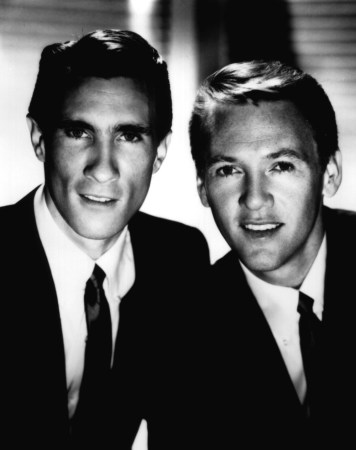
You’ve Lost that Lovin’ Feelin’, by The Righteous Brothers (their 1st of two #1s)

2 weeks, from 4th – 18th February 1965

And then that voice. Sonorous. Rich. Velvety and comforting, but authoritative too. You never close your eyes, Anymore when I kiss, Your li-ips… It’s a voice that is somehow both low and high within the same line – sometimes within the same word. And there’s no tenderness like before, In your fingerti-ips… A voice that goes from velvety soft to a gravelly rasp in seconds (see that Baby! Something beautiful’s dying! line.) Said voice is Bill Medley’s, and it’s unlike anything we’ve heard before in this countdown. Apparently, at the time, it was so deep and treacly that people thought they were listening to the record on the wrong speed. I’d rate it instantly alongside Roy Orbison and Shirley Bassey as the best voice to have topped the charts, up to now. It’s a voice that it’s almost impossible to mimic… Anyone can pretend to be Elvis, or Mick Jagger, and just about get away with it. Not this voice.

The backing music is way off in the background, too – a softly shaken out drum and some ethereal strings. This record, to start with anyway, is all about the voice. Apparently Bobby Hatfield, the other Righteous Brother (they weren’t biological brothers – something I just found out…) was pissed off that they weren’t starting the song by singing together. But you’d have to say the producer got it right on that front. That producer, by the way…? One Phil Spector.

Hatfield soon gets his moment, though. Come the chorus, the two voices ring out: You’ve lost that lovin’ feelin, Now it’s gone, gone, gone, Woah-woah-oh… Then they intertwine for the superb crescendo that leads to the final chorus. You know, the bit that starts with an angelic Baby, baby, I’ll get down on my knees for you… and soars into call-and-response Babys! and Pleases! and I need your loves! It is pop perfection… as trite as that phrase sounds. Time-capsule pop, as I coined it in an earlier post. Two voices that are as good as The Everly Brothers; but that are completely different too.

THE_RIGHTEOUS_BROTHERS_YOUVE+LOST+THAT+LOVIN+FEELIN+-+1ST-504151

In keeping with more recent #1s, ‘You’ve Lost That Lovin’ Feeling’ is a very sophisticated song. It’s pop for adults. A world away from the teeny-bopping Mersey sound that encapsulated 1963-’64. It’s perhaps the first example of the American response to the British invasion – a record, like The Supremes from a few weeks earlier, which has that US gloss. You just know that the Righteous Brothers had perfectly white teeth…

Some of this is to do with the lyrics. With lines like And now your starting to, Criticise little things that I do… it’s looking at love in a way that Herman’s Hermits, or Billy J. Kramer, or even The Beatles, weren’t. But it’s more to do with Spector’s soaring, crashing, grandiose Wall of Sound production. The strings. The drums. The stereo sound that fills the room. I wrote a post recently on how it was a crime that ‘Be My Baby’ didn’t make #1. But, while that is a peerless pop disc; I hadn’t noticed that this record was coming up. I knew that this was a good song – a classic – but I had forgotten (or perhaps had never realised) just how good it was. Listening to it now… Oh boy. Phil Spector may be many things (most of them awful), but nobody – nobody I say! – knew their way around a pop record like him back in his heyday.

Like most eighties kids, my first exposure to ‘You’ve Lost That Lovin’ Feeling’ was in, ahem, ‘Top Gun’. Maverick and Goose, all in white, serenading Kelly McGillis… And this is just one of the ways in which this song has grown its own legend. It’s been covered by everyone: Cilla Black, Dionne Warwick, Hall & Oates… It caused Brian Wilson to tell the writers – Barry Mann and Cynthia Weil – that he had been “ready to quit the music business, but this has inspired me to write again”… We are in Rolling Stone Top 10, BMI most-played songs of all time territory here. We won’t meet many bigger songs than this one as we move on. Finally, and perhaps most excitingly of all, mixed in amongst the backing singers on the disc, was an up-and-coming young woman by the name of Cher.

We will hear from The Righteous Brothers again. But not for a long time, and in somewhat specific circumstances. It’s a lifetime away – one of the biggest gaps between #1 singles in history. This was, then, to all intents and purposes, their only chart-topping hit in their ‘lifetime’. Relish it, appreciate it… Just be grateful that it exists…

Catch up with the previous #1 singles here:

171. ‘It’s Over’, by Roy Orbison

Out of nowhere, the Big ‘O’ is back. Enough of this new-fangled ‘Beat’ nonsense, he says. It’s been a little too happy at the top of the charts recently; a little too much positivity going round. Roy is here to change all that.

roy-orbison---monument---color1-e23f5a1e868942826513ded7cdd783370ff3fda4-s800-c85

It’s Over, by Roy Orbison (his 2nd of three #1s)

2 weeks, from 25th June – 9th July 1964

This isn’t any kind of reinvention. Orbison hasn’t updated his sound to keep up with the kids. Last we heard from him, over three and a half years ago, it was with ‘Only the Lonely’. Now, ‘It’s Over’. And if you held any hopes that that might just be a misleading title, then the opening line crushes them. A guitar gently strums… Your baby doesn’t love you, Anymore…

And so we embark on a song absolutely drowning in melodramatic heartbreak. Roy O excelled at this kind of OTT emoting. Lines like: All the rainbows in the sky, Start to weep and say goodbye… and Setting suns before they fall, Echo to you ‘That’s all, that’s all’… are both ridiculous and perfect. While in the build-up to the chorus, when he sings She says to you, There’s someone new, Were throu-ou-ough… and then, just for good measure, another We’re through! Goosebumps.

I had never heard of a ‘bolero’ before researching this song, but it’s a term that’s been used to describe what Orbison was doing in ballads like these. A bolero being, in Latin music, a piece that ‘builds’; and in pop music a song that builds to a climax without the traditional verse, bridge, chorus structure. Not that ‘It’s Over’ is strictly a bolero. There is a latin flavour to the insistent guitars, and the occasional castanets, but there is a reset halfway through, after the first three It’s overs… For a true taste of Orbison-bolero, check out the equally sublime ‘Running Scared’.

By the end of the song, you’ve come to a startling realisation. The Big ‘O’ is bloody loving all this heartbreak. For a start, this song is written in the 2nd person – he’s singing about another person’s despair. He’s the angel of heartbreak swooping in through some poor guy’s bedroom window, as his wife slams the door behind her, singing And you’ll see lonely sunsets, After all… And then we get to the climax. It’s over, It’s over, It’s over! But it’s not. Oh no. Pause. One final breath. And Jeezo. That last It’s Over! No chart-topper, before or since – and bear in mind that we’re on around 1300 by now – has had as dramatic and emphatic an ending as chart-topper #171.

s-l300 (1)

As I wrote above, this was Roy Orbison’s 2nd number one after a near four year wait. Under normal circumstances, a four year gap between chart-toppers is nothing special. But for him to span these four years, which saw Elvis kill off what remained of rock ‘n’ roll and The Beatles et al launch a musical revolution, is pretty impressive. His contemporaries at the top when ‘Only The Lonely’ was there were Ricky Valance, Cliff and Johnny Tillotson. And he’s done it without compromise. This record is The Big ‘O’ doing what The Big ‘O’ does best, and for its two minutes and forty-seven seconds you could be forgiven for forgetting that anything has changed. Back when The Beatles and The Pacemakers landed on the charts, I compared them to a meteor, killing off all the musical dinosaurs. But I forgot about Roy Orbison. I now have a mental image of him coolly lifting the meteor up with one arm, stepping out from under it and dusting himself off. And re-adjusting his shades, of course.

Interestingly, he’s the first American-that-isn’t-Elvis-Presley to top the charts since Ray Charles in July 1962. The Beat revolution has been, up to now, a strictly British affair. But that’s going to start slowly changing. As for Roy, it’s certainly not over. Not yet. He’s got one final #1 left in the tank, and it might just be his signature song.

Follow along with my Spotify playlist:

170. ‘You’re My World’, by Cilla Black

A word of warning. If you listen to this next #1 through headphones, and haven’t checked the volume levels on your device, then the violins that open this song may burst your eardrums. Take it from me. They’re the violins from the shower scene in ‘Psycho’, remixed.

cilla-black

You’re My World, by Cilla Black (her 2nd and final #1)

4 weeks, from 28th May – 25th June 1964

Once they settle down, though, we head into solid ‘sixties ballad’ territory. Dramatic piano, tumbling drums, a soaring chorus… You’re my world, You’re every breath I take, You’re my world, You’re every move I make… The lyrics are trite, no doubt about it – but does that really matter? It’s an over-the-top record, that requires some over-the-top emoting. As the trees reach for the sun, Above, So my arms reach out to you, For love…

I still can’t shake the feeling I had while listening to her first #1: ‘Anyone Who Had a Heart’ – that Cilla was but a second-rate Dusty Springfield. She gives it a good go, and does sing it very well, but her voice just doesn’t have enough behind it – it’s still a little too reedy. It’s harsh, you might argue, to compare a perfectly good singer to the one and only Dusty. And this, after all, is Cilla’s second chart-topper while we are still yet to hear from Ms. Springfield… But. From a 2019 standpoint, the patent on this type of pop-ballad is owned by Dusty, and almost everybody else will fall short of her standards.

Still, when we get to the line that builds up to the chorus – With your hand, Resting in mine… I feel a po-wer, So, divine… I’m completely won over by this song. That’s how you do a chorus. We’re a long way yet from the golden age of the power-ballad; but this is a proto power-ballad. What the V2 rocket was to Apollo 11. It’s a song that manages to cram a lot into it’s three minute run-time. A song that takes you on a journey, and assorted other clichés.

It’s also a song with a bit of a story behind it. It had originally been written the year before, in Italian as ‘Il Mio Mondo’ – which explains the operatic vibe – and translated into English, then French, then Spanish. It was a hit record in whatever language they tried; apart from, interestingly enough, in Italy… George Martin, who had an ear for these kind of things, was the man who spotted its potential and gave it to Cilla…

Cilla-Black-Youre-My-World-45-Parlophone-1964

And so it was her, and her alone, who could break up these nine months of Merseybeat with two #1 blockbuster ballads. She was a huge star, no doubt about that, though with this her chart-topping career ended quite abruptly. Whatever happened to her…? She lasted throughout the sixties – not something that all of her contemporaries managed – scoring nine more Top 10s (the last of which, the sublime ‘Something Tells Me (Something’s Gonna Happen Tonight)’ is the best.)

Oh yes. And then she became one of the most famous TV personalities in the country, as the face of Saturday night light entertainment shows like ‘Surprise, Surprise’ and ‘Blind Date’. I wasn’t allowed to watch ‘Blind Date’ as a kid; my mum thought it was trash. I mean, it was trash – that was the entire point… Anyway, unresolved childhood grievances aside, Cilla Black was part of the fabric of British live in the eighties and nineties and it was genuinely shocking when she died suddenly in 2015. Her death sent a ‘Greatest Hits’ compilation to the top of the UK Album Charts – the first time she had topped any chart since ‘You’re My World’…

I once spent an enjoyable hour reading a thread by anonymous British Airways cabin crew who had had the misfortune to serve Cilla on flights. She could *allegedly* be, shall we say, demanding… It made me love her even more. A proper diva, the likes of whom we see fewer and fewer of these days. RIP, and onwards.

169. ‘Juliet’, by The Four Pennies

Before listening to this next UK chart-topper, I would have put the house on ‘Juliet’ being a doo-wopish, soulful, Motown record and The Four Pennies a black vocal group from Detroit. And if I had, I would now be homeless.

The-Four-Pennies-10-x-8-Photograph-no

Juliet, by The Four Pennies (their 1st and only #1)

1 week, from 21st – 28th May 1964

For this is another Beat record, and The Four Pennies a band from Blackburn, Lancashire. Which goes to show how much of a forgotten #1 single this is. I have genuinely never heard this record before. I suspect most people haven’t. This record is so inconspicuous that I missed it every time I glanced down my list of UK chart-toppers, what with its single week at the top being completely buried amongst large swathes of Beatles, Pacemakers, Searchers and Cilla.

What is it, then – this most forgotten of #1s? Well, if I had to pick one word to describe it that word would be ‘gentle’. A gentle guitar rhythm, gentle drums, and oh-so gentle vocals that give us something approaching a lullaby. There was a love, I knew before, She broke my heart, Left me unsure…. It sounds like the last number played at a spring dance in 1955, a soundtrack to which sweethearts would pair up and decide to ‘go steady’, not a hit single from the swinging sixties. Ju-li-e-e-e-et, Don’t forget… (some high quality rhyming, there.)

It’s got a pleasantly lo-fi, home-demo quality to it, and I quite like the soaring, layered you gave me… line in the bridge. It’s nice that it sneaked a week at the top in amongst all the huge hits of the time; but there’s a good reason as to why ‘Juliet’ has been well-forgotten by the collective conscience… It’s pretty dull. Kind of like The Bachelors from a few weeks back, it’s a case of bandwagon-jumping, or perhaps clever marketing, from four guys with guitars who look like a cool new Beat group, but who are recording music for mums.

R-6644604-1519775926-8356.jpeg

Actually, the more I listen to it, and the more I look at my list of upcoming number one singles, I think this might be the final genuine, Merseybeat chart-topper. Suddenly the movement is dead. Or, if not dead then about to splinter into lots of different styles: R &B, garage, folk… especially once the Americans get involved. But what a run it’s been. I can’t imagine a similarly homogenous run of #1 singles at any other time, before or after. Since The Searchers hit the top back in August ’63 with ‘Sweets For My Sweet’ we’ve had a near flawless procession of Beat pop at the top of the charts. I make it fourteen out of fifteen #1s, with the only exception being Cilla Black’s ‘Anyone Who Had a Heart’, and she was from Liverpool and so was still halfway there.

The Four Pennies weren’t quite one-hit wonders, but ‘Juliet’ was their only Top Ten hit. The follow-up, ‘I Found Out the Hard Way’, could only make #14. By 1966, after only three years together as a recording group, Lionel, Fritz, Alan and Mike had gone their separate ways. Perhaps most tellingly, they were the only group from the Beat movement – and I’m talking about all the bands covered so far in this countdown and all the bands still to come over the next few years – that failed to chart for even a single week in the USA during the famous ‘British Invasion’.

Listen to every #1 so far with this playlist:

164. ‘Anyone Who Had a Heart’, by Cilla Black

Alright, chuck? What’s your name and where d’you come from? Me name’s Cilla, and I’m from Liverpool.

1962 and ’63 were barren years in terms of women reaching number one in the UK. 1963 had precisely zero female #1s, while 1962 had just the one – Wendy Richard popping up as the featured artist on Mike Sarne’s ‘Come Outside’ (and she didn’t even sing on that record!) No, if we are counting #1 discs sung solely by women we have to look all the way back to Helen Shapiro’s ‘Walkin’ Back to Happiness’ from October 1961! No pressure then, Cilla…

00849490_1024x1024

Anyone Who Had a Heart, by Cilla Black (her 1st of two #1s)

3 weeks, from 27th February – 19th March 1964

This is a dramatic record. Right from the opening chords. Dun… Dun Dun… It’s the sort of song sung onstage, in a movie, while a murder is being committed in the wings. We’ve got a jabbing piano, cascading strings, and those rolling drums that are fast becoming the sound of the mid-sixties. Anyone who ever loved, Could look at me, And know that I love you…. It’s the song of a spurned lover. One who demands better. Knowing I love you… so, Anyone who had a heart, Would take me in his arms and, Love me too…

Writing the words out like that, though, cannot convey the brilliantly stop-start, woozy way that they come at the listener – loud then quiet, soft then angry. The pauses before the ‘so’ and the ‘who’ in the chorus are perfect, as is the whispered What am I to do… before the gorgeous horn solo.

It is a slice of supreme balladry – a seriously classy record. And when you discover, as I just did, that it was written by Burt Bacharach and Hal David, then that makes complete sense. It’s their 4th UK chart-topper so far. And the soaring ending – with the Anyone who had a heart would love me too… lines emphasised by drumbeats on each word, and Yeah Yeahs from the backing singers, is possibly the most sixties thing we’ve heard yet in this countdown.

Cilla-Black-–-Anyone-Who-Had-A-Heart

The only unconvincing thing about this record is… sorry Cilla… the voice. Technically, it’s great. But, for me, it sounds just a little young. Anyone who had a heart would love me too… is a difficult line to sell, and in the hands of a twenty-year old Cilla Black it sounds a little bratty. You don’t like me so you must have something wrong with you… My first instinct is to ask: Did Dusty ever sing this? Dusty would have done it justice. And she did. It’s not her finest effort, and I’m not sure about the guitars in place of the piano, but still… Nobody conveys stoic heartbreak like Ms. Springfield. On top of this, the song was originally recorded by Dionne Warwick, who also gave a more grown-up rendition.

But, still, this single launched Cilla Black as one of the biggest British female singers of the decade. Her take on ‘Anyone Who Had a Heart’ was the biggest selling song by a woman for the entirety of the 1960s! She was, as many people know (and as she kept reminding us for years to come), best mates with The Beatles, coming up through the same club circuit as they did. John Lennon introduced her to Brian Epstein, and the band even accompanied her during her audition for Parlophone.

Maybe what I’m mistaking for brattishness was actually the reason Cilla Black became so popular – her genuine girl-next-door, cheeky charm. She’ll top the charts again very soon and so we’ll hold off talking about what was to come for our Cilla for now. It is interesting to note, though, that both she and the last woman to top the charts, the aforementioned Wendy Richard, went to on to be better known for their TV work than their singing. More on that later…

Listen to every #1 so far with this handy playlist:

159. ‘You’ll Never Walk Alone’, by Gerry & The Pacemakers

Gerry and his gang make it three number ones in a year – three in ‘63. A feat that not many acts manage. But this is a disc light-years away from their first two chart-toppers.

gerry-and-the-pacemakers-youll-never-walk-alone-1963-8

You’ll Never Walk Alone, by Gerry & The Pacemakers (their 3rd and final #1)

4 weeks, from 31st October – 28th November 1963

It starts very simply. When you walk… A voice, a piano, a sparse drumbeat, and a bass… Through a storm, Hold your head up high, And don’t be afraid, Of the dark… Yup, we are definitely a long way from ‘I Like It’.

It’s a motivational song – a ‘never-give-up’ number about holding onto your dreams, even in your darkest hour. And Gerry Marsden certainly sells it here, building in confidence as the song progresses with his slightly rough-round-the-edges scouse crooning, and an affecting tremble in his voice. Walk on, Through the rain, Though your dreams be tossed, And blown…

Then the violins kick in, and the band and George Martin pull out all the stops to make sure there isn’t a spine left untingled. Walk on… Walk on… With hope in your heart, And you’ll never walk alone…. It’s a classic, an anthem. There’s a quick drop following the first chorus and then BOOM – we’re back for a big ol’ finish.

What on earth, though, were Gerry and The Pacemakers doing recording a version of ‘You’ll Never Walk Alone’ in the first place? It’s such a weird trio of chart-toppers: ‘How Do You Do It?’ – perky Beat-pop, ‘I Like It’ – perky Beat-pop, ‘You’ll Never Walk Alone’ – umm… It’s from a Rodger’s & Hammerstein musical, ‘Carousel’, first performed in 1945 as their follow-up to ‘Oklahoma!’ In the show, the song is sung by the lead-female character’s sister to comfort her following her death of her husband.

However, in the UK, and much of Europe, ‘You’ll Never Walk Alone’ has become completely disassociated from the original musical, and even from Gerry & The Pacemakers. Ask your average youngster in the street today if they know the song and they’ll probably say ‘yes – it’s the Liverpool Football Club song.’ It’s a record – more so than any of the other chart-toppers that we’ve covered so far – that has, for better or worse, taken on a completely new role in the decades since its release. At every Liverpool home game, just as the players run out onto the pitch, you’ll hear that piano and Gerry Marsden’s husky tones. Then, just as it arrives at the big finish, the P.A system will cut out and the crowd will take it home.

Gerry-The-Pacemakers-Youll-Never-Walk-Alone

Legend has it that in the early sixties the P.A. would play the Top 10 ahead of each match at Anfield. For four weeks in November 1963, ‘You’ll Never Walk Alone’ was the last song played due to it being atop the charts. But even after it was knocked off the top and dropped out the charts, the crowd kept singing it. The Pacemakers were hometown lads, after all, and the lyrics and melody of the song do lend themselves to being sung en-masse at a football match. So it stuck. ‘You’ll Never Walk Alone’ is the Liverpool FC song now. It’s sung at every game. It’s carved above the gates at Anfield. Liverpool supporters sign off from message boards and forums with ‘YNWA’.

But… Football being a tribal game, this means that any supporter of a club that isn’t LFC has to, basically, hate this song. Especially those who grew up in the seventies and eighties, when the buggers were winning everything. I would never particularly choose to listen to this song, as I’m not a Liverpool fan. It’s left ‘You’ll Never Walk Alone’ in a very weird position in British popular culture – a song that everybody knows; but one that only a select portion of the population will actively enjoy. And, amazingly, I’ve only just scratched the surface here. The song will top the charts again, and will become indelibly connected to two of the biggest tragedies in recent British history. All that for another day…

Away from football, ‘YNWA’ (those Liverpool fans might be on to something here) has been recorded by everyone who’s everyone: Elvis, through Roy Orbison, to Susan Boyle. It would literally take half an hour for me to type out all the artists who’ve done their take in the song. Gerry and The Pacemaker’s version remains, in the UK at least, the definitive one. But I’ve not answered my initial question from several paragraphs back… Why on earth did they take such a big step away from their Merseybeat roots, and so early in their careers? Could it have, perhaps, been their downfall? You can’t imagine The Beatles ever recording a showtune, can you? It was the band’s last #1, and they would only have three further Top 10s. By 1965 their chart-careers would be over. It’s a huge collapse (similar to the way Liverpool threw away the league title at Crystal Palace a few seasons ago… I couldn’t resist…)

Still, three #1s from their first three singles was an unprecedented achievement at the time, and one that wouldn’t be matched for over twenty years. They split up in 1966, with Gerry going into cabaret and children’s entertainment.

Before we finish, I have one big problem with this record (and it’s nothing to do with football). I’ve mentioned ‘The big finish’ a couple of times now; but the song doesn’t actually have one. The song build and builds, and builds, for two minutes and twenty seconds, and is crying out for a huge, epic, grandiose finish. But they bottle it. In the middle of the last ‘never’, Gerry pauses, the soaring violins fall away, and the song ends with a bit of an anti-climax. It’s a strange decision. I don’t know if it was Marsden’s, another band member’s, George Martin’s or maybe even Rodger’s or Hammerstein’s back in the forties. But for me it doesn’t work. It leaves me feeling a little flat. I’ll leave it to the crowd at Anfield to give this song the big finish that it deserves.