463. ‘The Winner Takes It All’, by ABBA

In which ABBA return, triumphant, to the top of the charts, with their best song. Shortest post ever…

The Winner Takes It All, by ABBA (their 8th of nine #1s)

2 weeks, from 3rd – 17th August 1980

OK, fine. I should write a bit more. For a song to be ABBA’s best, it has to be a pretty good song. But why is ‘The Winner Takes It All’ so good? I’m no musicologist – if indeed that’s an actual job – and so cannot talk about chord progressions, keys, and melodic shifts (though I’m sure this record is brimming with them). I’m not sure I can look at this record objectively at all. I grew up with this song. I can’t remember a time when I didn’t know this song.

It’s a song full of moments. From the opening piano line – confident, stately – which announces that yes, this is ABBA and yes, something great is coming. The moment right at the start of the second verse, when the beat kicks in. The But tell me does she kiss… start to the third verse. The spoken but you see… The fade-out, when the vocals shift to the background and the trademark piano takes over again. It’s long for a pop song, but it’s exactly as long as it needs to be. Everything that’s there – pianos, guitars, strings, synths, backing vocals – is essential. There’s nothing extravagant about it (which isn’t something you can always say about ABBA songs).

A song about love as a game, with lovers holding cards, and the Gods throwing dice. It could come across as a bit silly. A bit flowery. But it doesn’t, because Agnetha sells it. She sells it, and then some, from the opening I don’t wanna talk… line through to the closing The winner takes it all… that she belts out in a manner unlike any ABBA single before. This is pop as a stage show, as opera. It’s melodramatic, and unrepentantly sad. There’s no sign of her moving on, of a brighter tomorrow. She’s having a good old wallow. She may even be enjoying this wallow, in a self-indulgent way. Why should she complain? Yet she still does. She doesn’t want to talk… but then she sings a full-blown song about it.

It’s been well-documented that, by this stage in ABBA’s career, the personal relationships between the members of the band had collapsed. It feels lazy to suggest that that’s what makes this song so powerful. But just imagine: Bjorn writes a song – while drunk apparently – about his recent divorce. Then hands it to his ex-wife to sing! She’s the ‘bad guy’ that she’s singing about! (Although Bjorn has denied that it’s specifically about their own divorce.) Still, that’s not your usual husband-wife, singer-songwriter dynamic. You can really hear the pain in her voice, in the lines before the final, earth-shattering chorus: And I understand, You’ve come to shake my hand…

I know people who don’t like ABBA. They’re a dying breed, thankfully, as the band has long since shaken off the cheesy, gay-bar reputation they had when I was growing up. But they still walk among us, the weirdos. The lady next to you on the bus, the guy that just served you in Starbucks… might not like ABBA. It’s best not to think about it. I can’t understand how you could listen to ‘The Winner Takes It All’ and not like it, not get it, not see it for the five minutes of genius that it is. Anyway. ABBA are back at the top of the charts, after what feels like ages. But, alas, they have just one more #1 to come…
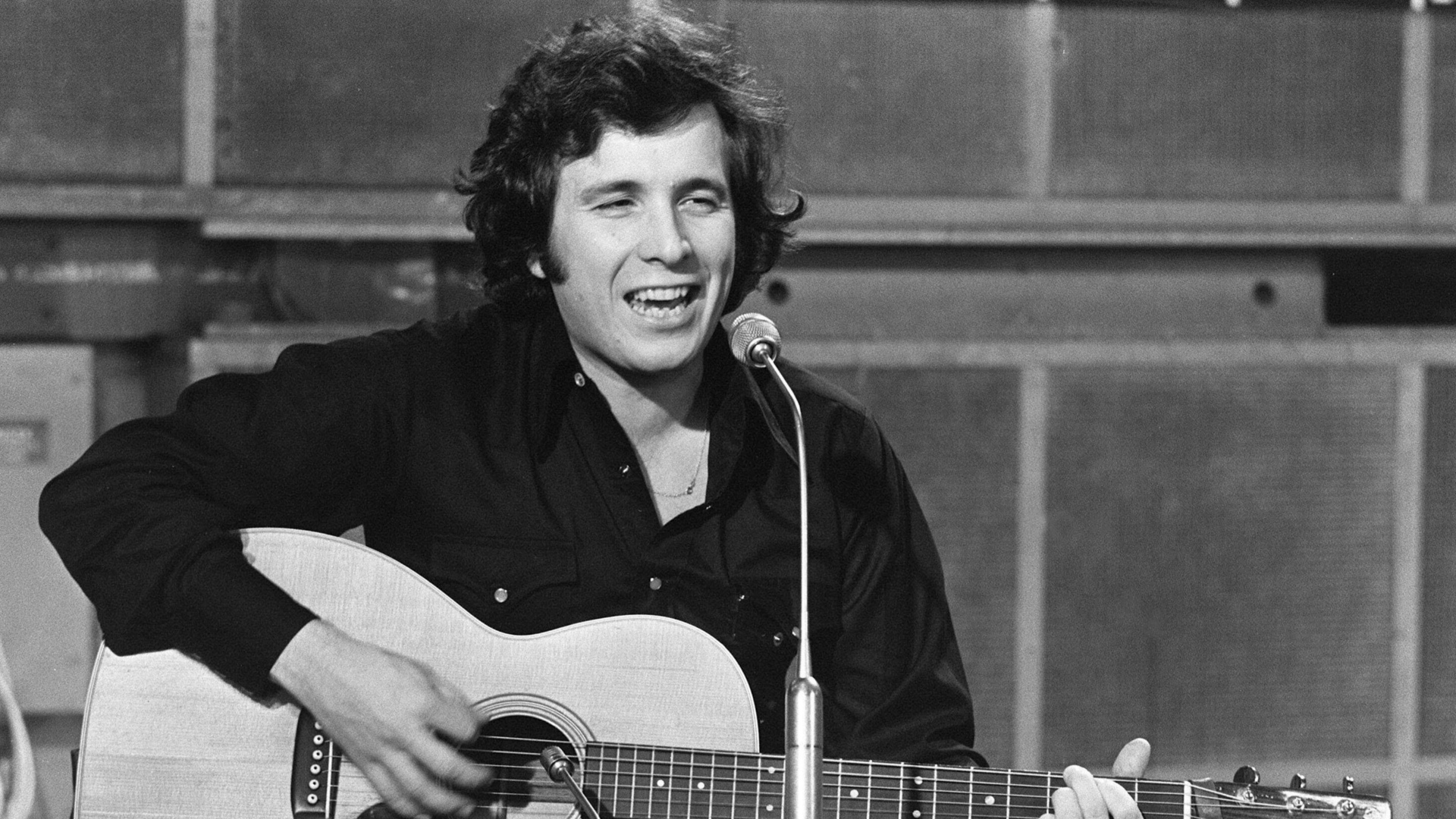
460. ‘Crying’, by Don McLean

Hot on the heels of ‘Suicide Is Painless’, we are crying, crying, crying… A depressing double-whammy at the top of the charts…

Crying, by Don McLean (his 2nd and final #1) 

3 weeks, 15th June – 6th July 1980

‘Crying’ was, of course, originally recorded by Roy Orbison. As I do every time I approach a cover of a famous hit, I try to blank out any knowledge of the original. Which is always hard, but especially so when said original was by The Big ‘O’. Don McLean takes what was already a ballad, and slows it down further. We are moving at treacle pace here.

I was alright, For a while, I could smile, For a while… It’s a classic Orbison theme: hiding your heartbreak behind your dark glasses. But when I saw you last night, You held my hand so tight… And it’s effective, as we’ve all been there – watching as a former crush moves on. And though you wished me well, You couldn’t tell, That I’d been crying… 

My biggest problem with this take – and let’s just have it out and admit that this isn’t a patch on the original – is that all the melodrama has been stripped out. Roy had a latin beat, strings and a marimba… You could samba as you cried. Don goes for a much more straight-forward, country version, and suddenly the lyrics sound trite and basic. The music plods as you wait for it to reach the climax.

Another sizeable problem is that for all Don McLean’s skills as a singer, he isn’t Roy Orbison. The climax here is the word ‘crying’ repeated over and over. Orbison rattles the roof with it, as he does on all his big heartbreak bangers: ‘Running Scared’, ‘It’s Over’ and the like. McLean can’t, and his voice ends up sounding reedy. That’s not to say he can’t put emotion into his songs. I find his previous #1, ‘Vincent’, heartfelt and heartbreakingly sad. Here, though, he over reaches, and his Cry-y-y-ying sounds… like Miss Piggy?

It’s still a pleasant melody, and I am enjoying it to some extent, but it’s a bit of a wet-blanket of a song. And yet another country chart-topper that I can’t quite get behind. At least, quickly scanning down my list, it looks like the last one for a while… This was also Don McLean’s last hit in the UK (he had barely charted since ‘Vincent’ either) until a re-release of ‘American Pie’ in the early ‘90s. He remains active, though, and released his 22nd studio album just last year.

458. ‘What’s Another Year’, by Johnny Logan

Eurovision klaxon! It’s been a few years since we’ve had to sound it, but 1980 was one of those years when the winning record also went all the way on the pop charts…

What’s Another Year, by Johnny Logan (his 1st and only #1)

2 weeks, 11th – 25th May 1980

Some Eurovision singles have been classic – ‘Waterloo’, ‘Congratulations’ – other have been less classic – ‘All Kinds of Everything’, ‘Save Your Kisses…’. Into which camp, then, does ‘What’s Another Year’ slide into…? Well…

I won’t keep you on tenterhooks. It’s the latter camp. From the opening seconds, when a gratuitous, easy-listening saxophone riff rises up, you know where this record is heading. We’re back in David Soul territory: a handsome lad – think a slightly more rugged Donny Osmond – crooning his heart out. I’ve been crying, Such a long time, With such a lot of pain, In every tear… What’s another year? The tweens and the grannies must have lapped it up.

In my post on the previous #1, ‘Geno’, I repeated my belief that pop music, at the very least, shouldn’t be boring. ‘What’s Another Year’ is a well-produced, and well-sung, song… but it’s dull. And that sax… It comes back for a pure elevator-slash-lounge-bar solo, that is a horrible premonition of what’s to come in the middle of this decade. To be fair, the song isn’t actually about a lost love, but about the death of the writers’ mother, which does make it a bit more heartfelt in my eyes.

(I love the weeping eye in the corner of this sleeve, just in case you were in any doubt what type of song this was…)

Of course, this record won Logan, and Ireland, the Eurovision Song Contest. Johnny clearly felt that the continent hadn’t suffered enough, as he re-recorded his biggest hit several times, including in Spanish and German. (I think the version I listened to for this post was the original.) And he wasn’t done there… This man is Mr. Eurovision. He won it again in 1987, with ‘Hold Me Close’ (that made #2 in the UK, and is even slicker and limper than this one…) Then he went and wrote the 1992 winner, ‘Why Me?’ for Linda Martin, on top of having written the 1984 runner-up, ‘Terminal 3’, for the same woman. (Of all four songs, ‘Terminal 3’ is by far the best: a Bonnie Tyler-esque barnstormer.)

Ireland may have won Eurovision more times than any other country, but goodness they’ve done so with some utter tripe. Anyway, Johnny Logan struggled to score any non-Eurovision hits in the UK, but he’s had better luck in his homeland, releasing his latest album in 2017, and scoring Top 10 hits as late as 2013. And I might as well break it to you now… we will also be sounding the Eurovision klaxon in 1981. But, boy oh boy, that record will be everything that this one is not!

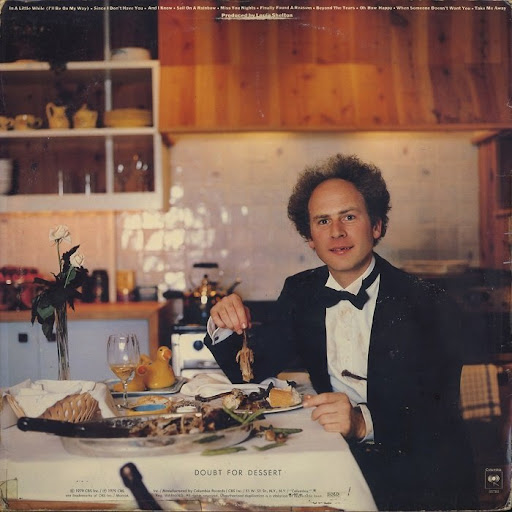
436. ‘Bright Eyes’, by Art Garfunkel

So, we hit the bump in the road. The record that ends the gloriously up-tempo run of disco-slash-rock that we’ve been on.

Bright Eyes, by Art Garfunkel (his 2nd and final #1)

6 weeks, from 8th April – 20th May 1979

It starts off quite flutey. I’m not 100% sure that they are flutes. But it’s woodwind of some sort, and it give us a lush, pastoral sort of feel. Which is appropriate, because this is a song with a lot of references to nature. Tides, hills, winds in the trees, rivers of death… Art Garfunkel’s voice comes from afar, a voice that was always quite delicate made even more ethereal when drenched in echo.

It’s still a great voice, one of pop music’s most recognisable, but I’m waiting for the hook. Bright eyes, Burning like fire… The closest we come, the catchiest bit of the song, comes next: How can the light that burns so brightly, Suddenly burn so pale… But it is fleeting. It’s a whisp of a song, without much to grab a hold of.

It’s about death, so that perhaps explains and excuses the funereal air. More specifically, it’s about dead… rabbits? It’s from the 1978 animation of Richard Adams’s novel ‘Watership Down’. It plays as the lead rabbit lies dying from a gunshot wound. (I’ve never seen the movie, but it’s famously traumatising. Disney it is not.) Adams himself apparently hated the song.

I have to admit that, while this record is far from being instant, the chorus has ear-wormed into me after a few listens. Perhaps there is something there. There has to be, to explain its six week stay at the top and the fact that it was the biggest-selling single of 1979. Yep, not ‘Heart of Glass’, nor ‘I Will Survive’, nor any of the other classics still to come in this year. ‘Bright Eyes’, by Art Garfunkel. Has anyone played this recently…?

It’s interesting that this is Art’s 2nd solo chart-topper, two more than his sometime partner. Simon has been the bigger solo star over the decades, but never managed a UK number one. Garfunkel bookends the decade with two monster hits: from ‘Bridge Over Troubled Water’, to this. You’d have to be very generous not to admit to the drop-off in quality. Meanwhile, as this song meanders on, I find myself wondering if the band Bright Eyes have ever covered it… They might do quite a nice version… Alas, there is no record of them ever having done so.

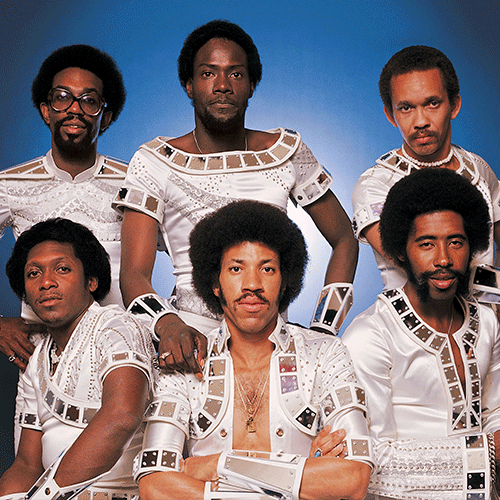
425. ‘Three Times a Lady’, by The Commodores

We are racing through 1978 now. In the space of just three #1s, we’ve leapt from early May to late September. And I thought we’d escaped, really I did. I thought we’d finally pulled ourselves from the late-seventies easy-listening swamp. But, just as we wrenched our back feet free from the sludge, Lionel Richie grabs us by the ankles and drags us back down…

Three Times a Lady, by The Commodores (their 1st and only #1)

5 weeks, from 13th August – 17th September 1978

Let’s start with the positives. I know this chorus, can sing this chorus, can drop this chorus jokingly into everyday counting situations… You’re once, Twice, Three times a lady… without ever having properly listened to the rest of the song. Which is a sign of a certain ubiquity, of a song’s place among the big boys. What does it mean, to be ‘three times a lady’? I had hoped it might be something dirty… But, apparently Richie wrote it after hearing his dad describe his mum as a great lady, a great friend and a great mother.

I must have heard the rest of this song, surely, but I can’t remember doing so. In fact, I’ve listened to this song several times in writing these past two and a bit paragraphs, and have already forgotten everything but the chorus. I am listening to it right now, and it is still not going in. It is background music, plain and simple.

Lionel’s voice is nice, the piano is nice, the percussion is… nice, I guess? But Good Lord it’s dull. Ballads like this are always at a disadvantage with me, but the best can pull through and convince. (Chicago’s ‘If You Leave Me Now’ was one such fairly recent example.) But here, chorus aside, it’s too slow, it’s not catchy, it’s nowhere near OTT enough (unlike Richie’s solo chart-topper…)

Just once does the song break away from its plod. Before the final chorus it builds, some drums and cymbals enter, and some backing vocalists harmonise… But it’s gone. The pace slows again and we trudge towards the end. It is genuinely terrifying to discover that the album version of ‘Three Times a Lady’ runs to almost seven minutes! Give whoever at Motown records decided to chop three minutes off for the 7” a medal.

The Commodores had been around for a few years before this gave them a trans-Atlantic #1. ‘Easy’ was their big breakthrough in the UK (it’s better than ‘Three Times…’, but I’d still be picking holes in it had it been a chart-topper…) They did release upbeat, funky tunes – try their debut single ‘Machine Gun’ – but sadly that wasn’t what sold. Lionel Richie left the band in 1980, and went to absolutely dominate the next decade on the Billboard chart. The remaining Commodores kept at it though, to decent success, and are still active today.

420. ‘Wuthering Heights’, by Kate Bush

It takes a moment to get used to our next #1 single. The tinkling piano, the etherealness of it, and then that high-pitched voice…

Wuthering Heights, by Kate Bush (her 1st of two #1s)

4 weeks, from 5th March – 2nd April 1978

Even though it’s a very well-known song, it still discombobulates. It still sounds nothing like what pop music should, at least not at first. Out on the winding, windy moors, we’d roll and fall in green… You wonder if it was a risk to write a pop song about a hundred and fifty year old novel, and then to sing it like a Victorian soprano. Pop is usually about the new and the instant, not the ancient and established. There has not been, to my knowledge, a #1 hit about ‘Moby Dick’, or ‘Anna Karenina’. It also means that, after Brotherhood of Man’s references to ‘Figaro’, it has been a pretty high-brow start to 1978.

You only really relax into this record as it slips into the chorus, and a soft-rock vibe takes over: Heathcliff, It’s me, I’m Cathy, I’ve come home now… To be honest, I’ve always thought of this song as some kind of revolutionary moment. But listening to it now, properly, it’s clear that Kate Bush is the star attraction. It’s her wide-eyed vocal performance – and this might be the first time that we really need to recognise the video, in which she performs an extremely intense, interpretive dance to the song, in soft focus against a black background – that makes this a classic.

For musically, there’s not that much to raise an eyebrow. It’s got a catchy chorus, and a hard-rock guitar fade-out that hints at eighties power-ballads to come, but it’s all about Kate, really. She was eighteen when she wrote her debut smash, and only nineteen when it hit #1, making her the youngest artist to reach such heights with a self-penned song.

And if you were going to pick a famous novel to sing about as a teenage girl, then ‘Wuthering Heights’ is the obvious choice. Heathcliff and Cathy’s romance is thrillingly torrid to a seventeen-year-old, then you reach your mid-twenties and the pair turn into obnoxious brats. Still, nowadays, people perhaps know the story more through this record than they do through Emily Brontë’s masterpiece. It’s the ultimate ‘York Notes’ version: a massive novel condensed into a four and a half minute pop song, for lazy students to listen to on repeat the night before a test…

Before arriving at ‘Wuthering Heights’, I did wonder if it would challenge for top spot in my latest recap, coming up next. But I don’t think it will. It’s a great song, memorably performed, but there have been better in recent months. There are probably better songs in Kate Bush’s back-catalogue too, though none perhaps have had the cultural impact of her debut smash.

I must admit that my knowledge of Kate Bush is patchy, beyond this one, ‘Hounds of Love’, ‘Running up That Hill’ and the like. She is a reclusive star, not one for interviews or photoshoots, or for releasing much music (her last album came out in 2011, and she’s only released two this century). In my mind she is the fairy godmother of British pop… an idea, or a presence, more than a real person. And that’s a pretty cool role to fill.

Finally, ‘Wuthering Heights’ is the 4th chart-topper of 1978, and the fourth to feature female vocalists. If you go back further, and ignore Wings, then six of the last seven #1s have been at least woman-led. Considering that for parts of the 1960s we went entire years without a woman’s voice at #1, that feels worth noting. The next couple of chart-toppers are going to spoil this run but, before that, a recap!

Get up to speed with all 420 #1s so far, before my next recap

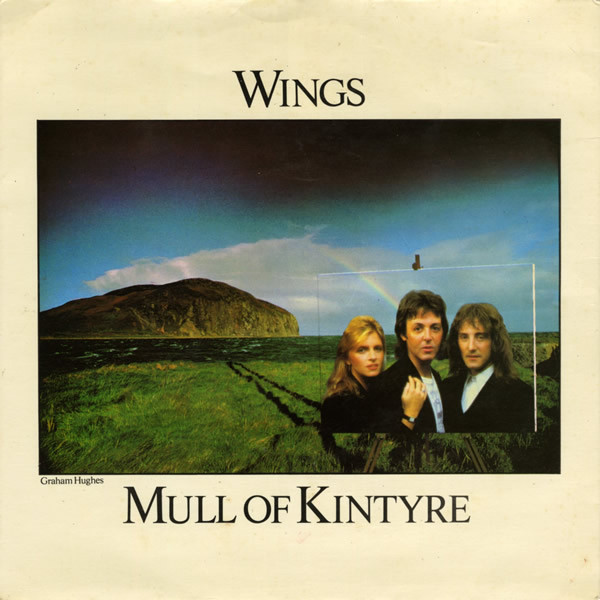
416. ‘Mull of Kintyre’ / ‘Girls’ School’, by Wings

It is amazing to think that, almost eight years on from their split, this is only the second time an ex-Beatle has appeared at the top of the charts. You’d have got long odds on it taking this length of time. George Harrison got in there quickly, and then there was a big old wait… Until our latest Christmas #1.

Mull of Kintyre / Girls’ School, by Wings (their 1st and only #1)

9 weeks, from 27th November 1977 – 29th January 1978

And it’s strangely comforting to hear Macca’s voice again, like a long lost friend… Mull of Kintyre, Oh mist rolling in from the sea, My desire, Is always to meet you… It’s just him, and a couple of guitars. Simplicity itself. Until ninety seconds in, when the bagpipes arrive (I always assumed they were saved for the finale. Alas, no.) They enter with that unmistakeable, ominous drone, and by the three minute mark they are the stars of the show. It is amazing to think that, in the 1970s, as many #1 singles featured bagpipes as featured a Beatle.

‘Mull of Kintyre’ is not an old folk song, though it sounds for all the world as if it should be. It is further evidence of McCartney’s ability to conjure timeless pop from a few chords (and a cheeky slice of ‘Auld Lang Syne’). It is not ‘Yesterday’, nor is it ‘Eleanor Rigby’, but it is a huge moment in his legacy. And yet…

As a Scot, part of me bristles at this act of cultural appropriation… (You may roll your eyes, but hear me out.) It’s a nice song, a sweet melody, a love-letter by Paul to his adopted home (he really was living, while he wrote this, on the Mull of Kintyre). But the lines about mist rolling in from the sea and sweeping through the heather like deer in the glen… It’s the aural equivalent of a souvenir shortbread box. It’s Scotland as imagined by American, or Japanese, (or Liverpudlian) tourists. It’s #notmyscotland. You can also imagine John Lennon hearing this for the first time, on the radio one morning, and ruefully shaking his head…

Still, come the drum-roll and the key change, ‘Mull of Kintyre’ has wormed its way into your brain. You can see why this is was a ginormous hit – a song that appeals to five-year-olds, ninety-five-year olds, and anyone who’s had enough whisky. Its nine weeks at the top makes it the joint longest running #1 of the decade, alongside ‘Bohemian Rhapsody’ and an upcoming movie soundtrack hit. It became the biggest selling single ever in the UK, usurping ‘She Loves You’, and it remains the biggest selling non-charity single ever released.

I did wonder if, by hitting #1 in late November, this was the earliest an Xmas #1 had made it to the top. But it’s not even close. Al Martino got there two weeks earlier in 1952, as did Clean Bandit in 2016, while Elvis’s ‘It’s Now or Never’ holds the record by holding on from November 3rd. However, this record also stayed top for over a month after Christmas thanks, it seems, to the flip-side…

‘Girls’ School’ is a rocker, all scuzzy slide guitars and heavy drums, as far removed from the faux-folk of ‘Mull of Kintyre’ as can be. SongFacts describes it as ‘semi-pornographic’, and that’s putting it mildly. While your grandma would have enjoyed singing along to ‘Mull…’, she may have choked on her sherry when she heard this one. Sleepy head kid sister, Lying on the floor, Eighteen years and younger boy, Well she knows what she’s waitin’ for…

It seems the nuns have lost control of the convent school… Yuki, the resident mistress and oriental princess, is showing porn in the classroom. The Spanish nurse is running a full-body massage parlour, while the matron is drugging the kids in their beds at night, and then… Well that much is left to the imagination… Ah, what can the sisters do…?

I’m loving-yet-appalled-by this post-‘Mull…’ palate cleanser. It is pure rock ‘n’ roll, both in terms of its sound and its lyrical content (which would come under, shall we say… ‘scrutiny’ were it released in 2021). I think someone was having a good old chuckle to themselves when they stuck this alongside such a shamelessly sentimental ‘A’-side. It does seem, too, that McCartney may have swept it under the carpet in recent years. It’s not on Spotify, for a start.

Although this is his first #1 since The Beatles, it’s not as if Paul had been hiding under a rock since ‘Let It Be’. Wings were a huge chart force throughout the seventies, featuring Paul, his wife Linda, Denny Laine (whom we have heard from before as a member of The Moody Blues) and a rotating cast of supporters. This was their 10th Top 10 hit, but the only one to go all the way. Macca will be back, though, in the 80s, with a couple of chart-toppers to make ‘Mull of Kintyre’ sound like the epitome of cool, cutting edge pop.

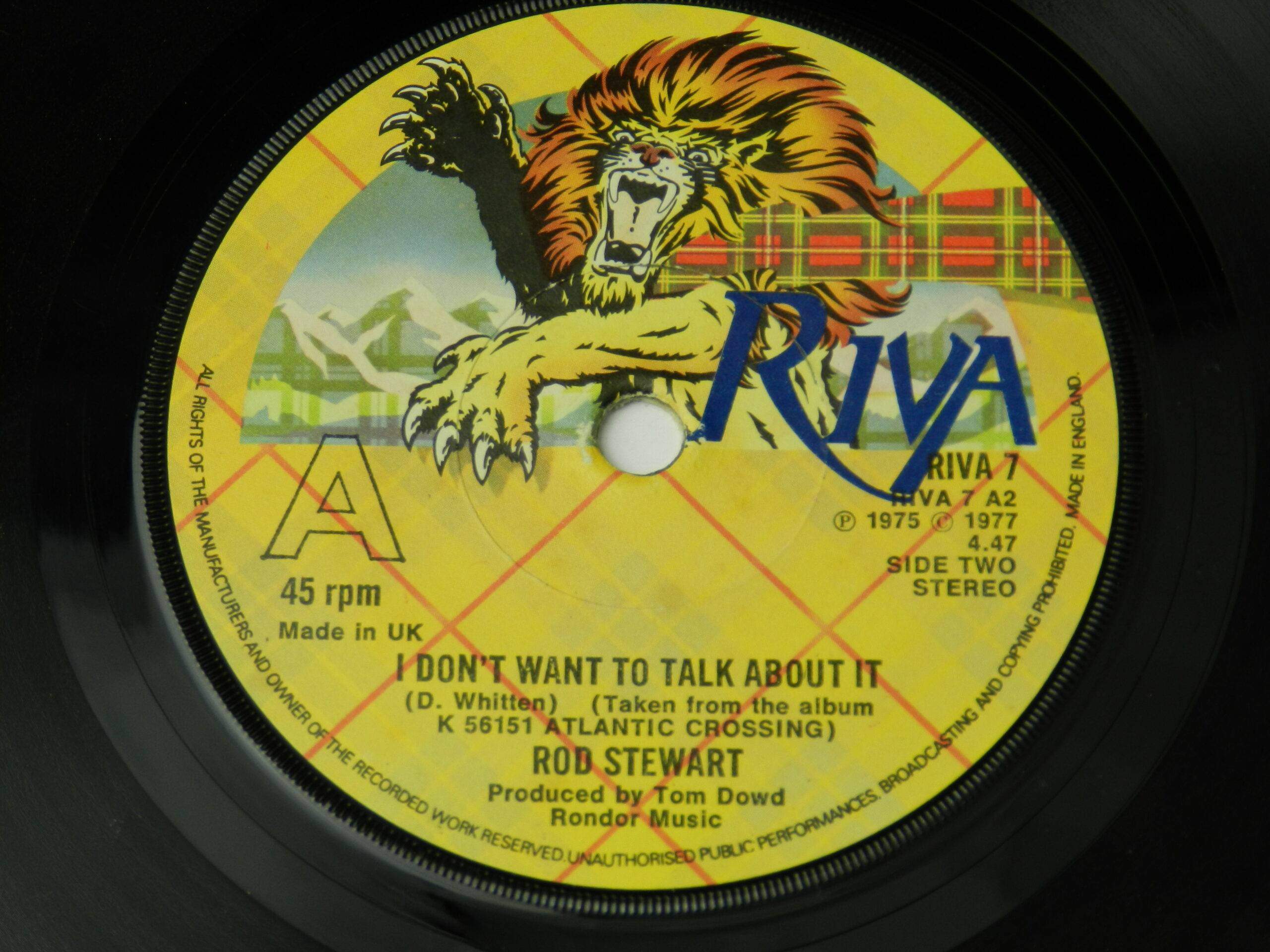
405. ‘I Don’t Want to Talk About It’ / ‘The First Cut Is the Deepest’, by Rod Stewart

The most interesting thing about this next number one is the song which could, maybe should, have replaced it at #1. More on that later. First, Rod’s got some ballads to sing…

I Don’t Want to Talk About It / The First Cut Is the Deepest, by Rod Stewart (his 4th of six #1s)

4 weeks, from 15th May – 12th June 1977

Actually, another interesting thing is that ‘I Don’t Want to Talk About It’ comes from the same album – ‘Atlantic Crossing’ – as Rod’s last chart-topper, ‘Sailing’, which reached the top almost two years ago! That’s a pretty rare feat, mining a LP for singles for that long.

Perhaps you can tell that I’m grasping for interesting things to write about this one, as I’m not finding the music all that gripping. It’s fine: Rod Stewart knows his way around an acoustic ballad like this in his sleep. And perhaps that’s the problem – it’s Rod on autopilot. It’s not got the novelty factor, or the drive, of ‘Maggie May’, or the ridiculous singalong chorus of ‘Sailing’. It’s simply pleasant.

I like the way the strings and guitars lift us to the chorus line: I don’t wanna, Talk about it… Which in itself is also a great line, sung with a lot of feeling. But it’s not enough to hang a whole, five-minute song on. (And that’s another thing – did nobody suggest a ‘single edit’ for this one?)

The guitars, fried and country, are cool, but especially towards the end the song does begin to meander. ‘I Don’t Want…’ was a cover of a 1971 song by Crazy Horse, Neil Young’s sometime band. Rod hasn’t strayed too far from the original, though his version is more polished… and that’s not a good thing. Anyway. What could we possibly need after that? Another heartfelt ballad, of course.

‘The First Cut Is the Deepest’ is another, probably more famous, cover, this time of a Cat Stevens original. It’s another acoustic, bittersweet love song. In fact, I’ll go further than that. It is a thoroughly miserable love song: If you want, I’ll try to love again… As declarations go, it’s certainly honest. He wants her by his side, but only to wipe the tears that he cries… Baby I know, The first cut is the deepest…

Hey, some people are into damaged goods. Again, this ticks all the classy ballad boxes, and Stewart’s voice is as smoky as ever. But, again, it washes over me. Maybe it’s not my thing. Or maybe it’s just dinner party background music. Plus, there’s always the earlier, superior version of ‘The First Cut…’, released by P.P Arnold a decade earlier.

The best double-‘A’ sides have a bit of yin and yang to them. Think of the most famous #2, ‘Strawberry Fields Forever’ / ‘Penny Lane’. Or Louis Armstrong’s ‘What a Wonderful World’ / ‘Cabaret’. Even our most recent double-‘A’ #1 from David Cassidy had two very different sounding songs on each side. Interestingly – here I go again – ‘The First Cut…’ was from a more recent album, ‘A Night on the Town’, making this potentially the only double-‘A’ to feature songs from different LPs by the same artist. (I say ‘potentially’, I have neither the time nor the inclination to check.)

So, we are two thirds through Rod Stewart’s chart-topping career, and it’s been wall to wall ballads so far. Luckily, his last two #1s up the tempo quite a bit. Wahey! It’s not that these are bad songs, far from it; they just don’t scream ‘four weeks at #1!’ to me. But, of course, there’s a good chance that, during the last of those four weeks, Rod Stewart didn’t really have the best-selling single in the land. Controversy ahead, then. More to come…

401. ‘When I Need You’, by Leo Sayer

Oh boy. More soft-rock…

When I Need You, by Leo Sayer (his 1st of two #1s)

3 weeks, from 13th February – 6th March 1977

We’re really hitting a slow and slushy moment in chart history. It must have been great at school discos, I suppose, with no shortage of last-dance tunes in which to snag your latest crush. But it doesn’t make for a very exciting listen forty odd years later.

It’s got all the instruments we’ve come to expect: gentle guitars, tinkly percussion, a glossy echo to everything. (Plus, this record has a secret weapon – more on that in a moment.) When I need you, I just close my eyes and I’m with you… Leo Sayer’s missing his girl while he works away from home… For some reason that I can’t quite place, I’m enjoying this more than the last-but-one chart topper, David Soul’s equally smoochy ‘Don’t Give Up On Us’. I think it’s the slightly funkier rhythm. If this one was sped up – a lot – it could be a disco classic.

I also like the emphatic It’s cold out, Just hold out… line. Plus, Leo Sayer’s voice has got a lot more oomph to it than Soul’s. He lets loose, in a fashion, for the fade-out. But, before that, we come to the secret weapon… the sax solo! Unleashed from out of the blue! They’re something we’ll have to get used to as the ’80s loom, but they’ve never sat well with me. Done well they’re fine; done badly they sound like the soundtrack to a bad date, or a porno.

It is sometimes hard to focus on the lyrics in songs like this, as they’re usually of the don’t leave me baby hold me baby variety. But, on closer inspection, on listen three or four, as Leo talks about closing his eyes and touching love while on the phone to his girl, and beseeching her to ‘do as he does’… I begin to wonder… Is this record actually about phone sex??

Or am I grasping to make it more interesting than it is? ‘When I Need You’ was the follow-up to the dorky but super catchy ‘You Make Me Feel Like Dancing’, which I would have much preferred as a #1. As it stands, this makes it four slow and soft #1s in a row, and five out of the last six. It’s not something that you say every day, but thank God for Showaddywaddy! Looking to the next chart-topper on my list, a record I have never heard before, I offer a silent prayer that it might be up-tempo.

Leo Sayer had been scoring hits since 1973, and had peaked at #2 three times before this one took him all the way. He will be back on top, but not for twenty-nine years, when he’ll feature on a remix of one of his seventies hits. That’s one of the longest gaps between number ones, ever. Meanwhile, ‘When I Need You’ has been covered by the great and the good of easy listening: Cliff, Julio Iglesias, Luther Vandross, Celine Dion… Leonard Cohen wasn’t as impressed by it, though – he sued Sayer for plagiarising his song ‘Famous Blue Raincoat”.

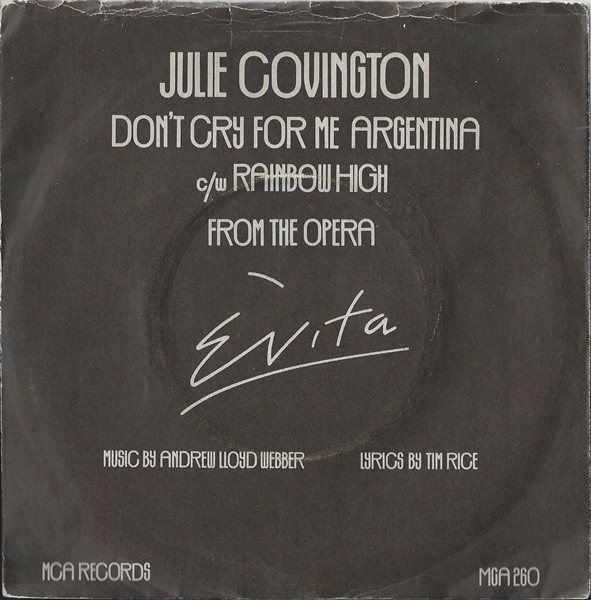
400. ‘Don’t Cry for Me Argentina’, by Julie Covington

Time for a proper show tune! The first, unless I am mistaken, since Shirley Bassey way back in 1961?

Don’t Cry For Me Argentina, by Julie Covington (her 1st and only #1)

1 week, from 6th – 13th February 1977

It’s a long one, too. Five and a half minutes, with nearly a whole minute of portentous introing before Julie Covington actually sings. It won’t be easy, You’ll think it strange… Gosh she sings it proper. When I try to explain how I feel… Musical theatre really stands out against pop songs, belted out as they are with cut-glass diction, aiming for the back row.

We’re approaching two and a half minutes, and still no appearance of the chorus. I have never seen ‘Evita’, neither on stage nor on screen, but I can sing this chorus. (I’ll show my age by saying I’m more familiar with Madonna’s version, which made #3 in 1996.) Come on Julie, love… Don’t cry for me Argentina, The truth is I never left you… It’s a love song, with all the usual trimmings, but about a country!

Show tunes also sound a bit strange divorced from their play, plonked into the singles chart. Who is she, and why is she singing about Argentina? Amazingly, this record was released well before ‘Evita’ debuted on the West End. Nobody had seen the show… and yet there was enough interest in this record to get it to the top of the charts!

To be honest, that first chorus was a bit underwhelming. I’m waiting for her to go around again, to really belt it out for the finale. While we wait – cause this is a record that isn’t afraid to take its time – a little bit of history. ‘Evita’, the musical by Andrew Lloyd-Webber, tells the story of Eva Perón, First Lady of Argentina between 1946 and ’52 and, since her death, official ‘Spiritual Leader of the Argentine Nation’ (with a fair few allegations of fascism thrown in from those who were against her).

Finally, a full four minutes in, and were back at the chorus. I’m ready for Ms. Covington’s big finale. But it never materialises… The orchestra does the soaring, we could be back in the charts of 1954, and I’m left a little bored. What a strange #1 hit… Bring back Dame Shirley. She’d have belted the life out of this.

Julie Covington never actually played Eva Perón on stage – she turned the role down – and when the show finally opened Elaine Paige took the part. Covington was a fixture on the West End stage throughout the seventies and eighties, but doesn’t seem to have done much in recent decades. Andrew Lloyd-Webber’s show tunes will be back, though – off the top of my head I can think of at least two more chart-toppers penned by him.

As this is the 400th (!) number one, I had planned to take stock, to see where we stood in the musical landscape. Except, this is a completely random one-week wonder that has no bearing on the real sound of the mid-seventies. In an ideal world, we could tell the story of British popular music tastes through every hundredth chart-topper. Number 100 would have been Elvis… (It wasn’t, it was Anthony Newley’s clipped and clicky ‘Do You Mind’), 200 would have been The Beatles… (It was! ‘Help’.) 300 would have been something glam… (Instead it was Tony Orlando’s sex-pest anthem ‘Knock Three Times’.) And 400 would have been a disco classic… Instead we aren’t crying for Argentina. Funny old things aren’t they, music charts…?