297. ‘Baby Jump’, by Mungo Jerry

Alright-alright-alright-alright-a! Let’s get this out into the open straight off: I love this song. This is brilliant. This is what every rock ‘n’ roll band should be aspiring to when they set foot in a studio. This is a raucous, dirty, silly, angry, rollercoaster-ride of a #1 single…

285204

Baby Jump, by Mungo Jerry (their 2nd and final #1)

2 weeks, from 28th February – 14th March 1971

Where to start? The swampy riff that sounds as if it’s being played through a boulder rather than speakers? The demented piano, like Jerry Lee Lewis on strong amphetamines? The lead singer, Ray Dorset’s, growling and screaming? The leery lyrics? If Mungo Jerry’s first chart-topper, ‘In the Summertime’, was the soundtrack to a chilled summer afternoon’s garden party, then ‘Baby Jump’ is the soundtrack to the same party, at 4am the next morning, hours after everyone should have gone home, with bodies are strewn across the lawn while somebody, somewhere, has cracked open yet another bottle of tequila.

She wears those micro-mini dresses, Hair hanging down the back, She wears those see-through sweaters, She likes to wear her stockings black… Dorset’s got his eyes on someone so sexy he don’t care where she been… The wooing continues: If I see her tonight, You can bet your life I’ll attack… (How very 1970s…)

As great as this song sounds, its full of lyrical gems as well. She got beautiful teeth, A toothpaste adman’s dream… And then the piece de resistance in the 3rd verse, when he compares his situation, in chasing this girl, to other famous ‘romances’. She is Lady Chatterley, he is the gamekeeper. He is Da Vinci, she the Mona Lisa. And then… I dreamt that I was Humbert, and she was Lolita… Yep, he went there. It’s a perfect rock ‘n’ roll lyric: provocatively dumb, yet somehow quite clever …

Meanwhile the simple riff thumps on and on and on, and we get some of the scatting from ‘In the Summertime’. On first listen you would never guess this was by the same band, but the hints are there. And then it ends. But it doesn’t, not really. Alright-alright-alright-alright-a! And we’re off again. Right back to the start. She wears those micro-mini dresses… And you begin to wonder if this song will ever end, or if it will just keep playing and playing until you go insane…

R-1502237-1413797300-2995.jpeg

Phew. Eventually it fades. You’re quite tired by the end of it. It’s not a record to casually throw on after a long day. This one requires stamina. Like I said – I love everything about ‘Baby Jump’, even if it is perhaps one of the most forgotten #1 records of all time. There’s no way this would have gotten anywhere near the top if ‘In the Summertime’ hadn’t exploded the year before – it’s the ultimate shadow #1. But I’m so glad it made it. It just happened to pop up on my Spotify some years and it’s been on steady rotation ever since. (While you’re getting your breath back, have a listen to ‘Brand New Cadillac‘ by Vince Taylor & The Playboys, and decide if Mungo Jerry were ‘referencing’ or ‘ripping off’.)

Mungo Jerry won’t score any more number one hits. (After this demented mess they never got invited back.) Their next single, ‘Lady Rose’, was stymied by the inclusion of ‘Have a Whiff On Me’ as the ‘B’-side. It was pulled from circulation, and replaced with a different song, as it was seen to be promoting cocaine use. Ray Dorset still uses the band name, though, and tours to this day.

It’s been quite the hard rocking end to 1970/start of 1971… Jimi Hendrix, Dave Edmunds, and now this. Plus, having this record knock ‘My Sweet Lord’ off the top is just plain funny. George Harrison was looking to the heavens for inspiration; Mungo Jerry weren’t looking any further than between their legs… And lo! We’ve had our strongest whiff of glam so far at the top of the charts. It’s coming! In fact, you can think of ‘Baby Jump’ as the amuse bouche before the King of the genre comes along next…


Find my #1s Blog Spotify playlist here.

296. ‘My Sweet Lord’, by George Harrison

I wonder what the odds were on George Harrison being the first Beatle to score a solo chart-topper? You would have assumed it’d be Lennon, who was releasing solo stuff before the Fab Four had even split, then McCartney, with his knack for a pop hook. Then again, George had been getting more of his songs included on their albums from 1968 onwards, and some of the Beatles’ most famous late-era tunes are his – ‘While My Guitar Gently Weeps’, ‘Something’, ‘Here Comes the Sun’… So maybe it wasn’t such a surprise when he hit top spot less than a year after his former band’s last hit.

George_Harrison

My Sweet Lord, by George Harrison (his 1st of two #1s)

5 weeks, from 24th January – 28th February 1971

And in the end, it wasn’t even close. We are still seven years from a #1 by Paul, and nearly a decade away from one by John, by which time he’ll be dead. Anyway, to the song… There’s something quite ominous in the opening acoustic chords, contrasting nicely with the goofy, tropical, lead guitar riff.

My sweet lord, Mmm my lord, I really want to see you, Really wanna be with you… His voice sounds great – angelic, but gruff and growly when it needs to be. Really wanna see you lord but it takes so long, My lord… First things first, then – is this a religious song? On the face of it, yes – especially when the hallelujahs come in. And does he want proof of God’s existence or, like Clive Dunn before, is he anticipating death? (George Harrison and Clive Dunn asking the big questions at the top of the charts, who’d’ve though it…)

It’s not your typical pop song – no verse, bridge, chorus here. It’s more of a growing chant, a five-minute long mantra, that ascends through several key changes. Now, you can’t ever go wrong with key changes, but at the same time it’s a song that doesn’t really go anywhere. Maybe that’s the intention; but for me it leaves something wanting. ‘My Sweet Lord’ is a song that I loved without really considering why, and I do still really like it, but the more I listen to it the more I wonder if it’s as great as they say…

R-8501940-1587384731-4928.jpeg

Sacrilege? Maybe. Halfway through the Hallelujahs become Hare Krishna’s and other snippets of Vedic prayer. Which answers our earlier question – yes, it is a religious song. Harrison was big into his Hinduism at the time and by combining it with Christian elements he wanted to make a statement on the follies of sectarianism. We all worship the same God at the end of the day, right? (No!, shout all the atheists in the back.)

It ends on a high, like a gospel choir singing it up to the rafters. Among the backing instruments and singers you can hear Ringo, Billy Preston (from ‘Get Back’), and Eric Clapton among others. You might also hear hints of ‘He’s So Fine’ by The Chiffons… Harrison famously lost a copyright case that ruled he had ‘subconsciously copied’ the melody. (I really like this cover by The Belmonts – minus Dion – which splices the two songs together, with lots of added kazoo.)

‘My Sweet Lord’ was on Harrison’s epic triple album ‘All Things Must Pass’ – a shackles-off moment in which he stepped out of Lennon and McCartney’s combined shadow. He would continue to have commercial success throughout the seventies and eighties – by himself, in the supergroup The Travelling Wilburys – and then in the nineties with the two remaining Beatles. The eagle-eyed among you will have noticed, though, that this is his ‘1st of two #1s’… The other? A re-release of ‘My Sweet Lord’ just after his death in 2002. Till then then, George…

Follow along with my Spotify playlist.

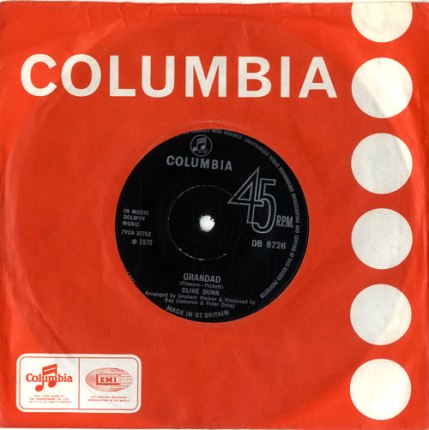
295. ‘Grandad’, by Clive Dunn

What have we here then? A Christmas novelty that made it to #1 a fortnight too late? I know this song, vaguely – well, the chorus at least – and brace myself to write a terrible review.

p03gz7y5

Grandad, by Clive Dunn (his 1st and only #1)

3 weeks, from 3rd – 24th January 1971

Grandad, Grandad, You’re lovely, That’s what we all think of you… And yep, the chorus is truly horrifying. It’s sung by little kids, to their grandpa, but in the creepily lifeless tones of horror-movie children, the sort with shining eyes that lure unsuspecting people into dark, misty forests… However, the song becomes more complex when you get to the verses. This is no saccharine ode to grandparents, oh no.

I’ve been sitting here all day, Thinking… Same old thing ten years away, Thinking… An old man sits in his rocking chair, getting all misty-eyed for days gone by. Penny-farthings on the street… Bows and hoops and spinning tops… The days when motorcars were new and scary, when happiness was a Charlie Chaplin matinee…

But there’s no resolution, no ‘oh getting old isn’t all bad’ twist at the end. In fact it gets worse. After listing all the things he misses, we get a final gut-punch: Familiar things I keep around, Near me… Mem’ries of my younger days, Clearly… Come into my mind… I’m no old man, but I can’t think of a better way to describe the feeling of getting older, of slowly losing your mind to age, of seeing death approaching over the horizon. Get beyond the banjo and the parping tuba, and this is a really depressing number one hit.

But then those bloody kids keep coming in to ruin it. Grandad, You’re lovely… What are they doing? Trying to cheer him up? If I were their grandad I’d be praying for the end to come even quicker. This would be a far, far better, and actually quite subversive, record without them. (I’m not even convinced that they’re real children, though I’m not sure that they had the technology in 1970 to computer-generate such creepy sounding voices.)

CLIVE_DUNN_GRANDAD-572221

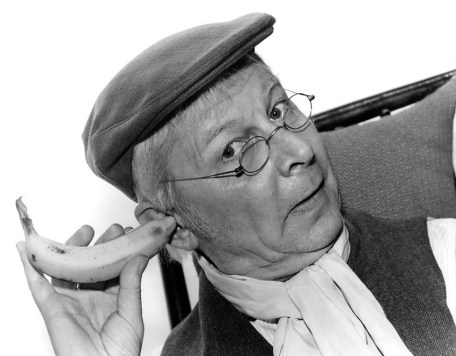
Clive Dunn does sound quite geriatric when he sings, especially when he pronounces ‘telephones’ as ‘jelly-phones’, but he was only fifty when ‘Grandad’ hit #1 – a young grandad in anyone’s books. He was, I guess, playing upon his dotty Corporal Jones character from ‘Dad’s Army’, which was one of the biggest shows on TV at the time. Presumably the show’s popularity can explain this strange record’s huge success.

It’s a novelty; but not particularly funny. It’s a children’s record; but more complex and bittersweet than most children would be able to grasp. I can imagine thousands of them bought their grandfathers this record for Christmas, sending the old men into a depressive spiral when they sat down and actually listened to it. Plus, if we assume that the ‘Grandad’ in this record is looking back fifty years, to 1920, then isn’t it weird to think that if this were re-recorded today then the singer might reference ‘listening to Clive Dunn singing ‘Grandad’’ fifty years ago in the lyrics? Mind-bending…!

The UK Number Ones Blog Playlist is here.

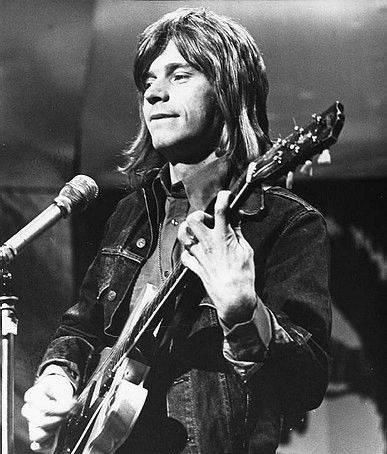
294. ‘I Hear You Knocking’, by Dave Edmunds

And so we arrive at a song I know very well – a song I’ve loved for a long time. It’s one of my earliest memories of popular music, this song – so early that I have no idea how it got to be there, buried in my consciousness.

0ba342e82e864d007e7e89610152248d

I Hear You Knocking, by Dave Edmunds (his 1st and only #1)

6 weeks, from 22nd November 1970 – 3rd January 1971

I love the choppy guitar, and the fried vocals. The trippy effects in the background, too, that sound like weird sea-creatures calling to one another across the deep. And I love the fact that at heart it’s just a straight-up, chugging, no frills rock ‘n’ roll number. You went away and left me, Long time ago, And now you’re knockin’, On my door…

It’s a sassy song – the singer telling his ex to get the hell out with their sweet words. I hear you knockin’, But you can’t come in… Go back where you been! She left him, though he begged her not to, and Edmunds still isn’t over it. Though he later reveals that this all happened in ’52, when he told her that I would never go with you… Which is both contradictory to what he sang two verses earlier, and a hell of a long time to hold a grudge…

Who cares. Careless lyrics aside, this is a rocking record. Our second whiff of glam at the top of the charts – after ‘Spirit in the Sky’ – and a bit of a throwback. (Over the chorus, Edmunds starts shouting out the names of some fifties rock ‘n’ roll stars – Chuck Berry! Fats Domino! – to leave us in no doubt about to whom this song owes a debt.) Something that sounds like a steam train gets added to the insistent rhythm, and then we get the piece de resistance of the whole record: the single, clanging note from a honky-tonk piano. Dung! Next verse!

71wOD2SwYUL._SL1024_

Despite ‘I Hear You Knocking’ sounding like it just crawled out of a Louisiana swamp, Dave Edmunds is actually Welsh. He had had one UK Top 10 with his blues band Love Sculpture, and this was his first, and by far his biggest, solo hit. It’s a staple of 70s Compilations, which is probably where first I heard it as a kid. ‘I Hear You Knocking’ was first recorded in the mid-fifties, by Smiley Lewis (Edmunds also shouts his name out during the solo) and then Fats Domino. Edmunds himself just recently retired from touring in his mid-seventies.

I do love this song, but am struggling to write much more about it. Really though – it’s not the sort of song that needs much writing about. If this record were a person, it’d be a doer, not a thinker. It gets you tapping your feet, and shaking your shoulders, rather than working your brain. I’d simply suggest that you click on the link below and get doing the same…

Actually, one thing that’s worth noting here is how long this, and so many other records, have spent at the top this year. ‘I Hear You Knocking’ got six, as did Elvis and Freda Payne. Mungo Jerry got seven, Edison Lighthouse five. If you look a little further, to the tail end of 1969, Rolf Harris also got six, while The Archies spent eight weeks up there! Not sure what this signifies, other than the fact that we are in the company of some monster hits at the moment – and that they’re going to keep on coming (and staying).

Listen to every number one so far on my Spotify playlist.

293. ‘Voodoo Chile’, by The Jimi Hendrix Experience

Our last number one had the title ‘Woodstock’, but didn’t really get going in terms of capturing the feel of the planet’s biggest ever music festival… But now… Now we have a song that people actually heard. At Woodstock. Performed by one of the weekend’s most famous acts…

1_m7nepYvCfBLqnI4WfkUcXA

Voodoo Chile, by The Jimi Hendrix Experience (their 1st and only #1)

1 week, from 15th – 22nd November 1970

It starts with a riff – a riff that everyone has heard – and a tickle from the drum kit. And then, the moment when the twangy, chicka-chucka intro to ‘Voodoo Chile’ cuts out and we slam into the brutally simple main riff is genuinely one of the most thrilling seconds in any chart-topping single. Hard rock from the ultimate rock star. A brilliantly heavy, undiluted record at the top of the pop charts.

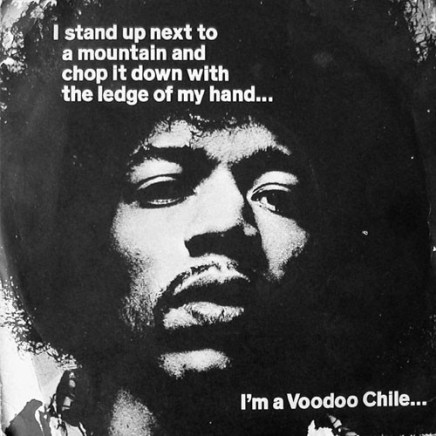
Well I stand up next to a mountain, And I chop it down with the edge of my hand… If you’re ever feeling down, ahead of a tough day, I’d recommend putting this on in your headphones and stepping out of the door just as Jimi sings that line… Cause I’m a voodoo child, Lord knows I’m a voodoo child… It’s a badass song, with a badass message. I didn’t mean to take up too much of your sweet time, I’ll give it right back to ya one of these days… Haha… What exactly is a ‘voodoo child’? Dunno, but it doesn’t sound like something you’d want in the house.

Not that the lyrics make up much of this song. There’s an electrifying solo between the first and second verses. And then the whole second half is given over to some serious head-banging and wah-wah pedalling. It might sound like Hendrix showing off, if it didn’t sound so damn good. It’s controlled chaos, a record that sounds like a live-recording, bottled lightning. And it really makes use of your stereo speakers, with the riffs chasing one another left to right, back and forth…

R-556557-1148199414.jpeg

(coolest single artwork so far, by far!)

God this is good. I knew ‘Voodoo Child’, of course, but it’s not in ‘overplayed’ territory for me. I really should listen to more Hendrix. By November 1970, when he grabbed his one and only week at #1, he was already dead, having joined the 27 Club two months earlier. The line: If I don’t meet you no more in this world, I’ll meet ya on the next one, And don’t be late…! makes it a very appropriate posthumous hit. It’s a shame that it took his death to get him to the top, though he had scored big, Top 10 hits consistently following his debut in 1966 with ‘Hey Joe’.

But who cares why this got to number one. Let’s just rejoice in the fact that it did. It ends abruptly, ricocheting to silence all of a sudden, and you get the feeling it could have been much longer. This ‘Voodoo Chile’ was based on a fifteen minute long, much more laid-back and bluesy, song of the same name that featured on his ‘Electric Ladyland’ album. This version was a reprise – the very last track on the LP – hence the ‘Slight Return’ on the track listing. It should actually be ‘Voodoo Child’, but the record company misnamed it when they released it.

While we wonder just what else 1970 has in store for us in this most schizophrenic of years, we should probably make a confession. At the start I billed this as the pinnacle of Woodstock, by its biggest star. Only problem is… Thanks to bad weather and technical issues, Hendrix actually went on stage at 08:30 on the Monday morning, after most people had begun to pack up and head home. The 500,000 strong crowd had dwindled to around 40,000. But what the hell, who cares. Let’s rewrite history, and imagine him playing this as the sun set, half a million extremely high people swaying along…

Find me on Spotify here.

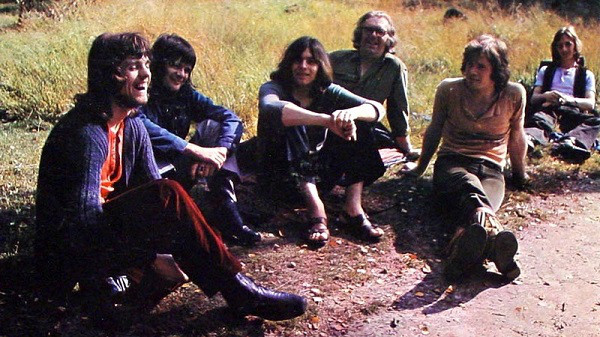
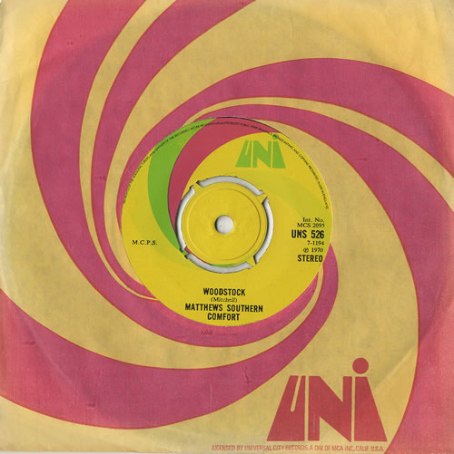
292. ‘Woodstock’, by Matthews Southern Comfort

As far as I know, I have never, ever heard this song before. I know Woodstock, the music festival, obviously, and I know Southern Comfort, the whisky flavoured liqueur that I haven’t drunk since an unfortunate incident when I was nineteen… Combining these two things in my mind, I begin to picture a Country & Western, smoke-tinged ballad…

A-507569-1425942931-2837.jpeg

Woodstock, by Matthews Southern Comfort (their 1st and only #1)

3 weeks, from 25th October – 15th November 1970

…and I’m not a million miles away. It’s a soft record – a soft voice, uber-soft rock – a comfy blanket that wraps itself around you and lulls you to sleep in its echoey rhythm. We are stardust, We are golden, And we’ve got to get ourselves, Back to the garden… The singer is a hitchhiker, on his way to Woodstock. His companion is a child of God, off to join a rock and roll band, looking to set his soul free.

It’s a song for fans of imagery. He feels like a cog, stuck in something turning… At one point he dreams of bombers in the sky that turn into butterflies above our nation, which works both as a trippy picture and as a ‘make love not war’ kind of statement. The garden could be the farm where Woodstock was held, or it could be the Garden of Eden, with the singer hoping for a return to innocence. It’s a melancholy sounding song, though; not one that sounds terribly hopeful. The sixties are over, after all, and the hippy dream has died. Contrast ‘Woodstock’ with the hope of If you’re goin’, To San Francisco, Be sure to wear, Some flowers in your hair… and All you need is love… from just three years ago.

Actually, maybe this #1 officially marks the end of the sixties. 1970 has wandered around without really knowing where it’s going – a year of eclectic chart-toppers. This record could be the gunshot that puts us out of our misery, that leads us into a bold new decade, ten months late… Or not. I have to confess that midway through my first listen to this song, I checked how long was left and my heart sank to see a full minute and a half remaining…

MATTHEWS_SOUTHERN_COMFORT_WOODSTOCK+-+1ST-493335

It’s a bit limp. A little Simon & Garfunkel, a little Eagles, a little Fleetwood Mac, a little meh… I do like the sinister, mournful reverbing solo, though. That bit can stay! Matthews Southern Comfort were a British band, led by singer Iain Matthews, who had previously been in folk band Fairport Convention. He did not, to the best of my knowledge, play at Woodstock. Neither did Joni Mitchell, the writer of this song, which surprised me. She based the lyrics on what she heard from her then boyfriend, Graham Nash of The Hollies (Crosby, Stills & Nash also did a version.) Mitchell’s original – listen here – isn’t as warm or as chart-friendly as Matthews’.

It’s cool that Joni Mitchell has a number one single by proxy, and that one of the biggest pop culture moments of the twentieth century gets a belated mention at the top of the pop charts, but I can’t really warm to this song. It’s just floated past me… And, actually, if you want a proper taste of the Woodstock Music and Arts Fair, then you would do well to hang around and catch our next number one single…

Follow my Spotify playlist with all the #1 singles so far here.

Never Had a #1 Hit… Ricky Nelson

I’m taking a quick break from the usual rundown to give a mention to the bands and artists that we will never meet at the top of the UK singles chart. If you were following along, wondering when (*insert name of your favourite act*) were going to finally appear in this countdown, then I got some bad news for you…

(I’ll do this in chronological order, with acts whom we would have met by now – i.e. in the fifties, sixties and early seventies.)

I wanted to include an early rock ‘n’ roller in this feature, and the obvious one would have been Little Richard. But, as legendary a figure as Richard was, a lot has been written about him since his death a fortnight ago. And, in terms of chart hits without reaching top-spot, one star of the late fifties and early sixties stands out even more…

6cdec6fc32669f6646e455bf6b4b9732

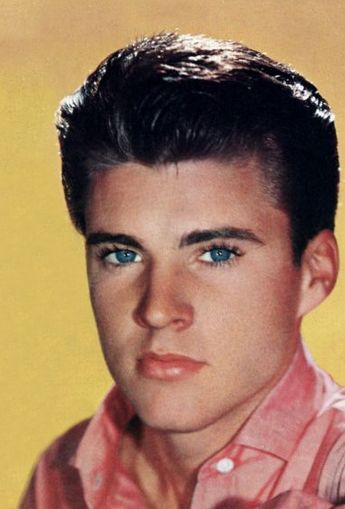
Look at those eyes! Nelson was quite ridiculously good-looking. The son of two well-known celebrities of the 1930s and 40s, he made his way in typical teen-idol fashion, first through radio sitcoms as a child, then TV shows and films as a teenager, and then, in 1957, he released his first single, aged seventeen. He scored tons of Billboard Top 10 hits, as well as two #1s, and while he wasn’t as successful in the UK, here are his five biggest:

‘Travellin’ Man’ / ‘Hello Mary Lou’, #2 in 1961

A pretty standard, Neil Sedaka-ish early sixties pop song for the first half of this double-‘A’, in which Nelson sings about the girls he has around the world. He’s got a little Eskimo girl in Alaska, and a China-doll in ol’ Hong Kong. Simpler times, simpler times…

A much better song on the flip side: a rolling country beat and a simple tale of falling in love with a pretty young gal called Mary-Lou.

‘It’s Late’, #3 in 1959

Great, light rock ‘n’ roll song, and a common theme for the time: a young couple stay out past their curfew, and dad’s gonna be mad. Ricky hopes this won’t be their last date…

‘Poor Little Fool’, #4 in 1958

Another fifties standard. His first US #1, and the new chart-topper on the first-ever Billboard Hot 100. Not his greatest song, though. A little dull. Nice enough. Next.

‘Someday’, #9 in 1958

Suspiciously similar in theme and sound to Connie Francis’s ‘Who’s Sorry Now’… The follow-up to ‘Poor Little Fool’ was an older country song given a light rock ‘n’ roll makeover, which is how around fifty percent of the chart-toppers in 1958 came about.

To be honest, Ricky Nelson’s biggest hits aren’t his best. I love his version of ‘Fools Rush In’, and his sarcastic seventies comeback ‘Garden Party’. And then there is the majestic ‘Lonesome Town’ – one of the 1950’s sparsest, most haunting hit records. As the sixties progressed, he dropped the ‘y’ from his name as the hit singles and big movie roles dried up. He struggled through a very messy divorce, and drug problems, before dying in a plane crash in 1985.

Hope you enjoyed this short interlude. I’ll do another three artistes-sans-#1s in the autumn…


Never Had a #1 Hit… The Doors

I’m taking a quick break from the usual rundown to give a mention to the bands and artists that we will never meet at the top of the UK singles chart. If you were following along, wondering when (*insert name of your favourite act*) were going to finally appear in this countdown, then I got some bad news for you…

(I’ll do this in chronological order, with acts whom we would have met by now – i.e. in the fifties, sixties and early seventies.)

Up today… One of the sixties’ most iconic bands…

Doors-4

I dunno about The Doors, really. Do I like them? Were they as good, or as bad, as people say? They’re a band that seem to inspire extreme reactions, based around whether you think Jim Morrison was a lizard-leather-sex-God, or a bit of an arse.

Plus, most of the Doors’ songs that I enjoy never made it to the British charts – ‘Touch Me’, ‘Love Her Madly, ‘Love Me Two Times’, ‘People Are Strange’… In fact, for such an iconic, influential band, they only ever had four charting singles in the UK Top 75! Which shocked me, I have to admit. Here they are:

‘Light My Fire’, #7 in 1967

A US #1, and their only Top 10 hit in Britain. A sixties classic, and a pretty simple song really. It’s either about sex, or drugs, or both, with a snazzy Louis XIV riff to start and end. I like that the backdrop to this performance in the video is lots and lots of doors hanging on the wall. (Meanwhile, ‘Light My Fire’ will top the charts, much later, and in a very different version.)

‘Hello, I Love You’, #15 in 1967

Another US #1 – part of the reason why I chose The Doors for this feature is the difference between their success in the two countries – with a cool riff and some trippy sound-effects. There was only three years between ‘Oh, Pretty Woman’ and this and, while they cover the same topic, the difference in sound is quite something.

‘Riders on the Storm’, #22 in 1971

A seven-minute-long bit of self-indulgence, if you ask me… But the band’s 3rd highest charting single in the UK!

‘Break On Through (To the Other Side)’, #64 when re-released in 1991

This is more like it. Quiet, then loud – loud, then quiet. Morrison sounds raw and ferocious, before the drugs took their toll. And that was it. Four hits (if you can call reaching #64 in the charts, twenty years later, a ‘hit’.) They’re a band that managed to go a long way – and become pretty legendary – without much of a back catalogue. Style and looks over substance?

One more chart-topper-less artist, coming up tomorrow…. And we’re going back a little further to find him. A rock ‘n’ roll idol, dead now, (and he didn’t die recently, if that’s who you’re thinking of…)

Never Had a #1 Hit… The Who

I’m taking a quick break from the usual rundown to give a mention to the bands and artists that we will never meet at the top of the UK singles chart. If you were following along, wondering when (*insert name of your favourite act*) were going to finally appear in this countdown, then I got some bad news for you…

(I’ll do this in chronological order, with acts whom we would have met by now – i.e. in the fifties, sixties and early seventies.)

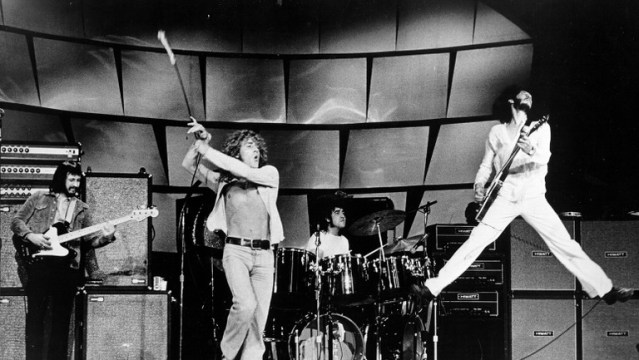
First up, probably just the biggest and most famous act never to have had a number one single… The Who!

the-who-1973-billboard-bw-1548-768x433

Yup, they’ve come close on plenty of occasions. 14 Top 10 hits between 1965 and 1981. Here are the five that came closest:

‘My Generation’, #2 in 1965

Part of the sixties canon, but a world away from both the optimistic pop of the Merseybeat days and the Summer of Love; The Who were angry young men. Banned by the Beeb because they thought Roger Daltrey’s delivery might offend stutterers, not, as I always thought, because it sounds like he’s about to drop an F-bomb. I’ve attached this live version for some brilliantly pointless guitar and drum smashing at the end. ‘My Generation’ was scandalously kept off the top spot by The Seekers snooze-inducing ‘The Carnival Is Over‘!

‘I’m a Boy’, #2 in 1966

My name is Bill and I’m a head-case… Just as anarchic as ‘My Generation’, though gentler sounding. Bill has four sisters and his ma is hell-bent on having five. He wants to ride his bike, climb trees, come home covered in blood – you know, regular 1960s boy stuff… But mum’s not having any of it. I’m a boy, I’m a boy, But if I say I am I get it! Power pop brilliance.

‘Happy Jack’, #3 in 1966

Happy Jack is a man who lives in the sand on the Isle of Man. Apparently, a real person from Pete Townshend’s childhood, kids bully him, laugh at him, chuck things at him… But nothing stops Jack from being happy. Not my favourite Who song in any way, but a worthy inclusion just for Keith Moon’s drumming.

‘Pictures of Lily’, #4 in 1967

I think people’s impression of The Who leans more nowadays to the hard rocking, stadium band that they became in the 1970s. But as this run-through is showing, their biggest hits came earlier, and were much quirkier. ‘Pictures of Lily’ tells the tale of a young lad who can’t sleep, until one day his dad gives him an old picture of a lady named Lily. Suddenly the boy can sleep the whole night through… Pictures of Lily, Solved my childhood problem… ‘Tis “merely a ditty about masturbation, and its importance to a young man” (Pete Townshend’s words, not mine). When the boy asks his dad if he can meet Lily, he is crushed to find out that she died in 1929…

mw56835

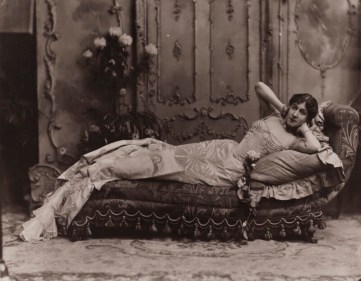
(Actress Lily Langtry, who died in 1929… This could well be the actual ‘Picture of Lily’.)

‘Pinball Wizard’, #4 in 1969

Last but not least… a song about a deaf, dumb and blind kid who sure plays a mean pinball. From the rock-opera ‘Tommy’ this, along with ‘My Generation’ and ‘Won’t Get Fooled Again’, has to be The Who’s signature song, and still a feature of their live shows to this day.

My personal favourite Who single, ‘Substitute’, only made #5, while their big seventies hits like ‘Won’t Get Fooled Again’ and ‘Who Are You’, made #9 and #18 respectively. But, no number one! And that’s why I wrote this post.

Up tomorrow, another hard-rocking, hard-living band, with a member who died too young, this time from the other side of the pond.

291. ‘Band of Gold’, by Freda Payne

A funky bass riff takes us into our next #1, a huge hit single that settled in for a long stretch at the top of the charts in the autumn of 1970…

p01bqv4q

Band of Gold, by Freda Payne (her 1st and only #1)

6 weeks, from 13th September – 25th October 1970

It’s a fun mix of a single. It’s soulful, it’s Motownish, it’s got strings, with some very early-seventies sounding electric sitar for the solo. Not that it’s a messy mix, not at all. It all comes together to make a great pop single. ‘Band of Gold’ was a perennial long car journey favourite as a kid, an ever present on my parents’ ‘Best of the ‘70s’ compilation tapes. It’s been nice getting to know it again.

And even as a child, I could tell that this record’s lyrics stood out. They tell a story… Since you’ve been gone, All that’s left is a band of gold… A young woman, left alone and crushed on her wedding night. Long before I knew what was meant to happen on one’s wedding night, it still drew me in, intrigued. You took me, From the shelter of my mother, I had never known, Or loved any other… Freda and her fiancé exchange vows, and kiss, but that night, on their honeymoon, they sleep in separate rooms…

This is the plot of a soap-opera, not the lyrics to a #1 single! Is she rich, and he only married her for her money? Was it an arranged marriage? Is he gay, and in need of a beard? Is he impotent?? (These are all bona fide theories that have been espoused over the years.) We never find out, left hanging as the song fades out.

Freda never stops hoping that he’ll walk… Back through that door, And love me, Like you tried before… He has tried to love her, then… The plot thickens. I love the image of her left in the dark, with her band of gold (it took me a long time, as a child, to work out that she was singing about her wedding ring.) Payne sings it forcefully, and the drumbeat comes down on every word. You can really picture her beating her chest in sorrow.

s-l400

‘Band of Gold’ was written by the Motown legends Holland-Dozier-Holland, but it wasn’t released on Motown due to an ongoing dispute between the writing team and the label. Which means it’s half a Motown hit, and frustrating as it deprives us of two-in-a-row following Smokey and the Miracles’ ‘The Tears of a Clown’. Ron Dunbar, who worked on the song alongside the trio, blames all the theories on the fact that he had to cut a line about the singer being the one who turned her husband away, to keep the runtime down. The full story can be heard on the 7” version…

I love the way that Freda Payne really lets loose for the final Since you’ve been go-o-o-ne… as she takes it home. Though apparently she had to be persuaded to record the song. She did, and it gave her what would be by far her biggest hit. In fact, ‘Band of Gold’ was Payne’s only Top 10 hit in either Britain or the US. She kept releasing music until the early eighties, when she moved into TV work and acting. She was married to fellow singer Gregory Abbott, for three years. Not a long marriage, but at least it got past the honeymoon.

Why not listen to all the #1 singles in one handy place, with my Spotify playlist?