876. ‘Black Coffee’, by All Saints

All Saints return for their second number one of the year, although ‘Pure Shores’ feels like a lifetime ago given how many chart-toppers we’ve ploughed through since then…

Black Coffee, by All Saints (their 5th and final #1)

1 week, from 8th – 15th October 2000

And this second single from their second album is cut from much the same cloth as their previous #1. It’s got the same lush, dream pop soundscape, with woozy synths and whale noises – it too was produced by William Orbit – and is a further departure from the sassy, R&B pop of their 1998 hits. But I think I actually prefer this to the hugely loved and well-respected ‘Pure Shores’.

I’d say that it’s got the best chorus of their five chart-toppers, and the contrast between the ambient yearning there and the fast moving verses is very appealing. It’s a love song, going by most of the lyrics… I wouldn’t wanna change, Anything at all… But the song’s wistful atmosphere (and the video) hints at a break-up… I wouldn’t wanna take, Everything out on you… (Although I know I do…)

Any song that chucks its title down the sink in the middle of the second verse is automatically very cool, but I would suggest that what elevates this record to true greatness is the coda, in which the first verse is remixed into something more industrial, and darker. It’s a fantastically edgy way for Britain’s coolest girl group to bow out from chart-topping duty.

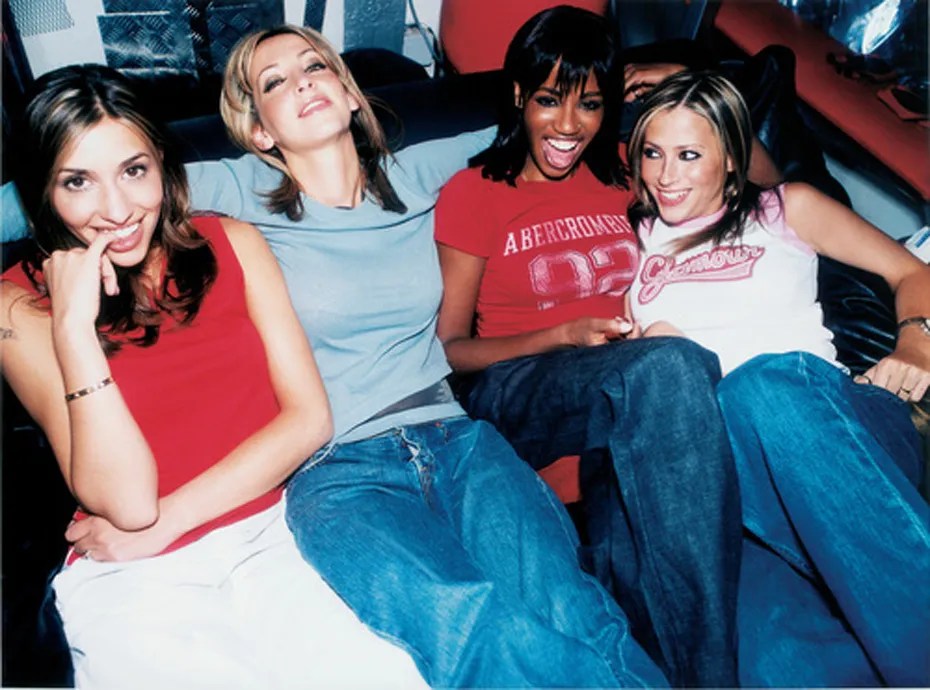
Sadly, though, ‘Black Coffee’ was a big part of All Saints calling it quits in early 2001. It was the only All Saints original not to be written by Shaznay Lewis, and the Appleton sisters saw this as a reason for them to finally be given lead vocals over Lewis. Tensions built up during recording and live performances, until an argument over who got to wear a jacket for a photoshoot proved the final straw. And to be honest, that was a huge part of All Saints appeal: the fact that running behind all those great songs was the nagging suspicion that they really fucking hated each other.

They had one more single to come, the #7 ‘All Hooked Up’, which contains the classic chorus line: I know that you want a piece of my ass… But that was pretty much it (until the inevitable comeback five years later). On any given day my choice of best All Saints single might rotate between ‘Never Ever’, ‘Pure Shores’ and this, but today I’m leaning towards ‘Black Coffee’. Add in ‘Bootie Call’ and the better-than-they-should-have-been covers of ‘Lady Marmalade’ and ‘Under the Bridge’, then you have one of the great chart-topping runs.
849. ‘Pure Shores’, by All Saints

The fifties had rock and roll, the sixties had beat bands and psychedelia. The seventies had glam, disco, and punk, while the eighties had new wave and new romantics. The nineties had hip-hop and Britpop, not to mention dance. The 2000s have… What do the 2000s have? In fact, what musical movements of any sort does the 21st century have…?

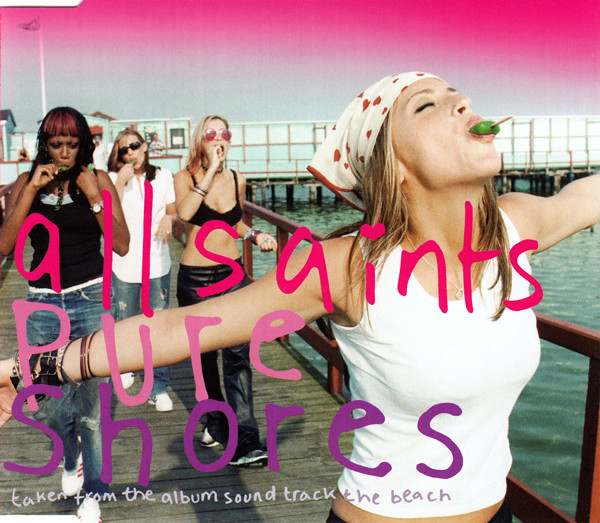
Pure Shores, by All Saints (their 4th of five #1s)

2 weeks, from 20th February – 5th March 2000

The new millennium provides an interesting dividing line, after which the Pop River reaches its delta, loses momentum, and splits into lots of little tributaries. It’s all to do with something called ‘the internet’, I think, taking power away from record companies and radio stations, and letting people discover all the music they could ever have dreamed of at the whir of a dial-up modem and the click of a mouse. The death of the monoculture, and all that. (Which isn’t to suggest that pop music’s journey had been relentlessly forward-moving over the first fifty years of the singles chart. Glam owed a debt to rock ‘n’ roll, Britpop owed a debt to the sixties, and so on …)

Anyway. That’s my long-winded way of getting around to saying that if the 21st century has a musical movement, I’d argue that it’s not so much a sound as a gender. Women. Female pop stars. Britney, Beyoncé, Gaga and Swift, to scratch but the tip of the iceberg. (And again, this is not to suggest that Connie Francis, Dusty Springfield, Diana Ross and Madonna were all figments of the 20th century imagination. Just indulge me…)

The dominance of the female pop star also meant – especially in the case of Britain in the 2000s – girl groups. In a few years I’ll be going wild for the cutting-edge pop of Sugababes and Girls Aloud, who even the likes of the NME will be rushing to anoint as the new avant-garde. All of which starts here, with the return of All Saints.

Phew. Having almost used up my regular wordcount with that intro, I’d better crack right into the song. ‘Pure Shores’ is described as ‘dream pop’, and it is definitely a step away from the group’s R&B-focused 1998 hits. The verses are laid-back, ambient, with a thrumming bass and lots of shimmering effects. We take detours between the verses for some whale calls and echoey backing vocals. It’s a pop song with the confidence to take its time, and to take us to some odd places. It was produced by electronic pioneer William Orbit, who is most famous perhaps for his work with Madonna around the same time, and who also worked with Blur, Prince, and U2.

But it is still a pop song, and the success of such things hinge on choruses. ‘Pure Shores’, for all its unusual soundscaping, remembers to click things into gear for a memorable I’m movin’, I’m comin’, Can you hear what I hear… Perhaps I’m of just the right age, but there are few choruses that transport me to a particular place and time like this one. It’s calling you my dear, Out of reach… The best bit of the song, though, is the hard-edged middle-eight, all industrial synths, and the following key change to take us home.

‘Pure Shores’ was written to order for the Leonardo Di Caprio movie ‘The Beach’, hence the Take me to my beach… line (the title doesn’t appear in the lyrics but certainly fits in with the film’s theme). Shaznay Lewis wrote most of the lyrics on a transatlantic flight, which is impressive, and not something many girl group members would be capable of doing, adding another layer of respectability to this tune.

Having said all that, and as good as ‘Pure Shores’ is, I think All Saints’ final chart-topper is even better. Both tracks, bookending the year 2000, set the tone for what pop music, specifically pop music fronted by women, could achieve in the years to come…

786. ‘Frozen’, by Madonna

Of all Madonna’s thirteen number ones, ‘Frozen’ – her first in almost eight years – has to be the strangest…

Frozen, by Madonna (her 8th of thirteen #1s)

1 week, from 1st – 8th March 1998

It’s her longest for a start, and probably the least accessible. There’s no instant hook, as with ‘Into the Groove’, and no controversial gimmicks, as with ‘Like a Prayer’. Instead there’s a shimmering, undulating electronic beat, beefed up at intervals by strange, reverberating sound effects and drum fills. And there are the strings that add an air of grandiosity to the song, especially when they come to the fore midway through, like an ‘Arabian Nights’ film score. A Rolling Stone reviewer at the time described it as “arctic melancholy”, and I think that’s perfect.

Interestingly for Madonna, the lyrics are the least noticeable thing about ‘Frozen’. They seem to be about a lover who is closed off: You only see what your eyes want to see, How can life be what you want it to be, You’re frozen, When your heart’s not open… Or perhaps it’s more religious, with Madonna, who had begun taking an interest in Eastern spiritualism, singing as a sort of high priestess. The video would bear this interpretation out, Madge floating above a desert, all in black, as a sort of nun-slash-witch, before turning into a flock of crows, and then a large dog.

In fact, despite me claiming that this isn’t one of her gimmicky chart-toppers, the first thing that springs to mind when I think of ‘Frozen’ is Madonna – famously blonde for most of the past fifteen years – now with long jet-black hair. Always one for the visuals… The second thing I remember about this record is hearing it almost as often as ‘My Heart Will Go On’ at the pool bar in Lanzarote during my spring holiday that year.

And the fact that it was on such heavy rotation at the time perhaps proves that this isn’t as inaccessible as I suggested. In truth, there are just as many hooks here as in Madonna’s poppier numbers, they’re just buried in the trip-hop beats, and stretched out over six minutes. Of 1998’s seven number ones so far, three have now run on beyond five minutes – ‘Never Ever’, ‘All Around the World’, and this – while Celine Dion wasn’t far behind (and that one certainly feels longer than five minutes…)

Although this was her first number one since ‘Vogue’, Madonna hadn’t ever been away from the top of the charts. In fact, she’d casually racked up a further seventeen (!) Top 10 hits between ‘Vogue’ and now. At the same time, ‘Frozen’ was the lead single from her first studio album in four years, following a few years of compilations and soundtracks.

Undoubtedly then, we can class this is one of Madge’s famous re-inventions. She wasn’t just following current trends with William Orbit on production duty, she was setting them. Fifteen years is a lifetime for a female pop star, and this was a statement release, one that announced the Queen of Pop wasn’t going anywhere. ‘Frozen’ was an interesting choice for the lead-single though, especially considering that follow-up ‘Ray of Light’ is the much better remembered hit, but it makes for an interesting detour in Madonna’s chart history. This is her second and final ‘90s #1, making it by far her least successful chart-topping decade. However, she has five more ‘00s #1s to come, all perhaps owing a debt to how successfully she updated her sound here.