922. ‘Unchained Melody’, by Gareth Gates

The winner of Pop Idol gets knocked off number one… by the runner-up. Yes, roll your eyes, it’s an understandable reaction; but you’d better get used to this level of domination.

Unchained Melody, by Gareth Gates (his 1st of four #1s)

4 weeks, from 24th March – 21st April 2002

Gareth Gates had been the frontrunner for much of the first series of Pop Idol, and was the bookies’ favourite going into the final. But I’d say that the public chose the right winner on the night. Will Young has a memorable voice, one you can pick out of a crowd. Gates has the voice of a decent-enough pub karaoke singer.

Luckily for him, his debut single was ripped right from Simon Cowell’s karaoke playbook. ‘Unchained Melody’ is either an inspired choice – it had worked for Robson & Jerome, and if it ain’t broke – or the most mind-numbingly unimaginative one. Why did we need yet another cover of it, the third one to top the charts in less than twelve years? At least Will Young was given a couple of ‘originals’, even if they were very dull. Although if one thing’s clear after the age of X-Factor, it’s that Simon Cowell has a very limited, if indeed any, imagination.

At least the song is shuffled around a little, starting with the lonely rivers bit. It means it does catch the ears, at first. But as soon as the tune comes in properly, it dissolves into mush. Is this better or worse than the R&J version? Or is that question moot as long as you can put on the Righteous Brothers instead? There was of course another number one version, Jimmy Young’s 1955 hit, which was literally the melody from the movie ‘Unchained’. This record of four different chart-topping versions of a song still stands, though it has since been matched by two other tunes.

I will have to admit that this record, when I was sixteen, was the first time I had really encountered ‘Unchained Melody’. I’m sure I already knew it, but the radio airplay of this version really hammered the song home. And I did quite like this version… For a week or two, at most, I assure you.

What’s interesting to see is that, in truth, and unlike later singing contest series, it didn’t matter whether Gareth Gates or Will Young won the final. They both enjoyed the success of winners, matching one another hit for hit, at least for the first year or two of their careers. Gates was only seventeen when he made the final, and he had the now contractually obliged reality TV sob-story: a stammer that only went away when he sang. Though I don’t want to belittle a genuine affliction, it does amuse me that his oblivious parents gave him the possibly the worst name ever given to someone with a stammer.

722. ‘Unchained Melody’ / ‘White Cliffs of Dover’, by Robson & Jerome

Serious question: who were the worst musical duo of 1995? In any other year, the moronic Outhere Brothers would have taken the prize hands down. And yet… We also have to reckon with another, potentially even more heinous, pair…

Unchained Melody / White Cliffs of Dover, by Robson & Jerome (their 1st of three #1s)

7 weeks, from 14th May – 2nd July 1995

Robson Green and Jerome Flynn were two actors and television personalities – still are, in fact. They had risen to prominence in the ITV series ‘Soldier Soldier’, in which they played, yes, soldiers. In one episode, they sang an impromptu version of ‘Unchained Melody’ at a wedding, going by the name the Unrighteous Brothers… And the rest was history.

This record suffers from two major problems. First off, it’s terrible. Secondly, the incomparably superior version of ‘Unchained Melody’ that this cover was based on is still fresh in the memory, having topped the charts barely four years ago. Which makes this sound even more like a cheap karaoke cash-in than the tinny backing track and the dodgy vocals might suggest.

And OK, they may have been going for a ‘cheap and cheerful’ feel, as in the TV programme, but that might be giving them a little too much benefit of the doubt. Allegedly the duo had a little ‘assistance’ in the recording studio (to the point where some claim that it’s not really them singing), but I’m not one to cast aspersions. Robson and Jerome seem like decent blokes, not taking themselves too seriously, enjoying an unexpected change in career direction… So on the one hand we shouldn’t get too annoyed by this silly #1. Yet, on the other, there’s the fact that what should have been a fun scene from a TV show was turned into a seven-week chart-topper, and the best-selling single of 1995 – nay, the best-selling single of the entire decade so far! The British public, once again, showing themselves unfit to be trusted within twenty feet of a record shop.

On the flip side of the disc, there’s something slightly more interesting. ‘(There’ll Be Bluebirds Over) The White Cliffs of Dover’ is a song from the Second World War, made famous by the forces’ sweetheart Vera Lynn. It’s interesting, because it may well have been a tie-in for the 50th anniversary of VE Day, and because it’s a clear indication of who this record was aimed at. Grannies across the land kept this on top of the charts, holding off U2 and, in a travesty far worse than Engelbert or ‘Shaddap You Face’, Pulp’s ‘Common People’.

‘Bluebirds’ itself is every bit as rotten as ‘Unchained Melody’, while the production may be even cheaper and nastier, slathered over twee lines about shepherds watching their flocks and little Jimmy sleeping safe in his room (which I’m sure were powerful in 1942 with the Luftwaffe swarming overhead, but which just sound maudlin here). At least, by the end, the pair have been relieved of their singing duties by a much more competent gospel choir.

Apparently both Robson and Jerome had to be persuaded to do any of this, to the point that Green threatened to sue for harassment. Who, pray tell, could be cynical enough to risk a court appearance in the name of unleashing this crap on the nation…? Oh, right, yep. Simon Cowell. The dark overlord of the charts in the 2000s cut his blood-sucking teeth with this, his first number one record. It was produced by two-thirds of SAW (Stock and Aitken), giving this disc yet another stamp of quality…

If only this was a one-off, for both Robson & Jerome, and for Simon Cowell. But, of course, it wasn’t. Much more is to come. Until then, let’s distract ourselves with some chart trivia. This marks the first time that a song has topped the chart in three different versions (the Righteous Brothers, of course, and the Jimmy Young version from way back in 1955). Meanwhile, ‘White Cliffs of Dover’ became the longest-titled #1 single ever – as long as you include the brackets at the start.

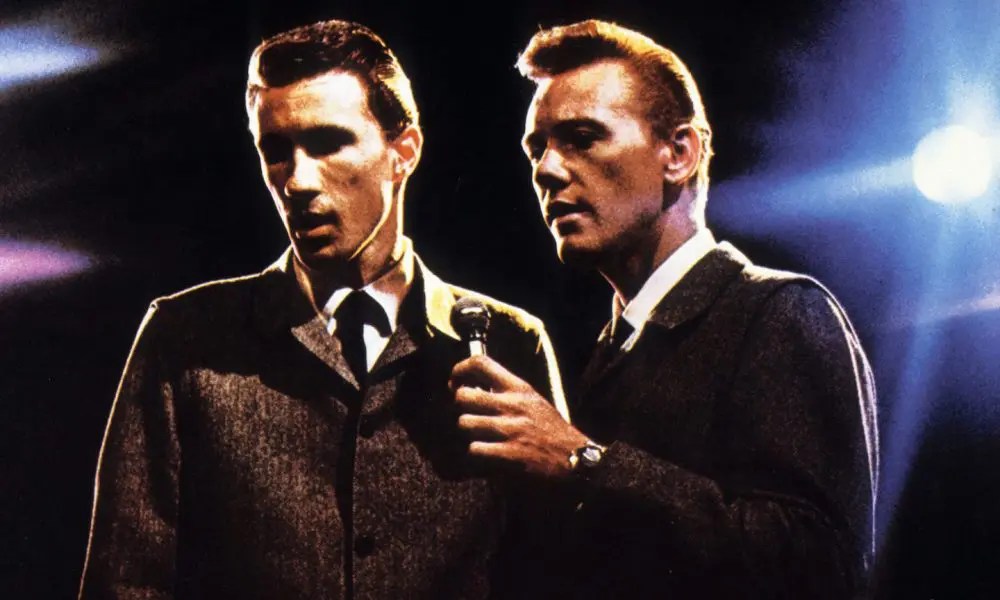
653. ‘Unchained Melody’, by The Righteous Brothers

And so the slew of random re-releases, that have been peppering the number one slot since the late ‘80s, peaks here, towards the end of 1990. And I mean ‘peaks’ both in the sense that we’ve literally just waved a Steve Miller Band tune from 1973 off top spot, and in the sense that nothing can top this gilt-edged beauty of a love song.

Unchained Melody, by The Righteous Brothers (their 2nd and final #1)

4 weeks, from 28th October – 25th November 1990

That’s not to say that ‘Unchained Melody’, in the hands of the Righteous Brothers, isn’t a preposterous, overblown nonsense of a record. It is completely over-the-top, the sort of display of affection that would put most women off a man were he to belt it out ‘neath her window of an evening. How does a lonely river sigh, exactly…? And yet, it is irresistible.

Irresistible because of the vocal performance of Bobby Hatfield (who won the right to record it in a coin-toss with his Righteous partner Bill Medley). It’s spectacular singing all the way through, a true tour-de-force, that culminates in that outrageous note he hits in the final chorus. The strings swell, the percussion crashes, creating a tempest of emotion that will wash over even the most cynical of listener.

Irresistible, too, because it is so different to what has come before it. I’ve enjoyed the recent transition to dance, more than I thought I might, but it’s interesting to hear a big sixties beast cutting through the drum machines and the samples. And despite coming from long before the era of the power-ballad, ‘Unchained Melody’ can compete with contemporary classics like ‘Nothing Compares 2 U’ and ‘Show Me Heaven’ in the chest-thumping melodrama stakes. In fact, could the case be made for this being the very first ‘power ballad’?

It found itself back in the charts thanks to its use in the movie ‘Ghost’, in a famous sex scene involving Patrick Swayze and a pottery wheel (I’ve never seen the film, and don’t intend to, so don’t try to persuade me that this isn’t what happens…) The Brothers did a re-record, which charted in the US, but it was their original that took off again in Britain (it had previously made #14 in 1965). It means that the duo have a twenty-five year gap between their two #1s – beating The Hollies’ previous record of twenty-three years – and that ‘Unchained Melody’ itself has a huge thirty five year span since Jimmy Young took his version to the top in 1955.

Young’s version is half the song that this is, though it feels unfair to judge him against what has since become a standard. A standard that, sadly, subsequent singers have felt the need to compare themselves against. ‘Unchained Melody’ has two further, Righteous Brothers aping versions to come atop the charts… And this also increases the irresistibility of this version: the depths that I know the song will be brought down to.

This record cemented itself as the peak of the re-release era by becoming the highest-selling single of the year. Folks lapped it up (‘Ghost’ was, for a spell, the highest-grossing film of all time in the UK), though I’d say it’s now moved into the realms of cliché, thanks no doubt to the subsequent karaoke cover versions, to the point that any use in a movie today would be done with tongue firmly in cheek.

Before I go, I have to give a shout out to the one version that can compete with the Righteous Brothers’: Elvis’s. It was used to great effect in the recent film biopic (that I thought was OK, but nowhere near as good as some said), and when they spliced it with the famous footage of him singing it a few weeks before his death… Well some dust just went and got in my eye, didn’t it?

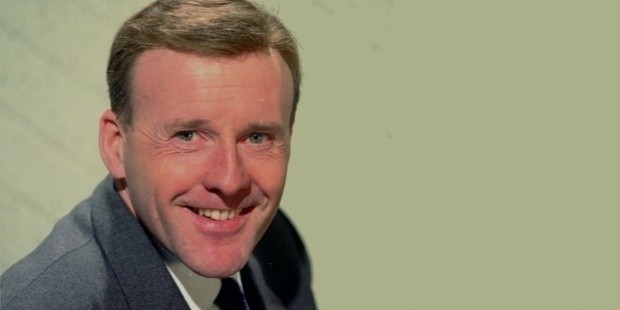
34. ‘Unchained Melody’, by Jimmy Young

s-l300

Unchained Melody, by Jimmy Young (his 1st of two #1s)

3 weeks, from 24th June to 15th July 1955

Forget ‘I Believe’, discard ‘How Much is that Doggie’, don’t mention ‘Mambo Italiano’… For the first time in this countdown, we have a song that everyone knows.

We’ve flirted with legend so far. Sinatra and Doris Day have hit the top, but not with any of their most famous recordings. Frankie Laine has set an unbeatable chart record with a song that will be unmistakeable to people of a certain age. And there have been other chart toppers that people might be able to sing a couple of lines from. But everyone, and I repeat everyone, knows ‘Unchained Melody’.

But not everyone will know this version. 4 (Four!) versions of ‘Unchained Melody’ have hit top spot in the UK charts – take a bow The Righteous Brothers, Robson & Jerome, and Gareth Gates, we shall hear from you anon. With these versions – the former especially – ingrained in popular culture, Jimmy Young’s version is a strange listen.

The tempo is faster, for a start. Then there are the Spanish guitars, when we are used to it being a piano led song. And then there is the clipped, British delivery. No glossy, American vocals here. Young’s voice is deep, sonorous even. It’s technically a good voice. But there is more than a whiff of David Whitfield about it, especially when he belts out the line Are you still MIIIIIIINE?

He still needs your love, and would like God to speed your love to him. It is the same song, but it’s not. I think that were this a more forgotten hit – a ‘Give Me Your Word’ for example -it might simply file in amongst all the other stiff, slightly overwrought, pre-rock ballads that we have sat through so far. But, unfortunately for Jimmy Young, people took this song and turned it into one of the most instantly recognisable pieces of popular music ever recorded. And his version, while still not the original (there were, inevitably, four other versions in the chart during the summer of ’55), now sounds very dated next to the more modern interpretations.

Interestingly, though, as we study the evolution of the number one record through time, we have a first here. At least, I think it’s a first (I can’t be bothered going back and listening to all the previous thirty-three). So many of these hits have favoured a bombastic THIS IS THE END OF THE SONG approach to the final chorus (to be referred to from now on as a TITEOES ending). And what song would have better suited this kind of OTT climax than ‘Unchained Melody’? But no. What we have here is Young singing the last line – God speed your love to me – the final note being held, the guitars strumming and a fade. A fade! And it works pretty well. It is, ironically – considering the time in which it was recorded – the most understated ending out of the four chart topping versions.

Why, though, is it called ‘Unchained Melody’ when the lyrics make no reference to being ‘unchained’? Is it because the singer is unchaining his heart, and pouring out his feelings to the one he loves? That would be a sensible guess, but no. We might as well address this here, though I am aware that I will have sod all to write about by the time we stumble across the Gareth Gates version. The song is from a film called ‘Unchained’, and is therefore the melody from ‘Unchained’. Kind of like Mantovani’s ‘Song from Moulin Rouge’. Simple. The film has been forgotten, but it lingers on in the title of a world-famous love song. And, it keeps up our run of film soundtrack #1s – four in a row, and counting. Of course, ‘Unchained Melody’ is also very well known for being in an ultra famous scene from another movie: ‘Ghost’. Which is turning this all very meta – kind of like the play within a play. Or not. I think I should stop writing soon.

jimmy-young-musical-career_1478869423

But I can’t finish without mentioning the man who has played barely a supporting role in this post so far: Jimmy Young himself. I’ve not so far been able to relate many of these early chart toppers to life events, experiences, or memories… But I do have a special place in my heart for Jimmy Young.

He was known by most as a Radio 2 DJ, rather than a singer. My parents love a bit of Radio 2 – as parents tend to do – and while I did put in some half-hearted protests for Radio 1, or even a commercial station (Shock! Horror!), I didn’t actually mind long car journeys with Steve Wright or Wogan or whoever. But I hated the two hours over lunch when Jimmy Young came on to talk about, ugh, politics, the world, society and the issues of the day. Then I would really protest, and my parents would usually concede to putting ‘ABBA Gold’ on for a bit.

Young just came across as a crusty old man, who thought youngsters didn’t know how easy they had it, who was definitely in favour of bringing back National Service, maybe even hanging… This is obviously all complete speculation on my part (though I see now that he had a column in the Daily Express – draw your own conclusions there…) and he’s dead so I shouldn’t be too rude. He did talk an awful lot, though. And yet I look back on those days fondly now, sitting in a car on our way to a fortnight in, I don’t know, Devon, listening to an old man chuntering on – an old man I had no idea had been a chart-topping singer.