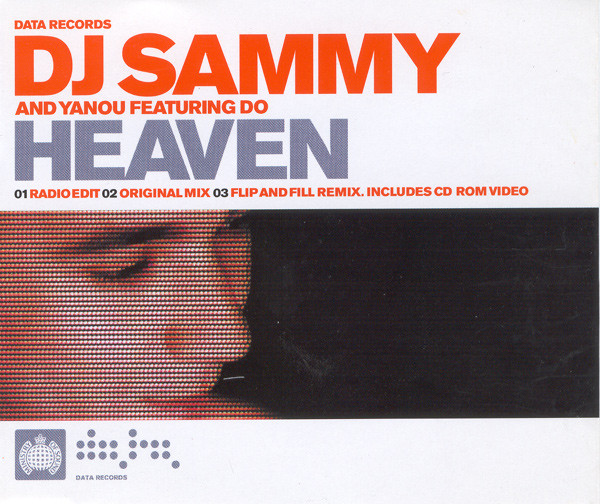
940. ‘Heaven’, by DJ Sammy & Yanou ft. Do

Here we, here we, here we fucking go!

Heaven, by DJ Sammy & Yanou ft. Do (their 1st and only #1s)

1 week, 3rd – 10th November 2002

That’s the sort of thing people used to shout when the beat dropped on this next number one, in the cheap nightclubs I was frequenting in 2002, where they didn’t check IDs and the carpet oozed decades’ worth of alcohol onto your shiny school shoes (no trainers allowed – they did have some standards).

This is cheap and nasty trance pop. Ned music, if you’re from where I’m from. Faceless Euro DJs with sledgehammer originals, and remixes of old hits. Think Ultrabeat, Basshunter, Cascada and, daddies of them all, SCOOOOO-TER! They did the job, when you were young and off your face on Smirnoff Ice, but for dance music in general I’d say it was a step backwards.

Compare this to the Eurodance of a couple years earlier: Fragma, Modjo, ATB. Their offerings were a lot subtler, a bit more thoughtful. For much of the 2010s though, as far as I could tell, most dance tunes sounded like DJ Sammy. And one on hand I do like the heavy, deliberate beats that trance gives you. It lends itself to lasers and dry ice, and listening to this now I am starting to get slightly nostalgic. But it also gets repetitive.

‘Heaven’ was originally a hit for Bryan Adams in 1985, when it had given him his first US #1 (and had made #38 in the UK). It provided a similar breakthrough for DJ Sammy, a Spaniard who had been active since the mid-90s. His version of ‘Heaven’ also impressively made the Billboard Top 10, a chart usually immune to the charms of European dance music. Sammy had further success with versions of Don Henley’s ‘Boys of Summer’ and Annie Lennox’s ‘Why’, and he continues to record and to DJ.

The credits for this song feel very 21st century. Imagine telling someone in 1952 that fifty years later number one hits would be recorded by acts named DJ Sammy & Yanou ft. Do. Yanou was the German producer who collaborated on this track, and Do a Dutch singer who provided the vocals. Neither have troubled the UK charts again, though Do was fairly successful in her homeland and Yanou went on to work extensively with the aforementioned Cascada.

Another thing I remember about this song was the very popular ‘candlelight mix’: a stripped back, piano version without the thumping beat, which probably soundtracked many a teenage fumble among my schoolfriends. Like I said, listening to this now is making me slightly nostalgic. I have to remind myself that I thought this was crap at the time, and that it’s still fairly crap now. But therein lies the pernicious danger of nostalgia, making even the bad, the cheap, and the tacky, appear good.

870. ‘I Turn to You’, by Melanie C

When Mel C scored her first number one, the hip-hop leaning ‘Never Be the Same Again’ featuring Lisa Lopes, I mentioned the impressive scope of her first few solo singles. Pop rock, alt-rock, rap… And now she achieves her second chart-topper, with some pretty hardcore trance.

I Turn to You, by Melanie C (her 2nd and final solo #1)

1 week, from 13th – 20th August 2000

I used to look at the number ones of 2000 with scorn: there are so many of them, such a high turnover that the idea of being ‘top of the pops’ seemed cheapened. But actually now, in the midst of listening to all of them, it’s turning out quite fun. Variety is, after all, the spice of life (no pun intended).

The same could be said about Mel C’s discography. The album version of ‘I Turn to You’ was a slower, longer, more atmospheric piece of music. And as it was chosen to be the LP’s fourth single, it needed something new to appeal to fans. That something was an absolutely banging remix. As regular readers know, I’m neither a dance music expert nor an aficionado. What stands out here is the beefy bass, and the buzzy synth riff. It reminds me of the dance hits of the early nineties, before Balearic beats and garage slowed things down.

There’s a subtle piano in the chorus that complements her vocals, and the exotic strings in the second verse keep things interesting just when the beat might have become tiring. Overall, though, this song works because it’s exciting. It has a power that makes you pay attention. The remix was the work of Hex Hector, an American producer who won a Grammy for this record in 2001.

Most importantly of all, Mel C’s vocal chords get a proper workout here, unlike on ‘Never Be the Same Again’. I turn to you, Like a flower leaning towards the sun… It’s left ambiguous whether Mel is singing about turning to a lover to help her through dark days, or a higher power. But in dance music, it never hurts to keep things vaguely spiritual.

She never managed any further solo #1s (though the Spice Girls have one more to come), but Melanie C has released eight solo albums to date, while also moving into musical theatre. In terms of #1s she is the second most successful solo Spice (behind Geri), and in terms of Top 10 hits she’s third (behind Geri and Emma Bunton). If we can crown a ‘most interesting solo Spice’ however, then Mel C’s got that award in the bag.

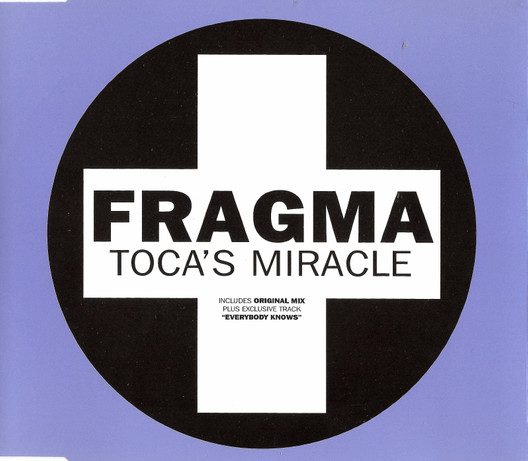
856. ‘Toca’s Miracle’, by Fragma

In my last post, I argued for garage as the sound of the new millennium. And it’s a compelling argument. But it wilts in the face of competition from the true, the one, the only sound of the year 2000… Random dance.

Toca’s Miracle, by Fragma (their 1st and only #1)

2 weeks, from 16th – 30th April 2000

Why is it so hard for dance acts to have longevity? Is it because their tracks are often based on samples, and have often been through multiple remixes, before they eventually make it big, making it hard to recapture whatever made it a hit in the first place when recording the follow-up? Or is it because it’s difficult for some faceless bloke behind a mixing desk to build up much of a fanbase?

Another question: who, or what, is a Toca? While my queries about dance music might need a more expert opinion, I can answer this second one. In Spanish, ‘Tocar’ means to touch. (It can also mean ‘a hole dug by a mouse’ in Portuguese, but I’m assuming that wasn’t the inspiration for this hit.) A British DJ by the name of DJ Vimto (juicy!) mashed 1998 hit ‘Toca Me’ (#11 in the UK) by German trance trio Fragma, with British singer Coco Star’s 1997 #39 hit ‘I Need a Miracle’. The illegally recorded results were picked up by DJs, and played in clubs to an enthusiastic reception. Luckily for Mr Vimto, Fragma and Coco Star liked what they heard, and were on board for a more legitimate recording.

I can pinpoint the exact moment that made ‘Toca’s Miracle’ such a big hit. The line in the chorus – It’s more than physical what I need to feel from you… They’re the usual semi-nonsense dance lyrics, but something in Star’s floaty melisma grabs the ear. It’s a hook that’s remained with us for the past twenty-five years, instantly identifiable even if I have very little love for the actual song. The rest of the record is fairly predictable, though admittedly I’m no connoisseur of ambient trance. It is a very well regarded track, however, and is seen as a game changer for Eurodance, setting the tone for the rest of the 2000s, through acts like Cascada, and Ultrabeat, and Basshunter.

The other thing I remember about this is the video, in which Coco Star plays in a game of women’s futsal. The scenes set in the changing rooms were very popular with the boys at school, though looking back it’s all quite PG, proof more of the untamed horniness of fourteen-year-old boys than of the video’s raunchiness. Interestingly, the only video now available on YouTube is of a 2008 remix, which might have something to do with Coco Star taking Fragma to court claiming that she had never received any royalties. The track was removed from streaming services too, until 2022 when the court case was thrown out.

Fragma managed a couple more Top 10 hits before disappearing from the charts. Coco Star has managed no hits other than this, and the song it samples. My question about dance acts not having longevity remains hanging… Perhaps the most interesting thing about this entire saga however is the fact that Coco’s ‘I Need a Miracle’ was written by Rob Davis, lead guitarist of glam rock legends Mud. Not a chart-topping connection many would have predicted, right? Amazingly, Davis will be go on to be involved in two further ginormous chart-toppers during the early years of the 21st century…

As mentioned, the video is not on YouTube due to copyright reasons. Even the video below may not be the actual chart-topping 2000 mix.

This is the original video, with a 2008 remix playing over it… (can only be watched on YouTube).

851. ‘Don’t Give Up’, by Chicane ft. Bryan Adams

Hurray! Our first random dance hit of the new century! From the mid-nineties onwards these have become a common occurrence, and they aren’t letting up in the early years of the 2000s.

Don’t Give Up, by Chicane (his 1st and only #1) ft. Bryan Adams (his 2nd and final #1)

1 week, from 12th – 19th March 2000

This is blissed-out, late-afternoon by the pool sort of dance. Background dance, if there is such a thing. Which begs the question, how did this middling record end up on top of the charts? What’s the USP? Is it the fact that it’s rock music’s Bryan Adams croaking his way through it?

Maybe it was a bigger deal than it seems now, a middle-aged rock star appearing on a fresh dance track. Nowadays nobody bats an eyelid at a rock-cum-dance remix. I initially wondered if it was a sample of an old Adams’ track, but no – it was written by Adams in 1999, then mixed and produced by Chicane (British DJ Nicholas Bracegirdle). Vocally, Adams does a Cher and is heavily vocoded and autotuned. And yet, you can instantly tell it’s him. I never would have pegged him as having such a distinctive voice.

Other than the novelty of Bryan Adams’ featuring on it, there’s not much here to catch the ears. It picks up a bit from the midway point, with some higher tempo trance touches, but it remains fairly repetitive. I can’t escape the feeling that this sounds like the sort of remix that would usually have been tucked away as the third track on a CD single.

Perhaps the success of this record was due to the fact that Chicane had been responsible for the single edit of Adams’ 1999 #6 single ‘Cloud Number Nine’ (a much better song than this). View ‘Don’t Give Up’ as the follow-up and its success starts to make more sense. Chicane didn’t have too many big hits, but when they did it was usually with someone interesting. His single before this featured Máire Brennan, sister of Enya, while his 2006 hit ‘Stoned in Love’ was with Tom Jones.

Bryan Adams meanwhile was no stranger to chart success. This was his 11th Top 10 hit since arriving on these shores in the mid-eighties. It is interesting to see the difference in his two chart-toppers though, both in terms of their sound, and in their presence at the top. ‘(Everything I Do) I Do It For You’ holds the record for consecutive weeks at number one; while a decade later ‘Don’t Give Up’ squeaked a solitary week on fairly low sales, just over a thousand copies ahead of Madonna in the end.

829. ‘9PM (Till I Come)’, by ATB

After plenty of boyband balladry and teeth-clenchingly sweet bubblegum, what else is on our 1999 checklist…? Of course: a one-off dance hit!

9PM (Till I Come), by ATB (his 1st and only #1)

2 weeks, from 27th June – 11th July 1999

I believe the airy trance riff that holds this hit together is classed as Balearic, after the island chain in the Mediterranean, where tunes like this blast from beach bars and clubs all summer long. I have never been to Ibiza, but as I listen to this next chart-topper I can’t help but picture a beach bathed in late-afternoon sun, a cocktail glass glistening, a sunburnt Brit vomiting Stella onto a street corner…

It’s an evocative track. While I must remind readers yet again that I am no dance music afficionado, I can’t deny that this is ear-catching, and atmospheric. And sophisticated too, compared to the Vengaboys (though a Whoopee Cushion would sound sophisticated next to the Vengaboys…) The main riff was created on a guitar, and has an almost flamenco tinge to it. While I’m convinced that elsewhere in the mix there’s a banjo, which must be a first for a dance #1.

Of course the somewhat risqué title and lyrics also played a part in this becoming such a huge smash. Till I come… a breathy voice coos over and over… Change it and see… Change what and see, we’re left wondering? As examples of titillation in number one singles go, it’s pretty subtle. Which I like. As we move into the 21st century, we’ll meet plenty of chart-toppers so brazen that they make this one sound relatively prudish.

ATB is the stage name of German DJ and producer André Tanneberger, for whom ‘9PM’ was a first smash hit, the first of three-in-a-row in the UK. (Which, okay, ruins what I said in the intro about this being a ‘one-off’, but you know what I mean.) It was the year’s 5th highest-selling hit, and the 44th highest of the entire decade! The riff proved so memorable that ATB recycled part of it for the #3 follow-up ‘Don’t Stop’, while it also returned him to the Top 10 in 2021 when a remake, ‘Your Love (9PM)’, was released. He was voted the world’s #1 DJ in 2011.

Detached appreciation is the best I can muster for this sort of dance hit, though it is a nice change of pace. I will say that this song was so ubiquitous at the time that, listening to it now, ‘9PM (Till I Come)’ feels so of the ‘late-nineties’ that it’s the sort of track you’d use in a film or TV show as a setting shorthand, making sure an audience knows exactly what time period they’re in.

Never Had a #1… Sash!

I thought my ‘Never Had a #1…’ series had reached a natural end. I’d gone through the main suspects: The Who, Bon Jovi, Janet Jackson, Bob Dylan, Bob Marley, among others, and was struggling to think of many other significant acts that hadn’t topped the UK singles chart. Until I remembered the act that can lay claim to being the unluckiest in chart history… Sash! (The exclamation mark is theirs, not mine…)

Between 1997 and 2000, Sash! scored five #2 singles without managing a single chart topper. Of course, plenty of acts have finished as runner-up more often than that. Madonna has twelve number two hits to her name, Cliff and Kylie have eleven… Elvis has seventeen if you include his 2005 re-releases. But the difference is that those legends also managed plenty of number ones between them. Not Sash!

Sash! were – still are – a German DJ and production four-piece, formed in 1995. They had a distinctive Euro-trance sound, and a clear ‘if it ain’t broke’ approach to hit-making, so this rundown of their tunes might start to sound like a spot-the-difference exercise…

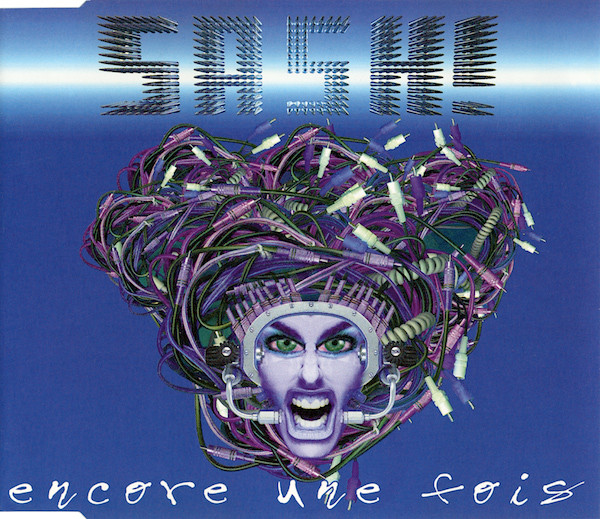
‘Encore Une Fois’ – #2 in 1997

If you only listen to one of these, then make it this one. This is a banger, and the only one of Sash’s hits that I truly remember. The female vocalist has always made me think of a station announcer. The French title translates as ‘one more time’, which is fitting because…

‘Ecuador’ ft. Rodriguez – #2 in 1997

They came back with more of the same. For their follow up hit, they swapped a woman shouting in French for a man shouting in Spanish. Rodriguez, presumably. This is still pretty catchy, a little lighter, a little more House-y.

‘Stay’ ft. La Trec – #2 in 1997

Completing their hat-trick of #2s in 1997, we get an intro in a 3rd language. English! By this point it’s getting hard to tell one trance riff from the next, but at least this one does have verses and choruses, and not just shouting.

‘Mysterious Times’ ft. Tina Cousins – #2 in 1998

The second single from their second album (the lead only made #3!) is a little more subtle. I’d also say a little more bland. I actually miss the shouting.

‘Adelante’ – #2 in 2000

We return to something a little more banging, with a little more Spanish, for Sash’s final UK #2. ‘Adelante’ means ‘forward’, which is fitting for a song released in February 2000, with a whole new millenium stretching out promisingly ahead of us… I would struggle to tell any of their non-‘Encore Une Fois’ hits from the other, although this track has to be praised for the novel use of accordions in a dance song.

If anyone has any other suggestions for acts that would merit a ‘Never Had a #1’ post (as in acts with lots of hits but no chart-toppers, rather than a band you really like but that have never been above #23) then let me know in the comments!

Next up, we prepare to party like it’s 1999…

Random Runners-Up: ‘Children’, by Robert Miles

Day 3 of our Random Runners-up weekend, and it’s time for a ’90s dance classic.

‘Children’, by Robert Miles

#2 for 2 weeks, from 10th – 24th March 1996 (behind ‘How Deep Is Your Love’)

In terms of number one singles, we’re only two and a half years ahead of Robert Miles’ ‘Children’. But to ears attuned to the sounds of 1998, this already sounds quite old-school. It is pure mid-nineties trance, house, Eurodisco… whatever. You know I’m terrible at labelling dance tracks. I usually have my own two labels for dance music: ‘good’, and ‘not so good’. But this record confounds such reduction.

‘Children’ has all the touches you’d expect from a mid-nineties dance record: a techno beat, synthesised strings, electronic squiggly bits… So far, so basic. But ‘Children’ also has one of the most recognisable riffs in modern popular music. A piano line so instant, so memorable, so strangely affecting, that it feels like it must have existed for all eternity. I can’t help feeling that it’s a waste for it to have been used on an otherwise fairly middling song like this.

I’ve mentioned this phenomena before, but dance music fans have a tendency to treat dance music like a religion, and the club as church. (I blame the ecstasy…) ‘Children’ is one of the few songs that helps someone like me to understand this point of view. Even as a dance music outsider, and as someone who doesn’t particularly love this song, I could see myself raising my hands to the sky if this came on. Having it large. Nice one! Chooooon…!

Robert Miles was an Italian DJ and composer, who had recorded ‘Children’ in 1994 after seeing pictures of child victims of the war in Yugoslavia. He also wanted to record a slower, more sedate form of dance music to play at the end of a night, to calm clubbers down and send them home less likely to crash their cars. (This was a real problem in Italy at the time, known as ‘Saturday night slaughter’, which to me sounds like a great lost glam rock track…) This more sedate sub-genre became known as ‘Dream House’.

‘Children’ was a huge hit across Europe, selling over five millions copies, and even making the Billboard 100. In the UK it spent a fortnight behind Take That’s farewell cover of ‘How Deep Is Your Love’, but in the long run was the year’s 8th biggest selling hit. Robert Miles managed three further Top 20 hits before setting up his own record label in the early 2000s. He died in 2017, aged just forty-seven.

Join us again tomorrow, when we’ll be heading back to the future. 1955 awaits…

767. ‘You’re Not Alone’, by Olive

We’ve not been short of dance hits in recent months, although their frequency hasn’t been as rapid fire as it was back in the early-to-mid nineties. And the dance hits of 1996-97 have tended to be of the chunky, Big-Beat variety. But this next number one is very different from the likes of the Prodigy, and the Chemical Brothers

You’re Not Alone, by Olive (their 1st and only #1)

2 weeks, from 11th – 25th May 1997

It’s a step back towards a lighter, House sound, with a female singer leading the cavalry. But it’s also a step forward, because it’s taking those sounds and adding a few more modern touches. Personally, I often dread writing entries on dance chart-toppers – not because I inherently dislike dance music; more because it’s out of my comfort zone. I’ve just about got my head around big beat and trance, and now I’m being told that ‘You’re Not Alone’ is at turns breakbeat, ambient, and trip-hop.

Basically, I am trying to write and learn as I go. Apologies if any dance music experts stumble across this blog, and it causes them to snap their glo-sticks in anger. Anyway, ‘ambient’ I get – it’s a very atmospheric track: melancholy, haunting even. And trip-hop I get too, thanks to the drum beat. ‘Breakbeat’ I’m happy to go along with, because it sounds fun.

And I do like this record. My favourite part is the trippy keyboard riff, which sounds so much like a passage from a classical composition that I was convinced it must be. It takes great skill to write a chord sequence that sounds so timeless. I remember this record from the time, watching it on TOTP, thinking it sounded very grown-up, not quite getting it. I still don’t quite get it, thirty years on, because this isn’t really in my wheelhouse. But it’s well-made, and diverting enough, to make it a worthy chart-topper. One that enhances further the quality of 1997, so far.

What I will say is that, for all the atmospherics, the track does hold back a little. I’m waiting for the drop, for a full-on, banging, trance finish that never comes. It remains slinky and strange until the end. But, as I’ve just proven, I know nothing about dance music. If I had my way behind a set of decks everything would end up sounding like 2 Unlimited (and, let’s be honest, that would actually be amazing).

Olive were a London-based three piece, formed in 1994. ‘You’re Not Alone’ had been a minor hit the year before, and this chart-topping version was a remix (though you’d be hard-pressed to notice much difference between the two versions.) I believe the video below to be the one that made #1. It was their only Top 10 hit – the follow-up made #14 – and they split in 2003.