I was nonplussed when Gary Barlow launched his solo career with the dreary ballad ‘Forever Love’. Nonplussed, and bored. Was that it, from the man meant to be the next George Michael?
Love Won’t Wait, by Gary Barlow (his 2nd of three solo #1s)
1 week, from 4th – 11th May 1997
I was also surprised that I had no recollection of ever hearing what must have been a hugely anticipated record. Almost a year later, Barlow’s debut album was ready, and his second single was released ahead of it. ‘Love Won’t Wait’ also doesn’t ring a bell, but at least it’s relatively up-tempo. There’s a hint of disco in the beat, and the bridge has a soaring chord progression. This might be… fun?
And then we reach the chorus, and I do recognise this one! Love won’t wait, Forever and a day… It’s a pretty basic, soul-pop song with some nice seventies touches. One reviewer compared it to Cliff Richard’s output from that time, and now I can’t un-hear that. It also sounds like the sort of song Take That would have chucked out as the third or fourth single from one of their earlier albums. It’s no great shakes, is what I’m saying; but it’s much better than ‘Forever Love’.
It also has an interesting back-story. It was written by none other than Madonna, during sessions for her ‘Bedtime Stories’ album in 1994. I couldn’t imagine something this unremarkable coming from Madge, but someone’s uploaded the demo onto YouTube. It feels more Motown than disco, and even in its rough form it sounds better than Barlow’s version. That’s true star quality, I suppose.
And I also suppose we can claim this as a belated second ‘90s #1 for Madonna, her first since ‘Vogue’. She will be back soon, though, with a chart-topper under her own steam. Did anyone at the time imagine that we would have to wait so much longer for another Gary Barlow chart-topper, though? The album, ‘Open Road’, produced just one further Top 10 hit, while his second solo album in 1999 produced none. He won’t trouble the top spot for a decade, until Take That have their spectacular comeback, and won’t manage his final solo #1 for another fifteen years.
I have been, and probably still am, a bit harsh on Gary Barlow. Yes, he’s written some great pop songs. But though he’s finally achieved his goal, and ascended to the British pop pantheon, better late than never, he’s no Cliff, Elton, or George Michael. No Robbie Williams either, the man who will be taking the mantle of Britain’s Biggest Pop Star from under his former bandmate’s nose, very soon.
Let’s recap, then. And it’s a landmark: our the 25th, the Silver Recap!
The past thirty #1s have taken us across a regulation year and a half of chart-topping history, from spring 1995 to late autumn 1996. This spell has run pretty much concurrent with the very height of Britpop but, as I discussed in a special post, very little of it actually made the top. We’ve had one each from Oasis and Blur – the latter of whom won the ridiculously hyped ‘Battle of Britpop’ – and not much else.
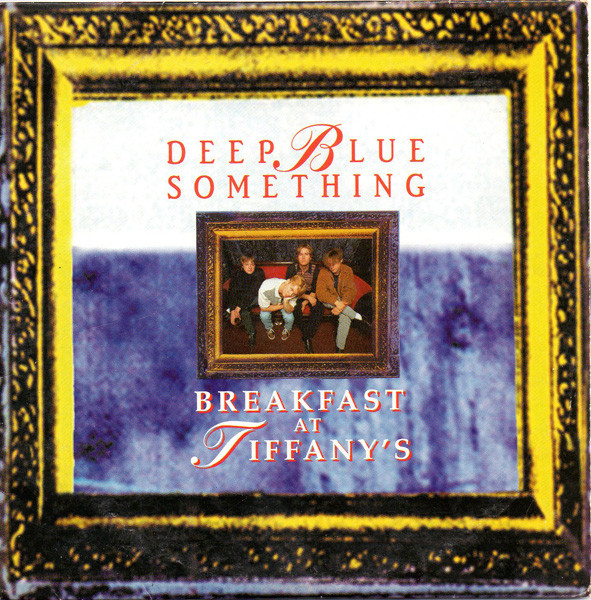
Away from the Big Two, you could argue that the Lightning Seeds were a Britpop band, and that almost thirty years on their Euro ’96 anthem ‘Three Lions’ is the genre’s most enduring hit. You could also argue that the Prodigy and the Chemical Brothers, while primarily dance acts, had strong Britpop elements in their two #1s (especially ‘Setting Sun’, with Noel Gallagher on vocals). We could even really stretch things and claim Babylon Zoo’s ‘Spaceman’ for Britpop, as there were elements of it mixed in amongst the techno and the grunge. I won’t go so far as to claim Texas-based Deep Blue Something for Britpop; but they did give us our one other rock-based chart-topper, ‘Breakfast at Tiffany’s’.
Britpop aside, one of the other big recent stories was Take That – the decade’s biggest boyband – bowing out after eight number ones in less than three years. They did so with the overblown ‘Never Forget’ and a fairly phoned-in cover of ‘How Deep Is Your Love’, before frontman Gary Barlow launched a solo career with the instantly forgettable ‘Forever Love’. Don’t worry, Take That will be back – just not for a few recaps yet.
1995-6 can also be pinpointed as the moment when rap went mainstream. It’s a genre that has been cropping up in the top spot, every now and then, since the mid-eighties. Often, though, hip-hop has been treated as a novelty: think Vanilla Ice, or Partners in Kryme, or the jarring rap from ‘Rhythm Is a Dancer’. Coolio’s ‘Gangsta’s Paradise’ was uncompromisingly real, though, and had an important message; while The Fugees’ take on Roberta Flack’s ‘Killing Me Softly’ showed how to incorporate rap into a pop song without taking away its edge. This pair remain two of the highest-selling hip-hop records of all time, and paved the way for the likes of ‘Ready or Not’, the Fugees’ much less commercial-sounding follow-up.
Elsewhere, Michael Jackson had his most successful chart period, many years after his true artistic peak, scoring two #1s in four months with the sappy ‘You Are Not Alone’ and the messianic ‘Earth Song’. Another pop superstar, George Michael, bowed out from chart-topping duty with the touching (if a little dull) ‘Jesus to a Child’, and a much more uplifting ode to casual sex in ‘Fastlove’. Shaggy gave us our now mandatory shot of ‘90s reggae, Livin’ Joy provided the dance-banger (though our dance-banger ratio is much down on recent recaps), and Gina G brought us the latest camp Eurovision classic.
One other thing I should mention before we get to the awards is that in the second half of 1996 a pretty big shift occurred. Pop music started to sound very modern. Ground Zero is the Spice Girls’ ‘Wannabe’, which introduced us to a genuine pop phenomenon, and to a breezy, streetwise nineties-bubblegum sound that will set the standard for pop as we barrel towards the new millennium. But it wasn’t just the Spice Girls. Mark Morrison, Peter Andre, and Boyzone, all made the top with songs that sound like pop music will, for better or for worse, from now until the mid-00s. The fact that I was almost eleven at the time of this recap, and for the first time fully aware of what was in the charts, perhaps makes this moment seem bigger than it does for somebody older or younger than me. But I think there’s something in my take on mid-1996 marking a shift into ‘modern’ pop.
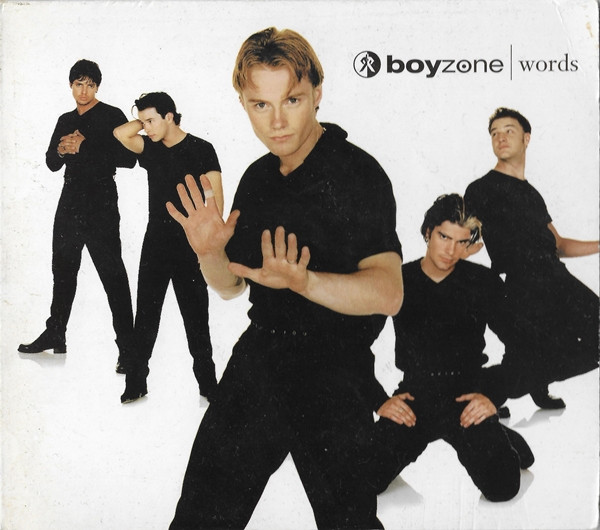
Anyway, to the awards. Starting as is now traditional with The ‘Meh’ Award, we peruse the songs that stirred us very little. I have a shortlist that includes MJ’s ‘You Are Not Alone’, George Michael’s ‘Jesus to a Child’, and Boyzone’s simpering cover of ‘Words’. But for the winner I’m choosing Gary Barlow’s utterly underwhelming ‘Forever Love’, which was so dull it basically killed his solo career before it had even begun.
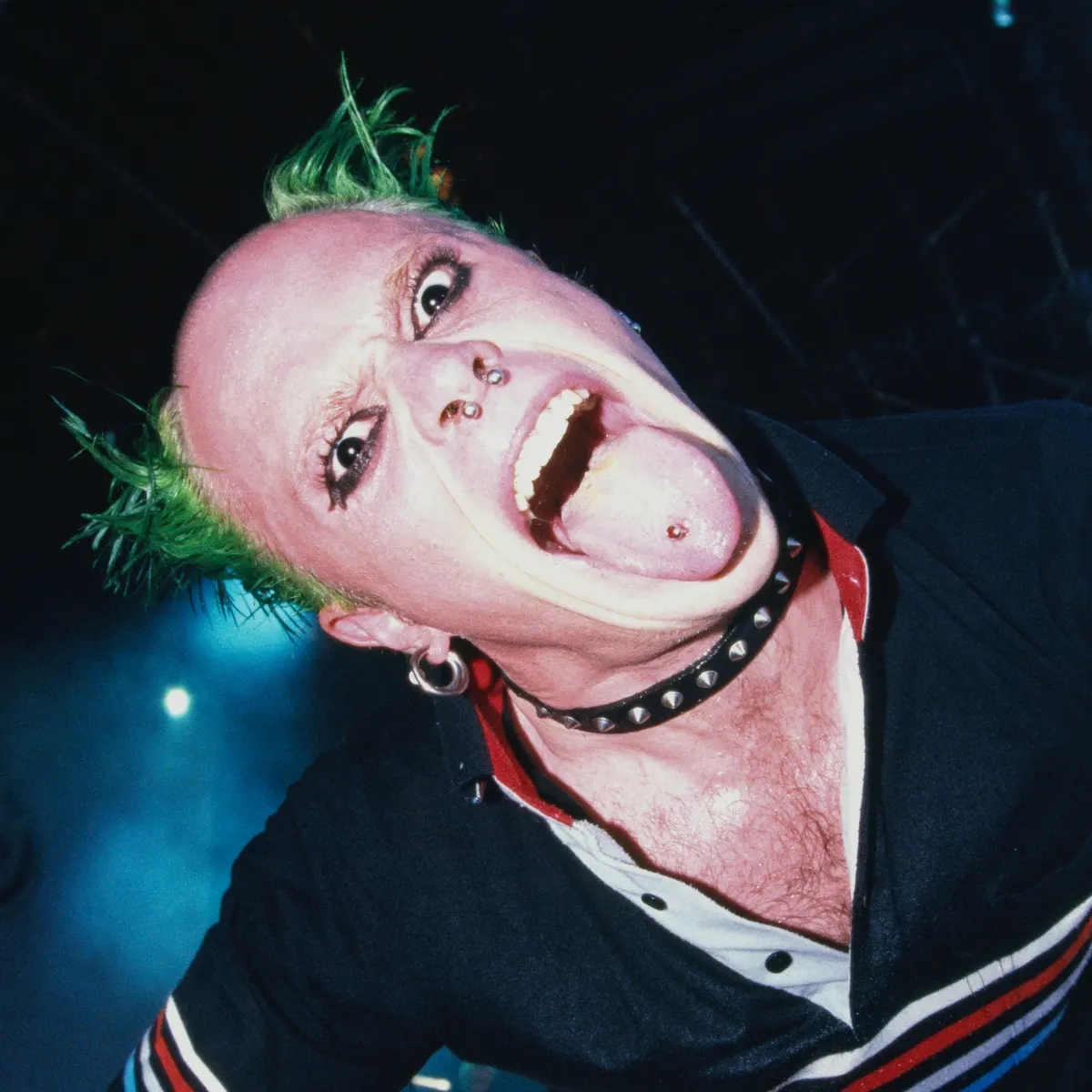
The WTAF Awardfor being interesting if nothing else has a few decent choices this time around. There’s another MJ contender, the overblown ‘Earth Song’. There’s the latest Levi’s Jeans chart-topper: Babylon Zoo’s zany, genre-hopping ‘Spaceman’. There’s the intense ‘Firestarter’, which had Middle England clutching their pearls. There’s even ‘Wannabe’, a phenomenon, yes; but also a truly bizarre pop song when you actually sit down and listen to it. Of the four, ‘Wannabe’ is a stretch, ‘Earth Song’ is a little too well-intentioned, and ‘Firestarter’ a little too good, for this award. Which leaves Babylon Zoo’s nihilistic anthem for the win!
You may have noticed that I haven’t yet mentioned the one act that have dominated the past year and a half of chart action… That’s because I was saving them for TheVery Worst Chart-Topper award. I am talking, of course, about Robson & Jerome, the first (though sadly not the last) of Simon Cowell’s crimes against music. Three #1s, thirteen weeks at the top, seven cover versions spread across their various discs… They are the only contender here, it’s just a question of which record to choose. It makes sense to go for the first one, ‘Unchained Melody’ / ‘White Cliffs of Dover’, because it was A) terrible, B) number one for the longest stretch, and C) it is currently the best-selling single of the entire decade…
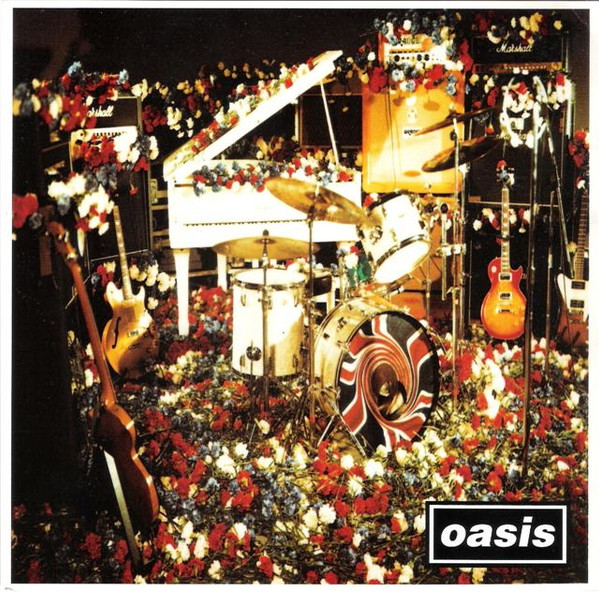
Finally, then, the latest Very Best Chart-Topper. Four contenders spring to mind, all from 1996. (It has been a much better year for #1s than 1995, which could probably go down as one of the very worst…) In chronological order we have: Oasis’s soaring ‘Don’t Look Back in Anger’, the Prodigy’s incendiary (gettit?) ‘Firestarter’, the Chemical Brothers’ Beatles-based banger ‘Setting Sun’, and ‘Say You’ll Be There’, AKA The Spice Girls best song.
I’m torn. This is probably my only chance of giving the award to my two favourite childhood groups, Oasis and the Spice Girls. But I think the Spice’s would be a stretch – as fun as SYBT is – and ‘Don’t Look Back in Anger’ has simply been done by this point. ‘Firestarter’ and ‘Setting Sun’ are cut from the same cloth, and going by my write ups I enjoyed the latter more. ‘Firestarter’ was a huge cultural moment, but I think ‘Setting Sun’ is the better record. Plus, with Noel G on vocals it means Oasis still get a look in (and that the Beatles do kind of claim their second ‘Very Best’ award…) The Chemical Brothers it is!
To recap the recaps:
The ‘Meh’ Award for Forgettability
‘Hold My Hand’, by Don Cornell.
‘It’s Almost Tomorrow’, by The Dream Weavers.
‘On the Street Where You Live’, by Vic Damone.
‘Why’, by Anthony Newley.
‘The Next Time’ / ‘Bachelor Boy’, by Cliff Richard & The Shadows.
‘Juliet’, by The Four Pennies.
‘The Carnival Is Over’, by The Seekers.
‘Silence Is Golden’, by The Tremeloes.
‘I Pretend’, by Des O’Connor.
‘Woodstock’, by Matthews’ Southern Comfort.
‘How Can I Be Sure’, by David Cassidy.
‘Annie’s Song’, by John Denver.
‘I Only Have Eyes For You’, by Art Garfunkel.
‘I Don’t Want to Talk About It’ / ‘The First Cut Is the Deepest’, by Rod Stewart.
‘Three Times a Lady’, by The Commodores.
‘What’s Another Year’, by Johnny Logan.
‘A Little Peace’, by Nicole.
‘Every Breath You Take’, by The Police.
‘I Got You Babe’, by UB40 with Chrissie Hynde.
‘Who’s That Girl’, by Madonna.
‘A Groovy Kind of Love’, by Phil Collins.
‘Do They Know It’s Christmas?’, by Band Aid II.
‘Please Don’t Go’ / ‘Game Boy’, by KWS.
‘Dreams’, by Gabrielle.
‘Forever Love’, by Gary Barlow.
The WTAF Award for being interesting if nothing else
‘I See the Moon’, by The Stargazers.
‘Lay Down Your Arms’, by Anne Shelton.
‘Hoots Mon’, by Lord Rockingham’s XI.
‘You’re Driving Me Crazy’, by The Temperance Seven.
‘Nut Rocker’, by B. Bumble & The Stingers.
‘You’ll Never Walk Alone’, by Gerry & The Pacemakers.
‘Little Red Rooster’, by The Rolling Stones.
‘Puppet on a String’, by Sandie Shaw.
‘Fire’, by The Crazy World of Arthur Brown.
‘In the Year 2525 (Exordium and Terminus)’, by Zager & Evans.
‘Amazing Grace’, The Pipes & Drums & Military Band of the Royal Scots Dragoon Guard.
‘Kung Fu Fighting’, by Carl Douglas.
‘If’, by Telly Savalas.
‘Wuthering Heights’, by Kate Bush.
‘Hit Me With Your Rhythm Stick’, by Ian Dury & The Blockheads.
‘Shaddap You Face’, by Joe Dolce Music Theatre.
‘It’s My Party’, by Dave Stewart & Barbara Gaskin.
‘Save Your Love’ by Renée & Renato.
‘Rock Me Amadeus’, by Falco.
‘Pump Up the Volume’ / ‘Anitina (The First Time I See She Dance)’, by M/A/R/R/S.
‘Doctorin’ the Tardis’, by The Timelords.
‘Sadeness Part 1’, by Enigma.
‘Ebeneezer Goode’, by The Shamen.
‘I Would Do Anything for Love (But I Won’t Do That)’, by Meat Loaf.
‘Spaceman’, by Babylon Zoo.
The Very Worst Chart-Toppers
‘Cara Mia’, by David Whitfield with Mantovani & His Orchestra.
‘The Man From Laramie’, by Jimmy Young.
‘Roulette’, by Russ Conway.
‘Wooden Heart’, by Elvis Presley.
‘Lovesick Blues’, by Frank Ifield.
‘Diane’, by The Bachelors.
‘The Minute You’re Gone’, by Cliff Richard.
‘Release Me’, by Engelbert Humperdinck.
‘Lily the Pink’, by The Scaffold.
‘All Kinds of Everything’, by Dana.
‘The Twelfth of Never’, by Donny Osmond.
‘The Streak’, by Ray Stevens.
‘No Charge’, by J. J. Barrie
‘Don’t Give Up On Us’, by David Soul
‘One Day at a Time’, by Lena Martell.
‘There’s No One Quite Like Grandma’, by St. Winifred’s School Choir.
‘I’ve Never Been to Me’, by Charlene.
‘Hello’, by Lionel Richie.
‘I Want to Know What Love Is’, by Foreigner.
‘Star Trekkin’’, by The Firm.
‘Nothing’s Gonna Change My Love for You’, by Glenn Medeiros.
‘Let’s Party’, by Jive Bunny & The Mastermixers.
‘(Everything I Do) I Do It for You’, by Bryan Adams.
‘Don’t Stop (Wiggle Wiggle)’, by The Outhere Brothers.
‘Unchained Melody’ / ‘White Cliffs of Dover’, by Robson & Jerome.
The Very Best Chart-Toppers
‘Such a Night’, by Johnnie Ray.
‘Cherry Pink and Apple Blossom White’, by Perez ‘Prez’ Prado & His Orchestra.
‘Great Balls of Fire’, by Jerry Lee Lewis.
‘Cathy’s Clown’, by The Everly Brothers.
‘Telstar’, by The Tornadoes.
‘She Loves You’ by The Beatles.
‘(I Can’t Get No) Satisfaction’, by The Rolling Stones.
‘A Whiter Shade of Pale’, by Procol Harum.
‘I Heard It Through the Grapevine’, by Marvin Gaye.
‘Baby Jump’, by Mungo Jerry.
‘Metal Guru’, by T. Rex.
‘Tiger Feet’, by Mud.
‘Space Oddity’, by David Bowie.
‘I Feel Love’, by Donna Summer.
‘Heart of Glass’, by Blondie.
‘The Winner Takes It All’, by ABBA.
‘My Camera Never Lies’, by Bucks Fizz.
‘Relax’ by Frankie Goes to Hollywood.
‘You Spin Me Round (Like a Record)’, by Dead or Alive
‘Stand by Me’, by Ben E. King (Honorary Award)
‘It’s a Sin’, by Pet Shop Boys.
‘Theme from S-Express’, by S’Express.
‘Nothing Compares 2 U’, by Sinéad O’Connor.
‘Would I Lie to You?’, by Charles & Eddie.
‘Stay Another Day’, by East 17.
‘Setting Sun’, by The Chemical Brothers.
Up next, we’ll briefly pause the regular countdown. I’m going to launch a new series, and take us back to the 1970s…
Have I ever heard this song before…? The much-anticipated solo debut from Take That’s leading man? I was about to start my final year of primary school, fairly well up on the pop hits of the day, and yet…
Forever Love, by Gary Barlow (his 1st of three solo #1s)
1 week, from 14th – 21st July 1996
There’s a chance I may never have heard ‘Forever Love’ before; but there’s also a chance I’ve heard it a hundred times and simply forgotten. It is… Dull. Bland. Pedestrian. Lacking any sort of hook, or memorable lines. Love it has, So many beautiful faces, Sharing lives, And sharing days… See what I mean. Meh.
My last two posts have been lengthy, so this one can be short and sweet. Dull love song has week at number one. Hardly the first time, and at least it was just one week. Except, ‘Forever Love’ should be so much bigger, so much more of an event. Gary Barlow was the biggest pop star in the land, striking out alone. The next George Michael, maybe?
I think he was probably trying too hard. This record is clearly well produced, something that took a lot of time and careful thought. But it’s too fussy, too needlessly ornate. The album-version intro is so long, and overwrought, that you’re bored before Gary has even opened his mouth. At the three minute mark you check how long is left, and sigh when you see there are two more to go… I’ve never written a classic pop song, but I bet nobody that’s managed it ever sat down at their piano and said ‘today is the day I write something timeless!’ You feel that Barlow probably set himself that goal, though.
The obvious comparison to make is with his former bandmate, the one who had jumped ship first and was also about to release his debut single, a cover of ‘Freedom’ by George Michael (clearly both men had the same ambition). Initially it was Gary who had the bigger hits, but it was Robbie Williams who understood better what a pop star is about, what the public wants: some catchy tunes and some showmanship. Most of them don’t care about the ‘craft’. (Also, Robbie very sensibly got someone in to help him write said tunes…)
And so Robbie will very soon eclipse his estranged bandmate. Gary has one further solo number one to come – another that, at first glance, I don’t think I’ve heard for the best part of three decades – before a decade in the wilderness beckons.
Take That have been a pioneering boyband in many ways, over the course of their eight number one singles. Multi-generational appeal with ‘Relight My Fire’, Ivor Novello-winning song writing in ‘Back for Good’, rock star level production on ‘Never Forget’…
How Deep Is Your Love, by Take That (their 8th of twelve #1s)
3 weeks, from 3rd – 24th March 1996
And now they push the idea of the ‘goodbye’ single. Ever since, every boyband worthy of the name has released a ballad after the inevitable split has been announced, and solo careers begin to loom large on the horizon. Not just boybands, even, as The Spice Girls will soon attest. Sadly, though, for a band capable of very good pop songs, this is a fairly flat goodbye: a serviceably average Bee Gees cover.
It’s a faithful take on ‘How Deep Is Your Love’, which had made #3 in 1978 when the Bee Gees were at the height of their disco powers. Rather than disco, though, Take That go for a soft-rock, acoustic guitars with some hand-held drums, sound. It reminds me of ‘More Than Words’ by Extreme… Make of that what you will.
One thing the stripped back production does is push the boys’ – a four-piece now after Robbie’s departure – voices to the fore. Their harmonies are nice, almost a cappella at times, but they can’t lift this record to anything other than middling heights. It is not a patch on the original, which I would rate as one of the Brothers Gibb’s crowning glories.
Take That had announced their split a few weeks before this final single was released, ahead of a Greatest Hits album, and so it was inevitable that it would make top spot. (Helplines had to be set up to counsel distraught fans following the news…) Since ‘Pray’ in 1993, only one of their singles had failed to make #1. And then that was it, or so everyone assumed. Gary Barlow was about to embark on a solo career – we’ll meet him again very soon – as were Mark and Robbie, all to varying degrees of success. I doubt any one predicted that a decade later Take That would launch one of the most successful musical comebacks the country had ever seen… But all that can wait for another day! In our more immediate future, with this drab one out the way, we are about to embark on a run of classic chart toppers, starting with an ode to pyromania…
For many, Take That peaked with ‘Back for Good’, their sixth and best-loved number one single. Where to go from there, then? Back to decent-but-unremarkable pop, such as ‘Sure’? Or do they get Jim Steinman, a kids’ choir, and a sample from Verdi’s ‘Requiem’, and throw together an extravagantly OTT remake of a track from their most recent album?
Never Forget, by Take That (their 7th of twelve #1s)
3 weeks, from 30th July – 20th August 1995
I’m sure you already know, but it was the latter. Trumpets of the type usually reserved for announcing royalty herald this next chart-topper. Angelic children’s voices telling us that we’ve come so far, and we’ve reached so high… Depending how you score on the Barlow-tolerance meter, this is either further evidence that Take That were not just another boyband… Or the sound of them, and their songwriter-in-chief, disappearing up their collective arses.
When all the choirs and the Verdi are done, and the song slips into a bog-standard mid-nineties soul-pop beat, it’s a little disappointing. Much of this song’s near seven-minute runtime is fairly mundane, but nobody remembers that. They remember the soaring chorus (that takes well over two minutes to arrive) and the extended fade-out, rather than the dull verses.
It’s now a standard boyband cliché: the song about how fame hasn’t changed them, or how fame isn’t everything it’s cracked up to be. This record might be where that trope stems from, as Howard Donald (on rare lead-vocal duty) announces weighty lyrics like We’ve had success, We’ve had good times, But remember this… while a slideshow of pictures from their childhoods plays in the video, interspersed with clips of them winning awards and generally being adored.
Again, if you have a cynical little mind (like I do) you could see this entire project as a massive humblebrag. My mind starts to wondering if Robbie left before or after ‘Never Forget’, as his voice is nowhere to be heard. But then he appears, eventually, to throw some ad-libs around in the long fade-out. Perhaps his diminished role is a clue as to why he did finally quit the band, post-recording but before ‘Never Forget’ was released. He’s had a fairly small role in all but one of their #1s (‘Everything Changes’), with nothing to suggest that he was going to be the huge solo star that he is.
I do like aspects of this single, just in case I’ve sounded too down on it. The sheer scale of it, the Jim Steinman-isation of it. The chorus is one of their very best, too. But by the six minute mark I’ve had my fill, and there’s a false ending that really tests the patience. Still, it was a huge hit – of course it was – and their seventh chart-topper in just two years. Yet it was the beginning of the end. Robbie had left, no further singles were released from the album, and there’s only a fairly limp Bee Gees cover to come before Britain’s biggest boyband are laid to rest. For a bit, anyway.
These are the types of posts I least enjoy writing. Famous songs, that everyone knows, about which loads has already been said…
Back for Good, by Take That (their 6th of twelve #1s)
4 weeks, from 2nd – 30th April 1995
Quite often, too, they’re not songs I particularly like. And I should, in the interests of full-disclosure, admit off the bat that I’m not a huge fan of this record… I can recognise it as a good pop song – a well-constructed, grown-up pop song far beyond your usual boyband fare – and admire it thus. From a distance. With one listen per year, at most.
It’s the Barlow Conundrum, again. He’s often trying, to my ears at least, to write the perfect pop song. To prove that he and his band had long since grown beyond their ‘British New Kids on the Block’ origins. That he is to be Taken. Seriously. And of course he should be. He’s a very capable, competent songwriter. ‘Back for Good’ won an Ivor Novello award, one of British music’s ultimate accolades, for a start.
But… Compare and contrast this with another recent blockbuster boyband ballad, on a very similar lyrical theme: ‘Stay Another Day’. The lyrics to that are simple to the point of almost being trite. But something – something in their universality, in the way Brian Harvey delivers them like a lost child, in the song’s hidden subject matter – hits home in a way ‘Back for Good’ never manages.
Take the second verse here, in particular. Unaware but underlined, I figured out this story… In the corner of my mind, I celebrated glory… In the twist of separation, You excelled at being free… It all sounds clever, but does it actually mean anything? The harmonies are lovely, the want you back hook burrows its way in and never leaves, but is it all a bit fur coat and no knickers?
Or maybe it’s just me. ‘Back for Good’ has cropped up in pretty much every ‘Best songs of the…’ list for thirty years now. I am fully prepared for comments on how very wrong I am on this… But this record leaves me, like a fair old chunk of the Barlow Songbook, cold. Luckily for Take That, I am (sadly) not the arbiter of popular music, and this was a massive, massive hit all around the world. Even on the Billboard 100, where it made #7.
My feelings aside, ‘Back for Good’ was clearly the moment that Take That were made credible. Everyone who had written them off as just another boyband, even those way too cool for school, liked this record. I think it’s fair to say that without this song’s success, the band would not still be filling stadiums and topping the album charts in 2023. Back in 1995, and one of those aforementioned converts who confessed himself a fan of this song was Noel Gallagher. Speaking of whom…
Any act that racks up twelve number ones is going to have some chart-toppers that are better remembered than others… May I present to you, then, Take That’s all-but-forgotten #1.
Sure, by Take That (their 5th of twelve #1s)
2 weeks, from 9th – 23rd October 1994
I’m ‘sure’ I’ve heard this somewhere – the sure, so sure hook in the chorus was familiar – but the rest was a surprise. A pleasant surprise at that. The intro fools you, with lullabying chords suggesting that a syrupy ballad is on its way. But then everything goes a bit funky: with a squelchy bass, and lots of horns and scratchy turntables. If Take That’s previous hits had relied on retro, disco influences – ‘Relight My Fire’ and ‘Everything Changes’ – then ‘Sure’ sees the band turn to modern, American R&B.
Though, in fairness, this new jack swing beat had been around for a while, so they were actually quite late to the party. Still, it’s a solid pop song, and boybands are always at their most bearable when they’re keeping things upbeat. The lyrics are a bit PG, compared to similar acts – it’s been well over three years since Color Me Badd wanted to sex us up. Though there is a reference here to Gary Barlow’s relationship checklist: It’s got to be social, compatible, sexual, irresistible… (Take That’s big ‘rivals’ East 17 were a lot steamier on hits like ‘Deep’, but then they weren’t scoring #1 after #1. Definitely something to be said for keeping it family-friendly.)
Speaking of Mr Barlow, I do wish he’d relinquished lead vocal duty for this one. As fun a song as it is, he just doesn’t convince as a sexy alpha on the record, or when the lads cut a slick dance routine in the video. I’ve written in my previous posts on Take That that he clearly had ambitions above ‘boyband star’ – ambitions that will come to fruition with their next number one – and on the basis of their first five chart-toppers he was clearly the dominant force. Possibly too dominant. Small wonder Robbie wanted to break free…
‘Sure’ was the lead single from the band’s third album, and so was guaranteed to be a massive hit. It got the epic, seven-minute video treatment too. Though in truth half the video tells a very dull story in which the boys babysit a little girl while also trying to get ready for a house party. (Skip forward three and a half minutes if you just want to hear the actual song.) And yet, like I said in the intro, this record feels forgotten among their more famous hits. None more so than their sixth chart-topper: a genuinely huge pop-culture moment, coming along very soon.
For their fourth #1 in nine months, Take That once again take turns at lead-vocal duty. We’ve had two Garys, one from Mark, and now a Robbie…
Everything Changes, by Take That (their 4th of twelve #1s)
2 weeks, from 3rd – 17th April 1994
Which gives a fairly throwaway pop song, a chart-topper more because of the band singing it than because of any innate quality the song might have, some significance. For here is the voice of the biggest British star of the coming decade… Though you might not have realised it at first, given the strange American accent he puts on for the album version’s intro…
On the single edit that bit is cut out, and we are rushed straight into another disco-tinged piece of retro-pop; the skinnier, sickly brother of ‘Relight My Fire’. I did wonder if ‘Everything Changes’ might have been a cover, as nobody under the age of sixty has ever used the term ‘taxicab’, but no – it’s a Gary Barlow (plus guests) writing credit. I guess they just needed the extra syllable to make it scan…
It’s perfectly serviceable pop. There’s nothing wrong with it (if we overlook the dated sax solo…) but neither is there much particularly memorable about it, apart perhaps from the for-ev-er… hook. There’s a reason why it was the fifth and final single from the band’s second album. There’s also a reason why it still made number one for a fortnight despite everyone already owning a copy of said album: Take That were bloody huge by this point.
While it might not have been his first lead vocals on a Take That single (I have little inclination to go back through their discography and check) it was definitely Robbie Williams’ first lead vocals on a #1. On their previous three, he very much took a back-seat. It felt strange to see him dancing gamely behind Barlow and Owen, knowing that he would go on to be bigger than any of them. But then, at the time, his departure was unexpected, and nobody would have bet on him having the success that he did.
Anyway, we’re getting ahead of ourselves. They’ve got a few more hits, and a few more chart-toppers, before he strikes out alone. And of the Take That #1s that have gone before, I’m starting to think I was a bit harsh on ‘Pray’… It’s head and shoulders above their other chart-toppers so far – as fun as ‘Relight My Fire’ was, and as strange as ‘Babe’ was. Quite possibly one of their very best…?
I wrote in my last Take That post of the band’s obvious desire to be more than just teenyboppers, that their cover of ‘Relight My Fire’, and the involvement of Lulu, was proof of them aiming to become Britain’s biggest act, bar none. ‘Babe’, their third number one in under six months is another step in that direction…
Babe, by Take That (their 3rd of twelve #1s)
1 week, from 12th – 19th December 1993
It was also a clear bid for Christmas #1, entering the chart in pole position the week before the big day. But this isn’t the cosy, festive love song you might expect. No sleigh bells and novelty jumpers here. It’s the tale of a lost love, opening with dramatic strings, a disconnected phone call, and a slightly creepy first person narrator. I come to your door, To see you again, But where you once stood, Was an old man instead…
I like a song that tells a story, and that’s what this five-minute epic (another epic!) does. Mark Owen – on lead duties this time – gets her number, and calls. He manages to find out where she now lives, goes down her street… It’s pretty overwrought, with some clunky lines (You held your voice well, There were tears I could tell…), and the unanswered phone call at the beginning and end is pure melodrama.
But, while you can pick holes, this is above and beyond your usual boyband fare. Come the last verse, as she answers the door, the singer sees a little boy: He had my eyes, He had my smile… Plot twist! Why she ran away with his child, clearly never wanting to hear from him again, is not explained – but I’ll give Take That the benefit of the doubt and assume they wanted this sinister ambiguity. I hear more than a hint of menace when the singer announces I tell you I’m back again…
The video suggests that he’s been away at war, but I’m not so sure. I like the creepier reading. It builds to an almost hard rocking climax, before disintegrating into thin air, and a dialling tone. Like I said, it was clearly a bid for Christmas number one, an achievement that would have capped off Take That’s breakthrough year. And when it entered at number one the week before, all bets would have been off…
Except… Blobby, Blobby, Blobby and all that. The pink and yellow one became the first act in twenty-five years to return to the top, and the rest was history. Take That never did get their Xmas #1, though there will be a boyband classic at the top this time next year. Perhaps the fact that it is quite a dark song, which isn’t about cuddling up with your loved one by the fire, also hurt it in the end. ‘Babe’ goes down as an interesting sidebar in Take That’s career: not one of their biggest or best-loved hits, but another sign that they were here for the long run.
In their early years, in amongst the Hi-NRG pop and the ballads, Take That had made a habit of popping out covers of 1970s golden-oldies. A version of Tavares’s ‘It Only Takes a Minute’ had brought them to the Top 10 for the first time, while a pumped up take on Barry Manilow’s ‘Could It Be Magic’ gave them their first Top 5 hit.
Relight My Fire, by Take That (their 2nd of twelve #1s) ft. Lulu (her 1st and only #1)
2 weeks, from 3rd – 17th October 1993
‘Relight My Fire’, their second number one, was the pinnacle of their cover version days, and the final one before their ascent to superstardom. And it’s a perfectly fine piece of pop: complete cheese – though a nice camembert rather than plastic cheddar – and completely undeniable. It’s the ultimate soundtrack to Saturday evening family TV, to a kid’s birthday party at a Charlie Chalk’s, to a Butlin’s disco…
They don’t do anything clever with it, updating the disco beat and percussion for something more post-SAW, but otherwise keeping sensibly close to the Dan Hartman original. An original which hadn’t been a very big hit in the UK. I assumed it must have been a hit of some sort, as it just sounds so very ‘peak’ disco, but no. In the US, it had topped the Billboard Dance Chart for six weeks in late 1979; but in Britain people may not have been aware of it. (The female vocalist on the original was Loleatta Holloway, who we last heard being similarly uncredited on Black Box’s ‘Ride on Time’, while Hartman sadly died just a few months after this cover became a hit.)
I say Take That don’t do anything clever with their version of the tune, but actually… Roping in none other than Scottish pocket-rocket Lulu to belt out the Loleatta verse provided a clever bit of cross-generational appeal. And belt it out she does, as her rasping You gotta be strong enough to walk on through the night… is a clear highlight. She grasps with both hands this gold-plated chance at a chart comeback, also making sure she isn’t overshadowed by these young whippersnappers (though, amazingly, she was only forty-five when this made #1…)
It gave Lulu her first chart-topper a full twenty-nine years after her chart debut with ‘Shout’ – a record at the time. She had recently released her first album in eleven years, and this was her first Top 10 in almost twenty (not counting a re-release of ‘Shout’ in the ‘80s). But just as importantly as relaunching Lulu’s career, it announced to the world that Take That weren’t just teeny boppers aimed at twelve-year-olds. They were looking to become Britain’s foremost pop group, one that appealed to your mum, your granny, and your gay uncle (note Mark Owen’s crop top in the video, as well as Jason/Howard’s – who can tell them apart? – leather chaps…)
Come the end of the decade, all the boyband imitators that Take That had spawned would be trying the same thing. Off the top of my head, I can remember seventies covers from Boyzone, Westlife and 911 all doing very well in the charts, and I’m sure there were more. It’s songs like this which mean Take That are still filling stadiums across the country, thirty years on, with people of all ages looking for nothing more than a good night out. It’s easy to sniff (and sniff I do), but few do it better.









 The UK Number Ones Blog