491. ‘Don’t You Want Me’, by The Human League

1981 has had its fair share of iconic chart-topping moments: Bucks Fizz’s skirt-ripping moves, The Specials’ call to arms, Soft Cell’s re-imagining of a soul classic, Mercury and Bowie going toe-to-toe… And it ends with perhaps its most iconic tune.

Don’t You Want Me, by The Human League (their 1st and only #1)

5 weeks, 6th December 1981 – 10th January 1982

For this is one of the most recognisable riffs ever, I’d say. Up there with ‘Satisfaction’ and ‘You Really Got Me’ for chart-topping riffs. It’s dramatic and ominous, yet catchy and danceable. It’s a synth riff here, but play it on a piano, a guitar, a bloody harp, and people would know it was the intro to ‘Don’t You Want Me’.

The opening lyrics are equally iconic: You were working as a waitress in a cocktail bar… a male voice intones… When I met you… It’s sung by an overbearing – ok, creepy – bloke. A Svengali figure. He found this girl, made her a star, and now she’s outgrown him. Don’t forget it was me who put you where you are now, And I can put you back down too…

In the second verse, the starlet has her say. Yes, she was working in a cocktail bar… That much is true… She tells him politely that it’s time for her to make it on her own. The male ‘character’ is so well-formed, such a nasty sounding piece of work, that you wish his female counterpart had a little more bite. Who is she? Did she really just use him? Or maybe her niceness is the ultimate insult…?
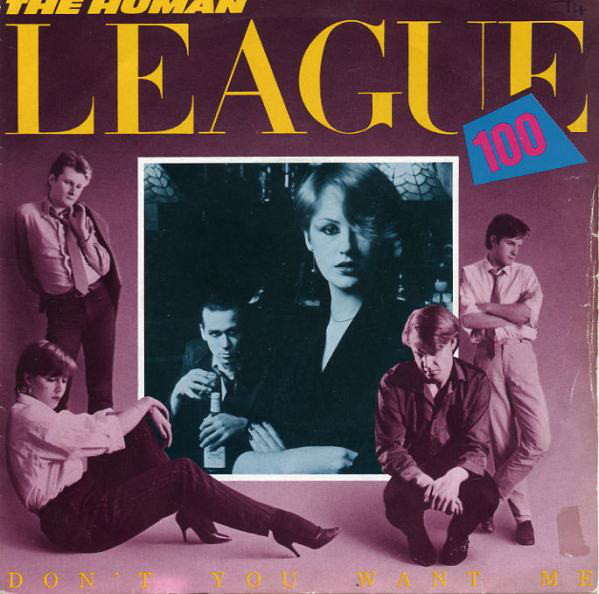
Aside from the riff, the next best bits are the lines that accelerate up to the chorus: You better change it back or we will both be sorry! This is a high-quality pop song, well worthy of being the year’s biggest-seller and a Christmas number one. But – there’s always a ‘but’ – I’m not sure if there isn’t a hint of ‘fur coat and no knickers’ about it. ‘Don’t You Want Me’ has a great riff and great hook, but on repeated listen it goes from all-time classic to simply great pop. Two years ago, Gary Numan was doing things with a synth that genuinely stood out. Now, in late-1981, synths alone are not enough to wow.

Phil Oakey, The Human League’s founder, didn’t want this released as a single, and has said in subsequent interviews that he sees the music video as a big factor in its success. And you can see why: it’s moody, noirish… dare I say, once more for luck, iconic? It’s certainly slicker and more expensive than many of the homemade looking MVs from the last couple of years, and it looks forward to a New Romantic future in the make-up, earrings and fringes. ‘Rolling Stone’ has claimed ‘Don’t You Want Me’ as the starting point for the 2nd British Invasion in the US (it hit #1 on Billboard six months after topping the charts here).

The Human League had only the one UK chart-topper, but were scoring hits well into the nineties. They still tour to this day. After I’m done writing this post, I’m going to listen to the album that birthed this hit, ‘Dare!’ to see what all the fuss us about. Maybe I’m being harsh in saying that this record lacks much substance beyond its killer riff. It’s still a great tune, but when songs come along with as much baggage and reputation as this one then I can’t help expecting great great things…
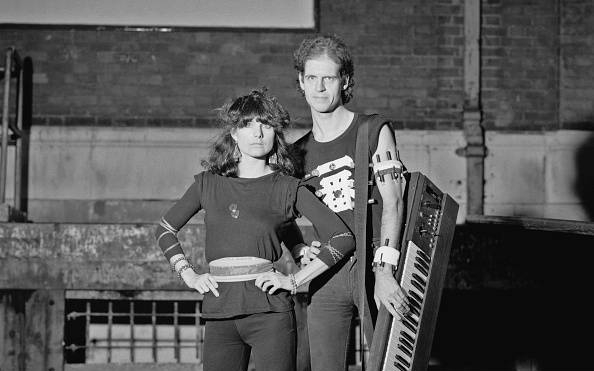
487. ‘It’s My Party’, by Dave Stewart with Barbara Gaskin

More evidence that 1981 was a leap-forward for the charts. The year in which the decade truly began. Because this, this next record, it is… truly…

It’s My Party, by Dave Stewart with Barbara Gaskin (their 1st and only #1s)

4 weeks, 11th October – 8th November 1981

something? It’s a leap-forward, for certain, because we’ve heard nothing like this before at the top of the charts. Whether we ever needed to hear anything like this at the top of the charts is another question. At its most basic level, this is a cover of the Lesley Gore hit, a #9 (and US #1) in 1963. Except the original has been deconstructed, mashed, blended, twisted and fricasseed until what is being served up is almost unrecognisable.

I’m enjoying it, at first. The intro is the best bit: woozy drums, weird far-eastern sound effects, and the Cry if I want to… line chanted like a mantra. But as it goes on, the song veers in one direction then another, then another. I count three complete changes of tone and style. No, make that four. I’m starting to feel dizzy. Can I just hand over my next WTAF award now?

Is this good? Or is it terrible? I can’t think of many records that straddle the line so completely as this. There are flashes – mainly when the charm of the original manages to shine through – where it’s really fun. But there are other times when it feels like this production is being controlled by a five-year-old banging away at the settings on their toy keyboard. Perhaps you could look at this as haute-couture music: just like nobody actually wears the clothes that come down the runway in Milan; probably nobody would listen to this by choice anymore. But the sounds and techniques used here would filter on down through the decade…

Or maybe that’s generous. Acts like The Buggles, and Soft Cell (who literally just took their version of a sixties gem to the top) have shown that you can sound ridiculously modern – emphasis on the ridiculous – and still make a great pop song. This one gets very lost along the way: there’s a moment, after the wedding bell sound effects and a theatrical gasp, when the final chorus clicks, and you can see that Dave Stewart and Barbara Gaskin had it in them to make this a great pop record. But, hey ho, it doesn’t last. Give me the sassy, swinging original over this any day. (Actually, I’ve just realised the difference between this and Soft Cell. Soft Cell lovingly re-crafted a classic; this sounds, at times, like art school students taking the piss – see the annoying way Gaskin squeals at the end of every ‘you’, for example.)

The Dave Stewart involved in this is not, as I immediately thought, the Dave Stewart of Eurythmics fame. This DS was a keyboard player and composer for various prog-rock bands throughout the seventies, before he hooked up with his former backing singer, Barbara Gaskin. Soon afterwards, they scored this huge hit, by far their biggest. They still work with one another, and have released seven albums together. And I do wonder if they chose ‘It’s My Party’ because it is such a typically old-fashioned, bubblegum hit, and the re-imagining is therefore so shocking. A few years later they tried to repeat the trick with a version of ‘The Locomotion’ that only made #70.

I still don’t really know what to make of this one, even after repeat listening. It is certainly something… Is it avant-garde, or just dumb? Impressive, or unlistenable? I can’t help thinking of that quote from ‘Jurassic Park’: they were so preoccupied with whether they could, they never stopped to think if they should…

For the first time in a while… A #1 that is missing from Spotify…

476. ‘Jealous Guy’, by Roxy Music

The fourth and final part of Britain’s period of national mourning for John Lennon and we end, quite fittingly, with a glossy tribute.

Jealous Guy, by Roxy Music (their 1st and only #1)

2 weeks, 8th – 22nd March 1981

To my ears, this is an interesting choice of both song and band to end up with the big Lennon tribute hit. ‘Jealous Guy’ wasn’t one of his very biggest hits, and Roxy Music aren’t the first act you’d think of to have been influenced by The Beatles, or John Lennon. Then again, what band that formed in the early ‘70s wouldn’t have been influenced by The Beatles? And maybe a more predictable cover of ‘Imagine’, or ‘Give Peace a Chance’, would have been met with a collective shrug.

I went through a phase, as a teenager, where ‘Jealous Guy’ was my favourite song, ever. It’s overwrought, and needy, you see… It’s Lennon’s ‘emo’ record. Feeling insecure… Swallowing my pain… Shivering inside… Those sorts of things. I still like it, though there are other Lennon tracks I much prefer these days. And I quite like this cover version. Bryan Ferry’s vocals are excellent – tremulous but powerful, and not as theatrical as he sometimes can be – but the music is slightly self-indulgent soft-rock.

It’s slow – though the original is, too – and over-long. I count three solos: guitar (good), synth (fine), saxophone (not for me). At least they kept the whistling. That was always my favourite bit. If there’s one thing I’ve discovered since starting this blog, it’s that whistling in pop songs usually works for me. If every sax solo ever recorded was replaced by whistling then the world would be a better place.

This was Roxy Music’s sole number one single, almost a decade into their chart careers. They had a similar chart run to ELO, who had scored their solitary #1 a year before. Both were a huge presence throughout the seventies (though Roxy Music had a two-year hiatus in the middle), and both scored a belated chart-topper with what was far from their best song. Though, I have to admit, my knowledge of Roxy Music beyond their biggest hits is patchy.

It’s worth noting, as we reach the end of it, the effect John Lennon’s death had on the top of the UK charts for three whole months. Other big, premature artist deaths – Buddy Holly, Elvis – resulted in posthumous #1s, but not in weeks of domination. And it will never happen again, in the download/streaming age, where an artist’s back-catalogue is at our fingertips, and we are no longer at the mercy of re-releases. Anyway. Next time out, ‘normal’ service is resumed.

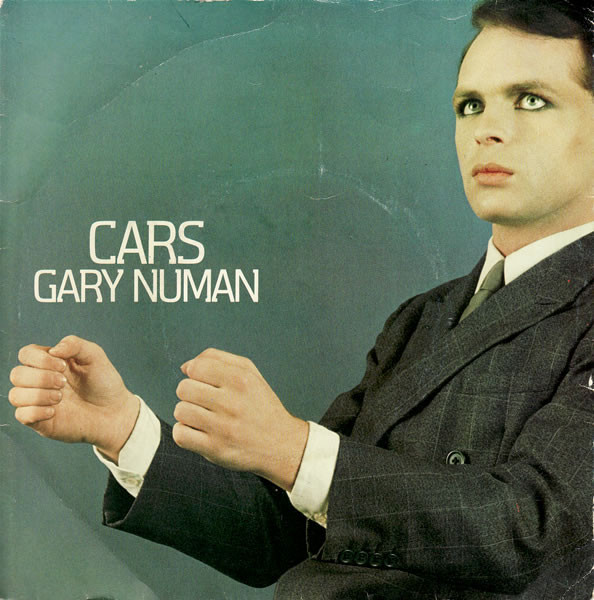
442. ‘Cars’, by Gary Numan

Gary Numan returns to the top of the singles chart, after doing so alongside his Tubeway Army a few weeks back, with another outsider anthem.

Cars, by Gary Numan (his 1st and only #1)

1 week, from 16th – 23rd September 1979

Here in my car, I feel safest of all… He’s locking the modern world away behind four doors and a boot. It’s the only way to live, In cars… It’s another memorable electronic riff: still clanking and industrial, but a little perkier than ‘Are ‘Friends’ Electric’, poppier even. Numan’s vocals are have lost the conversational tones of his earlier #1, and are full-on Kraftwerk-robot chic.

Here in my car, I can only receive… Is this, maybe, a little bit of a novelty? Is Numan hamming up the extra-terrestrial image he had seen grow around his live performances of ‘Friends’? I don’t know – perhaps that feels harsh. He was inspired to write this song after some unsavoury types had tried to drag him from his car… Had ‘Cars’ come first then maybe it’d sound just as ground-breaking. But… if you were to write a piss-take of a song by Gary Numan, it might sound a lot like this record.

As in ‘Friends’, there are variations on the main riff throughout the song. One is the grinding, clanking trip through a car factory without noise-cancelling headphones. One is a high-pitched counterpoint to this; that one sounds as if you’re speeding down a motorway at night. And then there’s the disco bit, the riff that reminds me of ‘Funkytown’, by Lipps Inc (which wasn’t released until November ’79 – maybe they’d heard ‘Cars’ while recording…)

This record is actually two-thirds instrumental. Once Numan has intoned his way through three verses (no choruses here), the synths take over and you just got to let them wash over you, man. I want to like this more; but with each listen I find my attention wandering by the end. Who am I to judge, though? ‘Cars’ has charted three times in the UK, and remains a staple of adverts, Best Ofs, and Numan’s live shows to this day. And it’s certainly a fine addition to the rich tapestry that is 1979’s chart-toppers.

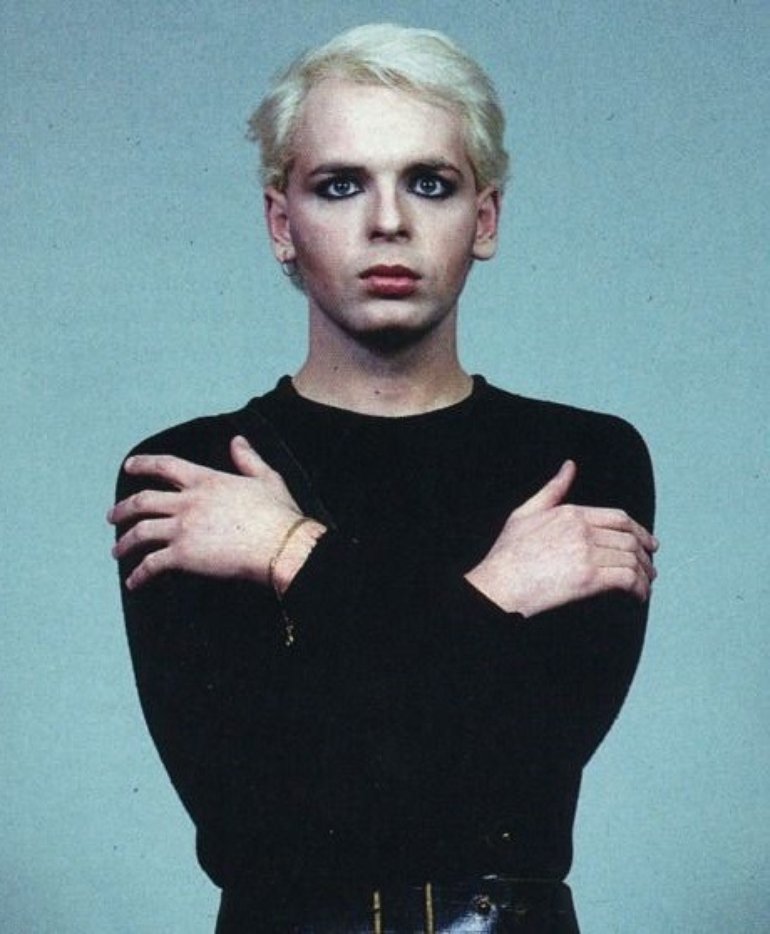
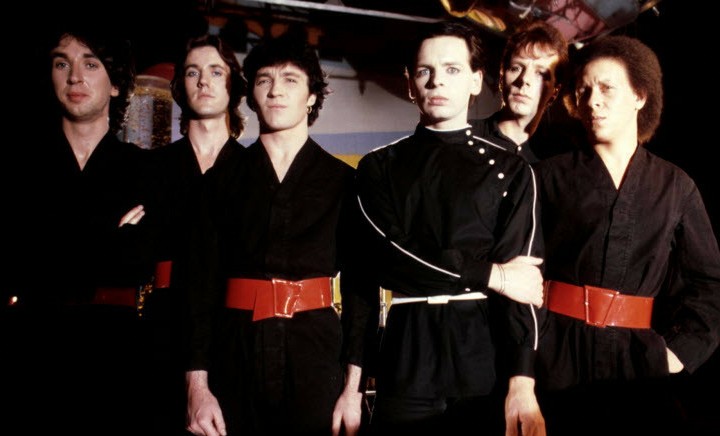
This is credited to Numan, solo, but still features half of the Tubeway Army on the record. You could argue that both of his quick-fire #1s could be credited to either Numan or his Army, but hey. He remains active to this day, a synth pop legend, and many of the acts who will make this the sound of the early eighties owe him a debt. And if that’s not cool enough for you, how about the fact that, after helping invent synth-pop, he got his pilots’ license and set up own airline, Numanair, in 1981…

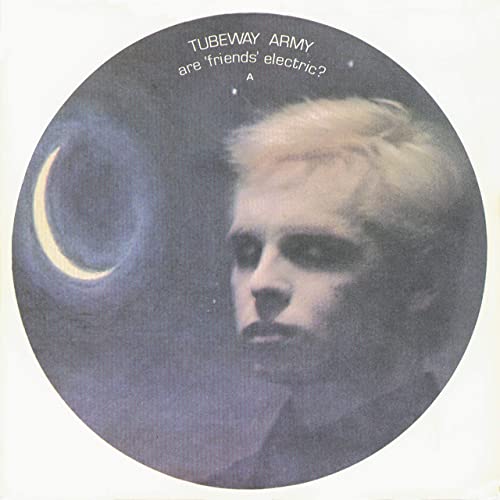
439. ‘Are ‘Friends’ Electric?’, by Tubeway Army

Symbolically whacking Anita Ward’s trashy disco ditty off top-spot… Time for something a bit different. The eighties have arrived.

Are ‘Friends’ Electric?, by Tubeway Army (their 1st and only #1)

4 weeks, from 24th June – 22nd July 1979

There have been synths right through the seventies, from Chicory Tip through to ‘Gonna Make You a Star’ and, most memorably, Donna Summer’s ‘I Feel Love’. But even Giorgio Moroder didn’t use them as aggressively as this. These churning and grinding synths leave you feeling kind of woozy. A riff hammers away, going low like a grinding gearstick, then high like a wonky police siren.

There’s no chorus, no verses or bridge. Just different themes on the same dreamy, trippy riff. But – and I don’t mean this to sound negative – this is a bad dream; one bad trip. Over the top of it, Gary Numan… Sings? Chants? Announces? It’s cold outside, And the paint’s splitting off of my walls…!

What this song is about I have no idea, really. Numan tells a story of a ‘friend’ – note the inverted commas – who may or not be human. The friend is broken down, and he’s lonely. So I head to Google to find out a little bit more… Numan is autistic, apparently, and struggles with interpersonal relationships. So he wrote a song set thirty years ahead, in a dystopian future, in which robots have replaced lovers (hence the ‘friends’). The title references the Philip K. Dick novel ‘Do Androids Dream of Electric Sheep?’ Numan puts it best: “I had a number one single about a robot prostitute and nobody knew it.”

For large parts of the song he also talks, making it a fairly spoken-word heavy #1. So now I’m alone, Now I can think for myself… He sounds – and maybe this is just me – a lot like Marc Bolan. ‘Plummy cockney’ is the way I’d describe it. You see this meant everything to me…

Is it my imagination, or does this song slow down and speed up at random? Each time I listen to it, I notice this effect but in different places. I think I’m just getting lost in its rhythm. I think I might have a nightmare involving this song tonight, and I’m ready for it. Of course, I’m no stranger to the main riff, sampled for Sugababes’ first chart-topper ‘Freak Like Me’, one of the early-2000’s finest pop songs. (Apparently Numan himself classes it as better as this original.)

Tubeway Army were originally a punk act, but Numan found himself increasingly drawn to electronic music. ‘Are ‘Friends’ Electric’ was their first single to make the charts; and their last. However, almost the same band will be back in the number one position in just eight weeks… with a single credited solely to Gary Numan.

Finally, I make this the 5th number one by a New Wave act in the last six months… And if they all haven’t sounded completely different to one another! A fertile time for popular music. I know we have six months left to go, but I’m sticking my neck out now and naming 1979 as the best year of the whole decade, in chart-topper terms…